Call of Duty: Modern Warfare III, due November 10, is a unique, albeit confusing, blend of new and old. It’s not a remake of 2011’s Modern Warfare 3, though it does contain all the multiplayer maps from 2009 first-person shooter Modern Warfare 2. But it’s not a sequel to 2009 MW2—it’s a sequel to the 2022 reboot Modern…
iRobot’s Roomba 694 isn’t the most feature-rich robot vacuum on the block, but it certainly gets the job done. Now, it can get that job done for cheaper, as the Roomba 694 is on sale for $159 as part of an early Black Friday deal on Amazon. This is a record-low price for the gadget, with the discount slashing $115 off the MSRP. That’s more than 40 percent off the usual price of $275.
If you’ve been curious about hiring a robot helper to sweep the floors, but were waiting for a good deal, now might be a great time to jump on board. After all, the Roomba 694 sits at the top of our list of the best budget robot vacuums in the world. This little jobby might be low in price, but it’s high in functionality.
The cleaning power is on point and the affiliated mobile app is both useful and easy to operate. The 694 boasts a sleek all-black design, giving it an aesthetic similar to its more expensive siblings. It can spot clean or do more intensive jobs throughout the home. The app lets you control the vacuum manually or set cleaning schedules. Amazon now owns Roomba, so you can even use that famous wisecracker Alexa to set up cleaning times.
The vacuum includes an edge-sweeping brush for corners and adaptive navigation capabilities, so it won’t careen down the stairs like a little kid on Christmas morning. These navigation sensors also allow the vacuum to clean under furniture. You don’t get any replacement brushes or filters with this unit, so you’ll have to buy those on your own when the time comes.
It cleans for 90 minutes before requiring a charge, but it’ll automatically head to the dock when the power’s running low, which is a staple of most modern robo-vacs. The Roomba 694 features a three-stage cleaning system that excels on both carpets and hard floors, but you won’t be able to use this little bot to mop. That’s a feature reserved for the pricier models.
Speaking of pricier vacuums, Roomba is running a sale on multiple models right now. You can snag the flagship J9+ for $600 instead of $1,000, or the J7+ vacuum/mop hybrid for $700 instead of $1,000. Even the mop-focused Braava Jet M6 is on sale for $300. In other words, it’s a mighty good day to be very, very lazy.
Believe it or not, after two decades, Brandon Sanderson’s Stormlight Archive is getting a TTRPG. This isn’t breaking news—it was announced well before Gen Con this year—but the reveal of its three team writers and designers is. Additionally, MCDM has announced that in December it will begin crowdfunding for its own…
The 160th installment of the 9to5Linux Weekly Roundup is here for the week ending on October 29th, 2023, keeping you guys up to date with the most important things happening in the Linux world.
It’s perhaps The Addams Family’s favorite time of year, but Apple’s pre-Halloween “Scary Fast” event was neither mysterious nor spooky. Thanks to M3 chip leaks and rumors, all of the company’s announcements were largely expected. And though the showcase inexplicably took place in the evening, it’s hard to imagine Tim Cook ever cutting a ghostly figure.
Anyway, Apple had a bunch of product refreshes to discuss, namely in the new MacBook Pro and iMac lineups. The event anchored around a trio of new chipsets that, unsurprisingly, Apple is touting as its most powerful yet.
M3 chipsets
Apple
Apple unveiled a trio of M3 chips at Scary Fast: the M3, M3 Pro and M3 Max. While they’re certainly going to be faster than the previous M2 chipsets, the company not-so-subtly hammered home the notion that they’re far more powerful than their M1 equivalents, just in case folks who are using devices with first-generation Apple silicon chips are starting to yearn for an upgrade.
Notably, these are the first three-nanometer chips for PCs. On the GPU side, Apple has factored in hardware-accelerated ray-tracing and mesh shading to offer more realistic lighting and better geometry handling.
The base M3 has an eight-core CPU (four performance cores and a quartet of efficiency cores) and a 10-core GPU, with support for up to 24GB of unified memory. The M3 Pro has six performance and six efficiency cores for a 12-core CPU, along with an 18-core GPU. The mid-range chipset can support up to 36GB of RAM.
As for the M3 Max, that’s up to 80 percent faster than the M1 Max, according to Apple. The company’s current most powerful chipset features a 16-core GPU (with 12 performance and four efficiency cores), a 40-core GPU and support for a whopping 128GB of RAM, in case you’re feeling flush or need a lot of memory.
The chips should be major upgrades for anyone making the switch from an M1-powered device or an Intel-powered Mac. That means better performance for productivity, creativity and even gaming as high-profile titles such as Death Stranding Director’s Cut make their way to Apple’s ecosystem.
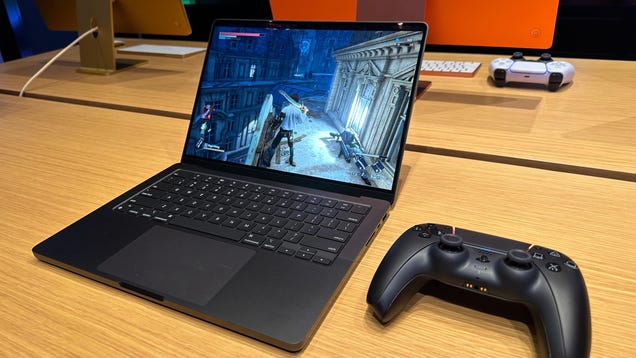
There are new 14- and 16-inch MacBook Pros for you to get your hands on. The 14-inch variant starts at $1,599 for a model with a base M3 chip. That’s the lowest ever price for a new 14-inch MacBook Pro. There wasn’t a version with a base M2 chip. Instead, you would have had to shell out $1,999 for an M2 Pro-powered unit if you wanted to go with that form factor. You can now opt for a 14-inch MacBook Pro with an M3 Pro, which will likewise run you $1,999.
On a similar note, the 16-inch MBP starts at $2,499 for a model with an M3 Pro. An M2 Pro-powered model started at $2,499 as well.
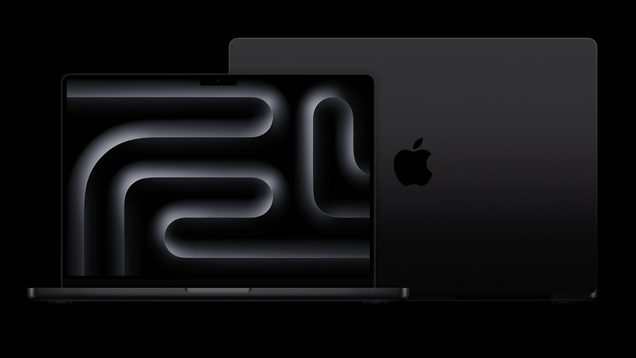
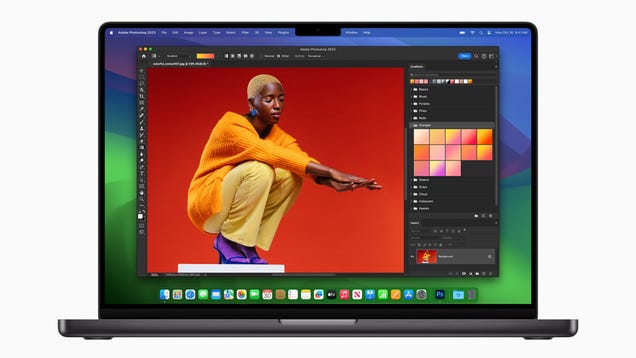
Don’t expect major hardware changes elsewhere on the latest models. This is by and large a spec bump. One notable tweak, however, means that the laptops’ Liquid Retina XDR displays are now able to display SDR content with 20 percent more brightness, up to 600 nits.
Perhaps the best thing about the new MBPs is that Space Black chassis. I’m more tempted than ever to make the switch from Windows to Mac for that colorway alone. The extra power that the M3 chips offer seems like a bonus — though the Space Black option isn’t available for the base 14-inch MacBook Pro, unfortunately.
However, not everything about the refreshed MacBook Pros is a Halloween treat. The base 14-inch model has a paltry 8GB of RAM, which maybe doesn’t quite align with Apple’s promise of significantly better performance in the new MBPs.
The new 24-inch iMac is pretty much the same as the last 24-inch iMac, save for a new chipset and a few other tweaks. Apple says the M3-powered system is up to twice as fast as the previous version, which ran on the M1 chipset.
The company claims that Safari and productivity apps like Microsoft Excel will run up to 30 percent faster than on the M1 iMac. There will be support for up to 12 video streams in 4K resolution, three times as many as on the last iMac. Image processing and video-editing apps will be up to twice as fast too, according to Apple.
There are some minor upgrades on the connectivity front too. The M3 iMac supports Wi-Fi 6E and Bluetooth 5.3, which improve on the previous model’s Wi-Fi 6 and Bluetooth 5.0.
The M3 iMac starts at $1,299 for a model with an eight-core GPU and eight-core CPU. Unfortunately, Apple’s only offering 8GB of RAM and 256GB of SSD storage with that configuration, so you may want to bump those up a bit. Pre-orders for the M3 iMac are open now and the revamped desktop will arrive next week.
Everything else
Other than the M3 chips, new MacBook Pros and refreshed iMac, Scary Fast was notable for what Apple didn’t talk about. First, you had to read between the lines to realize that the company has ditched the 13-inch MacBook Pro. That means we’re waving farewell to the much-loved and much-loathed Touch Bar, at least for the time being.
It was widely expected that Apple would update several of its accessories to include USB-C ports as it shifts away from Lightning to a common charger. That wasn’t the case at Scary Fast. For the time being, you’ll still need a Lightning cable on hand at least for your Magic Keyboard and Magic Mouse.
Although we couldn’t really shake the notion that Apple would reveal an M3-powered iPad or two, the company declined to do so on Monday. As such, you’ll need to wait a while longer for tablets with its new chips.
Follow all of the news from Apple’s “Scary Fast” October event right here.
This article originally appeared on Engadget at https://www.engadget.com/apples-scary-fast-mac-event-everything-announced-about-m3-macbook-pro-and-m3-imac-153056716.html?src=rss
Apple really threw us for a loop this year. The company usually announces new products in one of two ways—either a simple press release, or a big, blow-out event at 1 p.m. ET (10 a.m. ET). Its “Scary Fast” Mac event was neither of these things: Instead, the company rolled out a pre-recorded event at 8 p.m. ET (5 p.m.…
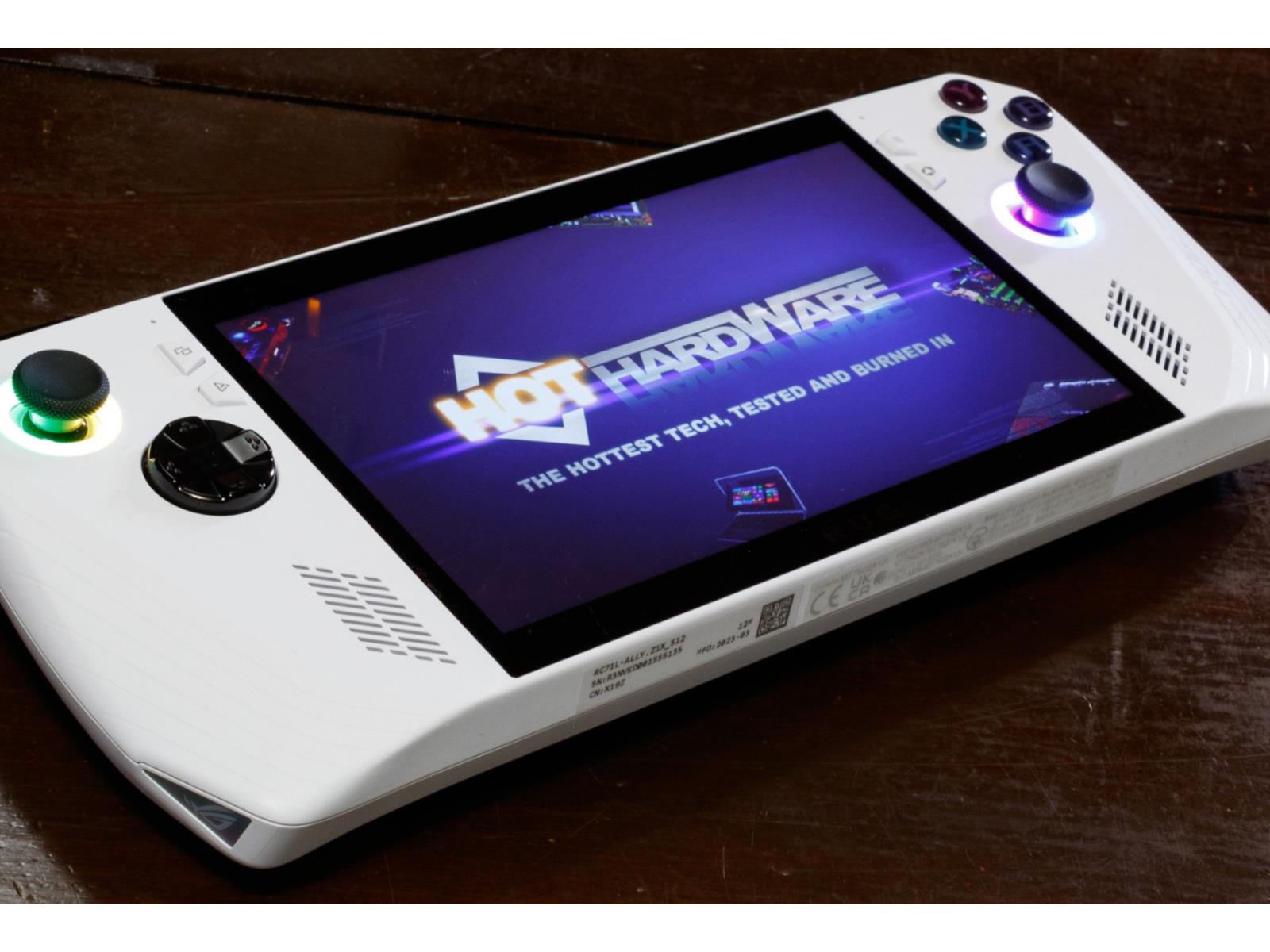
AMD drivers come with quite a few built-in features, but many of them couldn’t be used at the same time until AMD released HYPR-RX last month. Now, HYPR-RX is coming to the ROG Ally with the device’s latest update, and it seems like a match made in heaven for this driver feature and ASUS’s high-end gaming handheld.
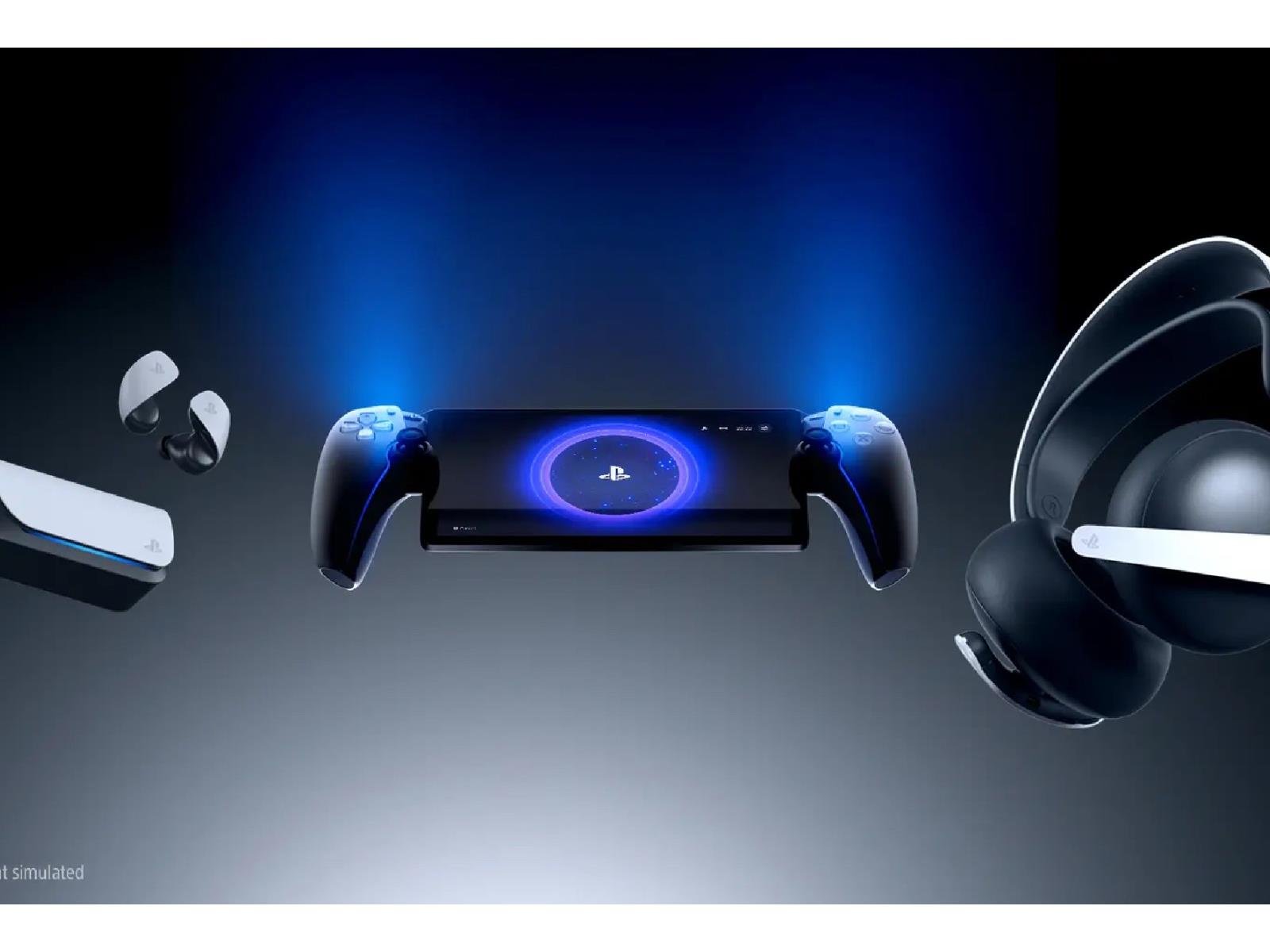
Sony announced its PlayStation Explore wireless earbuds, PlayStation Elite wireless headset, PlayStation Link USB adapter, and its highly anticipated PlayStation Portal remote player. All the new devices will be launched in time for the upcoming Christmas shopping season.
While Microsoft may have acquired Activision/Blizzard/King, Sony
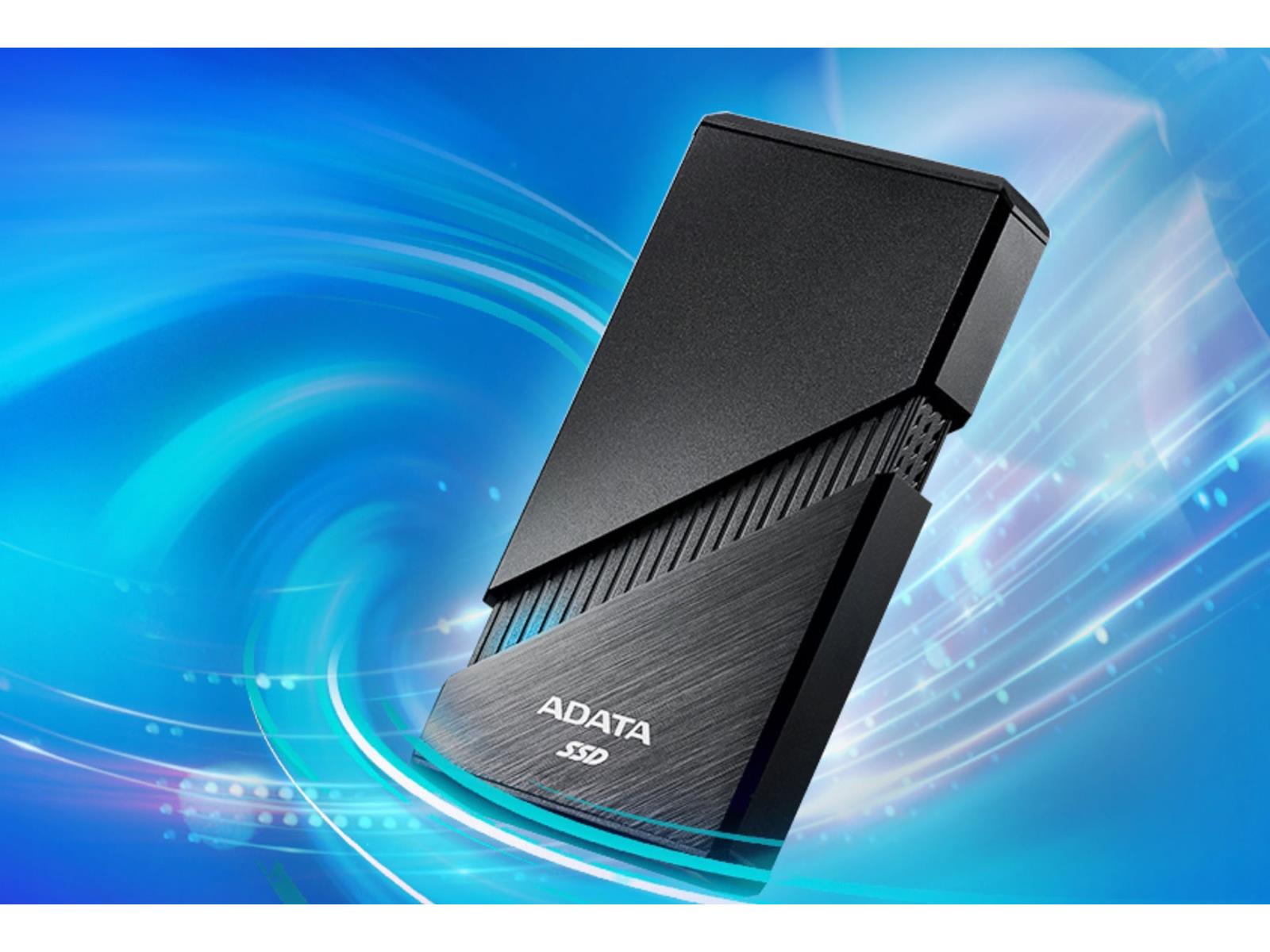
One of the best upgrades you can do to your PC is undoubtedly adding a faster storage or system drive. We’d surmise that the first time users tried a fast SSD (NVMe or even SATA), they immediately could tell the difference from their slower spinning hard drive. While the internal storage train has brought us to incredible PCIe Gen 5 speeds
AV1 — a next-generation, royalty-free video codec developed by the Alliance for Open Media, a consortium including tech giants like Google, Mozilla, Cisco, Microsoft, Netflix, Amazon, Intel, and Apple — is finally making inroads. From a report: We are finally seeing more hardware support for this codec. The new M3 chips from Apple support AV1 decode. The iPhone 15 Pro and iPhone 15 Pro Max also feature an AV1 hardware decoder. The official Android 14 Compatibility Definition makes support for AV1 mandatory. The Snapdragon 8 Gen 2 chipset, widely used by Android phones released in 2023, supports AV1. With the exception of Microsoft Edge, all browsers support AV1.
Deep into the night before All Hallows Eve, Apple’s Cupertino spaceship headquarters was shrouded in a dense, black fog as if preparing to release a malevolent force upon the world. Thankfully, when the fog cleared, what we had instead was three new chips, a MacBook Pro update, and an iMac refresh.
“Deep Stone Lullaby is the most gorgeous piece of game music that you’ve never heard,” wrote PC Gamer’s Tim Clark back in 2021. The “melancholy slice of sci-fi magic” was tucked away inside the raid for Destiny 2’s Beyond Light expansion, one of the multiplayer shooter’s end-game activities that the majority of…
The Linux kernel 6.6 release is a big one with plenty of improvements across the board for various laptops, networking hardware, processors, and whatnot.
Government leaders in more than 40 countries are signing a pledge agreeing never to pay a ransom to cybercriminals again. U.S. President Joe Biden introduced the International Counter Ransomware Initiative in 2021 and will discuss countries agreeing to push back against cybercriminals and cutting off their revenue…
It’s hard to imagine that the next Marvel movie is out in just a few weeks, but here we are—The Marvels is set to fly into cinemas November 10 and we’re only just getting our first extended look at the film. At least it’s a pretty fun one?
Western Digital has announced its decision to split its hard disk drive and NAND memory businesses, creating two separate public companies. According to the company, the change is aimed at refining the focus and operational efficiency of each business segment. The separation, planned to be tax-free, is slated for completion in the second half of 2024, subject to necessary approvals and customary conditions.
Western Digital believes that this separation will allow each business unit — hard disk drives and NAND flash memory — to refine their strategic directions, focusing on unique market opportunities and technological innovations. By becoming independent entities, they can operate with enhanced efficiency, each with its own capital structure, allowing for more targeted and agile decision-making processes, according to the company’s official rationale. This move is seen as a way to bolster each unit’s position in the market, driving long-term success through focused strategies and operational efficiencies.
The decision follows a comprehensive strategic review, where various alternatives were evaluated to enhance organizational value and operational efficiency. As a result, Western Digital’s board of directors decided that spinning off the company’s flash memory business makes a lot of sense. Meanwhile, the company’s announcements does not detail how exactly Western Digital plans to split product lineups and whether the new flash venture will retain all flash-based product lines (e.g. SSDs, flash drives), or will mostly focus on production of NAND memory.
“Our HDD and flash businesses are both well positioned to capitalize on the data storage industry’s significant market dynamics, and as separate companies, each will have the strategic focus and resources to pursue opportunities in their respective markets,” said David Goeckeler, CEO of Western Digital. “We have already laid important groundwork by building market-leading portfolios and enhancing the operational efficiency of each business, including the creation of separate flash and HDD product business units and separating operational capabilities over the past several years. Additionally, we now have strong product, operational, and financial leadership in place to execute this plan successfully. Each business is in a solid position to succeed on its own, and the actions we are announcing today will further enable each company to drive long-term success in the years to come.”
Western Digital obtained its NAND operations when it acquired SanDisk in 2016. Along with NAND production facilities, Western Digital got rather vast software and flash controller operations, which greatly expanded its market opportunities. Meanwhile, some of those operations were eventually merged, which somewhat reduced the company’s abilities to address certain market segment. As a result, the separation is viewed as an important step in enhancing each business’s ability to capitalize on market-specific growth opportunities and technological advancements.
Western Digital feels that the timing of the separation is right as industry conditions are improving, and sees it as a crucial move to unlock and enhance shareholder value further. The company remains open to exploring additional strategic opportunities that may arise, aiming to optimize the value of both the HDD and flash investments and assets. These additional strategic opportunities possibly include the acquisition of Kioxia, Western Digital’s NAND partner that co-owns the company’s flash memory fabs. Meanwhile, SK Hynix, another investor of Kioxia, is against the buyout by Western Digital, reportedly vetoing an offer as recently as last week. A combined Western Digital + Kioxia would form the world’s largest maker of NAND flash, making it a formidable rival for the South Korean company.
Apple’s latest MacBook Pro has almost everything you could want from a laptop. It has speed, thanks to the new M3 chip; 512GB of storage, which is great for any Apple laptop; a fantastic XDR display, which provides the best viewing experience on any Mac; and it costs $1,599, $400 less than what a 14-inch MacBook Pro…