Our Flag Means Death has just wrapped up its sophomore season, and it’s time to say goodbye to our favorite pirates for, well, at least another year. Streaming service MAX hasn’t renewed the workplace comedy/action-adventure show for a third season, but if the numbers are anything to go by, they would be foolish not…
The Super Mario games are often best experienced in solitude. Pretty much everyone who tried playing Super Mario 3D World with friends has stories about it devolving into chaos. But if you’ve decided that you only want to experience Super Mario Bros. Wonder by yourself, I’m here to recommend you give the new 2D…
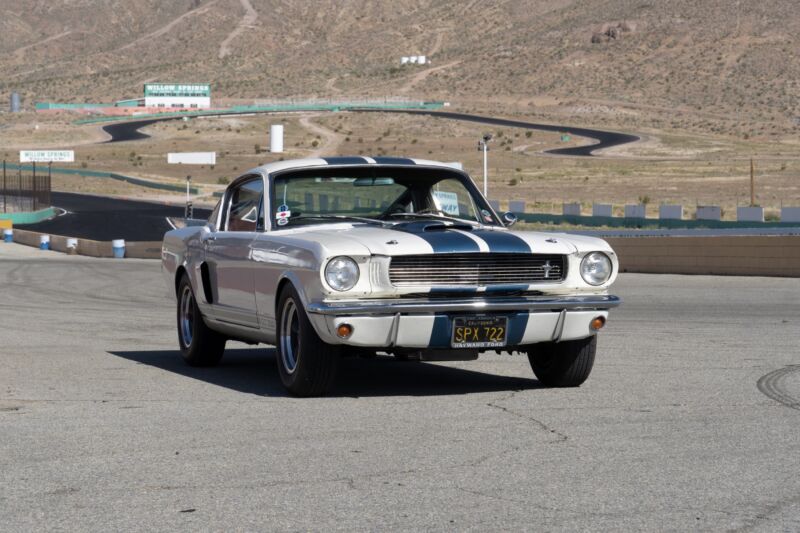
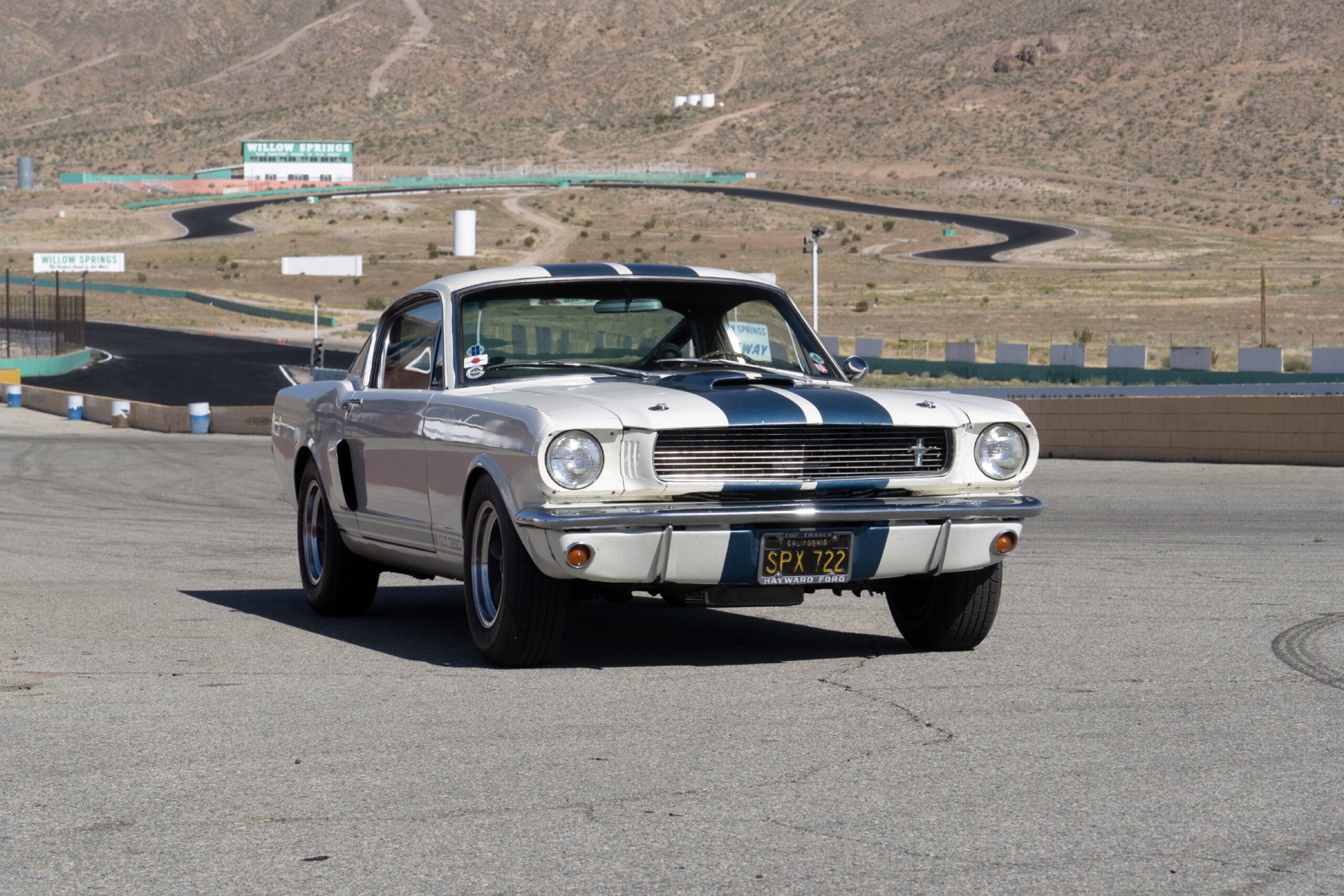
Enlarge/ OVC’s Shelby Mustang recreations are accurate enough to be granted official papers to compete in historic racing. (credit: Michael Teo Van Runkle)
To Shelby Mustang fans, the Original Venice Crew (OVC) is the stuff of legends. This was the actual team that designed and built the original GT350s, Cobras, Daytona Coupes, and GT40s that introduced Carroll Shelby’s name to the masses. Today, OVC builds modern Mustang recreations so accurate that one was approved for last year’s Le Mans Classic, which celebrated 100 years of the world’s most famous endurance race.
But OVC also offers updated versions of those classics, bringing to life ideas that bounced around the shop back in the day but that Shelby never built in series production. Want a 1965 GT350 with independent rear suspension? OVC can do that, after dialing in a design that Ford originally believed would be too expensive as a replacement for the first-gen Mustang’s solid rear axle.
These projects don’t quite fit under the “restomod” umbrella, instead falling more along the lines of the ideas that OVC founder and boss Jim Marietta remembers from his days back at 1042 Princeton Drive. Think fender flares cut by hand rather than being machined or updated fiberglass front fascias to provide additional airflow.
Given the recent launch of the Intel Arc Graphics A580 for under $200, I’ve been working on a fresh round of Intel / AMD Radeon / NVIDIA GeForce Linux gaming/graphics and compute benchmark results. Next week that fresh arsenal of Linux graphics benchmarks on the very latest drivers will be published but for today is a look at the most surprising aspect: the OpenCL-focused GPU compute benchmarks.
The C programming language is replete with features that seemed like a good
idea at the time (and perhaps even were good ideas then) that have not aged
well. Most would likely agree that string handling, and the use of
NUL-terminated strings, is one of those. Kernel developers have, for
years, tried to improve the handling of strings in an attempt to slow the
flow of bugs and vulnerabilities that result from mistakes in that area.
Now there is an early discussion on the idea of moving away from
NUL-terminated strings in much of the kernel.
A team of scientists utilized a combination of space and ground-based telescopes, including NASA’s James Webb Space Telescope, to identify a neutron star merger that created the second-brightest gamma-ray burst ever seen. The observation also helped scientists detect the chemical tellurium in the aftermath of the explosion.
JPMorgan Chase’s digital token JPM Coin now handles $1 billion worth of transactions daily and the bank plans to continue widening its usage, Global Head of Payments Takis Georgakopoulos said. From a report: “JPM Coin gets transacted on a daily basis mostly in US dollars, but we again intend to continue to expand that,” Georgakopoulos said Thursday in an interview on Bloomberg Television. JPM Coin enables wholesale clients to make dollar and euro-denominated payments through a private blockchain network. It’s one of the few examples of a live blockchain application by a large bank, but remains a small fraction of the $10 trillion in US dollar transactions moved by JPMorgan on a daily basis. The company also runs a blockchain-based repo application, and is exploring a digital deposit token to accelerate cross-border settlements.
Hyundai said Wednesday it’s pushing an anti-theft software update for select vehicles targeted by thieves using the viral TikTok “Kia Challenge.” Both Kia and Hyundai car thefts started to spike in the summer of 2022after thieves realized they lacked engine immobilizers and anti-theft technology that is standard in…
A bubble of coolant leaked out of a radiator attached to the International Space Station (ISS), jeopardizing an ongoing spacewalk by two Russian cosmonauts on Wednesday.
Alan Wake 2 is just on the horizon, and its bone-crushing recommended spec sheet doesn’t so much recommend powerful hardware as much as it does demand it. Even the minimum requirements to run the game call for pretty midrange GPUs, and that’s just to play at 1080p and 30 FPS with DLSS or FSR enabled. The recommended specs for playing the game
No one wants to screw over the cable companies over more than me. When Comcast almost doubled my rate a few years ago I decided it was time to ditch the box and try something else, which led me to digital antennas.
It’s only been a month since Xiaomi introduced the 13T series to the international market, and the company is already pushing out more flagship phones back in China. The freshly-announced Xiaomi 14 series is the first device to run the company’s supposedly more efficient and more interoperable HyperOS, which aims to bridge the gap between “human, cars, and home.” Naturally, these phones also feature Qualcomm’s AI-centric Snapdragon 8 Gen 3 processor launched earlier this week, with the bonus being a faster Leica Summilux lens and a floating telephoto lens for both the 14 and 14 Pro, along with a tough “Xiaomi Ceramic Glass” plus a titanium edition — literally the “one more thing” at the launch event — reserved for the Pro model.
Starting with the Xiaomi 14, its 6.36-inch screen boasts a new C8 AMOLED display panel co-developed by the phone maker and TCL CSOT. This offers an industry-leading peak brightness of 3,000 nits, as well as the common pixel density of 460 ppi and variable refresh rate from 1Hz to 120Hz. The phone also packs a 4,610mAh battery with 90W wired fast charging and 50W wireless fast charging. Audio-wise, you get a 4-mic array — great on paper when it comes to noise cancellation for phone calls — and stereo speakers with Dolby Atmos. If waterproof (and dustproof) is a must, don’t worry, as the phones in this series are all rated with IP68.
Xiaomi
The higher-end Xiaomi 14 Pro looks very similar, except for its larger size — it’s a 6.73-inch screen here, and there’s a bigger 4,880mAh battery tucked inside (with faster 120W wired charging; same 50W wireless charging though). You won’t see it, but it’s also worth noting that the 14 Pro’s USB 3.2 port offers a whopping 10Gbps data transfer speed, which is twice as fast as the one on the 14.
If you place both models side by side, you’ll see how all four sides of both glass panels are curved on the Pro, with the top panel retaining a flat screen look to avoid distortion. The display packs a 2K (WGHD+) resolution, which equates to an impressive pixel density of 522ppi. For the first time, Xiaomi took a page out of Huawei’s book and created its own tough glass, which is aptly dubbed “Xiaomi Ceramic Glass.” This supposedly features “10 times higher drop resistance and 1.25 times higher scratch resistance.” In fact, the 14 Pro’s titanium edition even has both sides shielded by this special glass, hence its 7g (0.25oz) of extra weight when compared to the regular model’s 223g (7.87oz).
Xiaomi
Both models come with a set of similar cameras, with the main Summilux lens featuring a new “Light Fusion 900” image sensor (50-megapixel, 1/1.3-inch, 1.2um, OIS) with a supposedly high dynamic range. While the Xiaomi 14’s main camera has an f/1.6 aperture, the Pro has a variable aperture ranging from f/1.42 to f/4.0 for more the sake of versatility. For the first time, you get the same floating telephoto lens (3.2x zoom, f/2.0, OIS) on both models (instead of just on the Pro), which lets you easily toggle between telephoto mode and close-up mode. For ultra-wide capture, it’s a 50-megapixel f/2.2 camera with a 115-degree viewing angle. For those who are nerdy enough to care, both the telephoto camera and the ultra-wide camera use a Samsung JN1 sensor.
Xiaomi is currently taking pre-orders for both models in China. The 14 Pro starts from 4,999 yuan (around $680) for the 12GB RAM with 256GB storage, and it maxes out at 5,999 yuan (about $820) with 16GB of RAM and 1TB of storage. If you want the titanium edition, it’s the same top specs, but it’ll cost you 6,499 yuan (around $890). As for the more affordable Xiaomi 14, it starts from 3,999 yuan ($550) with 8GB of RAM and 256GB of storage, then it goes all the way up to 4,999 yuan — matching that of the 14 Pro’s base model — with 16GB RAM and 1TB storage. There’s no word on when to expect international availability yet, but given the pattern of Xiaomi’s recent flagships, it’s probably just a matter of time.
This article originally appeared on Engadget at https://www.engadget.com/the-xiaomi-14-pro-packs-a-faster-leica-camera-and-comes-in-a-titanium-edition-141515470.html?src=rss
How would you like an Intel-powered mini-PC that combines a dual-drive network-attached storage (NAS) and two 2.5 GbE Ethernet ports? The Aoostar R1 seeks to be your answer to be your all-in-one media server and is available now for as low as $269 (via the Amazon link below).
Have you ever looked at your home server/network/storage setup
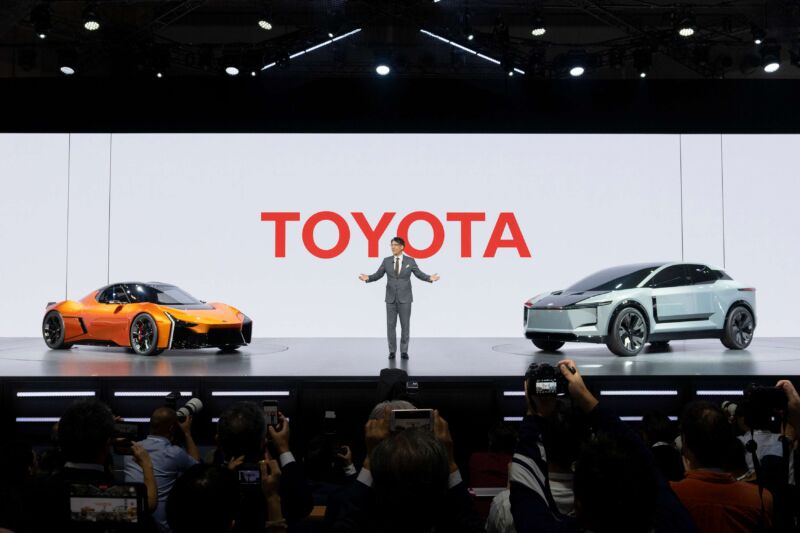
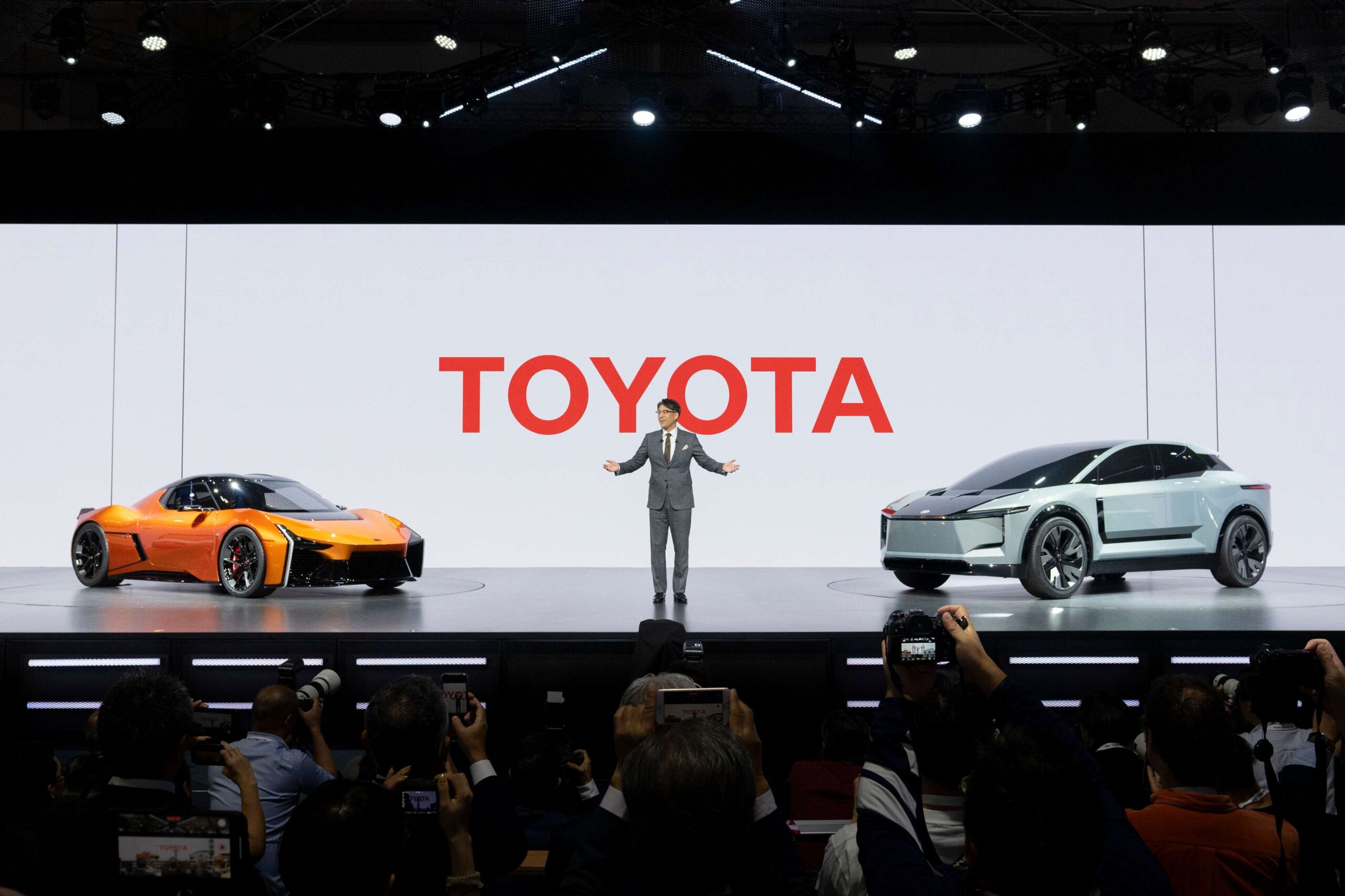
Enlarge/ Toyota CEO and President Kaji Sato on stage with the FT-Se (left) and FT-3e (right) concepts. (credit: Toyota)
A booth full of concept cars is nothing new at an auto show. This year at the Japan Mobility Show, though, Toyota called its entire booth a concept. The concept was “Find Your Future,” and it was meant to show how electric vehicles can be fun and flexible in ways that internal combustion vehicles can’t.
Toyota also highlighted an internal combustion vehicle that offers even more flexibility than its concepts. One will go on sale in Asia in the next few months, while the others may never see pavement.
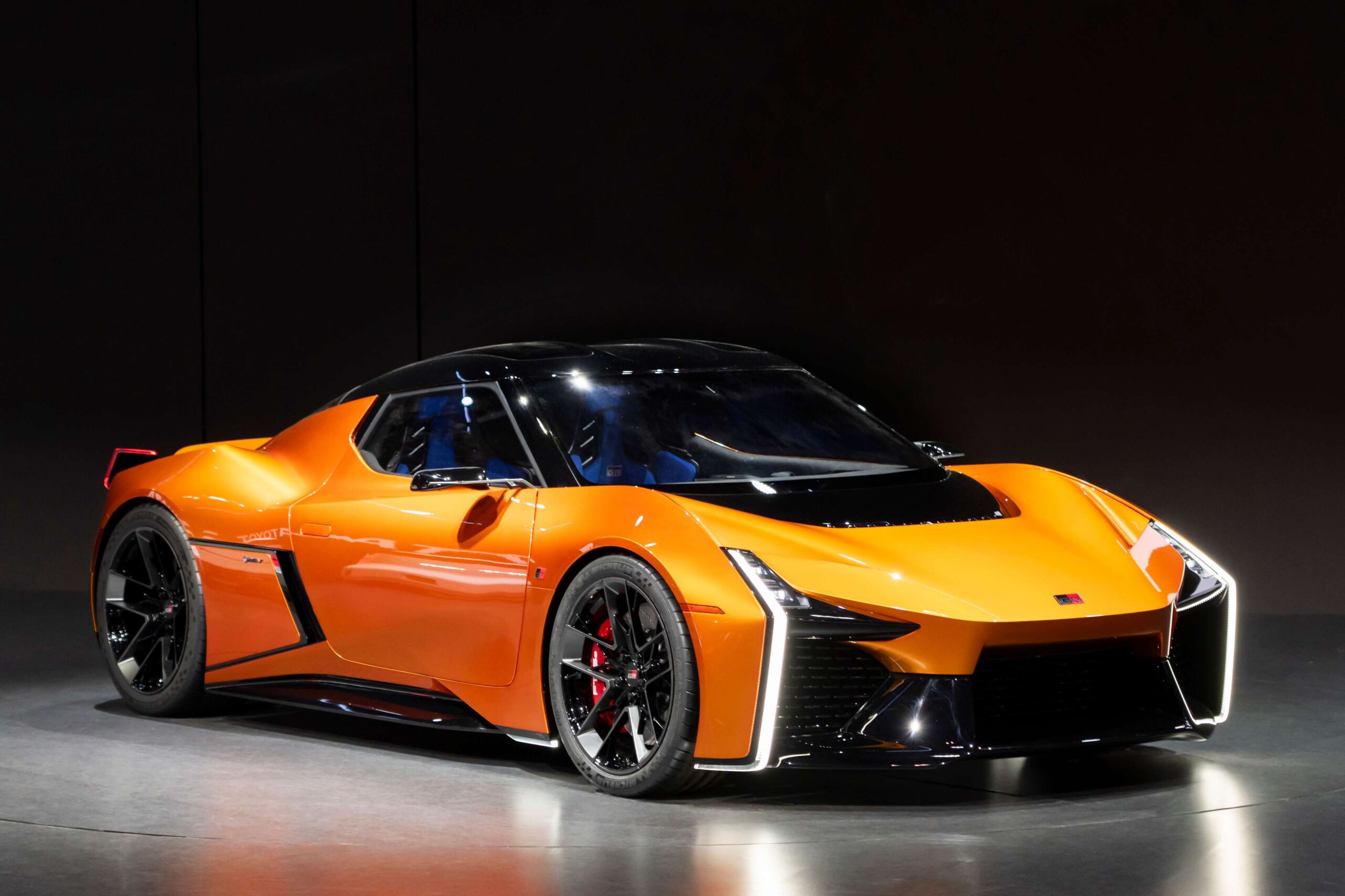
The highlight was a sharp-looking electric sports car concept called the FT-Se. Toyota didn’t provide many details, but it described what the concept means for future production Toyota EVs.
Valve is finally giving some love to those still looking to play their VR games on Steam. The newly-released SteamVR 2.0 has finally brought its virtual reality interface in line with its more current Steam and Steam Deck. The company previewed this update a month ago when it entered beta, and the update should be…
The Servo open-source web browser engine continues progressing as a community project under the leadership of Linux Foundation Europe. Over the course of October more features were implemented and additional fixes merged…
Mike Flanagan has found the rest of his cast for Life of Chuck. Chucky prepares to go out in a blaze of glory in our first look at the back half of Chucky season 3. Plus, another Five Nights at Freddy poster to tide you over, and a new look at Lisa Frankenstein. Spoilers away!
Google has worried for years that Apple would one day expand its internet search technology, and has been working on ways to prevent that from happening. From a report: For years, Google watched with increasing concern as Apple improved its search technology, not knowing whether its longtime partner and sometimes competitor would eventually build its own search engine. Those fears ratcheted up in 2021, when Google paid Apple around $18 billion to keep Google’s search engine the default selection on iPhones, according to two people with knowledge of the partnership, who were not authorized to discuss it publicly. The same year, Apple’s iPhone search tool, Spotlight, began showing users richer web results like those they could have found on Google.
Google quietly planned to put a lid on Apple’s search ambitions. The company looked for ways to undercut Spotlight by producing its own version for iPhones and to persuade more iPhone users to use Google’s Chrome web browser instead of Apple’s Safari browser, according to internal Google documents reviewed by The New York Times. At the same time, Google studied how to pry open Apple’s control of the iPhone by leveraging a new European law intended to help small companies compete with Big Tech. Google’s anti-Apple plan illustrated the importance that its executives placed on maintaining dominance in the search business. It also provides insight into the company’s complex relationship with Apple, a competitor in consumer gadgets and software that has been an instrumental partner in Google’s mobile ads business for more than a decade.