Samsung’s portable SSD lineup has enjoyed significant market success since the launch of the T1 back in 2015. Despite the release of the Thunderbolt-capable X5 PSSD in 2018, the company has been focusing on the mainstream market. Multiple T series drives have made it to the market over the last 8 years. The product line made the transition to NVMe and USB 3.2 Gen 2 only in 2020 with the launch of the T7 Touch. Today, the company unveiled its first USB 3.2 Gen 2×2 (20 Gbps) PSSD – the Samsung T9. Read on for an in-depth investigation into the design and performance profile of the T9’s 4 TB version.
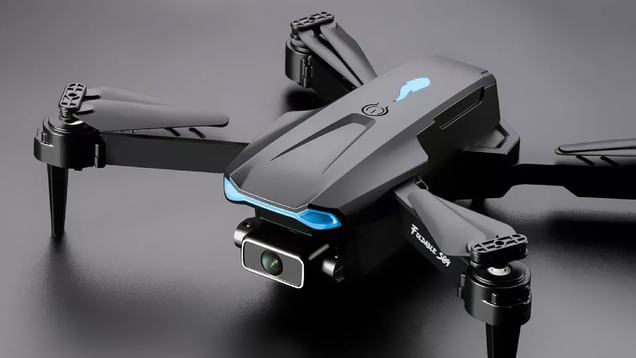
The Epic Flight S89 is a beginner-friendly foldable quadcopter, and it’s on sale for 64% off right now—it’s $89.99 for a limited time. This compact drone takes about 45 minutes to fully charge and has a max flight time of 15 minutes on a full battery. It comes with two Lithium batteries, a remote, a screwdriver, a char…
Today the review embargo lifts on the first AMD-powered Framework laptop. There’s one of the AMD Framework laptops in the lab for Linux testing and benchmarking but unfortunately no review for launch day due to being held up by a BIOS regression and thus unable to properly utilize accelerated graphics until a new BIOS revision is made available in the coming days…
The ground beneath New York City is sinking and rising across different areas, new research shows. The sinking has contributed to worsening flood risks, including at sporting arenas, roadways, and a busy airport.
Ars technica reports
on an Arm advisory regarding exploitable vulnerabilities in a number of
its GPU drivers.
The most prevalent platform affected by the vulnerability is
Google’s line of Pixels, which are one of the only Android models
to receive security updates on a timely basis. Google patched
Pixels in its September update against the vulnerability, which is
tracked as CVE-2023-4211.
As the article notes, the story on fixes for other devices is less clear.
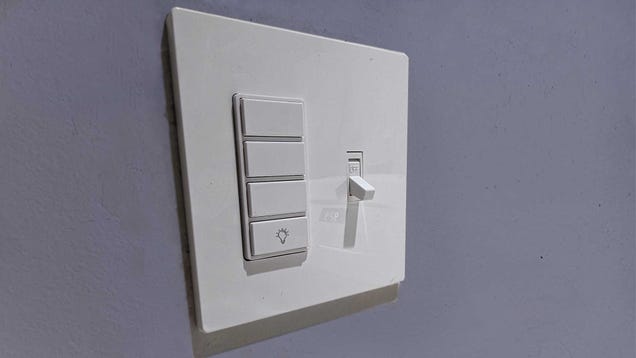
Instead of a smart plug, what if the outlet itself was smart? In fact, what if all your outlets were smart? Leviton, a legacy brand for outlets, light switches, and dimmers, is adding connectivity to its products, which makes a smart home more accessible to everybody. Now, instead of installing a smart light or fan,…
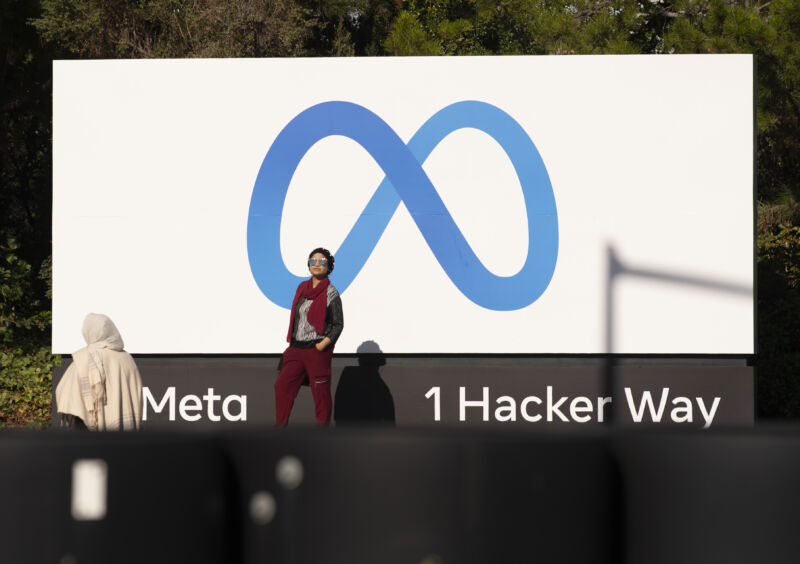
Meta is preparing to charge EU users a $14 monthly subscription fee to access Instagram on their phones unless they allow the company to use their personal information for targeted ads.
The US tech giant will also charge $17 for Facebook and Instagram together for use on desktop, said two people with direct knowledge of the plans, which are likely to be rolled out in coming weeks.
The move comes after discussions with regulators in the bloc who have been seeking to curb the way big tech companies profit from the data they get from their users for free, which would be a direct attack on the way groups such as Meta and Google generate their profits.
Atlanta Georgia’s annual convention, Dragon Con, is infamous in the cosplay community for the quality of looks on the show floor. And of course, this year’s convention did not disappoint, from elaborate Godzilla costumes to a lengthy cosplay parade.
The Federal Communications Commission (FCC) issued a $150,000 fine against Dish Network for failing to properly dispose of its broadcast communications satellite, leading to an increase in orbital debris.
Rust bindings are coming to the Linux kernel’s workqueue (WQ) infrastructure that is used for deferring work to a kernel thread for asynchronous process execution…
It’s Google’s turn to step up to the plate and swing for the fences with a fall hardware event. The company is holding a Pixel showcase in New York City, and you’re invited — at least to tune into a livestream of the Made by Google event. The fun starts at 1PM ET on October 4. You can watch the stream below. We’ll also have full coverage of all the Pixel news you need to know right here on Engadget, including in our liveblog.
There’s no big secret about the focus of the event. For weeks, Google has been teasing the Pixel 8, Pixel 8 Pro and Pixel Watch 2 in images and videos, and there have been leaks galore.
Google says the new Pixel phones have “the most advanced Pixel cameras yet and Google AI to help you do more, even faster.” Rumors suggest there will be other spec bumps, including a display with a refresh rate of up to 120Hz (faster than the Pixel 7’s 90Hz screen) and a Tensor G3 chipset that powers everything. Meanwhile, there may well be a price increase in store for the base Pixel 8 — rumors suggest it’ll cost $699, $100 more than the Pixel 7.
As for the Pixel Watch 2, that’s expected to feature IP68 water- and dust-resistance. It’s believed that Google is making extended battery life a focus with the help of a processor that’s more efficient than the one used in the original model. There could be a slightly larger battery too. Meanwhile, there are indications that Google may toss a Pixel Watch 2 in as a freebie for those who pre-order a Pixel 8 Pro.
Google may have some other things to discuss during the event. Given how things have been going this year, it would be a shock if the company didn’t spend a significant chunk of time talking about AI updates. In any case, we won’t have to wait long to find out what’s up Google’s sleeve.
This article originally appeared on Engadget at https://www.engadget.com/google-pixel-2023-how-to-watch-130033919.html?src=rss
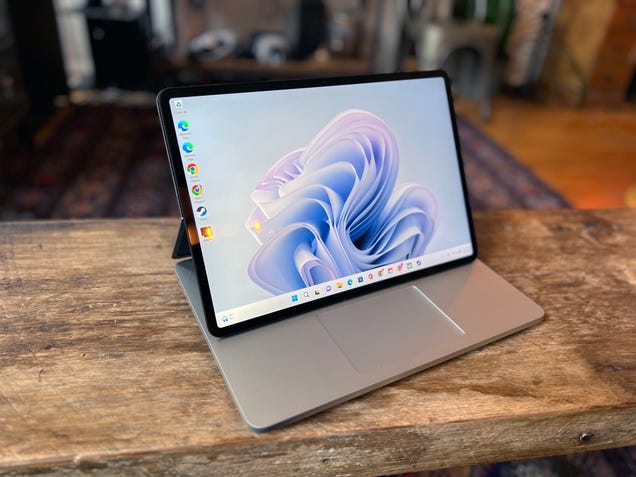
When the Surface Laptop Go debuted three years ago, it seemed like Microsoft pushed itself to make the cheapest possible notebook without sacrificing that Surface flair. The result was a $549 computer with specs so anemic I’d never recommend it to anyone. But, if you spent a bit more, you could upgrade it to a compelling (and compact) PC for students and less demanding users. Now, with the Surface Laptop Go 3, Microsoft has given up on trying to deliver a super cheap PC. But the result is a computer that’s far more appealing.
Starting at $799, the Surface Laptop Go 3 has been upgraded with Intel’s 12th-gen Core i5 CPU, 8GB of RAM and a 256GB SSD. Bump it up to $999, though, and you get 16GB of RAM — a first for the Laptop Go line. While the last two models could make for decent secondary machines, perhaps paired together with a powerful desktop, the Laptop Go 3 could conceivably be your primary PC thanks to that additional memory.
Sure, I’m sad to see Microsoft give up on the dream of a near-$500 Surface. But the original model was equipped with just 4GB of RAM and 128GB of sluggish eMMC storage – and nobody deserves to be subjected to such a torturously slow experience. The Surface Laptop Go 3 is more akin to Apple’s long-lost 12-inch MacBook, a wonderfully small machine that was just powerful enough to get some work done.
Photo by Devindra Hardawar/Engadget
The Laptop Go 3 doesn’t look or feel as expensive as that all-metal Apple machine, but it’s almost there. It features an aluminum top lid and keyboard deck, along with a smooth plastic bottom. The Laptop Go 3 also weighs a mere 2.5 pounds — a half-pound heavier than the 12-inch MacBook. But that’s a bit lighter than Apple’s slimmest notebook today, the 2.7-pound M2 MacBook Air. The Laptop Go line has always felt more akin to an over-sized tablet than a typical ultraportable, and that remains true this year. Few other notebooks slip as nimbly into my messenger bag.
So how did Microsoft make such a compact PC? Mostly, by building around a small 12.4-inch screen, which remains both a blessing and curse for the Laptop Go 3. On the bright side, Microsoft managed to scale down its Pixelsense technology to deliver a display that’s both rich with color and bright enough for outdoor use. But unfortunately, the company is still relying on a strange sub-1080p resolution (1,536 x 1,024) to keep costs down.
Photo by Devindra Hardawar/Engadget
That means if you lean in close, you can easily see pixelated text and images. Though, you may not notice that loss in sharpness in normal use. It just annoys me that even the Surface Go 4, Microsoft’s slower and cheaper tablet, has a 1080p screen. The Laptop Go 3 also retains the 3:2 aspect ratio of its predecessors, which makes it taller than a typical widescreen monitor and better-suited for web browsers and productivity apps.
Despite my issues with its screen, the Surface Laptop Go 3 is still an impressive PC for the price. We reviewed the $999 model with 16GB of RAM, and it felt noticeably snappier when it came to launching applications, switching windows and doing basic work than the previous two models. I’m typically juggling dozens of browser tabs, Evernote (yes, I know I need to move on), Slack, Spotify and image editing apps, and the Laptop Go 3 had no trouble keeping up with me.
Laptop
PCMark 10
Geekbench 5 (single core/multi-core)
3DMark Wildlife Extreme
Surface Laptop Go 3
4,785
1,430/6,094
2,810
Surface Laptop Go 2
4,213
1,349/3,764
2,799
Surface Laptop Go
2,122
1,135/3,486
N/A
I’d also attribute its speed bump to Intel’s 12th-gen Core i5 CPU, which features 10 cores (2 performance, 8 efficient), a healthy step up from last gen’s quad-core 11th-gen chip. While the Laptop Go 3 only scored slightly higher in the PCMark 10 benchmark, it faired much better in the Geekbench 5 multicore test. And based on my own testing, I can’t deny that the real-world performance felt more lively. While it’s not a machine I’d recommend to anyone doing tons of intensive image editing, the Laptop Go 3 still handled a few batch editing tasks (like resizing and watermarking) without showing any signs of slowdown.
That chip upgrade doesn’t make the Surface Laptop Go 3 much of a gaming machine — I hit around 40 fps while playing Halo Infinite in 720p with low settings — but I was still impressed by how it handled Xbox cloud streaming. During its crowded launch event, I was able to wirelessly stream Need for Speed Unbound smoothly, without any weird connectivity hiccups. And I had an even better experience playing a few hours of Lies of P at home over my Wi-Fi 6 router – consider that a solid stress test of the Laptop Go 3’s networking hardware.
Photo by Devindra Hardawar/Engadget
Thankfully, Microsoft didn’t touch the best part of the Laptop Go line: Its excellent keyboard. Its keys are still wonderfully responsive and deep, making them well-suited to my furious typing sessions. And while its trackpad isn’t as large as other notebooks, it’s perfectly fine for web browsing and productivity work. Battery life remains solid as well: It lasted 9 hours and 10 minutes in PCMark 1. That’s well below Microsoft’s estimate of 15 hours, but it’s similar to other recent ultraportables, like the ASUS ZenBook S 13.
Microsoft could make the Laptop Go 3 more useful by adding more connectivity: It still only has one USB Type A connection, a USB-C port, a headphone jack and a Surface charge port. A few more USB connections would make it far more versatile (but at least it has more than the 12-inch MacBook, which only had one USB-C port and a 3.5mm headphone jack). At the very least, it would be nice to have a microSD card slot for storing media.
The Surface Laptop Go 3’s USB Type and USB-C ports, alongside the headphone jack.
Photo by Devindra Hardawar/Engadget
With a $799 starting price, the Surface Laptop Go 3 is firmly int mid-range laptop territory. The $999 model with 16GB of RAM could even be considered a premium product, especially since you can still snag the M1 MacBook Air for the same price. In terms of raw power, Apple’s machine is clearly the winner, but it’s also a bit heavier at 2.8 pounds. When it comes to compact Windows competition, the Surface Pro 9 also starts at $999 with 8GB of RAM. That machine offers a larger 13-inch PixelSense screen and weighs just 1.9 pounds.
Given that there aren’t many 12-inch Windows PCs around, the Surface Laptop Go 3 certainly stands out. And now, thanks to a faster processor and the option of 16GB of RAM, it’s more than just a basic notebook. Almost by accident, Microsoft has crafted one of the most compelling and compact mid-range laptops around. Anyone looking for a new ultraportable won’t be disappointed — just don’t squint too hard at that screen.
This article originally appeared on Engadget at https://www.engadget.com/surface-laptop-go-3-review-microsoft-basic-pc-grows-up-130008297.html?src=rss
An anonymous reader quotes a report from CBS News: Your electronic devices may alarm you on Wednesday afternoon — but there’s a reason for that. A nationwide test of the federal emergency alert system will be broadcast at approximately 2:20 p.m. EDT to cellphones, televisions and radios across the United States at around the same time. Most Americans with wireless cellular devices will receive an emergency alert message, as will most whose televisions or radios are on when the test occurs.
The Federal Emergency Management Agency will conduct Wednesday’s test in coordination with the Federal Communications Commission. Emergency alert messages that make up the test are divided into two groups — the Emergency Alert System (EAS) for radios and televisions, and the Wireless Emergency Alerts (WEA) for wireless phones — although both are scheduled to happen at once. Wednesday will mark the seventh nationwide test of the Emergency Alert System. Six previous tests were conducted over the years between November 2011 and August 2021. This will be the third nationwide test of wireless alerts, and the second nationwide test transmitted to all cellphones, FEMA said in a statement. As the wireless alert tests are sent out to phones, the Emergency Alert System tests will be sent out to televisions and radios.
People can elect not to receive certain emergency alert messages to their cellphones from local authorities, or in some instances, simply decide whether to subscribe or not to a specific set of emergency alerts put out by a particular agency. On the other hand, it is not possible to opt out of the upcoming test of the national wireless alert system. All major wireless providers participate in FEMA’s wireless alert system. So, most people whose cellphones are turned on and located within range of an active cell tower during the test should receive a message, the agency said (PDF).
Amazon has announced that “Prime Big Deal Days,” a Prime-member-exclusive savings event, will run from Oct. 10 at 3 a.m. ET through Oct 11. “Member-exclusive” includes the millions of Amazon Prime users currently paying $14.99 per month or $139 per year for their membership.
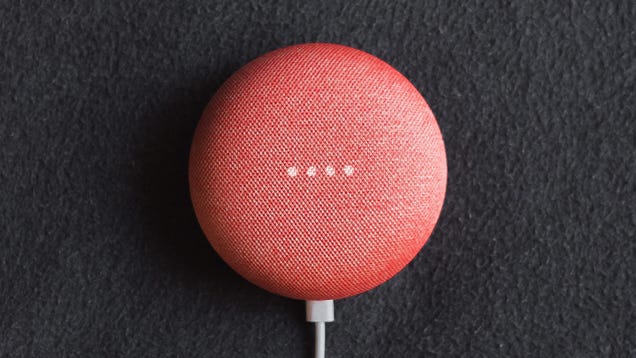
You might not have realized all the tricks that your smart speakers can do yet: As well as answering questions, setting timers and alarms, queueing up music, and everything else, these gadgets can also double up as intercom systems for your entire home. It’s a feature available on Google, Amazon, and Apple smart…
This is a multi-part blog looking at an Intel NUC 13 Pro Mini PC running Linux. In this series, we examine every aspect of this Mini PC in detail from a Linux perspective. We’ll compare the machine with modern desktop PC counterparts along the way.
Ford first unveiled its F-150 Lightning lineup only a couple of years ago, in 2021, but its fifth model is already underway. The manufacturer has announced that the F-150 Lightning Flash will join the existing Pro, XLT, Lariat and Platinum trims as a mid-tier option.
The F-150 Lightning Flash is a “tech-forward” expansion of the XLT’s offerings, adding in-demand tech capabilities and version 1.2 of Ford BlueCruise hands-free highway driving (which allows drivers to change lanes with a simple tap). The Flash also offers customers the option to activate Ford BlueCruise at any point or to trial it with 90 days free after purchase. The new model’s interior includes a 15.5-inch LCD Capacitive Touchscreen, a wireless charging pad and a B&O Sound System with eight speakers and a subwoofer.
Like the XLT, it has a targeted EPA-estimated extended range of 320 miles per charge. The entire F-150 lineup can use the BlueOval Charge Network, which includes more than 84,000 chargers across North America, and will have access to 12,000 Tesla chargers starting in 2024.
Online orders for the F-150 Lightning Flash will also start in early 2024, with the EV retailing for just under $70,000. The manufacturer lowered F-150 prices by up to $10,000 in July thanks to increased plant capacity (an estimated 150,000 units per year) and better battery raw material costs. However, they still come at a much higher cost than originally advertised, with the F-150 Lightning Pro retailing for about 50 percent of its initial sticker price at the beginning of summer.
This article originally appeared on Engadget at https://www.engadget.com/fords-new-f-150-lightning-flash-has-a-320-mile-range-and-hands-free-highway-driving-123633483.html?src=rss