Onewheel E-Skateboards Face Global Recall Following Four Deaths and Multiple Injuries

All Onewheel self-balancing electric skateboard models are being recalled following reports of at least four deaths and multiple injuries between 2019 and 2021. The recall was issued on Friday and includes 300,000 of the skateboards sold worldwide and the Consumer Product Safety Commission (CPSC) is warning consumers…

Read more…


Source: Gizmodo – Onewheel E-Skateboards Face Global Recall Following Four Deaths and Multiple Injuries

Watch Totally Killer Go Totally TARDIS in an Exclusive Clip

Totally Killer, the new Blumhouse sci-fi horror movie coming to Prime Video this week, is about a teenager who travels back in time to help the younger version of her mom stop a masked killer. Without a doubt, an awesome concept. And when you see exactly how she travels back in time, you’re going to be even more…

Read more…


Source: Gizmodo – Watch Totally Killer Go Totally TARDIS in an Exclusive Clip

Your Phone Will Sound a Loud Alarm on Oct. 4

Get ready for a little chaos on Wednesday afternoon, because a test of the national Wireless Emergency Alerts will happen between 2:20 and 2:50 p.m. EDT. (That’s 11:20 to 11:50 a.m. on the West Coast.) If you have a burner phone that needs to stay hidden, or a baby who sleeps during that time, you may want to be…

Read more…


Source: LifeHacker – Your Phone Will Sound a Loud Alarm on Oct. 4

Richard Stallman Talks Red Hat, AI, and Ethical Software Licenses at GNU Birthday Event

We should stop calling ChatGPT and other generative AI software “artificial intelligence,” according to Stallman, because “there’s nothing intelligent about them.”

The post Richard Stallman Talks Red Hat, AI, and Ethical Software Licenses at GNU Birthday Event appeared first on FOSS Force.


Source: FOSS Force – Richard Stallman Talks Red Hat, AI, and Ethical Software Licenses at GNU Birthday Event

Could DNA Have Survived 6 Million Years Inside a Turtle Shell?

A team of paleontologists studying the fossilized shell of a sea turtle from the Miocene Epoch found something surprising and perhaps impossible: preserved bone cells that they believe may contain ancient DNA, the molecule that holds the genetic information of living things.

Read more…


Source: Gizmodo – Could DNA Have Survived 6 Million Years Inside a Turtle Shell?

How to Install TIG Stack (Telegraf, InfluxDB, and Grafana) on Rocky Linux

The TIG (Telegraf, InfluxDB and Grafana) Stack is an acronym for a platform of open-source tools to make the collection, storage, graphing and alerting of system metrics easier. You can monitor and visualize metrics such as memory, disk space, logged-in users, system load, swap usage, uptime, running processes etc. from one place.

Source: LXer – How to Install TIG Stack (Telegraf, InfluxDB, and Grafana) on Rocky Linux

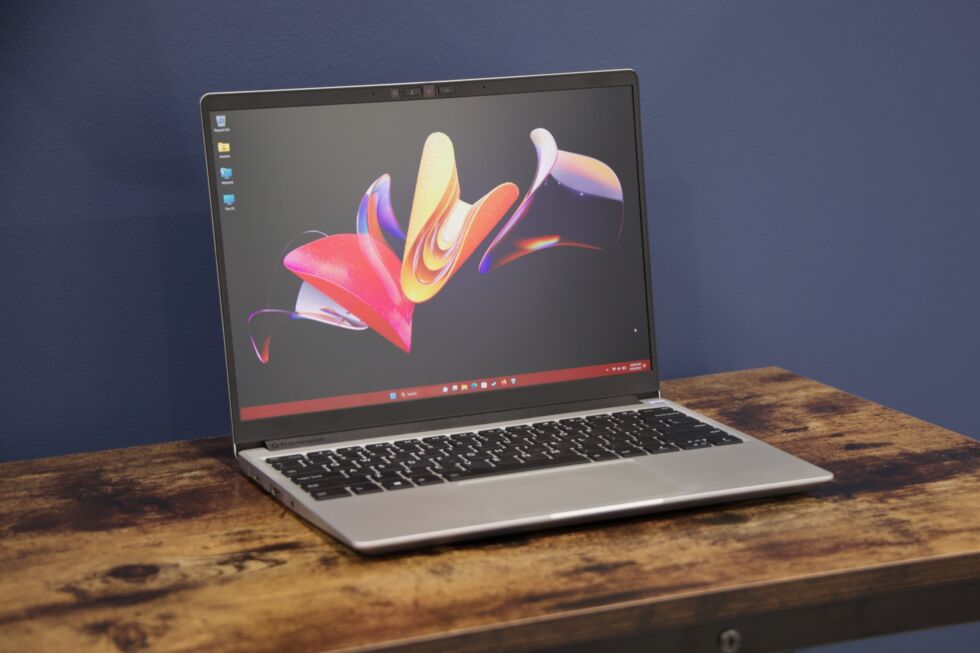
Review: Framework Laptop finally gets an AMD Ryzen config—and it’s pretty good

Read 29 remaining paragraphs | Comments


Source: Ars Technica – Review: Framework Laptop finally gets an AMD Ryzen config—and it’s pretty good

A Company Named X Social Media Is Suing X Corp, a Company Formerly Named Twitter

Turns out Elon Musk isn’t as creative at coming up with company names as we previously thought, as his obsession with the letter X is getting him into some legal trouble. A Florida ad agency for law firms is suing the billionaire’s company over trademark infringement.

Read more…


Source: Gizmodo – A Company Named X Social Media Is Suing X Corp, a Company Formerly Named Twitter

Netflix Plans To Raise Prices After Actors Strike Ends

Netflix plans to raise the price of its ad-free service a few months after the continuing Hollywood actors strike ends, the latest in a series of recent price increases by the country’s largest streaming platforms. From a report: The streaming service is discussing raising prices in several markets globally, but will likely begin with the U.S. and Canada, according to people familiar with the matter. It couldn’t be learned how much Netflix will raise prices by or when exactly the new prices will take effect.

Over the past year or so, the cost of major ad-free streaming services has gone up by about 25%, as entertainment companies look to bring their streaming platforms to profitability and lead price-conscious customers to switch to their cheaper and more-lucrative ad-supported plans. Streamers are also starting to look at how they can create new pricing tiers around exclusive programming, such as live sports, without running the risk of driving people away from their core offerings.

Read more of this story at Slashdot.


Source: Slashdot – Netflix Plans To Raise Prices After Actors Strike Ends

Meta Proposes Making EU Users Pay If They Don’t Want to See Targeted Ads

Meta’s bread and butter has long been its user-centric targeted ad business, but European regulations are forcing the company to rethink how it can monetize its ostensibly free social platforms. The answer? Make users pay up if they prefer not to let their data be used to sell them products.

Read more…


Source: Gizmodo – Meta Proposes Making EU Users Pay If They Don’t Want to See Targeted Ads

Tenstorrent to Use Samsung’s SF4X for Quasar Low-Cost AI Chiplet

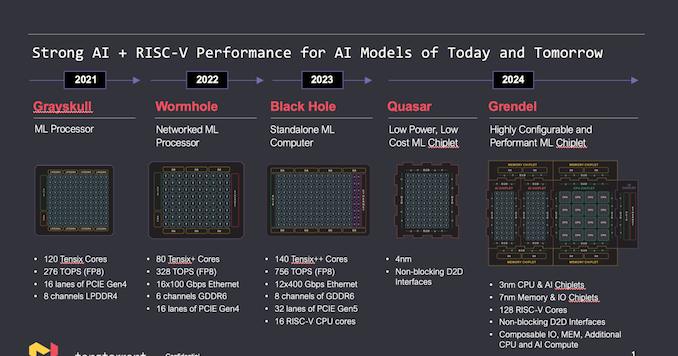
Tenstorrent this week announced that it had chosen to use Samsung’s SF4X (4 nm-class) process technology for its upcoming low-cost, low-power codenamed Quasar chiplet for machine learning workloads. The chiplets will be made at Samsung’s new fab near Taylor, Texas when it becomes operational in 2024.


Tenstorrent’s Quasar chiplet is a new addition to the company’s roadmap. Based on an image provided by the company, the chiplet is set to pack at least 80 Tensix cores based on the RISC-V instruction set architecture and tailored to run artificial intelligence workloads in a variety of formats, such as BF4, BF8, INT8, FP16, and BF16. Tenstorrent’s Quasar’s are designed to operate in groups and be paired with the company’s CPU chiplets, so they are equipped with non-blocking die-to-die interfaces.


Samsung’s SF4X is a process technology designed for high-performance computing applications. It is tailored for high clocks and high voltages to ensure maximum performance.


Tenstorrent does not disclose the estimated performance of its Quasar chiplet, but assuming that it has 80 Tensix cores, which is the same number as the Wormhole chiplet taking a 328 FP8 TOPS performance, we can probably make a similar estimate of the performance, considering that it is made using a performance-enhanced process technology.


Tenstorrent officially positions its Quasar chiplets as a low-power, low-cost solution for machine learning, so we can only wonder whether the company will try to squeeze every last bit of performance out of them or choose a different power strategy.


“Samsung Foundry is expanding in the U.S., and we are committed to serving our customers with the best available semiconductor technology,” said Marco Chisari, head of Samsung’s U.S. Foundry business. “Samsung’s advanced silicon manufacturing nodes will accelerate Tenstorrent’s innovations in RISC-V and AI for data center and automotive solutions. We look forward to working together and serving as Tenstorrent’s foundry partner.“


One interesting wrinkle about Tenstorrent’s relationship with Samsung is that it recently secured $100 million in financing from various companies in a round co-led by Hyundai Motor Group and the Samsung Catalyst Fund. Hyundai and Samsung need AI processors in one form or another, so it is not surprising that their funds are invested in Tenstorrent. Meanwhile, and I am speculating here, the same applies to chipmaking, and Samsung may be interested in producing chips for Tenstorrent for strategic reasons.


Source: AnandTech – Tenstorrent to Use Samsung’s SF4X for Quasar Low-Cost AI Chiplet

20 of the Best Thrillers on Netflix

You’d think we all have enough stress, but we still love those heart-pumping thrillers—whether they’re the quiet, suspenseful kind or the big action spectaculars. It might be simply that the things that get our hearts racing in real life are more often like “wow, look at this medical bill,” so a spy movie, a…

Read more…


Source: LifeHacker – 20 of the Best Thrillers on Netflix

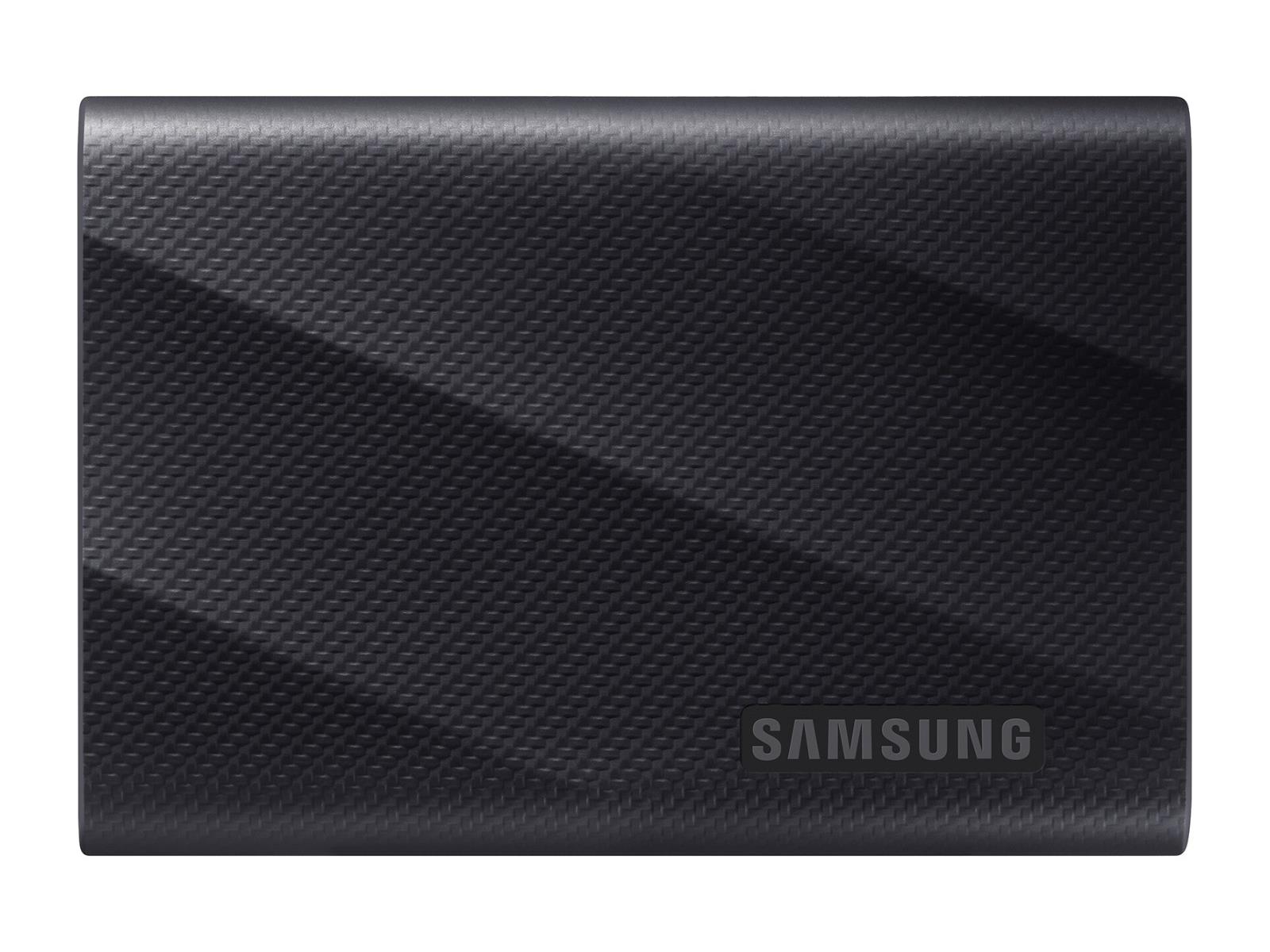
Samsung T9 Portable SSD Review: Rugged, Fast, Petite Storage

Samsung T9 Portable SSD Review: Rugged, Fast, Petite Storage
Samsung T9 SSD: Starting $139.99 (1TB), $439.99 (4TB) The new Samsung T9 is a compact, durable, high-performance external USB-C SSD that’s well suited to a wide array of applications. Compact Form Factor Rugged Enclosure Strong Performance Excellent Compatibility Price Premium Faster, Cheaper Options Available Samsung is expanding its line-up…

Source: Hot Hardware – Samsung T9 Portable SSD Review: Rugged, Fast, Petite Storage

Amazon's Fire TV Stick Lite drops to $18 ahead of October Prime Day

There’s only a week until Amazon’s October Prime Day starts, and the pre-sales keep coming. Right now, Amazon’s Fire TV Stick Lite is touting a nice 40 percent discount, dropping its price to $18 from $30, and only a few dollars more than its all-time low. Plus, another $4 gets you a two-year protection plan, still taking home a savings of $9.

Amazon’s Fire TV Stick Lite is already the cheapest option in the lineup and is a good choice for anyone looking to use Fire TV without any bells and whistles. It has Wi-Fi 5 compatibility, 1GB of memory and Dolby encoded (versus Atmos) audio. It presents media in 1080p full HD and comes with the Alexa Voice Remote Lite, which doesn’t have any TV controls but can still take audio commands.

Additional Fire TV devices are also on sale if you’re in the market for a higher-quality option. The previous generation 4K Stick is down to $23 from $50, a 54 percent deal — and a reminder that 2-for-1 and better deals are a great way to get your holiday shopping done early and affordably. The Fire TV Stick 4K offers improved picture quality, 2GB of memory and Dolby Vision compatibility. The standard Fire TV Stick is also marked down —to $20 from $40 — and the Fire TV Cube is available for $110 versus its typical $140.

This article originally appeared on Engadget at https://www.engadget.com/amazons-fire-tv-stick-lite-drops-to-18-ahead-of-october-prime-day-141523613.html?src=rss

Source: Engadget – Amazon’s Fire TV Stick Lite drops to ahead of October Prime Day

Updates From Deadpool 3, Star Trek: Lower Decks, and More

Macon Blair discusses some of Toxic Avengers’ gory, goopy characters. Shining Vale pays homage to classic horror in new posters. Get new looks at The Boy and the Heron and Five Nights at Freddy’s. Plus, the Ahsoka finale’s runtime, revealed. To me, my spoilers!

Read more…


Source: Gizmodo – Updates From Deadpool 3, Star Trek: Lower Decks, and More

This GeForce RTX GPU Finally Dethroned GTX 1650 On Steam's Hardware Survey

This GeForce RTX GPU Finally Dethroned GTX 1650 On Steam's Hardware Survey
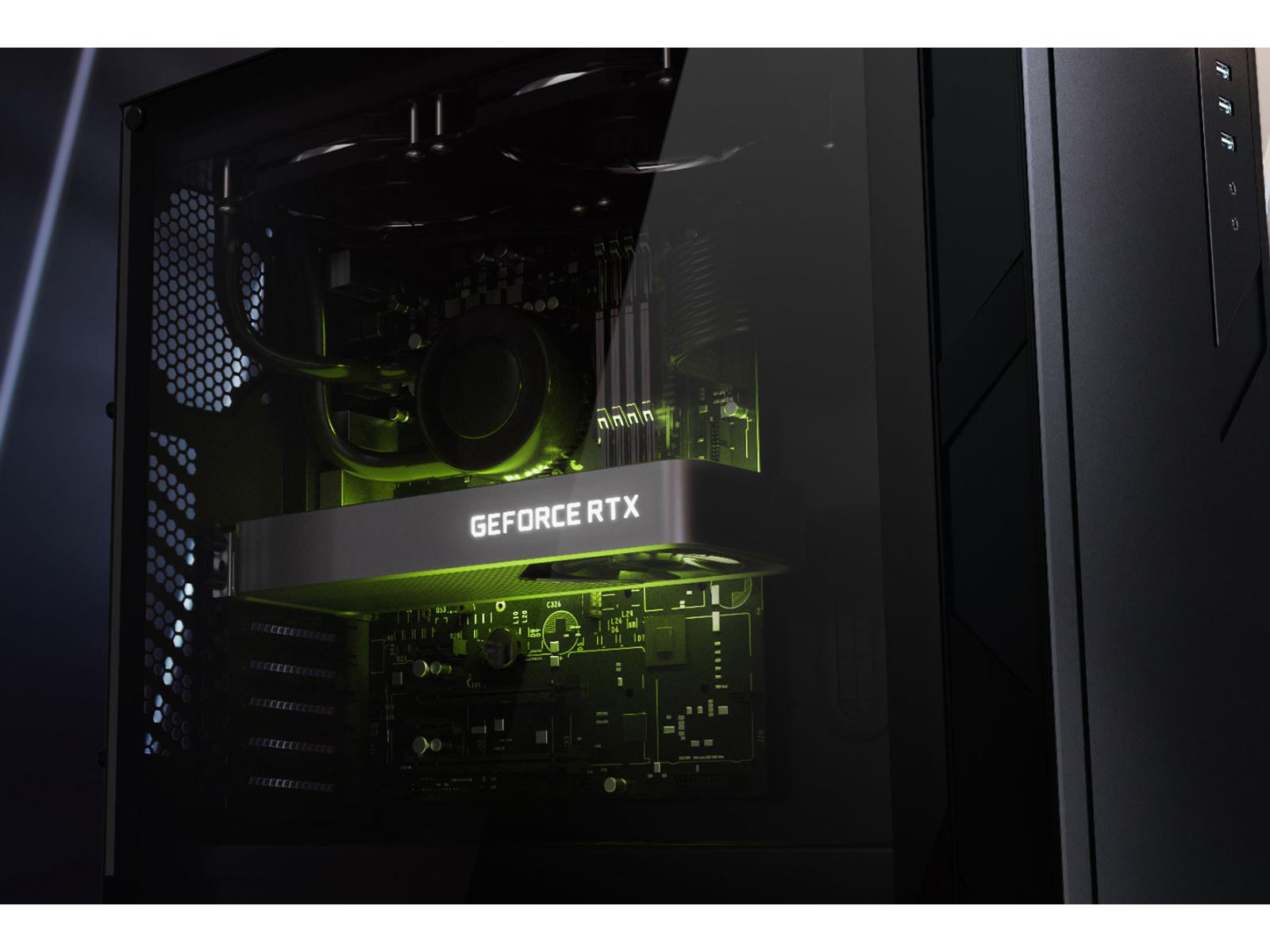
The results are in for the most recent Steam survey and according to the numbers, NVIDIA’s GeForce RTX 3060 is now the most widely-represented GPU on the world’s most popular digital distribution platform for games. To get there, it had to leapfrog the GeForce GTX 1650, a budget friendly graphics card released more than four years ago.

That

Source: Hot Hardware – This GeForce RTX GPU Finally Dethroned GTX 1650 On Steam’s Hardware Survey

Framework brings AMD mainboards to its 13-inch laptop

Framework has slowly broadened its product portfolio to include a gaming laptop and an AMD variant of its 13-inch productivity notebook. After an initial manufacturing hiccup earlier in the year, it’s the latter that’s finally ready to reach eager pre-order customers as new mainboards make their debut. Like every other Framework release, you can pick them up as a pre-built laptop, or as the parts for you to upgrade an existing model. There are some differences, both in how they’re set up and what they can do, but don’t expect a revolution. This is still a Framework 13, after all, and it can do more or less the same thing it’s always been able to.

Hardware

Given Framework’s emphasis on building a stable platform for its modular laptops, there are no changes here. Pop the hood and you’ll only notice a few differences, like a plastic retainer on the WiFi module rather than a metal one, but that’s it. At this point, I feel confident enough that I could swap out a mainboard without having to consult a manual.

Framework’s adopted the “Good, Better, Best” mode with its specs, with the base model packing a Ryzen 5, 7640U with a Radeon 760M iGPU, 8GB RAM and a 256GB SSD. The middle-tier unit I’m testing has a Ryzen 7, 7840U with Radeon 7840U, 16GB RAM and a 512GB SSD. Fancier types who opt for the flagship get the same Ryzen 7 7840U as the middle tier, albeit with 32GB RAM and a 1TB SSD.

The only other difference is with batteries: The base model will ship with the older, 55Wh battery while the other two get the newer 61Wh model. That said, the company has also wheeled out new HDMI and DisplayPort expansion cards for more power-efficient video outputs. Those will be coming to all new laptop orders in the near future, but make their debut here with the AMD editions.

Upgrades and Compromises

Naturally, the point of Framework’s platform is that if you already have one of its notebooks, you can just swap in the AMD mainboard. Although that process isn’t as simple as it is when you’re swapping out an Intel model for one of its successors. Your existing RAM and WiFi modules will not work with the AMD board, so you’ll need to get new DDR5 DIMMs and an AMD-made WiFi module like the RZ616, which is what Framework bundles in its prebuilt editions.

Much as the laptop’s design remains the same, there are more differences on the inside, which is where it counts. If you don’t know, each mainboard has a quartet of USB-C ports that stick out of the laptop’s deck. Each one corresponds to an Expansion Card slot, letting you slide in a specific port depending on your needs for that day. So you can pop out your second USB-C port in favor of a HDMI or DisplayPort-out the day you have a presentation to give.

On Intel’s side of the fence, this is a stress free experience because all four ports are the same. Since the 12th generation board, all four support Thunderbolt (and USB) 4, each one with 40 Gbps bandwidth, up to 100W power draw and support for two 60Hz 4K displays. Not to mention the standard enables you to add an eGPU to your setup for extra graphics muscle.

But things aren’t as elegant on the AMD side because a) Thunderbolt is an Intel standard and b) AMD’s portable silicon has some, uh, limitations. Only the rear port on either side supports USB 4, with the front two a mish-mash of competing standards. As you can see from the graphic, the front left port supports charging, USB 3.2 and USB-A, while the front right offers USB 3.2 and video out.

To make things worse, there are no visible clues to remind you what each port can and cannot do for obvious design and uniformity reasons. I don’t blame Framework for having to deal with AMD’s mess, and it has been brave enough to foreground these compromises from day one. But it’s one of those issues where you’ll either need to keep a mental record, or face an error pop-up when you’ve plugged the wrong port into the wrong socket.

But then I doubt there are too many people who are looking to buy this laptop who will need regular access to a quartet of 40 Gbps connections. I suspect there won’t be too many times AMD users are cursing the skies for the minor annoyance of swapping cards over. It’s just one of those situations where you wish users weren’t left dealing with the consequences of two chip giants who won’t play nicely.

Performance

Much as AMD may not have the silky uniformity and consistency of its rival chip giant, it does have an ace up its sleeve. Those integrated GPUs are far ahead of Intel’s, giving it enough grunt to push halfway-demanding games without too much sweat. It’s worth saying, as usual, that this is, first and foremost, a productivity machine, but with AMD on board, it’ll play just as hard as it works.

In the time I had with the hardware, I played Grand Theft Auto V on high settings and got 55 fps out of this machine. Similarly, Fortnite will crank out an average of 50 fps with the settings on high, easily enough to keep you amused on work trips or in your dorm room. Synthetic tests aren’t everything, but suggest the AMD version comes out ahead in both single (by a little) and multi-core performance (by a lot) compared to the equivalent Intel model.

The issue, really, isn’t with the performance you can wring out of this machine, but how much noise it’ll make while doing it. A common complaint, from the earliest version of the Framework 13, is the excessive fan noise when it’s put under heavy load. The mainboard fan really wasn’t designed to cope with the high loads you might expect to want to put it under, making a sound I will describe as “persistent” and “noticeable” and often “quite loud.”

Pricing

When announcing the AMD boards, Framework committed to price parity between Intel and AMD editions whenever possible. The Base and Performance models, on the entry and mid tiers, cost $1,049 and $1,469 whatever chip you choose. At the high end, however, there is a fairly big delta between the $1,669 you’ll pay for the AMD version and the $2,069 asking price for the Intel edition.

Wrap-Up

In the short time I’ve had with the AMD edition, I’ve been impressed with what is now possible in this chassis. The silicon out-performs its Intel equivalent, but it’s all taking place in the same body with the same, user-serviceable design. That’s a big achievement, and there are plenty of folks chomping at the bit to get one of these in their lives – the first seven production batches are already sold out, with an eighth on the way. It remains, undeniably, a Framework 13, so you will get the same flexibility and longevity that you’ve come to expect, but with a little bit more oomph.

This article originally appeared on Engadget at https://www.engadget.com/framework-brings-amd-mainboards-to-its-13-inch-laptop-140050567.html?src=rss

Source: Engadget – Framework brings AMD mainboards to its 13-inch laptop

SteelSeries starts out strong with its first dedicated gaming microphones

The rise of streaming and the switch to remote work means that in the past few years, more people are using mics than ever before. Which in turns means that lots of companies are looking to get into the space, and the latest entrant is well-respected game accessory manufacturer SteelSeries. Though the company’s probably best known for its headsets, it just might change that perception with its $180 Alias and $330 Alias Pro gaming microphones, available today.

Upfront I’ll admit I’m not a streamer, but I do make regular use of a microphone in both podcasting and regular Dungeons & Dragons sessions on Discord. And, like so many during the pandemic, I found myself in an endless array of remote meetings over Zoom, Google Meet, Microsoft Teams, WebEx, and whatever else companies want to throw out there. Even in the year 2023, it’s a pain in the ass. My go-to mic for the past few years has been the Elgato Wave:3, which I admire for its excellent audio and solid build quality. But in use it hasn’t always been a dream; weirdly enough I never got it to work properly with USB headsets, even those made by its parent company Corsair. And switching between apps, even with the Elgato software installed, wasn’t always a smooth process. I’ve started so many meetings with my computer outputting to the wrong device (usually the internal laptop microphone, which as you can imagine, is crap).

SteelSeries looks to simplify all that with its GG software, which automatically works with all SteelSeries hardware. I plugged in the Alias and it was detected immediately; I didn’t have to adjust the settings in any app or on my system. Within seconds I was on a call with a friend on Messenger, and Discord automatically made the adjustment on its own as well. In 2023 I would expect audio software should just work, and GG fits the bill. It has lots of built-in customization for things like lighting so you don’t have to be a programmer to make your setup look cool. It also lets you set levels program by program, with multiple outputs so you can have what your stream hears be different from what you hear on your end. It’s just a good level of control that allows professionals (as well as amateurs) fine-tune their stream to their liking.

SteelSeries Apex
Kris Naudus for Engadget

Of course, solid software wouldn’t be anything without the hardware to back it up, and the Alias and Alias Pro are high-quality, extremely attractive microphones to have on your desk. They’re both oblong pills suspended by elastic cords in a ring-shaped stand. It’s easy enough to remove and mount on a boom arm, and both models of the Alias come with a clip to attach it to your existing arm, or you can purchase one from SteelSeries.

From there the two mics have different features: the entry-level Alias has a volume dial and mute button right on its front, while the Pro outsources those to the included mixer, which requires external power (it comes with an AC adapter). The mixer has two dials, which can be customized in the GG software, and two buttons for muting mic and headset audio. (They feel extremely nice to push.) The biggest difference, however, is where the Pro gets its name from, and that’s the XLR connection in the back. That’s a higher-end connector than most users will need, but professionals looking to add a speciality gaming microphone into their mix will appreciate it. The mixer also comes with two USB ports so you can do dual PC streaming.

As I am not a professional audio person I stuck with the regular Alias, which connects to your setup using USB-C. It also has a single headphone jack for plugging in a headset, and I appreciated the mic stand design for keeping the cords tidy. When you plug in the mic it’ll start working right away; you’ll know because the front of the mic is outfitted with LED lighting that will show your levels. If the single bar of lights rises into the red, you know you’re clipping. When the mic is muted, a big red “X” is displayed on the surface, so there’s absolutely no question about the state of your recording.

SteelSeries Apex microphone
Kris Naudus for Engadget

In chatting with friends and family over various chat programs, the reports I got was that my audio was clear and loud, though one podcasting friend did think I did sound a little off at times — possibly because I got too close to the mic. At a normal distance I sounded fine. By my own reckoning through headphones, I thought it sounded great — on par with the audio I get from the Elgato Wave: 3 though a little more sensitive as it picked up the occasional ambient sound, like my typing. This isn’t unusual when I’m using a mechanical deck, but in this case it was the spongier membrane keyboard on my laptop. It can be mitigated by simply moving the devices further apart, if you have the space to do so.

Overall I think it’s a good piece of hardware to have on my desk; one of those accessories that makes you excited to record a stream, podcast or anything else you can imagine. You don’t need good tools to start creating, but the SteelSeries Alias is one of those that makes you want to make something because it’s such a delight to use.

This article originally appeared on Engadget at https://www.engadget.com/steelseries-starts-out-strong-with-its-first-dedicated-gaming-microphones-140041321.html?src=rss

Source: Engadget – SteelSeries starts out strong with its first dedicated gaming microphones

Nobel Prize in Physics Awarded To 3 Scientists for Illuminating How Electrons Move

The Nobel Prize in Physics was awarded to Pierre Agostini, Ferenc Krausz and Anne L’Huillier on Tuesday for their experiments that “have given humanity new tools for exploring the world of electrons inside atoms and molecules.” From a report: Electrons move at a whopping 43 miles a second. This speed long made them impossible to study. The new experimental techniques created by the three scientist-laureates use short light pulses to capture an electron’s movement at a single moment in time. Think of a rotating fan at its highest speed: each blade is a blur. But if you point a strobe light at the fan, every flash will illuminate a frozen moment in time. As the flashes get shorter, more information about the fan is revealed.

To study the movement of electrons, the scientists had to use pulses of light that last an attosecond. An attosecond is one quintillionth of a second. The number of attoseconds in a single second is the same as the number of all the seconds that have elapsed since the universe burst into existence 13.8 billion years ago, according to the Royal Swedish Academy of Sciences, which awards the Nobel Prizes. Eva Olsson, the chair of the Nobel Committee for Physics, said at a news conference on Tuesday that attosecond science “allows us to address fundamental questions” such as the time scale of the photoelectric effect, the release of electrons from a material when light shines on it. Albert Einstein received the 1921 Nobel Prize in Physics for his discovery of this effect. Accessing the ultrafast world of electron motion may also lead to advances in electronic circuitry, drug design and the materials used for batteries.

Read more of this story at Slashdot.


Source: Slashdot – Nobel Prize in Physics Awarded To 3 Scientists for Illuminating How Electrons Move