
In addition to Linux 6.6 delivering better results on AMD EPYC servers, Intel Xeon Max / Sapphire Rapids is also picking up some performance wins on this forthcoming version of the Linux kernel. Here are some comparison benchmarks looking at the Intel Xeon Max 9480 2S performance between Linux 6.5 stable and the upcoming Linux 6.6 kernel.
Source: Phoronix – Intel Xeon Max Enjoying Some Performance Gains With Linux 6.6
Monthly Archives: October 2023
Use the ‘Von Restorff Effect’ When Studying Difficult Concepts

Memory is incredibly complex, which is probably why it’s been studied and researched so much—and why researchers who make big discoveries about how it functions get phenomena named after them. A great example of this: the Von Restorff effect, which refers to our brains’ acuity for remembering distinctive pieces of…
Source: LifeHacker – Use the ‘Von Restorff Effect’ When Studying Difficult Concepts
Why Microsoft Is Refusing To Pay A Massive $28.9B IRS Bill For Back Taxes
It’s a rallying cry frequently heard among certain groups ever since the “Occupy” protests: a demand for corporations to “pay their share” of tax obligations. The truth and fairness of these demands is still debated to this day by people who are much smarter and more educated than we are, but the fact that the matter is still being debated
Source: Hot Hardware – Why Microsoft Is Refusing To Pay A Massive .9B IRS Bill For Back Taxes
Xbox Series S Starter Bundle Might Be Best Gaming Deal Of 2023
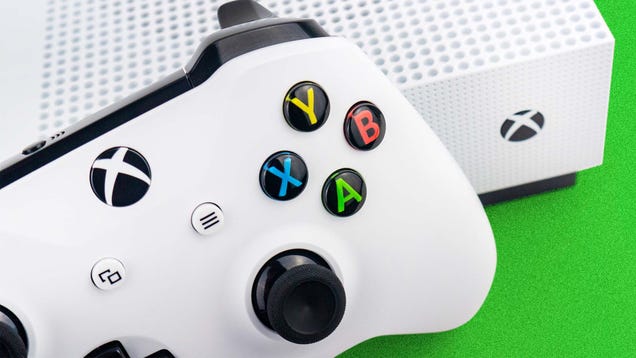
Microsoft’s getting ready for the holiday shopping season with a new Xbox Series S bundle that includes three months of Game Pass Ultimate at no additional cost. When you consider how many great games are available on Game Pass and how solid the tinier Xbox Series S is as a console, this new starter bundle might be…
Source: Kotaku – Xbox Series S Starter Bundle Might Be Best Gaming Deal Of 2023
Coin flips don’t appear to have 50/50 odds after all
Conventional wisdom about coin flips may have been turned on its head. A global team of researchers investigating the statistical and physical nuances of coin tosses worldwide concluded (via Phys.org) that a coin is 50.8% likely to land on the same side it started on, altering one of society’s most traditional assumptions about random decision-making that dates back at least to the Roman Empire.
The team appeared to validate a smaller-scale 2007 study by Stanford mathematician Persi Diaconis, which suggested a slight bias (about 51 percent) toward the side it started on. The authors of the new paper conducted 350,757 flips, using different coins from 46 global currencies to eliminate a heads-tail bias between coin designs. (They also used a variety of people to rule out individuals with biased flipping techniques corrupting the results.) Regardless of the coin type, the same-side outcome could be predicted at 0.508, which rounds up perfectly to Diaconis’ “about 51 percent” prediction from 16 years ago.
The researchers found no evidence of a heads-tail bias when excluding its starting position from the data. In other words, if you pay no attention to which side the coin is on pre-flip, the odds of the outcome are equally likely to be heads or tails.
Reuters Photographer / reuters
Coin flippers in the study selected their starting position randomly (or according to an algorithm), flipped the coin, caught it in their hand and recorded the landing position. (If they flipped it over in their palm before revealing it, the opposite side it started on had 50.8% odds.) All participants videotaped and uploaded recordings of their flips to simplify collection and coding errors. “Our data therefore provide strong evidence that when some (but not all) people flip a fair coin, it tends to land on the same side it started,” the authors wrote.
The paper notes there was a high degree of variability between coin flippers. “Some people appear to have little or no same-side bias, whereas others do display a same-side bias, albeit to a varying degree.” But taken on the whole, it leads to those 50.8% odds favoring the starting side.
The findings could even lead to (slight) financial gains. The researchers say that if you bet $1 on 1,000 separate coin flips, always betting on the side it starts on (and catching the coin rather than letting it roll on a surface or flipping it over in your palm), you’d make a $19 profit. The authors note that this is better odds than a casino’s built-in advantage for six-deck blackjack against a high-level player. They suggest that anyone making a high-stakes decision based on a coin flip would be wise to conceal its starting position.
This article originally appeared on Engadget at https://www.engadget.com/coin-flips-dont-appear-to-have-5050-odds-after-all-171556415.html?src=rss
Source: Engadget – Coin flips don’t appear to have 50/50 odds after all
What would signal life on another planet?

Enlarge / Surveying the atmospheres of planets beyond the solar system, such as those in the TRAPPIST-1 system (artist’s concept of four of the system’s seven planets shown), could turn up interesting molecules that might indicate life. But ruling out false positives will be a challenge. (credit: ADAPTED FROM NASA / JPL-CALTECH / R. HURT, T. PYLE (IPAC))


In June, astronomers reported a disappointing discovery: The James Webb Space Telescope failed to find a thick atmosphere around the rocky planet TRAPPIST-1 C, an exoplanet in one of the most tantalizing planetary systems in the search for alien life.
The finding follows similar news regarding neighboring planet TRAPPIST-1 B, another planet in the TRAPPIST-1 system. Its dim, red star hosts seven rocky worlds, a few of which are in the habitable zone—at a distance from their star at which liquid water could exist on their surfaces and otherworldly life might thrive.
What it would take to detect that life, if it exists, isn’t a new question. But thanks to the JWST, it’s finally becoming a practical one. In the next few years, the telescope could glimpse the atmospheres of several promising planets orbiting distant stars. Hidden away in the chemistry of those atmospheres may be the first hints of life beyond our solar system. This presents a sticky problem: What qualifies as a true chemical signature of life?
Read 27 remaining paragraphs | Comments
Source: Ars Technica – What would signal life on another planet?
Man Gets Strange Back Rash from Eating Undercooked Shiitake Mushrooms

A man’s love of mushrooms left him with bizarre red streaks across his back. In a case study released this week, doctors describe how the unlucky fellow developed a rare skin condition from eating undercooked shiitake mushrooms. The condition is only temporary, thankfully, and he recovered with no issues.
Source: Gizmodo – Man Gets Strange Back Rash from Eating Undercooked Shiitake Mushrooms
Pokémon to Re-Offer Van Gogh Pikachu Card After Disastrous Collaboration Launch

Late last month, what should’ve been a cutesy, even educational collaboration between Amsterdam’s Van Gogh Museum and Pokémon flared up into an absurd disaster as scalpers hungry to continue turning a profit on rare Pokémon merchandise raced to get their hands on as many behatted Pikachus as humanly possible. Now…
Source: Gizmodo – Pokémon to Re-Offer Van Gogh Pikachu Card After Disastrous Collaboration Launch
Hackers Think They’ve Found Mario’s New Wonder Voice Actor

Fans believe they might have discovered who the new actor for Mario is in Super Mario Bros. Wonder.
Source: Kotaku – Hackers Think They’ve Found Mario’s New Wonder Voice Actor
There's no easy answer to being a space janitor
Earth’s orbit is getting crowded.
Last year, a record 2,409 objects were sent to orbit, the bulk of which were satellites settling into the increasingly cluttered region 1,200 miles above our planet’s surface known as low Earth orbit. Another 2,000-plus satellites have joined them so far this year, according to the UN’s Online Index of Objects Launched into Outer Space. As the presence of artificial objects in orbit grows, so too does the accumulation of debris, or space junk — and the risk of collisions. Dealing with existing waste and preventing its unchecked growth has become imperative, but it’s a problem that doesn’t have one simple solution.
Currently, the US Department of Defense’s Space Surveillance Network tracks more than 25,000 objects larger than 4 inches wide, most of which are concentrated in low Earth orbit, and there are an estimated millions of smaller objects still that are trickier to pinpoint. This includes everything from defunct satellites and spacecraft fragments to things as small as a paint chip, all of which can cause damage to other equipment due to the extreme speeds orbiting objects travel at. As yet, there have been no successful missions to remove extant debris from orbit. Proposals for removing this debris fall into two broad (and imperfect) categories: pushing them further from Earth into graveyard orbits where they pose less risk, or pulling them towards Earth where they’ll deorbit and burn up in the atmosphere.
One such system is being developed and tested by Astroscale. The company, headquartered in Japan, demonstrated a magnetic capture-and-release tactic in 2021 with its ELSA-d mission, which simulated the strategy using an extra satellite it brought with it as mock debris. In a real-world scenario, its magnet would lock on to debris floating through space and drag it down to deorbit. Astroscale is selling its own docking plates that satellite operators can affix to their equipment ahead of launches, so it can easily be removed after a mission’s end. It’s partnered with UK-based OneWeb to test how this will work, and plans to execute a full removal demonstration using one of the company’s internet satellites in 2025 under the ELSA-M mission.
Astroscale will also soon launch its ADRAS-J spacecraft in partnership with Japan’s space agency, JAXA, to demonstrate the ability to safely approach and inspect a real target ahead of future removal attempts. And, it’s gearing up for a separate mission dubbed COSMIC that will use a robotic arm to grab objects in orbit, this time aiming for a pair of dead British satellites. That is expected to launch in the next few years.
The European Space Agency similarly commissioned Swiss startup ClearSpace for a junk removal mission that’s slated to launch in 2026. It’s expected to be the first mission to actually remove a real piece of debris from orbit, rather than perform a simulated capture. Ironically, the target of the ClearSpace-1 mission — an approximately 250-pound defunct rocket upper stage dubbed Vespa — was struck by untracked debris in August. The event created more debris, but ESA says it left the object intact and still in position for capture. ClearSpace will attempt to grab onto Vespa using a giant robotic claw, and the two will deorbit together, ending with them both burning up in Earth’s atmosphere.
Researchers have also experimented with the use of harpoons and nets to catch objects floating through space. The first mission to demonstrate these active debris removal techniques was one called RemoveDEBRIS, which launched in 2018. In 2018 and 2019, the craft successfully performed simulated debris capture by firing out a net and ensnaring a mock target, and by shooting a harpoon at a target to pierce and hook onto it. The company behind the project — Surrey Satellite Technology — does not appear to have any follow-up missions planned.
A cost-benefit analysis released last year by NASA noted that the benefit of space tugs like these could surpass their upfront costs in a matter of decades, but using space- or ground-based lasers to nudge debris out of orbit could break even much sooner. Lasers can move objects either through the momentum of their photons, or through a process called ablation, in which thrust is generated when the laser vaporizes bits of debris. The latter especially could be used for both large and small objects, either to deorbit debris or move trackable pieces out of another satellite’s way to avoid a collision.
“The process of laser ablation and photon pressure induces a change in velocity in the target debris, which ultimately alters the size and shape of its orbit,” said West Virginia University engineer Hang Woon Lee, who NASA recently granted up to three years of funding for research into this tactic. Doing so could mean “avoiding potentially catastrophic events,” he said. Using multiple lasers at once, instead of a single beam, could produce even greater effects.
Others yet are looking into means of recycling space debris, both to cut down on junk and to limit the reliance on reentries for its removal. While reentry is among the preferred disposal methods, it doesn’t come entirely without side effects of its own, which haven’t yet been well studied. Scientists have begun to speak up about the potential ozone-depleting effects of having large numbers of satellites disintegrate in Earth’s atmosphere, which releases pollutants like aluminum and nitrogen oxides. There are concerns about harmful pollution in the ocean, too, where spacecraft parts that don’t fully break apart end up.
NASA ODPO
Companies like Neumann Space and CisLunar Industries are developing the means to melt down metal parts from debris in space and reuse that material as fuel. The former’s Neumann Drive converts metal rods into plasma to generate thrust, and was just recently integrated into a satellite for the first time to begin tests of the system in space. CisLunar, on the other hand, is building the technology to create those metal fuel rods, along with other materials that could be repurposed to support other missions.
In the US, policymakers are starting to clamp down on commercial entities contributing to the pollution. The FCC handed out its first-ever fine for space debris in early October, and revised its guidelines last year for operations in low Earth orbit, with a new mandate that states satellites in LEO must be transitioned out of orbit within 5 years of completing their missions. The Federal Aviation Administration (FAA) is also eyeing more stringent policies, and proposed a new rule in September that would require commercial launch operators to have a plan in place to remove rocket upper stages from orbit within set timelines, from 30 days to 25 years depending on the circumstances.
Thanks to the rapid acceleration of commercial space activities in the 2020s, we’ve seen an unprecedented number of new satellites arrive in orbit, and there are many more yet on their way. With more launch providers on the scene and innovation in reusable launch systems, led by SpaceX with its Falcon 9 rockets, launches have become less costly and more attainable. And competition to provide space-based internet connectivity by way of satellite “megaconstellations” is intensifying; SpaceX’s Starlink fleet is now at about 5,000 and counting, Amazon just launched the first two prototypes of its eventual 3,200 Project Kuiper satellites and OneWebb has placed over 600 satellites in orbit as of early 2023.
Scientists have long warned about the potentially catastrophic chain reactions that could be caused by space junk if it’s allowed to get out of hand. In the 1970s, NASA scientists Donald Kessler and Burton Cour-Palais argued in a paper that rampant debris could spur collisions that in turn create more debris, and cause more collisions. The risk of impacts between satellites increases, too, as more are pumped into orbit. We’ve already seen a glimpse of how disastrous that could be. In 2009, a commercial Iridium 33 satellite collided with a long-defunct Russian military satellite, Cosmos 2251, creating nearly 2,000 pieces of large debris.
Satellite destruction on a mass scale would have grave consequences both in space and on Earth. It could interfere with science activities and space exploration, and threaten the safety of astronauts aboard the International Space Station. It would also disrupt communications on the ground, removing major sources of internet and cellular connectivity, and GPS. Weather services we’ve long relied on would be interrupted.
More than half of all satellites that have ever been sent to orbit are still up there, a lot of them inactive. “Imagine how dangerous sailing the high seas would be if all the ships ever lost in history were still drifting on top of the water,” ESA Director General Jan Wörner said in 2019, when ClearSpace-1 was announced. “That is the current situation in orbit, and it cannot be allowed to continue.”
This article originally appeared on Engadget at https://www.engadget.com/theres-no-easy-answer-to-being-a-space-janitor-170011469.html?src=rss
Source: Engadget – There’s no easy answer to being a space janitor
Mortal Kombat 1 Switch Patch Attempts To Fix The Disastrous Port

The Switch version of Mortal Kombat 1 released in an absolute state. It’s one of the widest gaps in quality we’ve seen between Nintendo’s device and its console contemporaries. But for better or worse, NetherRealm Studios and the port teams at Shiver Entertainment and Saber Interactive are still supporting it, and…
Source: Kotaku – Mortal Kombat 1 Switch Patch Attempts To Fix The Disastrous Port
Samsung Lines Up First Server Customer For 3nm Fabs

Although Samsung Foundry was the first contract fab to formally start mass production of chips on a 3 nm-class process, so far, the company’s latest process has largely been relegated to producing tiny cryptocurrency mining chips. But it looks like things will start picking up for Samsung’s foundry business soon, as this week it was announced that the company has landed a more substantial order which will see the Samsung make a server-grade system-in-package (SiP) with HBM memory for an unknown client.
Per this week’s press releases, Samsung Foundry is set to produce a server-grade processor with HBM memory that is set to be designed by ADTechnology, a contract chip developer from South Korea, for an American company. For now, details on the chip are light, so all we know about the 3 nm-based datacenter product is that it will will use 2.5D packaging in conjunction with HBM memory. All of which points to a high-end system-on-chip (SoC) – or rather a system-in-package (SiP).
“This 3nm project will be one of the largest semiconductor products in the industry,” said Park Joon-Gyu, chief executive of AD Technology. “This 3nm and 2.5D design experience will be a significant differentiation factor between other companies and AD Technology. We will do our utmost to deliver the best design results to our customers.”
Meanwhile, it is unclear which of Samsung Foundry’s 3 nm-class process technologies the company is set to use for the project. Currently the company is producing cryptocurrency mining ASICs using its SF3E process technology, which is the initial version of Samsung’s gate-all-around (GAA) manufacturing tech.
The company is set to roll-out an enhanced SF3 process technology next year. This version of the node provides additional design flexibility, which is enabled by varying nanosheet channel widths of the GAA device within the same cell type. All of this will, in turn, improve the performance, power, and area characteristics of SF3 compared to SF3E, making it more suitable for server designs. Yet, the company is also prepping SP3P technology with performance enhancements for 2025, which is likely to be even better for server-grade silicon.
“We are pleased to announce our 3nm design collaboration with AD Technology,” said Jung Ki-Bong, Vice President of Samsung Electronics Foundry Business Development team. “This project will set a good precedent in the collaboration program between Samsung Electronics Foundry Division and our ecosystem partners, and Samsung Electronics Foundry Division will strengthen our cooperation with partners to provide the best quality to our customers.”
Sources: ADTechnology, Pulsenew
Source: AnandTech – Samsung Lines Up First Server Customer For 3nm Fabs
The Gmail Add-ons You Need (and the Ones You Don’t)

You can get all kinds of Chrome extensions and add-ons for Gmail that make inbox management and utility easier, but some of them are less useful than others. Before you waste space (and potentially money), let’s go over some cheap ones that are actually helpful.
Source: LifeHacker – The Gmail Add-ons You Need (and the Ones You Don’t)
All Things Open 2020 – Pandemic Brings Tech Conferences to the Digital Age
In today’s article we’re looking at All Things Open 2020, which was the conference’s eighth outing, and due to Covid, the one without an in-person audience.
The post All Things Open 2020 – Pandemic Brings Tech Conferences to the Digital Age appeared first on FOSS Force.
Source: FOSS Force – All Things Open 2020 – Pandemic Brings Tech Conferences to the Digital Age
Another GeForce RTX 4090 Melting Connector Complaint Surfaces A Year After Use
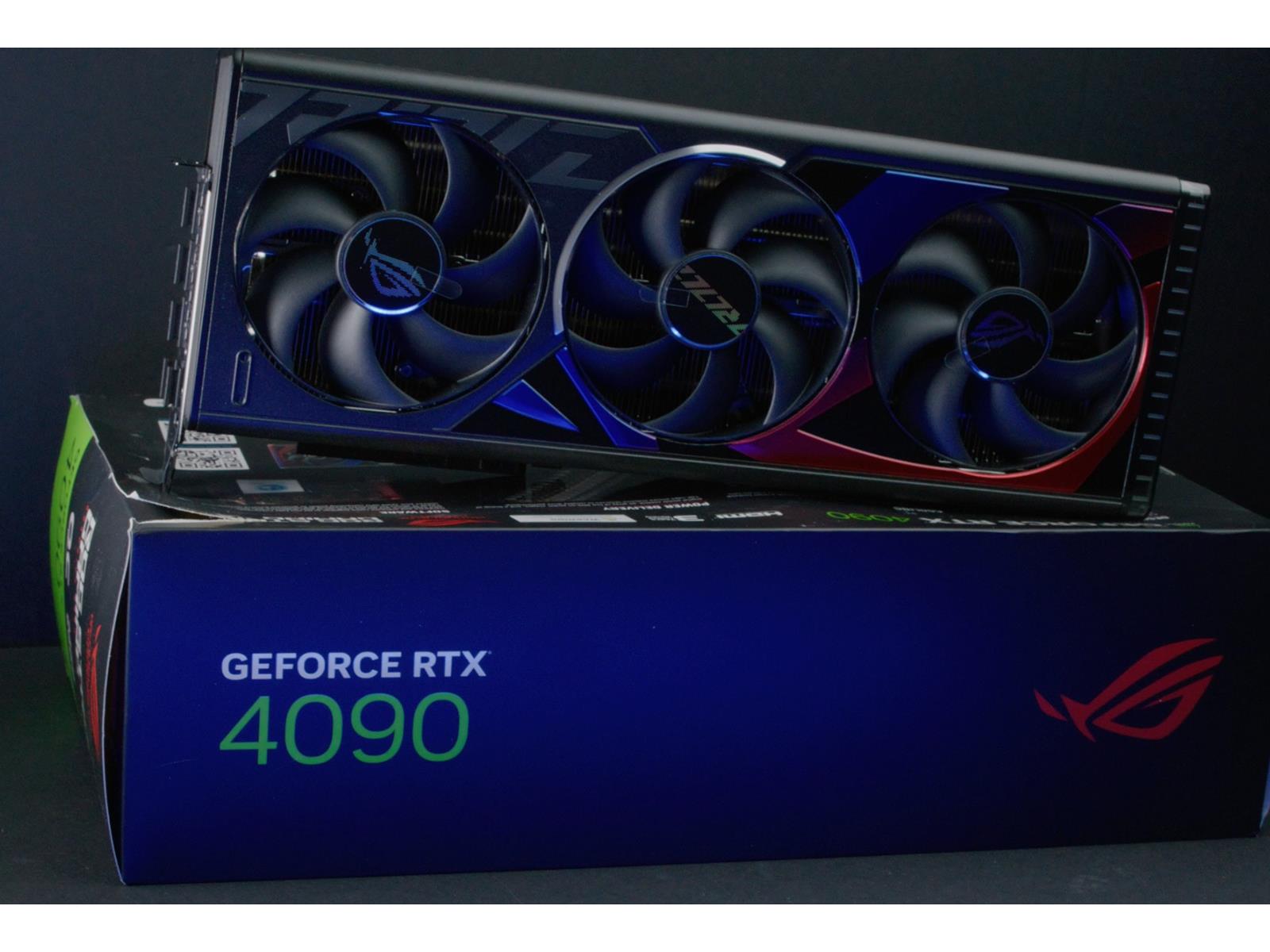
If you regularly browse Reddit for PC hardware discussions, you may notice a slightly alarming trend. NVIDIA’s RTX 4090 may be a graphics powerhouse, but it’s had a bad omen following it since release: melted power adapters. On sub-Reddits such as from the cable company Cablemod, you’ll often find users posting that their very expensive GPU
Source: Hot Hardware – Another GeForce RTX 4090 Melting Connector Complaint Surfaces A Year After Use
Half a Billion Cheap Electrical Items Go To UK Landfills in a Year, Research Finds
Almost half a billion small, cheap electrical everyday items from headphones to handheld fans ended up in landfill in the UK in the past year, according to research. The Guardian: The not-for-profit organisation Material Focus, which conducted the research, said the scale of the issue was huge and they wanted to encourage more recycling. More than half a billion cheaply priced electronic goods were bought in the UK in the past year alone — 16 per second. Material Focus findings showed that of these items, 471m were thrown away. This included 260m disposable vapes, 26m cables, 29m LED, solar and decorative lights, 9.8m USB sticks, and 4.8m miniature fans.
Scott Butler, executive director at Material Focus, described it as “fast tech.” He said: “People should think carefully about buying some of the more frivolous … items in the first place.” He said the items people bought were often “cheap and small,” and that consumers may not realise they contain valuable materials that could be salvaged if recycled. Small electricals can contain precious materials including copper, lithium and stainless steel. These components can be recycled and used in wind turbines, medical devices and electric vehicles. Material Focus said that while people were used to the idea of recycling larger electrical items such as fridges, lots of smaller devices were left unused in houses.


Read more of this story at Slashdot.
Source: Slashdot – Half a Billion Cheap Electrical Items Go To UK Landfills in a Year, Research Finds
OpenAI Reportedly Plans to Unveil Cheaper, Vision-Capable Developer Tools in November

OpenAI has shocked the world with ChatGPT-4, but now it has to win over the developers who will actually build the future of artificial intelligence.
Source: Gizmodo – OpenAI Reportedly Plans to Unveil Cheaper, Vision-Capable Developer Tools in November
SEC investigating MOVEit hack that exposed data of at least 64 million people
Progress Software disclosed that it has received a subpoena from the SEC to share information relating to the vulnerability in its file transfer software, MOVEit, which became the subject of a massive exploit beginning last May. According to the filing, the investigation is presently a “fact-finding inquiry,” and there’s no indication at this time that Progress has “violated federal securities laws.” The company intends to cooperate with the SEC.
One report by cybersecurity software company Emsisoft estimates that the MOVEit breach exposed the information of at least 64 million individuals through 2,547 affiliated organizations. Among the organizations impacted by the zero-day vulnerability are the Louisiana Office of Motor Vehicles and the Colorado Department of Health Care Policy and Financing. Sony confirmed its employee data was compromised in the exploit earlier this month. And Michigan-based financial services provider, Flagstar Bank, sent its customers a notice that said records had been stolen (they’ll now receive free identity monitoring services for two years.)
The culprits of the attack — the CL0P ransomware gang — “helped pioneer the practice of double-extortion,” according to Reuters. In this sort of scheme, the ransomers both encrypt the target’s data and threaten to leak said data (unless they’re paid.) The group have since made clearweb sites to leak some of the data they’ve exfiltrated in the MOVEit hack, from companies like Kirkland and TD Ameritrade. The FBI have since offered up to $10 million to anyone with information that could link CL0P to any particular foreign government.
The true cost (both to victims and Progress Software) remain unknown at this time. But some of the affected customers have begun seeking restitution for the breach. Progress disclosed in the same regulatory filing that it is a party to 58 class action lawsuits at this time. Many of those may be consolidated as they progress, but they still present the possibility of enormous civil penalties.
This article originally appeared on Engadget at https://www.engadget.com/sec-investigating-moveit-hack-that-exposed-data-of-at-least-64-million-people-163057853.html?src=rss
Source: Engadget – SEC investigating MOVEit hack that exposed data of at least 64 million people
Don't Buy the PS5 Slim

It happens with every console generation: After the world gets to know a PlayStation for a couple of years, Sony decides to refresh it with something lower profile: a “slim” console, if you will.
Source: LifeHacker – Don’t Buy the PS5 Slim
Starlink Says It's Bringing Cell Service to Remote Regions Starting Next Year
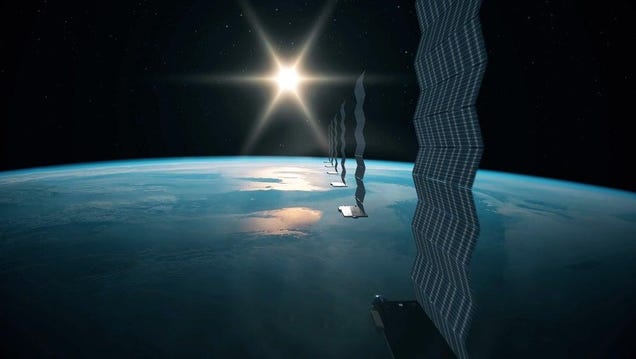
Starlink is rolling out its Direct to Cell service starting in 2024, SpaceX announced on its webpage that went up on Tuesday. The new service will use its satellites to provide users with talk, text, and data in remote regions.
Source: Gizmodo – Starlink Says It’s Bringing Cell Service to Remote Regions Starting Next Year