
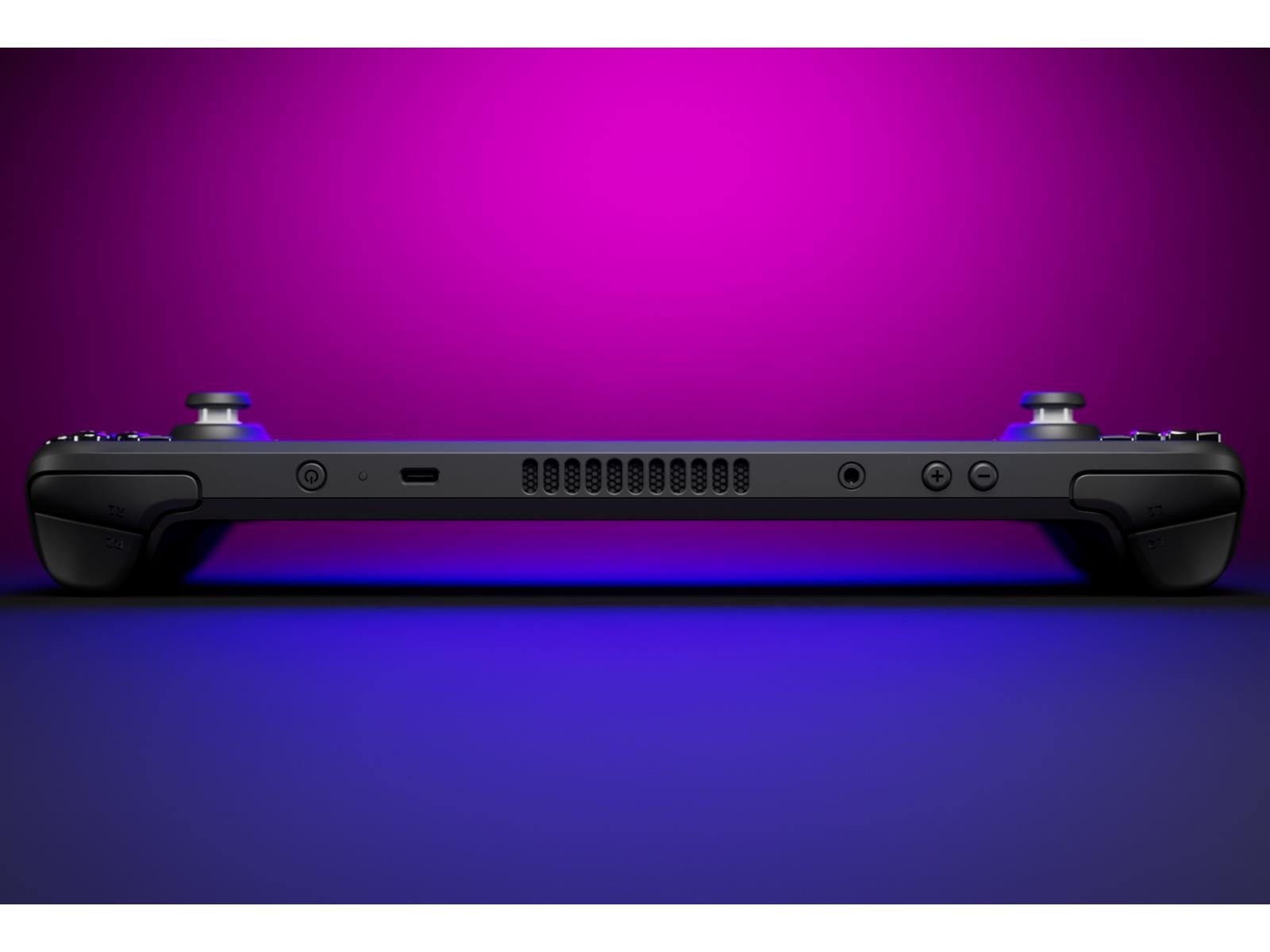
Valve’s latest preview update for the Steam Deck’s SteamOS, version 3.5.1, is largely a patch for bugs but includes one big ticket feature enthusiasts have been clamoring for: undervolting. This is thanks to the version 118 BIOS firmware that this preview update also introduces, and while it gets rid of the old overclocking settings, undervolting
Source: Hot Hardware – Steam Deck Is Getting Undervolting Controls, Here’s How To Access Them Now
Monthly Archives: October 2023
The Analogue 3D is a Nintendo 64 for modern times
With shipments of its Pocket handheld console finally under control, Analogue is turning its attention to a whole new retro machine. The Analogue 3D aims to be the ultimate Nintendo 64, playing original cartridges on modern 4K displays. I’d love to show it to you, but Analogue is only releasing a teaser image and a few key specs today.
The Analogue 3D is the latest in a line of consoles from the company that emulate retro hardware. All of Analogue’s machines use field-programmable gate arrays (FPGA) that are coded to mimic original hardware. Rather than playing ROM files like most software emulators, Analogue consoles play original media — in this case N64 carts — without the downsides that software emulation often brings, such as increased input lag or visual imperfections.
Analogue
Analogue started out with boutique recreations of Neo Geo and NES hardware, before targeting a more casual audience with systems that mimicked the SNES and Genesis. Its most splashy release to date is the Pocket, which emulates a variety of handhelds. There’s also the TurboGrafx-like Analogue Duo, which was announced in 2020 and, after some delays, will apparently ship this year.
That may seem like a disparate group of consoles, but there is one thing that ties them together: they’re all pretty primitive. If you’ve been around a while, you’ll remember consoles being referred to as 8-bit, 16-bit, 32-bit and so on. A lot of that was marketing, but the hardware of 8-bit systems is broadly less complex to recreate than that of 16-bit systems, and so on. As the first true “64-bit” console on the market, the N64 is by far the most complex system Analogue has tackled to date. Its 64-bit 93.75MHz CPU was wild for a $200 console — even if most developers still wrote 32-bit code for it — and its Silicon Graphics “reality coprocessor” was the stuff of (extremely nerdy) playground legend. They made the T-rex from Jurassic Park with (better versions of) that thing!
Analogue
The Analogue 3D is described as a “reimagining” of Nintendo’s console, and the company is promising 100 percent compatibility with carts from all regions. It will output at 4K resolution with Original Display Modes that target “reference quality recreations” of specific CRTs and PVMs. To translate, that means Analogue is building filters that might, for example, make a modern OLED or LCD display feel more like a dope mid-’90s Sony Trinitron TV. No word on whether they’re baking in a recreation of the weird LG TV with legs I played on for most of the ’00s.
Internals aside, the N64 has a small library of games and a mistake of a controller, but there are some classics in there. On the first-party side, The Legand of Zelda: Ocarina of Time and Majora’s Mask have both held up to decades of scrutiny, and Mario 64, some camera issues aside, is as fun to play in 2023 as it was in 1996. Then there’s Paper Mario, Mario Kart 64, F-Zero X, Star Fox 64, Super Smash Bros. and countless others. Rare also did some fantastic work on the N64 with the likes of GoldenEye 007, Perfect Dark, Banjo-Kazooie, Diddy Kong Racing and Conker’s Bad Fur Day.
Quality third-party titles were harder to come by, but Star Wars: Rogue Squadron, Mischief Makers, Harvest Moon 64 and the Turok games are all worth checking out. (I personally spent more time playing Horse in an average port of Tony Hawk’s Pro Skater than any of these, but there’s no accounting for taste.)
Analogue / 8BitDo
One thing very few people remember fondly is the N64’s three-paddled controller, which at the time felt fine but boy was it not. The Analogue 3D will have four controller ports, just like the original N64, but it thankfully also supports Bluetooth and 2.4G wireless connectivity. 8BitDo will be releasing a companion controller for the console, which is all-but invisible in the picture above. After some toying around in Photoshop, it appears to be very similar to the company’s Ultimate controller, but with C-buttons where the regular face buttons would be, the A+B buttons replacing the right analog stick and a big ol’ start button in the middle.
There’s no word yet on price — early Analogue machines cost a lot, but its more recent efforts have been more palatable. The Analogue Duo, which has a CD drive inside, cost $250 when pre-orders went live, so it seems a fair guess to say it’d be in the same price range — though you’ll need to budget for a couple of controllers no matter the price, as Analogue doesn’t supply them with any of its systems.
The Analogue 3D is currently slated to ship in 2024, and knowing Analogue, pre-orders will open some time in the next few months and sell out almost immediately.
This article originally appeared on Engadget at https://www.engadget.com/the-analogue-3d-is-a-nintendo-64-for-modern-times-150020872.html?src=rss
Source: Engadget – The Analogue 3D is a Nintendo 64 for modern times
AMD pulls graphics driver after “Anti-Lag+” triggers Counter-Strike 2 bans
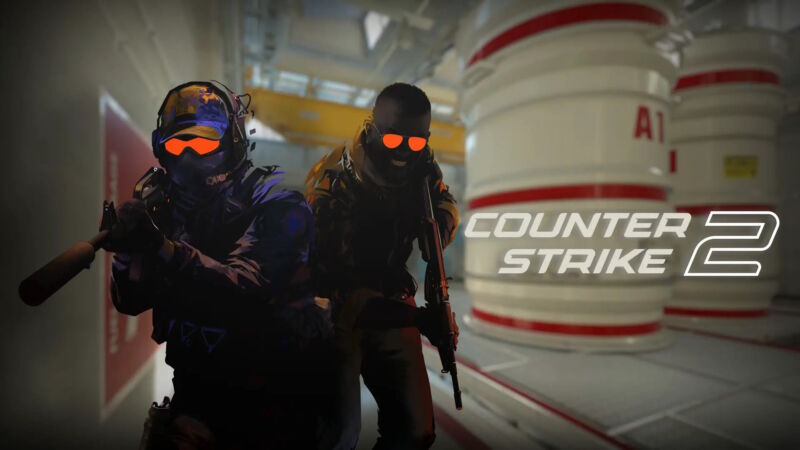
Enlarge / The red eyes represent the mark of VAC for Anti-Lag+ players. (credit: Valve)

AMD has taken down the latest version of its AMD Adrenalin Edition graphics driver after Counter-Strike 2-maker Valve warned that players using its Anti-Lag+ technology would result in a ban under Valve’s anti-cheat rules.
AMD first introduced regular Anti-Lag mitigation in its drivers back in 2019, limiting input lag by reducing the amount of queued CPU work when the processor was getting too far ahead of the GPU frame processing. But the newer Anti-Lag+ system—which was first rolled out for a handful of games last month—updates this system by “applying frame alignment within the game code itself,” according to AMD. That method leads to additional lag reduction of up to 10 ms, according to AMD’s data.
That additional lag reduction could offer players a bit of a competitive advantage in these games (with the usual arguments about whether that advantage is “unfair” or not). But it’s Anti-Lag+’s particular method of altering the “game code itself” that sets off warning bells for the Valve Anti-Cheat (VAC) system. After AMD added Anti-Lag+ support for Counter-Strike 2 in a version 23.10.1 update last week, VAC started issuing bans to unsuspecting AMD users that activated the feature.
Read 4 remaining paragraphs | Comments
Source: Ars Technica – AMD pulls graphics driver after “Anti-Lag+” triggers Counter-Strike 2 bans
How to Install Git and Set Up Git Account on Linux
In this tutorial, we will go through the steps in installing Git on RHEL-based and Debian-based distributions, along with configuring Git.
The post How to Install Git and Set Up Git Account on Linux appeared first on Linux Today.
Source: Linux Today – How to Install Git and Set Up Git Account on Linux
Australia Fines X for Not Answering Questions About Child Exploitation Content

Australia’s eSafety commissioner fined X, formerly called Twitter, on Sunday for failing to meet the country’s Online Safety Act requirements. Australia accused the social media platform of not taking the necessary steps to tackle child sexual exploitation content on X, including sexual extortion and live-streaming…
Source: Gizmodo – Australia Fines X for Not Answering Questions About Child Exploitation Content
How to Speed Read Without Forgetting Everything

Cramming for tests doesn’t work—scheduling consistent, serious study sessions is always a better idea. Sometimes, though, you’re in a rush to study; it happens to the best of us. And you can make the best of that by speed reading effectively. There are ways to skim that can still help you learn and retain some…
Source: LifeHacker – How to Speed Read Without Forgetting Everything
Bethesda Exec Pete Hines Leaving Company After 24 Years
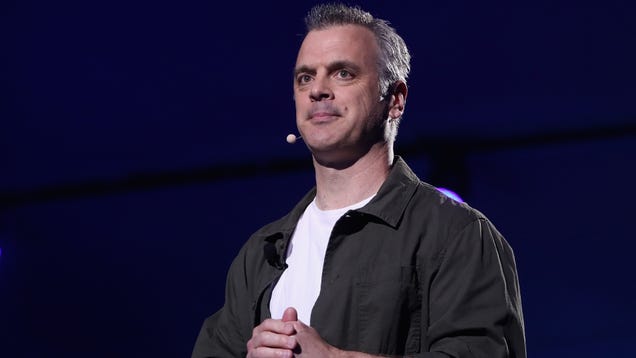
Bethesda publishing head Pete Hines is retiring from the Starfield developer after 24 years, he announced on Twitter (or X) on October 16. Hines’ decision comes only a few days after Microsoft, which owns Bethesda Game Studios, was rubber-stamped to complete its $69 billion Activision Blizzard buy.
Source: Kotaku – Bethesda Exec Pete Hines Leaving Company After 24 Years
Google Pixel 8 Is Getting A Sweet Upgrade That Audiophiles Will Love

Audiophiles on Pixel 8 and other Android phones may have a reason to rejoice—support for lossless USB audio is coming to a future Android 14 version. While it’s not a huge deal for most consumers, we think that this initiative is a potential win for Google over the competition.
The Pixel 8 series will add support for lossless USB audio
Source: Hot Hardware – Google Pixel 8 Is Getting A Sweet Upgrade That Audiophiles Will Love
Stunning Mars Flyover Tours The Red Planet's Incredible Labyrinth Of Night

The European Space Agency’s Mars Express takes adventurers on a gorgeous ride across Mars’s ‘labyrinth of night’. The spacecraft has been exploring the atmosphere, surface, and subsurface of the Red Planet since 2004.
ESA shared footage captured by the Mars Express spacecraft as it flew over the eastern part of Noctis Labyrinthus. It captured
Source: Hot Hardware – Stunning Mars Flyover Tours The Red Planet’s Incredible Labyrinth Of Night
Minecraft Has Sold Over 300 Million Copies
Minecraft already has the distinction of being the bestselling video game of all time. Today, it adds more down to that particular feather in its cap with the announcement that it has sold a staggering 300 million copies. From a report: “As we approach the 15th anniversary, Minecraft remains one of the best-selling games of all time, with over 300 million copies sold, a milestone no one could have dreamed of when we were all placing our first blocks,” Helen Chiang, head of Mojang Studios, said in a statement. Even the second bestselling video game of all time, Grand Theft Auto V, doesn’t even come close to Minecraft’s numbers, topping out at 185 million reported sales.


Read more of this story at Slashdot.
Source: Slashdot – Minecraft Has Sold Over 300 Million Copies
TSMC: We Want OSATs to Expand Their Advanced Packaging Capability
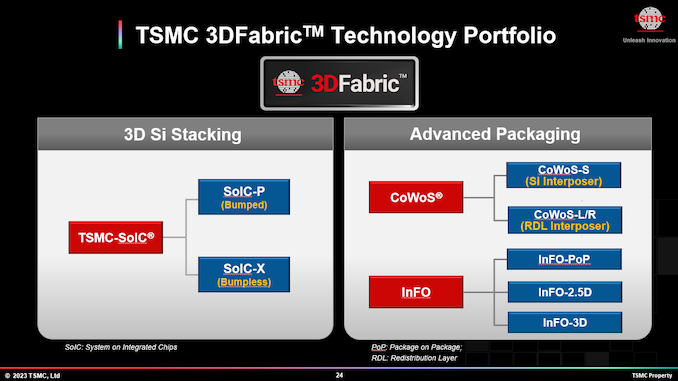
Almost since the inception of the foundry business model in the late 1980s, TSMC would produce silicon. In contrast, an outsourced semiconductor assembly and test (OSAT) service provider would then package it into a ceramic or organic encasing. Things have changed in recent years with the emergence of advanced packaging methods that require sophisticated tools and cleanrooms that are akin to those used for silicon production because TSMC was at the forefront of innovative packaging methods, which the company aggregates under the 3DFabric brand and because it built appropriate capacity, it quickly emerged as a significant OSAT for advanced packaging.
Many companies, such as Nvidia, want to send in blueprints and get their product that is ready to ship, which is why they choose to use TSMC’s services to package their advanced system-in-packages, such as H100, using such technologies as integrated fan-out (InFO, chip first) and chip-on-wafer-on-substrate (CoWoS, chip last) developed by the foundry. As a result, TSMC had to admit earlier this year that it could not keep up with CoWoS demand and would expand appropriate production capacity.
Although TSMC makes tons of money on advanced chip packaging methods these days, the company does not have plans to steal business away from its traditional OSAT partners, which is why it wants these companies to expand their sophisticated packaging capacity and use similar tools to TSMC and its partners to offer to package compatible with TSMC-made chiplets.
But it is not that simple. All leading assembly and test specialists like ASE Group, Amkor Technology, and JCET have advanced chip packaging technologies, many resembling those of TSMC. These OSATs own advanced packaging fabs already and can serve fabless chip designers. For example, just this week, Amkor opened up its $1.6 billion advanced packaging facility in Vietnam. It is set to have a cleanroom space comparable to that GlobalFoundries owns across multiple fabs.
But while packaging technologies offered by OSATs may be similar to those of TSMC in terms of pitch dimensions and bump I/O pitch dimensions, they are not the same in terms of flow and may even have slightly different electric specifications. Meanwhile, OSATs use the same tools as TSMC, so they can pack chips that use CoWoS interposer. So far, TSMC has certified two OSATs to perform the final CoWoS assembly. However, there is still a shortage of CoWoS capacity on the market because TSMC’s capacity is the bottleneck, at least based on TSMC’s comments from earlier this year.
“So, we have ASE and SPIL, we have qualified their substrates,” said Dan Kochpatcharin, Head of Design Infrastructure Management at TSMC, at the OIP 2023 conference in Amsterdam. “The next step is also doing the same thing to bring them into using the automated routing of the substrate as well. So, we can have the whole [CoWoS service] stack.“
TSMC’s advanced packaging technologies like CoWoS and InFO are supported by electronic design automation (EDA) tools from companies like Ansys, Cadence, Siemens EDA, and Synopsys. So, TSMC needs OSATs to use the same programs and align their technical capabilities with what these tools design and TSMC produces.
“We want them to use the same EDA tools,” said Kochpatcharin. “So, let’s say TSMC interposer on OSAT’s substrate. So, they use 3Dblox and [appropriate] EDA tools to do analysis, then it is easier for the customer. Right? Like we qualified the two partners to [produce] substrate. So, we do CoWoS, and OSATs do substrate. So, it would be good to use the same flow, because it is easier for customer. “If you have customers who use [different EDA tools] then the multi physics analysis [of the package] will be more difficult. It can be done just more difficult.“
To meet the demand for CoWoS and other advanced packaging methods, OSATs need to invest in appropriate capacities and tools, which are expensive. The problem is that assembly and test specialists cannot keep up with Intel, TSMC, and Samsung regarding investments in advanced packaging facilities. Last year, Intel spent $4 billion on advanced packaging plants, and TSMC’s capital expenditures on advanced packaging totaled $3.6 billion. In contrast, Samsung spent around $2 billion, according to Yole Group’s estimates published by EE Times. By comparison, the capital expenditures of ASE Group (with SPIL and USI) totaled $1.7 billion in 2022, whereas the spending of Amkor reached $908 million.
There are several reasons why advanced packaging technologies like TSMC’s CoWoS and InFO, as well as Intel’s EMIB and Foveros, are gaining importance. First up, disaggregated chip designs are getting more popular because chip manufacturing is getting more expensive, smaller chips are easier to yield, and many chips are reaching the reticle limit. At the same time, their designers want them to be bigger and more powerful. Secondly, disaggregated designs using chiplets made on different nodes are cheaper than one monolithic chip on a leading-edge node.
OSATs are poised to expand their advanced production capacities as their clients demand appropriate services. Meanwhile, they are less inclined to offer such services than foundries simply because if something fails during packaging steps, they have to throw away all the expensive silicon they package, and they do not earn as much as chipmakers do. Their margins are also significantly lower. Finally, it may be unclear in many cases why a multi-chiplet package does not work and whether the problem is with the package itself or with one of the chips. Today, all TSMC can do is to optically check the wafers before dicing them, but this is not a particularly efficient way of testing.
To gain the capability to test chiplets individually, TSMC is working with makers of chip test equipment and expects to validate these tools next year.
“On the 3DFabric on the testing, we work with Advantest, Teradyne, and Synopsys to leverage the high-speed die-to-die testing,” said Kochpatcharin. “When you have all these things stacked together, it is getting very difficult to test them. So, we have worked with Teradyne and Advantest to work […] [die-to-die] testing, and we will have silicon validation in 2024.“
Source: AnandTech – TSMC: We Want OSATs to Expand Their Advanced Packaging Capability
How You Can Help Kids With ADHD Throughout the School Year

With another school year underway, parents and teachers of any of the six million children diagnosed with attention-deficit/hyperactivity disorder, or ADHD, might notice that they are finding it challenging to keep up. Students might be struggling to pay attention, have trouble sitting still, or can’t control…
Source: LifeHacker – How You Can Help Kids With ADHD Throughout the School Year
Logitech Zone Wireless 2 Headset Means Business With AI Smarts And 40-Hour Battery
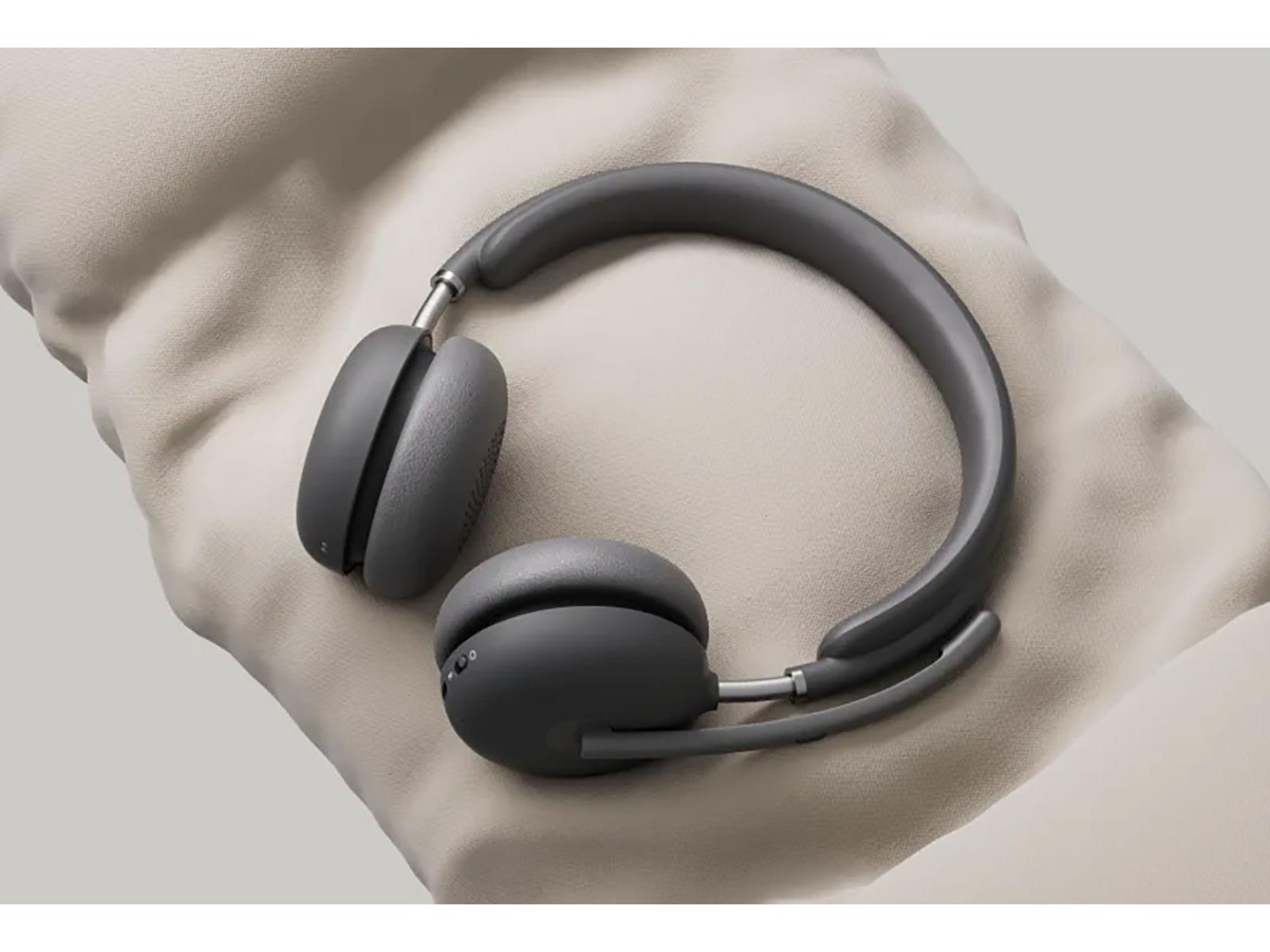
Most of the headsets that make headlines are geared towards gamers, save for the occasional exception. Logitech’s new Zone Wireless 2 is one of those semi-rare exceptions. It’s pitched as a “top-of-the-line business headset,” which is due in large part to a clever AI-powered tactic designed to suppress background noise on both ends of a call,
Source: Hot Hardware – Logitech Zone Wireless 2 Headset Means Business With AI Smarts And 40-Hour Battery
Goldman Sachs Wants Out of the Apple Card Business, Report Claims

Goldman Sachs’ third-quarter earnings may be the final straw for the Apple Card as the Wall Street giant faces internal pressure to exit the consumer-lending space. The Apple partnership has long been seen as a distraction from Goldman’s core business, the Wall Street Journal reported Monday. In regards to the…
Source: Gizmodo – Goldman Sachs Wants Out of the Apple Card Business, Report Claims
After six decades, ‘Gagarin’s Start’ will meet its end as a launch pad

Enlarge / A Soyuz FG rocket launches from Gagarin’s Start in Kazakhstan. (credit: NASA)

Because it lacks the funding to modernize its most historic launch pad, Russia now instead plans to turn “Gagarin’s Start” into a museum.
The pad is known as Gagarin’s Start because it hosted the world’s first human spaceflight in 1961, when the Vostok 1 mission carrying Yuri Gagarin blasted into orbit. Between 1961 and 2019, this workhorse pad accommodated a remarkable 520 launches, more than any other site in the world.
Most recently, during the last two decades, the Soyuz-FG rocket launched cargo and crew missions from Gagarin’s Start, which is located on the Kazakhstan steppe near the small city of Baikonur. The final launch from the site took place in September 2019, with the Soyuz MS-15 mission carrying Russian cosmonaut Oleg Skripochka, NASA astronaut Jessica Meir, and United Arab Emirates astronaut Hazza Al Mansouri to the International Space Station.
Read 10 remaining paragraphs | Comments
Source: Ars Technica – After six decades, ‘Gagarin’s Start’ will meet its end as a launch pad
You Can Now Use Crypto to Buy a Ferrari

Nothing says luxury like tapping into a digital trend that is past its best days. Italian car manufacturer Ferrari announced its intention to let the bourgeoisie purchase its luxury vehicles using cryptocurrency.
Source: Gizmodo – You Can Now Use Crypto to Buy a Ferrari
MX Linux 23.1 (Libretto) Released: Here’s What’s New
The first update in the MX’s “Libretto” series, 23.1, comes based on the latest Debian 12.2, offering new and updated applications.
The post MX Linux 23.1 (Libretto) Released: Here’s What’s New appeared first on Linux Today.
Source: Linux Today – MX Linux 23.1 (Libretto) Released: Here’s What’s New
Why the US Government Has $5 Billion in Bitcoin
The U.S. government is one of the world’s biggest holders of bitcoin, but unlike other crypto whales, it doesn’t care if the digital currency goes up or down in value. From a report: That is because Uncle Sam’s stash of some 200,000 bitcoin was seized from cybercriminals and darknet markets. It is primarily offline in encrypted, password-protected storage devices known as hardware wallets that are controlled by the Justice Department, the Internal Revenue Service or another agency. What the federal government does with its bitcoin has long been a topic of interest among crypto traders because any sale could potentially swing prices or cause other ripple effects in the $1 trillion digital-asset market.
The U.S. has been notoriously slow to convert its stash of bitcoin into dollars. It isn’t HODLing, crypto parlance for “holding on for dear life” and never intending to sell. Nor is it waiting for bitcoin to go “to the moon” so it can sell its holdings for a hefty profit. Rather, that big pile of bitcoin is more a byproduct of a lengthy legal process than strategic planning. “We don’t play the market. We basically are set by the timing in our process,” said Jarod Koopman, executive director of the IRS’s cyber and forensics services section, which oversees all activities focused on cybercrimes.


Read more of this story at Slashdot.
Source: Slashdot – Why the US Government Has Billion in Bitcoin
OpenBSD 7.4 Released With New Hardware Support, Security Improvements
Theo de Raadt released OpenBSD 7.4 today as the open-source BSD operating system project’s 55th release…
Source: Phoronix – OpenBSD 7.4 Released With New Hardware Support, Security Improvements
Marvel's Spider-Man 2 review: The rare game that's both bigger and better
For my money, web-swinging around New York City in Marvel’s Spider-Man is perhaps the singular best game mechanic I’ve come across in the last decade or so. It feels so incredibly right, and almost everything else in that game is built off it. I never really wanted to use fast-travel features, because swinging around was much more fun, and finding hidden missions and helping citizens in trouble as you traverse NYC is almost as rewarding as following the game’s main story. Of course, a great mechanic isn’t enough to make a great game, but Spider-Man is one of the most successful open-world style games I can think of, because it felt packed without being overwhelming.
My first impressions of Marvel’s Spider-Man 2 was that developer Insomniac Games turned everything up to 11, packing in more. The map is about twice as big as the original, adding in a chunk of the boroughs of Brooklyn and Queens to go along with Manhattan, and the web wings offer a new way of traversing the huge map. There are more playable characters, as you spend nearly equal time jumping between OG Spider-Man Peter Parker and his protégé Miles Morales. Peter and Miles have more special moves than ever before to turn the tides in combat, and there are more skills for them to learn. Conversely, enemies have a lot more ways to mess you up, if you’re not careful.
As such, my main concern for Spider-Man 2 was that Insomniac tried to pack in too much — take what happened to the Assassin’s Creed series with AC: Valhalla as a cautionary tale. However, now that I’ve finished the game, and completed about 75 percent of all the activities and quests available, I can confidently say that Insomniac has built a tight, compelling game with a storyline that ends up with serious momentum, making it all but impossible to put down through the second half. It’s just as satisfying as ever to play as the two Spider-Men, whether you’re flying around NYC or taking on hordes of bad guys. And while the story sucked me in, there are hosts of other things for a friendly neighborhood Spider-Man to do for the city’s citizens, including substantial side quests and smaller activities that enhance the story and your capabilities.
Sony / Insomniac Games
Just like the first game, Spider-Man 2 wastes no time hitting you with a bombastic action sequence that kicks off the game’s main plot. This time, Pete and Miles take on classic villain Sandman, who escapes transport to the city’s prison for super-villains and rampages throughout the streets, getting larger and more difficult to manage. As with the intro of most games, this is meant to teach you the capabilities of the two playable characters, and it does so without feeling too heavy-handed or disconnected from the main meat of the game.
It’s not long before we learn of a new threat to the city: Kraven and his band of hunters are tracking down super-villains for sport and causing plenty of distress while they do so. Perhaps most significantly, they’re trying to return Dr. Curt Connors to his menacing alter-ego, The Lizard, a move that has serious implications for Peter, Miles, Pete’s girlfriend MJ Parker and their friend Harry Osborne. Harry was mentioned but not seen in the first game, as he was ill and in recovery through some very experimental treatment that has returned him to his friends in this episode.
Sony / Insomniac Games
In the first third of the game, the traditional action sequences are augmented by a few flashbacks as well as sections of the game that are more about atmosphere and character-building – like one where teenaged Pete and Harry sneak through their high school, or a sequence where Pete, MJ and Harry enjoy a night at a lovingly-rendered version of the Coney Island boardwalk before things inevitably go awry. Those sequences were a little hit or miss, as they did steal away a bit of momentum – but they also provided a break from the pattern of “travel across the city, investigate, beat up bad guys.”
I won’t spoil how it happens, but the unofficial first act ends with Peter coming into possession of the fabled black symbiote suit, which greatly enhances his powers in combat in a way that’s both fun and also a little distressing. If you know anything about Spider-Man lore, you probably know where the story is going. But without going too deep, I can say that Insomniac created a familiar take on the tale of Spider-Man and Venom that nonetheless has a number of unexpected twists. Like I said earlier, I was positively glued to the game, particularly in the second half. The combination of the compelling story and outstanding gameplay elements simply made it hard to stop playing.
Let’s get into that gameplay. Sony and Insomniac have made a big deal about the fact that you can quickly swap between Peter and Miles to have different Spidey-experiences, and it’s as simple as holding a button down when you’re in the open-world part of the game. But the structure of the story dictates that you’re usually either Peter or Miles as the “lead” character for the main quests. The same goes for some of the side quests and activities you’ll find around NYC; there are plenty that you can achieve as either Pete or Miles, but some require you to switch to a specific character.
Sony / Insomniac Games
There are a number of major set-pieces throughout the game, including the Sandman intro, that blend action between the two Spider-Men. You’ll shift seamlessly between the two characters depending on what the action calls for, but you can’t just switch on the fly. It’s all pretty scripted, which makes sense but is still a little bit of a bummer. And while Miles and his crew of friends that were introduced in 2020’s mini-sequel Spider-Man: Miles Morales get plenty of screen time, the story and action lean slightly more towards Peter. If I had to guess, I’d say you control him for 60 percent of the main story. Miles fans shouldn’t be too disappointed, though, because you get to control him through a few of the game’s most intense and thrilling moments.
Insomniac did a great job of both streamlining and expanding combat. Peter and Miles each have four special attacks you can slot that regenerate through combat, giving you some options for discovering and picking your favorite moves. A lot of the gadgets from the first game return, but they’re easier than ever to access. Previously, if you wanted to use a gadget you’d have to hold R1 and switch from your web-shooters to another option. Now, web-shooters are always triggered by mashing R1, but you can hold R1 and hit one of the four face buttons to activate your slotted gadgets. It’s a great quality of life improvement that makes it a lot easier to deploy everything in your arsenal when you’re in a big battle.
The special attacks are likewise triggered by holding L1 and pressing a face button, and these are the main ways to differentiate between Peter and Miles. Otherwise, their combat skills and abilities are pretty similar, and there are lots of upgrades you can make to increase your health bar or the amount of damage you deal that apply to both characters. There’s a shared Peter and Miles skill tree as well as individual ones for each character that focus on their particular special moves. I was worried managing all this was going to get old and overly complicated, but I never felt overburdened by the variety of choices I could make, thanks partially to the fact that the game is generous about dolling out skill points to redeem.
Sony / Insomniac Games
Some of those skill upgrades relate to traversal — how far you travel when swinging from a web line or how fast you boost off an object. There’s a new skill you can use to web-slingshot yourself into motion, which is great to use when you’re on the ground and want to get moving quickly. But the web wings are the biggest change to how you get around NYC, and they’re a delight to use. Tapping X deploys the wings, and you can search for wind tunnels and updrafts to keep you moving quickly and well above street level.
Web-swinging is still my favorite move, but the wings come in extremely handy for some specific missions, including the wild on-the-river chase that Sony showed off a few months ago. Using the wings almost makes piloting the Spider-Men feel like you’re driving a race car, as you can turn corners a lot quicker and with more precision than I anticipated. It’s a totally different experience than web-swinging, and eventually I found myself switching between both techniques to build up speed or tackle certain geographical challenges as I explored the map.
Probably my biggest complaint with the gameplay is something I remember noticing in the first game: There are more than a few moments where the big climax of an action sequence takes place only in a cutscene, where the player has no control or input into what’s on the screen. I get that there are some sequences that are so far outside of the move set players have that they need to be cutscenes, but the game is otherwise so good at immersing you in large-scale conflicts that it’s jarring to be completely pulled out of the action.
Unlike the previous two games, Spider-Man 2 is exclusive to the PS5;the original was built for the PS4 while Miles Morales had a simultaneous release on both consoles. Insomniac didn’t waste any of the horsepower it had to play with here: the game looks incredible. As with many AAA games, you can pick a “fidelity” mode that runs at 30 fps with full 4K graphics and effects like ray tracing, or scale things down a bit for a higher frame rate (up to 120 fps, if your TV supports it) in “performance” mode. As usual, I went for high frame rates, but spent time in both. Rest assured that, whatever your preference, this game is a graphical stunner, with intricately detailed character models — massive bad guys like the Lizard are particularly stunning.
Sony / Insomniac Games
The city, meanwhile, looks gorgeous whether it’s at sunset or in the train, whether the streets are filled with tourists and pedestrians or deserted from the latest calamity. Local landmarks like Radio City Music Hall, Madison Square Garden and Avengers Tower are rendered lovingly, and the new boroughs of Queens and Brooklyn have their own distinct identities in the game just as they do in real life. I’m looking forward to spending more time just exploring the cities and taking in all the detail Insomniac included, probably while using the expansive Photo Mode for some virtual photography.
Insomniac also took advantage of the DualSense controller’s features like adaptive triggers and impressive haptic feedback. There’s a pleasing amount of tension when using the triggers to swing around the city, as well as a number of times when you’ll need to perfectly balance the amount of pressure you’re putting on the triggers to execute a move. As with most games, the DualSense features don’t radically change the experience, but they enhance it in ways that you might not immediately realize but would notice if they went away.
Sony / Insomniac Games
In the last few years, I’ve had an increasingly hard time coming up with original ways to describe Sony’s first-party games. In the PS4 generation, games like Horizon Zero Dawn, God of War and Spider-Man all combined excellent storytelling with huge worlds and outstanding gameplay. As such, the recent sequels have all felt like they had to up the stakes and make longer, more complicated games. While I love God of War Ragnarok and Horizon Forbidden West, I also occasionally felt they were just trying to do too much.
That’s not the case with Spider-Man 2. It’s a perfectly balanced game with gorgeous graphics, delightful combat and traversal systems, a compelling storyline and characters, plenty of challenge and a huge map to explore. Perhaps most importantly, though, it’s just fun. In a year where I’ve struggled to connect with games that I expected I’d love, it was a relief to play Spider-Man 2 and immediately get sucked into the world. Whether or not you’ve played Insomniac’s earlier Spider-Man games, anyone should be able to jump into Spider-Man 2 and immediately feel like a superhero.
This article originally appeared on Engadget at https://www.engadget.com/marvels-spider-man-2-review-the-rare-game-thats-both-bigger-and-better-140002497.html?src=rss
Source: Engadget – Marvel’s Spider-Man 2 review: The rare game that’s both bigger and better