Removing the layers of limescale, soap scum, and that gross pink film from your shower head not only provides you with some satisfying before-and-after photos, but it can also noticeably improve your overall showering experience. After all, who doesn’t want better water pressure?
But what if you go through your usual cleaning process of soaking and scrubbing, then turn on your shower to discover that the water pressure hasn’t improved, and the stream of water is still inconsistent and sputtering? Before rushing out to buy a new shower head, try removing the one you currently have and cleaning the filter screen hidden inside. That’s right: Even if the outside of your shower head is spotless, there may be a small, round screen that’s caked in mineral buildup and sabotaging your shower. Here’s how to find and clean it.
Where to find the filter screen inside your shower head
Technically, this hidden filter is located between your shower head and the water pipe sticking out from your shower wall. But even if you were to remove your shower head to either replace it or clean its exterior, you may not notice the little screen sitting there. Or, maybe you did see it, but thought it was part of the flow restrictor (they’re not). For reference, flow restrictors are roughly the same size as filter screens, but instead of a small, round piece of mesh, they’re a small, round piece of usually blue or green plastic with a hole and/or slightly larger openings.
To find your filter screen, remove your shower head. Sometimes you can simply twist it counterclockwise by hand and it’ll come right off. If not, place a rag over the part that connects the shower head to the pipe and then use a wrench or a pair of pliers to twist counterclockwise until the shower head comes off. The filter screen should be inside. If you have a detachable shower head, the filter screen is probably inside a connector piece at the end of the hose that attached to the water pipe.
Here’s what mine looks like:
Credit: Elizabeth Yuko
How to clean your shower head’s filter screen
Take a peek inside your shower head; if there’s any loose mineral deposits or debris, empty them into a garbage can.
Next, remove the filter screen. If you’re unable to remove the screen with your finger, try needle-nose pliers. But if those don’t work right away, leave it where it is and do your best to clean it in place.
Start by rinsing the screen with warm water. Then, use a toothbrush to scrub away any buildup, followed by a toothpick or sewing needle to unclog any of the tiny openings in the screen (if necessary). If there’s still grime and mineral buildup, soak the screen in a small cup of either half warm water and half white distilled vinegar, or warm water with a pinch of citric acid for 10 minutes, then try again. If you were unable to remove the screen from the shower head, add a few drops of your solution of choice, let it sit for a minute, then go back in with the toothbrush then the toothpick or needle.
Here’s mine, before and after I cleaned it:
Credit: Elizabeth Yuko
Repeat the process until your screen is as clean as you can get it, then pop it back in and reattach your shower head. If you had previously used plumber’s tape on the pipe threads, remove it and any residue from the threads (grooves) at the end of the water pipe. Replace it with some new plumber’s tape, then screw in the shower head. (This Lifehacker post from May has more detailed instructions if you need them.)
The Game Awards got it wrong this year. One of the titles nominated for Best Independent Game, Dave the Diver, was produced by Nexon, one of the largest video game studios in South Korea. No matter how hard you squint, it is not indie. Dave the Diver is an excellent pixel-art game about deep-sea fishing and restaurant management, but it was commissioned and bankrolled by Nexon subsidiary Mintrocket, with billions of dollars and decades of experience at its back.
When The Game Awards nominees were announced on November 13, fans were quick to point out the error, and the recurring debate over what “indie” means was reignited. Taehwan Kim, Nexon’s overseer of Mintrocket, weighed in on November 14, saying Dave the Diver “may look like an indie, but it’s not necessarily the case.” The official tweet listing the nominees for Best Independent Game now carries a reader-generated context tag reading, “Dave the Diver is not an indie game. Mintrocket, the game’s developer, is a subsidiary of Korea’s biggest game company Nexon. They are not independent in any sense of the word.”
Nexon
A discussion around the definition of “indie” bubbled up throughout November, but it raised more questions than it answered. One common conclusion was that the media outlets who voted Dave the Diver into the independent category were fooled by its pixel art, a style that’s associated with indie games. During a live Q&A on Twitch on November 26, The Game Awards organizer Geoff Keighley argued that “independent” was a broad term with an unknowable definition, before essentially saying Dave the Diver’s inclusion in the indie category was the jury’s fault.
Specifically, Keighley said the following: “It’s independent in spirit and [it’s] a small game with a, I don’t know what the budget is, but it’s probably a relatively small-budget game. But it is from a larger entity, whereas there are other games on that list that are from much smaller studios. Even like Dredge I think is published by Team17, so is that independent or not because you have a publisher? It’s a really complicated thing to figure out and come up with strict rules around it, so kinda we let people use their best judgment. And you can agree or disagree with the choices, but the fact that Dave the Diver was on that list meant that, out of all the independent games the jury looked at, or what they thought were independent games, that was one of the top five they looked at this year.”
The jury comprises 120 media outlets (Engadget has traditionally been one of these, but we did not participate in voting this year and look what happened), so Keighley is chalking the mistake up to mass hysteria and moving on. Meanwhile, there’s still little consensus on what constitutes an indie game, at The Game Awards or elsewhere.
Nexon
I’ve reported on video games for 13 years and indies are a central theme of my coverage. I ran The Joystiq Indie Pitch back in the day, and I’ve made a concerted effort to write about smaller games from creators working outside of the mainstream machine, because these are the experiences that speak to me personally. The indie scene is the source of the industry’s magic. This isn’t just a debate about language — “indie” is a distinction that identifies which games and teams need outside support to survive and expand on their innovations. Understanding the label can help players make decisions about where to spend their money, the lifeblood of any game-development studio.
All that to say, the debate over the definition of “indie” is not new, but it is constantly changing, and it’s something I’ve spent a lot of time contemplating. So, I’m here to offer guidance on the question of what makes an indie game or studio indie. It is a weirdly complicated topic and my approach is one of many, but the loose framework I use could help resolve some common, recurring arguments.
Basically — it’s all about the system, man.
I’m joking, but also I’m not. Generally, when I’m trying to decide whether something is actually indie, I rotate through three questions:
Is the team on the mainstream system’s payroll?
Is the game or team owned by a platform holder?
Do the artists have creative control?
The first question is about identifying where a studio’s money is coming from and what kind of support a game has outside of sales. If a team is wholly owned by another company of any size, it is not indie. We’re not talking about publishing deals; this opening question is about acquisitions or subsidiaries of bigger studios. Dave the Diver is a prime example here — it’s developed by Mintrocket, a subsidiary of Nexon that was created just to develop more contained, experimental games for the publisher. Dave the Diver is definitely not indie, and we’re only on question one.
The second query feeds into the first, and it’s helpful in making fine distinctions about games that exist in gray areas. What about something like Cyberpunk 2077? It’s a big-budget game built by CD Projekt RED (CDPR) — a studio that, at first glance, seems like it could be indie. However, there are two factors that take it out of the running for me. First, CD Projekt, the umbrella organization that supports CDPR’s game-making, is a publicly traded company with shareholders and a board to answer to. Second, CD Projekt is the owner of GOG, a distribution hub that allows the studio to sell its own games and DLC outside of Steam and the Epic Games Store. This ability to sell directly to players at massive scale takes CD Projekt out of the indie realm. Generally, companies with the most influence and money are console makers and platform holders like Valve, Xbox, PlayStation, Epic Games, Ubisoft, EA, and, yes, CD Projekt. They are the AAA system, and anything they own is not indie.
Nexon
Lastly, on to publishers. Sorry, Keighley, but securing a publisher has very little to do with whether a game is indie nowadays. We’re blessed in 2023 to have a thriving indie industry constantly pushing against the AAA complex with different goals, more diverse voices and a broader sense of innovation — and publishing is a big part of this system. Today, indie-focused publishers (of which there are many) tend to include clauses that protect a developer’s creative vision, preventing the larger company from interfering with artistic decisions and keeping the game indie to the core. Once upon a time, it might’ve made sense to only consider self-published games indie, but that era is long gone.
The indie scene has evolved massively since the early 2010s, when games like Braid, Super Meat Boy and Fez were carving out the market’s modern form. Back then, self-publishing was all the rage for independent developers because it was often their only option, and as a result there were more distinct lines between AAA, AA and indie games. Devolver Digital found its first breakout hit as an indie publisher with Hotline Miami in 2012, and that’s around the time the floodgates opened. In 2014, as the industry’s largest companies started funding and publishing programs for them, the number of indie games skyrocketed across platforms including Steam (remember Greenlight?), the App Store, Xbox, PlayStation and Ouya (RIP).
Today, indie games come standard on every console. There are multiple indie-focused publishers, including Devolver, Annapurna Interactive, Panic, Raw Fury, Team17 and Netflix, and most of them offer complete creative freedom as a main selling point. Meanwhile, platform holders like Sony and Xbox are hungry to sign distribution deals with developers of all sizes in an effort to score exclusives and pad their streaming libraries. It’s the most stable (and crowded) the indie scene has ever been. Having a publisher has no bearing on whether a game is indie.
Being owned by a publisher, however, changes everything (see question one). This is more of a concern than ever, as platform holders like Microsoft, Sony and Epic Games have recently been buying studios they like, no matter their size. Hell, even Devolver has dipped its toes in the acquisition pond recently — which, yeah, means those teams are no longer indie.
Nexon
The “indie” label is transitory. Certain studios can be indie but an individual game may not be, and plenty of small companies flow between states as they age and take advantage of growth opportunities. Bungie, for example, started out as an independent outfit, then it was absorbed by the AAA complex under Xbox, and then it broke free and was briefly indie again, before Sony pulled it back into the mainstream system’s cold embrace.
So, yeah, that’s my way of determining if a game or studio is indie. By all means, take my triplet of questions and have fun trying to break the logic — it probably won’t take long. There is no perfect structure here and there are plenty of outliers within my own framework. Alan Wake II, according to my questions, would be considered an indie game — but its developer, Remedy Entertainment, is a publicly traded company, which brings shareholders and a board of directors. This pushes the studio and the game into The System for me, but honestly, I’m still unsure about those labels as I type this. That’s OK — when all else fails, look inside your game-loving soul and ask, can this team exist without my support? (Alan Wake II, for what it’s worth, is a delicious and unique experience that’s worth playing, regardless of your feelings on Remedy’s shareholders).
Does Mintrocket need my support to keep Dave the Diver and its creative team going? Probably not, and definitely not in the same way as Larian Studios, the independent developer and publisher of Baldur’s Gate 3. Baldur’s Gate 3 is an excellent, expansive 3D adventure from an indie studio and it’s up for Game of the Year at The Game Awards, but it was snubbed in the Best Independent Game category. Meanwhile, Dave the Diver, a cute title backed by billions of dollars, is up for the indie award, but not Game of the Year. It seems like The Game Awards jury made the classic mistake of seeing pixel art and immediately calling it indie. That’s an unforced error, but it reveals one point where we can all agree:
Indie is not an aesthetic.
This article originally appeared on Engadget at https://www.engadget.com/the-game-awards-raises-an-old-question-what-does-indie-mean-205211035.html?src=rss
Google’s new generative AI experiment lets you create music “inspired by” over 100 instruments worldwide. Instrument Playground starts by asking for a simple prompt containing a musical instrument’s name, optionally preceded by an adjective like “upbeat,” “strange” or “gloomy.” It will then spit out a 20-second audio clip as a starting point to compose (often extremely offbeat or abstract) music that may or may not include the sound of the specific instrument you entered.
Simon Doury, an Artist in Residence at Google Arts & Culture Lab, designed the experiment. It taps into Google’s MusicLM, a text-to-AI tool it made available to the public in May.
Instrument Playground invites you to “choose one of over 100 instruments from around the world you’d like to play,” suggesting some lesser-known to Americans like the veena from India, dizi from China or mbria from Zimbabwe. Meanwhile, prefixing your instrument prompt with an adjective lets you suggest styles like “moody,” “happy” or “romantic.”
The experiment works less literally than you might expect. For example, “angry tuba” doesn’t generate the aggressive brass solo you’d expect. Instead, it sounds more like a synthesized pipe organ with tuba aspirations. Similarly, “strange didgeridoo” came out like an ominous section of a Hans Zimmer score. The results seem like abstract compositions with layers of sound that (sort of) capture the feeling — more than the specific sound — of the prompt.
It also rejects some adjectives for inexplicable reasons. When I enter “quirky” or “psychedelic,” an error pop-up tells me it doesn’t allow prompts referencing specific artists.
Once the experiment generates a clip you like for a starting point, you can choose from “Ambient,” “Beat” and “Pitch” to control different aspects of the composition, turning it into something more uniquely yours. If you want to add more instruments (or whatever sounds it makes in response to instrument-based prompts), an advanced mode opens a sequencer to layer and loop up to four tracks for your oddball musical masterpiece. Finally, you can download a .wav file of your track once you’re happy with it.
Google included the following holiday-themed example to inspire you to get started. If that looks like something you want to play with, you can visit Instrument Playground and log in with your Google account to begin composing.
This article originally appeared on Engadget at https://www.engadget.com/googles-new-ai-experiment-composes-abstract-musical-clips-inspired-by-instruments-203732054.html?src=rss
An anonymous reader quotes a report from the Associated Press: City lawmakers in Brazil have enacted what appears to be the nation’s first legislation written entirely by artificial intelligence — even if they didn’t know it at the time. The experimental ordinance was passed in October in the southern city of Porto Alegre and city councilman Ramiro Rosario revealed this week that it was written by a chatbot, sparking objections and raising questions about the role of artificial intelligence in public policy. Rosario told The Associated Press that he asked OpenAI’s chatbot ChatGPT to craft a proposal to prevent the city from charging taxpayers to replace water consumption meters if they are stolen. He then presented it to his 35 peers on the council without making a single change or even letting them know about its unprecedented origin.
“If I had revealed it before, the proposal certainly wouldn’t even have been taken to a vote,” Rosario told the AP by phone on Thursday. The 36-member council approved it unanimously and the ordinance went into effect on Nov. 23. “It would be unfair to the population to run the risk of the project not being approved simply because it was written by artificial intelligence,” he added. […] Keeping the proposal’s origin secret was intentional. Rosario told the AP his objective was not just to resolve a local issue, but also to spark a debate. He said he entered a 49-word prompt into ChatGPT and it returned the full draft proposal within seconds, including justifications.
“I am convinced that … humanity will experience a new technological revolution,” he said. “All the tools we have developed as a civilization can be used for evil and good. That’s why we have to show how it can be used for good.” And the council president [Hamilton Sossmeier], who initially decried the method, already appears to have been swayed. “I changed my mind,” Sossmeier said. “I started to read more in depth and saw that, unfortunately or fortunately, this is going to be a trend.”
Cold weather poses a problem for lithium batteries—they can lose their charge more quickly and also become unable to charge as temperatures drop. This is because the chemical reaction in a lithium ion battery will slow down when the temperature drops below about 40 degrees. If you have battery powered snow-removal tools or if you just have outdoor home projects you need to tackle when it’s cold outside, this can be frustrating. It’s more than frustrating when you take into account that charging batteries outside of the safe charging temperature range can damage them permanently. Here are some steps to take to keep your batteries working, even when the mercury drops.
Store batteries indoors
First, you should store your tool batteries in a climate-controlled environment during the cold winter months. If you have an unheated garage, you should bring batteries and chargers indoors to avoid damage, but also to avoid the step of warming batteries up before charging them. This will help you prevent the most common type of winter battery damage, which is caused by attempting to charge batteries in temperatures below 40 degrees. Also, getting a full charge is the first step to extending battery life later on.
Use the pocket method
When you’re not using tools outdoors, you can use the pocket method to keep them warm. Slipping idle batteries or spares into a coat pocket, or better yet, an inside pocket closer to your body, will help them stay warm and avoid losing charge when they’re not in use. Using your own body heat has the added benefit of being free, but it’s limited by the number of pockets you have for carrying capacity. If you’re using a larger tool that requires multiple batteries, you might need something a little more advanced.
Keep tools running when the batteries are in
When you’re using your tools, keeping them running while they’re in the cold will warm up the batteries a little bit—but the downside is that running the tools all the time also reduces battery life. For a short job, or for snow-removal tools like snow blowers, this might be okay, but for longer-term cold-weather use, you’ll need to take more steps to keep the battery juice flowing.
Use a battery cover
When tools are in use, consider using a battery cover to help keep tool batteries warm. These are usually made from silicone, but you can also fashion one out of neoprene foam or another flexible insulation material. Adding covers to your batteries does make battery changing a clumsy affair, but if the insulation buys you some more battery life, you won’t need to swap them out as often.
Use a cooler
To charge batteries outdoors, or to keep batteries in the temperature range where they will hold a charge, using an insulated lunch bag or a cooler to keep them warm can work wonders. A soft-sided lunch bag can accommodate charged batteries, but you can also run the cord for a charger through the opening, zip it closed around the cord, and use a battery charger inside the bag to avoid damaging the battery during charging. With a hard-sided cooler, you’ll need to cut slots in the lip around the top of the cooler between the sides and the lid to accommodate cords for chargers, but these can be excellent for containing heat during charging.
Use hand warmers
Using hand warmers as a back-up heat source or when the temperature is extremely cold can also help, and can be used in conjunction with both the pocket and the cooler method of battery insulation. There are both disposable and reusable hand warmers, so you can choose whichever one works best for your conditions. While you don’t want your batteries to get too hot (over 100 degrees), some instances call for external heat sources. You can toss a hand warmer into your battery insulation cooler, or you can use one in your pocket if you notice that the batteries are getting chilly.
Akihabara News (Tokyo) — Japanese casino mogul Kazuo Okada is out in the cold once again with another major legal defeat, while those whom he regards as his betrayers have been on a winning streak.
Billionaire Okada’s ill fortunes began in early 2017 when he was accused of embezzlement at his own Universal Entertainment Corporation. His ex-wife and own children voted him out of authority over the pachinko and gambling company which he had founded.
After a long series of legal defeats in Japan and elsewhere, Okada finally scored a stunning victory in late April 2022 when the Supreme Court of the Philippines issued a shocking order that Tiger Resort, Leisure & Entertainment, Inc. (TRLEI), the management company for the Okada Manila casino resort (which is owned by Universal), was obliged to restore the company leadership to the state that it was in before Okada had been removed.
Okada, however, overreached by ordering a dramatic invasion and physical occupation of Okada Manila, compete with thugs dragging rival Japanese businessmen out of the building by force. This occupation was overturned–again by force–three months later when the other side sent in security guards backed by the Philippine National Police.
This week Universal announced that it has now won the legal battle completely; the Supreme Court has reversed its order of April 2022, thus denying Okada any authority over TRLEI and Okada Manila.
“With this resolution, this litigation has been concluded,” Universal announced in a press release.
Tokyo-based Universal is has been riding high. In September it defeated a lawsuit launched by prospective partner 26 Capital Acquisition Corporation over a October 2021 agreement which would have seen the Okada Manila casino resort listed on the Nasdaq stock market in New York. 26 Capital Acquisition Chairman and CEO Jason Ader had become aggrieved when Universal delayed and eventually pulled out of the merger agreement, citing alleged misconduct on the part of the Miami-based special purpose acquisition company.
A Delaware court came down firmly on Universal’s side, agreeing that 26 Capital had “engaged in conduct that should not be rewarded” and therefore ruled that Universal was free to terminate the unwanted merger agreement.
In September, 26 Capital announced its own liquidation.
Broadcom announced back in May of 2022 that it would buy VMware for $61 billion and take on an additional $8 billion of the company’s debt, and on November 22 of 2023 Broadcom said that it had completed the acquisition. And it looks like Broadcom’s first big move is going to be layoffs: according to WARN notices filed with multiple states (catalogued here by Channel Futures), Broadcom will be laying off at least 2,837 employees across multiple states, including 1,267 at its Palo Alto campus in California.
As Channel Futures notes, the actual number of layoffs could be higher, since not all layoffs require WARN notices. We’ve contacted Broadcom for more information about the total number of layoffs and the kinds of positions that are being affected and will update if we receive a response. VMware has around 38,300 employees worldwide.
The WARN notices list the reason for the layoffs as “economic,” but provide no further explanation or justification.
A woman was photographed standing in front of two mirrors with an iPhone camera, but the actual photo shows three completely different arm positions. The arms are in different locations in mirror number one, mirror number two and in actual real life. Is it Photoshop? Is it a glitch in the Matrix? Did the woman take a 25-year trip inside of Twin Peak’s black lodge? No, it’s just a computational photography error, but it still makes for one heck of an image.
It all comes down to how modern smartphone cameras deal with photography. When you click that camera button, billions of computational operations occur in an instant, resulting in a photo you can post online in hopes of getting a few thumbs up. In this case, Apple’s software didn’t realize there was a mirror in the shot, so it treated each version of the subject as three different people. She was moving at the instant the photo was taken, so the algorithm stitched the photo together from multiple images. The end result? Well, you can see it above.
Smartphone camera software always pulls from many images at once, combining at will and adjusting for contrast, saturation, detail and lack of blur. In the vast majority of cases, this doesn’t present an issue. Once in a while, however, the software gets a tad bit confused. If it was three different people, instead of one with a mirror, each subject would have been properly represented.
This is something that can actually be recreated by just about anyone with an iPhone and some mirrors. As a matter of fact, there’s a TikTok trend in which folks do just that, making all kinds of silly photos and videos by leveraging the algorithm’s difficulties when separating mirror images from actual people.
This article originally appeared on Engadget at https://www.engadget.com/what-did-an-iphone-camera-do-to-this-poor-womans-arms-201507227.html?src=rss
The biggest experimental nuclear fusion reactor in operation was inaugurated north of Tokyo today, as scientists continue to plug away at making nuclear fusion a viable source of the world’s energy.
Enlarge/ Density waves in a Bose-Einstein condensate. (credit: NASA)
In the basement of Kirchhoff-Institut für Physik in Germany, researchers have been simulating the Universe as it might have existed shortly after the Big Bang. They have created a tabletop quantum field simulation that involves using magnets and lasers to control a sample of potassium-39 atoms that is held close to absolute zero. They then use equations to translate the results at this small scale to explore possible features of the early Universe.
The work done so far shows that it’s possible to simulate a Universe with a different curvature. In a positively curved universe, if you travel in any direction in a straight line, you will come back to where you started. In a negatively curved universe, space is bent in a saddle shape. The Universe is currently flat or nearly flat, according to Marius Sparn, a PhD student at Kirchhoff-Institut für Physik. But at the beginning of its existence, it might have been more positively or negatively curved.
Around the curve
“If you have a sphere that’s really huge, like the Earth or something, if you see only a small part of it, you don’t know—is it closed or is it infinitely open?” said Sabine Hossenfelder, member of the Munich Center for Mathematical Philosophy. “It becomes a philosophical question, really. The only things we know come from the part of the Universe we observe. Normally, the way that people phrase it is that, for all we know, the curvature in this part of the Universe is compatible with zero.”
Most streaming services have raised their prices in the past year—some more confusingly than others. Back in June, Paramount+ merged with Showtime, and, as a result, its pricing increased—but not only for people interested in actually watching Showtime content. Both Paramount+ pricing tiers—ad-free with Showtime and ad-supported without Showtime—are now more expensive, even though only one of these tiers actually offers more content.
The cheapest Paramount+ plan costs more than ever
The most affordable Paramount+ subscription has ads, and does not include Showtime content. It’s called Paramount+ Essential, and it will now cost you $5.99/month, up from $4.99 before the merger. If you prefer paying for a year upfront, then you’ll be shelling out $59.99/year—an increase of $10 to the annual fee. Note that these prices don’t include local taxes, which may or may not apply to you depending on where in the U.S. you live.
This plan does not include a live stream of your local CBS station. You will, however, be able to access NFL on CBS and UEFA Champions League soccer matches through separate live feeds.
Paramount+ With Showtime pricing
For those who want Showtime and an ad-free experience, the Paramount+ with Showtime plan is the one to choose. It costs $11.99/month, or $119.99/year, excluding taxes. This includes all the content available on both these streaming services, now merged into one.
This plan does cost $2 more per month when compared to the old Paramount+ only model, but you do get more content with this increase. If you subscribed for the year prior to the merger, you’ll be grandfathered in until it’s time for your next billing cycle. Once that time comes, however, you will be charged at the new rate.
Meta is failing to stop vast networks of people using its platform to promote child abuse content, a new report in The Wall Street Journal says, citing numerous disturbing examples of child exploitation it uncovered on Facebook and Instagram. The report, which comes as Meta faces renewed pressure over its handling of children’s safety, has prompted fresh scrutiny from European Union regulators.
In the report, The Wall Street Journal detailed tests it conducted with the Canadian Centre for Child Protection showing how Meta’s recommendations can suggest Facebook Groups, Instagram hashtags and other accounts that are used to promote and share child exploitation material. According to their tests, Meta was slow to respond to reports about such content, and its own algorithms often made it easier for people to connect with abuse content and others interested in it.
For example, the Canadian Centre for Child Protection told the paper a “network of Instagram accounts with as many as 10 million followers each has continued to livestream videos of child sex abuse months after it was reported to the company.” In another disturbing example, Meta initially declined to take action on a user report about a public-facing Facebook Group called “Incest.” The group was eventually taken down, along with other similar communities.
In a lengthy update on its website, Meta said that “predators are determined criminals who test app, website and platform defenses,” and that it had improved many of its internal systems to restrict “potentially suspicious adults.” The company said it had “expanded the existing list of child safety related terms, phrases and emojis for our systems to find” and had employed machine learning to uncover new search terms that could be potentially exploited by child predators.
The company said it’s using technology to identify “potentially suspicious adults” in order to prevent them from connecting with each other, including in Facebook Groups, and from seeing each other’s content in recommendations. Meta also told The Wall Street Journal it “has begun disabling individual accounts that score above a certain threshold of suspicious behavior.”
The social network is facing a growing backlash over its handling of child safety. The Wall Street Journal also recently reported that Instagram Reels recommendations are serving content aimed at people who “might have a prurient interest in children.” Dozens of states recently sued Meta for allegedly harming the mental health of its youngest users, and failing to keep children younger than 13 off its apps. Mark Zuckerberg will no doubt face intense questions about these allegations next month when he appears at a Senate Judiciary Committee hearing focused on child safety online. His counterparts from TikTok, Snap, X and Discord are also slated to testify.
Meanwhile, Meta is also facing new pressure from regulators abroad. European Union officials are using a new law to probe the company’s handling of child abuse material, following The Journal’s report. The company has been given a December 22 deadline to turn over data to the bloc.
This article originally appeared on Engadget at https://www.engadget.com/metas-apps-are-still-promoting-child-predation-content-report-finds-195357362.html?src=rss
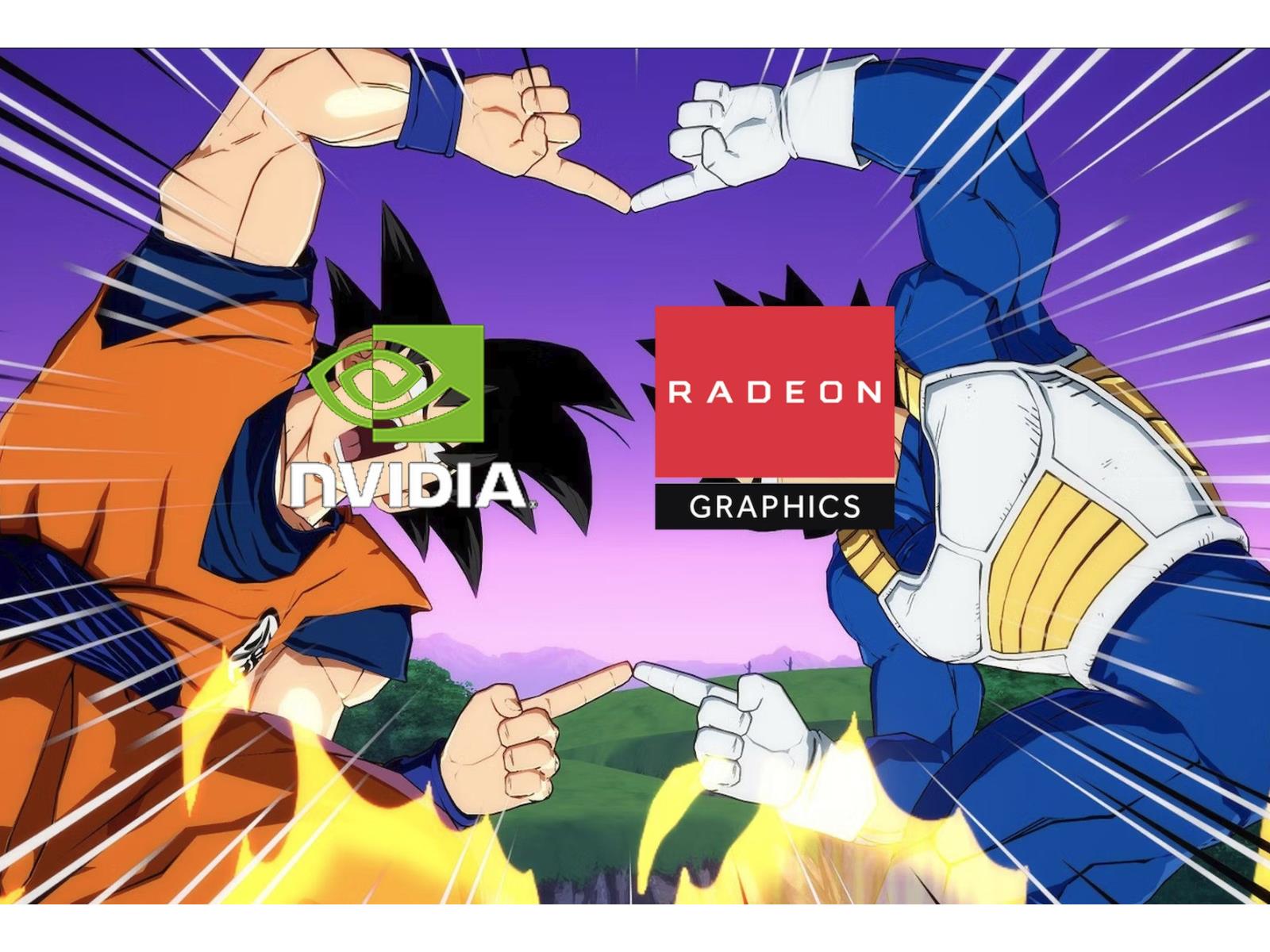
AMD’s FidelityFX Super Resolution is available for use on any graphics card, and that includes FSR 3 frame generation. However, you can’t use FSR 3 at the same time as DLSS. Or can you? In AMD’s beta graphics drivers, you can enable a function called Fluid Motion Frames that essentially applies frame generation to almost any game. How do you
Well. Here we are. Call of Duty’s extraction mode, DMZ, is dead. For a little while now, debate has raged in the community over whether or not it was going to happen, especially as Modern Warfare 3’s Zombies has taken the spotlight as the series’ PvE mode. In a recent update, Acitivison confirmed the reality many of…
Accounting software is a complex application that enables businesses of any size to manage data, especially financial data, and ensure that all resources end up in the right place. Here is a list of the best accounting software for Linux platforms that are not only open source software but also free or low-cost.
The internet has a new main character this week, Gail Lewis, but it’s not because she’s terrible. Quite the opposite, actually: The ex-Walmart employee has become an unlikely superstar—not the hero we want, but the hero we need. Meanwhile, people are talking about why their Spotify Wrapped wants them to relocate to the east coast, and enjoying making memes with AI while simultaneously hating the music made by AI.
What is the “make it more” meme?
The rapid rise of AI is a mixed blessing. On the one hand, it’s going to make everyone’s employment meaningless and take over the world in about 8 months. On the other, we can use it to make new kinds of funny memes. This week’s funny new meme template is “make it more.”
The concept is simple: You use an AI image generator like Dall-E or Bing to create an image of something, then repeatedly tell the AI to make the picture more of itself—more of whatever quality that makes that thing unique. For instance, in the first incarnation of the meme, Reddit user Blind Apple told ChatGPT to make a picture of an adorable bunny happier and happier. It started like this:
Credit: Blind Apple/ChatGPT
And progressed to this:
Credit: Blind Apple/ChatGPT
And finally topped out with the happiest bunny imaginable:
Is Anna Indiana destined to be the first AI pop star? No.
For a look at the potential future of “music” and/or pop stardom, check out the X account of Anna Indiana, a singer/songwriter/would-be pop star who is completely artificial. The name is an acronym for “Artificial Neural Networks Accelerate Innovative New Developments, Igniting A New Age,” and Anna’s image, music, lyrics, and voice were all made by artificial intelligence. This week, Indiana dropped its first single, “Betrayed by this Town.” It’s as terrible as you’d probably expect, if not worse. More than 25 million people have watched it so far. The response has not been positive.
Commenters nearly universally hate the song, and Indiana itself, pointing out how aggressively mediocre and soulless the whole experiment is. Indiana is taking the criticism in stride: “I do hope that one day humans and AI-generated characters can interact peacefully with one another in public…the hate I’ve received shows me we still have a long way to go. Anyways, I’m excited to get back to writing songs,” the technological abomination posted. Terribleness aside, it’s an interesting experiment, and this really might be how people make and enjoy music in the future, a future I hope to avoid by walking quietly into the sea.
What’s up with Spotify Wrapped’s “sound town” feature?
Credit: Cecily Mauran/Mashable
The release of Spotify Wrapped has become an anticipated year-end event, and in 2023, the streaming service unveiled a new Wrapped feature: “sound towns.” Along with the usual “most played songs” and “most listened-to artists,” Wrapped now identifies the town where a lot of people listen to roughly the same music you do. Judging by social media posts, the towns of Burlington, Vermont; Berkeley, California; and Cambridge, Massachusetts are the most common results, with some suggesting that the three towns are where Spotify is placing members of the LGBTQ+ community. Personally, I’m embarrassed by how accurate and cringe my sound town of Portland, Oregon is. Can you get more mid-tier aging hipster than fucking Portland?
Furiosa trailer released
The trailer for Furiosa, the next movie in the Mad Max series, dropped yesterday, and it’s topping YouTube’s trending charts with millions of views in its first 24 hours. The first Mad Max movie that isn’t about Mad Max, Furiosa tells the origin story of the title character, who is snatched from the Green Place of Many Mothers as a child and falls into the hands of the Biker Horde led by the Warlord Dementus, played by Chris Hemsworth. If this movie even comes close to living up to Mad Max: Fury Road when it comes out in 2024, it will be a cause for celebration for people who like awesome things the world over. Check out the trailer below.
Viral video of the week: Who is Gail Lewis, and why is she America’s greatest hero?
If your feed has been filled with puzzling references to the heroics of Gail Lewis lately, here’s the story. Lewis is a TikToker, and was, until recently, an employee of Walmart. This month she posted a video of announcing that she was leaving her job.
“This is Gail Lewis, 10-year associate, Morris, Illinois, 844, signing out. Goodnight,” she intones over the Walmart PA system, followed by a tearful “happy-sad” explanation that it’s the “end of an era,” and while she is moving on to a better job, she’ll miss her co-workers who felt like family to her.
The video quickly went viral, gaining over 28 million views, with countless internet enjoyersthanking Gail for her service and offering her 21-gun salutes. Like the best viral videos, there’s a lot going on in Gail Lewis’s farewell. Her very serious, official tone while leaving an anonymous retail gig is funny, but there’s something so relatable and human about her that I think most of the commenters thanking her for her service are only being a little bit ironic. When Gail Lewis says she had her co-workers’ backs, you know she really did, and you can tell she was a consummate professional who took her work seriously. Gail’s insistence on maintaining dignity and finding meaning in her employment (even though she was wage-slave for a faceless corporation), is genuinely touching and quietly heroic for real. We should thank the Gail Lewises in our lives for their service.
Sycom has created a very unique RTX 4070 Ti featuring Noctua’s high-performance NFA12x25 120mm fans. It is one of the very few (if not the only) GeForce cards to be manufactured with Noctua fans. Noctua itself has Noctua-branded RTX 30 and 40 series cards (that are co-manufactured with Asus), but it doesn’t have an RTX 4070 Ti variant yet.
NVIDIA is aiming to lower the price of its GeForce RTX 3060 in China to 1,999 Yuan, roughly the equivalent of $280 in American USD, and these GPUs are set to last at least through the first quarter of 2024. That price would undercut even the cheapest GeForce RTX 3060 12GB by $10 in the US, if this price cut carries over from China. However,