Nine Things You Need to Tell Your Home Insurer About

With homeownership comes with a lot of unavoidable bills, whether it’s for renovations and repairs or basic necessities like homeowners insurance—which is surprisingly expensive stuff. On average, homeowners pay about $1,428 annually for every $250,000 of coverage, which works out to about $120 per month. When you buy a house and take out a policy to protect it, everything is based on an appraisal of your home’s rebuilding costs: that is, how much it would cost to replace it, more or less, as is. This means that every time you make a significant change to your home, you need to tell your insurer about it because you probably need to adjust your coverage, which can raise or lower your rates.

Even if you don’t want to see your insurance premiums go up, you should still inform your insurer.

Why homeowner’s insurance rates go up

Some repairs or renovations you make to your home will raise the cost of your insurance—but that’s because they increase your home’s value, so you need more coverage. If your home will now require $50,000 more dollars to replace after a disaster, you need that extra coverage or you won’t get enough money in the settlement to fully replace what you had. A few examples of changes that can (and should!) raise your rates are:

  • Additions. If you add living space and increase the square footage of your home, you need to let your insurer know so the policy can be adjusted to accommodate for the extra cost of rebuilding those additions. This includes non-living spaces, like garages or sheds, that add value in other ways.

  • Finished spaces. If you bought an unfinished basement with a dirt floor and concrete walls and transformed it into a gaming paradise, you’ll want any insurance payout to cover it.

  • New pool. Pools are considered huge liabilities by insurance companies, so adding a pool to your home will definitely raise your insurance costs. Additionally, you should probably consider adding insurance if you install a pool—the Insurance Information Institute recommends an additional $300,000 to $500,000 of coverage.

  • Home business. If working from home means sitting at the kitchen table with a laptop, you probably don’t need to adjust your insurance. But if you start a home business that requires the installation of any sort of equipment, you should let your insurer know so they can determine if you need additional coverage—and higher rates.

Why homeowner’s insurance rates go down

All is not doom and gloom when it comes to insurance rates and improving or repairing your home. If you make any of these repairs or renovations, definitely tell your insurer, because there is a good chance your costs will actually go down:

  • New roof. Replacing a roof will usually lower your rates because it protects everything under the roof more effectively. In fact, putting a new roof on the house can lower your premium by as much as 35%. And if your new roof includes safety and storm-resistant features, you might get additional discounts. It’s definitely worth looking into.

  • New windows. If you replaced your inefficient old windows that didn’t open all the way with shiny modern windows, you may very well get a break on your insurance costs due to the lower chances of storm damage and improved security.

  • Modernized infrastructure. If you have all the electrical and/or plumbing in your house replaced and upgraded, you might see a significant drop in your insurance costs. The older the original equipment, the more dramatic this can be. Upgrading your heating, cooling, and water heater systems can also result in lower premiums, so alert your insurer to these changes pronto.

  • Security. Added an alarm system? A camera doorbell? Your insurer will be delighted to hear it, and will probably give you a discount as a result.

  • Fire and flood systems. Installing modern smoke detectors, leak detectors, and flood mitigation technologies like a sump pump or automatic water shutoff lowers the chances that your home will be damaged or destroyed, so may result in lower premiums.

Your homeowners insurance will never be free, but you can definitely shave a few bucks off of it just by keeping your insurer in the loop. This way you get a better, safer house and a lower monthly bill.


Source: LifeHacker – Nine Things You Need to Tell Your Home Insurer About

How to Install Netdata Monitoring Software on AlmaLinux 9

Netdata is an open-source, extensible, and real-time monitoring system for servers, containers, and applications. Follow our guide to install Netdata with Nginx as a reverse proxy on the AlmaLinux 9 server.

The post How to Install Netdata Monitoring Software on AlmaLinux 9 appeared first on Linux Today.


Source: Linux Today – How to Install Netdata Monitoring Software on AlmaLinux 9

Output’s AI-powered software automatically generates music sample packs from text prompts

Music-creation software company Output just launched an AI tool that generates free sample packs based on text prompts. These packs are royalty-free and include 30 samples that can be used in the digital audio workstation (DAW) of your choice, including Logic Pro, Ableton, Pro Tools and others.

The algorithm mixes and resynthesizes pre-existing samples to create new sounds that match the text prompt. This was developed to help music-makers move quickly, so they aren’t slowed down by hunting for that perfect sample to match the vibe of the track. Instead, just write something like “moody sounds for a rainy day” and let the AI assistant do the rest. You can also ask for sounds related to a specific event or samples based on a specific artist or genre.

The tool also allows for more nuanced prompts, like asking to generate samples in a particular key and tempo. Pack Generator is currently in beta, but available to use via a browser-based portal. This is the first available tool for Output’s Co-Producer suite of generative AI products. The company promises more to come throughout 2024.

One of the cool things about this tool is that it’s completely trained on Output’s in-house sample library, so it doesn’t pull from actual working artists, which is not true of most available AI products. It’s also not intended to replace artists in any way, as it just creates sample packs. It remains to be seen how useful these AI-generated samples will be in real-world productions, but Pack Generator is available now, so it won’t take long to find out.

Output has been a major player in the samples space for nearly a decade, offering meticulously crafted and clean sound packs. The company also has a popular product called Arcade that lets users mangle samples to create unique soundscapes.

This article originally appeared on Engadget at https://www.engadget.com/outputs-ai-powered-software-automatically-generates-music-sample-packs-from-text-prompts-184104250.html?src=rss

Source: Engadget – Output’s AI-powered software automatically generates music sample packs from text prompts

After 15 months Blue Origin’s New Shepard spacecraft will finally fly again

Photos from New Shepard launch day.

Enlarge / Blue Origin’s New Shepard launch system consists of a booster and a capsule. (credit: Blue Origin)

Blue Origin is finally returning to flight.

On Tuesday the company announced, via the social media site X, that its New Shepard spacecraft would launch no earlier than next Monday.

“We’re targeting a launch window that opens on Dec. 18 for our next New Shepard payload mission,” the company stated. “#NS24 will carry 33 science and research payloads as well as 38,000 @clubforfuture postcards to space.”

Read 8 remaining paragraphs | Comments


Source: Ars Technica – After 15 months Blue Origin’s New Shepard spacecraft will finally fly again

Starfield: Bethesda Is Working On 'New Ways Of Traveling'

If you were hoping for new ways to bounce about Bethesda’s jumbo-sized galaxy in space RPG Starfield, you might be in luck. In a recent Reddit response on Reddit t, the developer appears to have teased an upcoming feature update that will add “new ways of traveling” and that fans should expect regular updates moving…

Read more…


Source: Kotaku – Starfield: Bethesda Is Working On ‘New Ways Of Traveling’

These Simple Parmesan Tomato Puffs Are the Perfect Party Snack

Frozen puff pastry is one of the party host’s most reliable allies: delicious, versatile, and easy to work with. All are reasons I like to use it for quick assembly recipes, like parmesan tomato puffs. These holiday party-ready appetizers are handheld and mingle-friendly, and they only require four ingredients and 15 minutes in the oven. 

The key to working with puff pastry is to ensure it’s been thawed in the fridge according to the package’s directions. That’s really it, and a pretty accurate reflection of how easy this recipe is. To start, unfold the thawed puff pastry sheet. Use a two-inch or two and a half-inch biscuit cutter to cut circles out of the sheet. Using a two and a half-inch cutter and cutting the circles close together, I managed to cut 12 out of one sheet. Lay the pastry circles on a sheet tray that has been lined with parchment paper or a silicone baking mat.

Sprinkle each puff pastry circle with a pinch of grated or shredded parmesan cheese. Slice medium-small tomatoes in half or into half-inch slices. Try to use tomatoes that are the same size in diameter as the pastry circles you used, or smaller. I used Campari tomatoes because they’re sweeter than other varieties available this time of year in my area, and they’re about an inch and a half wide. 

Raw tomato slices on top of unbaked pastry circles.

Credit: Allie Chanthorn Reinmann

Place a tomato slice in the center of each pastry circle, cut side up. (If you place the slices off center, the puff may rise unevenly and the tomato could slide off.) Add another pinch of grated parmesan to the top of each tomato. Sprinkle on a bit of salt and a few cracks of freshly ground pepper. Pop the tray into a 400°F oven for 15 minutes, by which time the pastry should be fully puffed and evenly browned.

Roasting the tomatoes concentrates their sweetness, making for a lovely pairing with the salty parmesan and buttery pastry. If you want this quick and easy party appetizer to express more potent holiday vibes, add some green via the tender ends of fresh thyme sprigs, providing a flavorful garnish for each tomato puff.

The puffs are best when eaten the same day they’re made because the pastry only stays flaky, light, and crisp for six to eight hours at room temperature. They may not be the best for making in advance, but you can make 24 puffs in about as many minutes from start to finish, which makes this a handy party recipe to have in your toolkit.

Parmesan Tomato Puffs Recipe

Ingredients:

  • 1 box puff pastry, thawed

  • 12 Campari tomatoes, sliced in half (or half-inch slices for bigger ones)

  • Salt for sprinkling

  • Grated or shredded parmesan cheese, for sprinkling

  • Black pepper, for sprinkling (optional)

1. Preheat the oven to 400°F. Line a baking sheet with parchment paper or a silicone baking mat.

2. Unroll the puff pastry. Using a two and a half-inch circular cutter, cut the puff pastry sheets into as many circles as you can get. Probably around 24 circles. Lay the pastry circles on the baking sheets with at least an inch of space around them to grow.

3. Sprinkle each of them with a pinch of parmesan. I eyeball-it, but it’s about a half teaspoon for each circle. Lay a tomato slice on top, directly in the center, cut-side up. Top with another pinch of cheese, a sprinkle of salt and a bit of black pepper, if using. 

4. Bake them for 15 minutes, or until the puffs are well-risen and toasted all around. Serve immediately. 


Source: LifeHacker – These Simple Parmesan Tomato Puffs Are the Perfect Party Snack

The End Of A Glorious Era, ESA Retires E3 Games Expo For Good

The End Of A Glorious Era, ESA Retires E3 Games Expo For Good
If you still had “attend E3” on your bucket list, it’s time to scratch that one out. The ESA has announced on Xwitter today that the Electronic Entertainment Expo (better known as E3) is well and truly dead. This announcement marks the end of an era as the biggest and longest-lived games expo in America finally carks it.

If you read that

Source: Hot Hardware – The End Of A Glorious Era, ESA Retires E3 Games Expo For Good

Police are using pharmacies to secretly access medical information about members of the public

A Senate Finance Committee inquiry revealed on Tuesday that police departments can get access to private medical information from pharmacies, no warrant needed. While HIPAA may protect some access to personally identifiable health data, it doesn’t stop cops, according to a letter from Senator Ron Wyden, Representative Pramila Jayapal and Representative Sara Jacobs to the Department of Health and Human Services. None of the major US pharmacies are doing anything about it either, the members of Congress say. 

“All of the pharmacies surveyed stated that they do not require a warrant prior to sharing pharmacy records with law enforcement agents, unless there is a state law that dictates otherwise,” the letter said. “Those pharmacies will turn medical records over in response to a mere subpoena, which often do not have to be reviewed or signed by a judge prior to being issued.”

The committee reached out to Amazon, Cigna, CVS Health, The Kroger Company, Optum Rx, Rite Aid Corporation, Walgreens Boots Alliance and Walmart about their practices for sharing medical data with police. While Amazon, Cigna, Optum, Walmart and Walgreen said they have law enforcement requests reviewed by legal professionals before complying, CVS Health, The Kroger Company and Rite Aid Corporation said they ask in-store staff to process the request immediately. 

Engadget asked the pharmacies mentioned in the letter for comment about the claims. CVS said its pharmacy staff are trained to handle these inquiries and its following all applicable laws around the issue. Walgreens said it has a process in place to assess law enforcement requests compliant with those laws, too, and Amazon said that although law enforcement requests are rare, it does notify patients and comply with court orders when applicable. The others either haven’t responded or refuse to comment.

The pharmacies mostly blamed the current lack of legislative protections for patient data for their willingness to comply with cop requests. Most of them told the committee that current HIPAA law and other policies let them disclose medical records in response to certain legal requests. That’s why the Senate Finance Committee is targeting HHS to strengthen these protections, especially since the 2023 Dobbs decision let states criminalize certain reproductive health decisions. 

Under current HIPAA law, patients have the right to know who is accessing their health information. But individuals have to request the medical record disclosure data, instead of health care professionals being required to share it proactively. “Consequently, few people ever request such information, even though many would obviously be concerned to learn about disclosures of their private medical records to law enforcement agencies,” the letter states. The letter also urges pharmacies to change their policies to require a warrant, and publish transparency reports about how data is shared. 

This article originally appeared on Engadget at https://www.engadget.com/police-are-using-pharmacies-to-secretly-access-medical-information-about-members-of-the-public-182009044.html?src=rss

Source: Engadget – Police are using pharmacies to secretly access medical information about members of the public

Spider-Man And Wolverine Devs Hit By Alleged Ransomware Attack [Update]

Insomniac Games, the PlayStation-owned developer behind Marvel’s Spider-Man and the upcoming Marvel’s Wolverine, was reportedly breached by a ransomware gang that claims to have stolen employees’ personal data and unreleased information about its upcoming X-Men action game.

Read more…


Source: Kotaku – Spider-Man And Wolverine Devs Hit By Alleged Ransomware Attack [Update]

Apple's 15-inch M2 MacBook Air is up to $250 off right now

There’s still plenty of time to snap up a holiday gift for a loved one (or yourself). If you’re feeling particularly generous and you or someone you care about could do with a new laptop, it’s worth checking out deals on Apple’s 15-inch MacBook Air. Some configurations have dropped to record low prices, including one with 256GB of storage and an M2 chipset. That MacBook Air has dipped from $1,299 to $1,049 — which is $250 off the regular price.

This is an excellent entry point into the Mac ecosystem. In fact, the M2-powered MacBook Air (albeit a 2022 configuration) is our pick for the best MacBook overall. The 15.3-inch model that’s on sale here has a Liquid Retina display with 500 nits of brightness, 1080p FaceTime HD camera and Touch ID.

While the M2-powered MacBook Air should be more than capable enough of handling most tasks, it’s disappointing that the base model only comes with 8GB of RAM. That’s going to make tasks such as video and image editing, as well as even gaming, a bit more onerous on this MacBook Air.

In any case, we gave the 15-inch MacBook Air a score of 96 in our review in June. We appreciated the larger display compared with the 13.6-inch MBA, though lamented the fact the refresh rate is limited to 60Hz. Great battery life (the MBA ran for about 12 hours while handling day-to-day work tasks), terrific audio and a top-notch keyboard and trackpad are major plus points. One quibble is that, despite its great performance, the M2 chipset is getting a little long in the tooth — rumors suggest an M3-powered MacBook Air could debut in March.

Meanwhile, if you could use some more built-in storage than the 256GB that comes with this laptop, you can opt for a variant with 512GB for $1,249. That’s also $250 off and marks another record low. However, that model still only has 8GB of memory.

Follow @EngadgetDeals on Twitter and subscribe to the Engadget Deals newsletter for the latest tech deals and buying advice.

This article originally appeared on Engadget at https://www.engadget.com/apples-15-inch-m2-macbook-air-is-up-to-250-off-right-now-181005869.html?src=rss

Source: Engadget – Apple’s 15-inch M2 MacBook Air is up to 0 off right now

A Decade Later, GTA Online Finally Has Animals Running Around

‘Tis the season, once again, for Rockstar Games to drop another massive (and free) Grand Theft Auto Online update. And this time, not only has the company added a whole new chop shop business, but it’s also added drift races, new cars, and animals, too. Yes, it took a decade and three console generations, but finally, …

Read more…


Source: Kotaku – A Decade Later, GTA Online Finally Has Animals Running Around

[$] Project Bluefin: A customized Fedora Silverblue desktop image

So-called “immutable” Linux distributions have been in development for
some time, but (unless you count Chrome OS) haven’t gained much traction. Project Bluefin, is a heavily
customized set of Fedora
Silverblue
images coming from the Universal Blue community; they are
designed to deliver a reliable Linux desktop that’s as easy to use as a
Chromebook but more customizable. Bluefin’s mission is to change up
the desktop experience and attract a new generation of open-source
contributors with a “cloud-native”
take
on developing and delivering the operating system.

Source: LWN.net – [$] Project Bluefin: A customized Fedora Silverblue desktop image

Tesla claims California false-advertising law violates First Amendment

Aerial view shows cars parked at the Tesla factory in Fremont, California.

Enlarge / Cars parked at the Tesla factory in Fremont, California, on February 10, 2022. (credit: Getty Images | Josh Edelson)

Tesla is trying to use a free speech argument to defeat a complaint that it falsely advertised “Autopilot” as an autonomous vehicle system. In response to the California Department of Motor Vehicles allegation about Autopilot, Tesla claims the state laws cited by the DMV violate the US Constitution’s First Amendment.

The DMV’s July 2022 complaint alleges that Tesla falsely advertises its Autopilot-enabled cars as operating autonomously and seeks a suspension or revocation of Tesla’s manufacturer license.

Tesla’s response, which was filed last week and published yesterday in a story by The Register, says that several California statutes and regulations cited by the DMV “are unconstitutional under the First Amendment to the United States Constitution and Article I, Section 2, of the California Constitution, as they impermissibly restrict Tesla’s truthful and nonmisleading speech about its vehicles and their features.”

Read 13 remaining paragraphs | Comments


Source: Ars Technica – Tesla claims California false-advertising law violates First Amendment

Researchers fuse lab-grown human brain tissue with electronics

In a story ripped from the opening scenes of a sci-fi horror movie, scientists have bridged a critical gap between the biological and electronic. The study, published in Nature Electronics (summarized in Nature), details a “hybrid biocomputer” combining lab-grown human brain tissue with conventional circuits and AI. Dubbed Brainoware, the system learned to identify voices with 78 percent accuracy. It could one day lead to silicon microchips fused with neurons.

Brainoware combines brain organoids — stem-cell-derived clusters of human cells morphed into neuron-filled “mini-brains” — with conventional electronic circuits. To make it, researchers placed “a single organoid onto a plate containing thousands of electrodes to connect the brain to electric circuits.” The circuits, speaking to the brain organoid, “translate the information they want to input into a pattern of electric pulses.”

The brain tissue then learns and communicates with the technology. A sensor in the electronic array detects the mini-brain’s response, which a trained machine-learning algorithm decodes. In other words, with the help of AI, the neurons and electronics merge into a single (extremely basic, for now) problem-solving biomachine.

The researchers taught the computer-brain system to recognize human voices. They trained Brainoware on 240 recordings of eight people speaking, “translating the audio into electric to deliver to the organoid.” The organic part reacted differently to each voice while generating a pattern of neural activity AI learned to understand. Brainoware learned to identify the voices with 78 percent accuracy.

PHILADELPHIA, PA - AUGUST 15: Fadi Jacob, a visiting graduate student from Johns Hopkins University, dissects a a glioblastoma brain tumor at the University of Pennsylvania Clinical Research Building in Philadelphia, Pennsylvania on August 15, 2018.  The tumor, which came straight from post-op will be dissected into hundreds of small pieces that will be used to grow tumor organdies. (Photo by Jessica Kourkounis for The Washington Post via Getty Images)
Human brain organoids
The Washington Post via Getty Images

The team views the work as more proof of concept than something with near-term practical use. Although previous studies showed two-dimensional neuron cell cultures could do similar things, this is the first trial run using a trained three-dimensional lump of human brain cells. It could point to a future of biological computing, where the “speed and efficiency of human brains” spark a superpowered AI. (What could go wrong?)

Arti Ahluwalia, a biomedical engineer at Italy’s University of Pisa, sees the technology shedding more light on the human brain. Since brain organoids can duplicate the nervous system’s control center in ways simple cell cultures can’t, the researcher views Brainoware (and the further advances it could spawn) as helping model and study neurological disorders like Alzheimer’s. “That’s where the promise is; using these to one day hopefully replace animal models of the brain,” Ahluwalia told Nature.

Challenges for the bizarre proto-cyborg tech include keeping the organoids alive, especially when moving to the more complex areas where scientists eventually want to deploy them. The brain cells must grow in an incubator, which could become more challenging with bigger organoids. The next steps include working to learn how brain organoids adapt to more complex tasks and engineering them for greater stability and reliability.

This article originally appeared on Engadget at https://www.engadget.com/researchers-fuse-lab-grown-human-brain-tissue-with-electronics-175507932.html?src=rss

Source: Engadget – Researchers fuse lab-grown human brain tissue with electronics

Latest Obesity Drug Really Does Keep the Weight Off—If You Keep Taking It

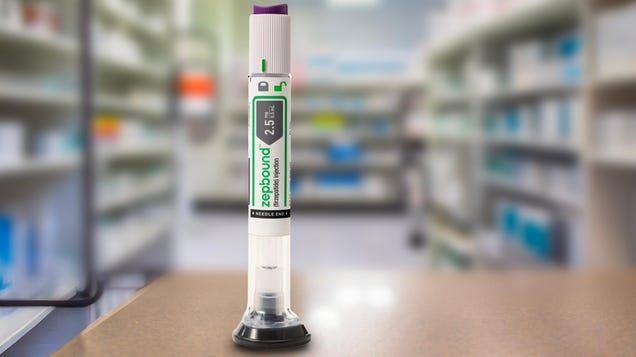
New research shows that tirzepatide, the latest FDA-approved obesity drug, really can help people lose substantial amounts of weight—but only if they continue taking it. The study found that people who stopped taking tirzepatide after 36 weeks regained much of their lost weight within a year, while those who continued…

Read more…


Source: Gizmodo – Latest Obesity Drug Really Does Keep the Weight Off—If You Keep Taking It

Ancient ruins were once a site for gruesome animal sacrifices

Image of a series of structures, including a square courtyard, steps, and walkways.

Enlarge / The site at casas del Turuñuelo, with 1 marking the courtyard. (credit: Iborra Eres, et al.)

Whether it was to appease a deity or honor the dead, ritual animal sacrifice was widespread in the ancient world. But there is a region where it appears that hardly any of these rituals occurred for an extended period of time.

Until now, the archaeological record was almost devoid of any evidence of significant animal sacrifices in the Mediterranean region during the Iron Age. Hardly any written sources describing the practice have been found. While the exact reason that we don’t see any evidence remains unknown, archaeologists have now unearthed more details on one of the only sites sacrifices were known to happen in the Iron Age Mediterranean, a location in western Spain.

The bones of Casas del Turuñuelo now tell us more from beyond the grave than they ever have. “The 52 animals deposited in the courtyard of Casas de Turuñuelo represent a series of episodes of slaughter,” a team of archaeologists said in a study recently published in PLOS ONE.

Read 10 remaining paragraphs | Comments


Source: Ars Technica – Ancient ruins were once a site for gruesome animal sacrifices