Microsoft Copilot can now make cute little songs on demand

Microsoft Copilot just rolled out a new feature that creates songs via text prompt, thanks to a partnership with AI-based music creation platform Suno. Microsoft says it gives users the ability to craft personalized songs, “regardless of musical background.” Suno has long been working with various algorithms to create an AI that can whip up entire songs and it looks like the company has struck gold.

When you access this tool, all you have to do is enter a prompt and let the algorithm do the rest. The end result should be “fun, clever and personalized” songs, complete with lyrics and singing voices. You can also make an instrumental tune, if that’s your bag. AI use has been ramping up in the music-making space, but most of those tools are intended to help musicians. This is primarily for non-musicians looking to make a tune for a birthday email or something.

To that end, Microsoft gives prompt examples like “create a pop song about adventures with your family” and “make a song that captures the spirit of growing up.” It looks like the Suno add-on will have access to any personal data accrued by Copilot during use, so these songs could, in theory, get pretty specific.

The feature begins rolling out today, but it’s a tiered release. In other words, it could be a few weeks before it reaches your update box. In the meantime, you’ll have to make do with the thousand other things that Copilot can do.

This article originally appeared on Engadget at https://www.engadget.com/microsoft-copilot-can-now-make-cute-little-songs-on-demand-182305372.html?src=rss

Source: Engadget – Microsoft Copilot can now make cute little songs on demand

Binance to pay $2.7 billion fine after hiding shady transactions from feds

Read 10 remaining paragraphs | Comments


Source: Ars Technica – Binance to pay .7 billion fine after hiding shady transactions from feds

Marvel Became Its Own Worst Enemy in 2023

This year, the once-untouchable Marvel Studios finally showed some vulnerability. For 15 years, the studio behind some of the biggest and best superhero movies ever was all but invincible. Every single gamble paid off. Every story expertly seeded over a decade blossomed beautifully. And even in the less cohesive few…

Read more…


Source: Gizmodo – Marvel Became Its Own Worst Enemy in 2023

Polish Train-Bricking Scandal Reportedly Kept Under Wraps by Government Officials

A Polish hacking group, Dragon Sector, went public recently with a scandal about one of Poland’s oldest train makers, Newag, bricking its own trains when they were repaired by third parties. However, new reporting on Tuesday from Polish publication Onet alleges that Dragon Sector first went to government officials…

Read more…


Source: Gizmodo – Polish Train-Bricking Scandal Reportedly Kept Under Wraps by Government Officials

The Play Store preps remote app uninstall feature

The Play Store preps remote app uninstall feature

Enlarge (credit: Google Play)

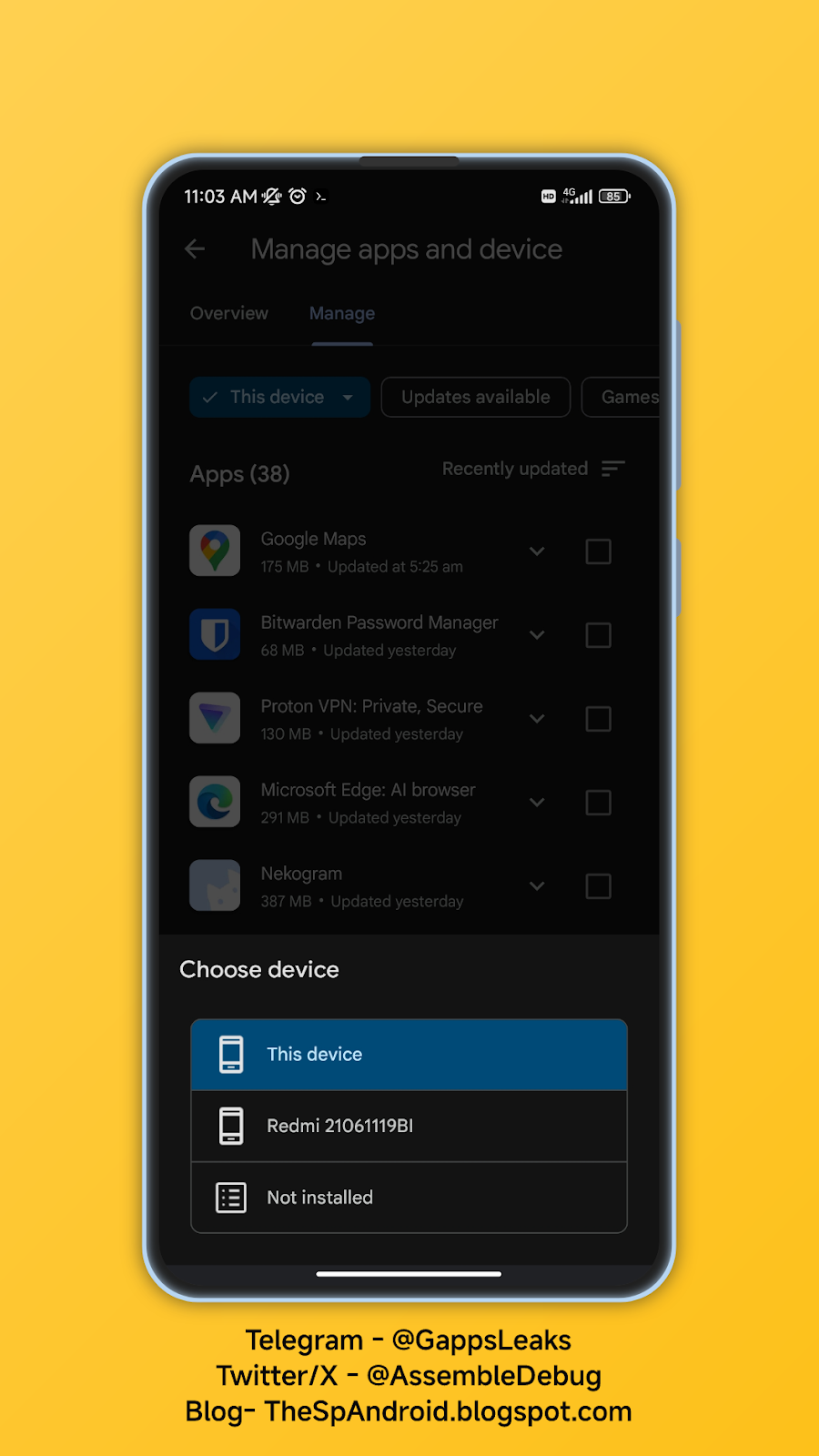
One of the neatest features of the Play Store is remote app installation. If you have multiple devices signed into the same Google account, the Play Store’s “install” button will let you pick any of those devices as an installation target. If you find an app you like, it’s great to queue up installs on your phone, watch, TV, tablet, laptop, and car, all from a single device. It makes sense, then, that you might want to be able to uninstall apps from all your devices, too.

The new feature coming to the Play Store will let you do exactly that: remote uninstalls from any device on your account. The first sign of the feature is in the latest Android patch notes, which list a “New feature to help you uninstall apps on connected devices.” It doesn’t seem like this has been activated yet, but the news site TheSpAndroid has photos of the feature, showing what you would expect. Opening the Play Store and uninstalling an app will bring up a list of devices, just like installing does now.

It might not look like it, but under the hood, all installs from the Play Store happen via Android’s push notification system. By default, the press of the Play Store install button requests Google to send an app push to your current device, but there’s no need for the target device of a remote app install to be turned on and unlocked. Just like any other push notification, when the device connects to the Internet and sees the push, it will wake up and do whatever business it needs to do—usually, that’s “show a message and beep,” but in this case, that business is “install an app.” Google has slowly exposed its remote install functionality to the world, first with the Android Market (now Play Store) website in 2011. It took 11 years for a similar feature to come to the Play Store phone app.

Read 1 remaining paragraphs | Comments


Source: Ars Technica – The Play Store preps remote app uninstall feature

There Might Be a Cheaper Fix to Your Expensive Appliance Repair

Some appliances are more or less necessary to survival these days, like a refrigerator. Others, like dishwashers or laundry machines, save us a lot of time and personal labor. These appliances can be a significant investment in terms of money, but the time and effort they save is kind of priceless.

If there was just one initial cost to an appliance and you were set for life, that would be great. Unfortunately, like everything else in this world, appliances have a useful life span and eventually break down. And then you go through the rite of passage known as Finding Out How Much Appliance Repairs Cost, which is a number economists have defined as a lot. If your hair turns white when you get a repair quote on an appliance, don’t despair: There’s a much cheaper option for many appliance repairs.

Why repairs can be so expensive

What’s frustrating about repairing an appliance is that it’s essentially paying money to get back to zero, the situation you were in yesterday when your dishwasher wasn’t blinking an inscrutable error code and making a weird grinding noise. And the money you’re paying can be significant: The average cost to repair a major appliance like a dishwasher or a clothes dryer is about $175, and some appliances like an oven can cost as much as $500—which means the repair can cost as much as a new unit.

There are many reasons for these costs. Companies have to manufacture and warehouse replacement parts for a long, long time after introducing an appliance to the market, and that costs money. And the older an appliance gets, the harder it can be to find those parts, making them even more expensive. And then there’s labor, which averages between $50 and $150 an hour. That means that with some repairs, you’re already going to be $300 in the hole without even paying for a replacement part.

With some appliance parts, like small motors or mechanical items, your only option will be a repair professional or a replacement model. But many modern appliances malfunction because of failed control boards—essentially a circuit board that runs the mechanical bits of the appliance. The control board is kind of your appliance’s brain, and it can be one of the most expensive parts to replace. If you’re getting an error code on a display, it’s often a control board problem. And you can get control boards repaired through the mail—often for less than $100.

How to mail in the control board

Step one will be to identify the specific control board you need repaired, so you’ll need to know the model number of your appliance. If you kept the manual, you’re golden. If you didn’t, or inherited the appliance, there are some typical locations where model numbers are located. Home Depot’s appliance repair center can help you locate the model number if you’re not sure.

Once you have the model number, you can use Home Depot’s site or a site like PartSelect to look up the precise part number of your control board, then go to a mail-in repair site like Electronic Restore, Circuit Board Medics, or FixYourBoard.com to check on availability and price. Typically, repairs cost a flat fee between $70 and $100, plus shipping, so this can turn out to be a lot cheaper than hiring a professional.

Of course, there are a few things to keep in mind:

  • Handiness. These sorts of repairs require you to be handy enough to identify the part you’re looking for, remove it from your appliance, and then put it back. Home Depot’s Repair Clinic can be a great resource for this, but if you’re not comfortable doing this kind of stuff you’re better off hiring a pro despite the extra cost. There are also plenty of videos out there that will show you how to remove a control board from various appliances.

  • Certainty. Be sure to diagnose the problem correctly. Control board problems tend to show up with error codes on display panels or blinking lights on the appliance. If there appears to be a physical problem with the appliance—no gas to the burners in a stove, for example, or a dishwasher that runs but doesn’t drain properly—it’s probably not the control board that needs fixing.

  • No guarantees. The repair sites don’t make any wild promises of success; you might spend $100 on shipping them a control board only to be informed it can’t be repaired.

Keep in mind that if you’re handy enough to pull a control board from your appliance, you’re probably handy enough to replace other parts on your own. You can order parts from PartSelect, for example, for a relatively low cost compared to a repair call.


Source: LifeHacker – There Might Be a Cheaper Fix to Your Expensive Appliance Repair

The DOJ says it disrupted the Blackcat ransomware group

The US Department of Justice says it has disrupted the Blackcat ransomware group. Also called ALPHV or Noberus, the hackers have targeted over 1,000 computer networks and extorted millions of dollars from victims. Bloomberg reports its members were known for speaking Russian. “In disrupting the BlackCat ransomware group, the Justice Department has once again hacked the hackers,” Deputy Attorney General Lisa O. Monaco wrote in a DOJ news release.

The FBI says it developed a decryption tool, which it has used to help over 500 Blackcat victims recover their data — saving more than $68 million in ransom payments. The agency adds that it has “gained visibility into the Blackcat ransomware group’s computer network” and seized several of its websites.

“With a decryption tool provided by the FBI to hundreds of ransomware victims worldwide, businesses and schools were able to reopen, and health care and emergency services were able to come back online,” Monaco wrote. “We will continue to prioritize disruptions and place victims at the center of our strategy to dismantle the ecosystem fueling cybercrime.”

U.S. President Joe Biden listens as Deputy Attorney General Lisa Monaco speaks at an event announcing measures to fight ghost gun crime, at the White House, in Washington, U.S., April 11, 2022. REUTERS/Kevin Lamarque
US Deputy Attorney General Lisa O. Monaco with President Biden.
REUTERS / Reuters

Blackcat’s developers create and update the ransomware software, which “affiliates” deploy in attacks on high-value targets; the developers and attackers then split the profits. Once an affiliate has infiltrated a network, they typically steal sensitive data before encrypting the victim’s system, incapacitating it. They then ask for a ransom. If the victims pay, the hackers say they’ll decrypt the system and abstain from exposing their confidential information. If the targets refuse to pony up, the hackers leave the victims locked out and publish their spicy documents on the dark web.

Blackcat took credit for infiltrating businesses and other US and European organizations. These included hacks on MGM Resorts, Caesars Entertainment, Reddit, US critical infrastructure (government facilities, emergency services, defense industrial base companies, critical manufacturing and healthcare facilities), a large UK hospital group and various attacks across the energy sector.

Its members aren’t afraid to think outside the box, either. Last month, Blackcat affiliates reportedly ratcheted the pressure on a hacked company by snitching to the SEC for not reporting their infiltration.

Although this could only be a fleeting upper hand in a long-running game of cat and mouse, the DOJ warns it’s just getting started. “Criminal actors should be aware that the announcement today is just one part of this ongoing effort,” wrote the DOJ’s Acting Assistant Attorney General Nicole M. Argentieri. “Going forward, we will continue our investigation and pursue those behind Blackcat until they are brought to justice.”

This article originally appeared on Engadget at https://www.engadget.com/the-doj-says-it-disrupted-the-blackcat-ransomware-group-174755936.html?src=rss

Source: Engadget – The DOJ says it disrupted the Blackcat ransomware group

Turquoise taillights tell you this Mercedes is driving autonomously

Read 6 remaining paragraphs | Comments


Source: Ars Technica – Turquoise taillights tell you this Mercedes is driving autonomously

See the Breathtaking Power of Iceland's Volcanic Eruption

A trepidatious Iceland has waited for this moment for over a month: a large crack in the ground has started to spew up lava. In mid-November, hundreds of tremors—earthquakes that portended the eruptions to come—forced the evacuation of the nearby Icelandic village of Grindavík and at least one famous tourist…

Read more…


Source: Gizmodo – See the Breathtaking Power of Iceland’s Volcanic Eruption

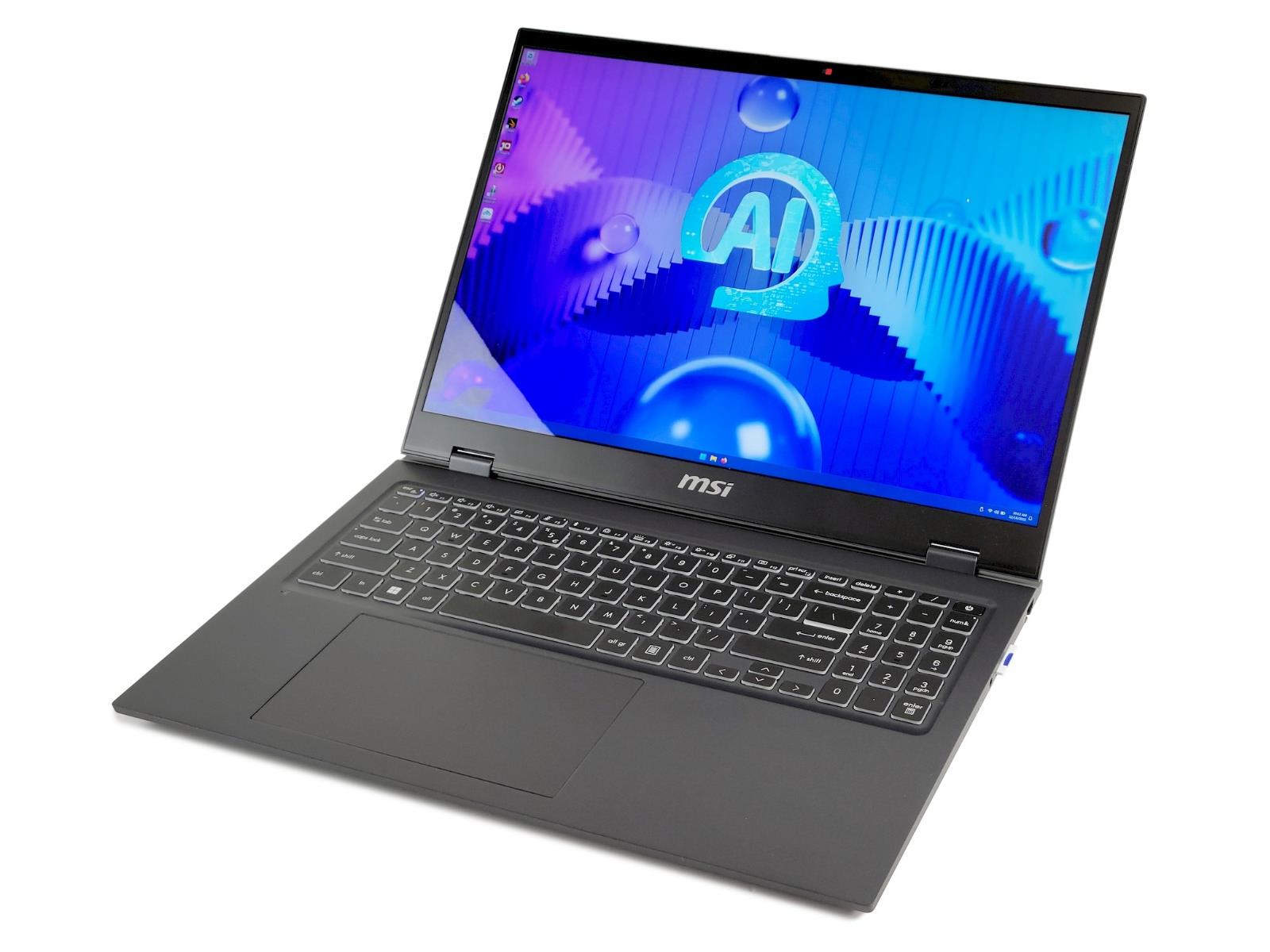
Meteor Lake Core Ultra Review: Intel's All New Tile CPU Tested

Meteor Lake Core Ultra Review: Intel's All New Tile CPU Tested
Ask anyone in the chip industry, and you’ll probably get a similar answer: chiplet-based CPU designs are the way of the future for high-performance, advanced processor, and it’s fairly likely that most highly integrated CPU architectures will be headed that way eventually. Intel obviously agrees, as the company has been deploying disaggregated…

Source: Hot Hardware – Meteor Lake Core Ultra Review: Intel’s All New Tile CPU Tested

SSH protects the world’s most sensitive networks. It just got a lot weaker

Terrapin is coming for your data.

Enlarge / Terrapin is coming for your data. (credit: Aurich Lawson | Getty Images)

Sometime around the start of 1995, an unknown person planted a password sniffer on the network backbone of Finland’s Helsinki University of Technology (now known as Aalto University). Once in place, this piece of dedicated hardware surreptitiously inhaled thousands of user names and passwords before it was finally discovered. Some of the credentials belonged to employees of a company run by Tatu Ylönen, who was also a database researcher at the university.

The event proved to be seminal, not just for Ylönen’s company but for the entire world. Until that point, people like Ylönen connected to networks using tools which implemented protocols such as Telnet, rlogin, rcp, and rsh. All of these transmitted passwords (and all other data) as plaintext, providing an endless stream of valuable information to sniffers. Ylönen, who at the time knew little about implementing strong cryptography in code, set out to develop the Secure Shell Protocol (SSH) in early 1995, about three months after the discovery of the password sniffer.

As one of the first network tools to route traffic through an impregnable tunnel fortified with a still-esoteric feature known as “public key encryption,” SSH quickly caught on around the world. Besides its unprecedented security guarantees, SSH was easy to install on a wide array of operating systems, including the myriad ones that powered the devices administrators used—and the servers those devices connected to remotely. SSH also supported X11 forwarding, which allowed users to run graphical applications on a remote server.

Read 29 remaining paragraphs | Comments


Source: Ars Technica – SSH protects the world’s most sensitive networks. It just got a lot weaker

Here's How Apple AirTags Actually Work

AirTags might seem a bit like magic. They’re tiny, fit nicely in backpacks and on keychains, and they can somehow identify where your most important stuff is at all times. Of course, that also might make them seem dangerous, as it appears all too easy for someone to slip an AirTag into your bag or car to track your whereabouts. AirTags are pretty safe to use these days, though: They’re simple trackers that rely on clever tech from Apple to work privately and securely. And if anyone decides to abuse AirTags for nefarious reasons, there are built-in tools to thwart their attempts.

What is an AirTag?

An AirTag is a simple tracker based on Bluetooth, UWB (ultra-wideband), and NFC. It looks like a thick coin, and can be used to track pretty much any object you can attach it to. You can keep it in your backpack, wallet, luggage, pet’s collar, on your Apple TV remote, or with any object you lose frequently. Some have effectively used AirTags to track checked-in luggage when flying. People also use AirTags to check in on their kids—however they’re not always effective for real-time tracking. 

How do AirTags actually work?

AirTags don’t have a GPS chip. Instead, they send out Bluetooth signals that can be received by nearby devices that are on Apple’s Find My network. This includes any device signed in to iCloud, such as an iPhone, iPad, or Mac. They can be any device on the Find My network, not just yours, which is why AirTags can be so useful: Anyone’s connected Apple device becomes a beacon for your AirTag. Once those devices connect to the internet, they send an update about your AirTag’s location, which allows you to locate your tagged item. AirTags are useless if they’re in a zone with no network or with no connected device nearby. 

You don’t just have to rely on this Bluetooth tracking technology to find your AirTag, either. If you’re in the vicinity of your device, you can go to the Find My app on your Apple device, tap your AirTag, and use Precision Finding to locate it. This works by using ultra-wideband technology to point you in the direction of the tag. Literally: Find My will direct you exactly where to go to find your AirTag, complete with haptic vibrations to note when you’re getting close.

How much are AirTags?

Apple’s AirTags are $29.99 a pop, but you can get a 4-pack for $99.99 if you want to save a bit of money. You can also wait for sales, such as the one on Black Friday, to get even better deals on AirTags.


Products to consider:


How long do AirTags last?

An AirTag’s battery lasts up to a year; when the battery is close to running out, you’ll get a notification from the Find My app on your iPhone. You can easily replace the battery, too, as Apple uses the affordable standard 3V CR2032 lithium coin battery.

AirTags and privacy

Apple says the entire process of finding an AirTag is anonymous and encrypted to preserve your privacy. Apple doesn’t know which devices relay your location, or where your AirTag is. The AirTag doesn’t store location data or a list of places you’ve been to, either, and the company claims that it doesn’t impact your battery life or data usage. 

You can share the location of your AirTag with other people, even if they’re not a part of your iCloud family. This could help with situations where multiple people need to keep an eye on a particular AirTag, such as two owners of a tagged pet.

But let’s discuss the dangers of AirTags: If someone decides to use an AirTag to track your movements, there’s a built-in safety feature to help: When an AirTag is separated from its owner, and finds itself within range of your iPhone or Android phone, your device will warn you an unknown AirTag is near you. You’ll be able to ping the tracker if you don’t recognize it, and deal with it accordingly.

AirTags accessories and engraving

Although AirTags are pretty easy to place anywhere, there are a few use cases where accessories can make things better. For example, you could use an AirTag keychain or holder to make it easier to track keys or other objects. You can also buy AirTags accessories directly from Apple. If you buy your AirTags through Apple, you can also engrave them with up to four characters. 


Source: LifeHacker – Here’s How Apple AirTags Actually Work

Sony's Video Game Plans Leaked By Ransomware Group

Speaking of the 1.3 million stolen files of Sony division Insomniac Games that hackers have leaked, the data dump includes game roadmaps, budgets, and detailed information about Insomniac’s upcoming Wolverine game, which a document says is slated for 2026. Bloomberg reports: According to the files, Sony plans to release several Marvel-inspired titles in the next decade, including Spider-Man 3, based on Venom and X-Men games. The files also reference a new Ratchet & Clank game apparently slated for 2029. Insomniac and Marvel’s licensing commitment is as high as $621 million to develop and market the X-Men games by 2035, according to one document, which was one of many circulating on the internet. The documents also give us a peak into how Sony internally felt about Microsoft’s acquisition of Blizzard. Eurogamer adds: Sony has privately described Microsoft’s $68.7bn takeover of Activision Blizzard as a potential “leapfrog” moment for its long-term console rival to take the lead. Threats identified by Sony include Microsoft using Call of Duty to “disrupt and threaten console gaming and game subscription markets”, with a potential “massive threat to PlayStation Plus.” […] “Activision provides incredible strategic value across live service games, scale in mobile and PC storefront (Battle.net),” Sony wrote, describing the various advantages Microsoft has now added to its portfolio with the deal freshly completed.

Read more of this story at Slashdot.


Source: Slashdot – Sony’s Video Game Plans Leaked By Ransomware Group

Hideo Kojima Is 'Too Tired And Exhausted These Days'

The last few years have been pretty tough both within the game industry and beyond it. Between the pandemic, ongoing wars, greedy corporations squeezing money out of us all, politicians becoming even more vile, and a general sense that things aren’t getting better, it’s hard to stay positive. All of this has led to a…

Read more…


Source: Kotaku – Hideo Kojima Is ‘Too Tired And Exhausted These Days’

US Congress recommends placing assets at Lagrange points to counter China

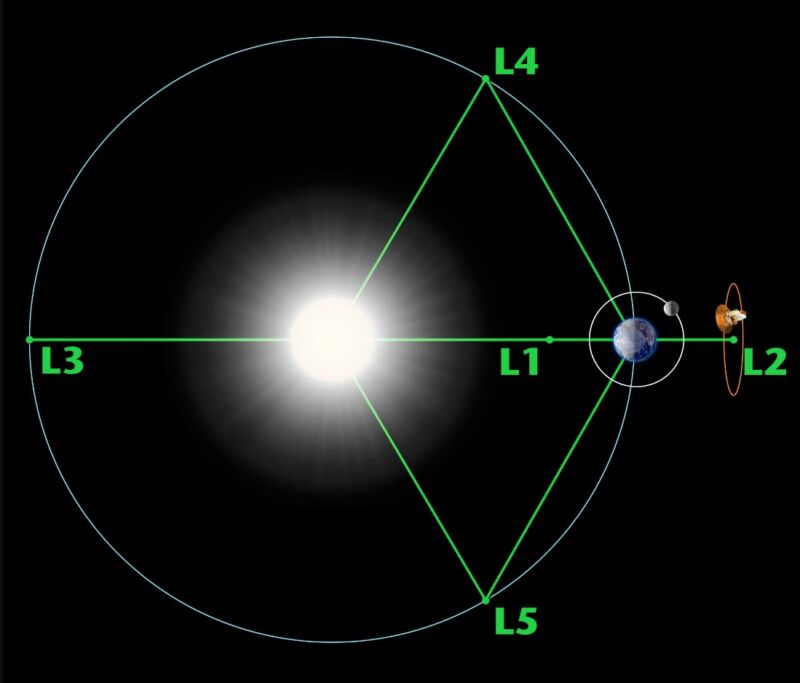
Lagrange points are positions in space where the gravitational forces of a two-body system like the Sun and Earth produce enhanced regions of attraction and repulsion.

Enlarge / Lagrange points are positions in space where the gravitational forces of a two-body system like the Sun and Earth produce enhanced regions of attraction and repulsion. (credit: NASA)

A bipartisan committee in the US House of Representatives recently issued a report on the economic and technological competition between the United States and China, and offered nearly 150 recommendations to “fundamentally reset” the relationship.

The report followed a year-long study of the competition between the countries since China’s entry into the World Trade Organization in 2001.

“The Chinese Communist Party has pursued a multi-decade campaign of economic aggression against the United States and its allies in the name of strategically decoupling the People’s Republic of China from the global economy, making the PRC less dependent on the United States in critical sectors, while making the United States more dependent on (China),” the report states.

Read 13 remaining paragraphs | Comments


Source: Ars Technica – US Congress recommends placing assets at Lagrange points to counter China

[$] The Linux graphics stack in a nutshell, part 1

Linux graphics developers often speak of modern Linux graphics
when they refer to a number of individual software components and how they
interact
with each other.
Among other things, it’s a mix of kernel-managed display resources,
Wayland for compositing, accelerated 3D rendering, and decidedly not X11.
In a two-part series, we will take a fast-paced journey
through the graphics code to see how it converts application data
to pixel data and displays it on the screen. In this installment, we look
at application rendering, Mesa internals, and the
necessary kernel features.

Source: LWN.net – [$] The Linux graphics stack in a nutshell, part 1

Samsung adds foldables to its self-repair program for the first time

Samsung Galaxy Z Flip 5 and Z Fold 5 owners can now fix their phones through the company’s self-repair service. The do-it-yourself program is expanding so that more Galaxy products, including foldables and tablets, are included in the iFixit collaboration. 

Samsung said it will add seven more products this month to its list of devices that are eligible for self-repair – from PCs, smartphones and tablets — including the Galaxy S23 series, Tab S9 series and the Galaxy Book2 Pro series. The program provides users with original equipment manufacturer (OEM) device parts and step-by-step guides that allow for things like screen or battery replacements. The price of fix kits will vary depending on the device. For example, a Samsung Galaxy S22 Ultra Screen and Battery set costs $240.

Samsung’s self-repair program, which first launched in the US last year, will also be offered to customers in an additional 30 countries across Europe. The company says expanding the scope of what’s covered by the program is in line with Samsung’s overall strategy to alleviate e-waste.

This article originally appeared on Engadget at https://www.engadget.com/samsung-adds-foldables-to-its-self-repair-program-for-the-first-time-171120939.html?src=rss

Source: Engadget – Samsung adds foldables to its self-repair program for the first time

Rick and Morty Season 7 Sets Max Streaming Date

Rick and Morty’s seventh season wrapped up Sunday night with “Fear No Mort,” another standout episode in what’s been one of the Adult Swim series’ strongest installments yet. But if you don’t have Adult Swim access and have been dying to see what you’ve been missing—including the new voices for Rick and Morty—here’s…

Read more…


Source: Gizmodo – Rick and Morty Season 7 Sets Max Streaming Date