Steam Keys For This Gaming Disaster Are Being Sold For Hundreds Of Dollars

You thought we were done with The Day Before shenanigans? Think again. Currently, Steam keys for the troubled zombie game are being listed on unauthorized third-party key reseller sites for more than $300. Suffice it to say, you should not spend this much money on this game (or maybe any game?).

Read more…


Source: Kotaku – Steam Keys For This Gaming Disaster Are Being Sold For Hundreds Of Dollars

How to Choose Between the Ring and Blink Video Doorbell

One of the first pieces of smart home technology people invest in is a video doorbell. It holds a lot of promise—the ability to see who dropped by when you weren’t there, and, more importantly, interact with those people as if you were there. A smart doorbell allows you to secure your packages, or watch them get stolen in high definition. It’s often an easy choice to buy one, but the tougher decision is which brand to purchase.

Although it may seem like a one-off purchase, your doorbell could become part of a whole home security system in the future, and you’ll want everything to be the same brand. Two of the biggest players in the field are Ring, the OG of video doorbells, and Blink, the Amazon brand. (To be clear, Amazon owns both brands now.) So, which is the better video doorbell: Ring or Blink? 

On cost alone, you can’t beat Blink

Blink keeps things simple. There’s only one model, the Blink Video Doorbell, and it can be hardwired or wireless. At only $59.99, it is substantially less than most Ring models on the market. Ring has taken a different approach, and has many versions of the doorbell available. The Video Doorbell (2nd Generation), the most comparable to the Blink’s hardwired or wireless approach, is $99.99. A more recent release, the Battery Doorbell Plus (Video Doorbell), is considerably more expensive at $179.99. If you plan to hardwire your doorbell, you can also look at the Video Doorbell Wired for $64.99, an earlier release that can’t be used wirelessly, the wired Video Doorbell Pro for $169.99, or Video Doorbell Pro 2 for $249.99. Ring also offers a Peephole Cam (Video Doorbell) for $129.99 and their top-of-the-line model, the Video Doorbell Elite, which at $349.99 comes with professional installation and is powered by ethernet.

Ring Doorbells look more substantial

The Blink camera follows the look and feel of other Blink products like the security cameras—universally black and sleek with plastic and metal parts, rounded corners and a rather slim profile. It doesn’t look expensive, and it’s not. Ring cameras, on the other hand, look more substantial and well-designed. Featuring brushed metal parts, most are aluminum steel (silver) and black, with a front camera surrounded by a blue circle. The model you choose will determine how much brushed metal is featured, but Ring has a more established ecosystem of frames and mounts for the doorbell as well, which means you can disguise the metal if you so choose. Ring cameras usually feature a mix of sharp edges and rounded curves. 

Both doorbells come with mounting plates for a flat surface, but Blink doorbells simply slide onto the mount, while Ring doorbells are secured by a few screws to the mount, for security. 

On installation, it’s a dead heat between Ring and Blink

Installation has two parts: physically mounting the doorbell, and then connecting it to your app. Both doorbells involve unboxing the doorbell, downloading an app, and then walking through a guided installation where you scan for a new device, connect the doorbell to your home’s wireless, and then set it up within the app. Having set both up, I can tell you there’s no advantage here for either brand. 

In five years of having a Ring mounted to my door, I’ve only had to do a hard reset once, and that’s probably on me for letting it go uncharged for six months. In the month I had a Blink doorbell installed, it went offline every few days, and had to be hard reset at least once. The Ring has never gone offline. 

Even if you prefer rechargeable batteries, you may still prefer Blink’s AAs

If you’re using a hardwired connection, battery power isn’t an issue. However, if you’ve gone wireless, it’s another story. Taking the doorbell off to charge it or change the batteries is a pain in the neck. Blink, luckily, requires only a few AA batteries, and claims the batteries can last two years. By contrast, Ring wireless doorbells use either a USB charger or a removable battery, which you will normally need to recharge every few months. To use the USB charger, you need to remove the entire doorbell, plug it in, charge it and then mount it again. The rechargeable batteries require removing a faceplate and grabbing the battery to do the same, meaning the doorbell won’t have a battery while it charges. You can, however, purchase additional batteries so you can always have one in the Ring while the other is charging. 

Now, normally, I think regular batteries are “over” and I’d rather have a rechargeable battery. But as a Ring owner, I think Blink may have an advantage for ease and length of battery life. At a minimum, to compare, you’d need to purchase an additional battery unit, and choose a Ring model that has a removable battery. 

All this said, Ring has an optional solar charger to extend the battery life. 

When it comes to resolution, some of the Ring models are superior

All video doorbells, including the Blink and Ring models, offer high-definition 1080p video, including night vision. This should deliver clear, crisp video at all hours. Two of the Ring models, the Video Doorbell Pro 2 and the Battery Doorbell Plus, offer higher resolution, at 1536p. These two also offer color night vision, which is an improvement over standard black and white.  Of course, those models are also two of the most expensive, but if the quality of the video you’re capturing is important, you’ll want to go with a higher-end Ring doorbell. 

Saving clips on the cloud and locally

It doesn’t matter how good the video is if you can’t review it. The doorbells, whether Ring or Blink, send notifications for different kinds of activity: someone ringing your doorbell, leaving a package, or passing by the front of the house in the zone you’ve tagged as being important. If you get the notification immediately, you can flip over to the live video of the doorbell to hopefully catch the action. That’s not really how most video doorbells work, however. Although wired doorbells do this a bit better, most of them have a bit of lag, and by the time you get the notification that UPS is at your door, flip over to live video, and have it come up, the delivery driver is pulling away. That’s not a problem if they left the package, but if that package is missing, and you see a notification someone was at the door after the UPS guy, you’d want to watch that video. Except you can’t, unless you’ve set up storage for the clips. That’s where these two doorbells are different. 

On both models, the Blink and the Ring, those clips can be stored in the cloud, and you pay monthly or yearly to do so. For Blink, it’s $30 a year for one device, and for Ring it’s $39 a year. (In both cases, the above fee is for storage from one device; you’d pay more for a whole house plan.) In both cases, you can also store videos locally, instead. For Blink, you set up a Sync Module, and attach a USB drive. For Ring, you’d need to purchase a Ring Alarm Pro and a micro SD card, and even then, you’d still need a Ring subscription on top of it. 

On features, Ring takes the lead

The Blink doorbell offers many of the same features as the company’s security cameras, and for the purpose of interacting with someone at your door, or seeing video of what’s happened on your stoop, it works just fine. If you’re looking for more advanced options, Ring runs circles around Blink. It offers the option for professional monitoring, and has a whole community built in, so you can see alerts of what’s happening in your neighborhood. Ring is compatible with IFTTT and Alexa, while Blink isn’t. Blink has been slow to add AI features to its security systems, but Ring already has updated doorbells to use facial recognition AI.  

Blink vs. Ring: Which will it be?

The Blink doorbell is a solid, easy-to-install doorbell that’ll kick off your smart home and security system for about $50. It’s basic, but that’s the Amazon brand for you. Ring is the upgrade, with more features, better looks, higher resolution and with it, more cost.


Looking for a new smart doorbell? Take your pick from our recommendations:


Source: LifeHacker – How to Choose Between the Ring and Blink Video Doorbell

FTC Calls Out Rite Aid For Being Reckless With AI Facial Recognition, Issues Ban

FTC Calls Out Rite Aid For Being Reckless With AI Facial Recognition, Issues Ban
The United States Federal Trade Commission is dropping the ban hammer on Rite Aid after finding the company’s use of AI facial recognition technology, which was used in hundreds of its stores, was harmful to consumers. The retailer will not be able to use this technology for five years while it settles the charges brought forth by the FTC.

The

Source: Hot Hardware – FTC Calls Out Rite Aid For Being Reckless With AI Facial Recognition, Issues Ban

Researchers found child abuse material in the largest AI image generation dataset

Researchers from the Stanford Internet Observatory say that a dataset used to train AI image generation tools contains at least 1,008 validated instances of child sexual abuse material. The Stanford researchers note that the presence of CSAM in the dataset could allow AI models that were trained on the data to generate new and even realistic instances of CSAM.

LAION, the non-profit that created the dataset, told 404 Media that it “has a zero tolerance policy for illegal content and in an abundance of caution, we are temporarily taking down the LAION datasets to ensure they are safe before republishing them.” The organization added that, before publishing its datasets in the first place, it created filters to detect and remove illegal content from them. However, 404 points out that LAION leaders have been aware since at least 2021 that there was a possibility of their systems picking up CSAM as they vacuumed up billions of images from the internet. 

According to previous reports, the LAION-5B dataset in question contains “millions of images of pornography, violence, child nudity, racist memes, hate symbols, copyrighted art and works scraped from private company websites.” Overall, it includes more than 5 billion images and associated descriptive captions. LAION founder Christoph Schuhmann said earlier this year that while he was not aware of any CSAM in the dataset, he hadn’t examined the data in great depth.

It’s illegal for most institutions in the US to view CSAM for verification purposes. As such, the Stanford researchers used several techniques to look for potential CSAM. According to their paper, they employed “perceptual hash‐based detection, cryptographic hash‐based detection, and nearest‐neighbors analysis leveraging the image embeddings in the dataset itself.” They found 3,226 entries that contained suspected CSAM. Many of those images were confirmed as CSAM by third parties such as PhotoDNA and the Canadian Centre for Child Protection.

Stability AI founder Emad Mostaque trained Stable Diffusion using a subset of LAION-5B data. Google’s Imagen text-to-image model was trained on a subset of LAION-5B as well as internal datasets. A Stability AI spokesperson told Bloomberg that it prohibits the use of its test-to-image systems for illegal purposes, such as creating or editing CSAM.“This report focuses on the LAION-5B dataset as a whole,” the spokesperson said. “Stability AI models were trained on a filtered subset of that dataset. In addition, we fine-tuned these models to mitigate residual behaviors.”

Stable Diffusion 2 (a more recent version of Stability AI’s image generation tool) was trained on data that substantially filtered out ‘unsafe’ materials from the dataset. That, Bloomberg notes, makes it more difficult for users to generate explicit images. However, it’s claimed that Stable Diffusion 1.5, which is still available on the internet, does not have the same protections. “Models based on Stable Diffusion 1.5 that have not had safety measures applied to them should be deprecated and distribution ceased where feasible,” the Stanford paper’s authors wrote.

This article originally appeared on Engadget at https://www.engadget.com/researchers-found-child-abuse-material-in-the-largest-ai-image-generation-dataset-154006002.html?src=rss

Source: Engadget – Researchers found child abuse material in the largest AI image generation dataset

Flightless Bird: E-Scooter Company Bird Declares Bankruptcy

Electric scooter company Bird is flying south for the winter, and it might be a very different kind of fowl by the time it returns. The Miami, Florida-based micro-mobility company known for allowing rambunctious, helmetless e-scooterists to fly down city streets declared bankruptcy Wednesday, saying it was entering…

Read more…


Source: Gizmodo – Flightless Bird: E-Scooter Company Bird Declares Bankruptcy

QR code attacks probably aren’t coming for your scan-to-order menus

QR code-based phishing attacks appear to be on the rise. For this “new” hacking vector, someone gets a phishing email asking them to scan a QR code, that code redirects to a malicious link (usually to steal credentials) and an account takeover occurs. Local news organizations have warned the public to watch out, security leadership publications tell executives to be careful and security companies really, really want you to call it quishing.

To be fair, there have been some notable headlines about it lately. A large-scale version of this against an unnamed “major” US energy company went after Microsoft logins, according to a Cofense report in August. Security researchers have unanimously reported some level of uptick or spike in the attack vector this year. Even the Federal Trade Commission warned consumers of the dangers.

The fanfare around these attacks, however, mostly outweighs the threat of using QR codes in your daily life. Phishing has been, and will likely always be, a prevalent way to trap victims, and what we’re seeing when people talk about QR code attacks is just another way to do that. That’s why despite how the reports may generalize the dangers of QR codes as a whole, some common sense security practices that you already use to avoid phishing can help you avoid this tactic, too. Other, advanced QR-based attack vectors outside of phishing are likely too technically complicated and low reward for bad actors to attempt, or for you to worry about.

Phishing attacks that work by pointing a victim to a malicious link are incredibly common, and QR codes are essentially just another way to execute them. QR codes are “jumping into a security gap,” said Randy Pargman, director of threat detection at security firm Proofpoint. It forces a victim away from their computer and onto a cell phone or another device, adding a level of distraction. Plus, people are more likely to fall for a phishing link on a mobile device, according to Pargman.

The smaller scale makes it harder to tell what’s legit, for example you can’t easily see a full link to point out discrepancies, and we generally tend to feel safer in our handheld world. Scanning a QR code on a phone takes a victim away from their computer. That could mean it has fewer security plugins installed on its browser that would warn you to stay away from suspicious sites, although more browsers have automatic protections against both. Or, if it’s taking you from a work device to a personal device, a security team probably supports the computer, but not your cell phone, with extra protections in place to stop you from falling victim. But on the flip side, this is a lot less efficient for scammers to set up. It assumes the victim has access to two devices, rather than just clicking a link.

Plus, people tend to scan the QR codes, even if they’re from an unfamiliar source, because we’re so used to it, according to Fae Carlisle, principal security engineer at VMware Carbon Black. “People are regularly told to scan a QR code to show them a map of a place, to vote in a competition, to visit Instagram, etc,” Carlisle said. “Because of inherent trust, people go along with it.” Hackers seemingly saw this trend and figured out they could exploit it.

While the application of QR codes to phishing attacks is fairly straightforward, the hype around their use in other malicious vectors mostly ends there. Security professionals advise against scanning unknown QR codes, in the same way you shouldn’t plug a random thumb drive into your device. But, while you should always be on guard to protect against phishing attacks, you don’t really have to worry about using QR codes in your daily life because it’s still rare to see them used as a hacking tactic.

This matters because when we think of QR codes, we don’t usually think of getting them in emails. You’re probably more familiar with them from real world interactions, like a call to action on a flier or a scan-to-order menu at a restaurant. Looking at my own inbox and desktop, the instances of getting a QR code are few and far between, with maybe the exception of some multifactor authentication apps and cross-login for VPNs. Basically, for a hacker going after everyday targets, the less effort the better, and plastering a poisoned QR code all over physical space in the hopes someone will scan it is a whole lot of work, according to Pargman. Bulk sending phishing emails is just a heck of a lot more efficient.

While it’s also possible to imagine a link takeover situation, where the destination of legitimate QR codes is redirected to a malicious URL, that really hasn’t been seen yet. Not only is it a lot of effort, but it would require an attacker to identify a widely-used QR code. That would mean sourcing the code information, and then hoping it was worth the work. “Quishing” may be legit, but avoiding QR codes at all costs probably goes a step too far.

If something seems off about scanning a QR code, pause before proceeding. “If you’re scanning a menu of the restaurant’s and it’s asking you to login to your Gmail account to access the menu, that’s a highly unexpected step,” said Olesia Klevchuk, product marketing director at security company Barracuda Networks. “Those are the kinds of things we want to be on the lookout for.” But if you just want to learn more about an exhibit at a museum or have a contactless check-in at the gym, you probably have nothing to worry about.

This article originally appeared on Engadget at https://www.engadget.com/qr-code-attacks-probably-arent-coming-for-your-scan-to-order-menus-153006742.html?src=rss

Source: Engadget – QR code attacks probably aren’t coming for your scan-to-order menus

My Favorite Smart Tech Devices of 2023

I reviewed a lot of smart technology this year—and the best of what I reviewed made my life more efficient, saved me some money, and relieved anxiety. That’s what good smart tech should do. Surprisingly, however, some of the best finds this year were the least essential—they just quietly made life better. Here are the products I’m still using at the end of the year, long after the review was published.  

The Pura Smart Diffuser

One of the most surprising successes I found this year was the smart diffuser from Pura. I’m not even a candle person, and I always found plug-in scents to be aggressive and kind of gross. I certainly couldn’t see how an app would improve the essential oil experience. However, many months after testing the Pura, I use it almost every day and added a second to the house. The ability to adjust how much scent you get, which scent, and when, without getting off the couch, turned out to be the game changer.  Non-smart plug-ins mean setting it and forgetting it, so you just got overwhelmed with scent all the time until it ran out and you’d forget to refill it. Choosing from hundreds of premium scents from luxury brands like Brooklyn Candle, Antica Farmacista and Votivo was the hardest part of the process, but each vial lasts me about six weeks (usage will vary), so it turns out to be pretty affordable.  I’m such a fan, I’m trying their car diffuser, which six months ago you’d have had to bribe me with migraine medicine to try.

Meross Smart Plugs

Every smart tech company on earth makes smart plugs, and despite every smart product out there, they are the secret cog of most homes, turning basic lights, humidifiers, and coffeemakers into automated machines. Meross smart plugs don’t have the problems others do, like suddenly disconnecting from wifi, or just burning out. I upgraded many of my Meross plugs to the new Matter-enabled version this year, and many months in, they are still humming along. I also tested plugs from four or five other brands; like clockwork, they all failed and were replaced by Meross plugs.

Nanoleaf 4D Screen Mirror + Lightstrip Kit

I doubt I’d have ever sought these out, but as I keep saying, they are my absolute favorite smart item this year. They are not essential. They solve no real “problem.” They’re just good vibes. I’ve not only fleshed out my living room and bedroom with more Nanoleaf lights, I sent kits to all my friends experiencing even a hint of depression and anyone I knew with kids on the autism spectrum, all to huge success. Turn off your overhead lights, turn on the Nanoleafs and adjust the colors or rhythm in the mobile or desktop app. It creates a light aura that reflects onto walls, like the aurora borealis in your room. Shapes like hexagons, squares and lines are touch-sensitive and interactive. There is no mindful app that has made me as peaceful or happy as my Nanoleaf lights.  

The Smart Envi Heater

Smart heaters are new to the market, and I happily tested every single one that was on the market by a big brand. While I liked the Dyson Hot+Cool (and it is warming my feet as we speak and will be back come summer to keep me cool), I loved the Smart Envi by eHeat. Put aside that it stays off the floor by mounting its slim profile to the wall: At only 500 watts, it magically (the comment section was feisty on how this was possible) keeps a 200+ sq foot room at temperature without making a sound, where 1500 watt heaters really struggled and cost a bundle. I am eagerly anticipating the release of the larger Smart Envi Max in the next month or two to tackle my living room. 

Switchbot

This is less about a particular product (although I still love the original Switchbot bot) but a love letter to the brand, which is evident in every single product. Switchbot hubs, sensors, controllers—heck, even a Switchbot robot I’m currently testing—are all reliable, chonky, small and above all, adorable.  Each and everything is thought out, even packaging that is accessible and well-designed. A hub doubles as a temperature and humidity sensor; the curtain controllers come with solar chargers that capture light from the window. The top of the robot vacuum, a place dust and dirt usually collects, comes off entirely, secured by a magnet, so it’s easy to clean. Switchbot devices want to be touched, held, and adored. 

Combustion Wireless Thermometer

If you hate standing over the stove or barbecue, as I do, or fret about cooking your meat long enough, a wireless thermometer is going to help you chill out. Of all the wireless probes I tested this year, Combustion came out on top as staying consistently connected to Bluetooth, and making the process of using the thermometer painless. You can even pop it into a sous vide bag. While I’m not letting go of my instant read thermometers, for anything that’s going to sit and cook for a bit, I’ve been using my Combustion. A recent update gives users even more information, easing your mind that food has cooked enough, while not necessarily hitting the high USDA temp ranges that tend to overcook. 

With CES around the corner, I’m excited to see what these brands are bringing out this year. The new year promises to be full of new tech to make your home (and everywhere else you go) smarter.


Source: LifeHacker – My Favorite Smart Tech Devices of 2023

Disney+ Sets Its Star Wars and Marvel Slate for 2024

Mutant Mayhem’s Jeff Rowe talks keeping Shredder back for the sequel. Wyatt Russell discusses’ Thunderbolts filming schedule. Get a look at Jadis’ return for Walking Dead: Ones Who Live. Plus, get a look at Adam Sandler’s new sci-fi movie for Netflix, Spaceman. To me, my spoilers!

Read more…


Source: Gizmodo – Disney+ Sets Its Star Wars and Marvel Slate for 2024

Apple Pay, Apple Card and Wallet are down for some users

Apple’s financial services, including Apple Pay, Apple Cash, Apple Card and Wallet, have been experiencing service disruptions for some users since 6:15AM this morning, the company reports. As of 10:04AM ET, those services still have outage notices on Apple’s System Status page. As AppleInsider notes, it’s unclear how widespread the issues are, but the company has experienced intermittent Apple Pay issues earlier this year. 

On a personal note, I was able to use Apple Pay without issue around 9AM ET to make a pick-up order at Starbucks. After launching in 2014, it took a while for Apple Pay (and other contactless payments options) to reach widespread support in the US. These days you can tap your phone or Apple Watch to pay at most major retailers (except for Home Depot, for some reason). Depending on how long this outage lasts, Apple may end up losing some consumer trust as users have to dig out their credit cards, or, God forbid, cash to grab their morning lattes. 

This article originally appeared on Engadget at https://www.engadget.com/apple-pay-apple-card-and-wallet-are-facing-outages-151139333.html?src=rss

Source: Engadget – Apple Pay, Apple Card and Wallet are down for some users

Watch NASA’s Purrfect HD Cat Video Streamed From 18.6M Miles In Space

Watch NASA’s Purrfect HD Cat Video Streamed From 18.6M Miles In Space
NASA’s Deep Space Optical Communications (DSOC) experiment beamed a video featuring Taters the cat from 18.6 million miles away. The record-setting ultra-high definition streaming video was part of a NASA technology demonstration on December 11, 2023.

The DSOC experiment is NASA’s first demonstration of optical communications beyond the

Source: Hot Hardware – Watch NASA’s Purrfect HD Cat Video Streamed From 18.6M Miles In Space

EU will hold 3 major porn sites to same regulations as Meta, X

Read 15 remaining paragraphs | Comments


Source: Ars Technica – EU will hold 3 major porn sites to same regulations as Meta, X

Microsoft Copilot Teams With Suno To Turn Your Ideas Into AI-Generated Songs, Try It Out

Microsoft Copilot Teams With Suno To Turn Your Ideas Into AI-Generated Songs, Try It Out
Microsoft Copilot will now be able to assist users in creating AI generated music, as the company looks to add as much functionality as possible to its AI companion. To accomplish this Microsoft is teaming up with Suno, a company that works on AI specifically designed to help people create music regardless of their musical skills (or lack

Source: Hot Hardware – Microsoft Copilot Teams With Suno To Turn Your Ideas Into AI-Generated Songs, Try It Out

Use Plex to Create Your Own Personal Streaming Service

Plex, which started as local media server—something to stream movies from your computer to your phone or TV—has evolved into an entire media ecosystem. You can use the free Plex account to watch a library of free movies, discover new TV shows or movies, and create a universal watchlist that spans all popular streaming services. Plex, clearly, is a lot of things—some free, some paid. Let’s break it down.

What is Plex?

Plex’s modular media center starts with a free streaming service of their own. Anyone who has a free account can watch and enjoy a large list of free movies and TV shows. They’ve partnered with Crackle, Paramount, MGM, Lionsgate, and more to provide free movies and TV shows that you might actually want to watch, with a catalog more than 50,000 titles strong.

Plex also has a Live TV feature that lets anyone stream more than 1,000 channels in real time, as well as special channels depending on where you live. (You can find a list of all the channels here.) That said, their collection leaves a lot to be desired. Sure, you’ll find niche kung-fu movies, animes, and comedies to watch, but Plex doesn’t have the catalog to go against a popular streaming service like Netflix, and even their Live TV catalog is lacking. You can use it to catch up on news, but it’s not going to replace a dedicated Live TV service like Sling TV or Hulu, or good old-fashioned cable.

Plex can help you create your own streaming service

Where Plex shines is as a media management platform. It’s a great way to build your own 4K media streaming service, whether local or remote. 

Here’s how it works: You set up the Plex app on a PC, Mac, or NAS system where all your movies, TV shows, and music are stored. Then, use their easy-to-use setup guide, and point the Plex app to the folder where the media is saved. Plex will run its wizard, and will show your entire media collection with proper posters, metadata, trailers, and more. 

You’ll feel like you have just created your own Netflix app, and it didn’t cost you a dime. Plex has streaming apps for all platforms—as long as the Plex Media Server app is running on your computer, you can use all that media to stream locally on any of your devices. This can be a smart TV, an iPad, or an Android smartphone. 

And just like that, for free, you have created a free streaming service that can be used by anyone in your family, and can be shared with other Plex users who are away as well—with it, you can let a friend from the other side of the country watch movies you own. Local streaming of files is effortless, and you can also enable Remote Access to check out your entire collection from anywhere in the world, as long as your home computer is turned on.

Plex also has a paid tier called Plex Pass that adds offline downloads for streaming apps, so you can load up your iPad with movies before heading out, without even connecting it to your computer. With this subscription, you also get premium photos and music options, auto-tagging, lyrics support, and more advanced sharing restrictions for shared users. 

Plex Pass costs $4.99 per month, or $39.99 per year, or you can buy it outright for $119.99. As good as the service is, you don’t really need to pay for it, especially if you aren’t going to be using the offline downloads feature often. 

Plex lets you create a universal watchlist

Plex universal watchlist feature.

Credit: Plex

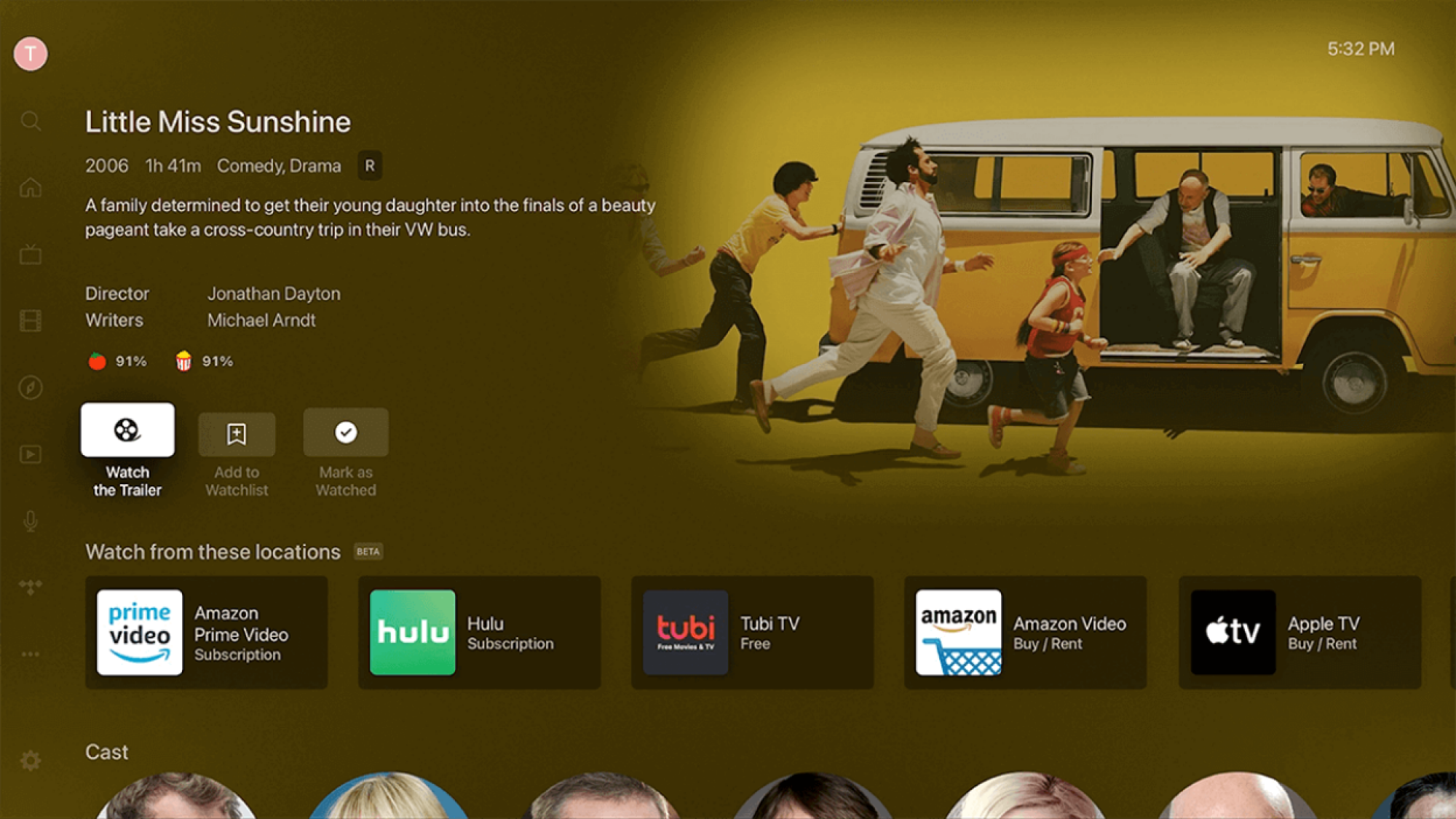
Universal Watchlist is a relatively new addition to Plex, and it instantly turns it into a streaming hub that connects popular online streaming services with the media you own.

It couldn’t come at a better time. It’s harder than ever to keep track of all the new and interesting TV shows that are coming out. For general use cases, JustWatch is a great option, but if you’re planning to use Plex, their built-in option is added convenience. 

On top of that, it’s easy to use. Search for a title in Plex, and use the Bookmark button to add it to the watch list. Right below, Plex will tell you where you can stream, rent, or buy the media. Click on an app and Plex will open that service, with the movie ready to go.

Verdict 

If you’re looking for an easy-to-use media center for your own collection of movies and TV shows, Plex is hard to beat. There are other options like Jellyfin that offer more features, such as offline downloads for free. But Plex offers a superior overall package, and the UX is unparalleled in the media center space. The extra features, like Universal Watchlist, make the experience sweeter, but the collection of free media and Live TV channels is still lacking. For more details, check out the PCMag’s full Plex review. 


Source: LifeHacker – Use Plex to Create Your Own Personal Streaming Service

Intel Meteor Lake Arc Graphics: A Fantastic Upgrade, Battles AMD RDNA3 Integrated Graphics

Yesterday I posted the first Intel Meteor Lake Linux benchmarks that were focused on the CPU capabilities with the Intel Core Ultra 7 155H on Ubuntu Linux compared to the existing AMD Ryzen 7 7840U. The strictly CPU core performance ended up being rather disappointing with the AMD Zen 4 laptop dominating in most cases at similar or better power efficiency. But where things become much more interesting — and competitive — with Meteor Lake is on the integrated graphics side now featuring Arc Graphics. The benchmarks today is our first look at the new Meteor Lake Arc Graphics with the Core 7 Ultra 155H while comparing it to the RDNA3 integrated graphics found with the AMD Ryzen 7 7840U as well as the prior generation Intel integrated graphics.

Source: Phoronix – Intel Meteor Lake Arc Graphics: A Fantastic Upgrade, Battles AMD RDNA3 Integrated Graphics

Sony has sold 50 million PS5 consoles over three years

The PlayStation 5 has officially hit the 50 million sales milestone, Sony confirmed in a blog post. That’s an impressive figure, considering the litany of supply chain issues that kept PS5s in limited supply after its November 2020 launch. And notably, the PS5 manage to reach 50 million sales just a week longer than it took the PlayStation 4, which wasn’t bogged down by as many supply chain issues or a worldwide pandemic. 

Sony has also outsold the Xbox Series X and S by almost three to one this year, the Financial Times reports, based on data from Ampere Analysis. While Microsoft doesn’t release official Xbox sales numbers (you can take a wild guess as to why), Ampere estimated that Microsoft sold 7.6 million next-gen systems this year (a 15 percent drop from 2022), while Sony’s sales exploded by 65 percent to reach 22.5 million units sold. 

It’s not hard to see why the PS5 is in more demand: Sony has pumped out far more must-have games this generation (including the recent Spider-Man 2, as well as anticipated sequels like God of War Ragnarok), while Microsoft has stumbled with its more high profile releases, like Halo Infinite and Redfall. But it could just be that Microsoft has a different goal. It’s far more focused on pushing subscriptions to Xbox Game Pass, which also allows players to stream titles over the cloud and play on PC with its ultimate tier.   

This article originally appeared on Engadget at https://www.engadget.com/sony-has-sold-50-million-ps5-consoles-over-three-years-145835145.html?src=rss

Source: Engadget – Sony has sold 50 million PS5 consoles over three years

Here's Why You'll Hear About a Lot More Data Breaches in 2024

Cybersecurity incidents are constantly in the news these days, but you’ll soon be hearing about a lot more of them. That’s because a new rule from the Securities and Exchange Commission went into effect on Monday, requiring all public companies to report data breaches in just four days.

Read more…


Source: io9 – Here’s Why You’ll Hear About a Lot More Data Breaches in 2024

Electric Scooter Rental Pioneer Bird Files for Bankruptcy

Bird Global, the company that pioneered on-street electric scooter rentals, has filed for Chapter 11 bankruptcy protection [Editor’s note: the link is paywalled; alternative source] in Florida, five years after becoming the fastest start-up ever to reach a so-called “unicorn” valuation above $1bn. From a report: In September, the New York Stock Exchange suspended trading in Bird, which went public via a blank-cheque company in 2021, after its market capitalisation fell below a $15mn threshold. “We are making progress towards profitability and aim to accelerate that progress by right-sizing our capital structure through this restructuring,” Bird interim chief executive Michael Washinushi said on Wednesday.

Bird said it would operate as normal during the restructuring process and that its lenders had entered into a “stalking horse” sale agreement. The company aims to complete a sale process within 120 days. Its European and Canadian businesses are not part of the bankruptcy filing. Founded by former Uber and Lyft executive Travis VanderZanden in Los Angeles in 2017, Bird spawned dozens of copycat companies around the world. But e-scooter rentals have struggled to reach consistent profitability, amid regulatory strictures, safety concerns, and high capital and operating costs.

Read more of this story at Slashdot.


Source: Slashdot – Electric Scooter Rental Pioneer Bird Files for Bankruptcy

Adorable Cat Video Reaches Earth After 16-Million-Mile Journey from Deep Space

NASA just combined all of my favorite things: space, lasers, and cats. In a first-of-its-kind demonstration of deep space optical communication, the space agency streamed a high-definition video from 19 million miles away from Earth. And as it turns out, NASA is just as obsessed as we are when it comes to sharing cat…

Read more…


Source: Gizmodo – Adorable Cat Video Reaches Earth After 16-Million-Mile Journey from Deep Space