Optus CEO Resigns After Nationwide Outage Left Millions Without Mobile and Internet Services

Earlier this month, the entire Optus mobile network went offline nationwide following a “routine software upgrade.” According to Reuters, “More than 10 million Australians were hit by the 12-hour network blackout […], triggering fury and frustration among customers and raising wider concerns about the telecommunications infrastructure.” Now, according to the Australian Broadcasting Corporation, Optus CEO Kelly Bayer Rosmarin has resigned in the wake of the outage. From the report: She said it “had been an honour to serve” but that “now was an appropriate time to step down.” During Friday’s Senate hearing into the outage, Ms Bayer Rosmarin rebuffed suggestions she was under pressure to step down. “On Friday, I had the opportunity to appear before the Senate to expand on the cause of the network outage and how Optus recovered and responded,” she said in a statement on Monday. “I was also able to communicate Optus’s commitment to restore trust and continue to serve customers. Having now had time for some personal reflection, I have come to the decision that my resignation is in the best interest of Optus moving forward.”

Ms Bayer Rosmarin will be replaced in the interim by chief financial officer Michael Venter. Yuen Kuan Moon, the chief executive of Optus’s Singaporean parent company Singtel Group, said the company understood her decision to resign. Mr Yuen said Singtel recognised “the need for Optus to regain customer trust and confidence as the team works through the impact and consequences of the recent outage and continues to improve.” He said Optus’s priority was about “setting on a path of renewal for the benefit of the community and customers.” Singtel said Optus had also created a new chief operating officer position, which would be carried out by former Optus Business Managing Director Peter Kaliaropoulos.

Read more of this story at Slashdot.


Source: Slashdot – Optus CEO Resigns After Nationwide Outage Left Millions Without Mobile and Internet Services

Nothing's iMessage App Was a Security Catastrophe, Taken Down In 24 Hours

Last week, Android smartphone manufacturer “Nothing” announced that it’s bringing iMessage to its newest phone through a new “Nothing Chats” app powered by the messaging platform Sunbird. After launching Friday, the app was shut down within 24 hours and the Sunbird app, which Nothing Chat is a clone of, was put “on pause.” The reason? It’s a security nightmare. Ars Technica reports: The initial sales pitch for this app — that it would log you into iMessage on Android if you handed over your Apple username and password — was a huge security red flag that meant Sunbird would need an ultra-secure infrastructure to avoid disaster. Instead, the app turned out to be about as unsecure as you could possibly be. Here’s Nothing’s statement: “We’ve removed the Nothing Chats beta from the Play Store and will be delaying the launch until further notice to work with Sunbird to fix several bugs. We apologize for the delay and will do right by our users.”

How bad are the security issues? Both 9to5Google and Text.com (which is owned by Automattic, the company behind WordPress) uncovered shockingly bad security practices. Not only was the app not end-to-end encrypted, as claimed numerous times by Nothing and Sunbird, but Sunbird actually logged and stored messages in plain text on both the error reporting software Sentry and in a Firebase store. Authentication tokens were sent over unencrypted HTTP so this token could be intercepted and used to read your messages. […]

Despite being the cause of this huge catastrophe, Sunbird has been bizarrely quiet during this whole mess. The app’s X (formerly Twitter) page still doesn’t say anything about the shutdown of Nothing Chats or Sunbird. Maybe that’s for the best because some of Sunbird’s early responses to the security concerns raised on Friday do not seem like they came from a competent developer. […] Nothing has always seemed like an Android manufacturer that was more hype than substance, but we can now add “negligent” to that list. The company latched on to Sunbird, reskinned its app, created a promo website and YouTube video, and coordinated a media release with popular YouTubers, all without doing the slightest bit of due diligence on Sunbird’s apps or its security claims. It’s unbelievable that these two companies made it this far — the launch of Nothing Chats required a systemic security failure across two entire companies.

Read more of this story at Slashdot.


Source: Slashdot – Nothing’s iMessage App Was a Security Catastrophe, Taken Down In 24 Hours

Microsoft CEO Nadella Says OpenAI Governance Needs To Change

In an interview with CNBC’s Jon Fortt today, Microsoft CEO Satya Nadella said that the governance structure of OpenAI needs to change after the AI company’s sudden firing of CEO Sam Altman. “At this point, I think it’s very clear that something has to change around the governance,” Nadella said. He added that Microsoft would have “a good dialogue with their board on that.”

Unlike traditional private company boards, OpenAI’s board consists mostly of outsiders and isn’t tasked with maximizing shareholder value. “[N]one of them hold equity in OpenAI,” notes The Verge. “Instead, their stated mission is to ensure the creation of ‘broadly beneficial’ artificial general intelligence, or AGI.” From the report: In his first press interview since Altman’s ouster, Nadella dismissed concerns of long-term damage at OpenAI and said that the critical artificial intelligence research continues as does the partnership with Microsoft. But his comments didn’t clear up confusion surrounding where Altman and fellow OpenAI co-founder Greg Brockman, who was the company’s chairman, will ultimately end up. Early Monday morning Nadella said that Altman, Brockman and their colleagues would join Microsoft as part of a new AI research group. That post followed news that ex-Twitch CEO Emmett Shear had been named OpenAI interim head as Altman looked to depart. Over the course of Monday, it became less evident that Altman and Brockman would actually be joining Microsoft.

Hundreds of OpenAI employees signed a letter to the company’s board demanding that they resign or else the staffers may choose to leave and join their former boss at Microsoft. Nadella said it’s the choice of OpenAI employees whether they stay in their current roles or move to Microsoft, adding that his company has what it needs to keep innovating on its own. “I’m open to both options,” he said. Nadella told Fortt that Microsoft respects OpenAI’s nonprofit roots and shares its belief that AI needs to be developed and rolled out in a safe manner. “We want to make sure that we’re dealing with not only the benefits of technology, but the unintended consequences of the technology from day one, as opposed to waiting for things to happen,” Nadella said. Stay tuned: Legendary tech journalist Kara Swisher is releasing a 30 minute interview with Nadella in which he says, among other things, that he felt he should have been informed earlier as a partner of OpenAI and that will change in the future. “Also lots of deets about new hire [Sam Altman], safety in AGI and even India’s loss to Australia in that cricket match,” says Swisher in a post on X.

Further reading: Some investors in OpenAI are considering suing the board. “Sources said investors are working with legal advisors to study their options,” reports Reuters. “Investors worry that they could lose hundreds of millions of dollars they invested in OpenAI, a crown jewel in some of their portfolios, with the potential collapse of the hottest startup in the rapidly growing generative AI sector.”

Read more of this story at Slashdot.


Source: Slashdot – Microsoft CEO Nadella Says OpenAI Governance Needs To Change

Nicholas Hoult Will Be Bald Once More as Superman: Legacy's Lex Luthor

With James Gunn’s recent announcement that Superman: Legacy was on track for its intended July 11, 2025 release date, it’s not surprising that we’re getting more casting news now that the strikes are over. Nicholas Hoult, recently seen ripping limbs onscreen in Renfield—but also a previous wearer of the bald look, in 2…

Read more…


Source: Gizmodo – Nicholas Hoult Will Be Bald Once More as Superman: Legacy’s Lex Luthor

Commercial Flights Are Experiencing 'Unthinkable' GPS Attacks

An anonymous reader quotes a report from Motherboard: Commercial air crews are reporting something “unthinkable” in the skies above the Middle East: novel “spoofing” attacks have caused navigation systems to fail in dozens of incidents since September. In late September, multiple commercial flights near Iran went astray after navigation systems went blind. The planes first received spoofed GPS signals, meaning signals designed to fool planes’ systems into thinking they are flying miles away from their real location. One of the aircraft almost flew into Iranian airspace without permission. Since then, air crews discussing the problem online have said it’s only gotten worse, and experts are racing to establish who is behind it.

OPSGROUP, an international group of pilots and flight technicians, sounded the alarm about the incidents in September and began to collect data to share with its members and the public. According to OPSGROUP, multiple commercial aircraft in the Middle Eastern region have lost the ability to navigate after receiving spoofed navigation signals for months. And it’s not just GPS — fallback navigation systems are also corrupted, resulting in total failure. According to OPSGROUP, the activity is centered in three regions: Baghdad, Cairo, and Tel Aviv. The group has tracked more than 50 incidents in the last five weeks, the group said in a November update, and identified three new and distinct kinds of navigation spoofing incidents, with two arising since the initial reports in September.

While GPS spoofing is not new, the specific vector of these new attacks was previously “unthinkable,” according to OPSGROUP, which described them as exposing a “fundamental flaw in avionics design.” The spoofing corrupts the Inertial Reference System, a piece of equipment often described as the “brain” of an aircraft that uses gyroscopes, accelerometers, and other tech to help planes navigate. One expert Motherboard spoke to said this was “highly significant.” “This immediately sounds unthinkable,” OPSGROUP said in its public post about the incidents. “The IRS (Inertial Reference System) should be a standalone system, unable to be spoofed. The idea that we could lose all on-board nav capability, and have to ask [air traffic control] for our position and request a heading, makes little sense at first glance” especially for state of the art aircraft with the latest avionics. However, multiple reports confirm that this has happened.” […] There is currently no solution to this problem, with its potentially disastrous effects and unclear cause. According to OPSGROUP’s November update, “The industry has been slow to come to terms with the issue, leaving flight crews alone to find ways of detecting and mitigating GPS spoofing.” If air crews do realize that something is amiss, Humphreys said, their only recourse is to depend on air traffic control.

Read more of this story at Slashdot.


Source: Slashdot – Commercial Flights Are Experiencing ‘Unthinkable’ GPS Attacks

Nothing’s iMessage app was a security catastrophe, taken down in 24 hours

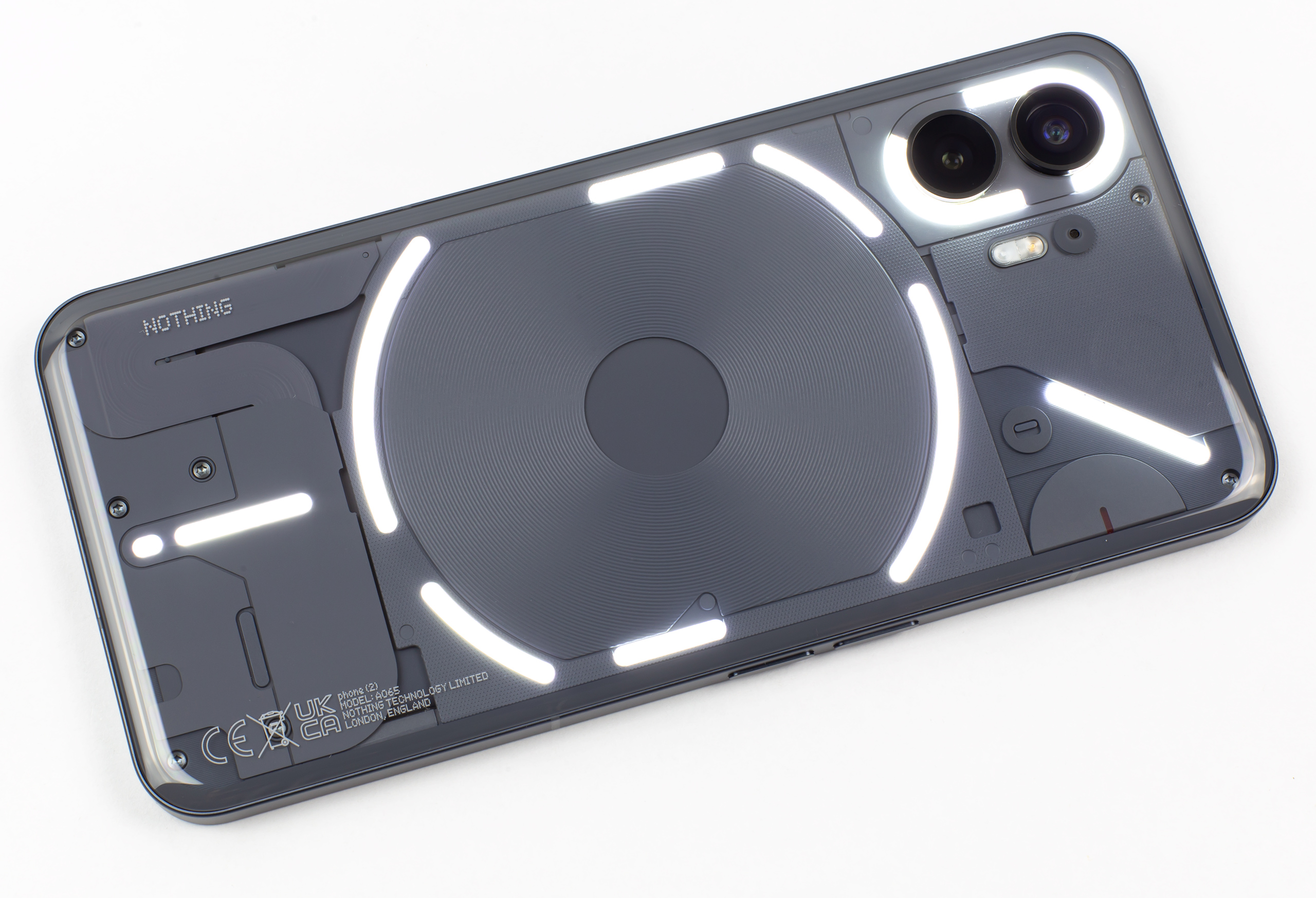
The Nothing Phone 2 all lit up.

Enlarge / The Nothing Phone 2 all lit up. (credit: Ron Amadeo)

It turns out companies that stonewall the media’s security questions actually aren’t good at security. Last Tuesday, Nothing Chats—a chat app from Android manufacturer “Nothing” and upstart app company Sunbird—brazenly claimed to be able to hack into Apple’s iMessage protocol and give Android users blue bubbles. We immediately flagged Sunbird as a company that had been making empty promises for almost a year and seemed negligent about security. The app launched Friday anyway and was immediately ripped to shreds by the Internet for many security issues. It didn’t last 24 hours before Nothing pulled the app from the Play Store Saturday morning. The Sunbird app, which Nothing Chat is just a reskin of, has also been put “on pause.”

The initial sales pitch for this app—that it would log you into iMessage on Android if you handed over your Apple username and password—was a huge security red flag that meant Sunbird would need an ultra-secure infrastructure to avoid disaster. Instead, the app turned out to be about as unsecure as you could possibly be. Here’s Nothing’s statement:

Nothing Chat's shut down post.

Nothing Chat’s shut down post. (credit: Twitter)

How bad are the security issues? Both 9to5Google and Text.com (which is owned by Automattic, the company behind WordPress) uncovered shockingly bad security practices. Not only was the app not end-to-end encrypted, as claimed numerous times by Nothing and Sunbird, but Sunbird actually logged and stored messages in plain text on both the error reporting software Sentry and in a Firebase store. Authentication tokens were sent over unencrypted HTTP so this token could be intercepted and used to read your messages.

Read 7 remaining paragraphs | Comments


Source: Ars Technica – Nothing’s iMessage app was a security catastrophe, taken down in 24 hours

Spotify reportedly struck a special deal with Google that let it skip Play Store fees

Spotify struck a special deal with Google that lets it pay no commission to Google when people sign up for subscriptions using the music streaming service’s own payment system on Android, according to new testimony in the ongoing Epic v. Google trial first reported by The Verge. As part of the same deal, Spotify paid Google just four percent commission if users signed up for the service through Google, far less than most other apps which typically pay 15 percent for subscriptions through the Google Play Store.

“Listening to music is one of [the phone’s] core purposes… if we don’t have Spotify working properly across Play services and core services, people will not buy Android phones”, Google’s partnerships head Don Harrison reportedly said in court. Both Google and Spotify also agreed to put $50 million each in a “success fund” as part of the deal.

The remarks were made as part of a lawsuit first filed against Google by Epic Games, the maker of the wildly popular Fortnite, in 2020. Epic claimed that Google’s Play Store on Android was an illegal monopoly that forced app makers to part with huge sums of cash in exchange for offering users in-app purchases through the Play Store. Epic filed a similar lawsuit against Apple in 2021, which it lost.

Spotify initially supported Epic in its fight against Google and Apple. But in 2022, the company started using a Google program called User Choice Billing that let Android apps use their own payment systems in exchange for giving a reduced cut to Google. The special deal revealed in court showed that Google was willing to carve out even more exceptions for popular apps like Spotify.

Google has had some pretty big business secrets spilled in the last few days. Last week, an economics professor testifying on behalf of the company in a separate antitrust trial that has since wrapped up, revealed that Google pays Apple 36 percent of all ad revenue it generates through Apple’s Safari browser, a figure which Alphabet CEO Sundar Pichai later confirmed while he was testifying in the Epic v. Google trial.

The Verge also reported earlier this month that Google offered Netflix, another popular streaming service, a custom deal. It offered a reduced commission of 10 percent, which Netflix turned down – instead choosing to not offer users a way to sign up for Netflix directly within its Android app.

This article originally appeared on Engadget at https://www.engadget.com/spotify-reportedly-struck-a-special-deal-with-google-that-let-it-skip-play-store-fees-224646377.html?src=rss

Source: Engadget – Spotify reportedly struck a special deal with Google that let it skip Play Store fees

Framework Laptop prices go as low as $639 thanks to refurbs and “factory seconds”

The Framework Laptop 13, with Framework's gear logo on the lid.

Enlarge / The Framework Laptop 13, with Framework’s gear logo on the lid. (credit: Andrew Cunningham)

Part of Framework’s sales pitch is that the company’s modular laptops are a (somewhat) more sustainable, responsible alternative to buying a hermetically sealed and non-upgradeable model from one of the big PC makers. The company has attempted to encourage reuse and recycling by offering refurbished models and 3D-printable cases for repurposing laptop motherboards as tiny desktop computers.

Earlier this month, the company took another step in that direction, opening up a Framework Outlet section in its online marketplace to sell refurbished products and things that have been returned by their original buyers. The company is also expanding its “factory seconds” offerings—it previously offered some 11th-gen Core i5 Framework Laptop motherboards this way, but that’s now expanded to Core i7 motherboards and some complete Framework Laptop models built with bodies and screens that have minor manufacturing defects.

“With the excess displays we received from the factory, we found a subtle cosmetic defect on some of them,” wrote Framework CEO Nirav Patel. “There is a wavy pattern and backlight non-uniformity that is visible from certain angles. Because of this, we’re calling these systems “B-Stock” and pricing them even lower than our 11th Gen refurbs. As always, you can upgrade any part of the system including the display using parts from the Framework Marketplace whenever you need to.”

Read 5 remaining paragraphs | Comments


Source: Ars Technica – Framework Laptop prices go as low as 9 thanks to refurbs and “factory seconds”

Apple Plans To Equip MacBooks With In-House Cellular Modems

According to Bloomberg’s Mark Gurman, Apple plans to ditch Qualcomm and build its own custom modem that could launch around 2026. MacRumors reports: Writing in his latest Power On newsletter, Gurman says that Apple’s custom technology aspirations include integrating an in-house modem into its system-on-a-chip (SoC), which would eventually see the launch of MacBooks with built-in cellular connectivity. Gurman says Apple will “probably need two or three additional years to get that chip inside cellular versions of the Apple Watch and iPad — and the Mac, once the part is integrated into the company’s system-on-a-chip.”

Apple has explored the possibility of developing MacBooks with cellular connectivity in the past. Indeed, the company reportedly considered launching a MacBook Air with 3G connectivity, but former CEO Steve Jobs said in 2008 that Apple decided against it, since it would take up too much room in the case. An integrated SoC would solve that problem. Gurman’s latest newsletter also said some of Apple’s other ongoing in-house chip projects include camera sensors, batteries, a combined Wi-Fi and Bluetooth chip that will eventually replace parts from Broadcom, Micro-LED displays for Apple devices, and a non-invasive glucose monitoring system.

Read more of this story at Slashdot.


Source: Slashdot – Apple Plans To Equip MacBooks With In-House Cellular Modems

The Boys' Antony Starr Got Hilariously Sweary Behind the Scenes on Gen V

We’ve seen a lot of behind-the-scenes videos showing buff actors pulling off action-hero feats. But it’s hard to recall any performer keeping it as real as Antony Starr. He plays Homelander on The Boys, so he’s presumably no stranger to stunts and wire work. But for his character’s appearance on Boys spin-off Gen V,…

Read more…


Source: Gizmodo – The Boys’ Antony Starr Got Hilariously Sweary Behind the Scenes on Gen V

New Starfield Patch Finally Adds Those Graphics Options You Wanted

After some beta testing, Bethesda has released Starfield’s latest patch for PC and Xbox. This new update adds DLSS support, the ability to eat food you find in the world instantly, some much-needed graphical options, and plenty of bug fixes, too.

Read more…


Source: Kotaku – New Starfield Patch Finally Adds Those Graphics Options You Wanted

Kotaku Asks: How Soon Is Too Soon For A Video Game Remaster Or Remake?

How much time has to pass before it becomes acceptable to remaster or even remake a game? 10 years? 15 years? What about three-ish years? Is that enough time between the original and the remaster? Well, that’s what’s happening early next year as Naughty Dog is remastering 2020’s The Last of Us Part II. 

Read more…


Source: Kotaku – Kotaku Asks: How Soon Is Too Soon For A Video Game Remaster Or Remake?