What’s Next for SpaceX’s Starship After Explosive Second Launch

SpaceX’s Starship exploded not once but twice during its historic second launch on Saturday, November 18. While it’s easy to get distracted by these ongoing failures, it’s clear that SpaceX is making progress with its oversized launch vehicle and that a third flight is bound to take the rocket even further along in…

Read more…


Source: Gizmodo – What’s Next for SpaceX’s Starship After Explosive Second Launch

The Apple Magic Keyboard for iPad is down to its lowest price this year in an Amazon Black Friday deal

Amazon has a hefty price cut on the Apple Magic Keyboard for iPad Pro / Air. The Black Friday sale drops the (typically $299) accessory’s price to $199. That’s the lowest we’ve seen on the accessory that transforms the tablet into a pseudo-laptop with keys and a trackpad.

Initially launched in 2020, the Apple Magic Keyboard for iPad provides an easy and seamless way to jump between tablet and laptop(-ish) modes. Attach your iPad magnetically to the accessory’s back (it appears to “float”), and Apple’s software immediately recognizes it for typing and cursor control — no Bluetooth pairing or cables required. Engadget recommended it as one of the best iPad accessories.

Its (scissor mechanism) keys feel similar to those of recent Mac keyboards, and its trackpad, although smaller than those on MacBooks, gives you desktop-like cursor control and swipe-based multitasking gestures in iPadOS. The accessory supports USB-C passthrough charging, so you can juice up your iPad while plugging an external drive or monitor into the tablet’s port. The accessory is available in black and white.

This model is only compatible with recent iPad Pro and iPad Air models. Specifically, it supports the 11-inch iPad Pro (1st generation through the current 4th-gen model) and iPad Air (4th and 5th generations). If you have the 12.9-inch iPad Pro, there’s a separate Magic Keyboard model for it that’s also on sale: You can grab that one for $299 (it’s usually $349).

Your Black Friday Shopping Guide: See all of Yahoo’s Black Friday coverage, here. Follow Engadget for Black Friday tech deals. Learn about Black Friday trends on In The Know. Hear from Autoblog’s experts on the best Black Friday deals for your car, garage, and home, and find Black Friday sales to shop on AOL, handpicked just for you.

This article originally appeared on Engadget at https://www.engadget.com/the-apple-magic-keyboard-is-down-to-its-lowest-price-this-year-in-an-amazon-black-friday-deal-173034923.html?src=rss

Source: Engadget – The Apple Magic Keyboard for iPad is down to its lowest price this year in an Amazon Black Friday deal

TikTok Myth of the Week: Vegetables Are Bad for You

In the wellness world, things you’ve already heard are boring. Why would you want to hear yet another person tell you something you’ve heard a million times: that almost any exercise can be good, that a healthy diet includes a variety of foods including vegetables, and so on? It’s much more interesting to watch somebody tell you secrets that mainstream medicine doesn’t want you to know. 

On TikTok, a bunch of (mostly) white (mostly) dudes proudly announce they don’t eat their vegetables, and you shouldn’t either. Ready to dig in?  

Why TikTokers say vegetables are bad for you

Here is a little story that has a few grains of truth to it. Vegetables are plants, specifically the roots, stems, leaves, and (arguably) seeds of those plants. Plants don’t want to be eaten. So they make toxic compounds, the better to kill off anyone who tries to eat them–including you. 

This talking point is parroted from video to video, and the TikToker usually follows it up with examples of specific toxins, health conditions, and vegetables that you must avoid if you want to be healthy. Sometimes they will also use the term “anti-nutrients,” a category that does not necessarily overlap with those toxins, but we’ll get to specifics in a bit. 

(The TikTokers tend to forget that any relationship between an eater and an eat-ee, in nature, is an arms race. The plant evolves a toxin; the plant-eater evolves resistance to that toxin. Have they never planted a garden and watched it feed all the neighborhood insects, slugs, and squirrels? Do they think we are more fragile than insects, slugs, and squirrels? I have so many questions.)

Sometimes there will be an acknowledgement that “some” people can eat vegetables and be healthy, but that anybody whose health is imperfect should simply stop eating most or all veggies. Fruits are sometimes demonized as well, although there are also TikTokers who say they will eat fruits but not vegetables. 

Are vegetables actually bad for you? 

What? No! Of course not! Mountains of scientific evidence back up the idea that the more vegetables you eat, the better. 

These studies have their drawbacks, as all studies do: they are mainly observational, and they combine many types of vegetables and different ways of measuring them. But even so, the results consistently and overwhelmingly point to vegetables reducing our risk of many health conditions. 

For example, a 2022 study designed to evaluate the evidence behind vegetable recommendations found that eating about 12 ounces of vegetables per day, compared to eating none, reduces the risk of strokes, coronary heart disease, and esophageal cancer. This 2008 study found that people who eat at least three servings of vegetables a day reduce their risk of coronary heart disease by 70%. (There was also a 60% reduction from five servings of fruit.) 

And this 2017 meta-analysis found that the more fruits and vegetables you eat, the lower your risk of the above chronic diseases and cardiovascular disease, cancer, and all-cause mortality. The more fruits and vegetables people eat, the better, they found, up to about 600 grams for cancer prevention and 800 grams for everything else. To put that in real-world terms, 800 grams of vegetables is 28 ounces, or about five to seven servings of fruits and veggies per day. 

So what’s the deal with these supposed toxins and anti-nutrients?

Two things are true at the same time: yes, there are toxins and anti-nutrients in vegetables. And, they are not harmful enough to matter to us in normal quantities and with normal food preparation techniques. 

As the above studies on vegetables and health show, the good outweighs the bad. People don’t get sicker the more vegetables they eat; they are healthier. You don’t need to dig into the specifics of what lectins or sulforaphanes or tannins do to our body to know that the big-picture answer is that we should be eating our veggies. 

But I know you want to hear the details, so let’s take a look at a few of the big names in anti-vegetables TikTok. 

Lectins

Lectins are plant proteins that bind to carbohydrates. They can prevent absorption of some nutrients, and can sometimes cause gastrointestinal illness. For example, there are dozens of case reports of people developing vomiting and diarrhea from lectin poisoning after eating undercooked kidney beans. This is why it’s important to boil your beans for 10 minutes, instead of simply soaking and slow cooking. (Canned beans have already been cooked enough to destroy the lectins.) 

As Harvard’s Nutrition Source explains, “It is important to remember that eating foods with a high amount of active lectins is rare.” Cooking destroys or significantly reduces the lectin content in foods. It’s unlikely that you’re even getting much lectin content in your food at all. 

The TikTokers who say that lectins can cause gastrointestinal issues aren’t speaking from clinical evidence; aside from cases where people overdosed on lectins (like the kidney bean poisoning), most of our evidence is from studies that don’t involve humans or the kinds of vegetables humans routinely eat. Is it possible that some people are sensitive to the effects of certain lectins? Sure. But are lectins found in vegetables ruining our health in any kind of universal or widespread way? It’s pretty clear they are not. 

Lectins also have their upsides: they are antioxidants, and can also slow the absorption of carbohydrates, potentially helping to avoid blood sugar spikes after eating. Foods that contain lectins include legumes (beans, lentils) and whole grains. These foods contain fiber, vitamins, and other healthful components, and there’s plenty of evidence that overall, these foods are good for us.

Oxalates

We’ve long known that it’s bad to eat large doses of foods that are high in oxalates or oxalic acid; that’s why, when you buy rhubarb at the grocery store, the red stalks don’t come with leaves attached. Rhubarb leaves are notoriously high in oxalates. Other vegetables, mainly leafy greens like spinach (but also potatoes!), contain oxalates in smaller amounts. 

But, again, most of our grocery-store vegetables don’t contain enough oxalates to be a health issue. Cooking reduces the oxalate content further. If you have a history of oxalate-containing kidney stones, the American Urological Association suggests that you might want to limit high-oxalate vegetables. (Not avoid them entirely, as TikTokers would suggest, but simply enjoy them in small doses.) 

You see how the risks sound a lot different when you listen to TikTok rants versus getting your information from medical sources. TikTok told me that oxalates cause kidney stones and kidney failure; Colorado State University’s nutrition center told me that the oxalate in most kidney stones is manufactured by the body itself, that drinking plenty of water is the best nutrition-based tip for avoiding kidney stones, and that “it is recommended to include many oxalate-containing plant foods in the diet as evidence suggests that these foods play a vital role in disease prevention.” 

Toxic reactions to vegetables look pretty different than what TikTok wants us to believe

The sweet spot for TikTokers, medically speaking, is when you feel kind of yucky and aren’t sure why. Then you’ll try their diet, or their supplements, or at least keep watching their content and boosting their engagement metrics. 

In reality, there are plenty of opportunities for us to have bad reactions to toxic compounds in vegetables, with dramatic results that would lead you to seek immediate medical attention–and this is exactly why the FDA, the WHO, and other organizations warn against exposing ourselves to the dangerous ones. They want us to be sure that we fully cook our kidney beans, that we don’t eat rhubarb leaves, that we avoid honey made from mountain laurel and rhododendron flowers, and that we don’t eat peach pits or apple seeds. (Re: the latter, “accidentally eating a seed or pit will not harm you,” but please don’t eat them in large amounts.)

TikTokers can, of course, attempt to weaponize this information to scare us away from perfectly harmless vegetables. For example, one video states that celery is poison because it contains an acid that makes you susceptible to sunburn. The part about sunburn is true! (The part about poison is not.) Celery juice can sensitize your skin to UV exposure; so can lime juice, causing the reaction nicknamed “margarita hand.” A woman developed a severe reaction when she ate an entire pound of celery before heading to the tanning salon. This does not mean you need to avoid celery entirely. 

Nor should you believe the videos from a sea moss supplement company that say celery’s acidic pH indicates it is man-made and not from nature (huh?) or that broccoli gets stuck in our digestive system for up to 4 weeks if we do not purchase sea moss supplements. (This is the 100-year-old “your guts are full of stuck poop” myth all over again.) 

Meanwhile, many of the compounds that TikTokers demonize–including tannins, sulforaphanes, and glycoalkaloids–seem to have beneficial effects as well as potentially harmful ones. Here’s an article from the M. D. Anderson Cancer Center recommending that we seek out cruciferous vegetables specifically for their sulforaphane content. 

In conclusion, vegetables are still good for us, no matter what TikTok says. I won’t make you eat them–I’m not your mom–but please don’t believe the online fearmongering.


Source: LifeHacker – TikTok Myth of the Week: Vegetables Are Bad for You

You Can Play Diablo IV For Free All This Week

Just in time for the long Thanksgiving holiday weekend, Blizzard is letting you play Diablo IV for free for one full week on Steam right now. That’s a pretty sweet deal among a crop of other pretty sweet deals that Valve is offering as part of the PC gaming store’s massive annual Autumn Sale.

Read more…


Source: Kotaku – You Can Play Diablo IV For Free All This Week

GameMaker makes its 2D engine free for tinkering, $100 for non-console games

Risk of Rain Returns screenshot

Enlarge / Risk of Rain was the work of two college students and GameMaker. (credit: Gearbox Publishing)

Up until this year, game engines were not something most gamers had to give much thought to, beyond the one or two seconds their logos might appear while a game was loading.

That changed this fall, when popular pick Unity went from a remarkable anybody-can-make-a-game tool to a developer-enraging, threat-generating, CEO-resignation mess. CD Projekt Red, maker of The Witcher and Cyberpunk 2077, made a point of stating that its next games would be built with the Unreal Engine, not its in-house REDengine. After Cities: Skylines 2 launched with notably rough performance, deep decompilation analysis found a bunch of seemingly Unity-related, or at least Unity-adjacent, issues.

That’s why this news about another big change in a popular game engine is so striking: it’s generally good. GameMaker (formerly Game Maker Studio), a 2D engine that was acquired by browser firm Opera in 2021, has simplified its licensing structure, declaring it “Free for Non-Commercial Use.”

Read 4 remaining paragraphs | Comments


Source: Ars Technica – GameMaker makes its 2D engine free for tinkering, 0 for non-console games

Airlines Will Make a Record $118 Billion in Extra Fees this Year

It’s not your imagination: Airlines are piling on more fees and extra charges, driving up the cost of air travel. From a report: Across the industry, revenue from what’s known as ancillary sales — fees for selecting seats, checking bags, and buying food, to name a few — will reach a record $117.9 billion in 2023. That’s a 7.7% increase from pre-pandemic records, according to a recent study from airline consultancy firm IdeaWorks and B2B car rental company CarTrawler.

As plane ticket prices have become more competitive, airlines have turned to ancillary sales to boost profits. And where these fees were once largely confined to low-cost carriers, practices like charging customers for seats and checked luggage are now widespread across all airlines. As the IdeaWorks study points out, carriers like British Airways, Air France, and KLM are now even charging fliers to secure ‘better’ business class seats.

It’s not simply the fees that are raising hackles. It’s also how they’re sold online. Due to the time sensitive nature of airfares, as well as the dozens of upgrades and extras offered as you click through the sales process, airline websites can be ripe environments for what’s known as dark patterns. Coined in 2010 by Harry Brignull, a UX designer with a doctorate in cognitive science, dark patterns are design strategies used to trick consumers during their purchasing experience and guide them to decisions they would not make otherwise. Airlines employ a range of tactics on their websites, ranging from manipulation to deception, Bringull says. “People need to be aware of their tactics if we want to see changes in the way they operate.”

Read more of this story at Slashdot.


Source: Slashdot – Airlines Will Make a Record 8 Billion in Extra Fees this Year

ASUS Dual GeForce RTX 4060 Ti SSD Graphics Card With A Built-In M.2 Slot Is Official

ASUS Dual GeForce RTX 4060 Ti SSD Graphics Card With A Built-In M.2 Slot Is Official
If you’ve ever watched a review of a fancy car showcasing a hidden fridge in the rear seat, we’ve got something more impressive to show you. ASUS has recently shown off its unique NVIDIA Dual GeForce RTX 4060 Ti, complete with a built-in M.2 SSD slot. Even If one is not impressed with the paltry 8GB of VRAM onboard, you now at least have one

Source: Hot Hardware – ASUS Dual GeForce RTX 4060 Ti SSD Graphics Card With A Built-In M.2 Slot Is Official

NASA will launch a Mars mission on Blue Origin’s first New Glenn rocket

Read 15 remaining paragraphs | Comments


Source: Ars Technica – NASA will launch a Mars mission on Blue Origin’s first New Glenn rocket

‘Batch’ Your Cocktails for Holiday Hosting Success

We’re wading into the deep waters of the holiday season now. While I like to offer up food ideas for easy party planning, I think we need to address an equally important player: beverages. As a person who loves hosting holiday parties, one of the biggest ways I help myself is by batching cocktails. It saves time, mess, and stress. I’d love for you to have more time for mingling and less time spent mixing, so use this batching tip guide to prepare your holiday cocktails and mocktails in advance. 

Batching is a host’s best friend

The concept is simple: Batched cocktails are simply large batches of pre-mixed drinks without the ice. Many cocktail recipes are ratios, or they have measurements that are easily multiplied. Which means that, depending on the concoction, you can pour large quantities of the ingredients together and store the mixture in the fridge or freezer for hours or days before you need it. Once it’s party time, your theme drink simply needs its final preparation. Often that step is only as complicated as pouring it over ice. 

Batching ahead of time means that he day of the festivities, you get more time to focus on plating charcuterie boards, answering the doorbell, or actually eating your own snacks and talking to people who you like. Be sure to let your guests know where the batch is so they can help themselves. This allows them to be more independent and embrace the “make yourself at home” holiday vibe.

Now that you understand the rewards of batching, here are a few tips to get you on the pathway to success. 

Choose the right cocktail

Not every cocktail is going to keep well in the fridge or freezer, so you have to be discerning when doing your research. Cocktails that are high in alcohol work well for batching, like martinis, a negroni, a Long Island iced tea, a sazerac, or a paper plane. These drinks have little juice or non-alcoholic components which means they’ll store well without losing flavor. Keep in mind particularly for a martini, that unless you’re planning on stirring or shaking the cocktail with ice just before serving it “up,” you’ll need to dilute it to account for that missing step. Here’s a ratio for properly diluting your bottled martini.

Carefully consider drinks that are largely sparkling wine, soda, or tonic (basically anything bubbly). They’re going to lose all of their festive fizz while sitting in the fridge. That doesn’t mean you can’t have a sparkling topper. To make the most of batching, choose a beverage that has a base you can prepare in advance, a Long Island iced tea for example, and then add the sparkling topper (Coca-Cola here) to each glass as needed. Pour the base into a cup over ice (if using), and top with the appropriate fizzy drink. You’ll need to let guests know about this step and leave the soda, tonic, or champagne available for them, and even if you have to top the drinks for people yourself this is still much faster than mixing each one individually from scratch. 

Save the egg-white-dependent, cream-foamed, and muddled drinks and make those to-order. These drinks look and taste best right after being prepared.

How much should you batch?

I very proudly made a large batched cocktail once. Two hours into the festivities it had clean run out. Of course, I had stocked my home bar for folk to rummage through, but I was hoping the clever browned butter-washed whiskey cocktail would be a mainstay throughout the evening. I had grossly underestimated how much to batch. 

In times like these, it’s better to do some math. Get a headcount that’s as accurate as possible, and account for four servings per guest for a four hour party. Some guests won’t have the cocktail, some will have fewer than four and a few will have more, but this calculation should land you close to an appropriate batch. Obviously, if you know two friends will only drink wine then you can subtract those servings. If you have 10 people likely to partake, you’ll need 40 servings of the batch. 

Use the number of servings to help you calculate the amount you need for each component. This will help you shop for ingredients. If your recipe requires two ounces of gin per serving, you’ll need 80 ounces of gin. Most liquor bottles are in milliliters, so you’ll need to do some quick internet converting from ounces. Since a handle of alcohol is usually 1.75 liters, you’ll need a handle plus a normal 750 milliliter bottle of gin. (No one said batching was cheap. Mocktail anyone?)

How to store it 

Store your beautifully batched cocktails in pitchers or large bottles that have secure lids. I like these swing-top glass bottles, they’re small enough to fit comfortably in the fridge or freezer, yet large enough to hold several servings. The small opening makes it easier to pour without making a mess (especially if your friends are getting tipsy), and this particular set comes with a handy collapsible funnel if you don’t already have one. Use your ounce calculation from earlier to help you decide how many bottles you need. 

Where to store it

The two best places to store your batched cocktails are the fridge or the freezer, mostly because a cold drink is a better drink, but also because juices, and other ingredients that might oxidize at room temperature (like vermouth), will have a longer life in the fridge. Longer life means you can batch one day or even a week ahead of time. If the cocktail or mocktail you mixed includes freshly squeezed juices as a primary ingredient, consider mixing the batch the day of, or the night before. The juices won’t “go bad,” but they can lose some of their flavor. 

Store any batches that are high in alcohol content (about 30% ABV or higher) in the freezer. They won’t freeze in a conventional home freezer, and at most they could become slushy. (Here is an ABV calculator for cocktails, which can be handy for multiple reasons.) Drinks with dairy ingredients, like milk or cream, should be stored in the fridge just in case. If those become slushy, the texture of the dairy ingredient might change after thawing. 

When the party starts, simply perform the final steps: Iced cocktails get poured over ice, while drinks served “up” are either already properly diluted or you’ll have to pour the concentrate into a shaker to shake or stir before straining. Maybe all you have to do is top off the batched mix with Champagne. Grab your own, and bask in the warm glow of the holiday season.


Source: LifeHacker – ‘Batch’ Your Cocktails for Holiday Hosting Success

Queer Pirates Sail for Love and Glory in Running Close to the Wind

Listen, anything billed as “for fans of Our Flag Means Death” is going to snag our attention—but when it’s describing the latest from A Taste of Iron and Gold author Alexandra Rowland, our interest becomes even more intense. io9 has the cover and an exclusive excerpt to share from Running Close to the Wind, the…

Read more…


Source: Gizmodo – Queer Pirates Sail for Love and Glory in Running Close to the Wind

Teenage Engineering's K.O. II groovebox is feature-rich and only $300

Teenage Engineering is a company that follows its own path. It’ll release a $250 toy car one day and a full-featured groovebox/sampler for $300 on the very next day. That’s what happened this week. Teenage Engineering just surprise-launched the EP-133 K.O. II, a portable sampler/groovebox that’s feature-rich, looks absolutely stunning and costs just $300. You read that cost right. 

The only musical instruments in TE’s lineup that approach this price point is its catalog of Pocket Operator portable synthesizers, so it’s no surprise that this is a direct followup to the best one, the PO-33 KO sampler. The original Pocket Operators were marketed as something of a toy, despite being surprisingly robust, but the EP-133 K.O. II is being advertised as a workstation. This is a fairly large, but still portable, device that more closely resembles an Akai standalone machine. It won’t fit in your pocket, but will fit in your bag.

Let’s go over some specs. The K.O. II boasts 64MB of memory, which isn’t a lot, but TE products typically come with some tradeoff. It’ll be enough for a bunch of samples and a few projects, though, which the company says was intentional. Teenage Engineering co-founder and hardware lead David Eriksson told The Verge that if the sampler had too much storage it would “give the user the option to finish later” instead of completing a song in one-go. Will nobody think of the poor musicians out there who love starting things and hate finishing things? Asking for a friend.

A gloved hand using the synth.
Teenage Engineering

There are 999 slots for samples, as a matter of fact, and an internal microphone for making your own. Though this is, first and foremost, a sampler, it ships pre-filled with drum hits, synths and other sounds so you can get straight to work. It connects via USB-C for loading samples from a computer or MIDI devices. The K.O. II is also portable, running off of four AAA batteries. In other words, there’s no internal rechargeable battery, but that $300 price tag had to come about somehow.

The unit features a traditional 3.5mm headphone jack and the most important buttons and knobs are orange, to help musicians find them during live sets in dark, smoky clubs. That’s a nice touch. The device itself is gorgeous, with a handsome panel of buttons, knobs and connectors. The keys are clicky and, more importantly, velocity sensitive. There’s a rectangular LED screen up top that boasts similar design language to the OP-1 and OP-1 Field portable synthesizers.

Teenage Engineering hopes this product will attract newbies to the world of music-making, so the workflow is designed for simplicity, a trait shared with its forebear. Despite that caveat, this is a powerful instrument that should lure in professionals and amateurs alike. It features 12 mono and 6 stereo voice polyphony, stereo/mono sampling at 46.875 kHz/16-bit, 12 pressure-sensitive pads, 6 built-in FX sends with a punch-in mode, a master compressor and both manual and automatic sample slicing tools. It also looks really cool, like an accounting calculator from the future.

The EP-133 K.O. II is available today and, again, costs $300. The day before Thanksgiving is an odd time to release a new piece of hardware, but Teenage Engineering is based in Sweden, so what does it care? It’s worth noting that this is the first dedicated music-making machine the company has released since last year’s OP-1 Field.

This article originally appeared on Engadget at https://www.engadget.com/teenage-engineerings-ko-ii-groovebox-is-feature-rich-and-only-300-164933466.html?src=rss

Source: Engadget – Teenage Engineering’s K.O. II groovebox is feature-rich and only 0

Australia Beefs Up Cyber Defences After Major Breaches

Australia will give cyber health checks for small businesses, increase cyber law enforcement funding and introduce mandatory reporting of ransomware attacks under a security overhaul announced on Wednesday after a spate of attacks. From a report: The federal government said it will also subject telecommunications firms to tougher cyber reporting rules which apply to critical infrastructure, seek migrants to build up the cyber security workforce and set limits on inter-agency data sharing to encourage people to report incidents. The A$587 million ($382 million) plan shows the centre-left Labor government trying to get on the front foot after a year in which nearly half the country’s 26 million population had personal information stolen in just two data breaches at companies, while a cyber attack at its biggest port operator this month brought supply chains to a standstill.

Read more of this story at Slashdot.


Source: Slashdot – Australia Beefs Up Cyber Defences After Major Breaches

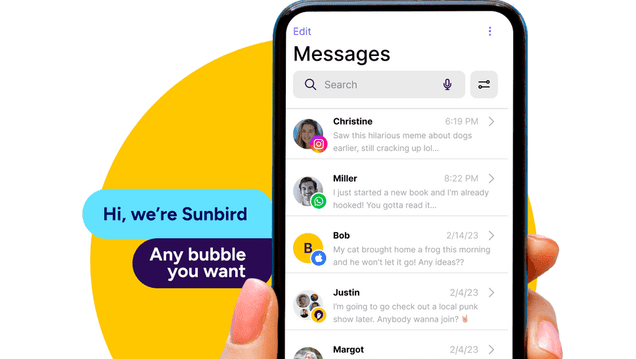
Android iMessage-Style Messaging App Sunbird Shuts Down Over Serious Privacy Concerns

This week brought a series of disasters (and quite some embarrassment) to Android messaging apps that were trying hard to break the infamous green-blue bubble barrier between Android and Apple users. It started with the failure of Nothing Chats and recently extended to the shutdown of Sunbird.

Read more…


Source: Gizmodo – Android iMessage-Style Messaging App Sunbird Shuts Down Over Serious Privacy Concerns

Happy Thanksgiving

November 23 is the US Thanksgiving holiday; as is our tradition, we will
not be publishing an LWN Weekly Edition this week as we will be far too
busy eating. We wish a good holiday to all of our readers (whether they
celebrate it or not); the weekly edition will return on November 30.

Source: LWN.net – Happy Thanksgiving

Use This New Google Maps Feature to Make Plans With Your Friends

Group texts are often the default way of making plans, but anyone in an overactive chat knows how quickly they can become a headache. The nonstop notifications, derailed conversations, and missed messages sometimes make group chats a less-than-idea place to coordinate. But a new feature on Google Maps is offering an alternative, allowing users to collaborate with others to make plans and decide activities with less opportunity for going off-map. Here’s how to use it.

How to use Google Maps to make plans with a group

In a Nov. 15 blog post, Amanda Leicht Moore, director of product for Google Maps, shared some tips for using the app. While most of them highlight existing functions—like searching for the cheapest gas and opting to take a route that avoids tolls—there’s an update to Google Maps’s list feature that allows multiple people to collaborate on a shared list to make plans, instead of relying on a group text.

To start the shared list, pick a starting point in Google Maps, then hit Save to add it to a list. Choose (+) New list, then give it a name (“Saturday road trip”), then hit Invite Collaborators to share it with a group. Invited users will see the collaborative list link on their end, and, when they tap on it, can tap Join to hop in.

Once in the list, anyone in the group can suggest activities and places to visit by adding them in Google Maps. Each suggestion shows who added it, and you can add a note if you want people to understand why you chose this location.

From here, the other members can express their opinion on each location by voting with an emoji. (Google suggests a heart in support of a particular spot, and a thumbs-down against it.) If everything works as intended, you’ll end up with a solid plan that at least some people are excited about, all without sending a single group text.

According to Moore, the new and improved list feature is rolling out, and will be available globally on iOS and Android over the next few weeks.


Source: LifeHacker – Use This New Google Maps Feature to Make Plans With Your Friends

Nintendo Adds Adults-Only N64 App For Switch In Japan

When you think of Nintendo, you tend to think of family-friendly gaming. You think of Link and Mario and sunshine and smiley stars. The word “adult” doesn’t likely come up when you ponder games on Switch, but that’s seemingly about to change. The company is adding a new 18+ app to its subscription service, Nintendo…

Read more…


Source: Kotaku – Nintendo Adds Adults-Only N64 App For Switch In Japan

Can The Upcoming Zelda Movie Be Like This Ghibli-Style Ocarina Of Time Animation?

This week is the 25th anniversary of The Legend of Zelda: Ocarina of Time. The Nintendo 64 classic was released in 1998, and became the framework for the series for several generations until Breath of the Wild’s open-world structure changed everything in 2017. In celebration of Ocarina of Time turning a quarter of a…

Read more…


Source: Kotaku – Can The Upcoming Zelda Movie Be Like This Ghibli-Style Ocarina Of Time Animation?