Two weeks ago, hundreds of Roblox players jumped into a custom game that let them take part in a pro-Palestine march. The game, which appeared to have been organized by Malaysian Roblox players, was made in response to the escalating violence in the Middle East. On October 7, the Islamic political and military…
If you’re interested in a flip-style foldable phone, you effectively have two choices in the US: the Samsung Galaxy Z Flip 5 and the Motorola Razr+. We think the former is ultimately better for most people, but the latter is still a worthy alternative, and now it’s on sale for $700 at Amazon. That’s the lowest price we’ve seen for an unlocked model outside of trade-in deals. Motorola normally sells the Razr+ for $1,000, though we’ve seen the phone fall between $800 and $900 a couple of times since it arrived in June. This deal is applicable to the black, magenta and blue versions of the device.
We gave the Razr+ a score of 85 in our review. As with the Galaxy Z Flip 5, the Razr+’s biggest selling point is that you can fold it in half and make it easier to tuck away. The main display is a vibrant 6.9-inch OLED panel with a 165Hz refresh rate; fold it shut, and you can use a 3.6-inch OLED display around the back. One advantage the Razr+ has over Samsung’s foldable is that it can run most Android apps on that outer display with less fuss. (The Galaxy Z Flip 5 limits its cover screen to a handful of widgets by default, though can you enable wider app support through the device’s settings.) Not every app is optimized for such a tiny screen, but you can quickly fire off a text, reply to an email, pick a new Spotify playlist or do other phone things without having to actually open the device.
Beyond that, the Razr+’s cover display has a higher refresh rate (144Hz versus 60Hz) and pixel density (413 ppi versus 306 ppi) than that of the Galaxy Z Flip 5, plus it’s 0.2 inches larger. It should last a little longer per charge, and its take on Android has more of a light touch than Samsung’s One UI interface. It also supports slightly faster wired charging speeds.
That said, there are a few clear downsides. For one, we found the Razr’s camera performance to be a step behind the Galaxy Z Flip 5. The hardware has a meager IP52 water-resistance rating — which means it can withstand some light rain but little more — whereas Samsung’s phone has a more robust IPX8 rating. (Though you’ll want to be delicate with either phone, as all foldables carry a greater risk of durability issues.) While it’s not slow, it uses a year-old Snapdragon Galaxy 8+ Gen 1 chip, so its performance is a little less futureproof. And Motorola’s update policy is less robust: It promises three major OS updates and bi-monthly security updates for the Razr+, while Samsung promotes four years of OS updates and five years of monthly security updates for the Galaxy Z Flip 5.
In the end, the main reason to consider the Razr+ is the bigger and more functional cover display, so if you’re sold on the idea of a clamshell-style foldable, it’s worth considering at this price. Just note that we may see a deal on Samsung’s foldable as we get closer to Black Friday. One foldable we’re less bullish on, however, is Motorola’s midrange Razr: That one is also on sale for $500, but we found it to be too limited in our review.
This article originally appeared on Engadget at https://www.engadget.com/the-motorola-razr-is-300-off-in-an-early-black-friday-deal-201601542.html?src=rss
If you’re dropping anything over $300 on a sweet gaming monitor like Dell had for sale recently, then there are still a few good options out there, including those from Titan Army. This is a Chinese monitor brand that’s been making waves in its home continent for its aggressive pricing on feature-filled monitors. Titan Army has now found its
According to a “survey of 167 academic and civil society researchers conducted at Reuters’ request by the Coalition for Independent Technology Research” (CITR) in September, more than 100 studies about X have been canceled, suspended, or switched to focus on another platform since Elon Musk began limiting researchers’ access to X data last February. Researchers told Reuters that includes studies on hate speech and child safety, as well as research tracking the “spread of false information during real-time events, such as Hamas’ attack on Israel and the Israeli airstrikes in Gaza.”
The European Union has already threatened X with fines if the platform fails to stop the spread of Israel/Hamas disinformation. In response, X has reported taking actions to curb misinformation, like removing newly created Hamas-affiliated accounts and accounts manipulating trending topics, working with partner organizations to flag terrorist content, actioning “tens of thousands of posts,” and proactively monitoring for antisemitic speech.
Citigroup’s managers and consultants working on CEO Jane Fraser’s reorganization have discussed job cuts of at least 10% in several major businesses, CNBC reported on Monday, citing people with knowledge of the process. Reuters: The bank has warned of job cuts as part of a sweeping overhaul it unveiled in September, but has said it will estimate the scale of layoffs and cost savings in the current quarter. The reorganization, known internally as “Project Bora Bora” according to CNBC, is intended to give Fraser more direct control as she seeks to simplify the Wall Street giant and boost its stock price.
The discussions are at an early stage and the number of people axed could change, CNBC said, adding that the lender had hired Boston Consulting Group for the plan. Fraser’s push to eliminate regional managers, co-heads and others with overlapping roles will translate into job cuts beyond 10% for executives, the report said. Last month, Citi said it would cut management layers from 13 to eight. In the two top layers of leadership, 15% of functional roles were reduced and 60 committees were eliminated, it said The bank’s global headcount has stayed at 240,000 this year, it disclosed in its latest quarterly supplement last month.
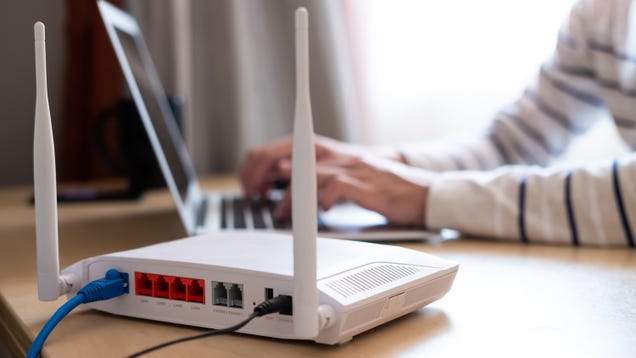
Setting up your home internet connection is a lot easier than it used to be, but that doesn’t mean it’s self-explanatory. Terms like “modem” and “router” are often thrown around, sometimes interchangeably, even though they’re very different devices. Before you go out and buy what you need to connect your devices to…
Enlarge/ Google’s conceptual rendering of its housing plan. (credit: Google)
Google has ended an agreement with a developer to build 15,000 homes in the San Francisco Bay Area, including affordable housing, as it continues a string of cost-cutting moves to reduce real estate costs. Google said it is “looking at a variety of options” to provide housing despite ending the development deal but didn’t offer specific details on its plans.
Google partnered with the Australian company Lendlease in 2019 on a $15 billion plan for “residential, retail, hospitality, and community development space,” with an expected completion date of 2038. Lendlease was to be the developer, builder, and owner of the residential, retail, hospitality, and community components, while Google also planned a related office expansion. Including office space, the developments could have covered 15 million square feet.
But on Friday, Lendlease and Google announced that they “mutually reached an agreement to end the Development Services Agreements of the four master-planned districts in San Jose (Downtown West), Sunnyvale (Moffett Park), and Mountain View (Middlefield Park and North Bayshore) in the San Francisco Bay area in California, collectively referred to as the San Francisco Bay Project.” Google is making a payment to Lendlease as part of the agreement to part ways.
A Parkinson’s patient can now walk 6km (3.7 miles) thanks to an implant targeting the spinal cord. The Guardianreports that the man — 62-year-old “Marc” from Bordeaux, France — developed severe mobility impairments from the degenerative disease. “I practically could not walk anymore without falling frequently, several times a day,” he said in a press release announcing the breakthrough. “In some situations, such as entering a lift, I’d trample on the spot, as though I was frozen there, you might say.” Wearing the spinal implant allows him to walk “almost normally” as the research team eyes a full clinical trial.
Marc underwent a “precision neurosurgical procedure” two years ago at Lausanne University Hospital (CHUV), which helped facilitate the research. The surgery fitted him with an electrode field placed against his spinal cord and an electrical impulse generator under the skin of his abdomen. Although conventional Parkinson’s treatments often target brain regions affected by the loss of dopamine-producing neurons, this approach instead focuses on the spinal area associated with activating leg muscles for walking.
The procedure used a personalized map of Marc’s spinal cord, identifying the specific locations signaling leg movements. He wears a movement sensor on each leg that tells the implant he’s trying to walk; it then switches on and sends electrical impulses to the targeted spinal neurons, adapting to his movement in real-time.
GABRIEL MONNET via Getty Images
“In response to precise stimulation of the lumbar spinal cord, I’ve observed for the first time remarkable improvements of gait deficits due to Parkinson’s disease,” project supervisor Jocelyne Bloch, professor and neurosurgeon at CHUV Lausanne University hospital, said in a webinar discussing the patient’s success. “I really believe that these results open realistic perspectives to develop a treatment.”
The patient says he could walk practically normally with the stimulation after several weeks of rehab. He now wears it for around eight hours daily, only turning it off when sleeping or lying down for a while. “I turn on the stimulation in the morning and I turn off in the evening,” he said. “This allows me to walk better and to stabilise. Right now, I’m not even afraid of the stairs anymore. Every Sunday I go to the lake, and I walk around 6 kilometres. It’s incredible.”
The researchers caution that there’s still a vast chasm between tailoring the approach to one person vs. optimizing it for wide-scale use. Co-leads Grégoire Courtine and Bloch are working on a commercial version of the neuroprosthetic in conjunction with Onward Medical. “Our ambition is to provide general access to this innovative technology to improve the quality of life of Parkinson’s patients significantly, all over the world,” they said.
Michael J. Fox (right) with Sting.
Michael J. Fox Foundation
In the meantime, research on six new patients will continue in 2024. The team says a “generous donation” of $1 million from the Michael J. Fox Foundation for Parkinson’s Research is funding the upcoming work. In 2021, the actor’s organization announced it had contributed over $1.5 billion to Parkinson’s research.
This article originally appeared on Engadget at https://www.engadget.com/spinal-implant-allows-parkinsons-patient-to-walk-for-miles-193637427.html?src=rss
The European Space Agency’s $1.4 billion Euclid space telescope is charged with revealing the dark universe—the 95% of the cosmos we don’t see. On Tuesday, the telescope’s first images will be revealed live.
Mozilla recently reported that of the car brands it reviewed, all 25 failed its privacy tests. While all, in Mozilla’s estimation, overreached in their policies around data collection and use, some even included caveats about obtaining highly invasive types of information, like your sexual history and genetic information. As it turns out, this isn’t just hypothetical: The technology in today’s cars has the ability to collect these kinds of personal information, and the fine print of user agreements describes how manufacturers get you to consent every time you put the keys in the ignition.
“These privacy policies are written in a way to ensure that whatever is happening in the car, if there’s an inference that can be made, they are still ensuring that there is protection, and that they are compliant with different state laws,” Adonne Washington, policy council at the Future of Privacy Forum, said. The policies also account for technological advances that could happen while you own the car. Tools to do one thing could eventually do more, so manufacturers have to be mindful of that, according to Washington.
So, it makes sense that a car manufacturer would include every type of data imaginable in its privacy policy to cover the company legally if it stumbled into certain data collection territory. Nissan’s privacy policy, for example, covers broad and frankly irrelevant classes of user information, such as “sexual orientation, sexual activity, precise geolocation, health diagnosis data, and genetic information” under types of personal data collected.
Companies claim ownership in advance, so that you can’t sue if they accidentally record you having sex in the backseat, for example. Nissan claimed in a statement that this is more or less why its privacy policy remains so broad. The company says it “does not knowingly collect or disclose customer information on sexual activity or sexual orientation,” but its policy retains those clauses because “some U.S. state laws require us to account for inadvertent data we have or could infer but do not request or use.” Some companies Engadget reached out to — like Ford, Stellantis and GM — affirmed their commitment, broadly, to consumer data privacy; Toyota, Kia and Tesla did not respond to a request for comment.
Beyond covering all imaginable legal bases, there simply isn’t any way to know why these companies would want deeply personal information on their drivers, or what they’d do with it. And even if it’s not what you would consider a “smart” car, any vehicle equipped with USB, Bluetooth or recording capabilities can capture a lot of data about the driver. And in much the same way a “dumb” tv is considerably harder to find these days, most consumers would be hard pressed to find a new vehicle option that doesn’t include some level of onboard tech with the capacity to record their data. A study commissioned by Senator Ed Markey nearly a decade ago found all modern cars had some form of wireless technology included. Even the ranks of internet listicles claiming to contain low-tech cars for “technophobes” are riddled with dashboard touchscreens and infotainment systems.
“How it works in practice we don’t have as much insight into, as car companies, data companies, and advertising companies tend to hold those secrets more close to the vest,” Jen Caltrider, a researcher behind Mozilla’s car study, said. “We did our research by combing through privacy policies and public documentation where car companies talked about what they *can* do. It is much harder to tell what they are actually doing as they aren’t required to be as public about that.”
The unavailability of disconnected cars combined with the lack of transparency around driver data use means consumers have essentially no choice to trust their information is being used responsibly, or that at least some of the classes of data — like Nissan’s decision to include “genetic information” — listed in these worrying privacy policies are purely related to hypothetical liability. The options are essentially: read every one of these policies and find the least draconian, buy a very old, likely fuel-inefficient car with no smart features whatsoever or simply do without a car, period. To that last point, only about eight percent of American households are carless, often not because they live in a walkable city with robust public transit, but because they cannot afford one.
This gets even more complicated when you think about how cars are shared. Rental cars change drivers all the time, or a minor in your household might borrow your car to learn how to drive. Unlike a cell phone, which is typically a single user device, cars don’t work like and vehicle manufacturers struggle to address that in their policies. And cars have the ability to collect information not just on drivers but their passengers.
If simply trusting manufacturers after they ask for the right to collect your genetic characteristics tests credulity, the burden of anyone other than a contract lawyer reading back a software license agreement to the folks in the backseat is beyond absurd. Ford’s privacy policy explicitly states that the owners of its vehicles “must inform others who drive the vehicle, and passengers who connect their mobile devices to the vehicle, about the information in this Notice.” That’s about 60 pages of information to relay, if you’re printing it directly from Ford’s website — just for the company and not even the specific car.
And these contracts tend to compound on one another. If that 60-page privacy policy seems insurmountable, well, there’s also a terms of service and a separate policy regarding the use of Sirius XM (on a website with its own ‘accept cookies’ popover, with its own agreement.) In fairness to Ford, its privacy notice does allow drivers to opt out of certain data sharing and connected services, but that would require drivers to actually comb through the documentation. Mozilla found many other manufacturers offered no such means to avoid being tracked, and a complete opt-out is something which the Alliance for Automotive Innovation — a trade group representing nearly all car and truck makers in the US, including Ford — has actively resisted. To top things off, academics, legal scholars and even one cheeky anti-spyware company have repeatedly shown consumers almost universally do not read these kinds of contracts anyway.
The burden of these agreements doesn’t end with their presumptive data collection, or the onus to relay them to every person riding in or borrowing your car. The data held in-vehicle and manufacturer’s servers becomes yet another hurdle for drivers should they opt to sell the thing down the line. According to Privacy4Cars founder AndreaAmico, be sure to get it in writing from the dealer how they plan to delete your data from the vehicle before reselling it. “There’s a lot of things that consumers can do to actually start to protect themselves, and it’s not going to be perfect, but it’s going to make a meaningful difference in their lives,” Amico said.
Consumers are effectively hamstrung by the state of legal contract interpretation, and manufacturers are incentivized to mitigate risk by continuing to bloat these (often unread) agreements with increasingly invasive classes of data. Many researchers will tell you the only real solution here is federal regulation. There have been some cases of state privacy law being leveraged for consumers’ benefit, as in California and Massachusetts, but on the main it’s something drivers aren’t even aware they should be outraged about, and even if they are, they have no choice but to own a car anyway.
This article originally appeared on Engadget at https://www.engadget.com/every-car-is-a-smart-car-and-its-a-privacy-nightmare-193010478.html?src=rss
The Marvels finally hits theaters this week with the cosmic team-up between Captain Marvel (Brie Larson), Ms. Marvel (Iman Vellani), and Monica Rambeau (Teyonah Parris).
The whole point of vinyl siding is that you don’t have to paint it and it’ll last for decades, but there are actually a lot of good reasons to consider painting your vinyl siding. For one, it allows you to freshen and transform the exterior of your home—if your siding is faded and weathered, a coat of paint will do…
Going back to early last year saw AMD Linux engineers posting PerfMonV2 patches in preparation for Zen 4 processors. The PerfMonV2 updated performance monitoring capabilities with Zen 4 were merged last year and are supported with the latest EPYC 8004/9004 series processors. Coming only now though to Linux 6.7 is support for Unified Memory Controller (UMC) events as part of PerfMonV2…
With the release of ChatGPT one year ago, OpenAI introduced the world to the idea of an AI chatbot that can seemingly do anything. Now, the company is releasing a platform for making custom versions of ChatGPT for specific use cases — no coding required. From a report: In the coming weeks, these AI agents, which OpenAI is calling GPTs, will be accessible through the GPT Store. Details about how the store will look and work are scarce for now, though OpenAI is promising to eventually pay creators an unspecified amount based on how much their GPTs are used. GPTs will be available to paying ChatGPT Plus subscribers and OpenAI enterprise customers, who can make internal-only GPTs for their employees.
Custom GPTs were announced Monday at DevDay, OpenAI’s first-ever developer conference in San Francisco, where the company also announced a turbocharged, cheaper GPT-4, lower prices for developers using its models in their apps, and the news that ChatGPT has reached a staggering 100 million weekly users. “Since launching ChatGPT, people have been asking for ways to customize ChatGPT to fit specific ways that they use it,” OpenAI said in a statement shared with The Verge. “We launched Custom Instructions in July that let you set some preferences, but requests for more control kept coming. Many power users maintain a list of carefully crafted prompts and instruction sets, manually copying them into ChatGPT. GPTs now do all of that for you.”
Microsoft is injecting a ton of generative AI-powered features into Windows 11, but it’s not all about the Copilot assistant. The company has started to update a string of apps with new AI functions, including Paint, Clipchamp, Snipping Tool and Photos. Microsoft released an update for Windows 11 2023, known as 23H2, on October 31. That update expanded access to Copilot and other AI features.
Microsoft is rolling out the AI updates gradually, so you may not have access to everything just yet. Still, it may be handy for you to know what you can do with the new tools. Here are some pointers on how to use the AI features in each app.
How to use Paint in Windows 11
An AI-infused version of Paint that includes generative AI features is rolling out to Windows 11 users. Microsoft Paint Cocreator taps into the DALL-E model to enable you to create images based on a text description. The feature will whip up just about anything you can think of (within reason).
It’s easy enough to get started with Cocreator, as long as you have access to it. To begin with, Cocreator is available in the US, UK, France, Australia, Canada, Italy and Germany. Only prompts in English are supported for now. At the outset, there’s a waitlist to use Cocreator. You can join this from the Cocreator side panel and you’ll receive an email to let you know when you can start using the feature.
You’ll need to sign into your Microsoft account to use Cocreator. That’s because the cloud-based service Cocreator runs on requires authentication and authorization. You also need to sign in to access credits; you’ll need these to generate images with DALL-E. When you join Cocreator, you’ll receive 50 credits with which you can create images. Each generated image costs one credit.
Microsoft
How to install Paint on Microsoft Windows 11
If you don’t already have Paint installed, you can download it from the Microsoft Store. Once you have it, open Paint and select the Cocreator icon on the toolbar. From there, you can type in a description of the image you’d like the AI to generate. Microsoft suggests being as descriptive as possible in order to get results that match your concept.
After entering the text, select a style that you’d like your image to be in. Then hit the Create button.
Cocreator will then generate three different images based on your text input and the style you chose. Simply click on one of these images to add it to the Paint canvas so you can start modifying it.
Meanwhile, Paint now supports background removal as well as layers. With the help of AI, you can isolate an item (such as an object or person) and remove the background with a single click. You can also edit individual layers without affecting the rest of the image.
How to use video auto composition with Clipchamp on Windows 11
It should be easier for you to stitch footage together in the video-editing tool Clipchamp. The app will help guide you with automated suggestions for the likes of scenes, edits and narratives. But it’s the auto compose feature that may prove most useful for many users. Auto compose is available on the web and in the Microsoft Clipchamp desktop app.
Microsoft says that the media you add to Clipchamp is not used to train AI models and all of the processing takes place in the app or browser. The app’s AI video editor (which Microsoft says is useful for everyone) can automatically generate slideshows, montage videos and short videos in 1080p based on the photos and videos you add to it.
If you don’t like the first video that Clipchamp offers up, you can check out a different version “instantly” since the app will generate multiple videos for you. Auto compose may also prove useful for professional video editors, Microsoft says, as the tool can generate several unique videos in the space of a few minutes.
Microsoft
After you sign into Clipchamp, click the “Create a video with AI” button. You’ll find this front and center on the main page. After you give your project a working title, you can upload media by clicking the “Click to add or drag and drop” button. Alternatively, you can simply drag and drop videos and photos into the media window.
Once you’ve finished adding everything, hit the “Get started” button.Now, it’s a case of letting the AI know what kind of style and aesthetic you’re looking for. Styles include things like elegant, vibrant and bold. You’ll use thumbs up and thumbs down buttons to inform the AI of your preferences. Alternatively, you can leave the decision up to Clipchamp by selecting the “Choose for me” option. When you’re ready to move onto the following step, click the Next button.
Microsoft
Clipchamp will suggest a length for your video based on what it believes are the best combinations of your media. You’ll be able to adjust the video length and the aspect ratio before moving on. Before you leave this screen, you can preview the video by clicking the play button.
Next up, you’ll be able to change the background music on the “Finish your video” screen if you’re not a fan of the track that the AI picked. Click the music button to change the tune. Again, you’ll be able to preview your video and audio track. If you’re not happy with the video, you can ask for a different take by clicking on “Create a new version.”
Microsoft
If you do like the video Clipchamp has created, you’re pretty much done at this point. Click the Export button to save the video. From the export page, you can share your video directly to the likes of YouTube and TikTok, or add a copy to your OneDrive storage.
After the AI is done with your video, you can further customize it in Clipchamp. Click on the “Edit in timeline” button and you’ll be able to do things like add stickers, captions, animated text and audio files.
In addition, you can enhance your video with AI options including a text-to-speech voiceover feature and automatically generated subtitles. The speaker coach tool aims to provide you with real-time feedback on your camera recordings to help improve your speaking skills and video presentations.
Many Clipchamp features are available for free. But for videos in 4K resolution and other premium tools, you’ll need to pay for the essentials plan, which costs $12 per month or $120 per year.
How to use Snipping Tool’s AI features
The Snipping Tool is one of the most useful in Windows 11. It’s a cinch to capture and share some or all of your display. The app’s AI functions should come in useful in a number of ways.
First, the app supports text recognition. If you use the Snipping Tool to take a screenshot of something with text in it, you can click the Text Actions button. At the outset, you’ll have two main options. You can copy all of the text and paste it into another app.
Tech Based/YouTube
Alternatively, you can quickly redact private information. The tool should be able to recognize email addresses and phone numbers, and you’ll be able to swiftly blue those out. That should save you having to manually cover up text in, say, Paint.
The Snipping Tool should work quite nicely with Copilot as well. As indicated in a Windows 11 promo video, you can paste something you’ve clipped with the tool into Copilot, then do things like ask the assistant to remove the background from the image.
How to use Background Blur in Windows 11’s Photos app
Microsoft
The Windows 11 Photos app has some useful AI features as well. Those include improved search for images stored on OneDrive accounts —- it should be easier for you to find a photo based on content or location where it was taken.
The app’s editing features have been enhanced thanks to AI as well. One of the handier and easiest-to-use tools is the self-explanatory Background Blur (Paint 3D has a similar feature). That can help the subject of your photo stand out. AI separates the background from the subject, but to ensure your data stays on your device, the separation process takes place there rather than in the cloud.
To use Background Blur, first select the image you want to use and open it in the Photos app. Click on “Edit image” at the top of the screen and select Background Blur. You’ll then have a few options to choose from. You can opt to enable the blur effect instantly; adjust the intensity of the blur before applying it; or have more granular control by turning on the “Selection brush tool.”
Opt for the Selection brush tool and you can manually add denote more parts of the image for the AI to blur out. Alternatively, you can deselect parts of the image that you don’t want to be blurred. You’ll be able to change the brush size for finer control and modify the brush softness to intensify or turn down the blue effect.
This article originally appeared on Engadget at https://www.engadget.com/windows-11s-new-ai-features-how-to-use-paint-clipchamp-snipping-tool-and-photos-191541014.html?src=rss
For years, the internet has insisted that you can use baby oil to polish chrome and faucet fixtures. As someone with disgusting faucets that never seem to be improved by scrubbing, I finally gave in to the pressure. The claims say it will cut through gunk and film, leaving a shiny faucet (or toilet handle or whatever…
Sam Altman, OpenAI cofounder and CEO, revealed Chat GPT-4 Turbo at the company’s first-ever developer conference called DevDay in San Francisco Monday. The new model supports 128,000 tokens of context, equivalent to a 300-page book and sixteen times ChatGPT-4’s context limits.
Brown researchers set up a belly flop-like water experiment using a blunt cylinder, adding an important vibrating twist to it that ultimately led them to counterintuitive findings. Credit: John Antolik and Daniel Harris.
We’ve all had the misfortune of botching a dive into the pool and ending up in a painful belly flop—or perhaps we’ve done it deliberately to show off and instantly regretted that decision. Hitting the water in that body position can feel like hitting concrete and lead to bruising or (if one is falling from a greater height) internal injuries. While the basic physics is well-understood, scientists are always looking for greater insight into the phenomenon in hopes of finding novel ways to ameliorate the impact.
Scientists at Brown University have found that, surprisingly, adding a bit of extra spring to a body hitting the water can actually increase the impact force instead of decrease it under certain conditions, according to a new paper published in the Journal of Fluid Mechanics. The implications go beyond protecting divers; a better understanding of the hydrodynamics will improve designs of naval ships, seaplanes, or projectiles, as well as underwater autonomous vehicles.
From a physics standpoint, we’re talking about an elastic body hitting the surface of water. The stress of moving from the medium of air to the much denser medium of water exerts a huge force as that body displaces it. The cohesive forces between water molecules are stronger at the surface, making it harder to break through. (It’s why diving competitions often use aerators to create bubbles in the water, breaking the surface tension to protect the divers.) A large volume of fluid must be accelerated (displaced) in a short timeframe to match the speed of the impinging body. The larger the surface area of the object hitting the water, the more resistance there will be—and with belly flops there will be a much larger surface area than with a simple swan dive, resulting in that signature slam.
This article focuses on the best open-source software for physics and physics education. Hopefully, there will be something of interest here for all budding physicists.