Apple is squeezing one more round of product announcements into October after all. The company announced today that it would be streaming a product event at 5 pm Pacific/8 pm Eastern on October 30, unusually late in the day (and in the month) for an Apple event. The “Scary Fast” tagline doesn’t give away anything about what Apple plans to announce, but both history and well-sourced Apple reporters and analysts suggest that the company will focus mostly on the Mac.
As Bloomberg’s Mark Gurman pointed out yesterday, the iMac and all three sizes of MacBook Pro have longer-than-usual shipping times listed on Apple’s website, which often indicates that a refresh is imminent. I’d guess that having an actual livestreamed product event—rather than just announcing the new products via press release, as Apple did with the new Apple Pencil last week—increases the likelihood that any new Macs will come with next-generation M3 chips. Analyst Ming-Chi Kuo believes that Apple will focus on M3 MacBook Pros at the event, although as recently as two weeks ago he didn’t think Apple had anything left to announce this year.
These new MacBook Pros would be coming just 11 months after the M2 refresh for those Macs, which launched back in January. But it’s worth noting that these Macs were probably meant to be released in late 2022, based on the original URL of their announcement video. It’s not that the M3 MacBooks Pro are a little early; it’s probably that the M2 versions were a little late.
Apple is reportedly set to overhaul the Apple TV app. On Tuesday, Bloomberg’s Mark Gurman reported that the company plans to consolidate its video offerings, placing them exclusively in the TV app on all its devices. Citing “people with knowledge of the matter,” Gurman reports that the company will launch a new version of the app “around December” as part of an upcoming tvOS software update.
As part of the move, Apple will reportedly remove its dedicated (iTunes-based) Movies and TV Shows apps from the Apple TV set-top box’s interface. In addition, it plans to axe all video-related sections from the iTunes app on iOS and iPadOS. The TV app already duplicates the functionality of renting and buying digital video content, making the alleged change more about streamlining and removing redundancies than altering any core features.
The updated app will reportedly include a left-side panel for video categories, similar to what’s found on Netflix and other streaming rivals. Apple’s TV app consolidates video content from the Apple TV+ subscription service, rented and purchased movies, live sports networks and compatible third-party services like Amazon Prime, Paramount+ and Starz.
Metal Gear Solid: Master Collection Vol. 1 gathers some of the best games ever made and puts them all on modern platforms in one convenient package. Unfortunately, a laundry list of weird caveats and shortcomings at launch make the new anthology hard to celebrate. Why is one of the best franchises in gaming history…
The moon has been a focal point for space research and exploration for years, yet we’re still far from fully understanding its origins. Take its age, for example – researchers have just discovered that the moon is about 40 million years older than previously thought.
In a study published by the European Association of Geochemistry, scientists looked at the age of crystal formations found in rock samples from the moon’s surface to determine its age. The prevalence of crystals called zircon in the samples, collected years ago from NASA’s Apollo program, suggests that the surface of the moon was created around 110 million years after the formation of the solar system. The scientists used analytical techniques including mass spectrometry to measure the presence of particular molecules in the rock. Another method of analysis, atom-probe tomography, was used to detect the amount of radioactive decay in the samples — which in turn was used to determine the age of the crystals in the rock.
NASA holds a theory that a Mars-sized object collided with Earth several billion years ago to form the moon. This new understanding of the age of the moon actually gives scientists a rough idea of when that collision might have occurred. This finding highlights the importance of exploratory missions like the Apollo 17 mission at the heart of this discovery. The 1972 manned mission to geologically survey the surface of the moon resulted in 243 pounds of lunar material being brought back to Earth — only for it to be examined by researchers 51 years later.
To date, NASA says that more than 105 robotic spacecraft have been launched to explore the moon, so the opportunities for more findings are boundless. Although the next NASA-led manned mission to the moon won’t happen until 2025 at the earliest, we can expect more rover programs to shed more light on the makings of the surface of the moon.
This article originally appeared on Engadget at https://www.engadget.com/lunar-rock-samples-suggest-moon-is-older-than-previously-thought-193036846.html?src=rss
Nintendo’s Pro Controller for Switch is great, especially if you find the Joy-Cons to be a bit small for extended gameplay. But whether you prefer the larger Pro Controller or the convenience of the Joy-Cons, they both have something in common: a lack of speakers. As such, any accompanying gameplay sounds must come…
Urban Outfitters is no stranger to selling ancient tech. The clothing and furniture brand went from pushing vinyl back into the mainstream to selling $350 refurbished iPods on behalf of the tech’s 22nd anniversary.
Apple will redesign its TV app in a step toward consolidating the company’s various video offerings later this year, part of its efforts to become a bigger player in the streaming world. Bloomberg News: The company is preparing a new version of the app for release around December as part of an upcoming tvOS software update, said the people, who asked not to be identified because the plan is private. The app, which first launched in 2016, aggregates content from iTunes, the Apple TV+ subscription service, live sports networks and third-party offerings like Amazon Prime.
As part of the overhaul, the company will discontinue its dedicated apps on the Apple TV set-top box that let users rent and buy movies and shows. It will also remove the movie and TV show sections from the iTunes Store app on iPhones and iPads. The idea is to steer more customers toward the main TV app, which sits at the center of Apple’s expanding video strategy. There, users are able to subscribe to TV+ as well as third-party video services like Starz and Paramount+. The app already lets customers rent and buy programs, making a separate iTunes option unnecessary.
The Federal Communications Commission’s attempts to stop robocalls have failed to make a big dent in the problem, according to testimony at a Senate subcommittee hearing today.
The FCC “has been trying to address the problems, but, to date, its methods have not succeeded in achieving a meaningful reduction in these unwanted and illegal calls. Either the FCC does not have sufficient legal tools to stop these unwanted and illegal calls, or it has not yet determined how to deploy those tools effectively,” said Margot Freeman Saunders, senior counsel for the National Consumer Law Center.
The hearing on robocalls was held by the Commerce Committee’s Subcommittee on Communications, Media, and Broadband. Senator Ben Ray Luján (D-N.M.), the subcommittee chair, said that FCC enforcement is ineffective and that Congress should give the agency more power. He mentioned the long-standing problem that the FCC is unable to collect on most of the robocall fines it issues.
From the earliest days of his career as a superhero, Peter Parker has made taking pictures—pictures of Spider-Man—as vital as webslinging and crimefighting. Photojournalism is as important a part of Spider-Man’s legacy as any other aspect, and with the release of Marvel’s Spider-Man 2, there’s plenty of opportunities…
If you’ve ever felt like you were duped by overpaying for something that was advertised as a “great deal,” you’re in the right place. It’s easy to get caught up in frenzied online shopping holidays like Prime Day or Black Friday, and retailers are known for sneaking price hikes before major “sales” or deceiving…
Universal Audio has gone all-in on the amp-in-a-pedal concept and just announced its latest entry, the UAFX Lion ’68 Super Lead. This pedal digitally recreates a trio of classic 100-watt Marshall Plexi setups from the 1960s. You get the titular Super Lead based on the classic tube amp, the Super Bass inspired by the 1967 low-end icon and the Brown, which emulates the sound of a 100-watt Marshall Plexi heading into a Variac to recreate Eddie Van Halen’s infamous guitar tone.
This is a modern pedal with high-tech features, however, so it goes well beyond simple amp recreations. The onboard IR includes recreations of different classic microphones and speaker cabinets to adjust the sound. There’s also built-in reverb, volume boost, presence and a variety of assignable preset switches that are customized by using a smartphone app. There are also plenty of artist presets to select from if you’ve grown weary of fiddling with knobs.
All of the speaker models derive from the company’s OX Stomp pedal. There’s six in total at launch, with more to be added at a later date. Updating is easy, as there’s a USB-C port on the back, in addition to mono/stereo jack connectors.
You can even bypass the cabinet and mic emulations entirely if you would rather rely on your actual amp. UA says these features combine to create “the most authentic late ‘60s British 100-watt tube sound ever placed into a stompbox.” The UAFX Lion ’68 Super Lead is available now for the usual high-end price tag of $400.
Accompanying today’s release is a new tremolo pedal, a chorus/vibrato pedal and a compressor pedal based on the classic Teletronix LA-2A. This is not the company’s first foray of amp recreations. Universal Audio cut its teeth making plugins, including many based on classic amps. More recently, it released a trio of amp emulation pedals based on the Fender Deluxe Reverb, the Fender Tweed Deluxe and the Vox AC30. We reviewed all three and said that they sounded amazing, despite the hefty $400 price tag.
This article originally appeared on Engadget at https://www.engadget.com/universal-audios-new-pedal-recreates-that-classic-1960s-marshall-plexi-sound-190608962.html?src=rss
One of the more exciting aspects of Qualcomm’s Snapdragon family processors for Windows on Arm64 is that these laptop PCs are always connected (4G or 5G), and they can deliver stellar battery life. Just peruse any of our recent reviews and you can see that, for instance, the Lenovo Flex 5G has more than 24 hours of battery life with video
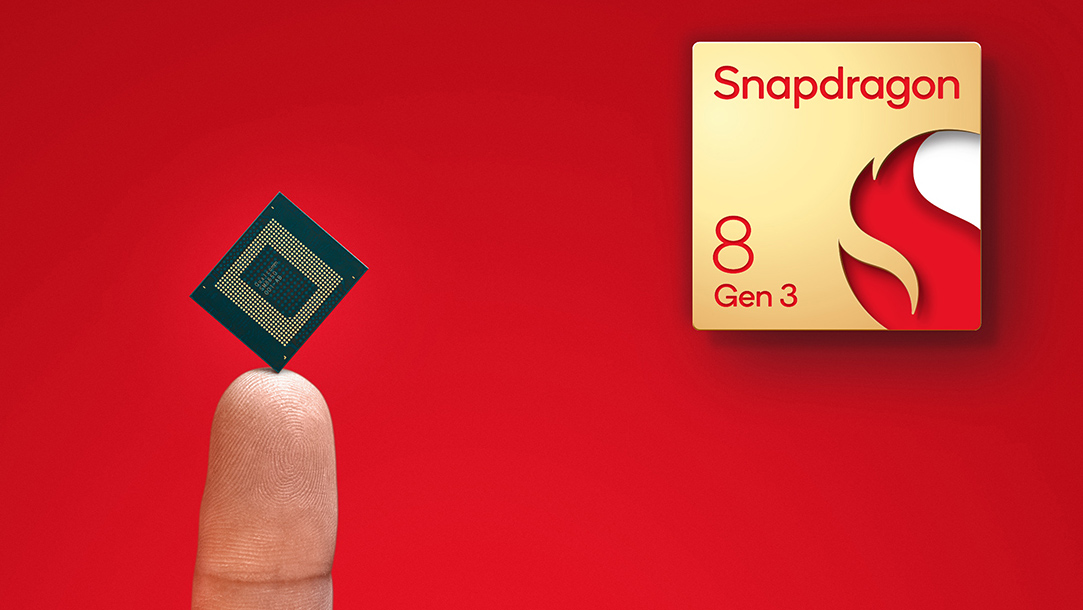
It’s that time of year again—the leaves and temperatures are falling, and Qualcomm is announcing a new flagship mobile processor platform at its Snapdragon Summit event in Maui today. As expected, the new Qualcomm Snapdragon 8 Gen 3 is now official, packing a faster CPU core configuration, an updated Adreno GPU, and AI engines galore. Qualcomm
Qualcomm’s Nuvia-designed Arm chip for PCs is easily the company’s most exciting announcement today, but it also announced a phone chip: the Snapdragon 8 Gen 3. This will show up in most flagship Android devices in 2024 and promises around 30 percent performance improvements while picking from Arm’s parts bin.
First up is a new “1:5:2” core arrangement. Instead of the usual one big core, three medium cores, and four small cores (for single-threaded performance, multi-core, and background processing, respectively), the Snapdragon 8 Gen 3 has one big core, five medium cores, and two small cores. Qualcomm says the big core is a 3.3 GHz Arm Cortex X4 but didn’t confirm any of the other CPU core model numbers. Those five medium cores don’t all run at the same frequency, with three running at 3.2 GHz and two at 3.0 GHz. The CPU performance claims are 30 percent faster and 20 percent more efficient. The chip is built on a 4 nm process.
Qualcomm is always light on the GPU details (even though it is one of the strengths of a Qualcomm chip), and this year, the Adreno GPU doesn’t even have a model number in the documentation Qualcomm sent over. It is supposed to be 25 percent faster and 25 percent more efficient, though. Qualcomm talked up the lighting capabilities of the chip for video games, with support for Unreal Engine 5 Lumen and better ray tracing.
Qualcomm is no stranger in running artificial intelligence and machine learning systems on-device and without an internet connection. They’ve been doing it with their camera chipsets for years. But on Tuesday at Snapdragon Summit 2023, the company announced that on-device AI is finally coming to mobile devices and Windows 11 PCs as part of the new Snapdragon 8 Gen 3 and X Elite chips.
Both chipsets were built from the ground up with generative AI capabilities in mind and are able to support a variety of large language models (LLM), language vision models (LVM), and transformer network-based automatic speech recognition (ASR) models, up to 10 billion parameters for the SD8 gen 3 and 13 billion parameters for the X Elite, entirely on-device. That means you’ll be able to run anything from Baidu’s ERNIE 3.5 to OpenAI’s Whisper, Meta’s Llama 2 or Google’s Gecko on your phone or laptop, without an internet connection. Qualcomm’s chips are optimized for voice, text and image inputs.
“It’s important to have a wide array of support underneath the hood for these models to be running and therefore heterogeneous compute is extremely important,” Durga Malladi, SVP & General Manager, Technology Planning & Edge Solutions at Qualcomm, told reporters at a prebriefing last week. “We have state-of-the-art CPU, GPU, and NPU (Neural Processing Unit) processors that are used concurrently, as multiple models are running at any given point in time.”
The Qualcomm AI Engine is comprised of the Oryon CPU, the Adreno GPU and Hexagon NPU. Combined, they handle up to 45 TOPS (trillions of operations per second) and can crunch 30 tokens per second on laptops, 20 tokens per second on mobile devices — tokens being the basic text/data unit that LLMs can process/generate off of. The chipsets use Samsung’s 4.8GHz LP-DDR5x DRAM for their memory allocation.
Qualcomm
“Generative AI has demonstrated the ability to take very complex tasks, solve them and resolve them in a very efficient manner,” he continued. Potential use cases could include meeting and document summarization or email drafting for consumers, and prompt-based computer code or music generation for enterprise applications, Malladi noted.
Or you could just use it to take pretty pictures. Qualcomm is integrating its previous work with edge AI, Cognitive ISP. Devices using these chipsets will be able to edit photos in real-time and in as many as 12 layers. They’ll also be able to capture clearer images in low light, remove unwanted objects from photos (a la Google’s Magic Eraser) or expand image backgrounds. User scan even watermark their shots as being real and not AI generated, using Truepic photo capture.
Having an AI that lives primarily on your phone or mobile device, rather than in the cloud, will offer users myriad benefits over the current system. Much like enterprise AIs that take a general model (e.g. GPT-4) and tune it using a company’s internal data to provide more accurate and on-topic answers, a locally-stored AI “over time… gradually get personalized,” Malladi said, “in the sense that… the assistant gets smarter and better, running on the device in itself.”
What’s more, the inherent delay present when the model has to query the cloud for processing or information doesn’t exist when all of the assets are local. As such, both the X Elite and SD8 gen 3 are capable of not only running Stable Diffusion on-device but generating images in less than 0.6 seconds.
The capacity to run bigger and more capable models, and interact with those models using our speaking words instead of our typing words, could ultimately prove the biggest boon to consumers. “There’s a very unique way in which we start interfacing the devices and voice becomes a far more natural interface towards these devices — as well in addition to everything else,” Malladi said. “We believe that it has the potential to be a transformative moment, where we start interacting with devices in a very different way compared to what we’ve done before.”
Mobile devices and PCs are just the start for Qualcomm’s on-device AI plans. The 10-13 billion parameter limit is already moving towards 20 billion-plus parameters as the company develops new chip iterations. “These are very sophisticated models,” Malladi commented. “The use cases that you build on this are quite impressive.”
“When you start thinking about ADAS (Advanced Driver Assistance Systems) and you have multi-modality [data] coming in from multiple cameras, IR sensors, radar, lidar — in addition to voice, which is the human that is inside the vehicle in itself,” he continued. “The size of that model is pretty large, we’re talking about 30 to 60 billion parameters already.” Eventually, these on-device models could approach 100 billion parameters or more, according to Qualcomm’s estimates.
This article originally appeared on Engadget at https://www.engadget.com/qualcomm-brings-on-device-ai-to-mobile-and-pc-190030938.html?src=rss
Enlarge/ Qualcomm’s Snapdragon X Elite could be the first Arm chip that can do for PCs what Apple Silicon did for Macs. (credit: Qualcomm)
For years, Qualcomm has been making Snapdragon chips for Windows PCs, and for years, those chips’ performance have failed to dislodge Intel’s or AMD’s chips to any significant degree. Its latest Snapdragon 8cx Gen 3 (and the closely related Microsoft SQ3) appears in just two consumer PCs, the cumbersomely named Microsoft Surface Pro 9 with 5G and Lenovo’s ThinkPad X13s Gen 1.
But that may be changing. Nearly three years ago, Qualcomm bought a company called Nuvia for $1.4 billion. Nuvia was mainly working on server processors, but the company’s founders and many of its employees had also been involved in developing the A- and M-series Apple Silicon processors that have all enabled the iPhone, iPad, and Mac to achieve their enviable blend of performance and battery life. Today, Qualcomm is formally announcing the fruit of the Nuvia acquisition: the Qualcomm Snapdragon X Elite is a 12-core, 4 nm chip that will compete directly with Intel’s Core processors and AMD Ryzen chips in PCs—and, less directly, Apple’s M2 and M3-series processors for Macs.
Qualcomm says the Snapdragon X Elite will begin arriving in PCs starting in mid-2024. The company has also announced a new Snapdragon SoC for smartphones, the Snapdragon 8 Gen 3.
At its annual Snapdragon Summit on Tuesday, Qualcomm revealed its latest mobile chipset. Perhaps the biggest change in the Snapdragon 8 Gen 3 is the introduction of on-device generative AI (akin to Google’s Tensor G3). The chipset’s AI Engine supports multi-modal generative AI models and what Qualcomm claims is the world’s fastest Stable Diffusion system with the ability to generate an image in under a second. So, you should be able to whip up backgrounds and images for social media posts in a flash.
Because GAI requests are handled on-device, Qualcomm says they remain private. There’s an AI assistant based on Meta’s Llama 2 language learning model. It can securely use personal data such as your favorite activities, location and fitness level to provide more personalized responses, Qualcomm says. The Qualcomm Sensing Hub (which powers this feature) is said to deliver an AI performance increase of up to 3.5 times that of Qualcomm’s previous mobile chipset. The company also claims the Snapdragon 8 Gen 3 delivers up to 98 percent faster Hexagon NPU performance and 40 percent better performance per watt.
Qualcomm
The camera and editing systems include support for features such as the ability to remove people and objects from a video with the tap of a finger. Qualcomm is promising voice-activated GAI photo and video editing thanks to its Cognitive ISP, along with the option to optimize different parts of a photo in up to 12 layers, whether you capture it with the front or back camera.
The Photo Expansion feature uses GAI to extend the borders of a photo, akin to Adobe’s Generative Fill tool. The Vlogger’s View mode allows you to share video from both your rear and front-facing cameras at the same time, so you can feature your face in what you capture as you narrate what you’re seeing.
Qualcomm says that Dolby HDR tech allows for image playback and capture with a fuller range of colors, tones and shades. Meanwhile, you can apply a cryptographic seal from Truepic to a photo to indicate that it’s the real deal and not something you whipped up with GAI, because that’s the world we’re living in these days. It’s a different approach to applying a label to AI-generated content.
Elsewhere, Qualcomm is promising some gaming upgrades in the Snapdragon 8 Gen 3. There’s support for Unreal Engine 5.2 along with hardware-accelerated ray-tracing with global illumination, which the company says is a first for a mobile chipset. This, Qualcomm says, helps deliver “lifelike, multi-source lighting” in games.
NetEase/Qualcomm
The Adreno Frame Motion Engine 2.0 can double framerates while sustaining the same power consumption as the previous chipset, Qualcomm claims. If you’re so inclined to hook up a Snapdragon 8 Gen 3-powered device to an external 240Hz display, you’ll be able to play games at up to 240 fps.
Snapdragon Game Super Resolution, Qualcomm’s answer to upscaling tech like NVIDIA’s DLSS, will help games to run at up to 8K on supported displays too. The company notes that it’s open-sourcing Snapdragon Game Super Resolution.
You can expect gameplay audio to be synced to the millisecond, according to Qualcomm, meaning that you shouldn’t experience any lag while using earbuds. It’s also promising uninterrupted lossless audio even as you move away from your phone or from one room to another thanks to its Expanded Personal Area Network Technology system. The Snapdragon 8 Gen 3 is said to support 24-bit 96 kHz lossless music over Bluetooth.
On the subject of connectivity, Qualcomm is using AI hardware acceleration in the X75 Modem-RF System. It says this can help to deliver better 5G speeds, coverage, mobility, link robustness and location accuracy. There’s Wi-Fi 7 support too.
Compared with the previous chipset, Qualcomm says the Snapdragon 8 Gen 3’s Kryo CPU delivers 30 percent better performance and 20 percent more power efficiency. As for the GPU, it claims you’ll benefit from a 25 percent performance improvement and 25 percent greater power efficiency, along with a 40 percent ray-tracing upgrade. Overall, the Snapdragon 8 Gen 3 is slated to have 10 percent overall power savings compared with last year’s chip.
You won’t have to wait long to try out a phone with the Snapdragon 8 Gen 3 if you really want to. Qualcomm says devices that use the chipset should start to appear in the coming weeks. Among the brands and manufacturers that will use it are Sony, ASUS, OnePlus, Oppo, Vivo, Xiaomi, Honor and ZTE.
This article originally appeared on Engadget at https://www.engadget.com/qualcomms-snapdragon-8-gen-3-brings-on-device-generative-ai-to-more-android-phones-190019288.html?src=rss
On Tuesday, at its annual Snapdragon Summit in Hawaii, Qualcomm announced a major addition to its line of mobile chips with the Snapdragon X Elite, which the company is calling its most powerful processor to date.
The Arm-based Snapdragon X Elite is the successor to last year’s Snapdragon 8cx Gen 3 line of laptop chips, which recently got a name change to reflect the huge leap in performance for this upcoming generation. Powered by 12 Oryon cores, Qualcomm claims the X Elite provides up to two times faster CPU performance compared to Intel’s 13th-gen Core i7-1360P and i7-1355U processors while also drawing up to 68 percent less power.
The chip is based on a 4nm design fabricated by TSMC with standard clock speeds of 3.8GHz with a dual-core boost of up to 4.3GHz. Qualcomm also includes 42MB of total cache with an LPDDR5x memory bandwidth of 136 GB/s. When compared to Apple’s M2 chip, Qualcomm says the X Elite boasts 50 percent faster peak multithreaded performance. And thanks to its integrated GPU, the X Elite is said to offer twice the graphics performance as the i7-13800H at ISO power.
Qualcomm
Qualcomm’s new AI Engine should also provide a significant boost to machine learning-based tasks. Between its Oryon CPU, Adreno GPU and Hexagon NPU, the X Elite looks to deliver up to 75 TOPs, which Qualcomm claims is 4.5 times more than its competitors. The chip was also designed to run large language models with up to 13 billion parameters locally with Qualcomm saying the chip offers the fastest Stable Diffusion performance of any laptop chip on the market. Other features include support for AV1 4K HDR video encoding/decoding, 5G connectivity (with downloads of up to 10 Gbps), Wi-Fi 7 and the company’s built-in Sensing Hub.
The arrival of the Snapdragon X Elite is poised to be a major breakthrough for Qualcomm as it attempts to better compete against rivals like Intel and more specifically Apple, following the latter’s transition away from x86-based chips to its custom-designed M-series silicon. The development of the chip’s Oryon cores has been a multiyear process following Qualcomm’s acquisition of Nuvia back in 2021.
Roya Kohbodi/Qualcomm
That said, while the X Elite boasts some impressive specs and power numbers, the major challenge for Qualcomm is translating all that oomph into actual performance. That’s because unlike Apple, Qualcomm doesn’t have the luxury of being able to design both its chips and the software/OS its processors are running. And as we’ve seen in the past on devices like the Surface Pro 9, systems running Windows on Arm still don’t feel as fast or responsive when compared to their more traditional x86-based counterparts.
Thankfully, with retail PCs powered by the Snapdragon X Elite expected to arrive sometime in mid-2024, it won’t be too long until we can see how Qualcomm’s latest laptop chip performs in the real world.
This article originally appeared on Engadget at https://www.engadget.com/the-snapdragon-x-elite-is-qualcomms-most-powerful-chip-to-date-190004830.html?src=rss
In the midst of the ongoing escalation between Israel and Palestine, gamers who can’t attend protests in real life are turning to digital spaces to show their support for those suffering as a result of the conflict. The latest venue? The ultra-popular tween hit Roblox.
While Qualcomm has become wildly successful in the Arm SoC market for Android smartphones, their efforts to parlay that into success in other markets has eluded them so far. The company has produced several generations of chips for Windows-on-Arm laptops, and while each has incrementally improved on matters, it’s not been enough to dislodge a highly dominant Intel. And while the lack of success of Windows-on-Arm is far from solely being Qualcomm’s fault – there’s a lot to be said for the OS and software – silicon has certainly played a part. To make serious inroads on the market, it’s not enough to produce incrementally better chips – Qualcomm needs to make a major leap in performance.
Now, after nearly three years of hard work, Qualcomm is getting ready to do just that. This morning, the company is previewing their upcoming Snapdragon X Elite SoC, their next-generation Arm SoC designed for Windows devices. Based on a brand-new Arm CPU core design from their Nuvia subsidiary dubbed “Oryon”, the Snapdragon X Elite is to be the tip of the iceberg for a new generation of Qualcom SoC designs. Not only is it the heart and soul of Qualcomm’s most important Windows-on-Arm SoC to date, but it will eventually be in smartphones and a whole lot more.