

This month marks the two-year anniversary of Windows 11 and by the numbers, many of you reading this on a Windows PC are rocking Microsoft’s latest-generation operating system. However, even more of you are running Windows 10. A lot more, as it turns out—around three out of every four Windows PCs have Windows 10 installed, compared to around
Source: Hot Hardware – Windows 11 Is Getting Crushed By Windows 10 In This Stat And It’s Not Even Close
Monthly Archives: October 2023
Cyberpunk 2077 Developers Call Unions 'A Stronger Voice In Times Of Crisis'

As the international gaming industry faces wave after wave of layoffs, workers at Cyberpunk 2077 and The Witcher developer, CD Projekt Red, have created a new Poland-wide union aimed at protecting their rights. This arrives in the face of the massive studio announcing it would be firing nine percent of its staff by…
Source: Kotaku – Cyberpunk 2077 Developers Call Unions ‘A Stronger Voice In Times Of Crisis’
The Eyes of Ahsoka, Ranked

Ahsoka is over (for now, at least it seems), and many questions remain. What are Thrawn’s plans? What will our heroes do to stop him? Just what great mysteries are out there for our other foes left to uncover? But an even sillier question lingers, too: what is up with the eyeballs on this show?
Source: Gizmodo – The Eyes of Ahsoka, Ranked
Medical Credit Cards Are a Bad Idea, Actually

It’s no secret that healthcare in the U.S. is difficult to afford, even for those who have insurance. In fact, roughly 20% of U.S. households have some amount of medical debt—and in 2021, more than half of all bills in collections were medical.
Source: LifeHacker – Medical Credit Cards Are a Bad Idea, Actually
Use the Earbuds App to Share Songs Between Spotify and Apple Music

Have you ever wanted to share a song or a playlist with a friend or a group online, only to find that they subscribe to Apple Music and you subscribe to Spotify? Earbuds, an iPhone and Android app, breaks down those walls so music nerds can share whatever they’d like.
Source: LifeHacker – Use the Earbuds App to Share Songs Between Spotify and Apple Music
Curl Preps For "Probably The Worst Curl Security Flaw In A Long Time"
The widely-used Curl project as a command-line tool and library for transferring data via a variety of protocols is preparing to roll-out Curl 8.4 early in order to address a particularly nasty vulnerability…
Source: Phoronix – Curl Preps For “Probably The Worst Curl Security Flaw In A Long Time”
Google Made Billions With Secret Change to Ad-Auction Algorithm, Witness Testifies
An economist testified that Google made billions of dollars in extra ad revenue starting in 2017 — by making a secret change to its auction algorithm that bumped their revenues up 15%. Bloomberg reports:
Michael Whinston, a professor of economics at the Massachusetts Institute of Technology, said Friday that Google modified the way it sold text ads via “Project Momiji” — named for the wooden Japanese dolls that have a hidden space for friends to exchange secret messages. The shift sought “to raise the prices against the highest bidder,” Whinston told Judge Amit Mehta in federal court in Washington.
Google’s advertising auctions require the winner to pay only a penny more than the runner-up. In 2016, the company discovered that the runner-up had often bid only 80% of the winner’s offer. To help eliminate that 20% between the runner-up and what the winner was willing to pay, Google gave the second-place bidder a built-in handicap to make their offer more competitive, Whinston said, citing internal emails and sealed testimony by Google finance executive Jerry Dischler earlier in the case…
About two-thirds, more than 60%, of Google’s total revenue comes from search ads, Dischler said previously, amounting to more than $100 billion in 2020.
In 2021 Google was also accused of running “a secret program to track bids on its ad-buying platform,” according to the New York Post (citing reporting by the Wall Street Journal). A Texas-led antitrust suit accused Google “of using the information to gain an unfair market advantage that raked in hundreds of millions of dollars annually, according to a report.”
And the Post’s article also mentioned “an alleged hush-hush deal in which Google allegedly guaranteed that Facebook would win a fixed percentage of advertising deals.”


Read more of this story at Slashdot.
Source: Slashdot – Google Made Billions With Secret Change to Ad-Auction Algorithm, Witness Testifies
The Morning After: ChatGPT creator OpenAI might start making its own AI chips
According to Reuters, OpenAI is exploring making its own artificial intelligence chips, even looking into an acquisition. OpenAI CEO Sam Altman previously blamed GPU shortages for users’ concerns regarding the company API’s speed and reliability, leading to these moves. OpenAI using its own chips could reduce its costs too. Based on analysis by Bernstein Research, each ChatGPT query costs the company around four cents.
At the moment, NVIDIA controls the market for chips that power AI applications. The Microsoft supercomputer OpenAI used to develop its technology, for instance, uses 10,000 NVIDIA GPUs. Microsoft, OpenAI’s biggest backer, has been working on its own AI chip since 2019.
— Mat Smith
The biggest stories you might have missed
The Talos Principle 2 is the ideal blend of puzzle and story
Amazon’s first internet satellite launch was a success
iOS 17 review: Notable new features and streamlined touches
Hitting the Books: NASA’s Kathy Sullivan and advances in orbital personal hygiene
UK regulator says Snap’s AI chatbot may put kids’ privacy at risk
You can get these reports delivered daily direct to your inbox. Subscribe right here!
NASA will reveal on Wednesday what OSIRIS-REx brought back from asteroid Bennu
A first look at its asteroid sample.
NASA/Keegan Barber
NASA will give the public a look at the asteroid sample brought back to Earth by its OSIRIS-REx spacecraft. A livestream of the reveal is set for 11 AM ET on Wednesday, October 11. OSIRIS-REx grabbed its sample from Bennu back in 2020, then spent a year-and-a-half observing the asteroid before returning to Earth in May 2021. “The very best ‘problem’ to have is that there is so much material, it’s taking longer than we expected to collect it,” said Christopher Snead, NASA’s deputy OSIRIS-REx curation lead.
Atari is releasing a new cartridge for its 46-year-old 2600 console
Save Mary never hit store shelves.
Atari just announced pre-orders for a physical cartridge of the company’s once-ubiquitous 2600 console. The game, Save Mary, was developed during the console’s golden years, before being shelved when the 2600 went the way of the dodo. If you want to play it, you don’t need to dust down your old 2600. Conveniently, Atari sells an upgraded version of the console, called the 2600+. What a relief.
X tests three paid subscription tiers
It looks like this will determine how many ads you see.
Bloomberg reports that X is testing a trio of subscription tiers to help solve its financial woes. Details are scant, but these paid subscription options are likely to impact the number of ads you might see when using the platform. It looks like it’ll break down into Basic, Standard and Plus. Basic users will continue to see the regular number of ads, while standard users will see half, equivalent to what folks who pay $8 each month get at the moment. Plus users will see no ads whatsoever, for however much that might cost.
Engadget Podcast: Google’s Pixel 8 phones and Pixel Watch 2
And Samsung launched even more devices.
Engadget
This week, Cherlynn and Devindra chat with Engadget’s Sam Rutherford about everything from the Made by Google event. That includes the Pixel 8, Pixel 8 Pro and Pixel Watch 2. We give Google credit for leaning on AI long before it was trendy, but we wonder if the Pixel 8 Pro’s temperature sensor will actually be useful.
This article originally appeared on Engadget at https://www.engadget.com/the-morning-after-chatgpt-creator-openai-might-start-making-its-own-ai-chips-111521672.html?src=rssSource: Engadget – The Morning After: ChatGPT creator OpenAI might start making its own AI chips
GNOME Merge Requests Opened That Would Drop X.Org Session Support
A set of merge requests were opened that would effectively drop X.Org (X11) session support for the GNOME desktop and once that code is removed making it a Wayland-only desktop environment…
Source: Phoronix – GNOME Merge Requests Opened That Would Drop X.Org Session Support
Intel APX Code Begins Landing Within The GCC Compiler
In addition to Intel’s compiler engineers pushing a lot of code into GCC — and other open-source compiler components — around AVX10, over the weekend code began hitting the GCC 14 Git codebase for the Advanced Performance Extensions (APX) functionality…
Source: Phoronix – Intel APX Code Begins Landing Within The GCC Compiler
Hangover 8.17 Released With Updated Box64 & FEX Integration
Hangover 8.17 was released this weekend as the newest feature release for this open-source Wine-based software that aims to make it easy to run Windows x86/x64 binaries on 64-bit Arm Linux systems as well as potentially other architectures too like RISC-V and POWER…
Source: Phoronix – Hangover 8.17 Released With Updated Box64 & FEX Integration
Libva 2.20 Released For Video Acceleration API
Libva 2.20 was released today as the newest update to this common Video Acceleration API (VA-API) library that sits in front of the various hardware-specific VA-API driver implementations…
Source: Phoronix – Libva 2.20 Released For Video Acceleration API
Google Nest cameras are up to 33 percent off in early October Prime Day sale
Just ahead of Google’s October “Big Deal Days” Prime Day sale, multiple Nest products are on sale, some back to all-time low prices. The easy-to-install Nest Doorbell (Battery) and Nest Cam Outdoor have particularly steep discounts of $60, letting you grab them for just $120 each (33 percent off). Meanwhile, the Nest Security Cam indoor is also on sale for $70 (30 percent off), one of the steepest discounts we’ve seen.
The Nest Doorbell (Battery) is a popular item because it’s much easier to install than any wired doorbells. As with the cameras, it will send you alerts when you have a visitor and you can chat with them through your phone and the built-in speaker and microphone. Google’s “intelligent alerts” can tell the difference between a visitor, a package being delivered, an animal sighting and more, so you can see if a situation requires your immediate attention. If the regular $180 price has made you pause, it’s now on sale for $120.
You can also pick up the Nest Cam Outdoor for just $120, or $60 off the regular $180 price. That model obviously has a weatherproof design so that you can install it outside your home, along with expanded Night Vision to better spot outdoor intruders. It also packs an internal battery that lets you set it up without the need for an AC plug, providing up to seven months of battery life before a recharge depending on usage.
Other deals are available as well. The Nest Cam indoor is designed to blend in to your home, with a range of colors, built-in stand, wall mount and hinge, and is currently on sale for $70 or 30 percent off the regular price. The sale also includes the Google Nest Doorbell (Wired) and other products — to see everything check here.
Your October Prime Day Shopping Guide: See all of our Prime Day coverage. Shop the best Prime Day deals on Yahoo Life. Follow Engadget for Prime Day tech deals. Learn about Prime Day trends on In The Know. Hear from Autoblog’s experts on the best Fall Prime Day deals for your car, garage, and home, and find Prime Day sales to shop on AOL, handpicked just for you.
This article originally appeared on Engadget at https://www.engadget.com/google-nest-cameras-are-up-to-33-percent-off-in-early-october-prime-day-sale-075727282.html?src=rss
Source: Engadget – Google Nest cameras are up to 33 percent off in early October Prime Day sale
Can These Fungus-Studying Scientists Make the Planet More Resilient to Climate Change?
A team of scientists drove hundreds of miles through the steppes of Kazakhstan in search of what may be one of the largest and most diverse fungi ecosystems on Earth.
The Washington Post believes their efforts “could help make the planet more resilient to climate change.”
When these underground fungi come together, they form sophisticated systems known as “mycorrhizal networks….” Mycorrhizal fungi often form mutually beneficial relationships with plants. They trade essential nutrients such as phosphorus and nitrogen in exchange for carbon, and act as an extended root system, allowing plants to access water they can’t reach. These networks may also prove to be invaluable for transporting carbon underground, a study published in June found. About 13 gigatons of carbon fixed by vegetation — equivalent to about one-third of all carbon dioxide emissions from fossil fuels in one year — flows through underground fungi, according to an analysis of nearly 200 data sets.
In the steppe, these plant-fungal benefits may be short-lived, however. While deserts are a natural part of Kazakhstan’s ecosystem, more than half of the country’s vegetation and drylands is at risk of becoming desert as well. The main drivers are large-scale intensive agriculture and increasingly warm and dry temperatures brought by climate change…. Knowing what species of fungi live here is key to understanding how to protect them, said Bethan Manley, project officer at the Society for the Protection of Underground Networks who was on the expedition. It will help determine “where we might be able to have the most effective measures of not poisoning them with fungicides or not having harmful farming practices,” she said.


Read more of this story at Slashdot.
Source: Slashdot – Can These Fungus-Studying Scientists Make the Planet More Resilient to Climate Change?
VLC 3.0.19 Improves AV1 HDR Support with Software Decoding, Fixes Linux Issues
The popular VLC Media Player open-source media player software has been updated to version 3.0.19, a release that comes almost a year after VLC 3.0.18 with numerous improvements and bug fixes.
Source: LXer – VLC 3.0.19 Improves AV1 HDR Support with Software Decoding, Fixes Linux Issues
How to Install Jellyfin Media Server with Docker
Follow our step-by-step guide to installing Jellyfin Media Server using Docker Compose. Enjoy a free, open-source streaming solution today!
Source: LXer – How to Install Jellyfin Media Server with Docker
What Microsoft's CEO Said in Court About Google – And Its Own 1998 Antitrust Case
The Street argues that Satya Nadella “has transformed Microsoft since taking over for former CEO Steve Ballmer. Instead of closing the company off from its rivals, Nadella has been open to working with companies that are also competitors like Apple.” But they added that Nadella “remains at odds” with Google’s parent company Alphabet, even testifying in the antitrust lawsuit against the company.
They highlight another example from Nadella’s testimony (first spotted by GeekWire).
Nadella also believes that Alphabet sells a false narrative that OEM partners have a choice when in reality they don’t. “Google has carrots and it has massive sticks…’We’ll remove Google Play if you don’t have us as the primary browser.’ And without Google Play, an Android phone is a brick. And so that is the type of stuff that is impossible to overcome. No OEM is going to do that,” he said.
GeekWire also notes Nadella’s comments about the U.S. government’s antitrust case against Microsoft in 1998:
“Google exists because of two things. One is because of our consent decree, where we had to put a lot of limits on what we could distribute and not distribute by default. And, second, because [of] the fact that you could distribute anything you wanted on Windows, and it’s still the case, right, it’s not just Google. … The largest marketplace on Windows happens to be not from Microsoft, it’s Steam. And so it’s an open platform on which anybody can distribute anything.”


Read more of this story at Slashdot.
Source: Slashdot – What Microsoft’s CEO Said in Court About Google – And Its Own 1998 Antitrust Case
Today’s NYT Connections Hints (and Answer) for Monday, October 9, 2023
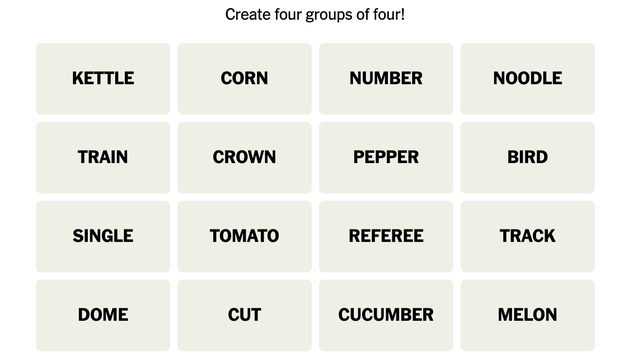
If you’re looking for the Connections answer for Monday, October 9, 2023, read on—I’ll share some clues, tips, and strategies, and finally the solutions to all four categories. Beware, there are spoilers below for October 9, NYT Connections #120! Read on if you want some hints (and then the answer) to today’s…
Source: LifeHacker – Today’s NYT Connections Hints (and Answer) for Monday, October 9, 2023
Why Is California's Population Falling? Housing Costs
“34% of Californians say they are considering moving out of the state due to housing costs,” according to a new report from the Public Policy Institute of California.
It’s a nonprofit think tank founded in 1994 “to inform and improve public policy in California through independent, objective, nonpartisan research.” (Founded with a grant from Bill Hewlett of Hewlett-Packard, it also gets funding from the David and Lucile Packard Foundation). The report’s startling conclusion? “After a century of explosive growth, California is likely to become a slow-growing state.” After the year 2030 California’s seniors (older than 65) are expected to outnumber its children. “In 2020, California had nearly four residents ages 18-64 for every adult 65 and older. This ratio is expected to drop to 2.8 by 2030 and 2.2 by 2060, if current trends continue.”
Births are outpacing deaths by over 106,000 people a year. (Even during the pandemic California had a lower COVID mortality rate than most states.) And international immigration remained a net positive with a 90,000-person increase in 2022. Yet all of this was offset in 2022 by a net loss of 407,000 people migrating out of the state.
California already has a population of 39 million — but the full report cites July 2023 projections from the state’s Department of Finance that now “suggest that the state population will plateau between 39 and 40 million residents in the long term.”
The caption on one graph notes that California “is losing households at all income levels.”
[W]hile the majority of domestic outmigrants are lower- and middle-income, an increasing proportion of higher-income Californians are also exiting the state. The “new normal” of remote work in many white-collar professions has enabled some higher-income workers to move. Politics might also play a role, as conservatives are much more likely than liberals to say they have considered leaving the state.
One other factor:
Declining birth and fertility rates are a nationwide, even a global, phenomenon as economic and social events have changed the status of women and their access to educational and job opportunities. Total fertility rates — the number of births the average woman will have in her lifetime — have fallen across the U.S. in recent decades. No state has a rate at or above 2.1, the level necessary to maintain a population’s current size (not taking immigration and migration into account), but California’s fertility rate has fallen faster than most. In 2008 its rate was above the national average (2.15); by 2020 it fell to the seventh-lowest (1.52).
The declining birth rate among young adults in their 20s is the biggest driver of the fertility rate decline. One major factor is that 20-somethings are now less likely to get married, which can affect decisions to have children… In the past, higher birth rates among immigrants also helped offset lower birth rates among US-born Californians, though more recently birth rates among immigrants have declined, reflecting patterns in sending countries.


Read more of this story at Slashdot.
Source: Slashdot – Why Is California’s Population Falling? Housing Costs
Debian 12.2 “Bookworm” Released with 117 Bug Fixes and 52 Security Updates
The Debian Project announced today the release and general availability of Debian 12.2 as the second ISO update to the latest Debian GNU/Linux 12 “Bookworm” operating system series.
Source: LXer – Debian 12.2 “Bookworm” Released with 117 Bug Fixes and 52 Security Updates