
Effective October 10, only users with active Red Hat subscriptions can access Red Hat Product Security announcements. Here’s more on that!
Source: LXer – Red Hat Restricts Access to Its Security-Announcement List
Monthly Archives: October 2023
Should New Tech Rules Apply To Microsoft's Bing, Apple's iMessage, EU Asks
EU antitrust regulators are asking Microsoft’s users and rivals whether Bing should comply with new tough tech rules and also whether that should be the case for Apple’s iMessage, Reuters reported Monday, citing people familiar with the matter. From the report: The European Commission in September opened investigations to assess whether Microsoft’s Bing, Edge and Microsoft Advertising as well as Apple’s iMessage should be subject to the Digital Markets Act (DMA). The probes came after the companies contested the EU competition regulator labelling these services as core platform services under the DMA.
The DMA requires Microsoft, Apple, Alphabet’s Google, Amazon, Meta Platforms and ByteDance to allow for third-party apps or app stores on their platforms and to make it easier for users to switch from default apps to rivals, among other obligations. The Commission sent out questionnaires earlier this month, asking rivals and users to rate the importance of Microsoft’s three services and Apple’s iMessage versus competing services.


Read more of this story at Slashdot.
Source: Slashdot – Should New Tech Rules Apply To Microsoft’s Bing, Apple’s iMessage, EU Asks
Watch How Google's Next Chrome Update Will Make Organizing Tabs A Whole Lot Easier
Modern browsers like Chrome make it a snap to open links in new tabs, and that’s led to many a cluttered window. The next version of Chrome might ease the burden with automatic tab organization. Simply tell your browser to organize your tabs, and like magic, it’ll (hopefully) create order from chaos.
Most Chrome users are on the stable
Source: Hot Hardware – Watch How Google’s Next Chrome Update Will Make Organizing Tabs A Whole Lot Easier
Regularly Check These Items in Your Home to Stay Safe

Existence is precarious. There are so many ways the universe can ruin your day that it’s actually incredible any of us make it from morning to bedtime in one piece. At least we have agency and sentience, the ability to identify threats and take steps to avoid problems. Our houses, being inanimate collections of…
Source: LifeHacker – Regularly Check These Items in Your Home to Stay Safe
Tired of shortages, OpenAI considers making its own AI chips

Enlarge (credit: OpenAI / Benj Edwards)

OpenAI, the creator of ChatGPT and DALL-E 3 generative AI products, is exploring the possibility of manufacturing its own AI accelerator chips, according to Reuters. Citing anonymous sources, the Reuters report indicates that OpenAI is considering the option due to a shortage of specialized AI GPU chips and the high costs associated with running them.
OpenAI has been evaluating various options to address this issue, including potentially acquiring a chipmaking company and working more closely with other chip manufacturers like Nvidia. Currently, the AI firm has not made a final decision, but the discussions have been ongoing since at least last year. Nvidia dominates the AI chip market, holding more than 80 percent of the global share for processors best suited for AI applications. OpenAI CEO Sam Altman has publicly expressed his concerns over the scarcity and cost of these chips.
The hardware situation is said to be a top priority for OpenAI, as the company currently relies on a massive supercomputer built by Microsoft, one of its largest backers. The supercomputer uses 10,000 Nvidia graphics processing units (GPUs), according to Reuters. Running ChatGPT comes with significant costs, with each query costing approximately 4 cents, according to Bernstein analyst Stacy Rasgon. If queries grow to even a tenth of the scale of Google search, the initial investment in GPUs would be around $48.1 billion, with annual maintenance costs at about $16 billion.
Read 3 remaining paragraphs | Comments
Source: Ars Technica – Tired of shortages, OpenAI considers making its own AI chips
Striking UAW workers win key battery plant concession from General Motors

Enlarge / UAW members and workers at the Mopar Parts Center Line, a Stellantis Parts Distribution Center in Center Line, Michigan, hold signs after walking off their jobs at noon on September 22, 2023, and picketing outside the facility. (credit: MATTHEW HATCHER/AFP via Getty Images)

On Friday, the United Auto Workers gained a key concession from General Motors in its ongoing strike. Workers at GM battery manufacturing plants will be allowed to unionize, as revealed by UAW President Shawn Fain in a livestream.
“We were about to shut down GM’s largest money-maker, in Arlington, Texas. The company knew those members were about to walk immediately. And just that threat has provided a transformative win,” Fain said. Our plan is winning at GM, and we expect it to win at Ford and Stellantis as well.”
The autoworker strike began when around 13,000 workers walked off their jobs at three factories in Michigan, Missouri, and Ohio after the UAW’s previous contract with Ford, Stellantis, and General Motors expired without a new contract in place in mid-September. A week later, another 5,600 workers joined the strike at 38 locations across 20 states.
Read 5 remaining paragraphs | Comments
Source: Ars Technica – Striking UAW workers win key battery plant concession from General Motors
AI's Costly Buildup Could Make Early Products a Hard Sell
Microsoft, Google and others experiment with how to produce, market and charge for new tools. From a report: Microsoft has lost money on one of its first generative AI products, said a person with knowledge of the figures. It and Google are now launching AI-backed upgrades to their software with higher price tags. Zoom has tried to mitigate costs by sometimes using a simpler AI it developed in-house. Adobe and others are putting caps on monthly usage and charging based on consumption. “A lot of the customers I’ve talked to are unhappy about the cost that they are seeing for running some of these models,” said Adam Selipsky, the chief executive of Amazon.com’s cloud division, Amazon Web Services, speaking of the industry broadly. It will take time for companies and consumers to understand how they want to use AI and what they are willing to pay for it, said Chris Young, Microsoft’s head of corporate strategy.
“We’re clearly at a place where now we’ve got to translate the excitement and the interest level into true adoption,” he said. Building and training AI products can take years and hundreds of millions of dollars, more than with other types of software. AI often doesn’t have the economies of scale of standard software because it can require intense new calculations for each query. The more customers use the products, the more expensive it is to cover the infrastructure bills. These running costs expose companies charging flat fees for AI to potential losses.
Microsoft used AI from its partner OpenAI to launch GitHub Copilot, a service that helps programmers create, fix and translate code. It has been popular with coders — more than 1.5 million people have used it and it is helping build nearly half of Copilot users’ code — because it slashes the time and effort needed to program. It has also been a money loser because it is so expensive to run. Individuals pay $10 a month for the AI assistant. In the first few months of this year, the company was losing on average more than $20 a month per user, according to a person familiar with the figures, who said some users were costing the company as much as $80 a month.


Read more of this story at Slashdot.
Source: Slashdot – AI’s Costly Buildup Could Make Early Products a Hard Sell
Ardour 8.0 Brings Launchpad Pro Support, Region Grouping
Ardour 8.0 brings full support for the Novation Launchpad Pro controller, the ability to group regions to move or trim together, and more.
The post Ardour 8.0 Brings Launchpad Pro Support, Region Grouping appeared first on Linux Today.
Source: Linux Today – Ardour 8.0 Brings Launchpad Pro Support, Region Grouping
Aberrance Is a Claustrophobic Tale With a Twist

Aberrance is the first Mongolian horror feature to get a theatrical release in the U.S.—a landmark moment for director and co-writer Baatar Batsukh, especially since this is his first feature. The film runs just 75 minutes, but fills that slender space with a suspenseful mystery that changes shape more than once.
Source: Gizmodo – Aberrance Is a Claustrophobic Tale With a Twist
Halo Infinite: Here’s Your First Look At Season 5’s Awesome New Maps

Halo Infinite’s fifth season, “Reckoning,” arrives on October 17, 2023. With two new maps, a returning multiplayer mode from Halo 4, a new variant of the Bandit rifle, and more, it’s shaping up to be an excellent season for 343’s shooter.
Source: Kotaku – Halo Infinite: Here’s Your First Look At Season 5’s Awesome New Maps
It's Time to Get Wood Chips for Your Yard

The streets in my neighborhood are dotted with piles of wood chips every few houses, as everyone prepares for “the wintering.” Me, too—I always try to make sure I get a Chip Drop this time of year; four yards of fresh maple were dropped last week in a giant pile in front of my house. Now is the perfect time to get a…
Source: LifeHacker – It’s Time to Get Wood Chips for Your Yard
These Early Amazon Prime Day Deals On Fire TVs And Streaming Sticks Are Lit

With football season fully underway, it is time to upgrade that old TV to a bigger and more vibrant model. Luckily, a ton of great deals are happening this week during Amazon’s second Prime Day event (of 2023) to up one’s game.
Amazon Fire 75-inch Omni Series TV
Who doesn’t want to watch the big game on Sunday on a giant TV? The Amazon
Source: Hot Hardware – These Early Amazon Prime Day Deals On Fire TVs And Streaming Sticks Are Lit
Offshore Wind Turbines Need Rare Earth Metals. Will There Be Enough to Go Around?

This story was originally published by Grist. Sign up for Grist’s weekly newsletter here.
Source: Gizmodo – Offshore Wind Turbines Need Rare Earth Metals. Will There Be Enough to Go Around?
Spanish company’s success comes at a critical time for Europe’s launch industry

Enlarge / The Miura 1 rocket takes flight from Southern Spain. (credit: PLD Space)

A Spanish launch company claimed success on Saturday after its suborbital Miura 1 rocket lifted off and achieved an altitude of 46 km before plummeting into the Atlantic Ocean.
Saturday’s launch from Southern Spain is exciting for several reasons, but most notably because PLD Space is the first of Europe’s new space launch companies to have some credible success. To that end, Saturday’s modest flight represented the dawn of the European commercial space age.
“This launch culminates over 12 years of relentless effort, yet it marks just the start of our journey,” said PLD Space Launch director and co-founder Raúl Torres in a statement after the launch. “This test flight has yielded valuable data, enabling us to validate crucial design elements and technologies that will underpin the development of our Miura 5 orbital launcher.”
Read 11 remaining paragraphs | Comments
Source: Ars Technica – Spanish company’s success comes at a critical time for Europe’s launch industry
ASUS Quietly Launches A Storage AIC That Can Hold Four PCIe 5 SSDs For Blistering RAID
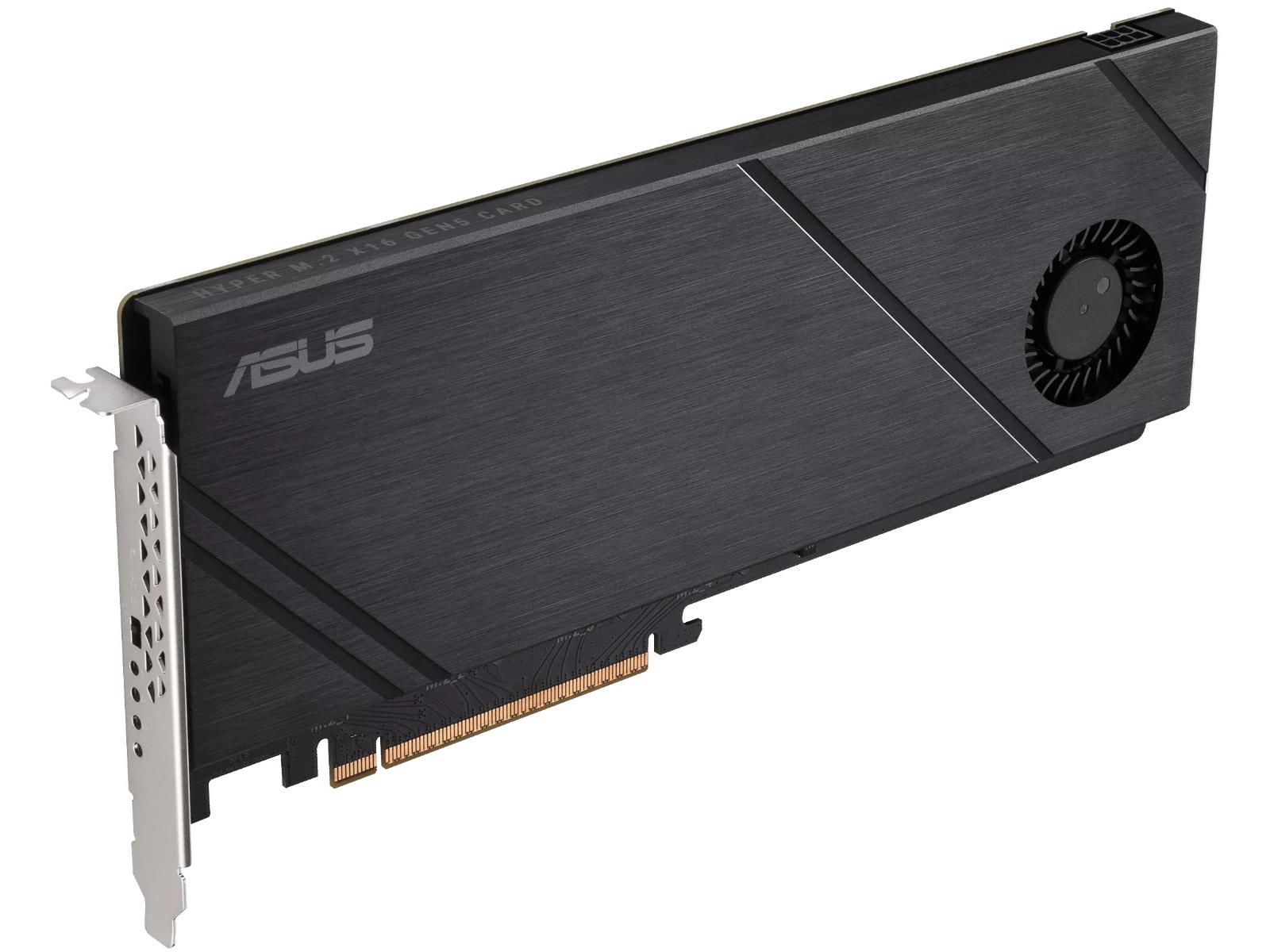
We’ve all been there, right? You want to add another SSD to your system, but all your M.2 sockets are full. You could get a SATA SSD, but that’s not going to satisfy your need for speed. No, you definitely need more NVMe storage, and that means you’re going to have to get a PCIe-to-M.2 adapter. If that’s the case anyway, why settle for one
Source: Hot Hardware – ASUS Quietly Launches A Storage AIC That Can Hold Four PCIe 5 SSDs For Blistering RAID
Use Productivity 'Sprints' When Your Attention Span Is Low

When you have a lot of work to do, a short attention span can be disastrous to your productivity. So instead of fighting it, you can use it to your advantage by working in “sprints” rather than trying for a marathon session. Like the Pomodoro technique, the sprints method has you work in a series of shorter bursts, so…
Source: LifeHacker – Use Productivity ‘Sprints’ When Your Attention Span Is Low
IBM CEO in Damage Control Mode After AI Job Loss Comments
IBM CEO Arvind Krishna appears to be in a state of damage control following recent controversial comments on AI-related job losses. From a report: Speaking at an event in the US this week, Krishna said IBM has no intention of laying off tech staff, such as developers or programmers, and instead plans to ramp up hiring for roles in these areas. “I don’t intend to get rid of a single one,” he said. “I’ll get more.” Krishna added that the company aims to increase the number of software engineering and sales staff over the next four years to accommodate for its heightened focus on generative AI. Instead, the hammer will fall largely on staff working in back-office operations, aligning closely with what we’ve heard previously from the exec.
Earlier this year, IBM announced plans to cut nearly 8,000 staff working in positions spanning human resources in a bid to automate roles. The move means that anywhere up to 7,800 jobs at the tech giant’s HR division could be cut, equivalent to around 30% of the overall workforce in the unit. IBM also said at the time that it would halt hiring for roles in the division on account of positions being automated.
Krishna has been among the most outspoken big tech executives on the topic of AI job losses in recent months. While industry figureheads have repeatedly shirked the topic, Krishna, to his credit, has been candid on the subject. In an interview with CNBC in August, Krishna suggested “we should all feel better” about the influx of generative AI tools, much to the ire of critics worried about its impact on the labor market. Krishna also told the broadcaster that organizations can deliver marked improvements to productivity through generative AI, but that will come at the expense of human roles.


Read more of this story at Slashdot.
Source: Slashdot – IBM CEO in Damage Control Mode After AI Job Loss Comments
VLC 3.0.19 Improves AV1 HDR Support With Software Decoding
Highlights of the VLC 3.0.19 release include improved AV1 HDR support with software decoding, support for RIFF INFO tags for WAV audio files, and more.
The post VLC 3.0.19 Improves AV1 HDR Support With Software Decoding appeared first on Linux Today.
Source: Linux Today – VLC 3.0.19 Improves AV1 HDR Support With Software Decoding
Meta Quest 3 review: A bit of mixed reality makes for better VR
The Meta Quest 3 proves that the Meta Ques 2 was just an impossibly good deal. When that VR headset arrived for just $300 three years ago, it was the perfect gateway to VR for most people. You didn’t need to hook it up to anything, you just flipped it on and stepped into virtual reality. But then Meta raised the price to $400 last year, and the entire VR industry just started to feel very stale.
It’s no wonder the $1,500 Meta Quest Pro completely flopped – VR was already struggling, and few people actually needed something so expensive.
The $500 Quest 3 likely won’t tempt over as many VR newcomers as the Quest 2, but it’s still a solid step forward for Meta. It has all of the upgrades you’d expect, and it also has full color mixed reality cameras, which let you use VR apps alongside a view of the real world. Squint a bit, and you can almost see what Apple is going for with the Vision Pro (though with far less fidelity).
Despite all those improvements though, the Quest 3 makes me marvel even more at what Meta accomplished with the Quest 2, which is still available at its original $299 price. That headset is still the best VR entry point for newbies, though I wish it were a bit cheaper by now. The Quest 3, meanwhile, is the logical upgrade once you’ve caught the VR bug.
Here’s what makes it special: It’s significantly thinner and lighter than the Quest 2, thanks to a new set of pancake lenses. Those also help to produce a sharper image from the new displays, which deliver 2,064 by 2,208 pixels per eye. That’s even better than the PlayStation VR 2, which wowed us earlier this year.
The Quest 3 is also running Qualcomm’s new Snapdragon XR2 Gen 2 chip, which offers double the GPU power of the Quest 2, according to Meta. Up front, there are two full color cameras for mixed reality, along with a depth sensor in the middle to help map your space and avoid obstacles. That’s notable, since it was a feature Meta completely dropped from the Quest Pro. When it comes to storage, you’ve got your choice between the 128GB $500 model and a 512GB option for $650.
Photo by Devindra Hardawar/Engadget
Now for what the Quest 3 doesn’t have: There’s no face or eye tracking, or cameras on the controllers like the Quest Pro. Though, at least they’ve lost the annoying rings from the Quest 2 gamepads. I don’t think you’ll miss any of the Quest Pro’s features – they’re potentially cool, but developers haven’t really taken advantage of them.
Meta already proved it can make a solid standalone VR headset, but can it really bring mixed reality to everyone? That seems to be the driving force behind the Quest 3. Apple’s Vision Pro showed us a genuinely promising vision of spatial computing, one where the digital and physical worlds can comfortably coexist. But that thing also costs $3,499. Trying to accomplish something similar for a fraction of the price seems impossible.
The Quest 3’s attempt at mixed reality is far from perfect – the color cameras deliver a fuzzy and pixelated view of the world, as if you’re in a drug-fueled haze. But it’s still pretty useful. A double tap on the side of the Quest 3 is all it takes to flip between immersive VR and the real world.
That’s something I ended up using frequently to check on text and Slack messages, grab information from my computer, and chat with people around me. Doing any of those things in the past would have required either completely removing the headset, or flipping up the visor.
Photo by Devindra Hardawar/Engadget
The Quest 3 also goes beyond just letting you see the real world: You can also do some basic mixed reality multi-tasking. You can arrange up to three windowed Quest apps, like WhatsApp and the Quest Store, on a translucent virtual tray that sits in front of you. Even better, you can move that tray anywhere in your space. That’s not something I’d use a lot, but the fact that I could create this environment, anchor it to a specific point in the real world, and walk around it simply blew me away.
It also helps that the Quest 3 makes every virtual element look incredibly sharp. Looking at WhatsApp chats in the headset was no different than on my gaming monitor. Meta still has to work on actually making the Quest’s apps more useful though: I could only reply to WhatsApp chats by awkwardly pecking away at the Quest’s virtual keyboard, leaving voice messages or attaching media from the headset. (Let’s just hope that tabletop virtual keyboard that Mark Zuckerberg showed off actually becomes a reality.)
Photo by Devindra Hardawar/Engadget
The Quest 3 also marks the first time I’ve genuinely enjoyed using Meta’s finger tracking. It was an intriguing feature when it arrived on the original Quest, but it wasn’t alway accurate, so I preferred using the Quest’s controllers instead. Now, thanks to the depth sensor and full color cameras, the Quest 3 does a far better job at recognizing every finger gesture. I found myself letting my controllers rest far more often, since it was so easy to navigate through apps by swiping and virtually pointing.
Now given just how well the Quest 2 excelled at being a standalone VR headset, I wasn’t very surprised that the Quest 3 was even better. Everything loaded faster thanks to its increased RAM. The controllers felt far more precise, especially for games that demanded accuracy, like the upcoming Samba de Amigo and the VR mainstay Beat Saber.
Photo by Devindra Hardawar/Engadget
The Quest 3’s higher resolution display also makes games look far better than the Quest 2, but I was more impressed by the handful of titles that were optimized for its faster hardware. Red Matter 2 practically looked like a full-fledged PC VR title, thanks to its incredibly detailed textures and character models. The Kurzgesagt game, Out of Scale, made me feel like I was living inside of one of its gorgeously animated YouTube videos .
Quest 3 owners will still have access to the hundreds of games that also work on the Quest 2, but it’s nice to see some new titles arriving alongside fresh hardware. It doesn’t look like anything will be exclusive to Quest 3 yet, but that could easily change down the line. For now, I’d expect new games will have an extra layer of polish, while the Quest 2 will get a more basic experience.
I didn’t get to try First Encounters, the Quest 3 mixed reality tutorial that was shown off during our initial preview, but I’m hoping more developers start building similar experiences for the Quest 3. There are a handful of truly “mixed reality” titles already, like Zombies Noir and Figmin XR, but they’re mostly just interesting experiments instead of anything truly groundbreaking. There’s room for the Quest 3 to deliver the sort of reality-bending experiences initially promised devices like the Magic Leap and HoloLens.
After testing the Quest 3 for a week, I’ve noticed something surprising: It’s the first headset that doesn’t make me feel trapped while using it. Since the real world is easily accessible, I feel far more comfortable sitting and enjoying a movie on Netflix, or a 360-degree video on YouTube. And thanks to its lighter frame and additional room for glasses, I can also play VR games far longer than I used to.
I only wish the Quest 3’s battery life lasted longer. Depending on what you’re doing, it can go for two to three hours, just like the Quest 2. At least you can still use it while charging the headset though, and it also stays powered when connected to a PC for beefier experiences, like Google Earth VR.
Photo by Devindra Hardawar/Engadget
If you’ve seen my PlayStation VR 2 review, you’ll know I’m pretty ambivalent about the state of VR at the moment. The headsets are getting better, but the games and industry just feels stagnant. The Meta Quest 3, at the very least, seems like a better option for VR newcomers than the $550 PlayStation VR 2. It’s pricey, but it delivers solid VR without a PlayStation 5. While it’s no Vision Pro, the Quest 3’s stab at mixed reality makes it a headset you’ll likely use long after your VR honeymoon is over.
And if a $500 headset is too expensive, I’m sure you can find a used Quest 2 for a steal.
This article originally appeared on Engadget at https://www.engadget.com/meta-quest-3-review-mixed-reality-vr-150009788.html?src=rss
Source: Engadget – Meta Quest 3 review: A bit of mixed reality makes for better VR
Meet Tatiana Maslany's Characters From Invincible Season 2

The first trailer for Invincible season two packed in so much news, watching it felt like being punched by a superhero. So many new actors are joining the show it’s, frankly, a little unfathomable and damned near impossible to pick out your favorite. Tim Robinson! Calista Flockhart! Chloe Bennet! Rhea Seehorn! Daveed…
Source: Gizmodo – Meet Tatiana Maslany’s Characters From Invincible Season 2