Climate-Driven Heat Extremes May Make Earth Too Hot for Billions of Humans

An anonymous reader shared this report from Phys.org:
If global temperatures increase by 1 degrees Celsius (C) or more than current levels, each year billions of people will be exposed to heat and humidity so extreme they will be unable to naturally cool themselves, according to interdisciplinary research from the Penn State College of Health and Human Development, Purdue University College of Sciences and Purdue Institute for a Sustainable Future… Humans can only withstand certain combinations of heat and humidity before their bodies begin to experience heat-related health problems, such as heat stroke or heart attack. As climate change pushes temperatures higher around the world, billions of people could be pushed beyond these limits…

Results of the study indicate that if global temperatures increase by 2 degreesC above pre-industrial levels, the 2.2 billion residents of Pakistan and India’s Indus River Valley, the one billion people living in eastern China and the 800 million residents of sub-Saharan Africa will annually experience many hours of heat that surpass human tolerance… Troublingly, researchers said, these regions are also in lower-to-middle income nations, so many of the affected people may not have access to air conditioning or any effective way to mitigate the negative health effects of the heat.

Read more of this story at Slashdot.


Source: Slashdot – Climate-Driven Heat Extremes May Make Earth Too Hot for Billions of Humans

Climate-Driven Heat Extremes May Make Earth to Hot for Billions of Humans

An anonymous reader shared this report from Phys.org:
If global temperatures increase by 1 degrees Celsius (C) or more than current levels, each year billions of people will be exposed to heat and humidity so extreme they will be unable to naturally cool themselves, according to interdisciplinary research from the Penn State College of Health and Human Development, Purdue University College of Sciences and Purdue Institute for a Sustainable Future… Humans can only withstand certain combinations of heat and humidity before their bodies begin to experience heat-related health problems, such as heat stroke or heart attack. As climate change pushes temperatures higher around the world, billions of people could be pushed beyond these limits…

Results of the study indicate that if global temperatures increase by 2 degreesC above pre-industrial levels, the 2.2 billion residents of Pakistan and India’s Indus River Valley, the one billion people living in eastern China and the 800 million residents of sub-Saharan Africa will annually experience many hours of heat that surpass human tolerance… Troublingly, researchers said, these regions are also in lower-to-middle income nations, so many of the affected people may not have access to air conditioning or any effective way to mitigate the negative health effects of the heat.

Read more of this story at Slashdot.


Source: Slashdot – Climate-Driven Heat Extremes May Make Earth to Hot for Billions of Humans

C# Challenges Java in Programming Language Popularity

“The gap between C# and Java never has been so small,” according to October’s update for TIOBE’s “Programming Community Index”.

“Currently, the difference is only 1.2%, and if the trends remain this way, C# will surpass Java in about 2 month’s time.”
Java shows the largest decline of -3.92% and C# the largest gain of +3.29% of all programming languages (annually).
The two languages have always been used in similar domains and thus have been competitors for more than 2 decades now. Java’s decline in popularity is mainly caused by Oracle’s decision to introduce a paid license model after Java 8. Microsoft took the opposite approach with C#. In the past, C# could only be used as part of commercial tool Visual Studio. Nowadays, C# is free and open source and it’s embraced by many developers.

There are also other reasons for Java’s decline. First of all, the Java language definition has not changed much the past few years and Kotlin, its fully compatible direct competitor, is easier to use and free of charge.

“Java remains a critical language in enterprise computing,” argues InfoWorld, “with Java 21 just released last month and Java 22 due next March. And free open source binaries of Java still are available via OpenJDK.” InfoWorld also notes TIOBE’s ranking is different than other indexes. TIOBE’s top 10:

Python (14.82%)
C (12.08%)
C++ (10.67%)
Java (8.92%)
C# (7.71%)
JavaScript (2.91%)
Visual Basic (2.13%)
PHP (1.9%)
SQL (1.78%)
Assembly (1.64%)

And here’s the Pypl Popularity of Programming Language (based on searches for language tutorials on Google):

Python, with a 28.05% share
Java (15.88%)
JavaScript (9.27%)
C# (6.79%)
C/C++ (6.59%)
PHP (4.86%)
R (4.45%)
TypeScript (2.93%)
Swift (2.69%)
Objective-C (2.29%)

Read more of this story at Slashdot.


Source: Slashdot – C# Challenges Java in Programming Language Popularity

You Can Get Windows 11 Pro for $30 Right Now

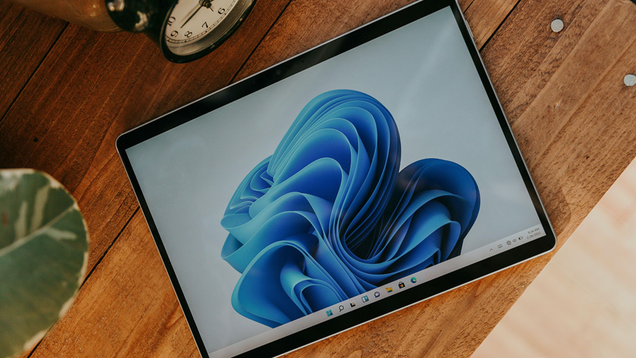
You can upgrade to Windows 11 Pro on sale for $29.97 right now (reg. $199). The latest update includes features like custom widgets, biometric logins, and a brand-new interface. Windows 11 Pro features a user-friendly design that makes it easier to use, including the Wake and Lock feature, which automatically wakes…

Read more…


Source: LifeHacker – You Can Get Windows 11 Pro for Right Now

Is Glass the Future of Storage?

“If we carry on the way we’re going, we’re going to have to concrete the whole planet just to store the data that we’re generating,” explains a deputy lab director at Microsoft Research Cambridge in a new video.

Fortunately, “A small sheet of glass can now hold several terabytes of data, enough to store approximately 1.75 million songs or 13 years’ worth of music,” explains a Microsoft Research web page about “Project Silica”. (Data is retrieved by a high-speed, computer-controlled microscope from a library of glass disks storing data in three-dimensional pixels called voxels):
Magnetic storage, although prevalent, is problematic. Its limited lifespan necessitates frequent re-copying, increasing energy consumption and operational costs over time. “Magnetic technology has a finite lifetime,” says Ant Rowstron, Distinguished Engineer, Project Silica. “You must keep copying it over to new generations of media. A hard disk drive might last five years. A tape, well, if you’re brave, it might last ten years. But once that lifetime is up, you’ve got to copy it over. And that, frankly, is both difficult and tremendously unsustainable if you think of all that energy and resource we’re using.”

Project Silica aims to break this cycle. Developed under the aegis of Microsoft Research, it can store massive amounts of data in glass plates roughly the size of a drink coaster and preserve the data for thousands of years. Richard Black, Research Director, Project Silica, adds, “This technology allows us to write data knowing it will remain unchanged and secure, which is a significant step forward in sustainable data storage.” Project Silica’s goal is to write data in a piece of glass and store it on a shelf until it is needed. Once written, the data inside the glass is impossible to change.

Project Silica is focused on pioneering data storage in quartz glass in partnership with the Microsoft Azure team, seeking more sustainable ways to archive data. This relationship is symbiotic, as Project Silica uses Azure AI to decode data stored in glass, making reading and writing faster and allowing more data storage… The library is passive, with no electricity in any of the storage units. The complexity is within the robots that charge as they idle inside the lab, awakening when data is needed…

Initially, the laser writing process was inefficient, but after years of refinement, the team can now store several TB in a single glass plate that could last 10,000 years. For a sense of scale, each plate could store around 3,500 movies. Or enough non-stop movies to play for over half a year without repeating. A glass plate could hold the entire text of War and Peace — one of the longest novels ever written — about 875,000 times.
And most importantly, it can store data in a fraction of the space of a datacenter…

Thanks to long-time Slashdot reader Kirschey for sharing the article.

Read more of this story at Slashdot.


Source: Slashdot – Is Glass the Future of Storage?

Today’s NYT Connections Hints (and Answer) for Sunday, October 15, 2023

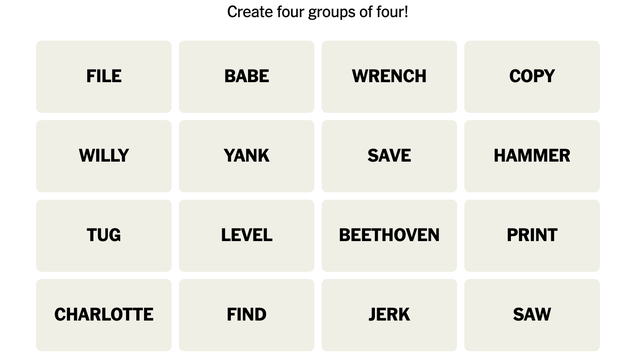
If you’re looking for the Connections answer for Sunday, October 15, 2023, read on—I’ll share some clues, tips, and strategies, and finally the solutions to all four categories. Beware, there are spoilers below for October 15, NYT Connections #126! Read on if you want some hints (and then the answer) to today’s…

Read more…


Source: LifeHacker – Today’s NYT Connections Hints (and Answer) for Sunday, October 15, 2023

Install KVM on Ubuntu Server 23.10 (Gnome 45 Desktop)

Ubuntu Server installation is pretty straightforward , then connect via ssh to server instance and install Gnome 45 desktop environment via command $ sudo apt install ubuntu-gnome-desktop. Reboot Ubuntu Server’s instance and log into newly installed Gnome 45 environment. Now you are ready to proceed with KVM setup on Ubuntu 23.10

Source: LXer – Install KVM on Ubuntu Server 23.10 (Gnome 45 Desktop)

Roundup: War’s Effect on Gaza Tech, Microsoft’s Howto for Installing Linux; California’s Right to Repair Law, and More

This week FOSS News Roundup also includes a list of some goodies coming to KDE Plasma 6.

The post Roundup: War’s Effect on Gaza Tech, Microsoft’s Howto for Installing Linux; California’s Right to Repair Law, and More appeared first on FOSS Force.


Source: FOSS Force – Roundup: War’s Effect on Gaza Tech, Microsoft’s Howto for Installing Linux; California’s Right to Repair Law, and More

How a Series of Air Traffic Control Lapses Nearly Killed 131 People

Due to an air traffic control mistake in February, a FedEx cargo plane flew within 100 feet of a Southwest Airlines flight in February. The New York Times reports that the flight’s 128 passengers “were unaware that they had nearly died.”
In a year filled with close calls involving US airlines, this was the one that most unnerved federal aviation officials: A disaster had barely been averted, and multiple layers of the vaunted US air-safety system had failed… But the errors by the controller — who has continued to direct some plane traffic in Austin, Texas — were far from the whole story, according to 10 current and former controllers there, as well as internal Federal Aviation Administration documents reviewed by the Times. Austin-Bergstrom, like the vast majority of US airports, lacks technology that allows controllers to track planes on the ground and that warns of imminent collisions. The result is that on foggy days, controllers can’t always see what is happening on runways and taxiways. Some have even resorted to using a public flight-tracking website in lieu of radar.

In addition, for years Austin has had a shortage of experienced controllers, even as traffic at the airport has surged to record levels. Nearly three-quarters of shifts have been understaffed. Managers and rank-and-file controllers have repeatedly warned that staffing levels pose a public danger. The controller on that February morning was working an overtime shift. In June, Stephen B. Martin, then Austin’s top manager, and a local union representative wrote a memo pleading for more controllers. “Drastic steps are needed to allow the facility to adequately staff for existing traffic,” they wrote to FAA and union officials.
Austin is a microcosm of a systemic crisis. The safety net that underpins air travel in America is fraying, exposing passengers to potential tragedies like the episode in February.

And yet the chair of America’s National Transportation Safety Board calls the February incident “just one of seven serious close calls and near misses involving commercial airlines that we have initiated investigations on this year.”
Thanks to long-time Slashdot reader schwit1 for sharing the article.

Read more of this story at Slashdot.


Source: Slashdot – How a Series of Air Traffic Control Lapses Nearly Killed 131 People

You can now buy a Ferrari with crypto in the US, if that's your thing

Anyone sitting on a mountain of cryptocurrency can now use it to buy a Ferrari in the US. According to Reuters, the luxury carmaker is working with the crypto payment processor BitPay to accept bitcoin, ether and USDC for purchases stateside, which customers were apparently begging for. Europe is expected to get the same treatment in early 2024, with other regions to follow.

There won’t be any upcharges for those paying with crypto, Ferrari’s Chief Marketing and Commercial Officer Enrico Galliera told Reuters, and BitPay will convert those payments to traditional currency at the time of the transaction to avoid any issues of volatility. Galliera said the move will help the company reach “people who are not necessarily our clients but might afford a Ferrari.”

Just last year, Ferrari announced a commitment to more sustainable operations, including reducing its environmental footprint, and embracing the notoriously energy-intensive cryptocurrencies would seem to go against that. But, the company insists this doesn’t get in the way of its mission. Galliera cited recent strides in improving crypto’s carbon footprint, like heavier reliance on renewable energy sources, and told Reuters, “Our target to reach for carbon neutrality by 2030 along our whole value chain is absolutely confirmed.”

This article originally appeared on Engadget at https://www.engadget.com/you-can-now-buy-a-ferrari-with-crypto-in-the-us-if-thats-your-thing-214639691.html?src=rss

Source: Engadget – You can now buy a Ferrari with crypto in the US, if that’s your thing

First 'Doctor Who' Writer Honored. His Son Contests BBC's Rights to 'Unearthly Child'

The BBC reports:
Doctor Who’s first writer could finally be recognised 60 years after he helped launch the hugely-popular series. Anthony Coburn penned the first four episodes of the sci-fi drama in 1963 — a story called An Unearthly Child. But after his second story did not air, the writer has been seen as a minor figure among some Doctor Who fans.

However, a campaign to erect a memorial to Coburn in his home town of Herne Bay, Kent, is gathering pace a month ahead of the show’s 60th anniversary.
A local elected councillor told the BBC they’re working to find a location for the memorial.

The BBC writes that Coburn’s episode — broadcast November 23, 1963 — “introduced the character of The Doctor, his three travelling companions, and his time and space machine, the TARDIS, stuck in the form of a British police box.”
Richard Bignell, a Doctor Who historian, believes Coburn played a significant role in sowing the seeds of the programme’s success. He said: “Although the major elements that would go on to form the core of the series were devised within the BBC, as the scriptwriter for the first story, Coburn was the one who really put the flesh on the bones of the idea and how it would work dramatically. “Many opening episodes of a new television series can be very clunky as they attempt to land their audience with too much information about the characters, the setting and what’s going to happen, but Coburn was very reserved in how much he revealed, preserving all the wonder and mystery.”

In 2013, the Independent reported:
Mr Coburn’s son claims that the BBC has been in breach of copyright since his father’s death in 1977. He has demanded that the corporation either stop using the Tardis in the show or pay his family for its every use since then. Stef Coburn claims that upon his father’s death, any informal permission his father gave the BBC to use his work expired and the copyright of all of his ideas passed to his widow, Joan. Earlier this year she passed it on to him.

He said: “It is by no means my wish to deprive legions of Doctor Who fans (of whom I was never one) of any aspect of their favourite children’s programme. The only ends I wish to accomplish, by whatever lawful means present themselves, involve bringing about the public recognition that should by rights always have been his due, of my father James Anthony Coburn’s seminal contribution to Doctor Who, and proper lawful recompense to his surviving estate.”

Today jd (Slashdot reader #1,658) notes that Stef Coburn apparently has a Twitter feed, where this week Stef claimed he’d cancelled the BBC’s license to distribute his father’s episodes after being offered what he complained was “a pittance” to relicense them.
In response to someone who asked “What do you actually gain from doing this though?” Stef Coburn replied: “Vengeance.” But elsewhere Stef Coburn writes “There are OTHER as yet unfulfilled projects & aspirations of Tony’s (of one of which, I was a significant part, in his final year), which I would like to see brought to fruition. If Doctor Who is my ONLY available leverage. So be it!”

Stef Coburn also announced plans to publish his father’s “precursor draft-scripts (At least one very different backstory; sans ‘Timelords’) plus accompanying notes, for the story that became ‘The Tribe of Gum’.”

Read more of this story at Slashdot.


Source: Slashdot – First ‘Doctor Who’ Writer Honored. His Son Contests BBC’s Rights to ‘Unearthly Child’

Final Fantasy VII Rebirth: Matt Mercer Is Vincent Valentine

Today at New York Comic Con, it was revealed that voice actor Matt Mercer, perhaps best known as the Dungeon Master of popular actual-play webseries Critical Role, will be starring as gunslinger Vincent Valentine in Final Fantasy VII Rebirth, the second chapter in Square Enix’s ongoing remake of the classic ‘90s…

Read more…


Source: Kotaku – Final Fantasy VII Rebirth: Matt Mercer Is Vincent Valentine

Australian Student Invents Affordable Electric Car Conversion Kit.

“Australian design student Alexander Burton has developed a prototype kit for cheaply converting petrol or diesel cars to hybrid electric,” reports Dezeen magazine, “winning the country’s national James Dyson Award in the process.”

Titled REVR (Rapid Electric Vehicle Retrofits), the kit is meant to provide a cheaper, easier alternative to current electric car conversion services, which Burton estimates cost AU$50,000 (£26,400) on average and so are often reserved for valuable, classic vehicles.

Usually, the process would involve removing the internal combustion engine and all its associated hardware, like the gearbox and hydraulic brakes, to replace them with batteries and electric motors. With REVR, those components are left untouched. Instead, a flat, compact, power-dense axial flux motor would be mounted between the car’s rear wheels and disc brakes, and a battery and controller system placed in the spare wheel well or boot. Some additional off-the-shelf systems — brake and steering boosters, as well as e-heating and air conditioning — would also be added under the hood. By taking this approach, Burton believes he’ll be able to offer the product for around AU$5,000 (£2,640) and make it compatible with virtually any car…

With REVR, people should be able to get several more years of life out of their existing cars. The kit would transform the vehicle into a hybrid rather than a fully electric vehicle, with a small battery giving the car 100 kilometres of electric range before the driver has to switch to the internal combustion engine… Borrowing a trick from existing hybrid vehicles, the kit uses a sensor to detect the position of the accelerator pedal to control both acceleration and braking. That means no changes have to be made to the car’s hydraulic braking system, which Burton says “you don’t want to have to interrupt”.

Thanks to Slashdot reader FrankOVD for sharing the news.

Read more of this story at Slashdot.


Source: Slashdot – Australian Student Invents Affordable Electric Car Conversion Kit.

The X-Men Rise and Ultimates Return in Marvel's 2024 Comics Plans

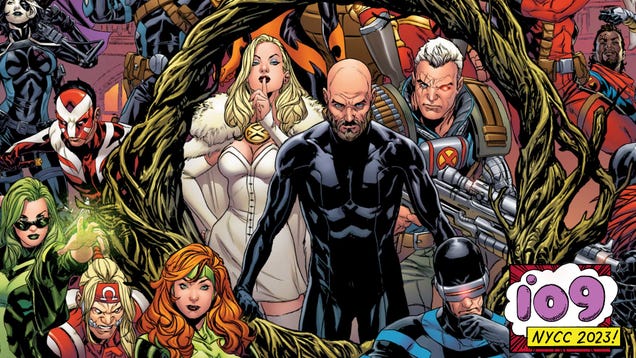
Marvel Comics likes to use either of the two big yearly Comic-Cons to reveal their big plans for the following year. 2023’s been an eventful time for the publisher, and that momentum will be continuing throughout 2024 in some big ways—mainly as it pertains to the X-Men and the returning Ultimate Universe.

Read more…


Source: Gizmodo – The X-Men Rise and Ultimates Return in Marvel’s 2024 Comics Plans