Pokémon to Re-Offer Van Gogh Pikachu Card After Disastrous Collaboration Launch

Late last month, what should’ve been a cutesy, even educational collaboration between Amsterdam’s Van Gogh Museum and Pokémon flared up into an absurd disaster as scalpers hungry to continue turning a profit on rare Pokémon merchandise raced to get their hands on as many behatted Pikachus as humanly possible. Now…

Read more…


Source: Gizmodo – Pokémon to Re-Offer Van Gogh Pikachu Card After Disastrous Collaboration Launch

There's no easy answer to being a space janitor

Earth’s orbit is getting crowded.

Last year, a record 2,409 objects were sent to orbit, the bulk of which were satellites settling into the increasingly cluttered region 1,200 miles above our planet’s surface known as low Earth orbit. Another 2,000-plus satellites have joined them so far this year, according to the UN’s Online Index of Objects Launched into Outer Space. As the presence of artificial objects in orbit grows, so too does the accumulation of debris, or space junk — and the risk of collisions. Dealing with existing waste and preventing its unchecked growth has become imperative, but it’s a problem that doesn’t have one simple solution.

Currently, the US Department of Defense’s Space Surveillance Network tracks more than 25,000 objects larger than 4 inches wide, most of which are concentrated in low Earth orbit, and there are an estimated millions of smaller objects still that are trickier to pinpoint. This includes everything from defunct satellites and spacecraft fragments to things as small as a paint chip, all of which can cause damage to other equipment due to the extreme speeds orbiting objects travel at. As yet, there have been no successful missions to remove extant debris from orbit. Proposals for removing this debris fall into two broad (and imperfect) categories: pushing them further from Earth into graveyard orbits where they pose less risk, or pulling them towards Earth where they’ll deorbit and burn up in the atmosphere.

One such system is being developed and tested by Astroscale. The company, headquartered in Japan, demonstrated a magnetic capture-and-release tactic in 2021 with its ELSA-d mission, which simulated the strategy using an extra satellite it brought with it as mock debris. In a real-world scenario, its magnet would lock on to debris floating through space and drag it down to deorbit. Astroscale is selling its own docking plates that satellite operators can affix to their equipment ahead of launches, so it can easily be removed after a mission’s end. It’s partnered with UK-based OneWeb to test how this will work, and plans to execute a full removal demonstration using one of the company’s internet satellites in 2025 under the ELSA-M mission. 

Astroscale will also soon launch its ADRAS-J spacecraft in partnership with Japan’s space agency, JAXA, to demonstrate the ability to safely approach and inspect a real target ahead of future removal attempts. And, it’s gearing up for a separate mission dubbed COSMIC that will use a robotic arm to grab objects in orbit, this time aiming for a pair of dead British satellites. That is expected to launch in the next few years.

The European Space Agency similarly commissioned Swiss startup ClearSpace for a junk removal mission that’s slated to launch in 2026. It’s expected to be the first mission to actually remove a real piece of debris from orbit, rather than perform a simulated capture. Ironically, the target of the ClearSpace-1 mission — an approximately 250-pound defunct rocket upper stage dubbed Vespa — was struck by untracked debris in August. The event created more debris, but ESA says it left the object intact and still in position for capture. ClearSpace will attempt to grab onto Vespa using a giant robotic claw, and the two will deorbit together, ending with them both burning up in Earth’s atmosphere.

Researchers have also experimented with the use of harpoons and nets to catch objects floating through space. The first mission to demonstrate these active debris removal techniques was one called RemoveDEBRIS, which launched in 2018. In 2018 and 2019, the craft successfully performed simulated debris capture by firing out a net and ensnaring a mock target, and by shooting a harpoon at a target to pierce and hook onto it. The company behind the project — Surrey Satellite Technology — does not appear to have any follow-up missions planned.

A cost-benefit analysis released last year by NASA noted that the benefit of space tugs like these could surpass their upfront costs in a matter of decades, but using space- or ground-based lasers to nudge debris out of orbit could break even much sooner. Lasers can move objects either through the momentum of their photons, or through a process called ablation, in which thrust is generated when the laser vaporizes bits of debris. The latter especially could be used for both large and small objects, either to deorbit debris or move trackable pieces out of another satellite’s way to avoid a collision.

“The process of laser ablation and photon pressure induces a change in velocity in the target debris, which ultimately alters the size and shape of its orbit,” said West Virginia University engineer Hang Woon Lee, who NASA recently granted up to three years of funding for research into this tactic. Doing so could mean “avoiding potentially catastrophic events,” he said. Using multiple lasers at once, instead of a single beam, could produce even greater effects.

Others yet are looking into means of recycling space debris, both to cut down on junk and to limit the reliance on reentries for its removal. While reentry is among the preferred disposal methods, it doesn’t come entirely without side effects of its own, which haven’t yet been well studied. Scientists have begun to speak up about the potential ozone-depleting effects of having large numbers of satellites disintegrate in Earth’s atmosphere, which releases pollutants like aluminum and nitrogen oxides. There are concerns about harmful pollution in the ocean, too, where spacecraft parts that don’t fully break apart end up.

A NASA visualization of debris in low-Earth orbit
NASA ODPO

Companies like Neumann Space and CisLunar Industries are developing the means to melt down metal parts from debris in space and reuse that material as fuel. The former’s Neumann Drive converts metal rods into plasma to generate thrust, and was just recently integrated into a satellite for the first time to begin tests of the system in space. CisLunar, on the other hand, is building the technology to create those metal fuel rods, along with other materials that could be repurposed to support other missions.

In the US, policymakers are starting to clamp down on commercial entities contributing to the pollution. The FCC handed out its first-ever fine for space debris in early October, and revised its guidelines last year for operations in low Earth orbit, with a new mandate that states satellites in LEO must be transitioned out of orbit within 5 years of completing their missions. The Federal Aviation Administration (FAA) is also eyeing more stringent policies, and proposed a new rule in September that would require commercial launch operators to have a plan in place to remove rocket upper stages from orbit within set timelines, from 30 days to 25 years depending on the circumstances.

Thanks to the rapid acceleration of commercial space activities in the 2020s, we’ve seen an unprecedented number of new satellites arrive in orbit, and there are many more yet on their way. With more launch providers on the scene and innovation in reusable launch systems, led by SpaceX with its Falcon 9 rockets, launches have become less costly and more attainable. And competition to provide space-based internet connectivity by way of satellite “megaconstellations” is intensifying; SpaceX’s Starlink fleet is now at about 5,000 and counting, Amazon just launched the first two prototypes of its eventual 3,200 Project Kuiper satellites and OneWebb has placed over 600 satellites in orbit as of early 2023.

Scientists have long warned about the potentially catastrophic chain reactions that could be caused by space junk if it’s allowed to get out of hand. In the 1970s, NASA scientists Donald Kessler and Burton Cour-Palais argued in a paper that rampant debris could spur collisions that in turn create more debris, and cause more collisions. The risk of impacts between satellites increases, too, as more are pumped into orbit. We’ve already seen a glimpse of how disastrous that could be. In 2009, a commercial Iridium 33 satellite collided with a long-defunct Russian military satellite, Cosmos 2251, creating nearly 2,000 pieces of large debris.

Satellite destruction on a mass scale would have grave consequences both in space and on Earth. It could interfere with science activities and space exploration, and threaten the safety of astronauts aboard the International Space Station. It would also disrupt communications on the ground, removing major sources of internet and cellular connectivity, and GPS. Weather services we’ve long relied on would be interrupted.

More than half of all satellites that have ever been sent to orbit are still up there, a lot of them inactive. “Imagine how dangerous sailing the high seas would be if all the ships ever lost in history were still drifting on top of the water,” ESA Director General Jan Wörner said in 2019, when ClearSpace-1 was announced. “That is the current situation in orbit, and it cannot be allowed to continue.”

This article originally appeared on Engadget at https://www.engadget.com/theres-no-easy-answer-to-being-a-space-janitor-170011469.html?src=rss

Source: Engadget – There’s no easy answer to being a space janitor

The Gmail Add-ons You Need (and the Ones You Don’t)

You can get all kinds of Chrome extensions and add-ons for Gmail that make inbox management and utility easier, but some of them are less useful than others. Before you waste space (and potentially money), let’s go over some cheap ones that are actually helpful.

Read more…


Source: LifeHacker – The Gmail Add-ons You Need (and the Ones You Don’t)

Samsung Lines Up First Server Customer For 3nm Fabs

Although Samsung Foundry was the first contract fab to formally start mass production of chips on a 3 nm-class process, so far, the company’s latest process has largely been relegated to producing tiny cryptocurrency mining chips. But it looks like things will start picking up for Samsung’s foundry business soon, as this week it was announced that the company has landed a more substantial order which will see the Samsung make a server-grade system-in-package (SiP) with HBM memory for an unknown client.


Per this week’s press releases, Samsung Foundry is set to produce a server-grade processor with HBM memory that is set to be designed by ADTechnology, a contract chip developer from South Korea, for an American company. For now, details on the chip are light, so all we know about the 3 nm-based datacenter product is that it will will use 2.5D packaging in conjunction with HBM memory. All of which points to a high-end system-on-chip (SoC) – or rather a system-in-package (SiP).


“This 3nm project will be one of the largest semiconductor products in the industry,” said Park Joon-Gyu, chief executive of AD Technology. “This 3nm and 2.5D design experience will be a significant differentiation factor between other companies and AD Technology. We will do our utmost to deliver the best design results to our customers.”


Meanwhile, it is unclear which of Samsung Foundry’s 3 nm-class process technologies the company is set to use for the project. Currently the company is producing cryptocurrency mining ASICs using its SF3E process technology, which is the initial version of Samsung’s gate-all-around (GAA) manufacturing tech.


The company is set to roll-out an enhanced SF3 process technology next year. This version of the node provides additional design flexibility, which is enabled by varying nanosheet channel widths of the GAA device within the same cell type. All of this will, in turn, improve the performance, power, and area characteristics of SF3 compared to SF3E, making it more suitable for server designs. Yet, the company is also prepping SP3P technology with performance enhancements for 2025, which is likely to be even better for server-grade silicon.


“We are pleased to announce our 3nm design collaboration with AD Technology,” said Jung Ki-Bong, Vice President of Samsung Electronics Foundry Business Development team. “This project will set a good precedent in the collaboration program between Samsung Electronics Foundry Division and our ecosystem partners, and Samsung Electronics Foundry Division will strengthen our cooperation with partners to provide the best quality to our customers.”


Sources: ADTechnology, Pulsenew


Source: AnandTech – Samsung Lines Up First Server Customer For 3nm Fabs

Mortal Kombat 1 Switch Patch Attempts To Fix The Disastrous Port

The Switch version of Mortal Kombat 1 released in an absolute state. It’s one of the widest gaps in quality we’ve seen between Nintendo’s device and its console contemporaries. But for better or worse, NetherRealm Studios and the port teams at Shiver Entertainment and Saber Interactive are still supporting it, and…

Read more…


Source: Kotaku – Mortal Kombat 1 Switch Patch Attempts To Fix The Disastrous Port

Another GeForce RTX 4090 Melting Connector Complaint Surfaces A Year After Use

Another GeForce RTX 4090 Melting Connector Complaint Surfaces A Year After Use
If you regularly browse Reddit for PC hardware discussions, you may notice a slightly alarming trend. NVIDIA’s RTX 4090 may be a graphics powerhouse, but it’s had a bad omen following it since release: melted power adapters. On sub-Reddits such as from the cable company Cablemod, you’ll often find users posting that their very expensive GPU

Source: Hot Hardware – Another GeForce RTX 4090 Melting Connector Complaint Surfaces A Year After Use

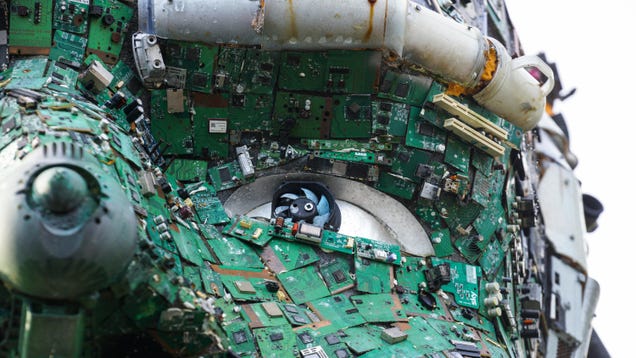
Half a Billion Cheap Electrical Items Go To UK Landfills in a Year, Research Finds

Almost half a billion small, cheap electrical everyday items from headphones to handheld fans ended up in landfill in the UK in the past year, according to research. The Guardian: The not-for-profit organisation Material Focus, which conducted the research, said the scale of the issue was huge and they wanted to encourage more recycling. More than half a billion cheaply priced electronic goods were bought in the UK in the past year alone — 16 per second. Material Focus findings showed that of these items, 471m were thrown away. This included 260m disposable vapes, 26m cables, 29m LED, solar and decorative lights, 9.8m USB sticks, and 4.8m miniature fans.

Scott Butler, executive director at Material Focus, described it as “fast tech.” He said: “People should think carefully about buying some of the more frivolous … items in the first place.” He said the items people bought were often “cheap and small,” and that consumers may not realise they contain valuable materials that could be salvaged if recycled. Small electricals can contain precious materials including copper, lithium and stainless steel. These components can be recycled and used in wind turbines, medical devices and electric vehicles. Material Focus said that while people were used to the idea of recycling larger electrical items such as fridges, lots of smaller devices were left unused in houses.

Read more of this story at Slashdot.


Source: Slashdot – Half a Billion Cheap Electrical Items Go To UK Landfills in a Year, Research Finds

SEC investigating MOVEit hack that exposed data of at least 64 million people

Progress Software disclosed that it has received a subpoena from the SEC to share information relating to the vulnerability in its file transfer software, MOVEit, which became the subject of a massive exploit beginning last May. According to the filing, the investigation is presently a “fact-finding inquiry,” and there’s no indication at this time that Progress has “violated federal securities laws.” The company intends to cooperate with the SEC.

One report by cybersecurity software company Emsisoft estimates that the MOVEit breach exposed the information of at least 64 million individuals through 2,547 affiliated organizations. Among the organizations impacted by the zero-day vulnerability are the Louisiana Office of Motor Vehicles and the Colorado Department of Health Care Policy and Financing. Sony confirmed its employee data was compromised in the exploit earlier this month. And Michigan-based financial services provider, Flagstar Bank, sent its customers a notice that said records had been stolen (they’ll now receive free identity monitoring services for two years.)

The culprits of the attack — the CL0P ransomware gang — “helped pioneer the practice of double-extortion,” according to Reuters. In this sort of scheme, the ransomers both encrypt the target’s data and threaten to leak said data (unless they’re paid.) The group have since made clearweb sites to leak some of the data they’ve exfiltrated in the MOVEit hack, from companies like Kirkland and TD Ameritrade. The FBI have since offered up to $10 million to anyone with information that could link CL0P to any particular foreign government.

The true cost (both to victims and Progress Software) remain unknown at this time. But some of the affected customers have begun seeking restitution for the breach. Progress disclosed in the same regulatory filing that it is a party to 58 class action lawsuits at this time. Many of those may be consolidated as they progress, but they still present the possibility of enormous civil penalties.

This article originally appeared on Engadget at https://www.engadget.com/sec-investigating-moveit-hack-that-exposed-data-of-at-least-64-million-people-163057853.html?src=rss

Source: Engadget – SEC investigating MOVEit hack that exposed data of at least 64 million people

Starlink Says It's Bringing Cell Service to Remote Regions Starting Next Year

Starlink is rolling out its Direct to Cell service starting in 2024, SpaceX announced on its webpage that went up on Tuesday. The new service will use its satellites to provide users with talk, text, and data in remote regions.

Read more…


Source: Gizmodo – Starlink Says It’s Bringing Cell Service to Remote Regions Starting Next Year

Ubuntu 23.10 Now Available With ZFS Desktop Install Option, Linux 6.5 Kernel

Ubuntu 23.10 “Mantic Minotaur” is now officially available for download as the latest (non-LTS) Ubuntu Linux release with a wealth of updated packages, continued desktop installer improvements, and other refinements ahead of the Ubuntu 24.04 LTS cycle…

Source: Phoronix – Ubuntu 23.10 Now Available With ZFS Desktop Install Option, Linux 6.5 Kernel

Logitech reveals an accessory kit for Sony's PS5 Access controller

Sony will soon release its Access controller, which it designed to help people with disabilities play PS5 games with greater ease. The $90 peripheral comes with a variety of customization options in the box, and there are four 3.5mm ports that people can use to connect third-party accessories to the controller.

Logitech has teamed up with Sony to release an Adaptive Gaming Kit for the controller. It includes eight buttons and triggers you can plug into the peripheral. These include two small and two large buttons with mechanical switches, two light-touch buttons and two variable trigger controls. These are all configurable on the console to best meet a player’s needs. The kit includes labels with PS5 symbols that you can attach to the buttons and triggers, along with mats and velcro ties to keep everything in place.

The Adaptive Gaming Kit, which will be available in January, costs $80. Logitech previously released a version for the Xbox Adaptive Controller. Since both console platforms’ accessibility controllers use industry-standard 3.5mm connectors, the Xbox variant of Logitech’s kit should be compatible with the Access controller. Still, perhaps you’d prefer stickers with PlayStation symbols to help keep track of what’s what.

Meanwhile, Sony has offered a look at the accessible packaging for the upcoming peripheral. It designed the packaging so that you can open it with one hand by pulling loops from either side. The company said that the components are placed in a single layer to make it easy to identify them.

The Access Controller will be available on December 6. Pre-orders are open at the PlayStation Direct store.

This article originally appeared on Engadget at https://www.engadget.com/logitech-reveals-an-accessory-kit-for-sonys-ps5-access-controller-161512216.html?src=rss

Source: Engadget – Logitech reveals an accessory kit for Sony’s PS5 Access controller

Those Discarded Vapes and Headphones Help Create 9 Million Tons of E-Waste

All of our discarded toys are adding up to a big problem. According to a new report from the Waste Electronic and Electric Equipment (WEEE) Forum, one-sixth of all annual e-waste by mass is what is called “invisible” waste, since they’re tossed in the trash without most folks considering it to be a big deal the way…

Read more…


Source: Gizmodo – Those Discarded Vapes and Headphones Help Create 9 Million Tons of E-Waste

You can now generate AI images directly in the Google Search bar

Back in the olden days of last December, we had to go to specialized websites to have our natural language prompts transformed into generated AI art, but no longer! Google announced Thursday that users who have opted-in for its Search Generative Experience (SGE) will be able to create AI images directly from the standard Search bar.

SGE is Google’s vision for our web searching future. Rather than picking websites from a returned list, the system will synthesize a (reasonably) coherent response to the user’s natural language prompt using the same data that the list’s links led to. Thursday’s updates are a natural expansion of that experience, simply returning generated images (using the company’s Imagen text-to-picture AI) instead of generated text. Users type in a description of what they’re looking for (a Capybara cooking breakfast, in Google’s example) and, within moments, the engine will create four alternatives to pick from and refine further. Users will also be able to export their generated images to Drive or download them.

a user in front of a computer, asking it to generate them a picture of a capybara making breakfast.
Google

What’s more, users will be able to generate images directly in Google Images. So, if you’re looking for (again, Google’s example) “minimalist halloween table settings” or “spooky dog house ideas,” you’ll be able to type that into the search bar and have Google generate an image based on it. What’s really cool is that you can then turn Google Lens on that generated image to search for actual, real-world products that most closely resemble what the computer hallucinated for you. 

There are, of course, a number of limitations built into the new features. You’ll have to be signed up for Google Labs and have opted-in to the SGE program to use any of this. Additionally, the new image generation functions will be available only within the US, in English-language applications and for users over the age of 18. That last requirement is a just bit odd given that Google did just go out of its way to make the program accessible to teens.

The company is also expanding its efforts to rein in the misuse of generative AI technology. Users will be blocked from creating photorealistic images of human faces. You want a photorealistic capybara cooking bacon, that’s no problem. You want a photorealistic Colonel Sanders cooking bacon, you’re going to run into issues and not just in terms of advertising canon. You’ll also be prevented from generating images of “notable” people, so I guess Colonel Sanders is out either way. 

Finally, Google is implementing the SynthID system developed by DeepMind announced last month. SythID is a visually undetectable metadata watermark that denotes a generated image as such, as well as provides information on who, or what, created it and when. The new features will be available through the Labs tab (click the flask icon) in the Google app on iOS and Android, and on Chrome desktop to select users today and expanding to more in the coming weeks.

This article originally appeared on Engadget at https://www.engadget.com/you-can-now-generate-ai-images-directly-in-the-google-search-bar-160020809.html?src=rss

Source: Engadget – You can now generate AI images directly in the Google Search bar

SAG-AFTRA Contract Negotiations Break Down After AMPTP Refuses to Counter

In the wake of the WGA’s incredible success on strike and in the negotiation of its own contract with the AMPTP, when it was announced that studio representatives would return to the bargaining table with the still-striking actors’ union SAG-AFTRA last week, there was hope that a similar labor win could be on the…

Read more…


Source: Gizmodo – SAG-AFTRA Contract Negotiations Break Down After AMPTP Refuses to Counter

The 26 best Amazon Prime Day deals you can still shop for today

Amazon’s October Prime Day sale officially ended yesterday, but some of the deals are still live. That means there’s time to run through your holiday gift list one more time or pick up something for yourself at a discount. We combed through our coverage over the past few days to find the best sales still available today. Amazon has returned most of their own devices, like Echos and Kindles, back to their full prices. But products from other brands, notably Google, Samsung and Anker, have maintained the same lows they hit on Prime Day. Here are the best deals from Prime Big Deal Days that you can still get right now. 

Samsung Galaxy Watch 6

The new Samsung Galaxy Watch 6 went down to $269 for October Prime Day and it’s still on sale. That’s lowest price we’ve seen since it came out a few months ago. You can’t get a better smartwatch than this one if you have an Android phone (bonus points if you have a Samsung phone), and it’s smaller and lighter than previous versions. Samsung brought back the spinning bezel on the Classic version, which is which makes the software’s UI easier to navigate, plus it has improved performance and updated health and fitness tracking tools.

Apple MacBook Air M2 (15-inch)

The 15.3-inch version of Apple’s MacBook Air is still down to $1,049 for an entry-level model with 8GB of RAM and a 256GB SSD. That matches the best price we’ve seen and takes $250 off Apple’s list price. The MacBook Air is the top pick in our guide to the best laptops, and we gave the 15-inch model a review score of 96 earlier this year, as it covers just about all of the things we look for in a quality mainstream notebook. Compared to the 13.6-inch version, it also includes a more powerful speaker system and a slightly upgraded GPU. The SSD in this base configuration is technically slower than the one in higher-capacity SKUs, but that shouldn’t be a major problem unless you’re looking to do more complex work. In general, you wouldn’t buy the Air for things like high-res media editing, though its M2 chip is still plenty powerful for everyday tasks.

If you do need more storage space, the 512GB model with 8GB of RAM is on sale for a low of $1,249. Variants with double the RAM are up to $250 off as well. Meanwhile, the 13.6-inch MacBook Air isn’t discounted on Amazon, but it’s down to $899 at Best Buy. That’s $200 off the notebook’s list price.

Apple iPad mini

The Apple iPad mini dropped to $400 for October Prime Day and it’s one of the few Apple products (apart from the 15-inch MacBook Air above) to maintain its sale price the day after the sale. It’s the best small tablet on the market right now and really your only option if you want a true one-hand-friendly iPad. It’s powered by Apple’s A15 Bionic chip and sports a Touch ID-toting power button, solid cameras, a good battery life and a USB-C port for charging.

Sony WF-1000XM5

Sony’s WF-1000XM5 wireless earbuds went down to $278 for Prime Day and are still going for that price today. Impressive as that’s their best price yet. These are the best wireless earbuds on the market right now, and Sony improved upon it’s already remarkable buds with a more comfortable fit, better sound quality and features likes adaptive sound and Speak-to-Chat.

Amazon Fire TV Stick 4K

The previous generation of Fire TV Stick 4K dropped to $23 for the sale and is one of the few Amazon devices still on sale. It has the same processor, RAM and storage as the standard Fire TV Stick, but it can stream 4K HDR content in all its glory. It also supports Dolby Vision HDR and Dolby Atmos, while a picture-in-picture live view feature can show you feeds from compatible security cameras right on your TV screen.

Do note, though, that this is the previous model of the streaming stick. The newly refreshed Fire TV Stick 4K isn’t sale but has a faster processor and supports Wi-Fi 6.

Anker Soundcore Motion +

One of the top Bluetooth options in our speaker guide is Anker’s Soundcore Motion +, which gives out good sound for its price point. The $100 MSRP is discounted to $70 if you clip the on-page copuon. That’s a 30 percent discount and an all-time low. It has a bright and bassy output and offers EQ customization in the app. Plus it’s water-resistant, so you can take it to the park or on a hike and share your good taste in music with whoever is nearby.

HyperX Cloud Stinger 2

The top budget pick in our gaming headphones buying guide, the HyperX Cloud Stinger 2, is on sale for $35. That’s just a modest $5 discount over its street price recently, but matches the lowest price we’ve seen. The Cloud Stinger 2 doesn’t have the most balanced or detailed sound, but its V-shaped signature gives action scenes a nice level of impact, and its mic quality belies the dirt-cheap price. The design is comfortable too, though it’s made from cheap-feeling plastic.

Shokz OpenRun Pro

The Shokz OpenRun Pro is down to $125 for Prime Big Deal Days, which is $25 more than the lowest price we’ve tracked but still $55 below its usual going rate. This is a recommended pair of bone conduction headphones, which means it hugs the side of your head and delivers sound by passing vibrations through your skull. (It’s not as uncomfortable as it sounds.) The main benefit is that this leaves your ear canals completely open, so you can enjoy a playlist or podcast without being shut out from the outside world. The downside, usually, is that you don’t get as full a sound as you would with a traditional pair. That’ll still be the case here, but we’ve found the OpenRun Pro to deliver more low-end depth than most of its peers. They’re fairly comfy and get up to 10 hours of battery life beyond that.

Logitech G535

If you’re looking for a wireless headset, the Logitech G535 is back down to $80, which is about $25 below its average street price. This is an honorable mention in our gaming headsets guide, as we like its lightweight design, Bluetooth support and agreeable, relatively well-balanced sound. It forces you to crank the volume to reach a listenable level though, and its mic makes voices sound a little too thin. It also doesn’t work with Xbox consoles. But if you really want a wireless gaming headset for less than $100, it’s well worth a look.

Chipolo ONE

The Chipolo One is our pick for the best overall Bluetooth tracking device. It’s currently down to $20 for the single tag, or you can get a 4-pack for $60, which is an even better deal. In our guide, we found the Chipolo to reliably and consistently inform us when we’d left our keys behind. It also has the loudest ring of the trackers we tried, which makes it easier to find lost keys and other items when they’re nearby.

Samsung Smart Monitor M8

The Samsung Smart Monitor M8 is down to just $500, which is $200 off its starting price (though it regularly sells for $600) and the lowest price we’ve seen thus far. This 32-inch display has built-in apps and allows you to access streaming services, just like you would on a smart TV. It can also act as a smart home hub, showing you your smart camera feeds and more. This discounted model is the updated 2023 version of the monitor that launched at CES 2022.

Google Indoor Nest Security Cam

A slew of Google Nest home security devices are still on sale the day after Prime, including the battery-powered Nest Cam that can go inside or outside your home. Typically priced at $180, the security cam dipped down to $120 for Amazon’s October Prime Day event. The Nest Cam works with smart speakers and displays enabled with Alexa or the Google Assistant and can last up to seven months depending on how much activity it picks up. Its weather-resistant build and magnetic mount should make it easy to install on most surfaces. It sends live alerts to your phone and will even allow for on-demand check-ins without a subscription, though it only stores the last three hours for free. For six months of stored footage, you’ll need a Nest Aware membership.

Google Nest Thermostat

In other Google deals, the Nest Thermostat is on sale for just $90, which is only about $10 more than the lowest price we’ve tracked and $40 off Google’s MSRP. This is Google’s entry-level smart thermostat, but it still lets you control your heating and cooling from anywhere, suggests tweaks to help you save money, and in some cases, can entitle you to rebates from your utility provider. It’s all relatively easy to program, and it works with Google’s Nest Hub and other smart displays like the Echo Show.

Beats Studio Pro

The Beats Studio Pro headphones are still on sale for $179 right now. That’s a sizable $170 discount. We reviewed these back in July when they came out and gave them a decent review score of 81. Unfortunately they didn’t push any of the top picks from our our best headphones list off their pedestals. They aren’t bad, however, offering pleasant, even-handed sound and good noise cancellation. Though Beats is now owned by Apple, these headphones still play nice with Android. There’s no wear detection and the mostly plastic design isn’t super premium, but at this price, you may not care.

Tribit StormBox Micro 2

The Tribit StormBox Micro 2 is another small speaker we like that puts out decent volume for its size, and for Prime day it went down to $48, which is $12 off its usual going rate. Right now it’s on sale for $60, but an on-page 15 percent coupon brings it back to that Prime Day low. This device has a strap on its back that works well on belts, backpacks, or even bike handlebars, so it’s easy to take on the road. And “on the go” is where the StormBox Micro 2 performs best, as it’s more about portable volume than pure fidelity.

Google Nest Wi-Fi Pro 6E

The Google Nest Wi-Fi Pro 6E is holding strong at $300 right now for a pack of three routers. That’s within a dollar of the lowest price it’s sold for on Amazon. It’s one of the best Wi-Fi 6 router systems you can get at the moment thanks to its easy setup process, convenient Google Assistant integrations and Matter and Thread support. If you’re looking for a not-too expensive way to upgrade your home Wi-Fi system, and one that will take little time to set up, Google’s is the one to get.

Roku Streaming Stick 4K

Our favorite streaming stick, the Roku Streaming Stick 4K, remains at $37 after the sale. It packs a ton of features into an affordable package, including 4K HDR streaming capabilities, Dolby Vision, AirPlay 2 and private listening when you have a pair of headphones. And since it’s so small, it makes for a great travel entertainment device too.

Hisense U6K

The Hisense U6K is one of the more affordable TVs. And the 55- and 65-inch models are still down to $400 and $548, respectively. We’ve seen these deals before, but each matches an all-time low. The U6K is has received generally positive reviews around the web, as it’s one of the few budget-level sets with quantum dots, full-array local dimming and a mini-LED backlight. All of that should help it deliver better contrast and color volume than most TVs in its price range. It’s not ideal for gaming though, as it’s limited to a 60Hz refresh rate and lacks HDMI 2.1 ports. In general, it can’t match the brightness or viewing angles of a more expensive set, but it looks to be a good buy if you’re on a tighter budget.

For a well-reviewed midrange model, the Hisense U8K provides much better contrast and peak brightness, plus more gaming-friendly features like ability to play 4K content at up to a 144Hz refresh rate. That one is down to $748 for a 55-inch model and $998 for a 65-inch set.

Samsung The Frame smart TV

Samsung’s The Frame TV is down to $998 for the 55-inch set. Yesterday it included a bezel cover at no extra charge, but today just the set alone is discounted. That’s still a $500 discount and matches the lowest price it’s sold for. Other sizes are discounted too. The expensive sets don’t have the high-end features you may expect like local dimming and mini-LED backlighting, so their picture quality isn’t as premium as others in their price range. But the realistic art-when-it’s-off effect is convincing.

iRobot Roomba 694

iRobot’s Roomba 694 dropped to $199 for Prime Day and stayed there. While that’s still $20 more than the lowest we’ve seen it go, it’s still a good deal on our favorite cheap robot vacuum. It’s got strong suction power, an attractive design and easy to use app. It’ll be a good option for robo-vac novices, or anyone that doesn’t want to fuss too much with an automatic dirt sucker. It clears hard and carpeted floors well, and it automatically returns to its base once a cleaning job is finished so it can recharge.

Samsung Pro Plus microSD

The Samsung Pro Plus microSD card is on sale for $20 right now. It’s our top pick in our best microSD card guide because it was the most consistent of the ones we tested, with some of the best overall speeds and all of the important ratings that a good card should have: U3, V30 and A2. It’ll be a great pick for your tablet, smartphone or Nintendo Switch, and it comes with a full-sized adapter in case you need to use it with a camera or connect it to your computer.

Crucial MX500

The Crucial MX500 internal drive is on sale for $46 right now. It’s been an Engadget favorite for a while thanks to its sequential read speeds of 560MB/s and a standard 2.5-inch design that should make it easy to swap in for your desktop’s or laptop’s used-up drive.

Other great deals for after Prime Day

Anker 511 Charger

New Apple Watches don’t come with power adapters, so if you’re looking for one that can deliver a quick charge, we recommend Anker’s 511 (Nano 3) charging brick. It’s down to $20 which is a mild, $4 discount, but still a welcome price for a worthwhile smartwatch accessory.

OtterBox Fast Charge Power Bank

The OtterBox Fast Charge Power Bank is currently just $36 for the 15,000mAh capacity model, which is the version we tested and recommend in our portable battery guide. This pack looks sharp and delivers a fast and reliable charge via USB-C or USB-A.

SanDisk 128GB microSDXC Card for Nintendo Switch

If you need more room on your Switch, SanDisk’s officially licensed microSDXC card is a good pick, particularly when it’s on sale. Right now a 128GB model is within a dollar of its all-time low at just $18.

Samsung Pro Plus microSD card

Our favorite microSD card for most people is the Samsung Pro Plus. It had the fastest sequential write speeds and random performance of any card we tested, and the USB reader that comes with included with this listing helps it reach higher speeds on compatible devices. It’s listed at $38 for the set (though it often goes for $25), and now Prime Day in October brings it to $23.

Follow @EngadgetDeals on Twitter and subscribe to the Engadget Deals newsletter for the latest tech deals and buying advice.

This article originally appeared on Engadget at https://www.engadget.com/the-26-best-amazon-prime-day-deals-you-can-still-shop-for-today-154416960.html?src=rss

Source: Engadget – The 26 best Amazon Prime Day deals you can still shop for today