Why The US Space Force Just Issued A Temp Ban On AI Tools Like ChatGPT

Why The US Space Force Just Issued A Temp Ban On AI Tools Like ChatGPT
The United States Space Force has declared a temporary halt on all use of web-based AI tools among its ranks, citing data security concerns as the key reason. The ban will possibly be lifted once more guidelines around AI usage can be determined.

Reuters reports that the US States Space Force has banned use of web-based AI tools, such as

Source: Hot Hardware – Why The US Space Force Just Issued A Temp Ban On AI Tools Like ChatGPT

Viking Runestones Suggest Bluetooth’s Mom Was Actually a Really Big Deal

Archaeologists scrutinizing two groups of runestones from Denmark have determined the name ‘Thyra’ mentioned in the two inscriptions refers to the same woman: Queen Thyra, wife of Gorm the Old, and mother of Harald Bluetooth, the ruler whose name adorns the technology that connects modern wireless devices.

Read more…


Source: Gizmodo – Viking Runestones Suggest Bluetooth’s Mom Was Actually a Really Big Deal

ISS Coolant Leak Forces NASA To Abandon Spacewalk, What Happens Next

ISS Coolant Leak Forces NASA To Abandon Spacewalk, What Happens Next
NASA engineers and flight control teams are reviewing data and video associated with a coolant leak that postponed two US spacewalks initially scheduled for today and October 20, 2023. The leak is from a backup radiator on the International Space Station’s Nauka multipurpose laboratory module (MLM).

The space agency confirmed the leak has

Source: Hot Hardware – ISS Coolant Leak Forces NASA To Abandon Spacewalk, What Happens Next

IRS Says Microsoft Owes an Additional $29 Billion in Back Taxes

Microsoft received Notices of Proposed Adjustment from the Internal Revenue Service for an additional tax payment of $28.9 billion, the company said in an 8-K filing Wednesday. From a report: Microsoft said the dispute concerns the company’s allocated profits between countries and jurisdictions between 2004 and 2013. It said up to $10 billion in taxes that the company has already paid are not reflected in the proposed adjustments made by the IRS. Microsoft plans to contest the notices through the IRS’ administrative appeal and is willing to go to judicial proceedings, if necessary.

Read more of this story at Slashdot.


Source: Slashdot – IRS Says Microsoft Owes an Additional Billion in Back Taxes

Lords Of The Fallen Sounds Like 2023’s Most Divisive Soulsborne

Lords of the Fallen sounds like the best and worst parts of the Soulsborne genre all rolled into one. Hexworks’ grim action-RPG arrives in a year full of homages to FromSoftware’s Dark Souls, and so far critical assessments run the gamut from high praise to exhausted disappointment.

Read more…


Source: Kotaku – Lords Of The Fallen Sounds Like 2023’s Most Divisive Soulsborne

Comcast starts squeezing 2 Gbps symmetrical internet speeds through decades-old coaxial cables

Comcast is upgrading its residential cable internet service to offer upload and download speeds of up to 2 Gbps through decades-old coaxial cables. The company says it’s the first ISP in the world to offer multi-gigabit symmetrical speeds to customers through DOCSIS 4.0 technology, which it’s powering through the Xfinity 10G network.

The zippy X-Class Internet service will first be available in some neighborhoods in Colorado Springs, Colorado starting next week. It will arrive in parts of Atlanta and Philadelphia soon, and then in other markets over the next few years.

Comcast says DOCSIS 4.0 connections are already available in tens of millions of homes across the US. Multi-gigabit download speeds have been possible via cable for several years. Upgrading to DOCSIS 4.0 will not only improve download speeds but make it possible to deliver symmetric uploads while minimizing lag and avoiding any impact to downstream service.

Comcast has been working on this technology for several years and it aims to offer 2 Gbps symmetrical service in more than 50 million homes by the end of 2025. Since they’ll be able to access faster connections through existing coaxial cable infrastructure, many consumers won’t need to wait for Comcast to connect their home to a fiber network before they can make the most of multi-gigabit upload and download speeds.

What’s more, DOCSIS 4.0 is capable of supporting up to 10 Gbps downstream and up to 6 Gbps upstream speeds, so coaxial cables may be able to carry even faster internet connections in the future. In a test last year, Comcast achieved download speeds of 6 Gbps and upload speeds of 4 Gbps.

This article originally appeared on Engadget at https://www.engadget.com/comcast-starts-squeezing-2-gbps-symmetrical-internet-speeds-through-decades-old-coaxial-cables-143657830.html?src=rss

Source: Engadget – Comcast starts squeezing 2 Gbps symmetrical internet speeds through decades-old coaxial cables

AMD RDNA3 Vulkan Ray-Tracing Performance Is Now Usable With Ubuntu 23.10

With today’s release of Ubuntu 23.10 not only is the performance improved nicely for modern AMD Ryzen systems, but as usual the open-source graphics performance has enjoyed some nice performance improvements, new Vulkan extensions, and more particularly when it comes to the AMD Radeon and Intel graphics drivers…

Source: Phoronix – AMD RDNA3 Vulkan Ray-Tracing Performance Is Now Usable With Ubuntu 23.10

Intel Arc GPU Driver Pilots A Massive 159% Uplift In Starfield And More Big Gains

Intel Arc GPU Driver Pilots A Massive 159% Uplift In Starfield And More Big Gains
Hot on the heels of releasing the Arc A580 for gamers on a budget, Intel has released a new WHQL-certified Arc GPU driver (version 31.0.101.4887) that’s tuned for the Call of Duty: Modern Warfare III beta, as well as Total War: PHARAOH and Lords of the Fallen. However, beyond the ‘Game On’ designation for those titles (similar to NVIDIA’s

Source: Hot Hardware – Intel Arc GPU Driver Pilots A Massive 159% Uplift In Starfield And More Big Gains

These New Sonoma Desktop Widgets Are Actually Useful

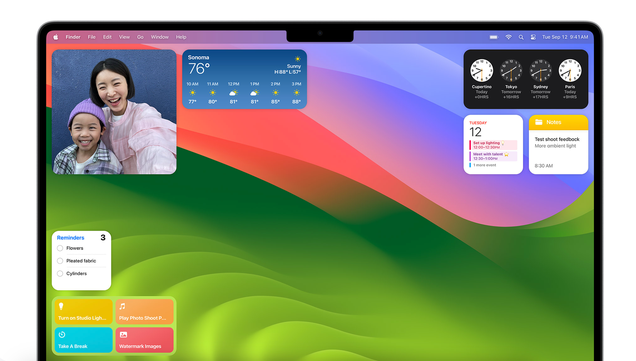
Back in the day, Mac OS X had a dedicated Dashboard for widgets, where you could add all sorts of nifty little interactive utilities. With the release of macOS Mojave in 2018, Apple finally laid the old system to rest, and did not replace it with anything. Sure, you could add widgets to the Notification Center, but…

Read more…


Source: LifeHacker – These New Sonoma Desktop Widgets Are Actually Useful

In Blue Eye Samurai's New Trailer, Revenge is A Deadly Blade

Weeks ago during its animation showcase highlighting its future animated shows, Netflix revealed a first look at Blue Eye Samurai. Unlike most of what was shown during that event, the upcoming series is an original property from co-creators Amber Noizumi and Logan writer Michael Green, and it’s just received a new…

Read more…


Source: Gizmodo – In Blue Eye Samurai’s New Trailer, Revenge is A Deadly Blade

Microsoft May Owe $28.9 Billion in Back Taxes to the IRS

On Wednesday, the Internal Revenue Service (IRS) notified Microsoft that it may owe $28.9 billion in back taxes, plus penalties and interest, from 2004 through 2013. The IRS says it believes that as of Sept. 30, its tax adjustments are correct and will elevate the issue to judicial proceedings, if necessary.

Read more…


Source: Gizmodo – Microsoft May Owe .9 Billion in Back Taxes to the IRS

FDBuild 0.1 Released To Make It Easier To Quickly Build Multiple Projects

Roman Gilg who is known for his work on the KWinFT compositor project has spent the past few years quietly developing FDBuild as a new tool for developers to easily pull, configure, and build multiple software projects via a single command. This week he released FDBuild 0.1 as the first public release of this handy utility…

Source: Phoronix – FDBuild 0.1 Released To Make It Easier To Quickly Build Multiple Projects

The Nintendo Switch OLED is $35 off at Woot

Amazon’s Prime Big Deal Days event included many discounts on Nintendo Switch games and accessories, but one thing we didn’t see on sale was the console itself. Now, though, Amazon subsidiary Woot has rolled out a new deal that brings the Nintendo Switch OLED down to $315. That’s $35 off Nintendo’s list price. While this isn’t the largest price drop we’ve ever seen, discounts on Switch consoles are relatively uncommon, so any opportunity to save is usually a good one. Woot says the offer applies to both the White and Neon Blue & Red versions of the console, and that it’ll run for nine days or (more likely) until the consoles sell out. If you’re an Amazon Prime member, you’ll get free shipping.

We gave the Switch OLED a review score of 89 when it arrived in late 2021. As a refresher, it’s the highest-end model in the Switch lineup, with a 7-inch OLED display that’s larger, brighter and more vibrant than the panels on the original Switch or Switch Lite (both of which remain available at lower prices). Despite the bigger screen, the machine itself is virtually identical in size to the standard model. 

Beyond that, the Switch OLED has a larger and far less flimsy kickstand around the back, and its built-in speakers are generally louder and clearer. Its included dock is a bit more convenient, as it features a LAN port and an easily removable back plate. There’s also double the internal storage at 64GB, though you’ll pretty much need a microSD card either way. All that said, there’s no difference in actual performance between the three consoles, and Nintendo rates the OLED and standard models with the same 4.5 to nine hours of battery life.

The big caveat to this or any other Switch deal right now is that the console seems very likely to be nearing the end of its cycle. The original device arrived nearly seven years ago, and a follow-up is widely expected to arrive sometime in 2024. A recent Eurogamer report, for one, said that Nintendo demoed a potential “Switch 2” for game developers during the Gamescom trade fair in August. So if you aren’t itching to play anything on the Switch today, it seems safe to wait. 

However, the Switch is still home to a tremendous library of games, with promising titles like Super Mario Bros. Wonder and the Super Mario RPG remake still on the way. (Yours truly is currently obsessed with F-Zero 99, another recent release.) For now, the Switch OLED is the best way to enjoy all of them, so this is a nice chance to save if you’ve wanted to catch up. 

Follow @EngadgetDeals on Twitter and subscribe to the Engadget Deals newsletter for the latest tech deals and buying advice.

This article originally appeared on Engadget at https://www.engadget.com/the-nintendo-switch-oled-is-35-off-at-woot-141708664.html?src=rss

Source: Engadget – The Nintendo Switch OLED is off at Woot

The Best Parcel Drop Boxes to Deter Package Thieves

Amazon has changed the way we live our lives, for better and for worse. Why go to a cellphone store to buy a new phone case when you have thousands of options at your fingertips that can be shipped to your house, often on the same day? Unfortunately, all those packages being whisked your way also means package thieves…

Read more…


Source: LifeHacker – The Best Parcel Drop Boxes to Deter Package Thieves

HBM4 in Development, Organizers Eyeing Even Wider 2048-Bit Interface

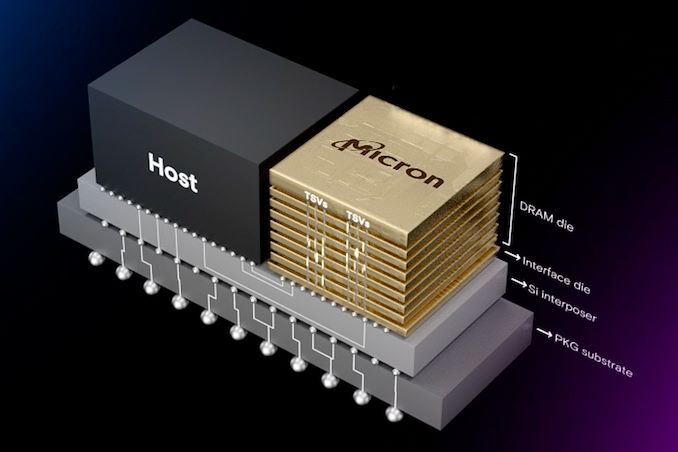
High-bandwidth memory has been around for about a decade, and throughout its its continued development it has steadily increased in speed, starting at a data transfer rate from 1 GT/s (the original HBM) and reaching upwards of 9 GT/s with the forthcoming HBM3E. This has made for an impressive jump in bandwidth in less than 10 years, making HBM an important cornerstone for whole new classes of HPC accelerators that have since hit the market. But it’s also a pace that’s getting harder to sustain as memory transfer rates increase, especially as the underlying physics of DRAM cells have not changed. As a result, for HBM4 the major memory manufacturers behind the spec are planning on making a more substantial change to the high-bandwidth memory technology, starting with an even wider 2048-bit memory interface.


Designed as a wide-but-slow memory technology with an ultra-wide interface running at a relatively modest clockspeed, HBM’s current 1024-bit memory interface has been a defining characteristic of the technology. Meanwhile its modest clockspeeds have become increasingly less modest in order to keep improving memory bandwidth. This has worked thus far, but as clockspeeds increase, the highly parallel memory is risking running into the same signal integrity and energy efficiency issues that challenge GDDR and other highly serial memory technologies.


Consequently, for the next generation of the technology, organizers are looking at going wider once more, expanding the width of the HBM memory interface even further to 2048-bits. And, equally as important for multiple technical reasons, they intend to do this without increasing the footprint of HBM memory stacks, essentially doubling the interconnection density for the next-generation HBM memory. The net result would be a memory technology with an even wider memory bus than HBM today, giving memory and device vendors room to further improve bandwidth without further increasing clock speeds.


As planned, this would make HBM4 a major technical leap forward on multiple levels. On the DRAM stacking side of matters, a 2048-bit memory interface is going to require a significant increase in the number of through-silicon vias routed through a memory stack. Meanwhile the external chip interface will require shrinking the bump pitch to well below 55 um, all the while increasing the total number of micro bumps significantly from the current count of (around) 3982 bumps for HBM3.


Adding some additional complexity to the technology, memory makers have indicated that they are also going to stack up to 16 memory dies in one module; so-called 16-Hi stacking. (HBM3 technically supports 16-Hi stacks as well, but so far no manufacturer is actually using it) This will allow memory vendors to significantly increase the capacity of their HBM stacks, but it brings new complexity in wiring up an even larger number of DRAM dies without fault, and then keeping the resulting HBM stack suitably and consistently short.


All of this, in turn will require even closer collaboration between chip makers, memory makers, and chip packaging firms in order to make everything come together smoothly.


Speaking at TSMC’s OIP 2023 conference in Amsterdam, Dan Kochpatcharin, TSMC’s Head of Design Infrastructure Management had this to say: “Because instead of doubling the speed, they doubled the [interface] pins [with HBM4]. That is why we are pushing to make sure that we work with all three partners to qualify their HBM4 [with our advanced packaging methods] and also make sure that either RDL or interposer or whatever in between can support the layout and the speed [of HBM4]. So, [we work with] Samsung, SK Hynix, and Micron.”


Since system-in-package (SiP) designs are getting larger, and the number of HBM stacks supported by advanced chip packages is increasing (e.g. 6x reticle size interposers and chips with 12 HBM stacks on-package), chip packages are getting more complex. To ensure that everything continues to work together, TSMC is pushing chip and memory designers to embrace Design Technology Co-Optimization (DTCO). This being a big part of the reason why the world’s largest foundry recently organized 3DFabric Memory Alliance, a program designed to enable close collaboration between DRAM makers and TSMC in a bid to enable next-generation solutions that will pack huge amounts of logic transistors and advanced memory.


Among other things, TSMC’s 3DFabric Memory Alliance is currently working on ensuring that HBM3E/HBM3 Gen2 memory works with CoWoS packaging, 12-Hi HBM3/HBM3E packages are compatible with advanced packages, UCIe for HBM PHY, and buffer-less HBM (a technology spearheaded by Samsung).


Overall, TSMC’s comments last week give us our best look yet at the next generation of high-bandwidth memory. Still, additional technical details about HBM4 remain rather scarce for the moment. Micron said earlier this year that ‘HBMNext’ memory set to arrive around 2026 will offer capacities between 36 GB and 64 GB per stack and peak bandwidth of 2 TB/s per stack or higher. All of which indicates that memory makers won’t be backing off on memory interface clockspeeds for HBM4, even with the move to a wider memory bus.


Source: AnandTech – HBM4 in Development, Organizers Eyeing Even Wider 2048-Bit Interface

Atlassian To Buy Video Messaging Provider Loom for Nearly $1 Billion

Atlassian said on Thursday it had agreed to acquire privately held video messaging platform Loom for about $975 million, beefing up its team collaboration tools to tap into resilient demand fueled by the adoption of hybrid work. From a report: Integration of Loom’s technology into Atlassian software such as collaboration tools Jira and Confluence will help users use video in their workflows. The acquisition of Loom, which has more than 25 million users globally, will enable customers communicate and collaborate more effectively, Atlassian said.

Read more of this story at Slashdot.


Source: Slashdot – Atlassian To Buy Video Messaging Provider Loom for Nearly Billion

Vincent D'Onofrio Weighs In On Daredevil: Born Again's Reset

A new Monarch: Legacy of Monsters poster has double the Russells. Get a look at the Go Go! Loser Ranger anime adaptation. Disney+’s new Goosebumps show drops a creepy new clip. Plus, what’s coming on Chucky, Quantum Leap, and more. Spoilers get!

Read more…


Source: Gizmodo – Vincent D’Onofrio Weighs In On Daredevil: Born Again’s Reset

Study Claims AI Is An Energy Hog Consuming As Much Electricity As A Country

Study Claims AI Is An Energy Hog Consuming As Much Electricity As A Country
A researcher out of Amsterdam is asserting in his recent study that our love and growing dependence on all things AI (artificial intelligence) will draw enough electricity to power a country the size of Sweden in less than five years.

Alex de Vries from the VU Amsterdam School of Business and Economics, in his peer-reviewed paper, claims

Source: Hot Hardware – Study Claims AI Is An Energy Hog Consuming As Much Electricity As A Country