Is the Novavax COVID Vaccine Actually ‘Better’?

Lots of people are hearing about Novavax, the fourth COVID vaccine option in the U.S., for the first time, but it’s been authorized for use as a primary vaccine series since early 2022. Previously, it was only available for those who hadn’t received a mRNA vaccine—an alternative for those who either couldn’t or…

Read more…


Source: LifeHacker – Is the Novavax COVID Vaccine Actually ‘Better’?

US Tightens Curbs on AI Chip Exports To China, Widening Rift With US Businesses

The Biden administration is tightening restrictions on China’s ability to buy advanced semiconductors, fueling friction with U.S. businesses that sell to the vast Chinese market. From a report: The Commerce Department on Tuesday said it would significantly constrict exports of artificial-intelligence chips, making it tougher for U.S. companies Nvidia and Intel to sell existing products in China — or to introduce new chips to circumvent the rules.
The move aims to close perceived loopholes in export controls announced a year ago, which themselves had faced strong opposition from the global semiconductor industry and escalated tensions with Beijing.

The goal, Commerce Secretary Gina Raimondo told reporters, is to limit China’s “access to advanced semiconductors that could fuel breakthroughs in artificial intelligence and sophisticated computers.” The chips are critical to Chinese military applications, she said, a nod to concerns that the U.S. could fall behind China in key defense technologies. The updated rules significantly expand the U.S. government’s authority to determine what products U.S. companies can and can’t sell in the name of national security. Shipments of high-end AI chips, including those developed by Nvidia and Intel for the Chinese market, are banned without a license. And “gray zone” chips just below those thresholds will now require notification to the government, which can then deny their sales.

Read more of this story at Slashdot.


Source: Slashdot – US Tightens Curbs on AI Chip Exports To China, Widening Rift With US Businesses

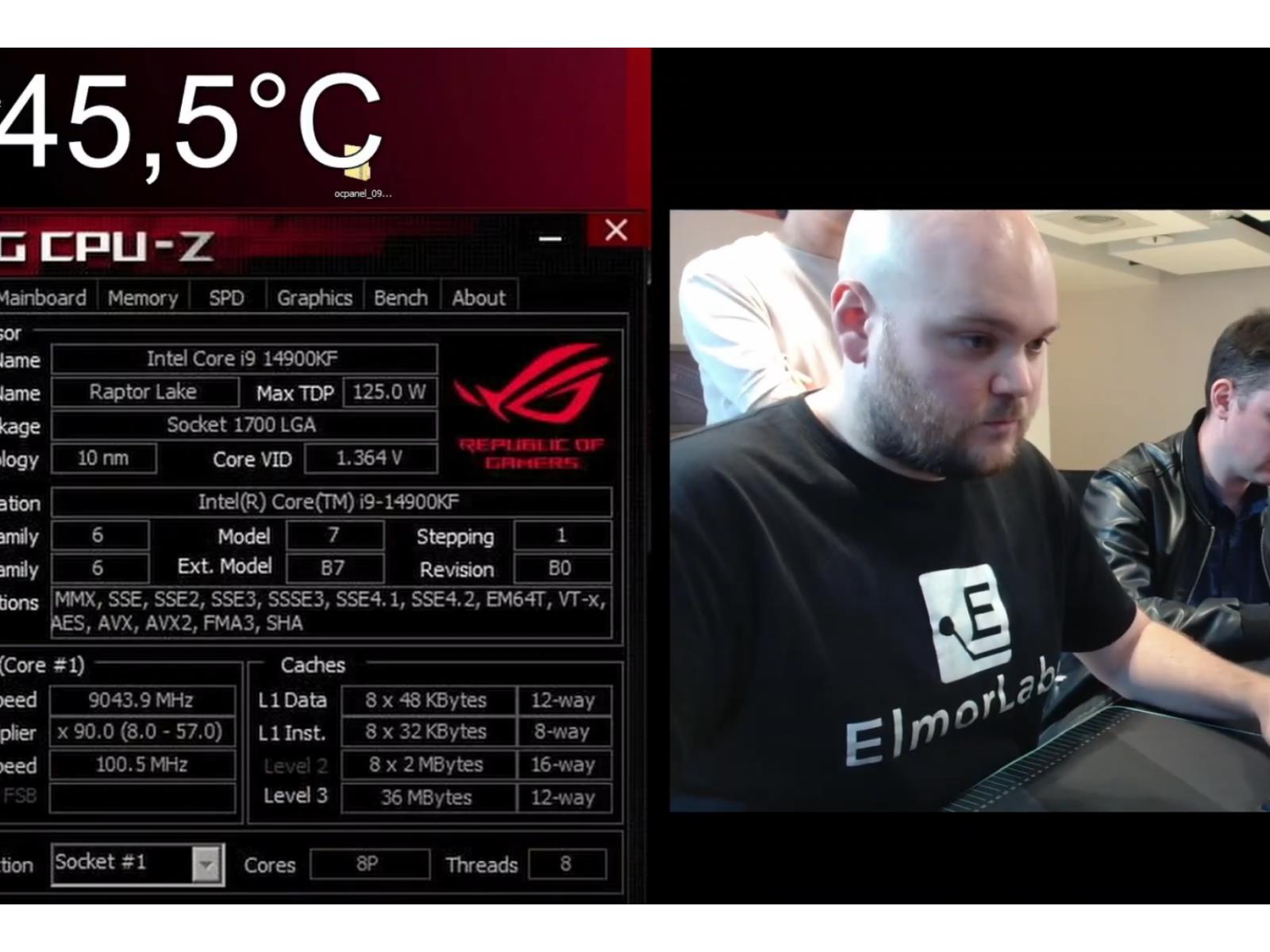
Intel's Core i9-14900K Is Already Smashing Records At A Blistering 9GHz Overclock

Intel's Core i9-14900K Is Already Smashing Records At A Blistering 9GHz Overclock
Extreme overclockers Elmor and SkatterBencher in cooperation with ASUS have submitted a record-smashing overclock of Intel’s brand-new Core i9-14900KF (a 14900K without integrated graphics), achieving a stable 9.044GHz and beating the previous world record (also held by Elmor) of 9.008GHz set on the Core i9-13900K. It’s the second time that

Source: Hot Hardware – Intel’s Core i9-14900K Is Already Smashing Records At A Blistering 9GHz Overclock

Alarming Security Report Claims Discord Is A Breeding Ground For Hackers And Malware

Alarming Security Report Claims Discord Is A Breeding Ground For Hackers And Malware
‘
Discord is a great voice, text, and video platform that allows friends, family, and communities of all types to connect in a common space. However, it’s been known that Discord has been used for some terrible things, such as the massive leak of intelligence from the U.S. Pentagon. Now, threat actors are leveraging the interconnectivity

Source: Hot Hardware – Alarming Security Report Claims Discord Is A Breeding Ground For Hackers And Malware

Study: Wearable sensors more accurately track Parkinson’s disease progression than traditional observation

In a study from Oxford University, researchers found that by using a combination of wearable sensor data and machine learning algorithms the progression of Parkinson’s disease can be monitored more accurately than in traditional clinical observation. Monitoring movement data collected by sensor technology may not only improve predictions about disease progression but also allows for more precise diagnoses.

Parkinson’s disease is a neurological condition that affects motor control and movement. Although there is currently no cure, early intervention can help delay the progression of the disease in patients. Diagnosing and tracking the progression of Parkinson’s disease currently involves a neurologist using the Movement Disorder Society-Unified Parkinson’s Disease Rating Scale (MDS-UPDRS) to assess the patient’s motor symptoms by assigning scores to the performance of specific movements. However, because this is a subjective, human analysis, classification can be inaccurate.

In the Oxford study, 74 patients with Parkinson’s were monitored for disease progression over a period of 18 months. The participants wore wearables with sensors in different regions of the body: on the chest, at the base of the spine and on each wrist and foot. These sensors — which had gyroscopic and accelerometric capabilities — kept tabs on 122 different physiological measurements, and tracked the patients during walking and postural sway tests. Kinetic data was then analyzed by custom software programs using machine learning.

Wearable sensors provide early detection of progression in Parkinson’s Disease.
Oxford

The sensor data collected by the wearables were compared to standard MDS-UPDRS assessments, which are considered the gold standard in current practice. That traditional test, in this study’s patients “did not capture any change” while the sensor-based analysis “detected a statistically significant progression of the motor symptoms” according to the researchers.

Having more precise data on the progression of Parkinson’s isn’t a cure, of course. But the incorporation of metrics from wearables could help researchers confirm the efficacy of novel treatment options.

This article originally appeared on Engadget at https://www.engadget.com/study-wearable-sensors-more-accurately-track-parkinsons-disease-progression-than-traditional-observation-171132495.html?src=rss

Source: Engadget – Study: Wearable sensors more accurately track Parkinson’s disease progression than traditional observation

Biden Admin Adds New Rules to Keep American AI Chips Out of China

The Biden administration laid out new restrictions on Tuesday to limit the primary and secondary sale of United States-made chips to China, according to a CNBC report. The move is an effort to limit the nation’s technological and military progress.

Read more…


Source: Gizmodo – Biden Admin Adds New Rules to Keep American AI Chips Out of China

How to Opt Out of Data Collection by Data Brokers

Each time you accept the privacy policies and terms of service on any app or website, there’s a chance some of your data is being sold. Information brokers, also known as data brokers, are organizations whose entire business model involves collecting your personal data and selling it to advertisers. This may include…

Read more…


Source: LifeHacker – How to Opt Out of Data Collection by Data Brokers

Intel’s 14th-gen desktop CPUs are a tiny update even by modern standards

Intel’s 14th-gen desktop CPUs are a tiny update even by modern standards

Enlarge (credit: Intel)

Intel’s new desktop processor generations haven’t always come with significant generational improvements in recent years, as the company has struggled with new manufacturing tech that enables big leaps in performance and power efficiency. For every major jump—the 12th-generation CPUs, codenamed Alder Lake, come to mind—you usually get several faster but less-than-thrilling iterations.

Intel is officially launching its 14th-generation desktop processors today, and they’re firmly in that iterative, non-thrilling group, even compared to last year’s 13th-generation chips. The good news for price-conscious PC builders is that they’ll continue to work in all current 600- and 700-series motherboards after a BIOS update, and Intel isn’t launching a series of new motherboards to accompany them—there aren’t many compelling reasons to upgrade from a 12th-gen setup to a 14th-gen one, but it’s an available option.

Even the branding Intel is using here signifies that the processors are a throwback—next-gen Meteor Lake chips for laptops and all of Intel’s other chips are losing the generational and i3/i5/i7/i9 branding in favor of “Core” and “Core Ultra.” By Intel’s admission, the last gasp of the 14th-generation branding here is a nod to how similar they are to the 13th-generation chips that preceded them (and, for that matter, the 12th-gen ones before that).

Read 9 remaining paragraphs | Comments


Source: Ars Technica – Intel’s 14th-gen desktop CPUs are a tiny update even by modern standards

Intel Arc Graphics A580 On Linux: Open-Source Graphics For Under $200

Last week Intel announced the Arc Graphics A580 as a new mid-range DG2/Alchemist graphics card option that comes in between the entry-level Arc Graphics A380 and the higher-end Arc Graphics A750/A770. With the Arc Graphics A580 coming in at under $200, it’s quite an interesting graphics card for those after open-source Linux driver support and/or those wanting to experiment with Intel’s growing oneAPI software ecosystem with excellent open-source GPU compute support.

Source: Phoronix – Intel Arc Graphics A580 On Linux: Open-Source Graphics For Under 0

Spider-Man 2's Yuri Lowenthal on Growing to Be a Great Peter Parker

Like all big superheroes, Spider-Man has been played and voiced by a variety of different people over the decades. There’s a certain art to the wallcrawler that a number of voice actors have managed to perfect in recent years, and among those is longtime performer Yuri Lowenthal. Known for a number of roles during the…

Read more…


Source: Gizmodo – Spider-Man 2’s Yuri Lowenthal on Growing to Be a Great Peter Parker

Amazon Quietly Rolls Out Support for Passkeys, With a Catch

Amazon has quietly rolled out support for passkeys as it becomes the latest tech giant to join the passwordless future. But you still might have to hold onto your Amazon password for a little while longer. From a report: The option to set up a passkey is now available on the e-commerce giant’s website, allowing users to log in using biometric authentication on their device, such as their fingerprint or face scan. Doing so makes it far more difficult for bad actors to remotely access users’ accounts, given that the attacker also needs physical access to the user’s device.

But Amazon’s implementation of passkeys isn’t without issues, as noted by Vincent Delitz, co-founder of German tech startup Corbado, who first documented the arrival of passkey support on Amazon. Delitz noted that there is currently no support for passkeys in Amazon’s native apps, such as Amazon’s shopping app or Prime Video, which TechCrunch has also checked, meaning you still have to use a password to sign-in (for now). What’s more, if you’ve set up a passkey but previously set up two-factor authentication (2FA), Amazon will still prompt you to enter a one-time verification code when logging in, a move Delitz said was “redundant,” since passkeys remove the need for 2FA as they are stored on your device.

Read more of this story at Slashdot.


Source: Slashdot – Amazon Quietly Rolls Out Support for Passkeys, With a Catch

Make Your Next Pie Crust With Pop-Tarts

Making a graham cracker crust for your no-bake pies and cheesecakes is a bit old hat these days. Usher in this festive season with a crumb crust that’s far from ordinary, but familiar at the same time. This crust provides a unique texture, and it just might be the easiest crumb crust out there. You can make a press-in…

Read more…


Source: LifeHacker – Make Your Next Pie Crust With Pop-Tarts

Baidu's CEO says its ERNIE AI 'is not inferior in any aspect to GPT-4'

ERNIE, Baidu’s answer to ChatGPT, has “achieved a full upgrade,” company CEO Robin Li told the assembled crowd at the Baidu World 2023 showcase on Tuesday, “with drastically improved performance in understanding, generation, reasoning, and memory.”

During his keynote address, Li demonstrated improvements to those four core capabilities on-stage by having the AI create a multimodal car commercial in a few minutes based on a short text prompt , solve complex geometry problems and progressively iterate the plot for a short story on the spot. The fourth-gen generative AI system “is not inferior in any aspect to GPT-4,” he continued.

ERNIE 4.0 will offer an “improved” search experience resembling that of Google’s SGE, aggregating and summarizing information pulled from the wider web and distilled into a generated response.The system will be multimodal, providing answers as text, images or animated graphs through an “interactive chat interface for more complex searches, enabling users to iteratively refine their queries until reaching the optimal answer, all in one search interface,” per the company’s press. What’s more, the AI will be able to recommend “highly customized” content streams based on previous interactions with the user.

Similar to ChatGPT Enterprise, ERNIE’s new Generative Business Intelligence will offer a more finely-tuned and secure model trained on each client’s individual data silo. ERNIE 4.0 will also be capable of, “conducting academic research, summarizing key information, creating documents, and generating slideshow presentations” as well as enable users to search and retrieve files using text and voice prompts.

Baidu is following the example set by the rest of the industry and has announced plans to put its generative AI in every app and service it can manage. The company has already integrated some of the AI’s functions into Baidu Maps, including navigation, ride hailing and hotel bookings. It is also offering “ow-threshold access and productivity tools” to help individuals and enterprises develop API plugins for the Baidu Qianfan Foundation Model Platform.

Baidu had already been developing its ERNIE large language model for a number of years prior to the debut of ChatGPT in 2022, though its knowledge-base is focused primarily on the Chinese market. Baidu released ERNIE Bot, it’s answer to ChatGPT, this March with some 550 billion facts packed into its knowledge graph, though it wasn’t until this August that it rolled out to the general public.

Baidu’s partner startups also showed off new product series that will integrate the AI’s functionality during the event, including a domestic robot, an All-in-One learning machine and a smart home speaker.

This article originally appeared on Engadget at https://www.engadget.com/baidus-ceo-says-its-ernie-ai-is-not-inferior-in-any-aspect-to-gpt-4-162333722.html?src=rss

Source: Engadget – Baidu’s CEO says its ERNIE AI ‘is not inferior in any aspect to GPT-4’

Our Fave Cosplay From New York Comic Con 2023

New York Comic Con takes place every year at the massive Jacob Javits Center on the west side of Manhattan, and it never lets me down when it comes to cosplay. I’ve cosplayed there myself, though my look paled in comparison to the most impressive fits and mechanical feats on display at the annual convention.

Read more…


Source: Kotaku – Our Fave Cosplay From New York Comic Con 2023

Netflix's first live sports event is a golf tournament featuring F1 drivers and PGA Tour pros

Netflix is getting into live sports streaming, but it’s not shelling out hundreds of millions of dollars on NFL games, Formula 1 races or the English Premier League quite yet. The company’s first live sports event is a pro-am golf tournament that features athletes from its Formula 1: Drive to Survive and Full Swing docuseries.

The Netflix Cup will see four pairs of Formula 1 drivers and PGA Tour golfers pairing up in a match play tournament that will take place in Las Vegas. You’ll be able to watch the event starting at 6PM ET on Tuesday, November 14 — just a few days before F1’s inaugural Las Vegas Grand Prix.

As things stand, The Netflix Cup is set to feature F1 drivers Alex Albon, Pierre Gasly, Lando Norris and Carlos Sainz. The golf pros who have lined up to take part are Rickie Fowler, Max Homa, Collin Morikawa and Justin Thomas. The tournament will see the pro-am pairs play an eight-hole match. The top two teams will duke it out on a final hole to try and win the Netflix Cup.

“The continued success of Drive to Survive has played a significant role in the growth of Formula 1 in the US, which has ultimately led to the addition of a third American race,” Emily Prazer, chief commercial officer of Las Vegas Grand Prix, Inc, said in a statement. “It’s only fitting that we kick off our inaugural race weekend with a fun event that can be streamed by F1 and PGA Tour fans around the globe.”

This is a logical way for Netflix to dip its toes into live sports streaming. It means that the company doesn’t have to immediately snap up expensive rights to high-profile leagues (many of which have deals with rival streaming services anyway) or to showcase lower-tier sports.

It’s also another example of Netflix’s cross-branding coming to the forefront. The company is placing more focus on its own properties with things like a Squid Game reality competition series and branded retail stores that will feature an obstacle course based on its biggest hit to date. Netflix is also said to be developing more video game adaptations of its shows and movies, such as Extraction and Black Mirror.

Netflix’s first livestreamed event was a Chris Rock standup special. However, the company ran into technical problems with its second planned livestream, a Love is Blind cast reunion. The company instead filmed the reunion and uploaded it to the platform as quickly as it could. Netflix will be hoping things go more smoothly this time around.

This article originally appeared on Engadget at https://www.engadget.com/netflixs-first-live-sports-event-is-a-golf-tournament-featuring-f1-drivers-and-pga-tour-pros-160042770.html?src=rss

Source: Engadget – Netflix’s first live sports event is a golf tournament featuring F1 drivers and PGA Tour pros

Use This Extension to Block Sponsored Ads on YouTube

There are many ways to watch YouTube ad-free (I highly recommend YouTube Premium). But even if you shell out $13.99 per month to remove autoplay ads on YouTube, you still can’t get rid of sponsorship ads. No matter how you watch YouTube, a popular creator may still place an ad read in the middle of a video with no…

Read more…


Source: LifeHacker – Use This Extension to Block Sponsored Ads on YouTube

Canon Prepares Nanoimprint Lithography Tool To Challenge EUV Scanners

Canon has recently revealed its FPA-1200NZ2C, a nanoimprint semiconductor manufacturing tool that can be used to make advanced chips. The device uses nanoimprint lithography (NIL) technology as an alternative to photolithography, and can theoretically challenge extreme ultraviolet (EUV) and deep ultraviolet (DUV) lithography tools when it comes to resolution.


Unlike traditional DUV and EUV photolithography equipment that transfers a circuit pattern onto a resist-coated wafer through projection, nanoimprint tool employs a different technique. It uses a mask, embossed with the circuit pattern, which directly presses against the resist on the wafer. This method eliminates the need for an optical mechanism in the pattern transfer process, which promises a more accurate reproduction of intricate circuit patterns from the mask to the wafer. In theory, NIL enables formation of complex two- or three-dimensional circuit patterns in a single step, which promises to lower costs. NIL itself is not a new technology, but it has remained in parallel development over the years, while the challenges involved in further improving photolithography have Canon believing that now is a good time for a second-look.


Canon says that its FPA-1200NZ2C enables patterning with a minimum linewidth (critical dimensions, CD) of 14 nm, which is good enough to ‘stamp’ a circa 26-nm minimum metal pitch, and therefore suitable for 5 nm-class process technologies. That would be in line with capabilities of ASML’s Twinscan NXE:3400C (and similar) EUV lithography scanners with a 0.33 numerical aperture (NA) optics.


Meanwhile, Canon says that further refinements of its technology, its tool can achieve finer resolutions that can enable 3 nm and even 2 nm-class production nodes.


Nanoimprint lithography offers several compelling advantages over photolithography. Primarily, NIL excels in resolution, enabling the creation of structures at the nanometer scale with remarkable precision without using photomasks. This technology bypasses the diffraction limits encountered in conventional photolithography, allowing for more intricate and smaller features. Additionally, NIL operates without the necessity of complex optics or high-energy radiation sources, leading to potentially lower operational costs and simpler equipment.


Another advantage of NIL is its direct patterning capability, enabling the reproduction of three-dimensional nanostructures effectively. Such functionality makes NIL a potent tool in the production of photonics and other applications where three-dimensional nano-patterns are essential. The technology also facilitates better pattern fidelity and uniformity.


However, NIL also presents certain challenges and limitations. One notable issue is its susceptibility to defects due to the direct contact involved in the imprinting process. Particles or contaminants present on the substrate or the mold can lead to defects, which may affect the overall yield and reliability of the manufacturing process. This necessitates impeccable process control and cleanliness to maintain consistent output quality.


Additionally, NIL, in its traditional form, is a serial process, which limits its throughput and production capacity. Unlike photolithography, which can process entire wafers or large areas in a parallel fashion, NIL often involves processing smaller areas sequentially. This poses great challenges in scaling the technology for high-volume manufacturing of chips, which limits its usage for chip manufacturing. Meanwhile, NIL can be used to create photomasks for EUV and DUV. Also, it can theoretically be used to create patterned media for hard disk drives.


Source: AnandTech – Canon Prepares Nanoimprint Lithography Tool To Challenge EUV Scanners