NASA is demonstrating laser communications on multiple missions — showcasing the benefits infrared light can have for science and exploration missions transmitting terabytes of important data. NASA: The International Space Station is getting a “flashy” technology demonstration this November. The ILLUMA-T (Integrated Laser Communications Relay Demonstration Low Earth Orbit User Modem and Amplifier Terminal) payload is launching to the International Space Station to demonstrate how missions in low Earth orbit can benefit from laser communications. Laser communications uses invisible infrared light to send and receive information at higher data rates, providing spacecraft with the capability to send more data back to Earth in a single transmission and expediting discoveries for researchers.
Managed by NASA’s Space Communications and Navigation (SCaN) program, ILLUMA-T is completing NASA’s first bi-directional, end-to-end laser communications relay by working with the agency’s LCRD (Laser Communications Relay Demonstration). LCRD launched in December 2021 and is currently demonstrating the benefits of laser communications from geosynchronous orbit by transmitting data between two ground stations on Earth in a series of experiments. Some of LCRD’s experiments include studying atmospheric impact on laser signals, confirming LCRD’s ability to work with multiple users, testing network capabilities like delay/disruption tolerant networking (DTN) over laser links, and investigating improved navigation capabilities.
Fedora 39 failed to make its “early” release target date, it didn’t meet its otherwise targeted release date one week later, and is now facing another possible setback still. These release delays have been due to outstanding blocker bugs all related to the Raspberry Pi…
When the Metal Gear Solid 3 remake was revealed back in May, all we got were some shots of a swamp and Naked Snake coming out of the water. A new trailer that debuted today during the latest Xbox mini-showcase finally gives us a look at the game in action, if only briefly. And you know what? It looks really good.
Three astronauts are gearing up to launch to China’s space station in low Earth orbit, where they will spend six months carrying out a variety of experiments.
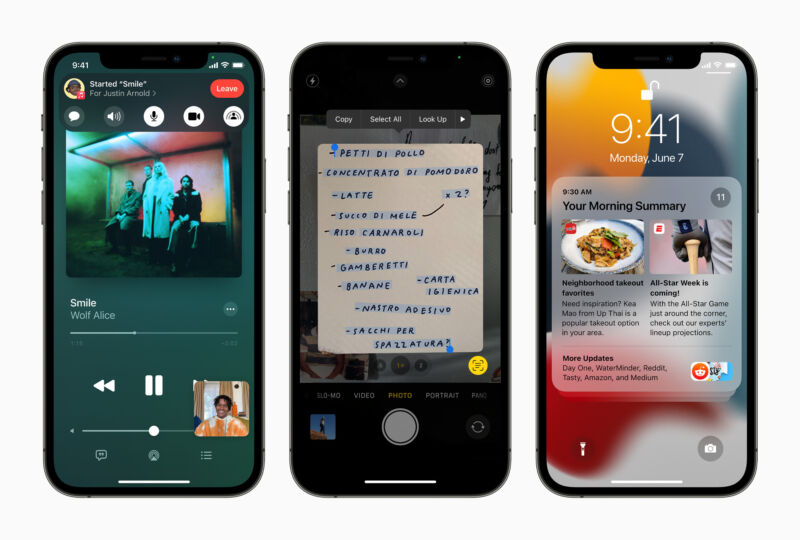
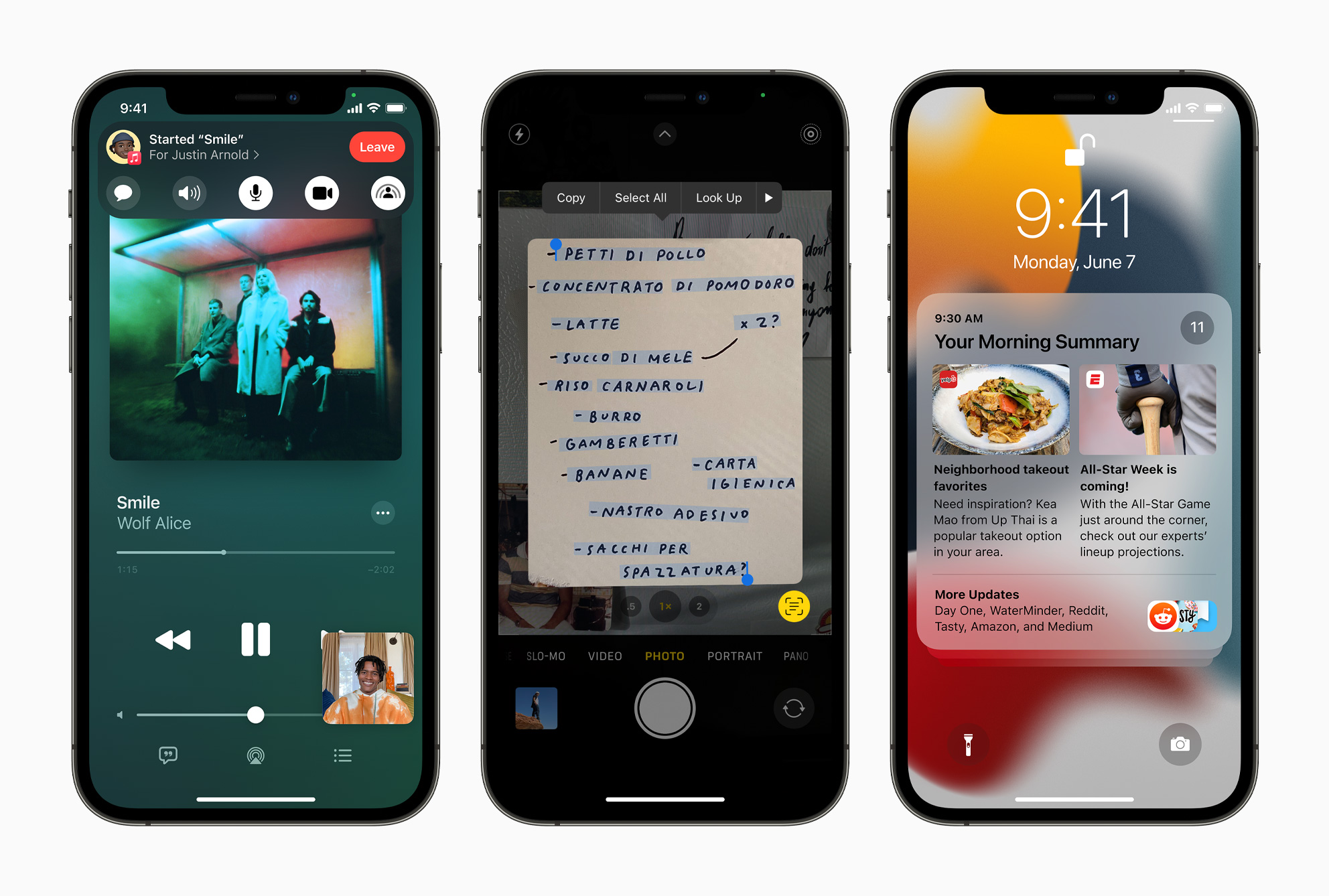
Apple is releasing a slew of updates for its latest operating systems today, including iOS and iPadOS 17.1, macOS Sonoma 14.1, watchOS 10.1, and others. The company is also releasing security updates for a few previous-generation operating systems, so that people who aren’t ready to upgrade (and older devices that can’t upgrade) will still be protected from new exploits.
Those updates include iOS and iPadOS 16.7.2 and 15.8, macOS Ventura 13.6.1, macOS Monterey 12.7.1, and the Safari 17.1 update for both of those macOS versions. At least for now, the iOS and iPadOS 16 updates cover older iPhones and iPads that can’t run iOS 17 and newer devices whose owners simply don’t want to install iOS 17 yet. Apple will eventually stop supporting newer hardware with iOS 16 security updates, but for now, the grace period is still in effect.
This is the first security update that Apple has delivered for iOS 15 since mid-September, suggesting that the company plans to keep supporting 2021’s iOS release with continued security updates for at least a while longer. The iOS 15.8 update will only run on phones and tablets that can’t install iOS 16 or 17, including the iPhone 6S, the iPhone 7, the original iPhone SE, the iPad Air 2, and the last iPod Touch.
After much speculation, Apple revealed it’s hosting a new event this Monday, Oct. 30 at 8 p.m. ET (5 p.m. PT). The only thing the company has told us about this presentation is its name, “Scary Fast,” in addition to including the Finder face in the announcement above, suggesting this event will be about the Mac.
You’ll need to join the wait list if you want to get your mitts on NECA’s new Halloween III: Season of the Witchaction figure of Dr. Dan Challis: it’s already sold out, and we can see why. The attention to detail lavished upon everyone’s favorite booze-soaked doctor turned crusader against a black magic-powered mask…
It’s been an unusually busy week in spaceflight, with the chatter restricted to rockets still on the ground. In a particularly festive update, United Launch Alliance (ULA) is gearing up for the launch of its Vulcan Centaur rocket on Christmas Eve.
The Biden administration on Monday is expected to unveil a long-anticipated artificial intelligence executive order, marking the U.S. government’s most significant attempt to date to regulate the evolving technology that has sparked fear and hype around the world. Washington Post: The administration plans to release the order two days before government leaders, top Silicon Valley executives and civil society groups gather in Britain for an international summit focused on the potential risks that AI presents to society, according to four people familiar with the matter, who spoke on the condition of anonymity to discuss the private plans.
The sweeping order would leverage the U.S. government’s role as a top technology customer by requiring advanced AI models to undergo assessments before they can be used by federal workers, according to three people involved in discussions about the order. The lengthy action would ease barriers to immigration for highly skilled workers, an attempt to boost the United States’ technological edge. Federal government agencies — including the Defense Department, Energy Department and intelligence agencies — would be required to run assessments to determine how they might incorporate AI into their agencies’ work, with a focus on bolstering national cyber defenses.
Right-to-repair advocates have long stated that passing repair laws in individual states was worth the uphill battle. Once enough states demanded that manufacturers make parts, repair guides, and diagnostic tools available, few companies would want to differentiate their offerings and policies and would instead pivot to national availability.
On Tuesday, Apple did exactly that. Following the passage of California’s repair bill that Apple supported, requiring seven years of parts, specialty tools, and repair manual availability, Apple announced Tuesday that it would back a similar bill on a federal level. It would also make its parts, tools, and repair documentation available to both non-affiliated repair shops and individual customers, “at fair and reasonable prices.”
“We intend to honor California’s new repair provisions across the United States,” said Brian Naumann, Apple’s vice president for service and operation management, at a White House event Tuesday.
Humanity is on the cusp of radical changes in how we produce and consume energy, according to a new evaluation by the International Energy Agency. And that leaves us in a place where small changes can produce huge differences in the energy economy by the end of the decade—even a slight drop in China’s economic growth, for example, could cut coal use by an amount similar to what Europe currently consumes.
Amidst the flux, governments are struggling to set policies that either meet our needs or reflect the changing reality. By 2030, the IEA expects that we’ll have the capacity to manufacture more than double the solar panels needed to meet current policy goals. And those goals will leave us falling well short of keeping warming below 2° C.
In flux
The IEA’s analysis focuses on two different scenarios. One of them, which it terms STEPS, limits the analysis to the policies that governments have already committed to. Those are sufficient to have energy-driven emissions peak in the middle of this decade—meaning within the next few years. But they stay above net zero for long enough to commit us to 2.4° C warming, a level that climate scientists indicate will lead to severe consequences.
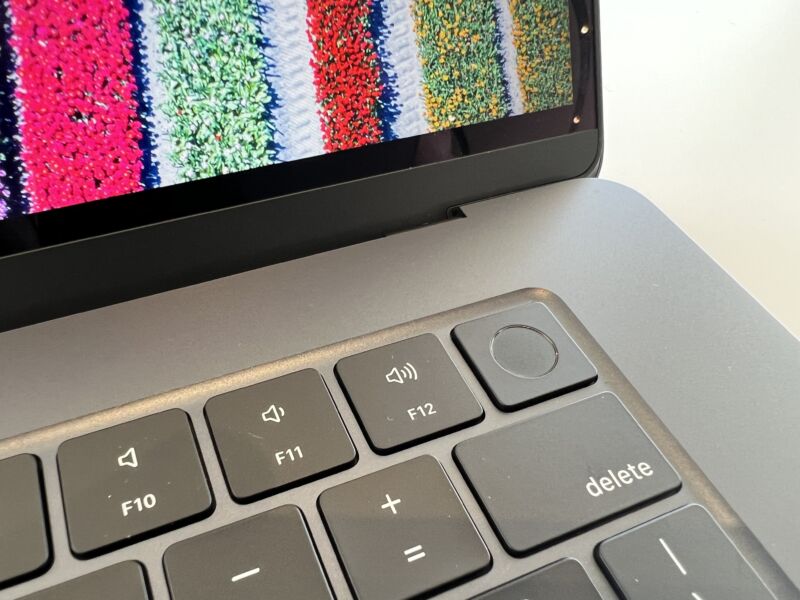
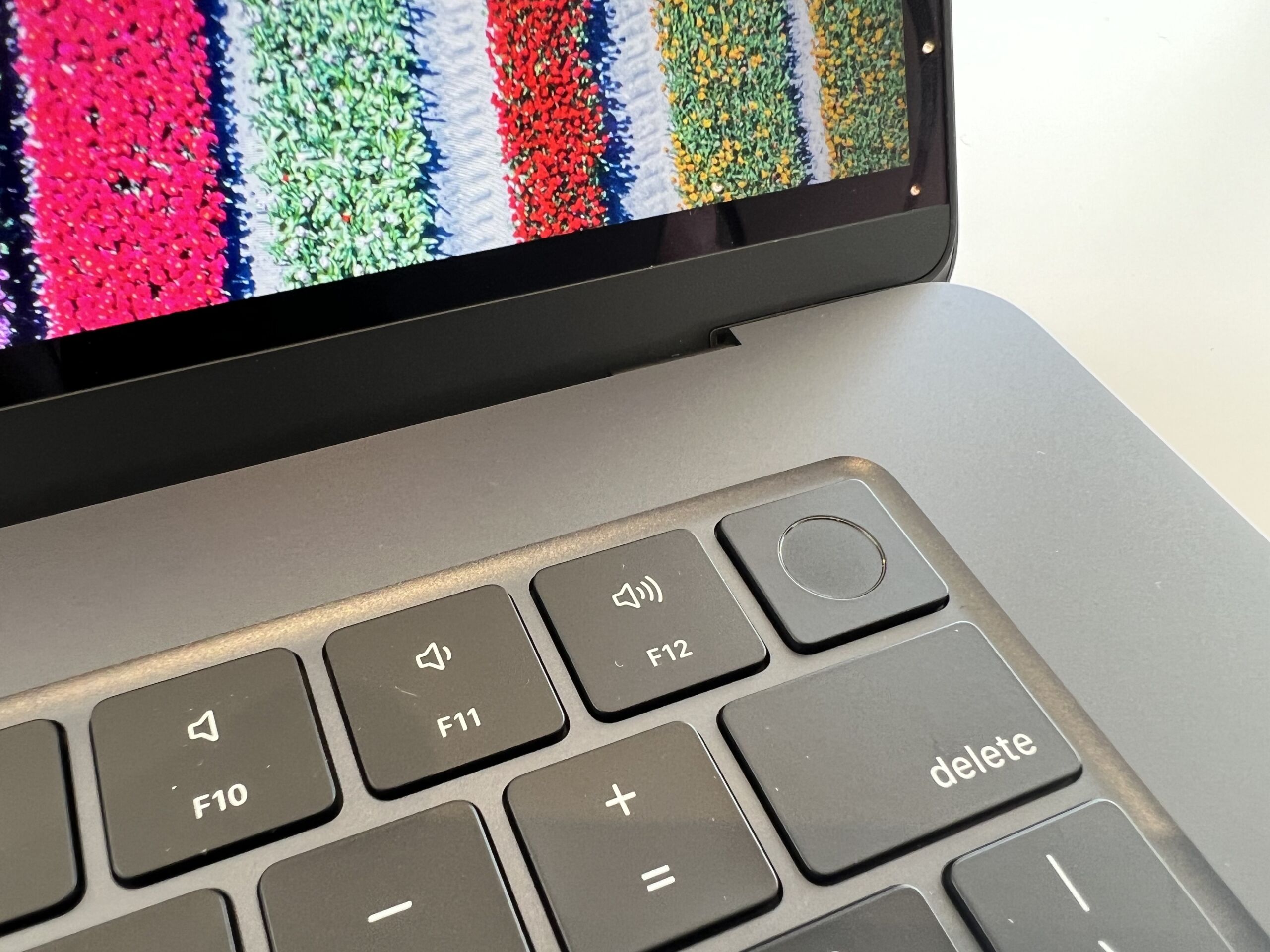
Enlarge/ Touch ID is back, as you’d expect. (credit: Samuel Axon)
With the holiday shopping season quickly approaching, it’s never too early to start looking for the best deals. From home sound bars to laptops, Apple gear, chargers, and charging cables, we found some great discounts on tech gear and essentials. Whether you’re upgrading to the latest Lenovo laptop or are looking to relax and tune out the chaos of retail shopping with a pair of active noise canceling headphones, there are plenty of choices on our list.
Lenovo
Lenovo IdeaPad Slim 3 (15-inch, AMD Ryzen 3 7330U) for $465 (wa $650) at Lenovo
Lenovo LOQ (16-inch, AMD Ryzen 7 7840HS and RTX 4050) for $980 (was $1,260) at Lenovo
Lenovo Slim Pro 7 (14-inch, AMD Ryzen 7 7840HS and RTX 3050) for $1,165 (was $1,450) at Lenovo
Lenovo ThinkPad X1 Carbon Gen 10 (14-inch, Intel Core i7-1270P) for $1,443 (was $3,609) at Lenovo
Lenovo ThinkPad P14s Gen 4 (14-inch, Intel Core i7-1360P and RTX A500) for $1,689 (was $3,389) at Lenovo
Lenovo ThinkPad T16 (16-inch, Intel Core i5-1240P) for $990 (was $2,829) at Lenovo
Lenovo Legion Pro 5i Gen 8 (16-inch, Intel Core i7-13700HX and RTX 4060) for $1,300 (was $1,700) at Lenovo
Lenovo ThinkPad X1 Carbon Gen 10 (14-inch, Intel Core i7-1260P) for $1,376 (was $3,439) at Lenovo
Lenovo ThinkPad P16s Gen 2 (16-inch, Intel Core i7-1360P and RTX A500) for $1,809 (was $3,629) at Lenovo
Lenovo LOQ (16-inch, Intel Core i7-13620H and RTX 4050) for $1,000 (was $1,360) at Lenovo
Lenovo ThinkPad P16v (16-inch, Intel Core i7-13700H and RTXA500) for $1,669 (was $3,339) at Lenovo
Lenovo ThinkPad P1 Gen 6 (16-inch, Intel Core i7-13700H adn RTX A2000) for $2,189 (was $4,389) at Lenovo
Lenovo ThinkPad P16 Gen 2 (16-inch, Intel Core i7-13700HX and RTX A1000) for $1,949 (was $3,899) at Lenovo
Lenovo ThinkPad L13 Gen 3 (13-inch, AMD Ryzen 7 Pro 5875U) for $1,275 (was $2,319) at Lenovo
Lenovo ThinkPad L13 Gen 3 (13-inch, AMD Ryzen 7 Pro 5875U) for $1,242 (was $2,259) at Lenovo
Lenovo ThinkPad L13 Yoga Gen 3 (13-inch, Intel Core i5-1245U) for $1,209 (was $2,199) at Lenovo
Lenovo ThinkPad X1 Nano Gen 3 (13-inch, Intel Core i5-1340P) for $1,201 (was $1,969) at Lenovo
Lenovo ThinkPad L13 Yoga Gen 3 (13-inch, Intel Core i5-1235U) for $1,1405 (was $2,009) at Lenovo
Lenovo ThinkPad T14 Gen 3 (14-inch, Intel Core i5-1250P) for $1,067 (was $3,049) at Lenovo
Lenovo Legion Slim 7i Gen 8 (16-inch, Intel Core i7-13700H and RTX 4060) for $1,450 (was $1,820) at Lenovo
Lenovo LOQ (16-inch, Intel Core i5-13500H and RTX 3050) for $770 (was $1,020) at Lenovo
Home audio
Sony HT-A7000 sound bar for $998 (was $1,398) at Crutchfield
Sennheiser AMBEO Soundbar | Max for $2,000 (was $2,500) at Crutchfield
Sony HT-A5000 sound bar for $698 (was $998) at Crutchfield
Yamaha SR-B20A sound bar for $150 (was $200) at Crutchfield
Polk Audio React Sound Bar for $199 (was $269) at Crutchfield
Sony HT-S2000 sound bar for $348 (was $498) at Crutchfield
Bose Smart Soundbar 900 for $699 (was $899) at Crutchfield
Sony HT-A3000 sound bar for $498 (was $698) at Crutchfield
Bowers & Wilkins Formation Bar for $631 (was $699) at Crutchfield
Apple gear
Apple 2020 MacBook Air Laptop M1 Chip for $849 (was $999) at Amazon
Apple 2023 MacBook Air 15-inch Laptop with M2 chip for $1,100 after coupon (was $1,299) at Amazon
Apple 2022 MacBook Pro 13-inch Laptop with M2 chip for $1,199 (was $1,299) at Amazon
Apple AirPods (2nd Generation) for $99 (was $129) at Amazon
Apple AirPods (3rd Generation) for $149 (was $169) at Amazon
Apple AirPods Max Wireless Over-Ear Headphones for $499 (was $549) at Amazon
The Bigscreen Beyond is miraculous. I expected the first hardware from Bigscreen, a company known mainly for its VR movie-watching app, to be merely a noble effort. You know, a brave attempt by a newcomer to make a splash in the niche world of VR – something that deserves golf claps and little more. They say hardware is hard for a reason; how can a small software company take on titans like Valve and Meta?
Despite everything stacked against it (and it’s not without some freshman stumbles), the Bigscreen Beyond stands out. It’s less a headset like the original Oculus Rift, and more akin to an oversized pair of glasses that can still immerse you. Consequently, it’s the most comfortable VR solution I’ve ever tested. It also has some of the sharpest displays I’ve ever seen, thanks to cutting-edge Micro-OLED panels (Meta, meanwhile, has fallen back on cheaper LCD displays for the Quest 3).
Somehow, a small VR app company built a truly compelling upgrade from the Valve Index, which is still one of the best VR headsets around. That deserves more than just golf claps.
With all that being said, the Bigscreen Beyond also isn’t something I can recommend to most people. The average gamer doesn’t need a Ferrari, after all. While Meta is aiming for the masses with the $299 Quest 2 and $499 Quest 3, the $999 Bigscreen Beyond is squarely targeted at Valve Index owners and VR enthusiasts who demand more comfort and better screens. It’s meant for a niche of the niche. The Beyond is even harder to justify if you’re stepping into high-end VR for the first time, since it requires two SteamVR base stations ($300 for a pair) and Valve Index controllers ($279). A $1,578 setup isn’t exactly the best introduction to VR.
Nothing about the Beyond is easy. That makes it best suited for people who are already used to the inconveniences and indignities of PC VR. Upon ordering it, you’ll need to create a 3D scan of your face via a mobile website. That process took around five minutes for me, but it requires an iPhone – Android users will need to borrow one or sneakily scan their faces at an Apple Store.
Photo by Devindra Hardawar/Engadget
Once your face is scanned, Bigscreen 3D prints an eyepiece cushion that’s built specifically for you. That process also determines the interpupillary distance, or IPD for the headset’s lenses. Instead of being adjustable like some competitors, Bigscreen has 18 (!) different models of the Beyond to fit IPDs between 55 millimeters and 72mm. The company says being so rigid about IPD sizes allows it to reduce weight – I can only imagine the logistical nightmare that creates. (That extreme customization also means it’ll be tough to share the Beyond with others.)
I’ll admit, I was shocked how well it fit the first time I tried the Beyond. It barely felt like I was wearing anything at all, since the weight was evenly distributed across my face. There was no pressure around my eyes, or on the bridge of my nose, issues I’ve come to expect from heavy VR headsets. There was also no light leakage either, something that can easily kill immersion, and the cushions easily clamp onto the headset using magnets.
Photo by Devindra Hardawar/Engadget
According to Bigscreen founder and CEO Darshan Shankar, the company developed a unique skin-safe foam material for the face cushion. It can be washed with soap and water, making it potentially more sanitary than the sweat-absorbing pads on other headsets. Shankar says he’s been using one foam pad for several years, and, surprisingly enough, he doesn’t try to protect it while traveling. If you do need a replacement, though, you can order one from Bigscreen for $49.
Given how small it is, the Beyond also doesn’t have room to fit glasses like the Quest 3. Instead, prescription glasses wearers will have to order custom lenses from the company. I can’t speak about that ordering process much — Bigscreen just shipped me prescription lenses alongside my review unit — but it’ll involve plugging in your prescription alongside your order. (Snagging lenses for the Quest 3 from Zenni Optical is no different than ordering a normal pair of glasses.) The Beyond’s lenses magnetically snap onto its displays without any effort, and they’re also easy to remove for cleaning.
You can tell that the Bigscreen Beyond isn’t like any other VR headset on the market with one glance. Imagine chopping off the top and bottom of the Valve Index, leaving only the displays behind. It looks suitably futuristic, with transparent plastic alongside the front and a few LEDs to let you know when it’s powered up. It also weighs just 127 grams (0.28 pounds), slightly more than a deck of playing cards. In comparison, the Valve Index comes in at 1.8 pounds, while the Quest 3 weighs 1.1 pounds. The Beyond ships with a rear head strap, which was tight enough to stay secured on my head, but there’s also a top strap in the box for those who need it.
Photo by Devindra Hardawar/Engadget
If you look closely at Bigscreen’s promotional photos for the Beyond, you may notice something that’s missing: Headphones. It doesn’t include any built-in speakers of its own, so you’ll have to come up with your own solution. I was able to fit Arctis’s Nova Pro headphones on top of the Beyond, but that defeats the purpose of having such a light headset. I eventually paired my AirPod Pros to my Windows PC — something I never do otherwise — and that worked just fine. Bigscreen plans to release a $129 audio strap later this year but, for now, Beyond buyers should plan to have wireless earbuds handy.
So clearly Bigscreen managed to create a unique headset, but how well does it handle VR? Simply put, it’s far better than I expected from the company’s first stab at hardware. Its Micro-OLED displays are bright and feature far more contrast than the Quest 3’s LCD panels. They’re also noticeably sharper than the Index’s. The Beyond offers 2,560 by 2,560 pixels per eye, while the Valve headset delivers 1,440 by 1,600 pixels per eye.
That difference was particularly stark while replaying Half-LIfe: Alyx, a game I’ve already spent dozens of hours immersed in while testing the Index years ago. On the Bigscreen Beyond, it felt more like I was stepping into Alyx’s dystopian world. I could barely feel the headset on my face, and everything just looked more realistic. I had a far easier time reading small text on newspapers strewn about the game—something that took a lot of squinting on the Index.
True to Bigscreen’s original mission, the Beyond is also a fantastic headset for watching Netflix, YouTube or a handful of 3D films. It’s not quite as relaxing as my home theater, since I’m stuck in an office chair tied to my computer, but it’s certainly the best PC VR headset I’ve encountered for watching media. It’s tough for me to choose between the Beyond and the Quest 3, though. Bigscreen’s headset has far better optics, but I can’t lay on the couch or in bed while wearing it. Meta probably wins when it comes to sheer convenience.
As great as the Beyond’s screens are, they still occasionally display reflections and artifacts like every other VR headset. Shankar says that’s a symptom of the Beyond’s pancake lenses — the Quest 3 and Quest Pro also have similar reflections. Older headsets like the Index often exhibited “god rays” in bright scenes, which typically showed up as extra glare. I can live with visual imperfections during genuine VR experiences, but they’re distracting while watching movies, which look far more pristine on a big screen TV and home theater projector.
Photo by Devindra Hardawar/Engadget
Ironically enough, Bigscreen managed to create a VR headset that’s better at gaming than it is for watching media. But if you’re stuck in an apartment without room for a large TV, or you want to recreate the experience of sitting front row in a theater using the Bigscreen app, the Beyond still delivers a decent sense of immersion. It’s sort of like going to a theater with a projector on the fritz — you learn to live with it just to see something on an enormous screen.
I’ll reiterate: Most people should not buy the Bigscreen Beyond. The Meta Quest 3 is right there! (And the Quest 2 is even cheaper!) But if you’re a VR fanatic for something lighter, brighter and sharper than the Valve Index, it’s a genuinely compelling upgrade… As long as you don’t mind shelling out another $999.
This article originally appeared on Engadget at https://www.engadget.com/bigscreen-beyond-review-gunning-for-vr-throne-valve-index-190004793.html?src=rss
Qualcomm revealed the Snapdragon 8 Gen 3 at long last this week, at its Snapdragon Summit in scenic Hawaii. We expect to see this chip powering most of the high-end Android phones and tablets that launch over the coming year, beginning in just a few weeks with an unnamed Qualcomm partner. Naturally, Qualcomm says this SoC reaches new heights
If you want to read but can’t find the time, Headway summarizes best-selling content into bite-sized reads or podcasts—and through Oct. 31, a lifetime subscription is on sale for $49.97 (reg. $299.95) with no coupon needed.
We’re here in sunny Hawaii for day two of Qualcomm’s annual Snapdragon Summit.
Yesterday, of course, was the company’s prime keynote, where they announced their forthcoming Snapdragon X Elite SoC for laptops, as well as the Snapdragon 8 Gen 3 for smartphones. As well, the company gave us our first look at their Oryon CPU architecture, which will be driving the X Elite, and eventually Qualcomm’s smartphones, automotive chips, and more.
For day two of their event, today Qualcomm is going to take us through the technical side of their new chips, revealing a bit more about how they work and what new features and abilities have been added in this generation. So please join us for our live blog coverage of Qualcomm’s technical track disclosures.
Qualcomm announced the release of a pair of chips, the S7 and the S7 Pro that companies can use in their earbuds, headphones, and speakers to benefit from Wi-Fi in addition to Bluetooth. The semiconductor company announced that it will leverage its Snapdragon Sound platform to bring Wi-Fi to audio peripherals.
It’s been a long time coming—especially so for a Time Lord. The BBC and Disney have now officially confirmed that Doctor Who’s trio of anniversary specials will begin airing from November 25, kicking off three weeks of new adventures in time and space.
Cost overruns for the new Air Force One jets continue to pile on massive losses for Boeing. From a report: Boeing on Wednesday reported another $482 million in red ink on the contract to retrofit two 747 jets into the next generation of the presidential plane. Boeing has now lost more than $1 billion on each of the two jets. The company has been reporting losses on the planes for years, as CEO Dave Calhoun admitted last year that the company should never have signed the contract with the Air Force to produce the jets for $3.9 billion. Supplier costs have soared since then, and the delivery date has been continually pushed back. Boeing took $1.45 billion in losses on the planes last year, and $318 million in 2021.
“Air Force One, I’m just going to call a very unique moment, a very unique negotiation. A very unique set of risks that Boeing probably shouldn’t have taken,” Calhoun said in April last year when discussing $660 million of those losses reported at that time. “But we are where we are.” The company said the latest loss on the program is a result of engineering changes, labor instability, as well as the resolution of negotiations with one of its suppliers. Very often higher costs on defense contracts can be passed onto US taxpayers, but under pressure from then-President Donald Trump, who was threatening to cancel the contract for the planes, Boeing agreed to a fixed price contract on the two new jets.