Tencent Stockpiled Nvidia AI Chips for 'a Couple of Generations'

Tencent dismissed concerns that US export controls will constrain its AI development capabilities, at least for the foreseeable future. From a report: The Shenzhen-based company has stockpiled Nvidia’s H800 artificial intelligence accelerators, enough to develop its proprietary Hunyuan AI model for at least another couple of generations, President Martin Lau said on an analyst call after earnings on Wednesday. “Right now we actually have one of the largest inventories of AI chips in China among all the players,” Lau said. “We were the first to put in orders for H800 and that allows us to have a pretty good inventory of H800 chips. So we have enough chips to continue our development.”

The Biden administration in October escalated export controls on AI semiconductors heading to China, depriving the Asian nation from access to a broad range of the world’s best AI-training hardware. The purpose of the measures is to prevent China’s military from obtaining the advanced technology, Washington argues, but they’re also making business harder for the country’s private sector. Elsewhere in China, AI industry veteran Kai-Fu Lee’s unicorn startup 01.AI has been buying up the Nvidia chips it needs to develop its own foundation models, with Lee saying the company has enough semiconductors for the next 18 months.

Read more of this story at Slashdot.


Source: Slashdot – Tencent Stockpiled Nvidia AI Chips for ‘a Couple of Generations’

Apple extends free emergency SOS satellite access for existing iPhone 14 owners

It has been a year since Apple enabled emergency SOS via satellite on all iPhone 14 units in the US. The feature lets users text emergency services for help when they don’t have cell service. The company is offering two years of free access upon activating an iPhone 14 or iPhone 15.

Apple has not said how much it will charge for the feature when the free access period ends. However, users won’t have to worry about that for a couple more years. Apple says existing iPhone 14 users (i.e. those who activated their phone before Wednesday in a country where the service is available) will get free access for an extra year.

“Emergency SOS via satellite has helped save lives around the world. From a man who was rescued after his car plummeted over a 400-foot cliff in Los Angeles to lost hikers found in the Apennine Mountains in Italy, we continue to hear stories of our customers being able to connect with emergency responders when they otherwise wouldn’t have been able to,” Kaiann Drance, Apple’s vice president of worldwide iPhone product marketing, said. “We are so happy iPhone 14 and iPhone 15 users can take advantage of this groundbreaking service for two more years for free.”

Apple is extending the free access period for many users not long after it emerged that Qualcomm’s bid to offer a similar feature on Android devices has sputtered out. Iridium, its partner on the Snapdragon Satellite project, said smartphone makers have opted not to include the tech in their devices. Qualcomm noted that OEMs are looking for “standards-based solutions.” The costs involved in the initiative may have put them off too.

This article originally appeared on Engadget at https://www.engadget.com/apple-extends-free-emergency-sos-satellite-access-for-existing-iphone-14-owners-183256442.html?src=rss

Source: Engadget – Apple extends free emergency SOS satellite access for existing iPhone 14 owners

NVIDIA's TensorRT AI Model Now Runs On All GeForce RTX 30 And 40 GPUs With 8GB+ Of RAM

NVIDIA's TensorRT AI Model Now Runs On All GeForce RTX 30 And 40 GPUs With 8GB+ Of RAM
NVIDIA will be releasing an update to TensorRT-LLM for AI inferencing, which will allow desktops and laptops running RTX GPUs with at least 8GB of VRAM to run the open-source software. This update will introduce support to more large language models. However, only users who are currently using Windows 11 will be able to take advantage of this

Source: Hot Hardware – NVIDIA’s TensorRT AI Model Now Runs On All GeForce RTX 30 And 40 GPUs With 8GB+ Of RAM

China's HiPhi debuts electric hatchback with a top speed of 186 MPH

Chinese automobile manufacturer HiPhi, otherwise called Human Horizons, just unveiled the HiPhi A, an all-electric hypercar that’s drenched in power. The company claims it can reach a top speed of 186 MPH and can accelerate to 60 MPH in around two seconds. The maximum power output is 1,305 PS, thanks to the company’s in-house-developed high-performance powertrain with a front single-motor drive and rear dual-motor drives.

The “A” in HiPhi A stands for Apollo and refers to the company’s technology partnership with the EV maker of the same name. Apollo’s behind several innovative hypercars, including the Intensa Emozione and Project Evo models. As such, the HiPhi A is more than just raw power and all-electric bona-fides. It boasts adaptive dampers, rear-wheel steering and a proprietary torque vectoring system that the company says improves both handling and braking.

There’s also plenty of premium features to suit consumers with deep pockets. These include a 23-speaker Meridian audio system, nappa leather trim and a robust driver-assist platform that features 34 sensors including lidar. As is the case with most modern high-end vehicles, there’s also an entertainment/infotainment screen to stave off boredom during those long road trips. This screen is attached to an “eight-direction, infinitely adjustable, high-speed motion robotic arm.”

This is an electric vehicle, so the battery is worth discussing. The 800-volt electrical system was developed in-house and features a battery that discharges up to 1,500 kw at its peak. Those numbers look good on paper, but HiPhi has yet to provide a range estimate, despite saying that the casing is fireproof.

The HiPhi A will take center stage at Friday’s Guangzhou Auto Show, which will be the first time people will be able to see it in person. The company promises more information, like pricing and availability, in the coming months. It’s worth noting that the brand doesn’t currently operate in the US, but has recently expanded to Europe. 

Electric supercars are extremely expensive, so you had better start hitting up your rich relatives now. For instance, the Lotus Evija cost over $2 million when it launched back in 2020.

HiPhi’s release shouldn’t be quite so bad, as the company’s all-electric HiPhi Z all-electric sedan cost around $90,000 when it launched. This isn’t a hypercar, of course, but does include many of the same features, such as that nappa leather interior and floating entertainment screen.

This article originally appeared on Engadget at https://www.engadget.com/chinas-hiphi-debuts-electric-hatchback-with-a-top-speed-of-186-mph-181037798.html?src=rss

Source: Engadget – China’s HiPhi debuts electric hatchback with a top speed of 186 MPH

Google's updated Titan security key can store up to 250 passkeys

Google has been trying to make it easier for people to secure their accounts for years now. The company is one of several that are pushing a transition to passkeys from passwords, and they have also sold physical keys for unlocking accounts that support FIDO standards. Today, Google has updated its lineup of Titan security keys with some features that’ll make them work better with passkeys as well as passwords.

As before, Google is offering two Titan keys, one with USB-C and another with USB-A. Both keys still support NFC so they can be used to unlock accounts on compatible smartphones as well as through the physical port. The new key supports FIDO2 specifications for password-free sign-ins and can store up to 250 passkeys. 

Google is using this as an opportunity to push people towards using passkeys to protect their Google account — as part of the set-up process, you’ll be encouraged to create a passkey and store it on the Titan key rather than continue using your password. At that point, you’ll also set up a PIN that can be used in conjunction with the security key to unlock your Google account. But the Titan key can work with any supported account, not just Google. And, of course, you can use it as a two-factor authentication device alongside traditional passwords, as well.

These new Titan keys are on sale today on the Google Store and cost the same as the ones they’re replacing. The USB-A model is $30, while the USB-C key costs $35. 

This article originally appeared on Engadget at https://www.engadget.com/googles-updated-titan-security-key-can-store-up-to-250-passkeys-180035899.html?src=rss

Source: Engadget – Google’s updated Titan security key can store up to 250 passkeys

Microsoft Officially Launches Loop, Its Notion Competitor

Microsoft is officially launching its Notion-like productivity and collaboration app called Loop. From a report: Loop lets you use flexible, collaborative workspaces and pages to make it easier to cooperate on work. If you’re familiar with Notion’s interface at all, Loop looks and feels remarkably similar — right down to the ability to easily access a bunch of tools and formatting options by typing the forward slash key (which pulls up what Microsoft calls the “insert menu”). But because Loop is built by Microsoft, that means it has some useful integrations with other Microsoft software.

Read more of this story at Slashdot.


Source: Slashdot – Microsoft Officially Launches Loop, Its Notion Competitor

$1,900 Tesla Cyberquad is on sale again, less likely to maim children

The kids’ version of the Tesla Cyberquad is back on sale. Made by Radio Flyer (the 106-year-old company known for its Americana-steeped red wagons), the children’s ride with Cybertruck stylings initially launched in 2021. However, it was recalled for not meeting Consumer Product Safety Commission (CPSC) standards. Radio Flyer says the new version of the $1,900 children’s vehicle now meets all CPSC requirements and will begin shipping later this month.

“We’re thrilled to announce the official relaunch of the Cyberquad for Kids by Radio Flyer, a product we have been working to enhance for the last two years,” Robert Pasin, Radio Flyer’s CEO (described as “Chief Wagon Officer”), wrote in a press release.

The updated Cyberquad for Kids is Model 915, replacing the recalled Model 914 that quickly sold out nearly two years ago. The CPSC claimed model 914 violated ATV federal safety standards for youths and had an inadequate mechanical suspension and maximum tire pressure, among other issues. When the older model was pulled, the government agency said Tesla had sold around 5,000 units.

According to Radio Flyer, Model 915’s safety updates include the “replacement of the rear spring with a steel tube with rubber-coated metal inserts that secures the rear frame to the main frame,” an updated age range of nine to 12 years old, a tire inflation warning label and another revised warning stating it isn’t an ATV or intended for off-road use.

Lifestyle marketing photo of a boy gleefully riding a Tesla Cyberquad for Kids ATV. His father beams from behind as he stands on the family's sunny suburban porch.
Radio Flyer / Tesla

The vehicle still includes a 500-watt motor with a max speed of 10 mph. It has an estimated 15 miles of range and an LED headlight and taillight mimicking the Cybertruck. The ride-on toy includes a steel frame, high-pressure rubber air tires and a 36V Radio Flyer battery, which the wagon-maker says provides “the best performance with a lower impact on the environment, as well as the longest run time and fastest recharge time compared to other products on the market.”

Tesla, whose involvement Radio Flyer has described as limited primarily to the sales and the vehicle’s appearance, offers the updated Cyberquad for Kids exclusively on its website — along with Model S for Kids and My First Model Y. The Cyberquad ride-on toy is available now for $1,900. The EV maker says orders will begin shipping in late November.

This article originally appeared on Engadget at https://www.engadget.com/1900-tesla-cyberquad-is-on-sale-again-less-likely-to-maim-children-174552173.html?src=rss

Source: Engadget – ,900 Tesla Cyberquad is on sale again, less likely to maim children

Google is testing community-sourced notes for search results

Google is experimenting with a feature that would allow people to add their own notes to search results for anyone to see. In theory, this would make results more helpful, providing a bit of human perspective — like feedback on recipe links or tips relating to travel queries — so people can better find the information that’s relevant to them. Notes are available now as an opt-in feature in Google’s Search Labs.

Search Labs is where Google tests new features that may or may not eventually make it to its flagship search engine. For those who are enrolled and have opted in for the Notes experiment, a Notes button will appear in Search and Discover, and tapping that will pull up all the insights other people have shared about a given article. You can also add your own, and dress it up with stickers, photos and, down the line (for US users only), AI-generated images.

A Note on a recipe from Google Search
Google

While community-sourced notes sound a bit like a recipe for disaster in an age of rampant misinformation and trolling, especially with the inclusion of AI imagery, Google says it will use “a combination of algorithmic protections and human moderation to make sure notes are as safe, helpful and relevant as possible, and to protect against harmful or abusive content.” The company is also looking into ways to let site owners add notes to their own pages.

It’s still just a test, and users will have the opportunity to submit feedback based on their experiences with Notes. The experimental feature has started rolling out for Search Labs on Android and iOS in the US and India.

This article originally appeared on Engadget at https://www.engadget.com/google-is-testing-community-sourced-notes-for-search-results-173022736.html?src=rss

Source: Engadget – Google is testing community-sourced notes for search results

Marvel's What If…? Season 2 Arrives Next Month and Here's the First Trailer

What if Marvel had a holiday present for us all? Nine straight days of brand new stories set in an alternate reality to the Marvel Cinematic Universe? Well, that’s not a hypothetical. It’s actually happening.

Read more…


Source: Gizmodo – Marvel’s What If…? Season 2 Arrives Next Month and Here’s the First Trailer

YouTube cracks down on synthetic media with AI disclosure requirement

An illustration of a woman in a tunnel of video thumbnails.

Enlarge (credit: Getty Images)

On Tuesday, YouTube announced it will soon implement stricter measures on realistic AI-generated content hosted by the service. “We’ll require creators to disclose when they’ve created altered or synthetic content that is realistic, including using AI tools,” the company wrote in a statement. The changes will roll out over the coming months and into next year.

The move by YouTube comes as part of a series of efforts by the platform to address challenges posed by generative AI in content creation, including deepfakes, voice cloning, and disinformation. When creators upload content, YouTube will provide new options to indicate if the content includes realistic AI-generated or AI-altered material. “For example, this could be an AI-generated video that realistically depicts an event that never happened, or content showing someone saying or doing something they didn’t actually do,” YouTube writes.

In the detailed announcement, Jennifer Flannery O’Connor and Emily Moxley, vice presidents of product management at YouTube, explained that the policy update aims to maintain a positive ecosystem in the face of generative AI. “We believe it’s in everyone’s interest to maintain a healthy ecosystem of information on YouTube,” they write. “We have long-standing policies that prohibit technically manipulated content that misleads viewers … However, AI’s powerful new forms of storytelling can also be used to generate content that has the potential to mislead viewers—particularly if they’re unaware that the video has been altered or is synthetically created.”

Read 6 remaining paragraphs | Comments


Source: Ars Technica – YouTube cracks down on synthetic media with AI disclosure requirement

EU Agrees Law To Curb Methane Emissions From Fossil Fuel Industry

The EU has struck a deal that will force the fossil fuel industry to rein in dangerous methane pollution. From a report: Under the proposed law, which is the first of its kind, coal, oil and gas companies would be required to report their methane emissions and take steps to avoid them. The measures include finding and fixing leaks, and limiting wasteful practices such as venting and flaring gas by 2027. Jutta Paulus, a German MEP with the Green grouping who worked on the proposal, said: “Finally, the EU tackles the second most important greenhouse gas with ambitious measures. Less methane emissions mean more climate protection and more energy sovereignty.”

Methane has more than 80 times the global heating power of carbon dioxide over a 20-year timespan but does not last as long in the atmosphere. Cutting methane emissions is seen as a cheap and easy way to stop extreme weather growing more violent in the short-term. The new EU rules, which were agreed on Wednesday by the European parliament and European Council, mean fossil fuel companies must try to repair leaks no more than five days after finding them, and fully fix them within a month. By the end of next year, operators will have to survey their existing sites and submit action plans to find and fix methane leaks.

Read more of this story at Slashdot.


Source: Slashdot – EU Agrees Law To Curb Methane Emissions From Fossil Fuel Industry

Meta calls for legislation to require parental approval for teens' app downloads

Meta has called for legislation that would require app stores to get parental approval before their teens download any app. That would effectively put more onus on parents, as well as Google and Apple, to protect younger users from apps that have the potential to cause harm.

“Parents should approve their teen’s app downloads, and we support federal legislation that requires app stores to get parents’ approval whenever their teens under 16 download apps,” Antigone Davis, Meta’s global head of safety, wrote. The company is proposing a plan that would see app stores notifying parents when their teen wants to download an app, in a similar way to how they are alerted when a kid wants to make an in-app purchase. The parent would then approve or deny the request.

Meta says its approach would let parents verify their teen’s age when they set up a phone, rather than requiring everyone to verify their age multiple times across various apps. The company suggests legislation is needed to make sure all apps that teens use are held to the same standard. 

It notes that states are enacting “a patchwork of different laws,” some requiring teens to get parental approval for different apps and others mandating age verification. However, “teens move interchangeably between many websites and apps, and social media laws that hold different platforms to different standards in different states will mean teens are inconsistently protected,” Davis wrote.

Under current proposals, Meta argues that parents would need to navigate different signup methods and provide “potentially sensitive identification information” for themselves and their teens “to apps with inconsistent security and privacy practices.” Indeed, experts say that such age verification practices threaten the privacy of all users.

Utah is enacting legislation that will require social media apps to obtain parental content before a teen can use them. That state and Arkansas both passed social media age verification laws. Following a lawsuit from tech companies, a federal judge struck down the Arkansas legislation a day before it was set to take effect in September. The Utah laws are scheduled to come into force in March.

In its call for federal legislation, this could be seen as a case of Meta trying to pass the buck to parents and app stores. A judge this week rejected attempts by Meta, YouTube parent Google and TikTok owner ByteDance to dismiss lawsuits blaming them for teens’ social media addiction. In October, 41 states and the District of Columbia sued Meta for allegedly releasing “harmful features on Instagram and Facebook that addict children and teens to their mental and physical detriment,” among other things.

This article originally appeared on Engadget at https://www.engadget.com/meta-calls-for-legislation-to-require-parental-approval-for-teens-app-downloads-171016744.html?src=rss

Source: Engadget – Meta calls for legislation to require parental approval for teens’ app downloads

Starlink’s overzealous fraud detection locked users out of their accounts

Read 7 remaining paragraphs | Comments


Source: Ars Technica – Starlink’s overzealous fraud detection locked users out of their accounts

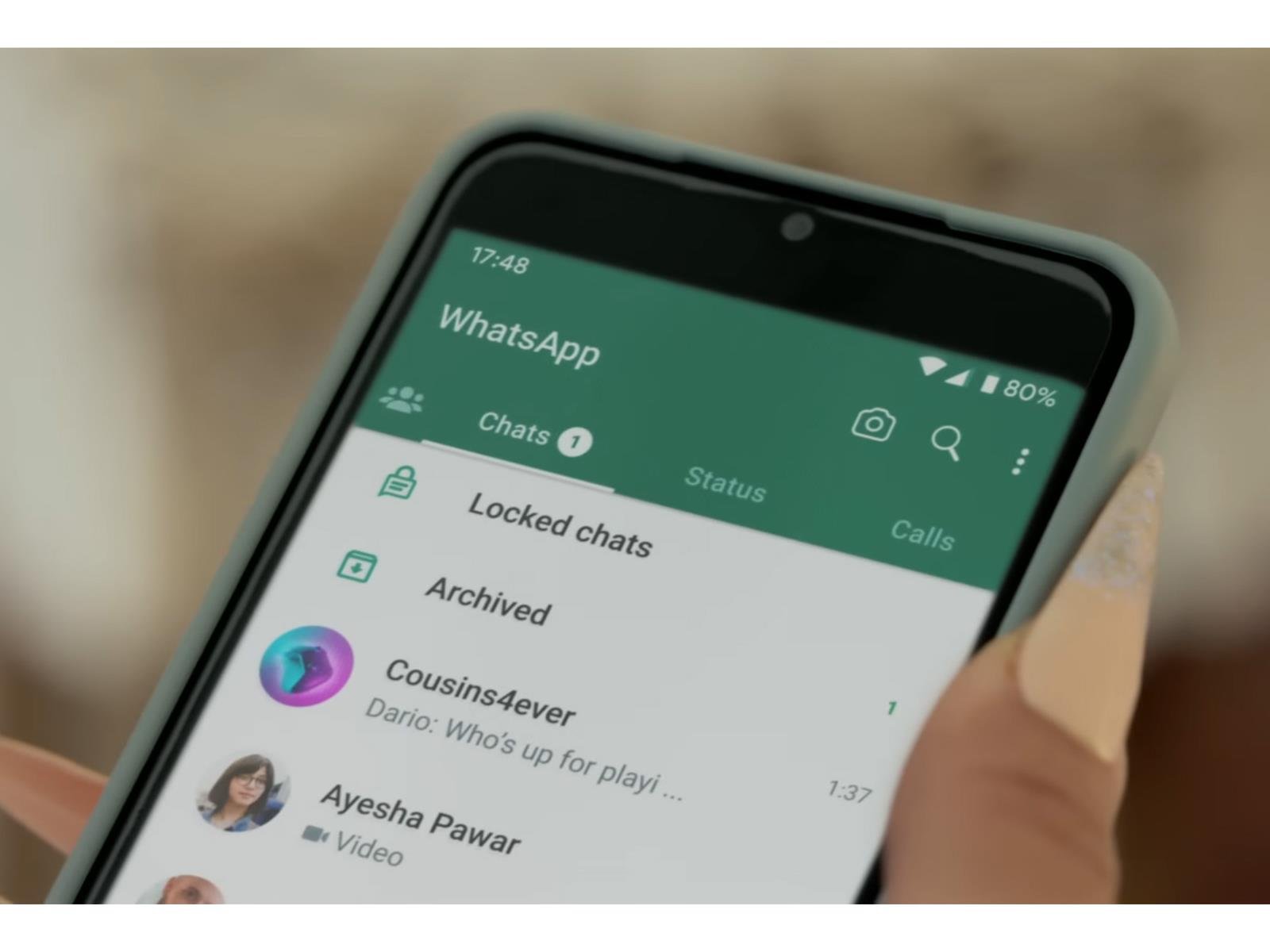
WhatsApp Chats Backed Up To Google Drive Will Soon Count Towards Your Storage Cap

WhatsApp Chats Backed Up To Google Drive Will Soon Count Towards Your Storage Cap
WhatsApp is one of the most popular communication platforms in the world, and it reached that lofty position before it even had a backup solution. Beginning in 2015, the Facebook-owned app added support for Google Drive backup and restore. Google and WhatsApp inked a deal that ensured those backups would not count against the Drive storage

Source: Hot Hardware – WhatsApp Chats Backed Up To Google Drive Will Soon Count Towards Your Storage Cap

Security Audit Reveals Major Vulnerability In A Popular WordPress Plugin, Update ASAP

Security Audit Reveals Major Vulnerability In A Popular WordPress Plugin, Update ASAP
WP Fastest Cache, a WordPress plugin currently in use by over 1 million users that assists in more efficiently delivering their websites, is addressing a security issue with its 1.2.2 release. This update addresses an SQL injection vulnerability found during an internal review by the WPScan team. The vulnerability made it possible for an unauthenticated

Source: Hot Hardware – Security Audit Reveals Major Vulnerability In A Popular WordPress Plugin, Update ASAP

Framework 13 With AMD Ryzen 7040 Series Makes For A Great Linux Laptop

For those in the market for an AMD Ryzen 7040 series (Zen 4) laptop, the Framework 13 laptop is a great option for those wanting a Linux-friendly device and is a rare breed in being a completely upgradeable laptop similar to Framework’s Intel laptop models. I’ve been testing out the Framework Laptop 13 the past month and after a BIOS update has been working out wonderfully on Linux.

Source: Phoronix – Framework 13 With AMD Ryzen 7040 Series Makes For A Great Linux Laptop

Accused Pelosi Hammer Attacker Confirms In Court He Was A Gamergater

On November 14, the man accused of a 2022 hammer attack on former U.S. House Speaker Nancy Pelosi’s husband pleaded not guilty, apologized in court for his actions, and explained that Gamergate first exposed him to right-wing conspiracies.

Read more…


Source: Kotaku – Accused Pelosi Hammer Attacker Confirms In Court He Was A Gamergater