
If you need to format a USB flash drive, here’s how it’s done on all three major operating systems.
Monthly Archives: February 2025
Fingertip Vacuum Allows You To Eat Dusty Snacks Without Touching Them
The brainchild of Matty from Unnecessary Inventions, the Snackuum is anything but. Consisting of a small wrist-mounted vacuum and a suck-tube extending to the tip of your index finger, you can use it to pick up and eat cheese puffs and other dusty snacks without turning your fingers orange. Me? I’m a Cool Ranch Doritos guy, but I don’t mind my fingers getting dusted with flavor. Do I lick it off? No — I carefully scrape it off and add it to the ball I’ve been collecting. When it’s the size of a hush puppy I’m going to eat it, and that day will be glorious.
Cat DJ Scratches Record On Turntable
This is a video of black cat Odo (who’s just an F and R short of being a Hobbit, but still eight members short of a ring fellowship) scratching a record on a turntable like a DJ. Honestly, his performance was actually better than some I’ve paid to see. It’s crazy to think about how much money I’ve spent being disappointed. Pretty much all of it, except what I’ve spent on food. And not all food either, I’ve paid for and eaten some real sh1t too.
Italian media groups file criminal complaint over the WhatsApp hack on journalists
The fallout continues from the recent WhatsApp hacking campaign (by a still-unconfirmed entity) that targeted nearly 100 journalists and activists. Bloomberg reported on Wednesday that a collection of Italian media groups has filed a criminal complaint with the Rome Public Prosecutor’s Office. They hope to discover who installed the zero-click spyware, which was made by the Israeli-founded Paragon Solutions.
According to Bloomberg, the complaint describes the spyware as an “intolerable intrusion into the personal and professional dimension of journalists,” exposing them and their sources “to enormous and still persistent risks for their individual safety.” It alleges that those responsible violated Italy’s laws banning the “illicit installation” of eavesdropping equipment.
WhatsApp said it reached out privately to notify the victims of the hack, which reportedly took place in December and targeted users across Europe. Three Italian victims have come forward, including Francesco Cancellato (a journalist and head of Fanpage.it) and activists Beppe Caccia and Luca Casarini. The latter two focus on charity with the group Mediterranea Saving Humans.
WhatsApp said the zero-click hack used malicious PDFs sent to groups on the platform. The company has since released a fix to prevent future uses of the exploit.
ANDREAS SOLARO via Getty Images
The scandal is putting pressure on Italian Prime Minister Giorgia Meloni and her far-right Brothers of Italy party. Earlier this month, the government confirmed that at least seven Italian phones were involved in the campaign and that its National Cybersecurity Agency was investigating. Arturo Di Corinto, a spokesman for the agency, told Bloomberg this week that the investigation was ongoing.
The Italian government has denied involvement in the hacks, but speculation abounds. Last week, Cabinet Minister Luca Ciriani confirmed in parliament that the government had a long-standing contract with Paragon to assist with intelligence and national security-related issues. However, he insisted the law was “rigorously respected.”
The Guardian reported that Paragon recently suspended a contract with Italy after the spyware attack became public. However, Ciriani said the intelligence services contract with Paragon is still active, which suggests there was a second agreement. Indeed, Israel’s Haaretz reported that Paragon had two contracts with Italy to use its military-grade Graphite software, which WhatsApp has said was used to infect the victims’ devices.
Paragon, essentially a professional spyware company, has a policy of only doing business with democratic governments. It recently entered into a controversial $2 million contract with the US Immigration and Customs Enforcement (ICE) department. Paragon was acquired in December by American private equity company AE Industrial Partners. The company hasn’t yet commented on the hacking.
This article originally appeared on Engadget at https://www.engadget.com/cybersecurity/italian-media-groups-file-criminal-complaint-over-the-whatsapp-hack-on-journalists-203150860.html?src=rss
You Can Now Hang Luke Skywalker’s Star Wars Medal Around Your Own Neck

If you have a spare $300,000 to $600,000, that is—and it doesn’t include any help from Princess Leia.
The iPhone 16e’s lack of MagSafe doesn’t make sense
The iPhone 16e, Apple’s replacement for the iPhone SE, has plenty of features that make it a good deal, from its A18 chip to the fact that it actually comes with an OLED screen. But one glaring omission in its spec sheet makes no sense: Why doesn’t this $599 phone have MagSafe?
Despite looking a lot like an iPhone 14, and using components that are similar to the iPhone 16, the iPhone 16e doesn’t support MagSafe or fast wireless charging. Apple expects iPhone 16e owners to be happy with the same wireless charging speeds as an iPhone SE released in 2022, and the slight advantage of using a USB-C port rather than a Lighting port.
The iPhone 16e’s missing MagSafe feels particularly strange because the feature has been a given for years at this point. Apple introduced MagSafe to its smartphones with the iPhone 12 as a magnetic accessory and charging standard, and has included it in every phone since. MagSafe borrows the name of the magnetic connectors on Apple’s laptops, but with some key differences. MagSafe on an iPhone means you have strong built-in magnets that let your phone attaches to cases, mounts, wallets and stands, without any extra fiddly pieces. When you charge over MagSafe, you also get faster charging speeds, bumping things from 7.5W charging to up to 25W charging with the right charging brick.
Chris Velazco for Engadget
More importantly, using magnets to directly guide a charger to charging coils largely eliminates the possibility of a phone being on a charger but not actually getting charged. It’s likely one of the main reasons why MagSafe was adopted into the wider Qi2 wireless charging standard — it just makes the whole thing a lot more convenient.
That doesn’t really explain why Apple would leave it out of the iPhone 16e, though. The company’s definition of what makes a “Pro” feature is always in flux, and it will often will leave features or components out to justify a lower price. But Apple and its partners likely sell a lot of MagSafe accessories, doesn’t Apple want to sell those to iPhone 16e owners, too?
The interesting wrinkle in all of this is Qi2, which has been available for phone makers to use since 2023, but hasn’t seen widespread adoption outside of Apple’s phones. Samsung, a company that should have more than enough money to work Qi2 into its flagships, instead offers a case you can buy if you want to use Qi2 charging on the Galaxy S25. Other Android makers are no better: you won’t find Qi2 on the Pixel 9, Motorola Razr+ or Galaxy Z Flip and Fold 6. It’s possible Qi2 or MagSafe is more expensive (or difficult) to include than it appears, and Apple has been “generous” all this time. That might make the decision to not support the standard make more sense. But that doesn’t change the fact that the iPhone 16e’s lack of MagSafe is very annoying.
This article originally appeared on Engadget at https://www.engadget.com/mobile/smartphones/the-iphone-16es-lack-of-magsafe-doesnt-make-sense-202101406.html?src=rss
[$] Extending time slices for user-space locks
Steven Rostedt recently posted
a patch set that could help improve the performance of certain user-space
applications by giving the scheduler more context about when they are safe to
interrupt. The patch set lets programs request a small grace window
before they can be interrupted so that they can relinquish any locks, decreasing the
amount of time that other threads have to spend waiting. Rostedt shared
performance numbers suggesting that the patch might cut the amount of time spent
acquiring locks in half for some programs — although, since his test was
specifically tuned for this case, real-world projects should expect a somewhat
less dramatic improvement. The change received some pushback from scheduler
maintainer Peter Zijlstra, who objected to the patch set’s approach.
Trump admin. fires USDA staff working on bird flu, immediately backpedals
Over the weekend, the Trump administration fired several frontline responders to the ongoing H5N1 bird flu outbreak—then quickly backpedaled, rescinding those terminations and attempting to reinstate the critical staff.
The termination letters went out to employees at the US Department of Agriculture, one of the agencies leading the federal response to the outbreak that continues to plague US dairy farms and ravage poultry operations, affecting over 160 million birds and sending egg prices soaring. As the virus continues to spread, infectious disease experts fear it could evolve to spread among humans and cause more severe disease. So far, the Centers for Disease Control and Prevention has documented 68 cases in humans, one of which was fatal.
Prior to Trump taking office, health experts had criticized the country’s response to H5N1 for lack of transparency at times, sluggishness, inadequate testing, and its inability to halt transmission among dairy farms, which was once considered containable. To date, 972 herds across 17 states have been infected since last March, including 36 herds in the last 30 days.
President Trump, NYC’s Biggest Hater, Says He Is Nixing Congestion Pricing

Early results from congestion pricing have been positive, but President Trump is no fan of the liberal city and attacking congestion pricing is red meat for his base.
Here’s Everything the iPhone 16e Can’t Do

The $600 iPhone 16e will get you Apple Intelligence, but you can forget about MagSafe charging.
US Army Soldier Pleads Guilty To AT&T and Verizon Hacks
Cameron John Wagenius pleaded guilty to hacking AT&T and Verizon and stealing a massive trove of phone records from the companies, according to court records filed on Wednesday. From a report: Wagenius, who was a U.S. Army soldier, pleaded guilty to two counts of “unlawful transfer of confidential phone records information” on an online forum and via an online communications platform.


According to a document filed by Wagenius’ lawyer, he faces a maximum fine of $250,000 and prison time of up to 10 years for each of the two counts. Wagenius was arrested and indicted last year. In January, U.S. prosecutors confirmed that the charges brought against Wagenius were linked to the indictment of Connor Moucka and John Binns, two alleged hackers whom the U.S. government accused of several data breaches against cloud computing services company Snowflake, which were among the worst hacks of 2024.
Read more of this story at Slashdot.
The best iPhones for 2025: Which model should you buy?
“Which iPhone should I buy?” It’s a question you might have heard many times over the years. Much of the time, the answer is simple: Get the best iPhone you can afford. If you’re happy with your current iPhone, meanwhile, don’t feel like you have to make a change at all. But if you’re ready to upgrade, allow us to help. We’ve reviewed just about every iPhone ever released, so we’ve picked through all nine models in Apple’s current smartphone lineup and highlighted the ones that should satisfy most people below.
Before we dive in, note that we’ve based our guide on the MSRPs of new, unlocked iPhones on Apple.com. If you can find a heavy discount from another trusted retailer or a good deal on a refurbished model, that could always change the value equation. With that disclaimer out of the way, here are the best iPhones you can buy as of early 2025.
Editor’s Note (2/19/25): Apple just announced the newest and most affordable iPhone, the $599 iPhone 16e. It replaces the old iPhone SE in the lineup and, thanks to its A18 chipset, it can take full advantage of Apple Intelligence features. At the moment, our current top picks are still available and still stand. We’ll update this guide once we’ve been able to fully review the iPhone 16e.
Table of contents
Best iPhones for 2025
The rest of Apple’s iPhone lineup in 2025
Billy Steele for Engadget
Apple iPhone 16 and iPhone 16 Plus
As noted above, the iPhone 16 and 16 Plus have made genuine improvements over last year’s models and generally feel more “Pro-like” than they have in years past. They also come in a range of vibrant colors. If the iPhone 16 Pro or 16 Pro Max are just too pricey, especially if you want extra storage space, they’re fantastic compromises. Still, they are compromises. If you can afford it, the Pro should hold up a bit better over time.
Apple iPhone 14 and iPhone 14 Plus
The iPhone 14 and 14 Plus are fine phones in a vacuum, but we just don’t have the stomach to recommend a $600 or $700 phone without USB-C in late 2024. You lose out on the Dynamic Island and Apple Intelligence as well. The 14 Plus may be justifiable if you just want the cheapest large-screen iPhone out there, but most should look for a trade-in or refurbished deal on an iPhone 15 or, if your budget allows it, iPhone 16 instead.
Apple iPhone SE (3rd gen)
The iPhone SE (3rd gen) isn’t just the cheapest iPhone that Apple sells, it’s also the smallest and lightest. It retains the look and feel of the iPhone 8, which was released all the way back in 2017, but some may appreciate the older design and tactile Home button. The SE uses the same A15 Bionic chip as the old iPhone 13, but it still runs fine for everyday tasks. It might be OK if you just want the cheapest route into iOS or you’re buying a first iPhone for your kids. For most, though, the SE’s small display, single-rear-camera setup and limited memory and storage are tough to accept in 2024. It also lacks ultra-wideband (UWB), so it’s not as adept at finding nearby AirTags. Bloomberg’s Mark Gurman has reported that Apple could release a new iPhone SE by early 2025, so anyone in need of a true budget iPhone should try to hold out for a little longer.
Recent updates
January 2025: We’ve made a few minor edits for clarity and ensured our recommendations are still up to date.
December 2024: We’ve made a few edits to reflect the release of Apple Intelligence, though our picks remain the same.
This article originally appeared on Engadget at https://www.engadget.com/mobile/smartphones/best-iphone-160012979.html?src=rss
This Apple Watch Series 9 Just Dropped to Its Lowest Price
We may earn a commission from links on this page. Deal pricing and availability subject to change after time of publication.
Like most tech products, the Apple Watch has a basic model (the SE), a mid-tier model (the Series 10), and a high-end version (the Ultra 2). But the older Series 9 offers a sweet spot for those looking for a budget mid-tier option. The Series 9 offers many high-end features at a price that’s closer to the price of the SE than the Ultra 2, and cheaper than the newer Series 10. Right now, the 45mm Apple Watch Series 9 is $370.99 for the GPS and Wifi version (originally $529), currently matching its lowest price since its release, according to price-checking tools.
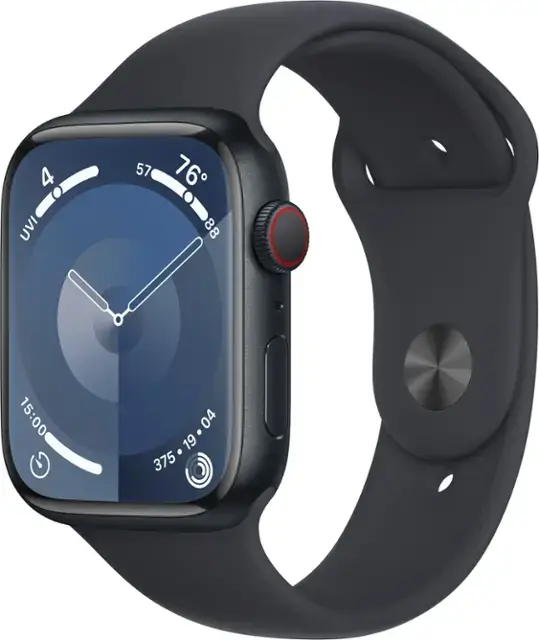
If you’re not sure whether the Series 9 is a better choice over the Ultra 2 or the Series 10, you can read our full breakdowns. Essentially, the Series 9 is a smaller watch with fewer features for outdoor enthusiasts than the Ultra 2. But if you want to save yourself a few hundred dollars and don’t need a brighter screen or a more rugged design, the Series 9 is a great choice. PCMag gave the Series 9 an “outstanding” review for its powerful processor, the in-demand double-tap gesture for hands-free operation, access to Siri, and its bright display.
You can expect up to 18 hours of battery life (or 36 hours in low power mode), sleep tracking, mental health and vision health tools, additional cycling and compass features, and more. This GPS and cellular version means you can access your phone without the need of a wifi network. In other words, you’ll be able to go on a run without your iPhone, play music on your AirPods, and take calls.
Right now, only the bigger 45mm sized screen is available for this deal, but the band size fits people with wrists from 140mm to 190mm.
Twitch community guideline violations will now disappear from accounts after a set time
Twitch has rolled out a number of changes to its violation enforcement system. The biggest change is that now infractions will disappear from an account “after a set amount of time.” This is great news for long-time creators, as minor violations stacked. This led to folks getting suspended as these smaller infractions piled up.
The platform says that most minor infractions, like cheating in an online game, will expire after 90 days. More serious violations, like participating in hateful conduct, will remain on an account for one to two years. The worst behavior will still result in an immediate suspension. Also, if a user is indefinitely suspended due to the accumulation of multiple violations, they can apply for reinstatement after six months.
Twitch
This isn’t any type of “get out of jail free” card. Twitch is also upping the consequences for repeatedly violating the rules in the same policy category. Each time a similar infraction occurs, the length of a suspension will increase. This will be true even if the severity of the offense hasn’t gone up. The platform says this new rule is to help “people understand the importance of adhering to our Community Guidelines without needing to resort to an indefinite suspension.”
Finally, Twitch is making good on its promise for increased transparency regarding policy violations. For most policy violations, users will now get a detailed email regarding the reasoning behind any suspension decision. This data will soon include specific chat messages or stream snippets. The information will also reside in the Appeals Portal. This starts with chat messages, with video clips coming later on.
Most of these changes are rolling out right now. Twitch recently added something called Enforcement Notes that inform users if certain trends violate one of its policies. It also publishes notes to alleviate “widespread community confusion” and alert folks as to which behaviors “are and aren’t out of bounds.”
This article originally appeared on Engadget at https://www.engadget.com/social-media/twitch-community-guideline-violations-will-now-disappear-from-accounts-after-a-set-time-195122034.html?src=rss
iPhone 16e Arrives With USB-C, Face ID, A18 And Apple’s First 5G Modem
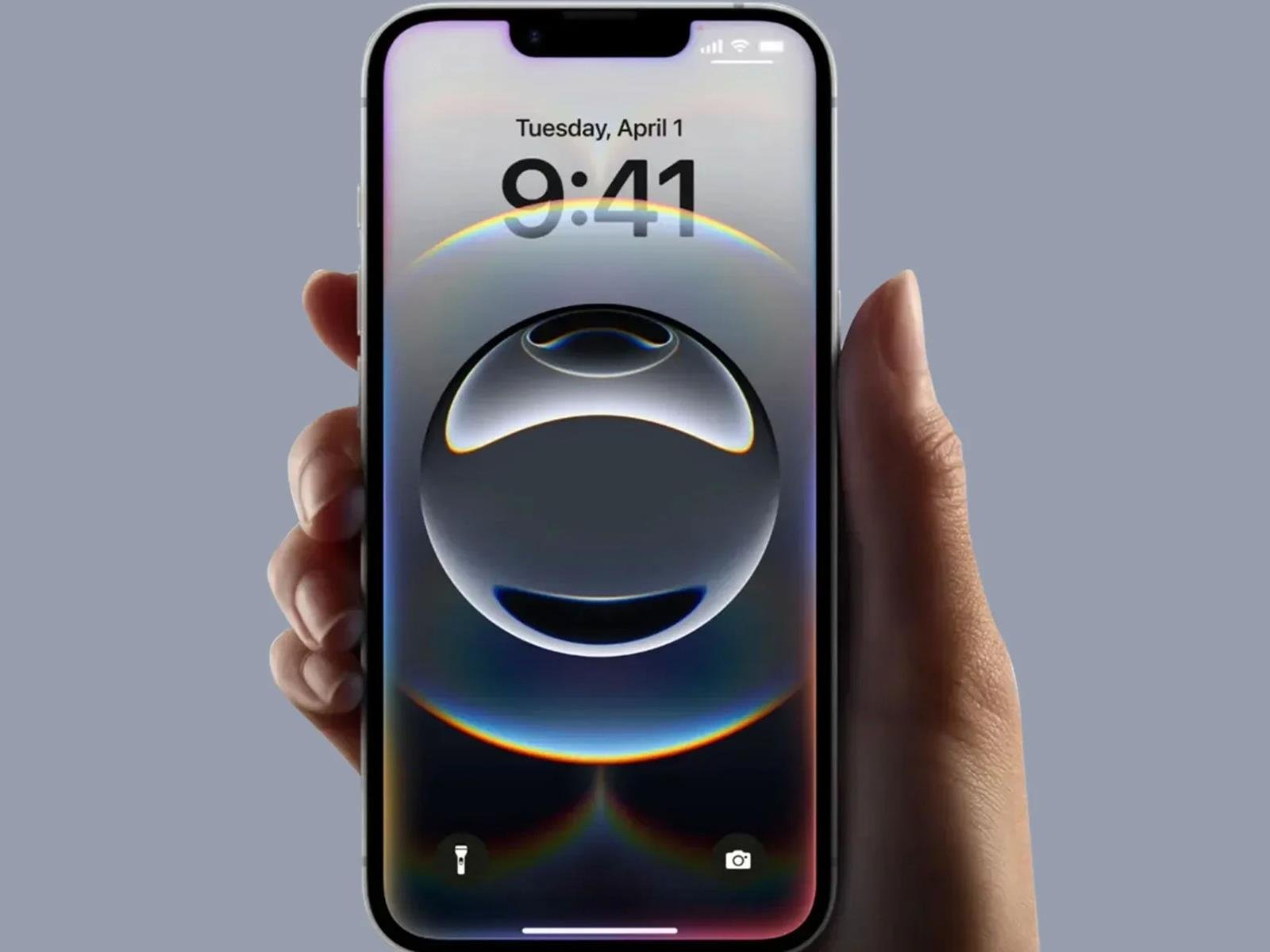
At last, we have a new iPhone SE, except it’s not called the SE anymore. Apple has incorporated its latest fourth gen SE phone into the iPhone 16 lineup as the iPhone 16e. The name change is a smart one—with SE sales struggling to keep up with its flagship stablemates, slapping “iPhone 16” (in this case) onto the moniker may help boost the
NVIDIA vs AMD on Linux: Which GPU Should You Choose?
Should you go with NVIDIA or AMD on Linux? Find the answer by understanding the pros and cons of each, and make an informed decision.
Scientists unlock vital clue to strange quirk of static electricity
Scientists can now explain the prevailing unpredictability of contact electrification, unveiling order from what has long been considered chaos.
Static electricity—specifically the triboelectric effect, aka contact electrification—is ubiquitous in our daily lives, found in such things as a balloon rubbed against one’s hair or styrofoam packing peanuts sticking to a cat’s fur (as well as human skin, glass tabletops, and just about anywhere you don’t want packing peanuts to be). The most basic physics is well understood, but long-standing mysteries remain, most notably how different materials exchange positive and negative charges—sometimes ordering themselves into a predictable series, but sometimes appearing completely random.
Now scientists at the Institute of Science and Technology Austria (ISTA) have identified a critical factor explaining that inherent unpredictability: It’s the contact history of given materials that controls how they exchange charges in contact electrification. They described their findings in a new paper published in the journal Nature.
Johan Carl Wilcke published the first so-called “triboelectric series” in 1757 to describe the tendency of different materials to self-order based on how they develop a positive or negative charge. A material toward the bottom of the list, like hair, will acquire a more negative charge when it comes into contact with a material near the top of the list, like a rubber balloon.
10 Life Lessons From Twin Peaks Season 1

As Twin Peaks Day approaches, the groundbreaking TV series from the late, great David Lynch still resonates.
NVIDIA Confirms GeForce RTX 50 GPUs Don’t Support 32-Bit CUDA And PhysX

The beauty of the PC platform is its backward compatibility. The whole reason that x86 and Windows have survived as long as they have is because they have largely preserved compatibility with old software. “Nuts to that,” says NVIDIA, who has officially ended support for GPU-accelerated PhysX and CUDA on 32-bit applications with the release
Call Of Duty LocksTMNT Characters Behind $80 Paywall
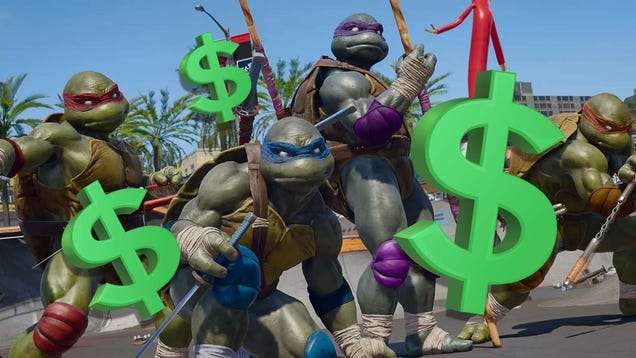
Activision is bringing the famous Teenage Mutant Ninja Turtles to Call of Duty Warzone and Black Ops 6. Players will be able to buy skins based on each of the four amphibian crime fighters starting Thursday. But if you want all four of them, you’ll need to shell out $80.