You can now access Apple’s official diagnostics tool online for DIY repairs

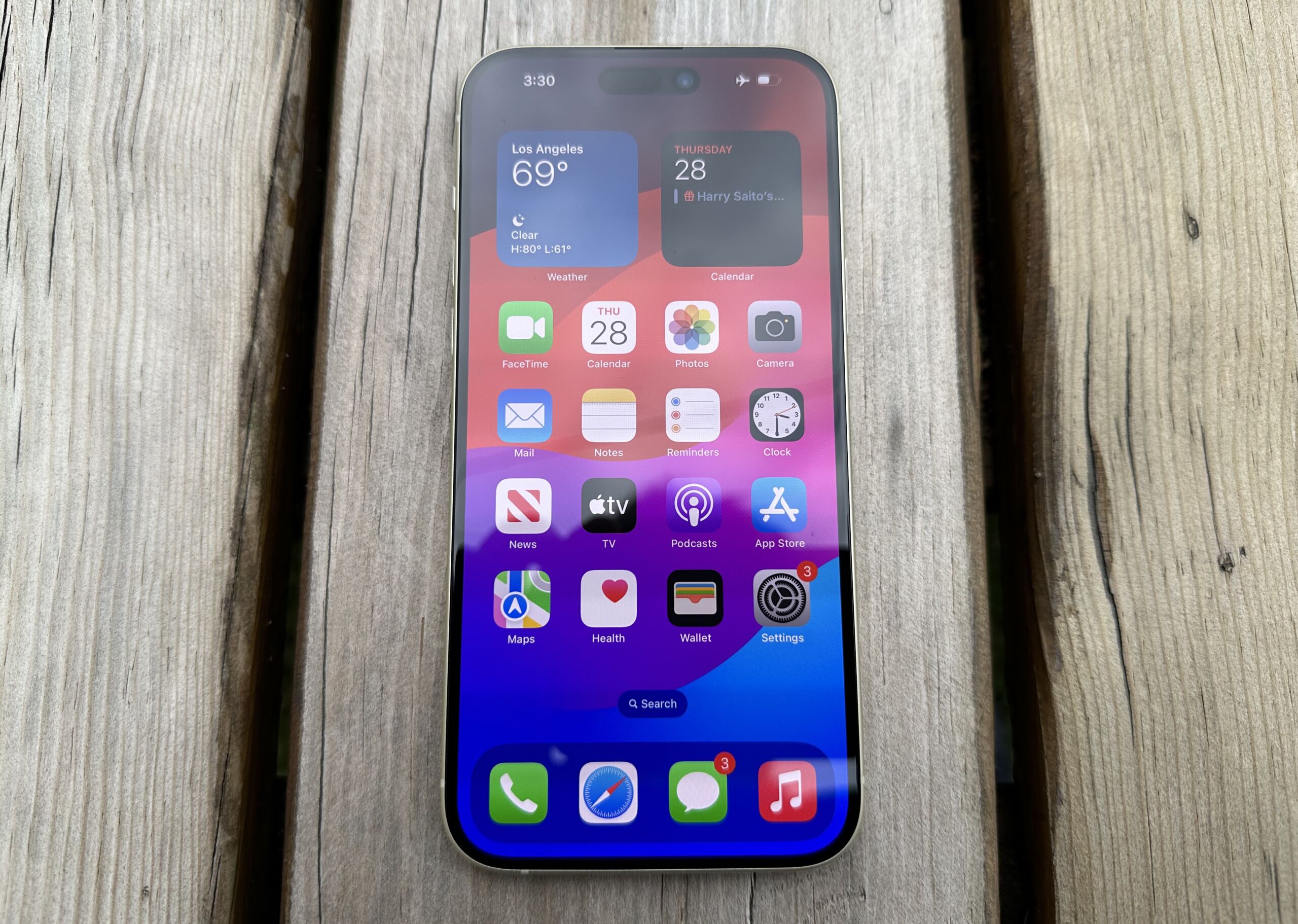
The front of the iPhone 15 Plus, with the Dynamic Island

Enlarge / The iPhone 15 is part of Apple’s self-repair program now. (credit: Samuel Axon)

Apple today expanded the Self Service Repair program it launched in April to include access to Apple’s diagnostics tool online and the iPhone 15 series and M2 Macs.

The online tool, Apple said in today’s announcement, provides “the same ability as Apple Authorized Service Providers and Independent Repair Providers to test devices for optimal part functionality and performance, as well as identify which parts may need repair.” The troubleshooting tool is only available in the US and will hit Europe in 2024, according to Apple.

Upon visiting the tool’s website, you’ll be prompted to put your device in diagnostic mode before entering the device’s serial number. Then, you’ll have access to a diagnostic suite, including things like a mobile resource inspector for checking software and validating components’ presence, testing for audio output and “display pixel anomalies,” and tests for cameras and Face ID.

Read 7 remaining paragraphs | Comments


Source: Ars Technica – You can now access Apple’s official diagnostics tool online for DIY repairs

Asus Plans to Debut the 'Transcendent' ROG Phone 8 at CES 2024

Unfortunately, I still have to lurk on X, formerly known as Twitter, to see when companies tease upcoming releases. As it turns out, Asus is still making its ROG—the Republic of Gamers—smartphone. It runs Android, and it will probably have some beefy innards. But all we know so far is that it’ll be revealed at CES…

Read more…


Source: Gizmodo – Asus Plans to Debut the ‘Transcendent’ ROG Phone 8 at CES 2024

Take These Three Steps After a Bad Performance Review at Work

When you have a poor evaluation at work, it feels just terrible. It’s like getting in trouble at school—except everyone involved is an adult and the stakes are higher, since your job is tied to your financial security, health insurance, and sense of self. You might walk out of the meeting feeling totally disoriented, which is fine, but once you regain your footing, there are critical next steps you can and should take. 

First assess the performance review

Before you do anything, go over the review that just took place. Was it actually “bad” or are you just interpreting it as bad? During reviews, you should try to take notes or ask for a written summary afterward, so you have something objective to look back on. There’s a chance your evaluation wasn’t as dire as you think. 

Then again, there’s a chance it was bad and it was just poorly communicated. HR pro Tim Sackett told me that a bad review might not always be obvious “because most managers are terrible at giving direct feedback and making it clear. Most managers are conflict-avoidant and while they might want to deliver a very critical review of your performance, it often comes across like you’re not that bad.” 

So as much as it sucks, you really want your manager to be direct with you. Anne N., a university employee, recalls that during a bad performance review she wasn’t expecting at all, her supervisor started off by saying, “Don’t freak out,” which was her “first initial inkling that it was going to be bad.” It’s better to know, absolutely, that the review is bad, so if you have an “inkling,” ask directly. 

Reach back out in writing after the review

You’ll need to set up a plan to right the ship, but don’t reach out that same day, as your emotions are going to be high. That said, Sackett cautions, “There’s no crying at work”: Whether you’re angry or sad, don’t be visibly distressed. In the moments after the review, take a walk or a little break; “find a safe space where you can cry and scream and do whatever you need to do without anyone else seeing.” Try to see the positive, even if it’s hard. Sackett recommends thinking of bad feedback as “a gift,” since “someone cared enough about you to warn you before you get fired.” 

Sackett recommends waiting 24 to 48 hours for the “sting to wear off” before you reach back out to your manager, but when you do, you should ask for a specific plan to improve your performance. Getting your correspondence in writing is crucial: You need the plan outlined with as much detail as possible so you can point back to it in your next meeting. 

Anne’s supervisor gave her feedback during the meeting, advising her on how to make her classes more collaborative: “We agreed I would begin incorporating those ideas to my class and she’d come review one. After she came back to watch my class, she said it was much better.” 

Continue communicating throughout the process of fixing the shortcomings, too. It might feel awkward to send Slack updates announcing your various moves, but your manager needs to see that you’re committed to course correction and are, in fact, taking action. If you’re not comfortable sending updates on your progress, try asking questions like, “I’m sending the new report by EOD, but can you confirm if it should be sent to everyone on the team or just to you first?” That lets them know you’re doing the thing you’re supposed to be doing, but opens a more natural dialogue. If you use an office-wide calendar, add blocks to yours that show what you’re doing at a given time, to make your efficiency visible.

Prepare carefully for the next review

In addition to addressing the specific, detailed issues the manager puts in writing, you have to do a little more before your next review. First, put your pride aside. Sackett says that “what turns into a death sentence for most people is their unwillingness to internalize the review, take corrective action, and not be a victim.” He says most managers desperately want to help you be the best at your job that you can be, but that won’t be possible if you’re too embarrassed after the review and just shut down. It can be true that you weren’t doing a great job at something specific. It doesn’t mean anything about who you are as a person. You can fix the issues and move forward. 

Do some self reflection, too. First, listen to your gut. Did this review make you feel inadequate? Did it make you want to push harder for success? Did it make you want to quit the job altogether? It’s possible that this is a wake-up call about the trajectory of your career, but you’ll only know that if you really think hard about it. Ask friends and coworkers, too. Sackett says coworkers are particularly helpful here: “If they’re giving you advice about your own performance and not about how to deal with your manager, they’re telling you, ‘It’s you and your responsibility to correct it.’” They’re the people on the frontlines with you and they have pretty good insight into how you do your job and how it affects the team, so make sure you check in with them for feedback regularly. 

“At the time, it made me feel not great but I didn’t feel powerless,” says Anne. “I felt like I genuinely valued [my manager’s] feedback. It’s hard to really review your own teaching so I thought it was helpful.” 

You’re allowed to feel bad, says Sackett, and it’s normal to feel a little down about the whole thing. Going into the next one, though, try to prepare yourself and be more ready for critical feedback. Better yet, come up with things you can improve on and offer those up in the meeting before your supervisor has a chance. “Many times,” says Sackett, “they’ll say you’re being too hard on yourself and look at you in a much more positive light.” 


Source: LifeHacker – Take These Three Steps After a Bad Performance Review at Work

European Union Lawmakers Agree To New Rules That Bolster Gig Worker Rights

An anonymous reader quotes a report from TechCrunch: Some two years of talking about gig worker rights later and European Union lawmakers have finally reached a deal on the final shape of the Platform Worker Directive. […] The Commission presented its original plan to reform labor laws to boost protections for platform workers back in December 2021, setting out a presumption of employment for workers in a bid to flip the odds on gig economy exploitation. But the proposal proved contentious, with heavy industry lobbying from tech platforms such as Uber pushing for gig workers to be carved out of Europe’s employment protections. There were also divisions between Member States over how much worker protection vs platform shielding they were prepared to commit to. But after a final trilogue, lasting more than 12 hours, a provisional agreement has been clinched.

The deal that’s been provisionally agreed means a presumption of an employment relationship between a gig worker and a platform will be triggered when two out of a list of five “indicators of control or direction are present,” as the parliament’s press release puts it. “This list can be expanded by Member States. The presumption can be triggered by the worker, by their representatives, and by the competent authorities on their own initiative. This presumption can be rebutted if the platform proves that the contractual relationship is not an employment relationship,” it adds. The agreement also contains transparency provisions that will require platforms to provide information to individuals performing platform work (and to their representatives) about how the algorithms that manage them work; and how their behavior affects decisions taken by automated systems. […] The provisionally agreed new rules will also ban platforms from taking “certain important decisions,” such as dismissals or decisions to suspend an account, without human oversight.

Per the parliament, the agreed text also ensures “more human oversight on the decisions of systems that directly affect the persons performing platform work”; and obliges platforms to “assess the impact of decisions taken or supported by automated monitoring and decision-making systems on working conditions, health and safety and fundamental rights”. So conducting data protection impact assessments looks set to be a hard requirement for complying with the new law. Another prohibition that’s been agreed is a ban on platforms from processing certain types of personal data of workers, including personal beliefs, private exchanges with colleagues, or when a worker is not at work — with the Directive billed as beefing up data protection rights for platform workers.

Other provisions in the provisional deal include a requirement for platforms to share information on self-employed workers in their employ with competent national authorities and representatives of those performing platform work, such as trade unions. Measures to prevent platforms from circumventing the rules by using intermediaries has also been agreement — a practice that’s stepped up considerably in Spain since the country introduced its own labor reform, back in 2021, with the aim of forcing platforms to hire delivery workers. Some key details of exactly what’s been agreed remain under wraps — and full visibility and analysis of the ramifications will likely have to wait for a consolidated text to emerge in the coming weeks/months. […] The final text still needs to be voted on by the Council and Parliament before it can be adopted as pan-EU law. What implementation period has been agreed also isn’t yet clear. But today’s political deal signals the train has now left the station.

Read more of this story at Slashdot.


Source: Slashdot – European Union Lawmakers Agree To New Rules That Bolster Gig Worker Rights

Effects of Falcon Heavy launch delay could ripple to downstream missions

A SpaceX Falcon Heavy rocket is seen outside the company's hangar at Kennedy Space Center, Florida.

A SpaceX Falcon Heavy rocket is seen outside the company’s hangar at Kennedy Space Center, Florida. (credit: SpaceX)

SpaceX and the US Space Force thought they were ready to launch the military’s mysterious X-37B spaceplane this week, but ground teams in Florida need to roll the Falcon Heavy rocket back into its hangar for servicing.

This is expected to push back the launch until at least late December, perhaps longer. SpaceX and Space Force officials have not divulged details about the problems causing the delay.

SpaceX called off a launch attempt Monday night at NASA’s Kennedy Space Center in Florida to resolve a problem with a ground system. A senior Space Force official told Ars on Wednesday that additional issues will cause an additional delay in the launch.

Read 16 remaining paragraphs | Comments


Source: Ars Technica – Effects of Falcon Heavy launch delay could ripple to downstream missions

Hasbro's New X-Men '97 Figures Hail the Goblin Queen

As we get closer and closer to the arrival of X-Men ‘97, the rallying cry of “To me, my X-Men merchandise!” just gets louder and louder. Earlier this week we saw Lego get in on the X-mania with a new set, but now it’s Hasbro’s turn with its latest wave inspired by the cartoon series.

Read more…


Source: Gizmodo – Hasbro’s New X-Men ’97 Figures Hail the Goblin Queen

You're Going to Want to Use Apple's New Stolen Device Protection Feature

Privacy and security are a huge element of Apple’s business model. When you buy an iPhone, Apple wants you to know that your iMessages are encrypted, Face ID is secure, and you have features to block trackers while browsing the web.

While it’s true that Apple has plenty of excellent features to keep your data safe and secure, they’re far from perfect. Back in February, a Wall Street Journal investigation found that iPhone thieves were able to reset their victims’ iCloud passwords from the stolen device, which allows them both take over the iPhone they stole and the Apple ID attached to it. This is possible if the thief knows your iPhone passcode, something that might be easy to learn if they spy over your shoulder as you type it in. While there are many iCloud features that require your Apple ID password to gain access to, resetting your iCloud password only takes your iPhone’s passcode to get started. As long as the thief spies your digits before the theft, they can break into your phone and take over your digital life.

Back when this report broke, we recommended certain workarounds to protect yourself, such as using an alphanumeric password on your iPhone, not punching in your password when anyone was around, and avoiding keeping financial information available on your unlocked device. However, workarounds are imperfect. Luckily, the first step towards a solution just arrived in the iOS 17.3 developer beta.

Stolen Device Protection can prevent thieves from taking over your iPhone

In the new iOS 17.3 developer beta, aside from bringing back collaborative playlists in Apple Music (thank god), iOS 17.3 introduces a new “Stolen Device Protection” feature. When enabled, Face ID or Touch ID (if your iPhone has a Home button) will be required when accessing passwords and passkeys, making purchases with saved cards in Safari, applying for an Apple Card, viewing your digital Apple Card, erasing all content and settings, taking some Apple Cash and Savings actions in Wallet, disabling Lost Mode, and using your iPhone to set up a new device.

In addition, certain features will require Face ID or Touch ID and come with a one-hour delay when you try to enable them. That includes changing your Apple ID password, updating certain Apple ID account security settings, changing your iPhone passcode, adjusting Face ID or Touch ID settings, turning off Find My, and turning off Stolen Device Protection itself.

In all cases, you won’t have the option to punch in your passcode if Face ID or Touch ID fails. You will, presumably, have the option to try again if your scan doesn’t work (say you forgot to take off your sunglasses) but bad actors will find their efforts to be in vain.

How to enable Stolen Device Protection on iPhone

To get started, you’ll need to be running iOS 17.3 or newer. Once updated, open Settings > Face ID & Passcode > Stolen Device Protection. If you’re on the beta, you may see a pop-up inviting you to test the feature, but if you are running the public version of iOS 17.3 Apple will release in the future, you won’t see this.

If you don’t want the feature on going forward, you can return to this page to disable it. However, remember there’s a one-hour delay that kicks in when you try to turn the feature off.


Source: LifeHacker – You’re Going to Want to Use Apple’s New Stolen Device Protection Feature

GM Says It's Ditching Apple CarPlay, Android Auto For Your Safety

Earlier this year, General Motors announced plans to phase out Apple CarPlay and Android Auto, shifting instead to built-in infotainment systems developed with Google. Now, the company has explained why it made that decision to MotorTrend: Tim Babbitt, GM’s head of product for infotainment, gave MT a better explanation at a press event for the new Chevrolet Blazer EV, the flagship vehicle in the no CarPlay or Android Auto strategy. According to him, there’s an important factor that didn’t make it into the fact sheet: safety. Specifically, he cited driver distraction caused by cell phone usage behind the wheel. According to Babbitt, CarPlay and Android Auto have stability issues that manifest themselves as bad connections, poor rendering, slow responses, and dropped connections. And when CarPlay and Android Auto have issues, drivers pick up their phones again, taking their eyes off the road and totally defeating the purpose of these phone-mirroring programs. Solving those issues can sometimes be beyond the control of the automaker. You can start to see GM’s frustration. Babbitt’s thesis is that if drivers were to do everything through the vehicle’s built-in systems, they’d be less likely to pick up their phones and therefore less distracted and safer behind the wheel. He admits, though, GM hasn’t tested this thesis in the lab or real world yet but believes it has potential, if customers go for it.

The issues Babbitt cited with CarPlay and Android Auto seem like they’d be mostly linked to using those programs wirelessly, and while he says that’s true, just plugging the phone into a USB data port doesn’t solve all the problems. Babbitt says even when using a physical connection, Android phones are prone to compatibility issues between the vehicle and all the various phone manufacturers running Android. iPhones, meanwhile, suffer from backwards compatibility issues that cause older iPhone models to have trouble running CarPlay consistently. He points to J.D. Power data that shows issues with CarPlay and Android Auto are common owner complaints, and that customers tend to blame the automaker rather than the phone manufacturer or phone software. In that way, eliminating CarPlay and Android Auto potentially relieves GM of a key customer complaint dragging down their perceived quality scores. After MotorTrend’s story was published, GM issued the following statement: “We wanted to reach out to clarify that comments about GM’s position on phone projection were misrepresented and to reinforce our valued partnerships with Apple and Google and each company’s commitment to driver safety. GM’s embedded infotainment strategy is driven by the benefits of having a system that allows for greater integration with the larger GM ecosystem and vehicles.”

Read more of this story at Slashdot.


Source: Slashdot – GM Says It’s Ditching Apple CarPlay, Android Auto For Your Safety

Finally, You Can Buy an Apple AirPods Pro USB-C Case Separately

The rumors are true. If you need to replace or switch to a USB-C charging case for your Apple AirPods Pro, you will no longer have to spend $250 on a new pair. Apple is finally selling its new USB-C AirPods Pro USB-C charging cases separately for $99 (first spotted by The Verge).

Read more…


Source: Gizmodo – Finally, You Can Buy an Apple AirPods Pro USB-C Case Separately

Trains were designed to break down after third-party repairs, hackers find

Dragon Sector uploaded a video to social media after discovering an "undocumented ‘unlock code’ which you could enter from the train driver’s panel" fixed "mysterious issues" impacting trains in Poland.

Enlarge / Dragon Sector uploaded a video to social media after discovering an “undocumented ‘unlock code’ which you could enter from the train driver’s panel” fixed “mysterious issues” impacting trains in Poland. (credit: Adam Haertle on YouTube)

An unusual right-to-repair drama is disrupting railroad travel in Poland despite efforts by hackers who helped repair trains that allegedly were designed to stop functioning when serviced by anyone but Newag, the train manufacturer.

Members of an ethical hacking group called Dragon Sector, including Sergiusz Bazański and Michał Kowalczyk, were called upon by a train repair shop, Serwis Pojazdów Szynowych (SPS), to analyze train software in June 2022. SPS was desperate to figure out what was causing “mysterious failures” that shut down several vehicles owned by Polish train operator the Lower Silesian Railway, Polish infrastructure trade publication Rynek Kolejowy reported. At that point, the shortage of trains had already become “a serious problem” for carriers and passengers, as fewer available cars meant shorter trains and reduced rider capacity, Rynek Kolejowy reported.

Dragon Sector spent two months analyzing the software, finding that “the manufacturer’s interference” led to “forced failures and to the fact that the trains did not start,” and concluding that bricking the trains “was a deliberate action on Newag’s part.”

Read 19 remaining paragraphs | Comments


Source: Ars Technica – Trains were designed to break down after third-party repairs, hackers find

Elon Musk Is Reportedly Launching a New University in Texas

The legions of Elon Musk stans who have long dreamed of following in the unhinged billionaire’s footsteps will soon have an opportunity to learn directly from the master. Or, rather, they’ll have an opportunity to attend a university set up by Musk. And learn science. Or something. Maybe.

Read more…


Source: Gizmodo – Elon Musk Is Reportedly Launching a New University in Texas

How Long an AirTag’s Battery Lasts (and How to Change It)

Apple’s AirTags are a useful device if you have a tendency to misplace things; the tool lets you track important things, such as luggage, keys, backpack, or even pets. Of course, any tracker is only as good as its battery: Once it loses power, it’s useless.

Can you check an AirTag’s battery level?

While an AirTags’ battery life is pretty long, there’s no clear way to check on its battery; you can’t check an AirTags’ battery life in percentages the way you can with smartphone or tablet. An AirTag’s battery life is, instead, a bit of a mystery.

How long do AirTags last?

According to Apple, you won’t run out of charge on your AirTags for about a year. When the battery is running low, you’ll receive a notification from the Find My app on your iPhone. You can also view this information in the Find My app by tapping the AirTag from the Items tab. The message simply reads: “Low Battery”—it offers no additional information. If the AirTag doesn’t have low battery, you won’t see any battery information at all.

How to change an AirTag’s battery

Apple uses a standard 3V CR2032 lithium coin battery that’s available at hardware stores and plenty of online retailers, so you won’t have to spend much time or money to find a replacement. Once you have the battery in hand, push the stainless steel side of the AirTag and rotate it counter-clockwise. This will open the cover. You can remove it, take out the old battery and replace it with the new one. The AirTag will play a sound to indicate the new battery is connected. You can then replace the cover and rotate it clockwise to close it.


You can pick up AirTags and replacement batteries from Amazon:


Source: LifeHacker – How Long an AirTag’s Battery Lasts (and How to Change It)

Hackers Hit With Legal Threats After They Fixed a 'Bricked' Polish Train

Three hackers in Poland were hired to fix the software of a broken train, and they were successful, but now the train company, Newag, is threatening to sue them, according to Polish outlet Rynek Kolejowy. The hackers allege that the trains were deliberately outfitted with software that would ensure they couldn’t…

Read more…


Source: io9 – Hackers Hit With Legal Threats After They Fixed a ‘Bricked’ Polish Train

[$] Logo and trademark issues for openSUSE

A contest for new logos
for the openSUSE project and for
four separate distributions of it,
Tumbleweed, Leap, Slowroll, and
Kalpa, has turned into a
bit of an uproar in that community. A vote
has been held on the candidates
and winners have been announced, but
some are questioning why there is a need to change the existing logo (the
“Geeko”
chameleon) at all. In addition, there are questions about whether the
new logo will be trademarked (as previous ones have been)—and how many
years that will take.

Source: LWN.net – [$] Logo and trademark issues for openSUSE

Fan-made Zelda: Link’s Awakening remake lets you zoom out to see the entire island

An anonymous and inventive Nintendo fan has recreated the Game Boy classic The Legend of Zelda: Link’s Awakening with a twist that separates it from the official 2019 remaster. The widescreen Windows remake adds high frame rate support and lets you zoom out to view a larger portion — or even all — of Koholint Island. But the game may not last long as Nintendo has a habit of crushing copyright-infringing fan games, even when crafted lovingly and offered for free like this one.

Spotted on X (alongside a writeup by Polygon), Link’s Awakening DX HD is a love letter to the 1993 original and its 1998 color re-release. The unofficial port recreates the quirky Zelda installment with 120 frames per second (FPS) support, which the developer describes as adding “unparalleled fluidity.”

The homebrew port also gets rid of the original’s transitions, which loaded a new screen every time you walked to the next one (old-school Zelda style). In this version, the camera pans fluidly as Links strolls around the island, something we imagine was no small task for the unnamed creator.

Fan-made remake of The Legend of Zelda: Link's Awakening, showing most of the southwest portion of Koholint Island as Link walks around. Colorful 1990 Game Boy graphics zoomed out far past what that hardware supported.
linksawakeningdxhd / itch.io / Nintendo

Zoom level, available in the in-game settings menu, lets you pan out to a 1:1, half or one-third pixel scale, allowing you to view as much as the entire island simultaneously. This isn’t a static perspective, either. Each visible section is fully activated (as if Link were on it in the original) and swarming with enemies. You can move around in the panned-out views, swinging your sword at Moblins and searching for the next task without pausing to consult a static game map.

The game’s developer posted the 90s love letter anonymously, likely to shield them (for a time, anyway) from Nintendo’s litigation-happy legal team. The 24 MB Link’s Awakening DX HD is a free download on itch.io, but we wouldn’t count on it staying there for much longer. Either way, you can watch a snippet of gameplay in the video below.

This article originally appeared on Engadget at https://www.engadget.com/fan-made-zelda-links-awakening-remake-lets-you-zoom-out-to-see-the-entire-island-214345008.html?src=rss

Source: Engadget – Fan-made Zelda: Link’s Awakening remake lets you zoom out to see the entire island

Humana also using AI tool with 90% error rate to deny care, lawsuit claims

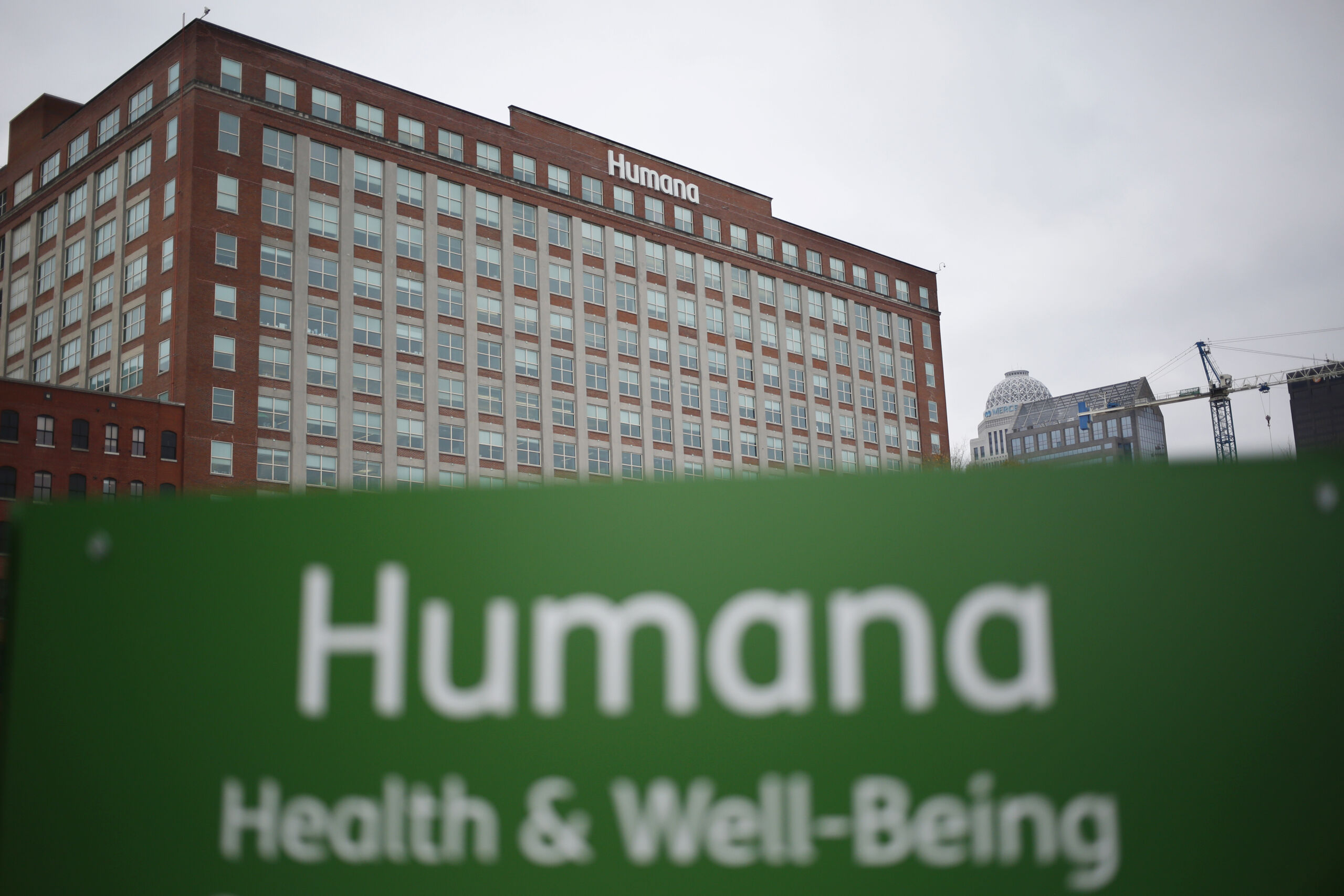
Signage is displayed outside the Humana Inc. office building in Louisville, Kentucky, US, in 2016.

Enlarge / Signage is displayed outside the Humana Inc. office building in Louisville, Kentucky, US, in 2016. (credit: Getty | Luke Sharrett)

Humana, one the nation’s largest health insurance providers, is allegedly using an artificial intelligence model with a 90 percent error rate to override doctors’ medical judgment and wrongfully deny care to elderly people on the company’s Medicare Advantage plans.

According to a lawsuit filed Tuesday, Humana’s use of the AI model constitutes a “fraudulent scheme” that leaves elderly beneficiaries with either overwhelming medical debt or without needed care that is covered by their plans. Meanwhile, the insurance behemoth reaps a “financial windfall.”

The lawsuit, filed in the US District Court in western Kentucky, is led by two people who had a Humana Medicare Advantage Plan policy and said they were wrongfully denied needed and covered care, harming their health and finances. The suit seeks class-action status for an unknown number of other beneficiaries nationwide who may be in similar situations. Humana provides Medicare Advantage plans for 5.1 million people in the US.

Read 13 remaining paragraphs | Comments


Source: Ars Technica – Humana also using AI tool with 90% error rate to deny care, lawsuit claims