Enlarge/ Ilya Sutskever, OpenAI Chief Scientist, speaks at Tel Aviv University on June 5, 2023. (credit: Getty Images)
On Friday, OpenAI fired CEO Sam Altman in a surprise move that led to the resignation of President Greg Brockman and three senior scientists. The move also blindsided key investor and minority owner Microsoft, reportedly making CEO Satya Nadella furious. As Friday night wore on, reports emerged that the ousting was likely orchestrated by Chief Scientist Ilya Sutskever over concerns about the safety and speed of OpenAI’s tech deployment.
“This was the board doing its duty to the mission of the nonprofit, which is to make sure that OpenAI builds AGI that benefits all of humanity,” Sutskever told employees at an emergency all-hands meeting on Friday afternoon, as reported by The Information.
Since its founding, OpenAI has pursued the development of artificial general intelligence (or AGI), which is a hypothetical technology that would be able to perform any intellectual task a human can do, potentially replacing a large number of humans at their jobs.
In addition to the many OpenGL and Vulkan open-source driver improvements building up for Mesa 24.0, the RadeonSI Gallium3D driver has also been preparing some video acceleration improvements for this next quarterly release…
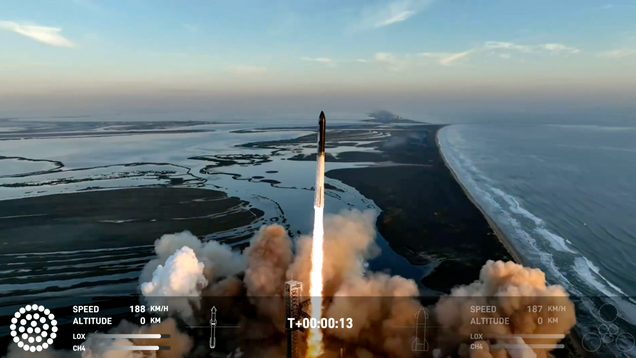
SpaceX’s latest test flight of the Starship rocket lasted for around eight minutes—twice the length of the previous test. Both the booster and the Starship upper stage were lost, but SpaceX achieved many key milestones during the flight test.
How did science get started? A few years back, we looked at one answer to that question in the form of a book called The Invention of Science. In it, British historian David Wootton places the origin within a few centuries of European history in which the features of modern science—experiments, models and laws, peer review—were gradually aggregated into a formal process of organized discovery.
But that answer is exquisitely sensitive to how science is defined. A huge range of cultures engaged in organized observations of the natural world and tried to identify patterns in what they saw. In a recent book called Horizons, James Poskett places these efforts firmly within the realm of science and arrives at his subtitle: “The global origins of modern science.” He de-emphasizes the role of Europe and directly dismisses Wootton’s book via footnote in the process.
Whether you find Poskett’s broad definition of science compelling will go a long way to explain how you feel about the first third of the book. The remaining two-thirds, however, are a welcome reminder that, wherever it may have started, science quickly grew into an international effort and matured in conversation with international cultural trends like colonialism, nationalism, and Cold War ideologies.
Alan Wake II is a fantastic game. It tells a twisted, serpentine story of paranormal murder, shifting realities and demonic possession, with two brooding investigators at its core. Developers at Remedy Entertainment are masters of mood and Alan Wake II is their latest showpiece, highlighting the studio’s eye for psychedelic terror and complex mysteries. This game is packed with monsters, ghosts, cults, Old Gods, rock operas and mind-bending perspective swaps. And on top of all that, its character models and set pieces are absolutely gorgeous. Even though it just came out at the end of October, it’s no surprise that Alan Wake II is nominated in multiple categories at The Game Awards, including Game of the Year.
There’s a lot more than clue-gathering going on in Alan Wake II. The game regularly mixes full-motion video with CGI in a way that doesn’t feel silly or contrived; set in a universe of broken realities, the visual styles bleed into each other like alternate timelines fighting for dominance, fitting both the narrative and mechanical storytelling on display.
Remedy Entertainment
There are two playable characters, Saga Anderson and Alan Wake, and they’re each able to escape inside their own mind to solve the mysteries at hand. Saga, the stoic FBI agent, has a Mind Place where she can connect pieces of evidence with red string on a large, wood-paneled wall, and she can also profile people of interest, using her intuition to speak with their subconscious selves and uncover their secrets. Alan, the author who’s been lost in purgatory for 13 years, has a Writer’s Room with a plot board that literally alters reality when he adds new ideas to it. Players are able to switch between Saga and Alan throughout the game, as they attempt to crack the same case from opposite sides of the underworld.
Both of their environments have been infiltrated by shadow people, the standard enemies in this universe. The black silhouettes, glitching around the edges and hissing Alan Wake’s name, are affected by light — many of them fade away under the beam of a flashlight, but some of them transform into corporeal enemies and immediately attack, requiring multiple gunshots or one strong explosion to take them out. Saga and Alan can find temporary solace under lampposts and other well-lit areas, but these tend to flicker out in the heat of combat.
Which brings us to my issue with Alan Wake II, a game I very much enjoyed and highly recommend. Because I can still hear the furious typing from people who won’t read a negative word about something they love — please remember, it’s possible to enjoy something and also discuss what it could’ve done better. In the case of Alan Wake II, this means removing the guns.
There’s a delicious undercurrent of tension running beneath Alan Wake II, propelled by dark corridors, gruesome rituals and a creeping wave of personal loss. This sense of unease builds throughout the story and bursts through the screen in jump-scare vignettes as the characters’ situations become more desperate. Mystery is the heart of Alan Wake II’s horror. Unfortunately, the slow-burning narrative tension is routinely interrupted by gunplay, replacing it with a different, harsher kind of anxiety that feels out of place in this survival horror experience.
Again and again, I’d be exploring a new area, mentally putting the clues together as the story unspooled, when suddenly — time for a gunfight. The tone would immediately shift from dark, inquisitive terror to pew pew pew, replacing my train of thought with standard action-game things like landing headshots and dodging. After the scuffle, it would take a long moment for me to find the rhythm again, remind myself what I was looking for, what was at stake, what reality I was in. The tension and terror would start to build again, and then — another gunfight.
Remedy Entertainment
There’s nothing wrong with the combat in Alan Wake II, but it isn’t revolutionary and it doesn’t serve the game’s narrative. It’s an unnecessary interruption. Alan Wake II has intense detective work, horrific setpieces, paranormal drama, reality-shifting mechanics, secrets uncovered with light, two versions of a Sherlock-style mind palace, small puzzles, grand mysteries, murderous demons and plenty of action without guns at all.
Light is the shadow people’s weakness, and Saga and Alan both carry flashlights for most of the game. Turning on the high beam stuns the shadow enemies and sometimes opens weak points in their chests. Light hurts the ghosts, but it doesn’t kill them. To kill the ghosts you need bullets. I find this concept silly enough, but there are also scenes where the ghostshave guns, which is downright hilarious. On top of that, some of the shadow people are true bullet sponges, eating eight to twelve shots before going down. This sucks in general, but it’s especially egregious in a horror game, as it replaces feelings of dread with frustration and bullet math. Tediously shooting a ghost eight times instead of one doesn’t make an encounter any scarier.
With light as a weapon, Alan Wake II doesn’t need guns. Activating the high beam already uses precious battery power, and both Saga and Alan have to find batteries hidden around their environments, keeping resource-management fears alive. There are scenes where a flashlight and weapon combination actually works well — mainly, the flashlight and flare gun offer a swift one-two punch for standard enemies, preserving the panic of an attack while offering twitchy combat moments that don’t interrupt the overall vibe. Here, the gun is secondary, while the light does most of the work. In terms of game logic, this makes way more sense than a ghosts-and-guns approach.
Remedy Entertainment
Remedy is calling Alan Wake II the studio’s “first foray into the survival horror genre,” which makes its reliance on guns and even more perplexing. Regardless of whether Alan Wake II is more of an action horror or survival horror game, I’m most concerned with how it serves horror. In this regard, the gunplay just gets in the way.
I turned on story mode about two-thirds through my playtime, and I didn’t feel cheated out of any tension or terror; the enemies were still scary, and the game’s puzzles remained challenging. Remedy does weird stuff really well, and Alan Wake II is grotesque, mind-melting and darkly soapy, like The X-Files or Twin Peaks, with a touch of Outlast and Resident Evil 4. I just wonder what game we would’ve gotten if the developers didn’t design around basic third-person shooter tropes (feel free to save those for Control, Remedy — guns make sense in that game).
You know how every big-studio action movie nowadays feels like a modified version of Iron Man? The Marvel Cinematic Universe set the modern standard for big-budget action flicks, and it seems like many other movies now attempt to imitate its tongue-in-cheek tone, the epic scale of each battle, its predictable narrative flow and climax, the green-screen action scenes, its cliffhangers and after-credits scenes. A similar phenomenon is occurring with big-budget mainstream games, where there seems to be a formula that developers attempt to emulate, and this includes gunplay with hordes of bullet-absorbing enemies.
It feels like Alan Wake II fell victim to this unnecessary constraint, with negative consequences for the game’s sense of storytelling and terror. I get it — guns, ammo and inventory management are a familiar, accepted mechanic in video games as a whole, which makes firearm combat an easy element to include in mainstream titles. I just don’t think Alan Wake II needed it to be successful.
This article originally appeared on Engadget at https://www.engadget.com/alan-wake-ii-is-great-but-it-doesnt-need-guns-130027149.html?src=rss
Have you ever wondered why robots are unable to walk and move their bodies as fluidly as we do? Some robots can run, jump, or dance with greater efficiency than humans, but their body movements also seem mechanical. The reason for this lies in the bones they lack.
Unlike humans and animals, robots do not have real bones or the flexible tissues that connect them; they have artificial links and joints made of materials like carbon fiber and metal tubes. According to Robert Katzschmann, a professor of robotics at ETH Zurich, these internal structures allow a robot to make movements, grab objects, and maintain different postures. However, since links and joints are made up of hard materials, robot bodies are not as flexible, agile, and soft as human bodies. This is what makes their body movements so stiff.
But they may not need to stay stiff for long. A team of researchers from the Swiss Federal Institute of Technology (ETH) Zurich and US-based startup Inkbit have figured out a way to 3D print the world’s first robotic hand with an internal structure composed of human-like bones, ligaments, and tendons. What makes the hand even more special is that it was printed using an entirely new 3D inkjet deposition method called vision-controlled jetting (VCJ).
An anonymous reader quotes a report from SecurityWeek: Moving to clamp down on the growing scourge of SIM-swapping and port-out fraud, the Federal Communications Commission (FCC) has unveiled new rules mandating telcos to give consumers greater control of their mobile phone accounts. Under the new rules, wireless carriers are required to notify customers of any SIM transfer requests, a measure designed to thwart fraudulent attempts by cybercriminals. The FCC has also revised its customer proprietary network information and local number portability rules, making it more challenging for scammers to access sensitive subscriber information.
The new protective measures (PDF) are meant to address SIM-swapping and port-out attacks widely documented in cybercriminal attacks against businesses and consumers. The attack technique is used to hijack mobile accounts, change and steal passwords, bypass MFA roadblocks and raid bank accounts. Studies have found that major mobile carriers in the US are vulnerable to SIM-swapping with the Federal Bureau of Investigation (FBI) receiving thousands of consumer complaints every year.
Linux, the cornerstone of open source operating systems, has always been synonymous with flexibility and choice, particularly through its diverse range of desktop environments (DEs). These DEs are more than just user interfaces; they are gateways that define user interaction with the vast world of Linux. This article delves into the future trajectory of Linux DEs, exploring upcoming trends and innovations that are poised to redefine the Linux user experience.
At 8AM ET today, SpaceX will open a 20-minute launch window for Starship’s second-ever fully integrated test flight. If everything goes well during the pre-flight procedures, and if the weather cooperates, then we’ll see the company’s spacecraft make another attempt to reach space. SpaceX completed Starship’s first fully integrated launch in April. While it was considered a success, the company wasn’t able to meet all its objectives and had to intentionally blow up the spacecraft after its two stages failed to separate.
As a result of that incident, the Federal Aviation Administration (FAA) had grounded Starship while authorities conducted an investigation. They found that the explosion scattered debris across 385 acres of land, caused pulverized concrete to rain down on areas up to 6.5 miles northwest of the pad site, and started a wildfire at Boca Chica State Park. The FAA required SpaceX to make 63 corrective actions before it could give the company clearance to fly its reusable spacecraft again.
SpaceX said that this flight will debut several changes it implemented due to what happened during Starship’s first test flight. They include a new hot-stage separation system, a new electronic Thrust Vector Control (TVC) system for Super Heavy Raptor engines, reinforcements to the pad foundation and a water-cooled steel flame deflector.
The company’s live broadcast of the launch starts at 7:24AM ET on its website and on X. If the Starship’s stages can successfully separate this time around, its upper stage will fly across the planet before splashing down off a Hawaiian coast.
This article originally appeared on Engadget at https://www.engadget.com/watch-spacexs-starship-lift-off-for-its-second-fully-integrated-test-flight-121559318.html?src=rss
We hop in the car to get groceries or drop kids at school. But while the car is convenient, these short trips add up in terms of emissions, pollution, and petrol cost.
Close to half (44 percent) of all Australian commuter trips are by car—and under 10 km. Of Perth’s 4.2 million daily car trips, 2.8 are for distances of less than 2 km.
This is common in wealthier countries. In the United States, a staggering 60 percent of all car trips cover less than 10km.
Michal Jires of SUSE posted a new set of patches on Friday for implementing Incremental LTO support for the GNU Compiler Collection. The goal here with Incremental LTO is for reducing compile times while doing quick edit-compile cycles while employing Link-Time Optimizations…
The FFmpeg multimedia library has been making progress with its Vulkan Video API support while this week an interesting change was merged for ffplay, FFmpeg’s built-in simple multimedia player. The ffplay player now has a built-in Vulkan renderer provided by libplacebo as an optional means of hardware acceleration…
Following last week’s KDE Plasma 6.0 Alpha release with more enthusiasts beginning to test out the next-generation KDE desktop stack, there’s been a spike in bug reports. KDE developers are on it working to address these bugs ahead of the Plasma 6.0 stable release at the end of February…
Enlarge/ Lotus followed up the Eletre S with a far more powerful Eletre R. Lotus purists might not like how much mass it carries around. (credit: Seyth Miersma)
The Lotus Eletre R is an electric SUV with 900 hp (671 kW), a curb weight of approximately 5,820 lbs (2,640 kg), and a six-figure sticker price. If you’re a longstanding fan of the British brand—look around, is there a small model of a race car within sight or Colin Chapman biography on your bookshelf?—that opening sentence likely causes some distress. If you are like most Americans, however, a mention of “Lotus” is just as likely to conjure up thoughts of gardening as grands prix.
Therein lies the puzzle for a company that is in phase one of a total reinvention. Lotus cars have never sold particularly well, but for seven decades now if you bought one you knew what you were getting: a minimalist sports car with a focus on extreme weight savings. Folks, the Eletre R ain’t that.
I think it’s more important to ask if this Lotus is any good, rather than arguing about whether or not it’s a “real Lotus.” The EV revolution may be underway in earnest, but it’s not as though we’re awash in quasi-exotic electric SUVs with outrageous power outputs and challenging design language. Brand aside, what does this car compete with, and does it have a chance to win?
The world’s largest single-site solar farm has gone online in the United Arab Emirates. Called the Al Dhafra solar farm, it features almost 4 million bifacial solar panels and will power nearly 200,000 homes — all while eliminating 2.4 million tons of carbon emissions annually. Electrek reports: Now that Al Dhafra is online, the UAE’s solar power production capacity has increased to 3.2 GW. In September, EWEC called for proposals to develop a 1.5 GW solar farm in Al Khazna near Abu Dhabi. UAE is aiming to triple its renewable energy capacity to 14 GW by 2030. The UAE is hosting COP28 in Dubai, which kicks off on November 30, so, understandably, its rulers would time the launch of the world’s largest solar farm just ahead of that event — it’s simply good PR.
UAE is rightly being criticized for putting the CEO of its state oil company, the Abu Dhabi National Oil Company — the world’s 12th-biggest oil company by production — in charge of COP28. It’s also being criticized for hosting COP28 yet having an all-of-the-above approach to energy. The UAE Energy Strategy 2050 targets an energy mix of 44% clean energy, 38% gas, 12% “clean coal” (yes, it really says that), and 6% nuclear. It says it will become carbon neutral by 2050, but how it will do that on 50% fossil fuels is anyone’s guess.
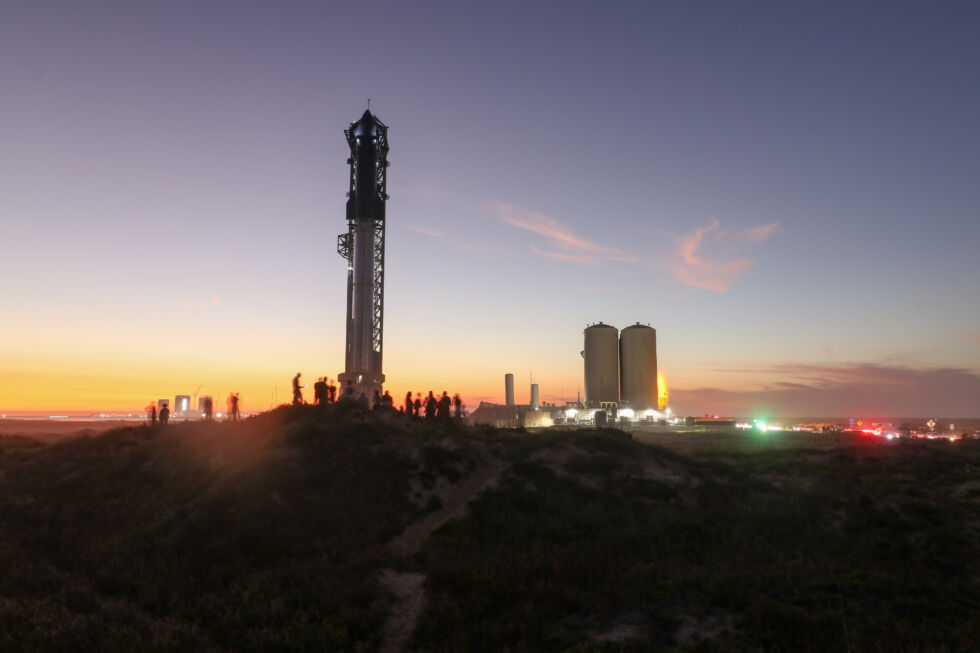
SpaceX fans turned out at Starbase, the company’s sprawling test facility in South Texas, on the eve of the second full-scale test flight of the Starship rocket. [credit:
Stephen Clark/Ars Technica ]
Early Saturday morning, SpaceX will load more than 10 million pounds of super-cold methane and liquid oxygen into the propellant tanks inside the company’s second flight-ready Super Heavy booster and Starship rocket.
Then, if all goes according to plan, 33 Raptor engines will light at 7 am CST (13:00 UTC) to propel this gigantic rocket into the sky over Boca Chica Beach, a remote stretch of South Texas shoreline a couple of miles north of the US-Mexico border. SpaceX will live stream the event on X.
Space fans got what they hope will be their last look at this particular rocket Friday night, hours before law enforcement closed off public access to the launch site. One of the neat things about SpaceX’s privately-owned South Texas launch site, named Starbase, is the public can approach white a few hundred feet of the rocket. The surrounding mud flats, dunes, and beach are all public land.
According to a new study published in JAMA Internal Medicine, women in the U.S. are now projected to live about six years longer than U.S. men. TIME reports: [T]he 2021 data represent the largest gender-based life expectancy gap in the U.S. since 1996. The gulf began to widen before the COVID-19 pandemic, the authors note, but the trend accelerated from 2019 to 2021. Deaths from COVID-19 and unintentional injuries, a category that includes accidental drug overdoses, were the largest contributors to the widening of the gap, but differential rates of homicide, heart disease, and suicide deaths also played a role, according to the report. It’s well-established that men die of these causes more frequently than women, and in recent years, they have been some of the most common causes of death overall. Heart disease, COVID-19, and unintentional injuries accounted for three of the top five in 2021.
The gender gap would have been even wider, the authors note, but for factors including increases in maternal mortality and decreases in cancer deaths among men. Overall, the data underscore the continued importance of limiting COVID-19’s spread, and of finding better ways to improve national mental health and prevent drug overdoses and suicides — fatalities sometimes labeled by experts as “deaths of despair.”