Researchers Found an Abundance of Helium In Canada's Baffin Island

Long-time Slashdot reader thepacketmaster writes: Documented in a recent article in the journal Nature, researchers have found an abundance of both helium-4 and helium-3 trapped in the volcanic rocks on Canada’s Baffin Island.

As the Earth formed, it is thought that helium-4 and helium-3 flowing on the solar wind became trapped in the minerals of the cooling planet. With heavier elements and minerals sinking to the bottom, this trapped helium was transported to the core, where it would have remained locked in its original forms.

Earth isn’t massive enough to hold on to helium in any significant quantities, though. Any that did not get trapped, or that was subsequently released when the minerals melted in the mantle or due to massive impacts, would have eventually seeped up to the surface and floated off into space. So, helium is relatively rare on Earth, and helium-3 is even more so.

Read more of this story at Slashdot.


Source: Slashdot – Researchers Found an Abundance of Helium In Canada’s Baffin Island

xAI’s ‘Grok’ chatbot will be available to X Premium+ subscribers only

Elon Musk’s new AI company, xAI, will release its chatbot to subscribers of X’s $16 per month Premium+ plan once it exits beta. The system, called Grok, is positioned to be a competitor to OpenAI’s ChatGPT and started rolling out to a select group of users this weekend.

Musk shared a few screenshots of the conversational AI on X, and confirmed its responses will unfortunately be laden with Musk-type humor. The CEO also further touted its capabilities compared to the competition, tweeting, “Grok has real-time access to info via the X platform, which is a massive advantage over other models.” There’s no public timeline yet for when it will be out of beta, but Musk said it “will be available to all X Premium+ subscribers” when it is.

The comments coincide with the timing of the first developer conference from rival company OpenAI — which Musk co-founded and remained on the board for until 2018 — on November 6. OpenAI’s ChatGPT costs $20 per month to use.

This article originally appeared on Engadget at https://www.engadget.com/xais-grok-chatbot-will-be-available-to-x-premium-subscribers-202127713.html?src=rss

Source: Engadget – xAI’s ‘Grok’ chatbot will be available to X Premium+ subscribers only

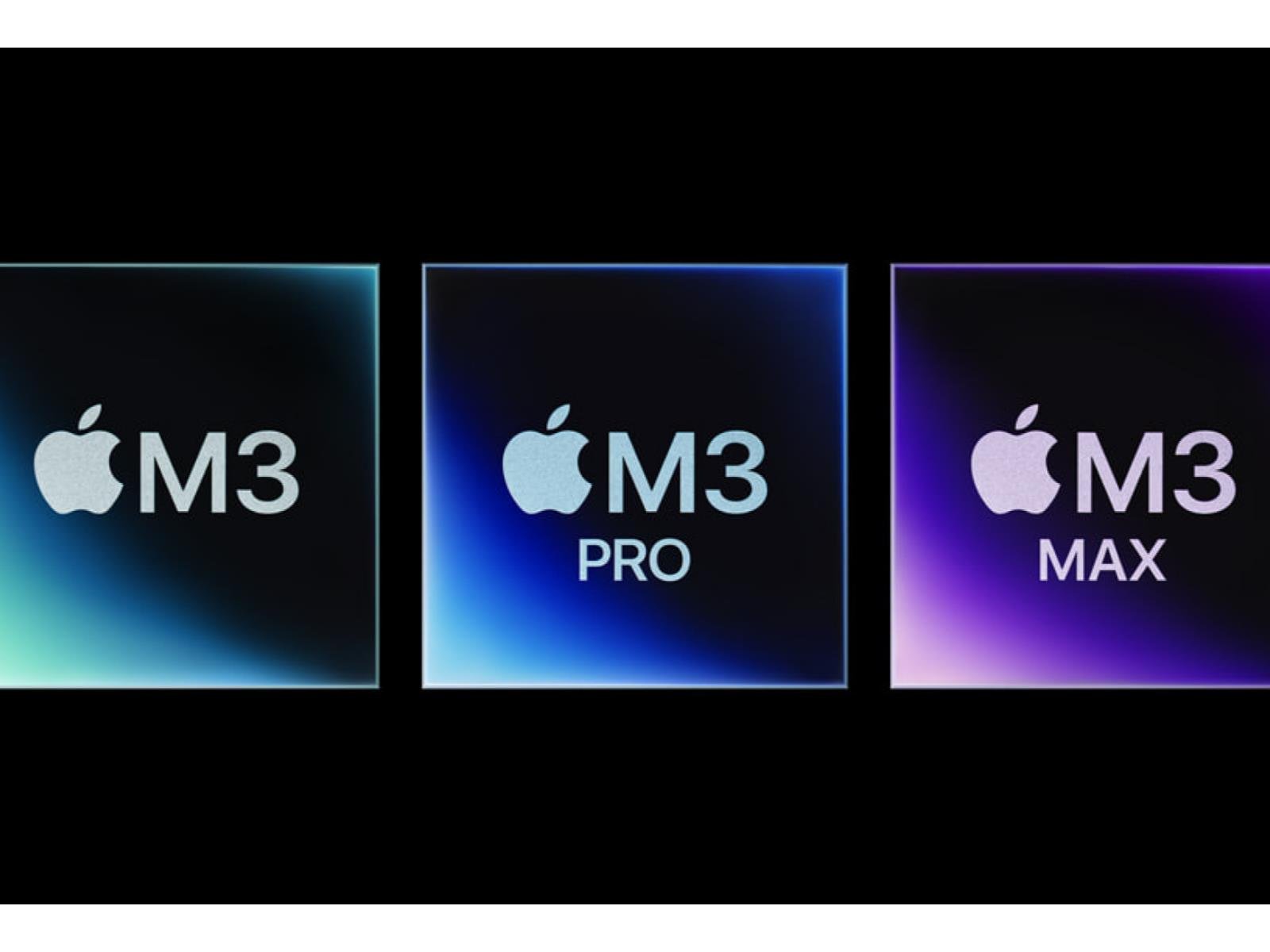
Analyst Reports Apple’s M3 Tape-Out Cost Alone Was A Cool $1 Billion

Analyst Reports Apple’s M3 Tape-Out Cost Alone Was A Cool $1 Billion
Apple’s brand-new M3 processors are due to arrive soon, to supplent their M2 predecessors, and according to semiconductor analyst Jay Goldberg taping out the new chips cost Cupertino a pretty penny. In fact, the total cost to get the three M3 chips to the manufacturing stage may have hit roughly $1 billion. If that’s true, it means Apple is

Source: Hot Hardware – Analyst Reports Apple’s M3 Tape-Out Cost Alone Was A Cool Billion

Will AI-Powered SEO Ruin Google's Search Results?

A long read at the Verge explores the quality of Google’s search results — and whether they’ve been affected by the Search Engine Optimization industry.
But it begins by saying that “A lot of folks’ complain that “The links that pop up when they go looking for answers online, they say, are “absolutely unusable”; “garbage”; and “a nightmare” because “a lot of the content doesn’t feel authentic.”

If so, the question is why. SEO Daron Babin warns that “We’re entering a very weird time, technologically, with AI, from an optimization standpoint… All the assholes that are out there paying shitty link-building companies to build shitty articles, now they can go and use the free version of GPT.”
Soon, he said, Google results would be even worse, dominated entirely by AI-generated crap designed to please the algorithms, produced and published at volumes far beyond anything humans could create, far beyond anything we’d ever seen before. “They’re not gonna be able to stop the onslaught of it,” he said. Then he laughed and laughed, thinking about how puny and irrelevant Google seemed in comparison to the next generation of automated SEO. “You can’t stop it…!”

Nowadays, he mostly invests in cannabis and psychedelics. SEO just got to be too complicated for not enough money, he told me. [SEO Missy] Ward had told me the same thing, that she had stopped focusing on SEO years ago.

But the Verge also spoke to Danny Sullivan, the former journalist who started the SEO-industry site Search Engine Land — who was eventually hired by Google as their “public liaison for serach.” And Sullivan “is pissed that people think Google results have gone downhill. Because they haven’t, he insisted. If anything, search results have gotten a lot better over time. Anyone who thought search quality was worse needed to take a hard look in the mirror.”
Sullivan was not the only person who tried to tell me that search results have improved significantly. Out of the dozen-plus SEOs that I spoke with at length, nearly every single one insisted that search results are way better than they used to be…

This was not what I had been noticing, and this was certainly not what I had been hearing from friends and journalists and friends who are journalists. Were all of us wrong…? I began to worry all the people who were mad about search results were upset about something that had nothing to do with metrics and everything to do with feelings and ~vibes~ and a universal, non-Google-specific resentment and rage about how the internet has made our lives so much worse in so many ways, dividing us and deceiving us and provoking us and making us sadder and lonelier.

SEO Lily Ray says Google did change its algorithm in 2016 to fight disinformation, trying to favor sites with “experience, expertise, authoritativeness, and trustworthiness.”
But the point that really hit me was that for certain kinds of information, Google had undone one of the fundamental elements of what had made its results so appealing from the start. Now, instead of wild-west crowdsourcing, search was often reinforcing institutional authority…

The second major reason why Google results feel different lately was, of course, SEO… Google is harder to game now — it’s true. But the sheer volume of SEO bait being produced is so massive and so complex that Google is overwhelmed. “It’s exponentially worse,” Ray said. “People can mass auto-generate content with AI and other tools,” she went on, and “in many cases, Google’s algorithms take a minute to catch onto it.”
The future that Babin had cackled about at the alligator party was already here. We humans and our pedestrian questions were getting caught up in a war of robots fighting robots, of Google’s algorithms trying to find and stop the AI-enabled sites programmed by SEOs from infecting our internet experience.

Read more of this story at Slashdot.


Source: Slashdot – Will AI-Powered SEO Ruin Google’s Search Results?

Fedora Linux Flatpak cool apps to try for November

This article introduces projects available in Flathub with installation instructions. Flathub is the place to get and distribute apps for all of Linux. It is powered by Flatpak, allowing Flathub apps to run on almost any Linux distribution. Please read “Getting started with Flatpak“. In order to enable flathub as your flatpak provider, use the instructions […]

Source: LXer – Fedora Linux Flatpak cool apps to try for November

How to Train Your Dragon Remake Turns Tail, Retreats Deeper Into 2025

Dreamworks’ How to Train Your Dragon movies were well-liked hidden gems during the 2010s, and it seemed inevitable that the series would eventually return in some form. (In film, at least, because the series has been chugging along with various TV spinoffs.) Earlier this year, we learned that would be the case…

Read more…


Source: Gizmodo – How to Train Your Dragon Remake Turns Tail, Retreats Deeper Into 2025

FSF Warns About the Perils of Medical Devices with Un-Free Software

“Software that controls your body should always respect your freedom,” warns the program manager of the Free Software Foundation:

In July, users of the proprietary software app LibreLink, who live in the UK and use Apple devices, found that the app they depend on to monitor their blood sugar was not working anymore after the developer Abbott pushed an update for the app… Despite what its name may suggest, there is nothing libre about the LibreLink app. It’s proprietary software, which means users must depend on the company to keep it running and to distribute it. With free software, [a user] would have had the freedom to run, copy, distribute, study, change, and improve the software himself, or he could have leaned on a community of developers and users to share and fix the software, and the old version of the software would have been available to revert the update…

Two months later, with Apple’s update to iOS 17, users of the FreeStyle LibreLink and Libre 2 apps had reason again to fear that the software they rely on wouldn’t work after updating their iPhones. This time, users all over the world were affected. In September, Abbott warned Apple users: “As part of the upcoming iOS 17 release, Apple is introducing StandBy Mode and Assistive Access Mode … this release may impact your experience with the FreeStyle Libre 2 app, the FreeStyle LibreLink app, or the FreeStyle LibreLinkUp app. We recommend that you disable automatic operating system updates on the smartphone using the mentioned apps.” This warning was made because StandBy Mode would sometimes prohibit time-sensitive notifications such as glucose alarms, and the Assistive Access Mode would impact sensor activation and alarm setting modification in the app…

And a scenario where a company abandons service or updates to its users is not merely theoretical. This is the bitter reality faced by users of eye implants produced by Second Sight Medical Products since the company decided to abandon the technology in 2020 when facing the prospect of bankruptcy. [“>According to IEEE Spectrum], Terry Byland, whose sight has been dependent on the first-generation Argus implant since 2004, says of his experience, “As long as nothing goes wrong, I’m fine. But if something does go wrong with it, well, I’m screwed. Because there’s no way of getting it fixed.” That’s what also happened to Barbara Campbell, whose retinal implant suddenly stopped working when she was on a subway…

It’s up to us advocates of free software to inform the people around us of the issues with proprietary software in medical aids. Let’s encourage our friends, parents, and grandparents to ask their doctor about the software in their medical devices and to choose and insist upon free software over proprietary software.

Read more of this story at Slashdot.


Source: Slashdot – FSF Warns About the Perils of Medical Devices with Un-Free Software

Security Researcher Finds 34 Windows Driver Flaws That Allow Full Takeover

Security Researcher Finds 34 Windows Driver Flaws That Allow Full Takeover
In case you weren’t aware, VMware operates a security arm called Carbon Black. On Halloween, Carbon Black’s Threat Analysis Unit (TAU) announced that it had found 34 different vulnerable Windows drivers that had firmware access. To be clear, that’s 34 unique filenames; the actual number of different driver files is 237.

What do we mean

Source: Hot Hardware – Security Researcher Finds 34 Windows Driver Flaws That Allow Full Takeover

X is reportedly soliciting people to buy recycled user handles for $50,000

X has been trying to find buyers for user handles it reclaimed from inactive accounts, even going so far as to send out solicitation emails asking for “a flat fee of $50,000 to initiate a purchase,” according to Forbes. Elon Musk announced back in May that X, formerly Twitter, would start purging accounts that have gone dormant, and has alluded to plans for recycling disused handles.

According to emails seen by Forbes, X now has a task force called the “@Handle Team” that’s working on creating a marketplace for buying handles tied to inactive accounts. X changed its policy this year to stipulate that users must log in every 30 days to remain active, and risk having their accounts suspended or permanently removed if they go long enough without signing on. It’s unclear how long a user would have to remain inactive for to actually be booted from the platform. After NPR quit the site this past spring, Musk began threatening to reassign its handle just a few weeks later.

As of now, obtaining another user’s inactive handle doesn’t seem to be something just anybody can do. X’s website still says it cannot release inactive usernames. But, the Forbes report suggests the company is looking at the possibility of a handle marketplace as yet another way to pull in money from its users. The company just recently introduced two new subscription tiers for paid users — a $16 per month Premium+ tier and a more pared-down $3 per month “basic” tier.

This article originally appeared on Engadget at https://www.engadget.com/x-is-reportedly-soliciting-people-to-buy-recycled-user-handles-for-50000-174504242.html?src=rss

Source: Engadget – X is reportedly soliciting people to buy recycled user handles for ,000

Blade, A Movie That's Sooooo Real, Should've Been Out This Weekend

Once upon time in the distant year of 2019, Marvel Studios held a pretty momentous Hall H panel at San Diego Comic-Con. With Avengers: Endgame in the rearview mirror and Spider-Man: Far From Home presently raking in cash at the box office, everyone was wondering what was coming next for the MCU. The Phase Four slate…

Read more…


Source: Gizmodo – Blade, A Movie That’s Sooooo Real, Should’ve Been Out This Weekend

CNN Criticizes Microsoft's 'Making a Mess of the News' By Replacing MSN's Staff With AI

CNN decries “false and bizarre” news stories being published by Microsoft on MSN.com, “one of the world’s most trafficked websites and a place where millions of Americans get their news every day.”

Microsoft’s decision to increasingly rely on the use of automation and artificial intelligence over human editors to curate its homepage appears to be behind the site’s recent amplification of false and bizarre stories, people familiar with how the site works told CNN.
The site, which comes pre-loaded as the default start page on devices running Microsoft software, including on Microsoft’s latest “Edge” browser… employed more than 800 editors in 2018 to help select and curate news stories shown to millions of readers around the world. But in recent years Microsoft has laid off editors, some of whom were told they were being replaced by “automation,” what they understand to be AI.
CNN points out that while Microsoft’s president “has publicly lectured on the responsible use” of AI, “the apparent role of AI in Microsoft’s recent amplification of bogus stories raises questions about the company’s public adoption of the nascent technology and for the journalism industry as a whole.” CNN notes that an AI-generated poll urging readers to guess the cause of a swimmer’s death “was not the first public blunder caused by Microsoft’s embrace of AI.”

In September Microsoft republished a story about Brandon Hunter, a former NBA player who died unexpectedly at the age of 42, under the headline, “Brandon Hunter useless at 42.” Then, in October, Microsoft republished an article that claimed that San Francisco Supervisor Dean Preston had resigned from his position after criticism from Elon Musk. The story was entirely false.

Some of the articles featured by Microsoft were initially published by obscure websites that might have gone unnoticed amid the daily deluge of online misinformation that circulates every day. But Microsoft’s decision to republish articles from fringe outlets has elevated those stories to potentially millions of additional readers, breathing life into their claims. Editors who formerly worked for Microsoft told CNN that these kinds of false stories, or virtually any other articles from low-quality websites, would not be prominently featured by Microsoft were it not for its use of AI. Ryn Pfeuffer, who worked intermittently as a contractor for Microsoft for eight years, said she received a call in May 2020 with the news that her entire team was being laid off. 2020 was the year, a Microsoft spokesperson told CNN in a statement on Wednesday, that the company began transitioning to a “personalized feed” that is “tailored by an algorithm to the interests of our audiences.”

MSN “has also published other junk content, including bogus stories about fishermen catching mermaids and Bigfoot spottings,” reports the tech news site Futurism, “in the wake of ditching its human editors in favor of automation.
“Noticing a pattern yet? The company pumps out trash-tier AI content, then waits until it’s called out publicly to quietly delete it and move onto the next trainwreck.”
We’ve known that Microsoft’s MSN news portal has been pumping out a garbled, AI-generated firehose for well over a year now. The company has been using the website to distribute misleading and oftentimes incomprehensible garbage to hundreds of millions of readers per month… And if MSN presents a vision of how the tech industry’s obsession with AI is going to play out in the information ecosystem, we’re in for a rough ride.

CNN got this reaction from a user whose default browser changed from Chrome to Microsoft Edge after a software update — and discovered their home page had switched to MSN.com. “It felt like I was standing in line at the grocery store reading a National Enquirer front page.”

A company spokesperson assured CNN that Microsoft was “committed to addressing the recent issue of low quality articles.”

Read more of this story at Slashdot.


Source: Slashdot – CNN Criticizes Microsoft’s ‘Making a Mess of the News’ By Replacing MSN’s Staff With AI

The Difference Between Renovating and Remodeling

Whenever there’s talk of home improvement projects, the terms “renovation” and “remodeling” tend to be used interchangeably. That can get confusing quickly, though, as they have two separate meanings. Here’s the difference between renovating and remodeling, and why it matters.

Read more…


Source: LifeHacker – The Difference Between Renovating and Remodeling

US Approves Massive Windfarm Project Off the Coast of Virginia

Tuesday Orsted cancelled two wind farms near New Jersey that would’ve generated about 2.2 gigawatts of energy. But the same day America’s Interior Department approved plans to install up to 176 wind turbines off the coast of Virginia with an estimated capacity of about 2.6 gigawatts of clean energy.

Located approximately 27 miles from the shores of Virginia Beach, the project will be America’s largest offshore wind project, capable of powering over 900,000 homes. In just its first 10 years it should save customers $3 billion in fuel costs, Dominion Energy told the Associated Press:
Dominion expects construction to be completed by late 2026… Construction of the project in Virginia is expected to support about 900 jobs each year and then an estimated 1,100 annual jobs during operations, the Interior Department said. The initiative has gained wide support from Virginia policymakers and political leaders, including Republican Gov. Glenn Youngkin, who last week attended a reception marking the arrival of eight monopile foundations for the windfarm.

Two pilot turbines have already been in place since 2020, the article points out. And when finished the new wind farm “would bolster and eventually replace the mostly natural gas-powered electricity that is contributing to costly climate change,” reports MarketWatch

President Biden, early in his first term, announced a goal of installing 30 gigawatts of offshore wind power by 2030, enough to power 10 million homes and prevent the spewing of 78 million metric tons of carbon-dioxide emissions… U.S. offshore wind has been helped along by nearly $8 billion in investments since Biden signed his signature, climate-heavy Inflation Reduction Act a little over a year ago… Biden’s team has projected that the U.S. could install 110 gigawatts of offshore wind power by 2050, a major jump considering there is less than 1 gigawatt installed today. Land-based wind farms across the U.S. already produce more than 140 gigawatts of energy, contributing to about 10% of the nation’s energy portfolio…

When measured by announced plans and pledges, the country has been barreling toward its offshore goal. To date, the Department of the Interior has approved four New England-based projects that, together with the new Coastal Virginia Offshore Wind project, promise to deliver 5 gigawatts of electricity, enough to power 1.75 million homes with average power use. A total of more than 51 gigawatts of wind power capacity is in the works off U.S. shores and the most ambitious 10 coastal states have combined offshore wind goals of generating more than 81 gigawatts.

Read more of this story at Slashdot.


Source: Slashdot – US Approves Massive Windfarm Project Off the Coast of Virginia

Futurama Lives On With Two Extra Seasons

Over a year ago, Hulu announced it would be reviving Futurama, Matt Groening’s other very popular animated series that aired on Fox. Things were rough at first: it originally seemed like John DiMaggio wouldn’t reprise his role as Bender, to say nothing of how many times this show has ended, then been suddenly…

Read more…


Source: Gizmodo – Futurama Lives On With Two Extra Seasons

Microsoft Exchange Security Flaws Could Put User's Data At Risk

Microsoft Exchange Security Flaws Could Put User's Data At Risk
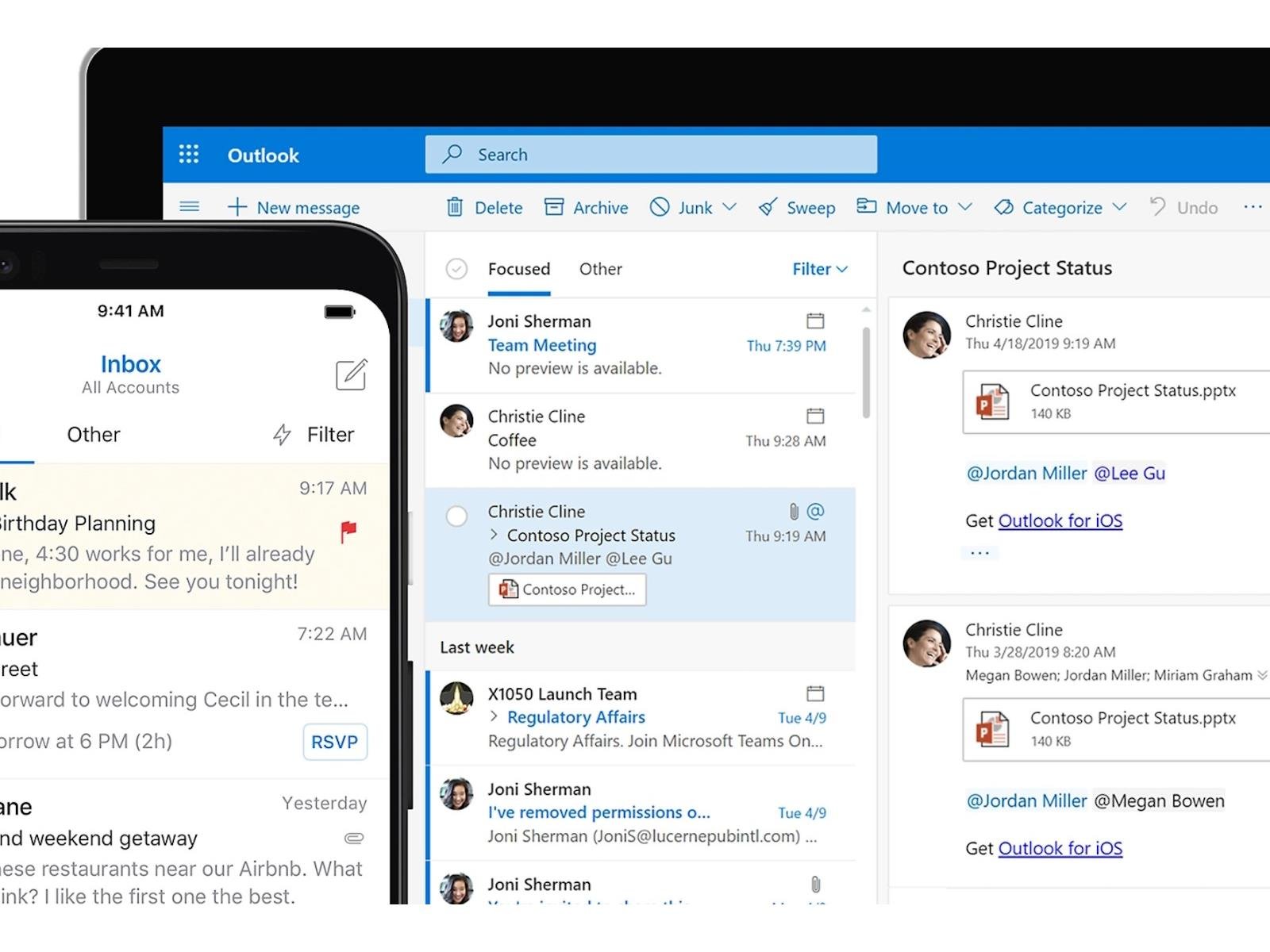
Microsoft Exchange has quite a storied history of security vulnerabilities and breaches given its widespread usage in the corporate world. While there has not been much news regarding Exchange for a while, the Zero Day Initiative has found four vulnerabilities that, while not absolutely critical, could still pose a risk for opportunistic threat

Source: Hot Hardware – Microsoft Exchange Security Flaws Could Put User’s Data At Risk

Blizzard's next World of Warcraft expansions make up a three-part saga

Blizzard is planning an MCU-style future for the World of Warcraft. Chris Metzen, who only recently returned to the company as the executive creative director of Warcraft, has announced that the game’s next three expansions will make up a three-part interconnected saga. Since Blizzard typically releases expansions within two years of each other, “The Worldsoul Saga’s” story will take years to unfold. The first installment called World of Warcraft: The War Within is slated for release sometime in 2024, followed by World of Warcraft: Midnight and World of Warcraft: The Last Titan in the years after that. 

Warcraft general manager John Hight said the trilogy encompasses “one of the most ambitious creative endeavors ever attempted for World of Warcraft.” Each one is a standalone narrative, but they’re connected by an overall story arc, he explained. “Alongside these epic adventures, the ongoing quality-of-life feature updates players have come to expect from us since Dragonflight will continue in The War Within, further setting us up for the next 20 years and beyond,” Hight added. 

While Blizzard has yet to released an in-depth summary for The War Within, it did share a few pertinent details about the expansion. It will feature an ancient civilization underneath the surface of the planet as it rises in power, while Alliance and Horde heroes experience visions of possible futures, both good and bad. Players can grind until they reach the expansion’s level cap of 80, and they can explore a new continent called Khaz Algar. There’s also a new unlockable and playable Titan-forged race called the Earthen, new bite-size adventures that can support one to five players called Delves, as well as a new feature dubbed Warbands, which allows players to share banks, reputations and transmogs across characters. 

Fans can already pre-purchase The War Within for $50, and it will also give them instant access to the Dragonflight expansion. The War Within: Heroic Edition, which comes with extras, is available for $70, while the The War Within: Epic Edition that includes beta access to the expansion, along with even more extras, will set them back $90. 

This article originally appeared on Engadget at https://www.engadget.com/blizzards-next-world-of-warcraft-expansions-make-up-a-three-part-saga-154521763.html?src=rss

Source: Engadget – Blizzard’s next World of Warcraft expansions make up a three-part saga

Mozilla Introduces Firefox Nightly<nobr> <wbr></nobr>.deb Packages for Debian-based Linux Distros

Mozilla has some news for users of Debian-based Linux distributions (such as Debian, Ubuntu, Linux Mint, and others):

installing, updating, and testing the latest Firefox Nightly builds just got a lot easier. We’ve set up a new APT repository for you to install Firefox Nightly as a .deb package… These packages are compatible with the same Debian and Ubuntu versions as our traditional binaries. If you’ve previously used our traditional binaries (distributed as .tar.bz2 archives), switching to Mozilla’s APT repository allows Firefox to be installed and updated like any other application… You will not have to restart Firefox after updating the package with APT…

For those of you who would like to use Firefox Nightly in a different language than American English, we have also created .deb packages containing the Firefox language packs.

Some context from 9to5Linux:

Back in April, I reported that Mozilla was offering a DEB package of the Firefox 113 release during the beta testing phase. Unfortunately, that was the only time a DEB package was available for download and, of course, it didn’t make it into the final release of Firefox 113, nor future releases. It would appear that Mozilla needed more time to work on the DEB package for Debian and Ubuntu-based distributions, and it looks like it will finally become a thing starting with an upcoming Firefox release, like Firefox 121 or later…

Using the DEB package over Snap or the official binary package offers some benefits like better performance due to advanced compiler-based optimizations, hardened binaries with all security flags enabled, access to the latest Firefox releases as fast as possible [because the .deb is integrated into Firefox’s release process], and you won’t have to create your own .desktop file anymore.

Read more of this story at Slashdot.


Source: Slashdot – Mozilla Introduces Firefox Nightly<nobr> <wbr></nobr>.deb Packages for Debian-based Linux Distros