Netflix teases the live-action YuYu Hakusho series before it arrives in December

The live-action adaptation of the classic shonen manga and anime YuYu Hakusho is hitting Netflix on December 14, and the streaming service has given fans some idea of what they can expect in a short teaser video. Live-action adaptations of anime shows are a hit or miss. Some, like Netflix’s Death Note, were generally panned and poorly received, while others like the Rurouni Kenshin movies starring Takeru Satoh and Netflix’s One Piece had managed to win over existing fans and new audiences alike. 

As a long-time fan of Yoshihiro Togashi’s YuYu Hakusho, I have witnessed fellow fans dread its arrival after the streaming service published the first posters for the series. Certain actors were a miscast, they said, and even the actors in YuYu Hakusho’s stage production had better costumes and styling. The teaser, however, actually looked pretty good, and fans seem to be hopeful that the show will end up becoming of the better anime adaptations out there. 

When Netflix announced the series’ streaming date, it hinted that it will not be an exact copy of the manga and the anime. “The series breathes new life into the story, and fans old and new can expect to encounter their favorite characters in ways that have never been seen before,” it said. The teaser’s too short to reveal most of the changes the show has made, but eagle-eyed viewers might find some in the video below. 

This article originally appeared on Engadget at https://www.engadget.com/netflix-teases-the-live-action-yuyu-hakusho-series-before-it-arrives-in-december-140055463.html?src=rss

Source: Engadget – Netflix teases the live-action YuYu Hakusho series before it arrives in December

How to Locate and Clean Your Dishwasher's Filter

Even though appliances have replaced many of the household tasks that were once done manually—like washing dishes and clothing—that doesn’t mean they’re completely maintenance-free. For example, we recently discussed the fact that washing machine filters exist and need to be cleaned regularly.

Read more…


Source: LifeHacker – How to Locate and Clean Your Dishwasher’s Filter

Navigating the Linux Textscape using Vim and Emacs

In the vast landscape of Linux, the prowess of a user is often measured by their fluency in text editing. Two titans dominate this realm: Vim and Emacs. These editors are not merely tools; they are ecosystems, philosophies, and communities that embody the essence of Linux’s flexibility and power. This article dives deep into the intricacies of both, providing a roadmap for mastery over these keystroke kingdoms.

Source: LXer – Navigating the Linux Textscape using Vim and Emacs

NY AG Issues $450K Penalty To US Radiology After Unpatched Bug Led To Ransomware

An anonymous reader quotes a report from The Record: One of the nation’s largest private radiology companies agreed to pay a $450,000 fine after a 2021 ransomware attack led to the exposure of sensitive information from nearly 200,000 patients. In an agreement announced on Wednesday, New York Attorney General Letitia James said US Radiology failed to remediate a vulnerability announced by security company SonicWall in January 2021. US Radiology used the company’s firewall to protect its network and provide managed services for many of its partner companies, including the Windsong Radiology Group, which has six facilities across Western New York.

The vulnerability highlighted by the attorney general — CVE-2021-20016 — was used by ransomware gangs in several attacks. US Radiology was unable to install the firmware patch for the zero-day because its SonicWall hardware was at an end-of-life stage and was no longer supported. The company planned to replace the hardware in July 2021, but the project was delayed “due to competing priorities and resource restraints.” The vulnerability was never addressed, and the company was attacked by an unnamed ransomware gang on December 8, 2021.

An investigation determined that the hacker was able to gain access to files that included the names, dates of birth, patient IDs, dates of service, provider names, types of radiology exams, diagnoses and/or health insurance ID numbers of 198,260 patients. The data exposed during the incident also included driver’s license numbers, passport numbers, and Social Security numbers for 82,478 New Yorkers. […] In addition to the $450,000 penalty, the company will have to upgrade its IT network, hire someone to manage its data security program, encrypt all sensitive patient information and develop a penetration testing program. The company will have to delete patient data “when there is no reasonable business purpose to retain it” and submit compliance reports to the state for two years. “When patients visit a medical facility, they deserve confidence in knowing that their personal information will not be compromised when they are receiving care,” said Attorney General James. “US Radiology failed to protect New Yorkers’ data and was vulnerable to attack because of outdated equipment. In the face of increasing cyberattacks and more sophisticated scams to steal private data, I urge all companies to make necessary upgrades and security fixes to their computer hardware and systems.”

Read more of this story at Slashdot.


Source: Slashdot – NY AG Issues 0K Penalty To US Radiology After Unpatched Bug Led To Ransomware

Intel Begins Sorting Out SR-IOV Support For The Xe Kernel Graphics Driver

One of the great aspects of Intel integrated and discrete graphics is the broad support for Single Root I/O Virtualization (SR-IOV). Intel “Gen12” graphics back to Tigerlake can handle SR-IOV when there aren’t any firmware woes or other issues at play. There is SR-IOV support currently with the i915 kernel driver but Intel engineers are working to architect optimal SR-IOV integration into their forthcoming Xe DRM kernel driver…

Source: Phoronix – Intel Begins Sorting Out SR-IOV Support For The Xe Kernel Graphics Driver

Netflix's The Witcher: Sirens of the Deep animated film will feature Geralt's original voice actor

Netflix has given The Witcher fans their first look at a new animated film that’s set to hit the streaming service in late 2024. The Witcher: Sirens of the Deep is based on A Little Sacrifice, a short story written by the universe’s creator Andrzej Sapkowski. It will have Geralt of Rivia investigating a series of attacks in a seaside village in the midst of rising conflict between its human inhabitants and merpeople from the ocean. Netflix says the film is set between episodes 5 and 6 of the live-action series’ first season, and it does show: The Geralt in the film resembles original Witcher actor Henry Cavill more than the Geralt in the games. 

The live action’s stars Anya Chalotra and Joey Batey will also be reprising their roles as Yennefer of Vengerberg and Jaskier in the animated film. But Geralt will be voiced by Doug Cockle, who’s known for voicing the White Wolf in the Witcher games. The movie is directed by Kang Hei Chul, who served as a storyboard artist for The Witcher: Nightmare of the Wolf, which featured the story of Vesemir before he became Geralt’s mentor. It was also animated by Studio MIR, the same South Korean studio that worked on Nightmare of the Wolf. 

The film may be the last time those who were particularly fond of Cavill as Geralt can see, well, a version of him play the role. He left the live-action show after its third season and is set to be replaced by Liam Hemsworth. 

This article originally appeared on Engadget at https://www.engadget.com/netflixs-the-witcher-sirens-of-the-deep-animated-film-will-feature-geralts-original-voice-actor-120020251.html?src=rss

Source: Engadget – Netflix’s The Witcher: Sirens of the Deep animated film will feature Geralt’s original voice actor

Mummified baboons point to the direction of the fabled land of Punt

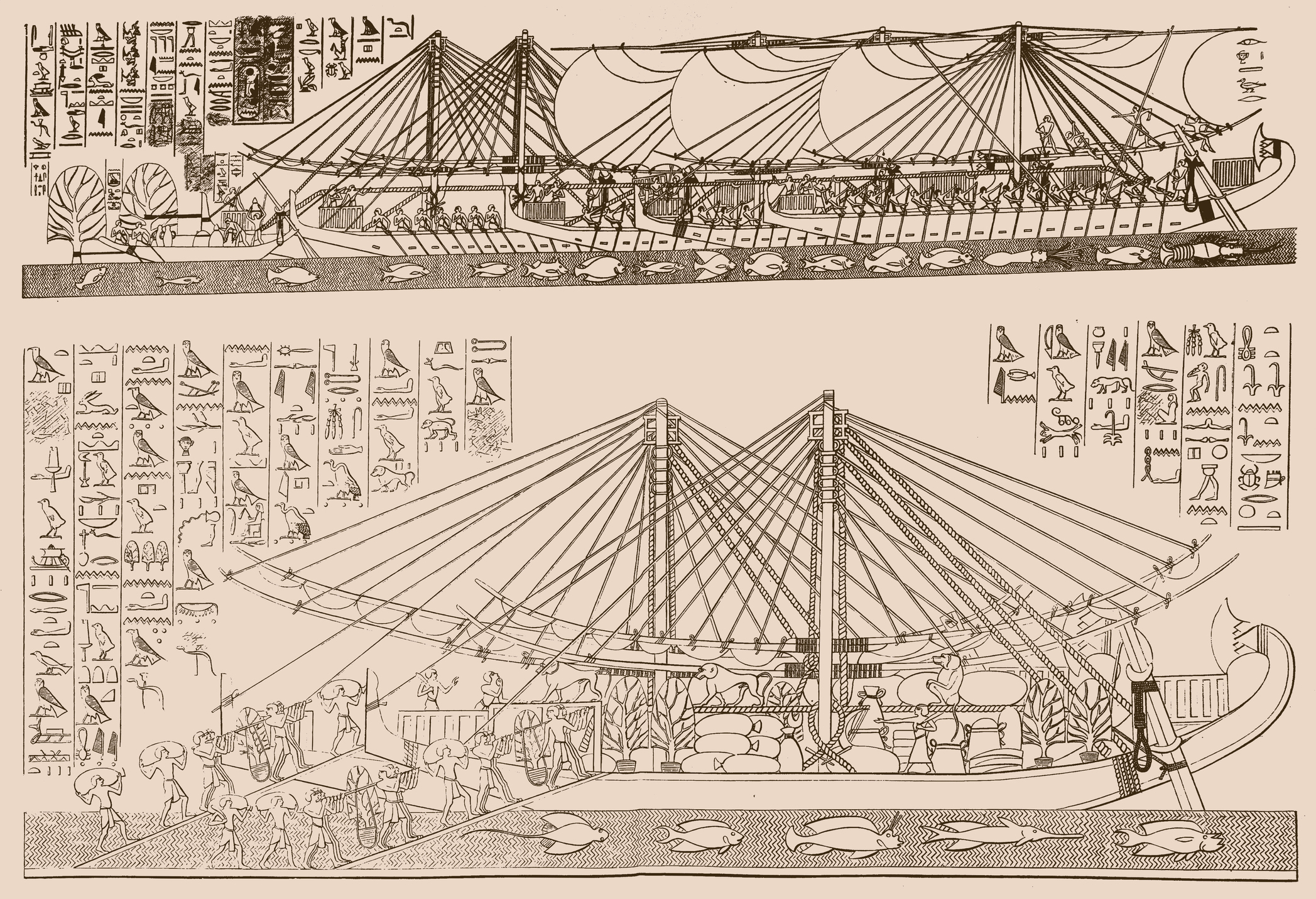
Line drawing of ancient ships with people loading goods on board. The ships are surrounded by hieroglyphics.

Enlarge / Drawing of a trade expedition to Punt during the reign of Queen Hatshepsut. Note the presence of baboons on board the lower ship. (credit: Nastasic)

One of the most enduring mysteries within archaeology revolves around the identity of Punt, an otherworldly “land of plenty” revered by the ancient Egyptians. Punt had it all—fragrant myrrh and frankincense, precious electrum (a mixed alloy of gold and silver) and malachite, and coveted leopard skins, among other exotic luxury goods.

Despite being a trading partner for over a millennium, the ancient Egyptians never disclosed Punt’s exact whereabouts except for vague descriptions of voyages along what’s now the Red Sea. That could mean anywhere from southern Sudan to Somalia and even Yemen.

Now, according to a recent paper published in the journal eLife, Punt may have been the same as another legendary port city in modern-day Eritrea, known as Adulis by the Romans. The conclusion comes from a genetic analysis of a baboon that was mummified during ancient Egypt’s Late Period (around 800 and 500 BCE). The genetics indicate the animal originated close to where Adulis would be known to come into existence centuries later.

Read 21 remaining paragraphs | Comments


Source: Ars Technica – Mummified baboons point to the direction of the fabled land of Punt

Gateway API improves networking and connectivity in Kubernetes

At the KubeCon NA 2023 conference this week, developers celebrated the general availability (GA) of the Gateway API, which literally opens up a new gateway to how Kubernetes networking and connectivity will be enabled in the future. Gateway API is intended to replace the Ingress API, which has long been one of the primary ways that a cloud native environment gains access to services outside of a cluster. Gateway API aims to solve numerous shortcomings in Ingress API and already benefits from the broad participation of many vendors.

Source: LXer – Gateway API improves networking and connectivity in Kubernetes

NVIDIA may soon announce new AI chips for China to get around US export restrictions

NVIDIA really, really doesn’t want to lose access to China’s massive AI chip market. The company is developing three new AI chips especially for China that don’t run afoul of the latest export restrictions in the US, according to The Wall Street Journal and Reuters. Last year, the US government notified the chipmaker that it would restrict the export of computer chips meant for supercomputers and artificial intelligence applications to Russia and China due to concerns that the components could be used for military purposes. That rule prevented NVIDIA from selling certain A100 and H100 chips in the country, so it designed the A800 and H800 chips specifically for the Chinese market. 

However, the US government recently issued an updated set of restrictions that puts a limit on how much computing power a chip can have when it’s meant for export to the aforementioned countries. The A800 and the H800 are no longer eligible for export under the new rules, along with NVIDIA’s other products, which include its top-of-the-line RTX 4090 consumer GPU. Some reports even suggest that the company could end up canceling over $5 billion worth of advanced chip orders in China. 

The new chips meant for the Chinese market are called the HGX H20, the L20 and the L2, based on the specs sent to distributors. While the H20 is supposed to be the most powerful model out of the three, all of them don’t go beyond the computing power threshold set by the US government’s new export rules. That means customers using them for AI applications may need more chips than they would if they had access to higher-spec models. 

Chinese companies, including Baidu, Huawei, Xiaomi and Oppo, have already started designing their own semiconductor to prepare for a possible future wherein they could longer be able to import chips from the US and other countries. Old NVIDIA customers may prefer sticking to the company’s components, however, due to its reputation and its software, which The Journal says is some of the most robust for AI development. NVIDIA, according to the source, may announce the new chips as soon as November 16 and start selling them before the year ends. 

This article originally appeared on Engadget at https://www.engadget.com/nvidia-may-soon-announce-new-ai-chips-for-china-to-get-around-us-export-restrictions-100509873.html?src=rss

Source: Engadget – NVIDIA may soon announce new AI chips for China to get around US export restrictions

Scientists Build Yeast With Artificial DNA

Alison Snyder reports via Axios: For more than 15 years, scientists have worked to build a complex cell with an entire genome built from scratch. This week they announced a major milestone: They’ve created synthetic versions of the 16 chromosomes in a yeast cell and successfully combined some of them in one cell. The feat is revealing new information about fundamental processes in cells, and it is a key step toward some scientists’ vision of creating programmable cellular factories to produce biofuels, materials, medicines and other products.

The changes researchers made to yeast chromosomes fall into three main categories: increasing stability of the genome, repurposing codons (genetic sequences that carry instructions for reading DNA or RNA) and introducing a system that allows scientists to make millions of cells, each with different genetic properties. “A big problem is a lot of the things you want to make are actually toxic to the cells,” [says Benjamin Blount, a synthetic biologist at the University of Nottingham in the U.K. and co-author of some of the scientific papers in a series published this week in Cell and Cell Genomics detailing the work]. With the system that reshuffles the genome and effectively mimics evolution, scientists can make many variants of yeast and pick the ones “that are really good at growing in the presence of what you’re trying to make.” Then, they’re able to look at what’s happened to their genomes to enable that particular strain to grow and make the desired product, and use that genetic information to develop strains of yeast suited for an industrial process.

The chromosomes still have to be combined in one cell that can survive, which means they have to be “basically indiscernible” from natural chromosomes in terms of the cell’s fitness, Blount says. That required a lot of debugging of the genome, similar to what’s done for computer code. One team was able to combine multiple chromosomes in one cell and it survived and reproduced, demonstrating a mechanism for bringing them together. Building the genomes — and seeing when the cell doesn’t work as expected as the result of one change or another — has revealed fundamental information about genome biology, Blount says. For example, the team identified sequences in genes that interrupted a key process in the cell and led to mitochondria dysfunction, which is involved in some human diseases.

Read more of this story at Slashdot.


Source: Slashdot – Scientists Build Yeast With Artificial DNA

Frank Borman, Commander of Apollo 8, Dies At 95

Long-time Slashdot reader HanzoSpam shares a report from Ars Technica: Frank Borman, an Air Force test pilot, astronaut, and accomplished businessman who led the first crew to fly to the Moon in 1968, died Tuesday in Montana, NASA said Thursday. He was 95 years old. Borman, joined by crewmates Jim Lovell and Bill Anders, orbited the Moon 10 times over the course of about 20 hours. They were the first people to see the Earth from another world, a memory of “wonderment” Borman recalled decades later. Apollo 8 produced one of the most famous photos ever taken, the iconic “Earthrise” showing a blue orb — the setting for all of human history until then — suspended in the blackness of space over the charcoal gray of the Moon’s cratered surface.

Borman was born in Gary, Indiana, on March 14, 1928, and raised in Tucson, Arizona. He learned to fly airplanes as a teenager, then attended the US Military Academy at West Point before earning his commission in the Air Force to start training as a fighter pilot. Following a similar career path as other early astronauts, Borman became an experimental test pilot, receiving a master’s degree in aeronautical engineering from Caltech, and served a stint as an assistant professor at West Point. NASA accepted applications for a second class of astronauts in 1962 to follow the original Mercury Seven. Borman was one of the “New Nine” astronauts, and he reported for training in Houston. “Today we remember one of NASA’s best,” NASA Administrator Bill Nelson said in a statement. “Astronaut Frank Borman was a true American hero. Among his many accomplishments, he served as the commander of the Apollo 8 mission, humanity’s first mission around the Moon in 1968.”

Read more of this story at Slashdot.


Source: Slashdot – Frank Borman, Commander of Apollo 8, Dies At 95

Amazon reportedly blocks 'junk ads' on Apple product pages

Amazon gives Apple’s product pages the special treatment and keeps them relatively clear of unrelated ads, signifying an arrangement between the companies, according to Insider. When the Federal Trade Commission filed an antitrust lawsuit against the e-commerce retailer in September, it accused Amazon of “deliberately increasing junk ads that worsen search quality.” However, Insider found that the pages for Apple products, such as “iPhone” and “iPad,” show a clean page layout with no ads or recommendation. Meanwhile, products from rival brands, including Samsung Galaxy and Microsoft Surface, show multiple banner ads and several sponsored recommendations from other brands. 

We tried it out ourselves and did find that Apple’s product pages do look cleaner. Microsoft Surface Pro’s, however, showed a carousel of sponsored listings “4 stars and above,” along with products related to the specific item and multiple banner ads. Insider says Apple asked Amazon to keep its product pages free of ad clutter back in 2018, based on an email shared by the House Judiciary Committee. “We understand that Apple does not want to drive sales to competing brands in search or detail pages,” Jeff Wilke, who was then Amazon’s retail CEO, reportedly wrote. 

Apple has admitted to the publication that it has some sort of an agreement with Amazon that prevents other companies from buying ads for “specific Apple-related brand queries” on the latter’s marketplace. They can still buy ads for key phrases with an Apple name, say “iPad keyboard case,” but not for “iPad” itself. “Apple’s goal for the Agreements was to create the best possible customer experience, and others are free to do the same,” Apple’s representative said in a statement. They added that the deal was also meant to address the company’s issues with counterfeit products on the platform, because it used to send Amazon “hundreds of thousands of take-down notices” before then. 

While it’s not clear whether money exchanged hands between the two companies, the email shared by the House talked about a potential financial deal. Amazon reportedly turned down Apple’s request at first, but Wilke wrote in the email: “We cannot alter our organic search algorithm to return only Apple products in the search results when an Apple team is searched… Apple would need to purchase these placements or compensate Amazon for the lost ad revenue.”

This article originally appeared on Engadget at https://www.engadget.com/amazon-reportedly-blocks-junk-ads-on-apple-product-pages-045018125.html?src=rss

Source: Engadget – Amazon reportedly blocks ‘junk ads’ on Apple product pages