
It’s been about a month since we announced the Fedora Slimbook laptop. That was just the first step in our partnership with Slimbook to see Fedora Linux preinstalled on more devices. The feedback we’ve received has been great! With that, we wanted to share more news from our hardware partner that we hope is exciting […]
Source: LXer – New Fedora Slimbook 14″ joins the Fedora Slimbook 16″
Monthly Archives: November 2023
What to Do If Your Home Inspector Missed a Major Problem

Many homebuyers rely on inspections to find existing and potential future problems with a house they’re serious about purchasing. And while it’s important to keep in mind that inspectors probably won’t find every single thing that’s wrong with the home, it is fair to expect them to identify the major problems.…
Source: LifeHacker – What to Do If Your Home Inspector Missed a Major Problem
Robert Butler, Star Trek & Batman TV Director, Has Died at Age 95

Filmmaker Robert Butler passed away earlier in the month on November 3 at 95 years old, according to the Hollywood Reporter.
Source: Gizmodo – Robert Butler, Star Trek & Batman TV Director, Has Died at Age 95
'Provisional Agreement' Reached on eID, a 'Digital Identity for All Europeans'
This week the Council of the European Union made an announcement. “With a view to ensuring a trusted and secure digital identity for all Europeans, the Council presidency and European Parliament representatives reached today a provisional agreement on a new framework for a European digital identity (eID).”
The proposed new framework would also require member states “to issue a digital wallet under a notified eID scheme, built on common technical standards, following compulsory certification.”
“With the approval of the European digital identity regulation, we are taking a fundamental step so that citizens can have a unique and secure European digital identity,” said Nadia Calviño, acting Spanish first vice-president and minister for economy and digitalisation.
From the announcement:
The revised regulation constitutes a clear paradigm shift for digital identity in Europe aiming to ensure universal access for people and businesses to secure and trustworthy electronic identification and authentication. Under the new law, member states will offer citizens and businesses digital wallets that will be able to link their national digital identities with proof of other personal attributes (e.g., driving licence, diplomas, bank account). Citizens will be able to prove their identity and share electronic documents from their digital wallets with a click of a button on their mobile phone.
The new European digital identity wallets will enable all Europeans to access online services with their national digital identification, which will be recognised throughout Europe, without having to use private identification methods or unnecessarily sharing personal data. User control ensures that only information that needs to be shared will be shared…
The revised law clarifies the scope of the qualified web authentication certificates (QWACs), which ensures that users can verify who is behind a website, while preserving the current well-established industry security rules and standards.
“When finalised, the text will be submitted to the member statesâ(TM) representatives (Coreper) for endorsement. Subject to a legal/linguistic review, the revised regulation will then need to be formally adopted by the Parliament and the Council before it can be published in the EUâ(TM)s Official Journal and enter into force.”


Read more of this story at Slashdot.
Source: Slashdot – ‘Provisional Agreement’ Reached on eID, a ‘Digital Identity for All Europeans’
Tesla fine print says it may sue Cybertruck resellers for $50K if they flip it too soon
A new “Cybertruck Only” clause in Tesla’s purchase agreement stipulates that buyers cannot sell their new vehicle within the first year unless they have explicit permission from the automaker, or they may be sued. The company just updated its Motor Vehicle Order Agreement ahead of the first Cybertruck deliveries, which it said last month are on track for November 30.
Under the terms, which have been making the rounds on social media this weekend, Tesla states that it “may seek injunctive relief to prevent the transfer of title of the Vehicle” if buyers breach its resale provision, or it may “demand liquidated damages from you in the amount of $50,000 or the value received as consideration for the sale or transfer, whichever is greater.” The terms also warn that offending resellers could be barred from buying vehicles from Tesla in the future.
Tesla says it may grant exceptions to some people wishing to sell their Cybertruck within the first year, but they must get written consent. If the company does agree, it will either buy the car back at a reduced price — deducting $0.25 per mile driven, plus wear and tear, and the cost of any necessary repairs — or allow the owner to resell the truck to a third-party buyer. Tesla’s Cybertruck is only being released to a small number of select customers at first and won’t enter mass production until 2024, so naturally, the company is trying to get ahead of resellers looking to cash in on the vehicle’s rarity.
This article originally appeared on Engadget at https://www.engadget.com/tesla-fine-print-says-it-may-sue-cybertruck-resellers-for-50k-if-they-flip-it-too-soon-173137300.html?src=rss
Source: Engadget – Tesla fine print says it may sue Cybertruck resellers for K if they flip it too soon
How 'Hour of Code' Will Teach Students About Issues with AI
Started in 2013, “Hour of Code” is an annual tradition started by the education non-profit Code.org (which provides free coding lessons to schools). Its FAQ describes the December event for K-12 students as “a worldwide effort to celebrate computer science, starting with 1-hour coding activities,” and over 100 million schoolkids have participated over the years.
This year’s theme will be “Creativity With AI,” and the “computer vision” lesson includes a short video (less than 7 minutes) featuring a Tesla Autopilot product manager from its computer vision team. “I build self-driving cars,” they say in the video. “Any place where there can be resources used more efficiently I think is a place where technology can play a role. But of course one of the best, impactful ways of AI, I hope, is through self-driving cars.” (The video then goes on to explain how lots of training data ultimately generates a statistical model, “which is just a fancy way of saying, a guessing machine.”)
The 7-minute video is part of a larger lesson plan (with a total estimated time of 45 minutes) in which students tackle a fun story problem. If a sports arena’s scoreboard is showing digital numbers, what series of patterns would a machine-vision system have to recognize to identify each digit. (Students are asked to collaborate in groups.) And it’s just one of seven 45-minute lessons, each one accompanied by a short video. (The longest video is 7 minutes and 28 seconds, and all seven videos, if watched back-to-back, would run for about 31 minutes.)
Not all the lessons involve actual coding, but the goal seems to be familiarizing students (starting at the 6th grade level) with artificial intelligence of today, and the issues it raises. The second-to-last lesson is titled “Algorithmic Bias” — with a video including interviews with an ethicist at Open AI and professor focused on AI from both MIT and Stanford. And the last lesson — “Our AI Code of Ethics” — challenges students to assemble documents and videos on AI-related “ethical pitfalls,” and then pool their discoveries into an educational resource “for AI creators and legislators everywhere.”
This year’s installment is being billed as “the largest learning event in history.” And it’s scheduled for the week of December 4 so it coincides with “Computer Science Education Week” (a CS-education event launched in 2009 by the Association for Computing Machinery, with help from partners including Intel, Microsoft, Google, and the National Science Foundation).


Read more of this story at Slashdot.
Source: Slashdot – How ‘Hour of Code’ Will Teach Students About Issues with AI
Big Apple Deals On AirPods, Beats And Watch Series 9 For Early Black Friday Savings

The holiday shopping season is upon us and the deals on tech favorites from Apple and others are aplenty. Right now shoppers can find big savings on Apple AirPods, Watch Series 9, MacBook Air, and other big-name wireless earbuds.
Apple AirPods (2nd Generation) Wireless Ear Buds
Apple AirPods have been a favorite among Apple users for a
Source: Hot Hardware – Big Apple Deals On AirPods, Beats And Watch Series 9 For Early Black Friday Savings
The Dead Boy Detectives Are Here to Solve Some Ghostly Mysteries

Earlier in the year, it was reported that Warner Bros. Discovery had successfully sold off its upcoming comic book show Dead Boy Detectives over to Netflix. During this weekend’s Geeked Week event, the streamer showed off the first trailer for the show, and the young sleuths duo looks they’ll be getting up to some…
Source: Gizmodo – The Dead Boy Detectives Are Here to Solve Some Ghostly Mysteries
These Are the Best Travel ‘Dupes’ for 2024

Inflation hit Americans hard in 2023, but so did wanderlust. In fact, according to the Transportation Security Administration (TSA), rising prices weren’t enough to keep people home, as 2023 saw the busiest summer travel period on record. But they did help make it the year of the travel “dupe”—destinations that have…
Source: LifeHacker – These Are the Best Travel ‘Dupes’ for 2024
Contribute at the Fedora Linux Test Week for Kernel 6.6
The kernel team is working on final integration for Linux kernel 6.6. This version was just recently released, and will arrive soon in Fedora Linux. As a result, the Fedora Linux kernel and QA teams have organized a test week from Sunday, November 12, 2023 to Sunday, November 19, 2023. The wiki page in this […]
Source: LXer – Contribute at the Fedora Linux Test Week for Kernel 6.6
Terminator is back with a new anime series coming to Netflix
Netflix is giving the Terminator franchise the anime treatment in a new series that’s set to hit the streaming platform “soon.” The company dropped the first teaser for Terminator: The Anime Series this weekend during its Geeked Week event. Details so far are scant, but we do know it’ll be produced by Production IG, the Japanese animation studio behind the original Ghost in the Shell movie and spinoff TV series.
Terminator: The Anime Series will take us back to August 1997, when the Skynet AI has first become self-aware and turned against humans. It will feature a cast of new characters, according to Variety.
On August 30th, 1997…Two days from now…Everything changes. Terminator: The Anime Series is COMING SOON #GeekedWeek pic.twitter.com/mcbxavrn7V
— Netflix Geeked (@NetflixGeeked) November 11, 2023
Also on board as executive producers are Skydance and Project Power writer Mattson Tomlin, who will be the series’ writer and showrunner. Netflix hasn’t announced a release date yet or shown any preview scenes, so here’s hoping we get an expanded trailer soon. The Terminator franchise has had quite a few installments, not all of them good, but going back to the beginning could be just the refresh it needs.
This article originally appeared on Engadget at https://www.engadget.com/terminator-is-back-with-a-new-anime-series-coming-to-netflix-154925265.html?src=rss
Source: Engadget – Terminator is back with a new anime series coming to Netflix
Highly Invasive Backdoors Hidden in Python Obfuscation Packages, Downloaded by 2,348 Developers
The senior security editor at Ars Technica writes:
Highly invasive malware targeting software developers is once again circulating in Trojanized code libraries, with the latest ones downloaded thousands of times in the last eight months, researchers said Wednesday.
Since January, eight separate developer tools have contained hidden payloads with various nefarious capabilities, security firm Checkmarx reported. The most recent one was released last month under the name “pyobfgood.” Like the seven packages that preceded it, pyobfgood posed as a legitimate obfuscation tool that developers could use to deter reverse engineering and tampering with their code. Once executed, it installed a payload, giving the attacker almost complete control of the developerâ(TM)s machine. Capabilities include:
– Exfiltrate detailed host information
– Steal passwords from the Chrome web browser
– Set up a keylogger
– Download files from the victim’s system
– Capture screenshots and record both screen and audio
– Render the computer inoperative by ramping up CPU usage, inserting a batch script in the startup directory to shut down the PC, or forcing a BSOD error with a Python script
– Encrypt files, potentially for ransom
– Deactivate Windows Defender and Task Manager
– Execute any command on the compromised host
In all, pyobfgood and the previous seven tools were installed 2,348 times. They targeted developers using the Python programming language… Downloads of the package came primarily from the US (62%), followed by China (12%) and Russia (6%)
Ars Technica concludes that “The never-ending stream of attacks should serve as a cautionary tale underscoring the importance of carefully scrutinizing a package before allowing it to run.”


Read more of this story at Slashdot.
Source: Slashdot – Highly Invasive Backdoors Hidden in Python Obfuscation Packages, Downloaded by 2,348 Developers
What happened to Washington's wildlife after the largest dam removal in US history
The man made flood that miraculously saved our heroes at the end of O Brother Where Art Thou were an actual occurrence in the 19th and 20th century — and a fairly common one at that — as river valleys across the American West were dammed up and drowned out at the altar of economic progress and electrification. Such was the case with Washington State’s Elwha river in the 1910s. Its dam provided the economic impetus to develop the Olympic Peninsula but also blocked off nearly 40 miles of river from the open ocean, preventing native salmon species from making their annual spawning trek. However, after decades of legal wrangling by the Lower Elwha Klallam Tribe, the biggest dams on the river today are the kind made by beavers.
In this week’s Hitting the Books selection, Eat, Poop, Die: How Animals Make Our World, University of Vermont conservation biologist Joe Roman recounts how quickly nature can recover when a 108-foot tall migration barrier is removed from the local ecosystem. This excerpt discusses the naturalists and biologists who strive to understand how nutrients flow through the Pacific Northwest’s food web, and the myriad ways it’s impacted by migratory salmon. The book as a whole takes a fascinating look at how the most basic of biological functions (yup, poopin!) of even just a few species can potentially impact life in every corner of the planet.
Hatchette Books
Excerpted from by Eat, Poop, Die: How Animals Make Our World by Joe Roman. Published by Hachette Book Group. Copyright © 2023 by Joe Roman. All rights reserved.
When construction began in 1910, the Elwha Dam was designed to attract economic development to the Olympic Peninsula in Washington, supplying the growing community of Port Angeles with electric power. It was one of the first high-head dams in the region, with water moving more than a hundred yards from the reservoir to the river below. Before the dam was built, the river hosted ten anadromous fish runs. All five species of Pacific salmon — pink, chum, sockeye, Chinook, and coho — were found in the river, along with bull trout and steelhead. In a good year, hundreds of thousands of salmon ascended the Elwha to spawn. But the contractors never finished the promised fish ladders. As a result, the Elwha cut off most of the watershed from the ocean and 90 percent of migratory salmon habitat.
Thousands of dams block the rivers of the world, decimating fish populations and clogging nutrient arteries from sea to mountain spring. Some have fish ladders. Others ship fish across concrete walls. Many act as permanent barriers to migration for thousands of species.
By the 1980s, there was growing concern about the effect of the Elwha on native salmon. Populations had declined by 95 per cent, devastating local wildlife and Indigenous communities. River salmon are essential to the culture and economy of the Lower Elwha Klallam Tribe. In 1986, the tribe filed a motion through the Federal Energy Regulatory Commission to stop the relicensing of the Elwha Dam and the Glines Canyon Dam, an upstream impoundment that was even taller than the Elwha. By blocking salmon migration, the dams violated the 1855 Treaty of Point No Point, in which the Klallam ceded a vast amount of the Olympic Peninsula on the stipulation that they and all their descendants would have “the right of taking fish at usual and accustomed grounds.” The tribe partnered with environmental groups, including the Sierra Club and the Seattle Audubon Society, to pressure local and federal officials to remove the dams. In 1992, Congress passed the Elwha River Ecosystem and Fisheries Restoration Act, which authorized the dismantling of the Elwha and Glines Canyon Dams.
The demolition of the Elwha Dam was the largest dam-removal project in history; it cost $350 million and took about three years. Beginning in September 2011, coffer dams shunted water to one side as the Elwha Dam was decommissioned and destroyed. The Glines Canyon was more challenging. According to Pess, a “glorified jackhammer on a floating barge” was required to dismantle the two-hundred-foot impoundment. The barge didn’t work when the water got low, so new equipment was helicoptered in. By 2014, most of the dam had come down, but rockfall still blocked fish passage. It took another year of moving rocks and concrete before the fish had full access to the river.
The response of the fish was quick, satisfying, and sometimes surprising. Elwha River bull trout, landlocked for more than a century, started swimming back to the ocean. The Chinook salmon in the watershed increased from an average of about two thousand to four thousand. Many of the Chinook were descendants of hatchery fish, Pess told me over dinner at Nerka. “If ninety percent of your population prior to dam removal is from a hatchery, you can’t just assume that a totally natural population will show up right away.” Steelhead trout, which had been down to a few hundred, now numbered more than two thousand.
Within a few years, a larger mix of wild and local hatchery fish had moved back to the Elwha watershed. And the surrounding wildlife responded too. The American dipper, a river bird, fed on salmon eggs and insects infused with the new marine-derived nutrients. Their survival rates went up, and the females who had access to fish became healthier than those without. They started having multiple broods and didn’t have to travel so far for their food, a return, perhaps, to how life was before the dam. A study in nearby British Columbia showed that songbird abundance and diversity increased with the number of salmon. They weren’t eating the fish — in fact, they weren’t even present during salmon migration. But they were benefiting from the increase in insects and other invertebrates.
Just as exciting, the removal of the dams rekindled migratory patterns that had gone dormant. Pacific lamprey started traveling up the river to breed. Bull trout that had spent generations in the reservoir above the dam began migrating out to sea. Rainbow trout swam up and down the river for the first time in decades. Over the years, the river started to look almost natural as the sediments that had built up behind the dams washed downstream.
The success on the Elwha could be the start of something big, encouraging the removal of other aging dams. There are plans to remove the Enloe Dam, a fifty-four-foot concrete wall in northern Washington, which would open up two hundred miles of river habitat for steelhead and Chinook salmon. Critically endangered killer whales, downstream off the coast of the Pacific Northwest, would benefit from this boost in salmon, and as there are only seventy individuals remaining, they need every fish they can get.
The spring Chinook salmon run on the Klamath River in Northern California is down 98 percent since eight dams were constructed in the twentieth century. Coho salmon have also been in steep decline. In the next few years, four dams are scheduled to come down with the goal of restoring salmon migration. Farther north, the Snake River dams could be breached to save the endangered salmon of Washington State. If that happens, historic numbers of salmon could come back — along with the many species that depended on the energy and nutrients they carry upstream.
Other dams are going up in the West — dams of sticks and stones and mud. Beaver dams help salmon by creating new slow-water habitats, critical for juvenile salmon. In Washington, beaver ponds cool the streams, making them more productive for salmon. In Alaska, the ponds are warmer, and the salmon use them to help metabolize what they eat. Unlike the enormous concrete impoundments, designed for stability, beaver dams are dynamic, heterogeneous landscapes that salmon can easily travel through. Beavers eat, they build dams, they poop, they move on. We humans might want things to be stable, but Earth and its creatures are dynamic.
This article originally appeared on Engadget at https://www.engadget.com/hitting-the-books-eat-poop-die-joe-roman-hatchette-books-153032502.html?src=rss
Source: Engadget – What happened to Washington’s wildlife after the largest dam removal in US history
How to Prevent Condensation on Your Windows (and Why You Should)

Condensation can form on windows when there’s a major difference in temperature indoors versus outdoors. When it’s on the outside, condensation is essentially dew, and disappears when the sun warms the window. Indoor condensation, however, is a sign of high humidity in a room—or possibly the entire home.
Source: LifeHacker – How to Prevent Condensation on Your Windows (and Why You Should)
The Linux 6.7 Merge Window Is Massive With Many New Features
The Linux 6.7 merge window has been downright exciting with additions like Nouveau GSP support and the Bcachefs file-system being added. It’s also been downright massive as one of the largest merge windows in recent history in terms of code changes. Here’s some statistics of the Linux 6.7 merge window ahead of today’s Linux 6.7-rc1 release…
Source: Phoronix – The Linux 6.7 Merge Window Is Massive With Many New Features
Learn About the Best Features of Kali Linux
Learn what the key best features and tools about Kali Linux and why it is so popular in the information security industry.
Source: LXer – Learn About the Best Features of Kali Linux
Linux 6.7 USB/Thunderbolt Adds DP Alt Mode 2.1 Support, Intel LJCA
The USB/Thunderbolt subsystem udpates were merged a few days ago for Linux 6.7. As Greg Kroah-Hartman put it in the pull request, “nothing really major in here, just lots of constant development for new hardware.”..
Source: Phoronix – Linux 6.7 USB/Thunderbolt Adds DP Alt Mode 2.1 Support, Intel LJCA
Intel Atom ISP Camera Driver Continues Being Cleaned Up In The Linux Kernel
While Intel hasn’t released a new Atom SoC in years, thanks to the work by Red Hat engineers and others in the open-source community, even drivers for aging Intel Atom platforms continue to receive improvements. One of the areas of ongoing work has been the Linux kernel driver for the Atom ISP camera interface for image signal processing in supporting the web camera on some of these old devices. With Linux 6.7 there is yet more work on the Intel Atom ISP driver…
Source: Phoronix – Intel Atom ISP Camera Driver Continues Being Cleaned Up In The Linux Kernel
Former President Obama Warns 'Disruptive' AI May Require Rethinking Jobs and the Economy
This week the Verge’s podcast Decoder interviewed former U.S. president Barack Obama for a discussion on “AI, free speech, and the future of the internet.”
Obama warns that future copyright questions are just part of a larger issue. “If AI turns out to be as pervasive and as powerful as it’s proponents expect — and I have to say the more I look into it, I think it is going to be that disruptive — we are going to have to think about not just intellectual property; we are going to have to think about jobs and the economy differently.”
Specific issues may include the length of the work week and the fact that health insurance coverage is currently tied to employment — but it goes far beyond that:
The broader question is going to be what happens when 10% of existing jobs now definitively can be done by some large language model or other variant of AI? And are we going to have to reexamine how we educate our kids and what jobs are going to be available…?
The truth of the matter is that during my presidency, there was I think a little bit of naivete, where people would say, you know, “The answer to lifting people out of poverty and making sure they have high enough wages is we’re going to retrain them and we’re going to educate them, and they should all become coders, because that’s the future.” Well, if AI’s coding better than all but the very best coders? If ChatGPT can generate a research memo better than the third-, fourth-year associate — maybe not the partner, who’s got a particular expertise or judgment? — now what are you telling young people coming up?
While Obama believes in the transformative potential of AI, “we have to be maybe a little more intentional about how our democracies interact with what is primarily being generated out of the private sector. What rules of the road are we setting up, and how can we make sure that we maximize the good and maybe minimize some of the bad?”
AI’s impact will be a global problem, Obama believes, which may require “cross-border frameworks and standards and norms”. (He expressed a hope that governments can educate the public on the idea that AI is “a tool, not a buddy”.) During the 44-minute interview Obama predicted AI will ultimately force a “much more robust” public conversation about rules needed for social media — and that at least some of that pressure could come from how consumers interact with companies. (Obama also argues there will still be a market for products that don’t just show you what you want to see.)
“One of Obama’s worries is that the government needs insight and expertise to properly regulate AI,” writes the Verge’s editor-in-chief in an article about the interview, “and you’ll hear him make a pitch for why people with that expertise should take a tour of duty in the government to make sure we get these things right.”
You’ll hear me get excited about a case called Red Lion Broadcasting v. FCC, a 1969 Supreme Court decision that said the government could impose something called the Fairness Doctrine on radio and television broadcasters because the public owns the airwaves and can thus impose requirements on how they’re used. There’s no similar framework for cable TV or the internet, which don’t use public airwaves, and that makes them much harder, if not impossible, to regulate. Obama says he disagrees with the idea that social networks are something called “common carriers” that have to distribute all information equally.
Obama also applauded last month’s newly-issued Executive Order from the White House, a hundred-page document which Obama calls important as “the beginning of building out a framework.”
We don’t know all the problems that are going to arise out of this. We don’t know all the promising potential of AI, but we’re starting to put together the foundations for what we hope will be a smart framework for dealing with it… In talking to the companies themselves, they will acknowledge that their safety protocols and their testing regimens may not be where they need to be yet. I think it’s entirely appropriate for us to plant a flag and say, “All right, frontier companies, you need to disclose what your safety protocols are to make sure that we don’t have rogue programs going off and hacking into our financial system,” for example. Tell us what tests you’re using. Make sure that we have some independent verification that right now this stuff is working.
But that framework can’t be a fixed framework. These models are developing so quickly that oversight and any regulatory framework is going to have to be flexible, and it’s going to have to be nimble.


Read more of this story at Slashdot.
Source: Slashdot – Former President Obama Warns ‘Disruptive’ AI May Require Rethinking Jobs and the Economy
Determinism vs. free will: A scientific showdown

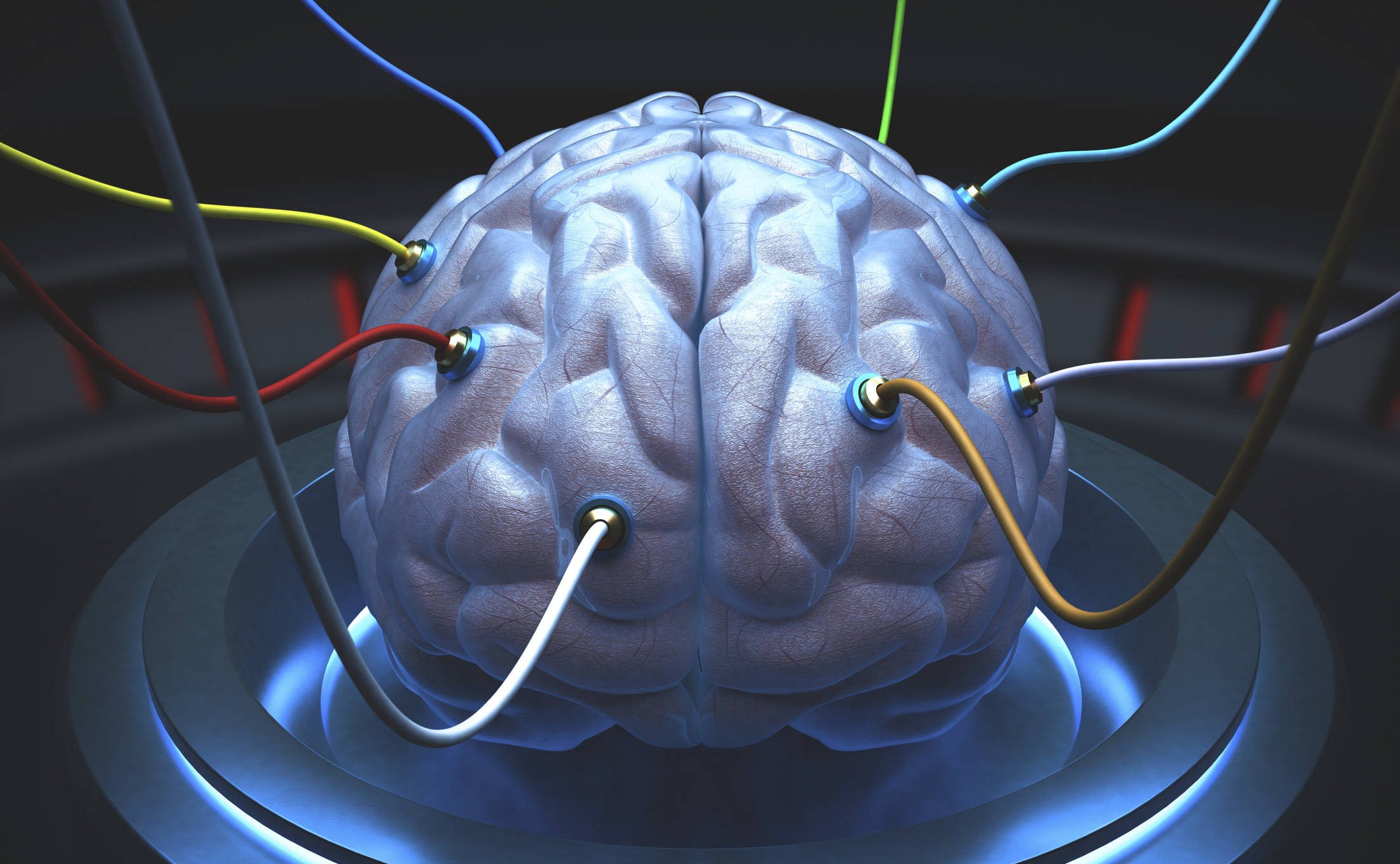
The takeaway of Robert Sapolsky’s Determined: A Science of Life Without Free Will is basically the same as that espoused by those Snickers commercials: You’re not you when you’re hungry. Except according to Sapolsky, there is no “you”—the hunger is what dictates your behavior, along with your stress level, whether or not you were born with fetal alcohol syndrome or grew up in a culture that valorizes individual freedoms versus one that prioritizes communal responsibility or in one that believes in an omniscient, omnipotent, vengeful deity.
Hormones, neurotransmitters, and how they are affected by your current and historical circumstances—these are the only things that determine how you will act and what decisions you will make at those inflection points when you’re called upon to make impactful choices. And all of them are things you did not choose and cannot control.
Sapolsky, a neurobiologist at Stanford University, is not averse to the notion of our having free will; it’s just that he can’t find it. And he’s looked everywhere. He has studied—intensely—not only neurobiology but also endocrinology, behavioral science, philosophy, primatology, criminology, psychiatry, sociology, anthropology, evolution, and history. Not a single one of these disciplines precludes free will, but all of them together do. All there is to us is biology and the way that biology is affected by our environment. That’s it. We are not, as Yoda suggested, luminous beings; we are only crude matter.
Read 17 remaining paragraphs | Comments
Source: Ars Technica – Determinism vs. free will: A scientific showdown