Google Stopped Selling Its Fitbit Products In Almost 30 Countries

Fitbit is active in only 23 countries after leaving Mexico, South Africa, and all Latin American countries. “We communicated that we will stop selling Fitbit products in select countries in order to align our hardware portfolio to map closer to Pixel’s regional availability,” a Google spokesperson confirmed to Cord Cutters News via email. From the report: The move marks a phasing out of Fitbit products after the Big Tech company acquired wearable company in 2021. Last month, Fitbit said it would remove itself from Asian markets Hong Kong, Korea, Malaysia, Thailand, and the Philippines, along with European markets Croatia, Czech Republic, Estonia, Hungary, Latvia, Lithuania, Luxembourg, Poland, Portugal, Romania, and Slovakia. It’s possible Google is removing Fitbit and Nest from the European markets because they don’t have a Google Store support. If that changes, Fitbit products and Nest Aware subscriptions could return. New products like the Pixel Watch could also arrive for the first time. “We remain committed to our customers and have not made any changes that impact the existing Fitbit devices they already own. Existing Fitbit customers will continue to have access to the same customer support, warranties will still be honored, and products will continue to receive software and security updates,” the Google spokesperson said.

Read more of this story at Slashdot.


Source: Slashdot – Google Stopped Selling Its Fitbit Products In Almost 30 Countries

10 Shows That Make Apple TV+ a Must-Have for Sci-Fi Fans

Monarch: Legacy of Monsters is bringing Godzilla to Apple TV+ this week, and sci-fi fans who show up for Kurt Russell and giant monsters will want to stick around after. The streamer is one of the very best around for original content, particularly of the genre variety. Here are 10 sci-fi (and horror) shows to check…

Read more…


Source: Gizmodo – 10 Shows That Make Apple TV+ a Must-Have for Sci-Fi Fans

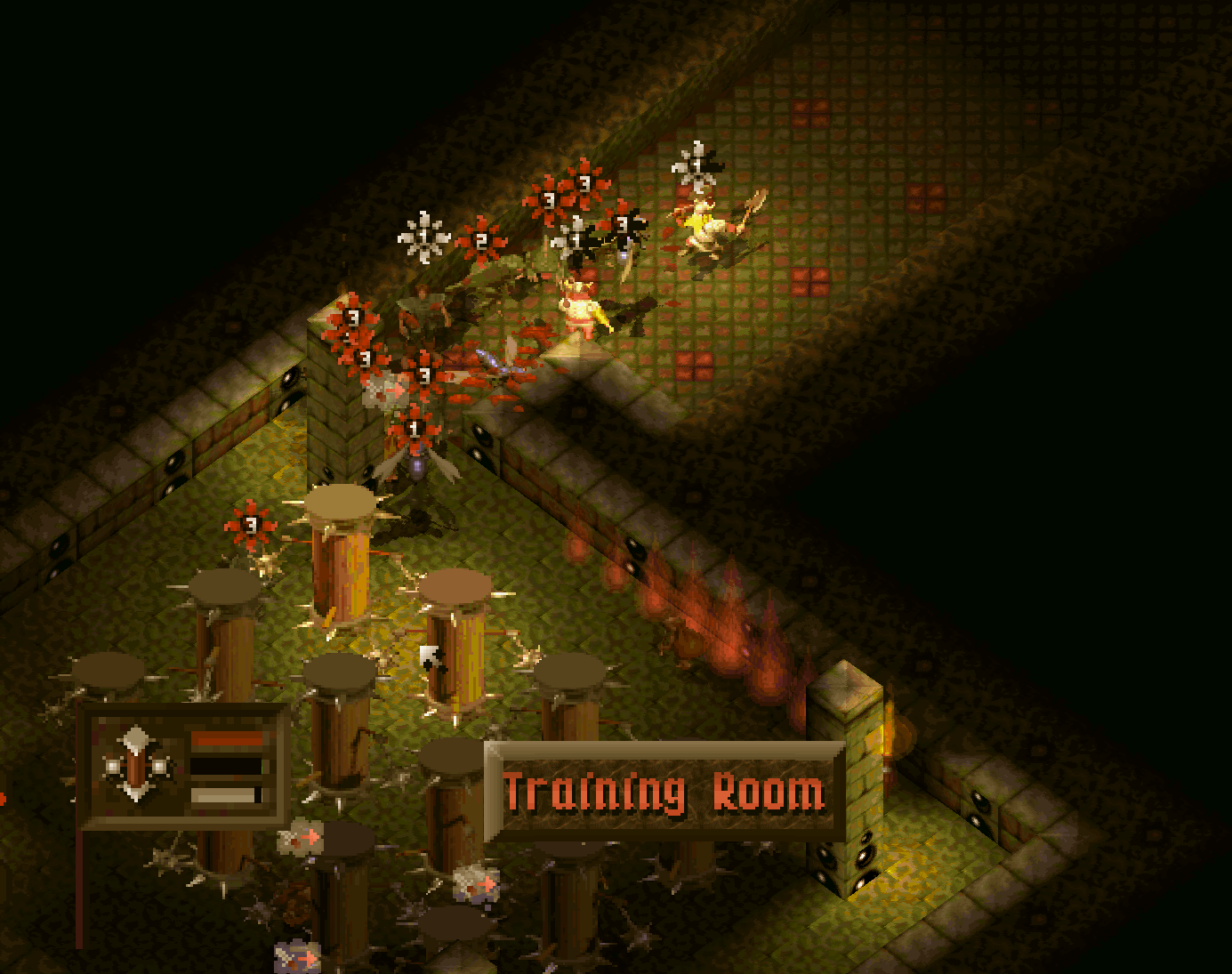
KeeperFX keeps Dungeon Keeper alive by making it actually playable

If it were me, I would simply not burrow my way directly to where all the creatures are gaining levels as fast as my gold allows them. But I'm not full of grog and adventuring spirit.

Enlarge / If it were me, I would simply not burrow my way directly to where all the creatures are gaining levels as fast as my gold allows them. But I’m not full of grog and adventuring spirit. (credit: EA/KeeperFX)

In an interview about The Making of Karateka, a wonderful interactive documentary and game-about-a-game, Chris Kohler of Digital Eclipse notes that, based on the company’s data, people don’t actually play the games inside “classics” collections. Maybe they spend 5 minutes inside a few games they remember, but that’s about it. Presenting classic games, exactly as they were when they arrived, can be historically important but often falls short of real engagement.

That’s why it’s a thrill to see (as first spotted by PC Gamer) a triumphant 1.0 release from KeeperFX, an open source “remake and fan expansion” of Dungeon Keeper, the 1997 Bullfrog strategy game that had players take on the other side of a dungeon crawl. The project had already, over 15 years, carried the game quite far, giving it modern Windows support, hi-res support, and loads of bugfixes and quality-of-life improvements. Now, says the team, all the original code from the original executable has been rewritten, freeing them up to change whatever they want in the future. There can be more than 2,048 “things” on the map, maps can have more than 85 square tiles, and scripting and mods can go much further.

But take note: “Ownership of the original game is still and will always be required for copyright reasons.” You can, like I did earlier today, rectify that with a $6 GOG purchase, at least while it’s on sale today. After downloading KeeperFX, you unpack it, run its launcher, point it to where you’ve installed the original Dungeon Keeper, and launch it. And then you get ready to click.

Read 5 remaining paragraphs | Comments


Source: Ars Technica – KeeperFX keeps Dungeon Keeper alive by making it actually playable

Intel Fixes High-Severity CPU Bug That Causes 'Very Strange Behavior'

An anonymous reader quotes a report from Ars Technica: Intel on Tuesday pushed microcode updates to fix a high-severity CPU bug that has the potential to be maliciously exploited against cloud-based hosts. The flaw, affecting virtually all modern Intel CPUs, causes them to “enter a glitch state where the normal rules don’t apply,” Tavis Ormandy, one of several security researchers inside Google who discovered the bug, reported. Once triggered, the glitch state results in unexpected and potentially serious behavior, most notably system crashes that occur even when untrusted code is executed within a guest account of a virtual machine, which, under most cloud security models, is assumed to be safe from such faults. Escalation of privileges is also a possibility.

The bug, tracked under the common name Reptar and the designation CVE-2023-23583, is related to how affected CPUs manage prefixes, which change the behavior of instructions sent by running software. Intel x64 decoding generally allows redundant prefixes — meaning those that don’t make sense in a given context — to be ignored without consequence. During testing in August, Ormandy noticed that the REX prefix was generating “unexpected results” when running on Intel CPUs that support a newer feature known as fast short repeat move, which was introduced in the Ice Lake architecture to fix microcoding bottlenecks. The unexpected behavior occurred when adding the redundant rex.r prefixes to the FSRM-optimized rep mov operation. […]

Intel’s official bulletin lists two classes of affected products: those that were already fixed and those that are fixed using microcode updates released Tuesday. An exhaustive list of affected CPUs is available here. As usual, the microcode updates will be available from device or motherboard manufacturers. While individuals aren’t likely to face any immediate threat from this vulnerability, they should check with the manufacturer for a fix. People with expertise in x86 instruction and decoding should read Ormandy’s post in its entirety. For everyone else, the most important takeaway is this: “However, we simply don’t know if we can control the corruption precisely enough to achieve privilege escalation.” That means it’s not possible for people outside of Intel to know the true extent of the vulnerability severity. That said, anytime code running inside a virtual machine can crash the hypervisor the VM runs on, cloud providers like Google, Microsoft, Amazon, and others are going to immediately take notice.

Read more of this story at Slashdot.


Source: Slashdot – Intel Fixes High-Severity CPU Bug That Causes ‘Very Strange Behavior’

The Biggest Differences Between the Galaxy S23 FE and Galaxy S23

Despite losing the newer processor and CPU, the Galaxy S23 FE stands up to the raw power of the Galaxy S23 when compared side-by-side.Despite losing the newer processor and CPU, the Galaxy S23 FE stands up to the raw power of the Galaxy S23 when compared side-by-side.

Source: LifeHacker – The Biggest Differences Between the Galaxy S23 FE and Galaxy S23

Nothing Phone says it will hack into iMessage, bring blue bubbles to Android

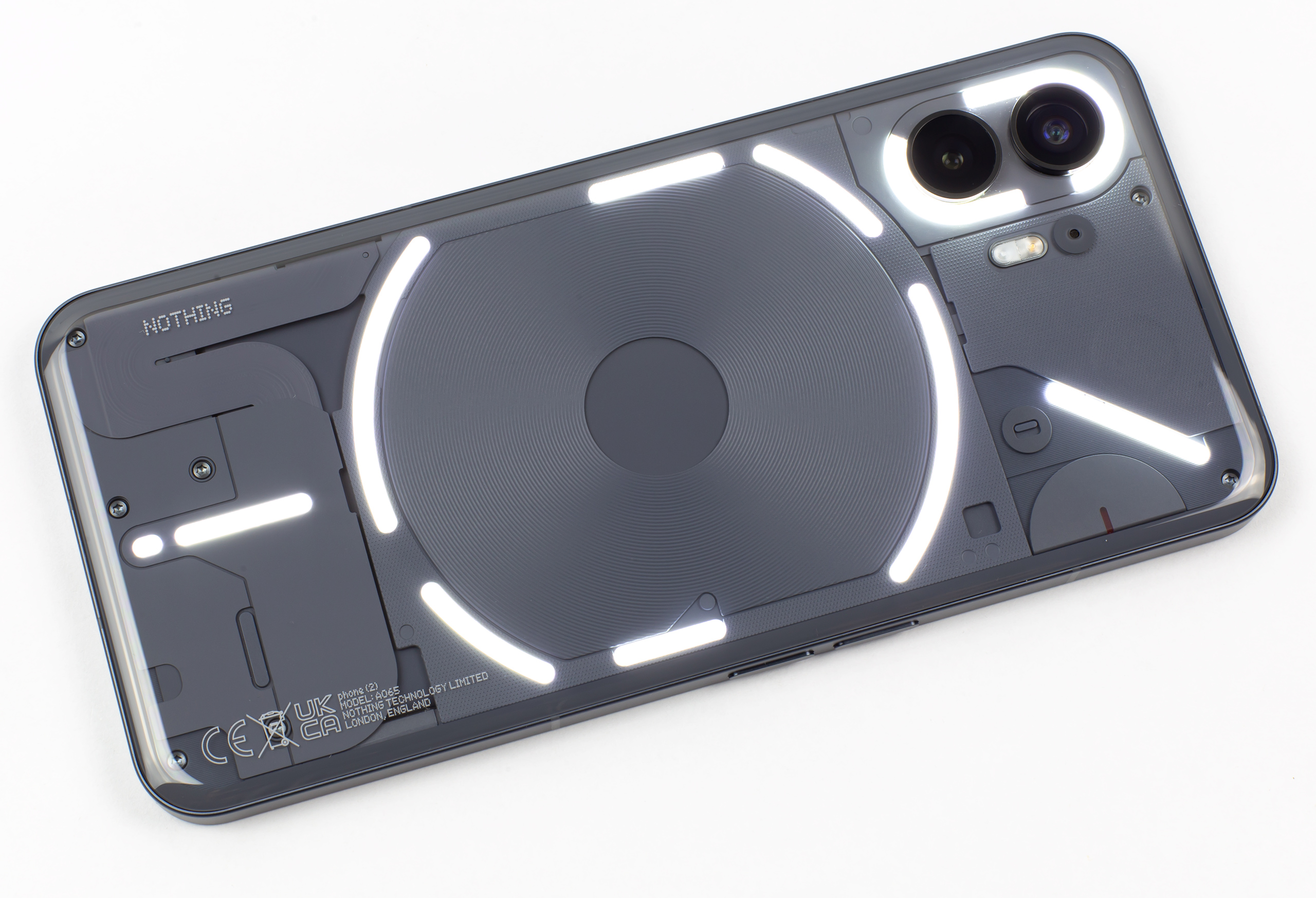
The Nothing Phone 2 all lit up.

Enlarge / The Nothing Phone 2 all lit up. (credit: Ron Amadeo)

Can an Android OEM really just hack its way into Apple’s iMessage? That is the hard-to-believe plan from upstart phone manufacturer “Nothing,” which says the new “Nothing Chats” will allow users to use “iMessage on Android” complete with a blue bubble sent to all their iPhone friends.

Nothing Chat will be powered by Sunbird, an app developer that has claimed to be able to send iMessage chats for about a year now, with no public launch. According to a Washington Post article with quotes from the CEOs of Nothing and Sunbird, Nothing will “start” rolling out “an early version” of Nothing Chats with iMessage compatibility on Friday. The only catch, supposedly, is that you’ll need a Nothing Phone 2.

Is this for real or a publicity stunt? Apple is on record saying that iMessage on Android would only serve to weaken Apple, and it doesn’t want to do that. Surely, any Android OEM offering “iMessage” support would immediately have the project shut down by Apple.

Read 11 remaining paragraphs | Comments


Source: Ars Technica – Nothing Phone says it will hack into iMessage, bring blue bubbles to Android

Marvel Finally Does the Thing with New Spectacular Spider-Men Comic

Even before Miles Morales got brought over to the main Marvel universe by way of Secret Wars to hang out with Peter Parker more easily, it was a given that the two Spider-Men would eventually team up on adventures. And while they’ve saved New York and the world several times in various comic events or certain other…

Read more…


Source: Gizmodo – Marvel Finally Does the Thing with New Spectacular Spider-Men Comic

48-Nation Bloc To Crack Down On Using Crypto Assets To Avoid Tax

A bloc of 48 nations have developed the Crypto-Asset Reporting Framework (CARF), aimed at standardizing reporting requirements for crypto assets to address concerns related to money laundering and tax evasion. It’s set to be implemented by 2027. The Register reports: Developed by the Organisation for Economic Co-operation and Development (OECD), the CARF was developed under the 168-member Global Forum on Transparency and Exchange of Information for Tax Purposes, with the G20 and the Organisation for Economic Co-operation and Development looking on approvingly and lending a hand. As the name implies, that Forum is all about sharing data so that each nation’s tax authorities have the information they need to understand money movements and make sure they can see what they’re allowed to tax. The Forum and the legislative instruments it has fostered include reporting requirements that ensure relevant information is collected by those who facilitate transactions and will be shared.

CARF brings similar reporting requirements to crypto assets. Note the term “crypto assets.” That’s important, because cryptocurrency is not the only blockchain-based instrument that worries authorities. Some, like non-fungible tokens, rely on the same “greater fool” theory that pumped up cryptocurrency prices, and can attract – ahem – interesting investors. But others are far less contentious or speculative, and instead aim to speed transaction processing. Stablecoins, for example, are often suggested as a means for faster and cheaper cross-border transactions than is possible with dominant transaction processing services. Tokenized assets can also be more easily integrated into applications to ease automated money movements.

That speed and flexibility is increasingly appreciated. But unless transactions made with those instruments can be observed, the potential for their use to evade tax authorities is high. CARF’s use of the term “crypto assets” therefore signals an effort to cover the weird world of cryptocurrencies and the emerging classes of classier tokenized assets. The Framework was signed off in March 2023, and in the time since OECD members and other interested nations have been dotting the Is and crossing the Ts to prepare for its implementation. The Framework can be found here.

Read more of this story at Slashdot.


Source: Slashdot – 48-Nation Bloc To Crack Down On Using Crypto Assets To Avoid Tax

How to Install Odoo 17 on Debian 12

Odoo is an open-source suite of business management software applications that encompasses a wide range of business needs, including customer relationship management (CRM), sales, project management, inventory management, manufacturing, financial management, and more. In this tutorial, we will show you how to install Odoo 17 on Debian 12 OS.

The post How to Install Odoo 17 on Debian 12 appeared first on Linux Today.


Source: Linux Today – How to Install Odoo 17 on Debian 12

People think white AI-generated faces are more real than actual photos, study says

Eight images used in the study. Four of them are synthetic. Can you tell which ones?

Enlarge / Eight images used in the study; four of them are synthetic. Can you tell which ones? (Answers at bottom of the article.) (credit: Nightingale and Farid (2022))

A study published in the peer-reviewed journal Psychological Science on Monday found that AI-generated faces, particularly those representing white individuals, were perceived as more real than actual face photographs, reports The Guardian. The finding did not extend to images of people of color, likely due to AI models being trained predominantly on images of white individuals—a common bias that is well-known in machine learning research.

In the paper titled “AI Hyperrealism: Why AI Faces Are Perceived as More Real Than Human Ones,” researchers from Australian National University, the University of Toronto, University of Aberdeen, and University College London coined the term in the paper’s title, hyperrealism, which they define as a phenomenon where people think AI-generated faces are more real than actual human faces.

In their experiments, the researchers presented white adults with a mix of 100 AI-generated and 100 real white faces, asking them to identify which were real and their confidence in their decision. Out of 124 participants, 66 percent of AI images were identified as human, compared to 51 percent for real images. This trend, however, was not observed in images of people of color, where both AI and real faces were judged as human about 51 percent of the time, irrespective of the participant’s race.

Read 8 remaining paragraphs | Comments


Source: Ars Technica – People think white AI-generated faces are more real than actual photos, study says

YouTube Adapts Its Policies For the Coming Surge of AI Videos

Sarah Perez reports via TechCrunch: YouTube today announced how it will approach handling AI-created content on its platform with a range of new policies surrounding responsible disclosure as well as new tools for requesting the removal of deepfakes, among other things. The company says that, although it already has policies that prohibit manipulated media, AI necessitated the creation of new policies because of its potential to mislead viewers if they don’t know the video has been “altered or synthetically created.” One of the changes that will roll out involves the creation of new disclosure requirements for YouTube creators. Now, they’ll have to disclose when they’ve created altered or synthetic content that appears realistic, including videos made with AI tools. For instance, this disclosure would be used if a creator uploads a video that appears to depict a real-world event that never happened, or shows someone saying something they never said or doing something they never did.

It’s worth pointing out that this disclosure is limited to content that “appears realistic,” and is not a blanket disclosure requirement on all synthetic video made via AI. “We want viewers to have context when they’re viewing realistic content, including when AI tools or other synthetic alterations have been used to generate it,” YouTube spokesperson Jack Malon told TechCrunch. “This is especially important when content discusses sensitive topics, like elections or ongoing conflicts,” he noted. […] The company also warns that creators who don’t properly disclose their use of AI consistently will be subject to “content removal, suspension from the YouTube Partner Program, or other penalties.” YouTube says it will work with creators to make sure they understand the requirements before they go live. But it notes that some AI content, even if labeled, may be removed if it’s used to show “realistic violence” if the goal is to shock or disgust viewers. […]

Other changes include the ability for any YouTube user to request the removal of AI-generated or other synthetic or altered content that simulates an identifiable individual — aka a deepfake — including their face or voice. But, the company clarifies that not all flagged content will be removed, making room for parody or satire. It also says that it will consider whether or not the person requesting the removal can be uniquely identified or whether the video features a public official or other well-known individual, in which case “there may be a higher bar,” YouTube says. Alongside the deepfake request removal tool, the company is introducing a new ability that will allow music partners to request the removal of AI-generated music that mimics an artist’s singing or rapping voice.

Read more of this story at Slashdot.


Source: Slashdot – YouTube Adapts Its Policies For the Coming Surge of AI Videos

Google loses battle to redact confidential info leaked by final witness

Google loses battle to redact confidential info leaked by final witness

Enlarge (credit: SOPA Images / Contributor | LightRocket)

On Tuesday, Google ended two and a half weeks of defending its search business against the Department of Justice’s monopoly claims, reportedly with a whimper.

During the DOJ’s cross-examination of Google’s final witness, Kevin Murphy, the economist got “upset” when the DOJ introduced a 2011 email from an ex-Google executive, Chris Barton, which suggested that Google’s default search agreements with wireless carriers, mobile device manufacturers, and browser partners had to be “exclusive,” Big Tech on Trial reported, or else they were worthless.

“Without the exclusivity, we are not getting anything,” Barton’s email said. “Without an exclusive search deal, a large carrier can and will ship alternatives to Google.”

Read 21 remaining paragraphs | Comments


Source: Ars Technica – Google loses battle to redact confidential info leaked by final witness

Study reveals how natural processes helped sculpt the Great Sphinx of Giza

Frontal view of the Great Sphinx of Giza in Egypt

Enlarge / Experiments yield fresh evidence to support controversial hypothesis about the formation of the Great Sphinx of Giza. (credit: MusikAnimal/CC BY-SA 3.0)

Leif Ristroph, a physicist and applied mathematician at New York University, was conducting experiments on how clay erodes in response to flowing water when he noticed tiny shapes emerging that resembled seated lions—in essence, miniature versions of the Great Sphinx of Giza in Egypt. Further experiments provided evidence in support of a longstanding hypothesis that natural processes first created a land formation known as a yardang, after which humans added additional details to create the final statue. Initial results were first presented last year as part of the American Physical Society’s Gallery of Fluid Motion, with a full paper being published this week in the journal Physical Review Fluids.

“Our results suggest that Sphinx-like structures can form under fairly commonplace conditions,” Ristroph et al. wrote in their paper. “These findings hardly resolve the mysteries behind yardangs and the Great Sphinx, but perhaps they provoke us to wonder what awe-inspiring landforms ancient people could have encountered in the deserts of Egypt and why they might have envisioned a fantastic creature.”

In 2018, Ristroph’s applied mathematics lab fine-tuned the recipe for blowing the perfect bubble based on experiments with soapy thin films, pinpointing exactly what wind speed is needed to push out the film and cause it to form a bubble, and how that speed depends on parameters like the size of the wand. (You want a circular wand with a 1.5-inch perimeter, and you should gently blow at a consistent 6.9 cm/s.)

Read 10 remaining paragraphs | Comments


Source: Ars Technica – Study reveals how natural processes helped sculpt the Great Sphinx of Giza

Rivian Software Update Bricks Infotainment System, Fix Not Obvious

An anonymous reader quotes a report from Electrek: On Monday, Rivian released an incremental software update 2023.42, which bricked the infotainment system in R1Ses and R1Ts. The company is frantically working on a fix, but it might not be an OTA. […] The vehicles are drivable, but software and displays go black. It appears that the 2023.42 software update hangs at 90% on the vehicle screen or 50% on the app screen, and then the vehicle screens black out. All systems appear to still work except for the displays. At the moment, it appears that Amazon vans are not impacted. Update: The company has acknowledged the issue with affected customers but has yet to issue a fix or plan to fix. Rivian’s vice president of software engineering, Wassim Bensaid, took to Reddit to update users on the situation, writing: “Hi All, We made an error with the 2023.42 OTA update — a fat finger where the wrong build with the wrong security certificates was sent out. We cancelled the campaign and we will restart it with the proper software that went through the different campaigns of beta testing. Service will be contacting impacted customers and will go through the resolution options. That may require physical repair in some cases. This is on us — we messed up. Thanks for your support and your patience as we go through this.

*Update 1 (11/13, 10:45 PM PT): The issue impacts the infotainment system. In most cases, the rest of the vehicle systems are still operational. A vehicle reset or sleep cycle will not solve the issue. We are validating the best options to address the issue for the impacted vehicles. Our customer support team is prioritizing support for our customers related to this issue. Thank you.”

Read more of this story at Slashdot.


Source: Slashdot – Rivian Software Update Bricks Infotainment System, Fix Not Obvious