
SB Components has launched a low cost and high quality audio expansion board compatible with the open-source Raspberry Pi Pico. The device provides multiple audio outputs, a small display and a microSD card for convenient storage. The Pico Audio Expansion board provides female headers to accommodate the low-cost Raspberry Pi Pico. Additionally, it provides two […]
Source: LXer – MusicPi audio expansion boards for Raspberry Pi Pico
Monthly Archives: October 2023
Raspberry Pi 5 Single Board Computers Begin Shipping
After the Raspberry Pi 5 was excitingly announced a few weeks ago, Eben Upton shared today that ramping up the production has gone better than initially anticipated and that these AArch64 single board computers are beginning to ship to customers…
Source: Phoronix – Raspberry Pi 5 Single Board Computers Begin Shipping
Tinder will let your family nag you and play virtual matchmaker
Tinder has rolled out a new feature dubbed “Tinder Matchmaker” that will allow users’ family and friends to access the dating app and make recommendations for potential matches. The matchmakers do not need to have a Tinder profile to view or suggest possible pairings. Hypothetically, that means anyone from your grandmother to your ex-boyfriend could help you select a new profile to match with.
A Tinder user will need to launch a “Tinder Matchmaker session” either directly from a profile card or within the app’s settings. If you see a potential match, you can share a unique link with up to 15 individuals in a 24-hour period. Once a matchmaker gets a link, they can log into Tinder or continue as a guest.
A matchmaker will gain access to profiles they can “like” and if they do, it will appear as a recommendation for the original Tinder user to see. The matchmaker’s abilities are limited though. They can’t send messages or actually swipe right on the profiles in question – ultimately, the Tinder user will decide whether or not to match with another.
“For years, singles have asked their friends to help find their next match on Tinder, and now we’re making that so easy with Tinder Matchmaker,” Melissa Hobley, Tinder’s Chief Marketing Officer says on the new feature.
Bumble has a similar offering, where a user can recommend a profile to a friend through a private link that only they can open within the dating app. However, it’s more geared for one-on-one sharing compared to Tinder Matchmaker. Hinge, another key competitor, tried launching a separate Hinge Matchmaker app in 2017. Matchmakers on the Hinge spinoff were supposed to suggest potential pairings based on who the individuals knew personally from Facebook. That secondary app didn’t last for Hinge – the app is no longer available.
Tinder’s matchmaker feature is just the latest offering from the company designed to entice more users to engage with the app in new ways. Verification on Tinder got a boost with video selfies, incognito mode finally was introduced earlier this year and the company just started letting Tinder users specify gender pronouns and non-monogamous relationship types.
This article originally appeared on Engadget at https://www.engadget.com/tinder-will-let-your-family-nag-you-and-play-virtual-matchmaker-100011319.html?src=rss
Source: Engadget – Tinder will let your family nag you and play virtual matchmaker
How to Install and Enable Dark Theme in Geany IDE on Linux
Discover the lightweight yet powerful open-source Geany text editor alternative to Notepad++ on Linux with an installation guide and a few tips and tricks.
Source: LXer – How to Install and Enable Dark Theme in Geany IDE on Linux
CarPlay? Android Auto? Most People Still Just Listen to AM/FM Radio
“New data suggests that what a lot of people do most often in their car is listen to AM/FM radio,” writes 9to5Mac. “Yes, it’s 2023, and you might think AM/FM radio is on the way out, but new data show that to not be the case for a lot of people…”
The market research company Edison Research used one-day listening diarires (for Americans older than 13) to measure the amount of time spent listening to audio — then compared results for those with and without an in-car entertainment system.
Those without an in-car entertainment system spent 67% of their time listening to AM/FM radio — with the rest listening to Sirius XM (12%), a streaming service (9%), or podcasts (4%).
But among those with an in-car entertainment system… 46% still listened to AM/FM radio. Less than a fifth listened to Sirus XM (19%), a streaming service (18%), or podcasts (7%).
The researchers’ conclusion? “Even those with these systems choose AM/FM for nearly half of their in-car listening. For many people, even with so many new options, radio and the in-car environment continue to just go together.”


Read more of this story at Slashdot.
Source: Slashdot – CarPlay? Android Auto? Most People Still Just Listen to AM/FM Radio
California Law Limits Bitcoin ATM Transactions to $1,000 to Thwart Scammers
One 80-year-old retired teacher in Los Angeles lost $69,000 in bitcoin to scammers. And 46,000 people lost over $1 billion to crypto scams since 2021 (according to America’s Federal Trade Commission).
Now the Los Angeles Times reports California’s new moves against scammers using bitcoin ATMs, with a bill one representative says “is about ensuring that people who have been frauded in our communities don’t continue to watch our state step aside when we know that these are real problems that are happening.”
Starting in January, California will limit cryptocurrency ATM transactions to $1,000 per day per person under Senate Bill 401, which Gov. Gavin Newsom signed into law. Some bitcoin ATM machines advertise limits as high as $50,000… Victims of bitcoin ATM scams say limiting the transactions will give people more time to figure out they’re being tricked and prevent them from using large amounts of cash to buy cryptocurrency.
But crypto ATM operators say the new laws will harm their industry and the small businesses they pay to rent space for the machines. There are more than 3,200 bitcoin ATMs in California, according to Coin ATM Radar, a site that tracks the machines’ locations. “This bill fails to adequately address how to crack down on fraud, and instead takes a punitive path focused on a specific technology that will shudder the industry and hurt consumers, while doing nothing to stop bad actors,” said Charles Belle, executive director of the Blockchain Advocacy Coalition…
Law enforcement has cracked down on unlicensed crypto ATMs, but it can be tough for consumers to tell how serious the industry is about addressing the concerns. In 2020, a Yorba Linda man pleaded guilty to charges of operating unlicensed bitcoin ATMs and failing to maintain an anti-money-laundering program even though he knew criminals were using the funds. The illegal business, known as Herocoin, allowed people to buy and sell bitcoin in transactions of up to $25,000 and charged a fee of up to 25%.
So there’s also provisions in the law against exorbitant fees:
The new law also bars bitcoin ATM operators from collecting fees higher than $5 or 15% of the transaction, whichever is greater, starting in 2025. Legislative staff members visited a crypto kiosk in Sacramento and found markups as high as 33% on some digital assets when they compared the prices at which cryptocurrency is bought and sold. Typically, a crypto ATM charges fees between 12% and 25% over the value of the digital asset, according to a legislative analysis…
Another law would by July 2025 require digital financial asset businesses to obtain a license from the California Department of Financial Protection and Innovation.


Read more of this story at Slashdot.
Source: Slashdot – California Law Limits Bitcoin ATM Transactions to ,000 to Thwart Scammers
NASA Transmits Patches to the Two Voyager Probes Launched in 1977
“It’s not every day that you get to update the firmware on a device that was produced in the 1970s,” writes Hackaday, “and rarely is said device well beyond the boundaries of our solar system.
“This is however exactly what the JPL team in charge of the Voyager 1 & 2 missions are facing, as they are in the process of sending fresh firmware patches over to these amazing feats of engineering.”
From NASA’s announcement:
One effort addresses fuel residue that seems to be accumulating inside narrow tubes in some of the thrusters on the spacecraft. The thrusters are used to keep each spacecraft’s antenna pointed at Earth. This type of buildup has been observed in a handful of other spacecraft… In some of the propellant inlet tubes, the buildup is becoming significant. To slow that buildup, the mission has begun letting the two spacecraft rotate slightly farther in each direction [almost 1 degree] before firing the thrusters. This will reduce the frequency of thruster firings… While more rotating by the spacecraft could mean bits of science data are occasionally lost — akin to being on a phone call where the person on the other end cuts out occasionally — the team concluded the plan will enable the Voyagers to return more data over time.
Engineers can’t know for sure when the thruster propellant inlet tubes will become completely clogged, but they expect that with these precautions, that won’t happen for at least five more years, possibly much longer. “This far into the mission, the engineering team is being faced with a lot of challenges for which we just don’t have a playbook,” said Linda Spilker, project scientist for the mission as NASA’s Jet Propulsion Laboratory in Southern California. “But they continue to come up with creative solutions.”
But that’s not the only issue:
The team is also uploading a software patch to prevent the recurrence of a glitch that arose on Voyager 1 last year. Engineers resolved the glitch, and the patch is intended to prevent the issue from occurring again in Voyager 1 or arising in its twin, Voyager 2…
In 2022, the onboard computer that orients the Voyager 1 spacecraft with Earth began to send back garbled status reports, despite otherwise continuing to operate normally… The attitude articulation and control system (AACS) was misdirecting commands, writing them into the computer memory instead of carrying them out. One of those missed commands wound up garbling the AACS status report before it could reach engineers on the ground.
The team determined the AACS had entered into an incorrect mode; however, they couldn’t determine the cause and thus aren’t sure if the issue could arise again. The software patch should prevent that.
“This patch is like an insurance policy that will protect us in the future and help us keep these probes going as long as possible,” said JPL’s Suzanne Dodd, Voyager project manager. “These are the only spacecraft to ever operate in interstellar space, so the data they’re sending back is uniquely valuable to our understanding of our local universe.”
Since their launch in 1977, NASA’s two Voyager probes have travelled more than 12 billion miles (each!), and are still sending back data from beyond our solar system.


Read more of this story at Slashdot.
Source: Slashdot – NASA Transmits Patches to the Two Voyager Probes Launched in 1977
KDE vs. GNOME: Choosing the Perfect Linux Desktop Experience
A comparative study of two prominent Linux desktop environments, KDE and GNOME to assist you in making an informed choice.
Source: LXer – KDE vs. GNOME: Choosing the Perfect Linux Desktop Experience
Today’s NYT Connections Hints (and Answer) for Monday, October 23, 2023
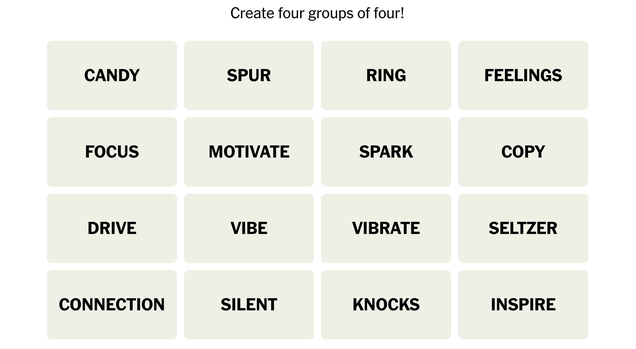
If you’re looking for the Connections answer for Monday, October 23, 2023, read on—I’ll share some clues, tips, and strategies, and finally the solutions to all four categories. Along the way, I’ll explain the meanings of the trickier words and we’ll learn how everything fits together. Beware, there are spoilers below…
Source: LifeHacker – Today’s NYT Connections Hints (and Answer) for Monday, October 23, 2023
Kernel prepatch 6.6-rc7
Linus has released 6.6-rc7 for testing.
Anyway, while this is all bigger than I’d have liked it to be, if
the upcoming week is quiet and normal, this is the last rc and next
Sunday will see the final release and then we’ll open the merge
window for 6.7. I simply am not aware of any issues that would be
showstoppers.
Source: LWN.net – Kernel prepatch 6.6-rc7
Linux 6.6-rc7 Released: Linux 6.6 Final Likely Next Sunday
Linus Torvalds today released the seventh weekly release candidate of Linux 6.6 while is hoping to release the stable kernel version next weekend…
Source: Phoronix – Linux 6.6-rc7 Released: Linux 6.6 Final Likely Next Sunday
PeaZip 9.5 File Archiver Brings UI and Performance Improvements
The latest PeaZip 9.5 archiver unveils heightened performance, a faster mode for archive browsing, and polished file manager functionalities.
Source: LXer – PeaZip 9.5 File Archiver Brings UI and Performance Improvements
Mozilla Launches Annual Digital Privacy 'Creep-o-Meter'. This Year's Status: 'Very Creepy'
“In 2023, the state of our digital privacy is: Very Creepy.” That’s the verdict from Mozilla’s first-ever “Annual Consumer Creep-o-Meter,” which attempts to set benchmarks for digital privacy and identify trends:
Since 2017, Mozilla has published 15 editions of *Privacy Not Included, our consumer tech buyers guide. We’ve reviewed over 500 gadgets, apps, cars, and more, assessing their security features, what data they collect, and who they share that data with. In 2023, we compared our most recent findings with those of the past five years. It quickly became clear that products and companies are collecting more personal data than ever before — and then using that information in shady ways…
Products are getting more secure, but also a lot less private. More companies are meeting Mozilla’s Minimum Security Standards like using encryption and providing automatic software updates. That’s good news. But at the same time, companies are collecting and sharing users’ personal data like never before. And that’s bad news. Many companies now view their hardware or software as a means to an end: collecting that coveted personal data for targeted advertising and training AI. For example: The mental health app BetterHelp shares your data with advertisers, social media platforms, and sister companies. The Japanese car manufacturer Nissan collects a wide range of information, including sexual activity, health diagnosis data, and genetic information — but doesn’t specify how.
An increasing number of products can’t be used offline. In the past, the privacy conscious could always buy a connected device but turn off connectivity, making it “dumb.” That’s no longer an option in many cases. The number of connected devices that require apps and can’t be used offline are increasing. This trend, coupled with the first, means it’s harder and harder to keep your data private.
Privacy policies also need improvement. “Legalese, ambiguity, and policies that sprawl across multiple documents and URLs are the status quo. And it’s getting worse, not better. Companies use these policies as a shield, not an actual resource for consumers.” They note that Toyota has more than 10 privacy policy documents, and that it would actually take five hours to read all the privacy documents the Meta Quest Pro VR headset.
In the end they advise opting out of data collection when possible, enabling security features, and “If you’re not comfortable with a product’s privacy, don’t buy it. And, speak up. Over the years, we’ve seen companies respond to consumer demand for privacy, like when Apple reformed app tracking and Zoom made end-to-end encryption a free feature.”
You can also take a quiz that calculates your own privacy footprint (based on whether you’re using consumer tech products like the Apple Watch, Nintendo Switch, Nook, or Telegram). Mozilla’s privacy advocates award the highest marks to privacy-protecting products like Signal, Sonos’ SL Speakers, and the Pocketbook eReader (an alternative to Amazon’s Kindle. (Although 100% of the cars reviewed by Mozilla “failed to meet our privacy and security standards.”)
The graphics on the site help make its point. As you move your mouse across the page, the cartoon eyes follow its movement…


Read more of this story at Slashdot.
Source: Slashdot – Mozilla Launches Annual Digital Privacy ‘Creep-o-Meter’. This Year’s Status: ‘Very Creepy’
20 Carriers Face Call-Blocking in the US for Submitting Fake 'Robocall Mitigation Plans'
“Twenty phone companies may soon have all their voice calls blocked by US carriers,” reports Ars Technica, “because they didn’t submit real plans for preventing robocalls on their networks.”
The 20 carriers include a mix of US-based and foreign voice service providers that submitted required “robocall mitigation” plans to the Federal Communications Commission about two years ago. The problem is that some of the carriers’ submissions were blank pages and others were bizarre images or documents that had no relation to robocalls. The strange submissions, according to FCC enforcement orders issued Monday, included “a .PNG file depicting an indiscernible object,” a document titled “Windows Printer Test Page,” an image “that depicted the filer’s ‘Taxpayer Profile’ on a Pakistani government website,” and “a letter that stated: ‘Unfortunately, we do not have such a documents.'”
Monday’s FCC announcement said the agency’s Enforcement Bureau issued orders demanding that “20 non-compliant companies show cause within 14 days as to why the FCC should not remove them from the database for deficient filings.” The orders focus on the certification requirements and do not indicate whether these companies carry large amounts of robocall traffic. Each company will be given “an opportunity to cure any deficiencies in its robocall mitigation program description or explain why its certification is not deficient.” After the October 30 deadline, the companies could be removed from the FCC’s Robocall Mitigation Database.
Removal from the database would oblige other phone companies to block all of their calls.


Read more of this story at Slashdot.
Source: Slashdot – 20 Carriers Face Call-Blocking in the US for Submitting Fake ‘Robocall Mitigation Plans’
Instagram's latest test feature turns users' photos into stickers for Reels and Stories
Instagram is testing a sticker creation feature that will let users make custom stickers from their own photos — and other users’, in some cases — and pop them into Reels or Stories. While Meta has been going all in on prompt-based, AI-generated stickers lately, this tool is something much simpler. It’ll just select the subject of a photo and remove the background, creating a free-floating sticker that can be placed over other content.
Adam Mosseri/ Instagram
Adam Mosseri gave a brief demonstration of how it’ll work in a video shared to his broadcast channel. He also said that, in addition to creating stickers from photos saved on your phone, users will be able to make them from “eligible images you see on Instagram.” Mosseri didn’t share any further details on that, but it suggests users will be able to opt in to making their pictures stickerable.
It’s still just a test and hasn’t rolled out to all users, so we’ll see what that actually looks like in time. The platform last week started testing a new polling feature, too, which will show up in the comments section under feed posts.
This article originally appeared on Engadget at https://www.engadget.com/instagrams-latest-test-feature-turns-users-photos-into-stickers-for-reels-and-stories-211046111.html?src=rss
Source: Engadget – Instagram’s latest test feature turns users’ photos into stickers for Reels and Stories
Warehouse: A Must-Have App Manager for Flatpak Enthusiasts
Seeking an efficient Flatpak app manager? Warehouse’s intuitive GUI offers Flatpak users a seamless experience and efficiency. Check it out!
Source: LXer – Warehouse: A Must-Have App Manager for Flatpak Enthusiasts
'Threads' Downloads Nearly Doubled in September, as New Features Roll Out
“Mark Zuckerberg is making good on his promise to accelerate the use of Threads,” reports Business Insider:
The Meta CEO insisted in July that the app was not in its final form. “I’m highly confident that we’re gonna be able to pour enough gasoline on this to help it grow,” Zuckerberg said. Since then, Threads has rolled out a host of major new features, including a web version, keyword search, voice posts, and the ability to edit posts, even as it avoids promoting news. Smaller things, too, like being able to follow updates in individual threads at the tap of a bell icon, a way to mass follow people mentioned in a post, and even tag people’s Instagram accounts, are now available… More Threads features are said to be on the way, like polls.
But Insider also reports that “As the app has matured quickly in recent weeks, users have started to return and downloads have continued to rise.”
So far in October, Threads has hovered around 33 million daily active users and 120 million monthly active users, according to data from Apptopia, up from about 25 million daily users and 100 million monthly users in July… Since the app launched on July 6, it’s been downloaded 260 million times, Apptopia data shows, with downloads in September almost double the downloads in August…
Although the entire team working on Threads remains small by Meta standards, around 50 people, the company was surprised by the interest in the app and “really wants it to work,” an employee said. To that end, Threads is now being integrated to an extent with Facebook and Instagram, two of the most popular apps in the world. There is a direct link to Threads on each user’s Instagram page, a post on Threads can be sent in Instagram DMs, and as of this week, Threads is being promoted within the Instagram app feed via a small carousel of select posts under the header “Threads for you….”
It’s not just Instagram, according to BGR. “If you’ve been posting some especially strange messages Threads, thinking that only the few people who follow you will see them, I have some bad news for you…”
As spotted by TechCrunch, users on Facebook have noticed something new on their News Feed: content from Threads. It appears that Meta is now showing Facebook users a new “For You from Threads” section on the News Feed that contains recommended content from the sibling social media platform.


Read more of this story at Slashdot.
Source: Slashdot – ‘Threads’ Downloads Nearly Doubled in September, as New Features Roll Out
SAG-AFTRA and AMPTP Get Back to Negotiating This Week

Yesterday, October 21 marked the 100th day of the SAG-AFTRA strike. As a way of commemorating the occasion, the actors union affirmed that it would continue to stand firm and wanted to continue negotiations with the AMPTP after their last discussion two weeks ago fell apart. The winter season isn’t that far off, and…
Source: Gizmodo – SAG-AFTRA and AMPTP Get Back to Negotiating This Week
James Bond's Producers Are Still Figuring Out His Future

Daniel Craig didn’t have the longest run of James Bond movies, but he did have one of the most eventful. 2007’s Casino Royale gave the series a shot in the arm that both made it matter more in the eye of the mainstream public, and greatly boosted his profile.
Source: Gizmodo – James Bond’s Producers Are Still Figuring Out His Future
QLogic 10Gb "QLGE" Ethernet Driver Set To Be Removed From The Linux Kernel
For those that happen to have QLogic 10Gb PCIe Ethernet adapters, the mainline Linux kernel is planning to remove this driver from the kernel source tree unless any active users step-up…
Source: Phoronix – QLogic 10Gb “QLGE” Ethernet Driver Set To Be Removed From The Linux Kernel