AI This Week: Cruise's Robotaxi Meltdown

  • Academic researchers at the University of Chicago are helping artists fight back against AI algorithms that would ingest and monetize their works. Researchers have developed a program called “Nightshade” that could “break” AI programs that ingest unauthorized content that has been laced with the software.

Read more…


Source: Gizmodo – AI This Week: Cruise’s Robotaxi Meltdown

G7 Nations Will Announce an 'AI Code of Conduct' for Companies Building AI

The seven industrial countries known as the “G7” — America, Canada, Japan, Germany, France, Italy, and Britain — will agree on a code of conduct Monday for companies developing advanced AI systems, reports Reuters.

The news comes “as governments seek to mitigate the risks and potential misuse of the technology,” Reuters reports — citing a G7 document.

The 11-point code “aims to promote safe, secure, and trustworthy AI worldwide and will provide voluntary guidance for actions by organizations developing the most advanced AI systems, including the most advanced foundation models and generative AI systems”, the G7 document said. It “is meant to help seize the benefits and address the risks and challenges brought by these technologies”.

The code urges companies to take appropriate measures to identify, evaluate and mitigate risks across the AI lifecycle, as well as tackle incidents and patterns of misuse after AI products have been placed on the market. Companies should post public reports on the capabilities, limitations and the use and misuse of AI systems, and also invest in robust security controls.

Read more of this story at Slashdot.


Source: Slashdot – G7 Nations Will Announce an ‘AI Code of Conduct’ for Companies Building AI

Firefox Isn't Just a Browser; It Is a Web Resistance, and It's Now at Version 119

I’m baffled as to why Google Chrome still dominates the browser market when Firefox, a faster and privacy-conscious open-source browser, is readily available!In the previous update, Firefox introduced a long-awaited feature – an automatic and customizable built-in translation. With this addition, Firefox fills a significant gap that was once held against it.Now, with the latest update, Firefox 119 not only surpasses Chrome (I’m confident it does) but also competes with PDF editors. With great excitement, let’s explore what this latest version has in store.

Source: LXer – Firefox Isn’t Just a Browser; It Is a Web Resistance, and It’s Now at Version 119

Linux Mint Gets 'Experimental' Wayland Support in December

“The work started on Wayland,” the Linux Mint project announced in their monthly newsletter.

An anonymous reader shared this report from 9to5Linux about an upcoming new option in the Ubuntu-based distro:

Linux Mint 21.3 [planned for Christmas of 2023] will be the first Linux Mint release to offer a Wayland session, but in an experimental state. The default session will still be the X11 one, but users who want to try Wayland can do so by selecting the “Cinnamon on Wayland” session from the login screen.
“The Wayland session won’t be as stable as the default one. It will lack features and it will come with its own limitations. We won’t recommend it but you’ll be able to give it a shot if you want to and it’ll be there for interested people if they want to give us feedback,” said Linux Mint project leader Clement Lefebvre.

I said that “2024 is the year of the Wayland desktop”, but Clement Lefebvre doesn’t think Linux Mint needs Wayland support before 2026… By that time, I believe Xfce will also be fully Wayland compatible so that Linux Mint can fully switch to Wayland by default.

The newsletter says the 2026 target “leaves us two years to identify and to fix all the issues. It’s something we’ll continue to work on.
“Whenever it happens, assuming it does, we’ll consider switching defaults. We’ll use the best tools to do the job and provide the best experience. Today that means Xorg. Tomorrow it might mean Wayland. We’ll be ready and compatible with both.”

Read more of this story at Slashdot.


Source: Slashdot – Linux Mint Gets ‘Experimental’ Wayland Support in December

New report reveals details on the three M3 chips Apple may launch Monday night

Apple is planning to debut three M3 chips at its “Scary Fast” Mac event Monday night, according to Bloomberg’s Mark Gurman — the M3, M3 Pro and M3 Max. The event is set to kick off at 8 PM ET and is expected to bring multiple hardware announcements. Gurman previously reported that the company is prepping a new 24-inch iMac which could make an appearance tomorrow, along with upgraded MacBook Pros running the new M3 series.

In the Power On newsletter, Gurman writes that the standard M3 chip is likely to sport an 8-core CPU and 10-core GPU like the M2, but with improvements to performance speed and memory. He also notes the company is testing multiple configurations for both the M3 Pro and M3 Max chips. We may see an M3 Pro with 12-core CPU/18-core GPU and the option for a pricier 14-core CPU with a 20-core GPU. Meanwhile, the M3 Max could come with 16 CPU cores and either 32 or 40 GPU cores.

We won’t know anything for sure until Apple’s unusually-timed October event starts tomorrow night. Thankfully, that’s not a long time to wait. Join us here to watch as it all unfolds.

This article originally appeared on Engadget at https://www.engadget.com/new-report-reveals-details-on-the-three-m3-chips-apple-may-launch-monday-night-202456989.html?src=rss

Source: Engadget – New report reveals details on the three M3 chips Apple may launch Monday night

Five Nights at Freddy's Scares Up a Massive Box Office

Horror movies usually hit big no matter when you release them, but October can help them do especially well. Almost every year, there’s a particular movie that outpaces all the rest, and for 2023, that distinction goes to the newly released Five Nights at Freddy’s.

Read more…


Source: Gizmodo – Five Nights at Freddy’s Scares Up a Massive Box Office

America's Net Neutrality Question: Should the FCC Define the Internet as a 'Common Carrier'?

The Washington Post’s editorial board looks at America’s “net neutrality” debate.

But first they note that America’s communications-regulating FCC has “limited authority to regulate unless broadband is considered a ‘common carrier’ under the Telecommunications Act of 1996.”

The FCC under President Barack Obama moved to reclassify broadband so it could regulate broadband companies; the FCC under President Donald Trump reversed the change. Dismayed advocates warned the world that, without the protections in place, the internet would break. You’ll never guess what happened next: nothing. Or, at least, almost nothing. The internet did not break, and internet service providers for the most part did not block and they did not throttle.

All the same, today’s FCC, under Chairwoman Jessica Rosenworcel, has just moved to re-reclassify broadband. The interesting part is that her strongest argument doesn’t have much to do with net neutrality, but with some of the other benefits the country could see from having a federal watchdog keeping an eye on the broadband business… Broadband is an essential service… Yet there isn’t a single government agency with sufficient authority to oversee this vital tool. Asserting federal authority over broadband would empower regulation of any blocking, throttling or anti-competitive paid traffic prioritization that they might engage in. But it could also help ensure the safety and security of U.S. networks.

The FCC has, on national security grounds, removed authorization for companies affiliated with adversary states, such as China’s Huawei, from participating in U.S. telecommunications markets. The agency can do this for phone carriers. But it can’t do it for broadband, because it isn’t allowed to. Or consider public safety during a crisis. The FCC doesn’t have the ability to access the data it needs to know when and where there are broadband outages — much less the ability to do anything about those outages if they are identified. Similarly, it can’t impose requirements for network resiliency to help prevent those outages from occurring in the first place — during, say, a natural disaster or a cyberattack.

The agency has ample power to police the types of services that are becoming less relevant in American life, such as landline telephones, and little power to police those that are becoming more important every day.
The FCC acknowledges this power would also allow them to prohibit “throttling” of content. But the Post’s editorial also makes the argument that here in 2023 that’s “unlikely to have any major effect on the broadband industry in either direction… Substantial consequences have only become less likely as high-speed bandwidth has become less limited.”

Read more of this story at Slashdot.


Source: Slashdot – America’s Net Neutrality Question: Should the FCC Define the Internet as a ‘Common Carrier’?

Fantastic Beasts Is Probably Dead, As It Should Be

Though the original Harry Potter films managed to make it all the way to the finish line without a hitch, its theatrical follow-up wasn’t so lucky. The Fantastic Beasts movies have had a rough go of it—mostly of series author JK Rowling’s own repeated volition over the last several years. It’s why we here at io9…

Read more…


Source: Gizmodo – Fantastic Beasts Is Probably Dead, As It Should Be

For the First Time, Scientists Have Fired Up the World's Smallest Particle Accelerators

“Scientists recently fired up the world’s smallest particle accelerator for the first time,” reports Space.com.

“The tiny technological triumph, which is around the size of a small coin, could open the door to a wide range of applications, including using the teensy particle accelerators inside human patients.”

The new machine, known as a nanophotonic electron accelerator (NEA), consists of a small microchip that houses an even smaller vacuum tube made up of thousands of individual “pillars.” Researchers can accelerate electrons by firing mini laser beams at these pillars. The main acceleration tube is approximately 0.02 inches (0.5 millimeter) long, which is 54 million times shorter than the 16.8-mile-long (27 kilometers) ring that makes up CERN’s Large Hadron Collider (LHC) in Switzerland — the world’s largest and most powerful particle accelerator… The inside of the tiny tunnel is only around 225 nanometers wide. For context, human hairs are 80,000 to 100,000 nanometers thick, according to the National Nanotechnology Institute.

In a new study, published Oct. 18 in the journal Nature, researchers from the Friedrich-Alexander University of Erlangen-Nuremberg (FAU) in Germany used the tiny contraption to accelerate electrons from an energy value of 28.4âkiloelectron volts to 40.7âkeV, which is an increase of around 43%. It is the first time that a nanophotonic electron accelerator, which was first proposed in 2015, has been successfully fired, the researchers wrote in a statement…

“For the first time, we really can speak about a particle accelerator on a [micro]chip,” study co-author Roy Shiloh, a physicist at FAU, said in the statement.

What they accomplished “was demonstrated almost simultaneously by colleagues at Stanford University,” according to the researchers’ statement. “Their results are currently under review, but can be viewed on a repository. The two teams are working together on the realization of the ‘Accelerator on a chip’ in a project funded by the Gordon and Betty Moore Foundation” in 2015.

Read more of this story at Slashdot.


Source: Slashdot – For the First Time, Scientists Have Fired Up the World’s Smallest Particle Accelerators


Josh Peck Very Well Could've Been Twilight's Edward Cullen

The original Twilight movie and its four sequels were known for many things, chief among them being catapulting the leading trio of Kristen Stewart, Robert Pattinson, and Taylor Lautner into super stardom that. Back during the late 2000s and 2010s, the three of them were hot young actors, to the point that you can’t…

Read more…


Source: Gizmodo – Josh Peck Very Well Could’ve Been Twilight’s Edward Cullen

Apple's upgraded 2nd-gen AirPods Pro with USB-C are $50 off right now

Apple’s refreshed second-generation AirPods Pro are down to just $200 on Amazon in a discount almost as good as we saw during October’s Prime Day event. The deal cuts $50 off the normal price of $250. The second-generation AirPods Pro got an upgrade in September that brought improvements to durability and a USB-C port for charging the MagSafe case more conveniently, replacing the Lightning port. While the price could dip down even lower as Black Friday approaches, this is one of best deals we’ve seen as of late.

The upgraded second-generation AirPods Pro have an IP54 rating for better dust resistance than their predecessor. They also received new audio features with the release of iOS 17 that further improves upon the listening experience, including Adaptive Audio, Conversation Awareness, and Personalized Volume. The second-generation AirPods Pro get up to six hours of battery life, with up to 30 hours using the charging case. Even before the upgrade, we counted them among the best earbuds you can get today.

Apple also introduced lossless audio with Apple Vision Pro for the refreshed second-generation AirPods Pro, which buyers will get to appreciate once they finally have the headset in their hands. Otherwise, the AirPods Pro are a top choice for use with the Apple ecosystem of devices, with features like active noise cancellation and an impressive transparency mode. At $200 right now, they’re only $10 more than they were going for on Prime Day.

If you’re looking for something with fewer bells and whistles, Apple’s third-generation AirPods are discounted too. Right now, they’re just $150 on Amazon.

Follow @EngadgetDeals on Twitter and subscribe to the Engadget Deals newsletter for the latest tech deals and buying advice.

This article originally appeared on Engadget at https://www.engadget.com/apples-upgraded-2nd-gen-airpods-pro-with-usb-c-are-50-off-right-now-182421286.html?src=rss

Source: Engadget – Apple’s upgraded 2nd-gen AirPods Pro with USB-C are off right now

Here Are Some Deals On Clever Ways To Capture Celestial Events Day Or Night

Here Are Some Deals On Clever Ways To Capture Celestial Events Day Or Night
While all the major celestial events for October have passed, there is no reason not be prepared for what is yet to come. Between binoculars and telescopes with smartphone integration, you can snag a deal on some great space-observing gear on Amazon to ensure you are ready for any meteor showers, lunar eclipse, or whatever else may be going

Source: Hot Hardware – Here Are Some Deals On Clever Ways To Capture Celestial Events Day Or Night

Experimental Project Attempts a Python Virtual Shell for Linux

Long-time Slashdot reader CJSHayward shares “an attempt at Python virtual shell.”

The home-brewed project “mixes your native shell with Python with the goal of letting you use your regular shell but also use Python as effectively a shell scripting language, as an alternative to your shell’s built-in scripting language… I invite you to explore and improve it!”

From the web site:

The Python Virtual Shell (pvsh or ‘p’ on the command line) lets you mix zsh / bash / etc. built-in shell scripting with slightly modified Python scripting. It’s kind of like Brython [a Python implementation for client-side web programming], but for the Linux / Unix / Mac command line…

The core concept is that all Python code is indented with tabs, with an extra tab at the beginning to mark Python code, and all shell commands (including some shell builtins) have zero tabs of indentation. They can be mixed line-by-line, offering an opportunity to use built-in zsh, bash, etc. scripting or Python scripting as desired.

The Python is an incomplete implementation; it doesn’t support breaking a line into multiple lines. Nonetheless, this offers a tool to fuse shell- and Python-based interactions from the Linux / Unix / Mac command line.

Read more of this story at Slashdot.


Source: Slashdot – Experimental Project Attempts a Python Virtual Shell for Linux

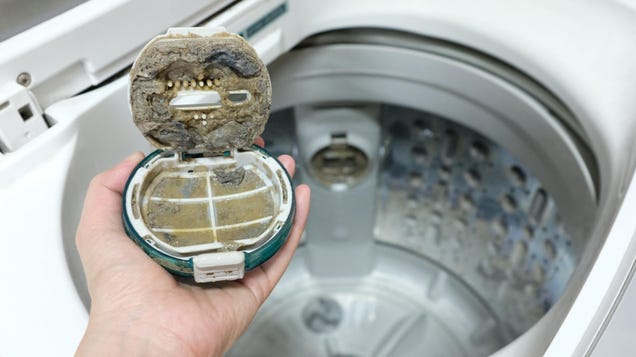
How to Locate and Clean Your Washing Machine's Filter

You’re probably familiar with the lint trap on your dryer, and, ideally, clean it after every load of laundry. But did you know that your washing machine has a filter, too? If that’s news to you, that probably means yours has never been cleaned. But don’t worry: Once you know where to find it, it’s a pretty easy job.…

Read more…


Source: LifeHacker – How to Locate and Clean Your Washing Machine’s Filter

Somehow, The Black Phone Will Ring Up a Sequel

In 2021, following his split with Marvel over Doctor Strange in the Multiverse of Madness, director Scott Derrickson pivoted back to full-on horror with The Black Phone. Based on a 2004 short story by Joe Hill, the film was notably one of the few instances where leading man Ethan Hawke played an all-out villain. If…

Read more…


Source: Gizmodo – Somehow, The Black Phone Will Ring Up a Sequel

Linux 6.7 Will Let You Enable/Disable 32-bit Programs Support At Boot-Time

From the perspective of Linux distributions trying to reduce their attack surface while still making it possible for users to run legacy software without recompiling their kernel, SUSE has spearheaded the effort for boot-time enabling/disabling of x86 32-bit support for whether 32-bit user-space programs and 32-bit system calls can be executed. That code has been submitted for the imminent Linux 6.7 merge window…

Source: Phoronix – Linux 6.7 Will Let You Enable/Disable 32-bit Programs Support At Boot-Time