President Joe Biden signed a wide-ranging executive order on artificial intelligence Monday, setting the stage for some industry regulations and funding for the U.S. government to further invest in the technology. From a report: The order is broad, and its focuses range from civil rights and industry regulations to a government hiring spree. In a media call previewing the order Sunday, a senior White House official, who asked to not be named as part of the terms of the call, said AI has so many facets that effective regulations have to cast a wide net. “AI policy is like running into a decathlon, and there’s 10 different events here,” the official said. “And we don’t have the luxury of just picking ‘we’re just going to do safety’ or “we’re just going to do equity’ or ‘we’re just going to do privacy.’ You have to do all of these things.”
The official also called for “significant bipartisan legislation” to further advance the country’s interests with AI. Senate Majority Leader Chuck Schumer, D-N.Y., held a private forum in September with industry leaders but has yet to introduce significant AI legislation. Some of the order builds on a previous nonbinding agreement that seven of the top U.S. tech companies developing AI agreed to in July, like hiring outside experts to probe their systems for weaknesses and sharing their critical findings. The order leverages the Defense Production Act to legally require those companies to share safety test results with the federal government.
The Gizmodo Monday Puzzle is back from summer hiatus! After a long season of sunshine, flip flops, and mental atrophy, it’s time to fall back into the cool, brisk world of rationality. Our last challenge before the break was also our most controversial yet. The comments section bubbled with animated debate over the…
A few of the Echo Show devices are touting major sales right now, dropping to their all-time-low prices. The 2023 third-generation Echo Show 5 has fallen to $40 from $90 — a 56 percent discount. The Echo Show 8 is marked down nearly as much, with a 54 percent discount bringing its price to $60 from $130.
The third-gen Echo Show 5 is a great option if you’re looking for a simple smart home device that does all the basics your family needs. Its 5.5-inch 960 x 480 resolution display is perfect for checking the weather, picking a song or displaying your favorite photos. It also has a 2MP camera for making video calls or checking in on your home while you’re away. Listen to Prime Video, Spotify and more through its 1.7-inch speaker.
While there’s a newer Echo Show 8 available, there’s still a lot to love about the second-gen model (and not just that it comes without a $150 price tag). The eight-inch screen has a 1,200 x 800 resolution display that can do all the same things the Echo Show 5 can, just in better quality — plus, it can stream Netflix, while its counterpart can’t. The Echo Show 8 also comes with a 13MP camera with auto-framing to look your best while on video calls.
This article originally appeared on Engadget at https://www.engadget.com/amazons-echo-show-smart-displays-fall-back-to-all-time-lows-114005160.html?src=rss
The Wall Street Journal reports that more than three million Americans have now had a total of $127 billion in student loans flagged for cancellation. (Which for 3 million would average out to over $40,000 apiece).
Interestingly, the article notes this happened despite a set back for forgiveness in America’s highest court this June:
The high court ruled that the Biden administration couldn’t cancel hundreds of billions of dollars for tens millions of student-loan holders, reasoning that the authority for such a broad-based policy doesn’t exist under the law. While that closed one path, Biden tapped a variety of different tools that no previous president had ever used to this extent. Since taking office in 2021, the Biden administration has arranged to cancel loans equal to around 30% of the total projected cost of its blocked mass cancellation plan.
Samsung has unveiled the Galaxy Z Flip 5 Retro, a limited-edition foldable that pays homage to the SGH-E700 (AKA the SGH-E715 in the US), which came out 20 years ago in 2003. It has the same indigo blue and silver color combo as the original and a few special widgets, but it’s otherwise the same foldable flip phone from earlier this year. This special edition will go on sale in Korea and several countries in Europe, but not the US.
Samsung
The SGH-E700 was Samsung’s first mobile phone with an integrated antenna and became a certified hit, selling more than 10 million units. Weirdly, this isn’t even the first time Samsung has tugged at nostalgia strings with this phone: in 2007, Samsung effectively reissued the same phone with new radios as a nostalgia play, even though it was only four years old at the time.
— Mat Smith
You can get these reports delivered daily direct to your inbox. Subscribe right here!
Exactly one year has passed since Elon Musk, fresh off a months-long legal battle that forced him to buy the company, strolled into Twitter headquarters carrying a sink. We weren’t entirely sure what to expect. But there was no shortage of predictions about just how messy and chaotic Twitter might become under Musk’s leadership. The biggest twist, however, might be Meta making its Twitter rival, Threads, into a viable (if flawed) alternative. Karissa Bell walks through what did (and didn’t) happen when Musk took charge.
Threads aims to be the place for public conversations online.
Threads was missing a lot of features users would expect from a service similar to Twitter (now X) when it launched. But over the past few months, it has added more new features, but as it still doesn’t have an API, third-party developers can’t create features with hooks into their services. For example, local transport agencies can’t automatically post service alerts when a train is delayed.
According to Instagram chief Adam Mosseri, though, Threads is working on an API for developers — he just has some reservations. He’s concerned the API’s launch could mean “a lot more publisher content and not much more creator content.” Mosseri may be hinting at the early days of Threads, where people’s feeds were dominated by brands and accounts with (presumably) social media staffers posting up a storm.
The figure was revealed in the DOJ’s antitrust trial against the search giant.
Google VP Prabhakar Raghavan testified the company paid $26.3 billion in 2021 for maintaining default search engine status and acquiring traffic. Most of that likely went to Apple, in order to remain the default search option on iPhone, iPad and Mac.
Raghavan, who was testifying as part of the DOJ’s ongoing antitrust suit against the company, said Google’s search advertising made $146.4 billion in revenue in 2021, which puts the $26 billion it paid for default status in perspective. The executive added that default status made up the lion’s share of what it pays to acquire traffic.
The night time is the right time for new iMacs and laptops.
Apple’s holding another streaming event today, Monday October 30, at 8PM ET. Yes, that’s in the dead of night, and you can watch the stream on YouTube, on Apple’s website and on Apple TV devices. Here’s what you can expect to see.
This article originally appeared on Engadget at https://www.engadget.com/the-morning-after-samsung-pays-tribute-to-its-flip-phone-past-with-limited-edition-foldable-111618806.html?src=rss
Linux’s FSCRYPT file-system encryption framework allows for native file encryption support on the likes of EXT4, F2FS, and UBIFS. FSCRYPT can make use of inline encryption hardware for accelerating the file-system encryption support and with the Linux 6.7 kernel will work for more scenarios…
So what makes the WH-1000XM5 headphones so great even a year and a half after Sony released them? The headphones have an unmatched mix of features, including a remarkable sound quality that is crisp and clear while providing a punchy bass during 30 hours of battery life. The M5 comes with eight ANC mics — double that of its predecessor. Plus, the wireless headphones have an updated fit that makes the 0.55-pound device feel light and remarkably comfortable. It’s no surprise we gave them a 95 in our initial review.
Sony’s top-tier headphones also have all the controls you need without having to pick up your phone. You can use physical and touch control buttons to change the song, make a call or change the noise mode (which can also change automatically as you move throughout the day). The Speak-to-Chat feature will even pause your audio as soon as you start talking.
While Mozilla has always produced Firefox Nightly builds for Linux as traditional binaries, they have finally decided to offer up an APT repository of Firefox Nightly builds to make it easy to stay up-to-date with new Firefox Nightly releases on Debian and Ubuntu Linux based distributions…
The Biden Administration unveiled its ambitious next steps in addressing and regulating artificial intelligence development on Monday. Its expansive new executive order seeks to establish further protections for the public as well as improve best practices for federal agencies and their contractors.
“The President several months ago directed his team to pull every lever,” a senior administration official told reporters on a recent press call. “That’s what this order does, bringing the power of the federal government to bear in a wide range of areas to manage AI’s risk and harness its benefits … It stands up for consumers and workers, promotes innovation and competition, advances American leadership around the world and like all executive orders, this one has the force of law.”
These actions will be introduced over the next year with smaller safety and security changes happening in around 90 days and with more involved reporting and data transparency schemes requiring 9 to 12 months to fully deploy. The administration is also creating an “AI council,” chaired by White House Deputy Chief of Staff Bruce Reed, who will meet with federal agency heads to ensure that the actions are being executed on schedule.
ASSOCIATED PRESS
Public Safety
“In response to the President’s leadership on the subject, 15 major American technology companies have begun their voluntary commitments to ensure that AI technology is safe, secure and trustworthy before releasing it to the public,” the senior administration official said. “That is not enough.”
The EO directs the establishment of new standards for AI safety and security, including reporting requirements for developers whose foundation models might impact national or economic security. Those requirements will also apply in developing AI tools to autonomously implement security fixes on critical software infrastructure.
By leveraging the Defense Production Act, this EO will “require that companies developing any foundation model that poses a serious risk to national security, national economic security, or national public health and safety must notify the federal government when training the model, and must share the results of all red-team safety tests,” per a White House press release. That information must be shared prior to the model being made available to to the public, which could help reduce the rate at which companies unleash half-baked and potentially deadly machine learning products.
In addition to the sharing of red team test results, the EO also requires disclosure of the system’s training runs (essentially, its iterative development history). “What that does is that creates a space prior to the release… to verify that the system is safe and secure,” officials said.
Administration officials were quick to point out that this reporting requirement will not impact any AI models currently available on the market, nor will it impact independent or small- to medium-size AI companies moving forward, as the threshold for enforcement is quite high. It’s geared specifically for the next generation of AI systems that the likes of Google, Meta and OpenAI are already working on with enforcement on models starting at 10^26 petaflops, a capacity currently beyond the limits of existing AI models. “This is not going to catch AI systems trained by graduate students, or even professors,” the administration official said.
What’s more, the EO will encourage the Departments of Energy and Homeland Security to address AI threats “to critical infrastructure, as well as chemical, biological, radiological, nuclear, and cybersecurity risks,” per the release. “Agencies that fund life-science projects will establish these standards as a condition of federal funding, creating powerful incentives to ensure appropriate screening and manage risks potentially made worse by AI.” In short, any developers found in violation of the EO can likely expect a prompt and unpleasant visit from the DoE, FDA, EPA or other applicable regulatory agency, regardless of their AI model’s age or processing speed.
In an effort to proactively address the decrepit state of America’s digital infrastructure, the order also seeks to establish a cybersecurity program, based loosely on the administration’s existing AI Cyber Challenge, to develop AI tools that can autonomously root out and shore up security vulnerabilities in critical software infrastructure. It remains to be seen whether those systems will be able to address the concerns of misbehaving models that SEC head Gary Gensler recently raised.
AI Watermarking and Cryptographic Validation
We’re already seeing the normalization of deepfake trickery and AI-empowered disinformation on the campaign trail. So, the White House is taking steps to ensure that the public can trust the text, audio and video content that it publishes on its official channels. The public must be able to easily validate whether the content they see is AI-generated or not, argued White House officials on the press call.
Adobe
The Department of Commerce is in charge of the latter effort and is expected to work closely with existing industry advocacy groups like the C2PA and its sister organization, the CAI, to develop and implement a watermarking system for federal agencies. “We aim to support and facilitate and help standardize that work [by the C2PA],” administration officials said. “We see ourselves as plugging into that ecosystem.”
Officials further explained that the government is supporting the underlying technical standards and practices that will lead to digital watermarking’ wider adoption — similar to the work it did around developing the HTTPS ecosystem and in getting both developers and the public on-board with it. This will help federal officials achieve their other goal of ensuring that the government’s official messaging can be relied upon.
Civil Rights and Consumer Protections
The first Blueprint for an AI Bill of Rights that the White House released last October directed agencies to “combat algorithmic discrimination while enforcing existing authorities to protect people’s rights and safety,” the administration official said. “But there’s more to do.”
The new EO will require guidance be extended to “landlords, federal benefits programs and federal contractors” to prevent AI systems from exacerbating discrimination within their spheres of influence. It will also direct the Department of Justice to develop best practices for investigating and prosecuting civil rights violations related to AI, as well as, per the announcement, “the use of AI in sentencing, parole and probation, pretrial release and detention, risk assessments, surveillance, crime forecasting and predictive policing, and forensic analysis.”
Additionally, the EO calls for prioritizing federal support to accelerate development of privacy-preserving techniques that would enable future LLMs to be trained on large datasets without the current risk of leaking personal details that those datasets might contain. These solutions could include “cryptographic tools that preserve individuals’ privacy,” per the White House release, developed with assistance from the Research Coordination Network and National Science Foundation. The executive order also reiterates its calls for bipartisan legislation from Congress addressing the broader privacy issues that AI systems present for consumers.
In terms of healthcare, the EO states that the Department of Health and Human Services will establish a safety program that tracks and remedies unsafe, AI-based medical practices. Educators will also see support from the federal government in using AI-based educational tools like personalized chatbot tutoring.
Worker Protections
The Biden administration concedes that while the AI revolution is a decided boon for business, its capabilities make it a threat to worker security through job displacement and intrusive workplace surveillance. The EO seeks to address these issues with “the development of principles and employer best practices that mitigate the harms and maximize the benefit of AI for workers,” an administration official said. “We encourage federal agencies to adopt these guidelines in the administration of their programs.”
Richard Shotwell/Invision/AP
The EO will also direct the Department of Labor and the Council of Economic Advisors to both study how AI might impact the labor market and how the federal government might better support workers “facing labor disruption” moving forward. Administration officials also pointed to the potential benefits that AI might bring to the federal bureaucracy including cutting costs, and increasing cybersecurity efficacy. “There’s a lot of opportunity here, but we have to to ensure the responsible government development and deployment of AI,” an administration official said.
To that end, the administration is launching on Monday a new federal jobs portal, AI.gov, which will offer information and guidance on available fellowship programs for folks looking for work with the federal government. “We’re trying to get more AI talent across the board,” an administration official said. “Programs like the US Digital Service, the Presidential Innovation Fellowship and USA jobs — doing as much as we can to get talent in the door.” The White House is also looking to expand existing immigration rules to streamline visa criteria, interviews and reviews for folks trying to move to and work in the US in these advanced industries.
The White House reportedly did not preview the industry on this particular swath of radical policy changes, though administration officials did note that they had already been collaborating extensively with AI companies on many of these issues. The Senate held its second AI Insight Forum event last week on Capitol Hill, while Vice President Kamala Harris is scheduled to speak at the UK Summit on AI Safety, hosted by Prime Minister Rishi Sunak on Tuesday.
Chip Somodevilla via Getty Images
At a Washington Post event on Thursday, Senate Majority Leader Charles Schumer (D-NY) was already arguing that the executive order did not go far enough and could not be considered an effective replacement for congressional action, which to date, has been slow in coming.
“There’s probably a limit to what you can do by executive order,” Schumer told WaPo, “They [the Biden Administration] are concerned, and they’re doing a lot regulatorily, but everyone admits the only real answer is legislative.”
This article originally appeared on Engadget at https://www.engadget.com/sweeping-white-house-ai-executive-order-takes-aim-at-the-technologys-toughest-challenges-090008655.html?src=rss
Wikipedia defines LIGO as “a large-scale physics experiment and observatory designed to detect cosmic gravitational waves.” (It stands for Laser Interferometer Gravitational-Wave Observatory — that is, measuring the interference caused by superimposed waves.)
Now Science Alert reports:
A technique for squeezing light in the arms of LIGO’s interferometer has allowed its measurements to cross the quantum barrier.
For LIGO, it’s a bold new realm of sensitivity, giving the gravitational wave detector the ability to find 60% more dead star mergers than the rate of its previous run, which was around one or two detections every week or so… “Now that we have surpassed this quantum limit, we can do a lot more astronomy,” says physicist Lee McCuller of Caltech…
LIGO’s sensitivity was already absolutely jaw-dropping. The interferometer works by detecting ripples in space-time that are generated by colliding black holes and neutron stars, millions of billions to light-years away. These cause gravitational waves, like ripples in a pond. We can’t feel them; but they can be detected in miniscule deviations in the path of light down a long, long tunnel. These deviations are incredibly small, down to trillions of times smaller than a human hair. But once you get into subatomic scales — the quantum realm — LIGO’s abilities are hobbled. That’s because, on those unimaginably small scales, particles randomly pop in and out of space, creating a constant background hiss of quantum noise that’s louder than any signal.
Frequency-dependent squeezing is a way of amplifying the signals to be ‘louder’ than the quantum noise… If you pinch a property of light, such as amplitude (or power), other properties, such as frequency, can be measured more accurately… [T]he light can be squeezed in multiple ways to amplify the frequency of the gravitational waves the scientists are looking for… “We’ve known for a while how to write down the equations to make this work, but it was not clear that we could actually make it work until now. It’s like science fiction,” says physicist Rana Adhikari of Caltech…
This means we’re likely to see a significant uptick in the number of black hole and neutron star collisions we observe out there in the wider Universe.
Samsung has unveiled the Galaxy Z Flip5 Retro, a limited edition version that pays homage to the iconic SGH-E700 (aka the SGH-E715 in the US on T-Mobile), which first came out 20 years ago in 2003. It comes with the same indigo blue and silver color combo as the original, along with similar pixel graphics for the clock widget on the cover screen and an exclusive cityscape-style animation on the Flex Window. It’ll be sold in Korea and several countries in Europe, but not the US.
The SGH-E700 was Samsung’s first mobile phone with an integrated antenna and became a certified hit, selling more than 10 million units. The success of that phone elevated Samsung’s standing in the mobile phone industry at the time, helping make it the smartphone behemoth it is today. The phone was popular enough that in 2007, Engadget noted that Samsung effectively reissued the phone with new radios as a nostalgia play, even though it was only four years old at the time.
The Galaxy Z Flip5 Retro will include three Flipsuit cards featuring logos from different eras of Samsung’s history, a Flipsuit case and a collector card engraved with a unique serial number, the company said. It’ll be available starting November 1 in Korea, the UK, France, Germany, Spain and Australia from Samsung’s website.
This article originally appeared on Engadget at https://www.engadget.com/samsungs-galaxy-z-flip5-retro-pays-tribute-to-the-iconic-sgh-e700-flip-phone-073003464.html?src=rss
“More developers are looking for or are open to a new job now compared to the last two years,” writes Stack Overflow’s senior analyst for market research and insights — citing the results of their latest survey of developers in 107 different countries.
“More than 1,000 developers responded to this year’s survey about jobs and 79% are at least considering new opportunities if not actively looking.”
New insights from these survey results show that new tech talent and late-career developers are both more likely to be looking. New developers have increasingly switched jobs compared to early- and mid-career developers in the last three years… Interest in looking for a new job drops as developers get older for new to mid-career (44 and younger) respondents (86% to 74%), but picks back up for those 55 to 64 (88%). Late-career developers acknowledge curiosity about other companies as their second top reason to look for a new job this year behind “better salary,” which all age groups rank as their top reason. Curiosity grew in importance for late-career developers since last year more than all other age groups (32% vs. 22%) and is more important to this group than reasons other groups ranked higher such as working with new technology and growth opportunities…
In our 2023 Developer Survey, we started asking about AI and the sentiment around it in our developer community; results were very similar when we checked in again through this pulse survey (70% are using AI or planning to). Developers may also feel less enthusiastic about learning opportunities now that AI tools are rapidly developing to help many be more productive in their jobs (30% cite this as the top benefit).
Other interesting findings from the survey:
Compared to the 2023 Developer Survey, 8% of developers have exited the technology industry and are increasingly filling roles in manufacturing and supply chain companies (11% vs. 7%) Technology is the industry most developers currently work in (46%), followed by manufacturing/supply chain (14%) and financial services (13%)
New tech talent is onboarding at as many jobs by 24 as those up to 10 years their senior and this rapid experience cycle could rival the knowledge and experience of those they report to.
In the heart of the digital age, the way we interact, transact, and process information has been continuously morphing, paving the way for innovative solutions to antiquated problems. Two such innovative veins—Linux and Blockchain Technology—are not just advancing in parallel, but are synergistically fostering a decentralized digital frontier.
Are face masks effective in stopping virus transmissions? CBS News re-visited the question Sunday on its news show 60 Minutes by sending their chief medical correspondent to interview Linsey Marr, a professor who specializes in aerosol science at Virginia Tech University.
Here’s a transcript from an excerpt posted on YouTube:
60 Minutes: Is there any doubt in your mind that masks prevent the person who’s wearing it from getting Covid — or at least, are helpful?
Professor Marr: I would say they are very helpful in reducing the chances that the person will get Covid. Because it’s reducing the amount of virus that you would inhale from the air around you.
It’s not going to guarantee that it’s going to protect you, because are masks are not 100% effective — we talk about N-95’s being 95% efficient at filtering out particles, if they’re properly fitted and everything, and so that’s in an ideal world. But even so, if you — instead of breathing in 100 virsues, I’m breathing in 20, because my mask was 80% effective? That’s a huge reduction, and that greatly reduces the chance that I’m going to become infected.
On the CBS News web site, they highlight this excerpt from the interview:
Early in the pandemic, some guidance from health professionals suggested that wearing a mask might actually lead to infection: A person might encounter a contaminated mask and then touch their eyes, nose, or mouth. But research in the ensuing years has shown that fear to be misplaced. “There wasn’t any evidence really that that happens,” Marr said.
Marr said her team aerosolized the coronavirus, pulled it through a mask, and then examined how much virus survived on the mask. The study reported some viral particle remained on some cloth masks, but no virus survived on the N95s or surgical masks. Marr’s team also touched artificial skin to masks and looked at how many virus particles transferred to the artificial skin. No infectious virus transferred.
“I hope the study kind of shows that it’s something we don’t need to worry about as much as we were told,” Marr said.
CBS gave their video interview the headline “Face mask effectiveness: What we know now” — and asked professor Marr for a definitive answer:
60 Minutes: There was a lot of controversy over whether or not masks worked at all. Were you able to show that they worked scientifically?
Professor Marr: We were able to show that they block particles that are the same size as those that carry the virus… What happens is the virus is being carried in the air, and it’s not just going straight through those holes. It has to weave around all these layers of fibers in there. As the air is going around the curves, the virus may crash into one of those fibers, and so then it’s trapped, or maybe it comes up close to the fiber and brushes against it. And the really small particles, like the virus by itself if it were by itself, would be small enough that it undergoes these random motions, because it’s getting bounced around by the gas molecules, and it ends up crashing into the fibers of the mask too.
So there was accumulating evidence — and there had been kind of a handful of papers before that, too, showing the same thing. That masks — even cloth masks — do something.
A deep dive into the present condition of GNOME Web (Epiphany) in this status update article with its accessibility, privacy features, and compatibility with modern web standards.
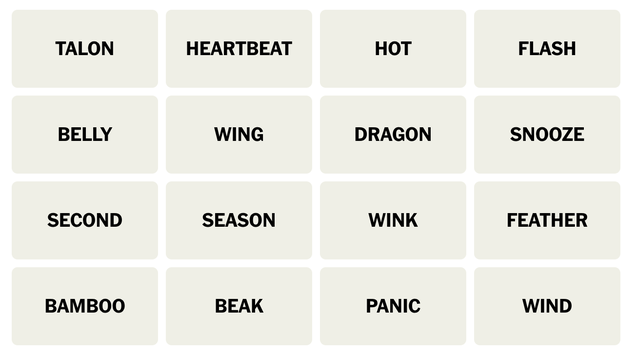
This one was half easy, half tricky for me; I got the first two groups in a HEARTBEAT and then nearly PANICked trying to figure out the rest. If you’re looking for the Connections answer for Monday, October 30, 2023, read on—I’ll share some clues, tips, and strategies, and finally the solutions to all four categories.…
Long-time Slashdot reader destinyland writes: In 1994 the TV show Friends premiered, and its first season’s high ratings made it the 8th most-popular show. The next year Microsoft released Windows 95 — and filmed a promotional video for it with 25-year-old Matthew Perry and 26-year-old Jennifer Aniston.
“They’ll be taking you on an adventure in computing that takes place in the office of Microsoft chairman Bill Gates,” explains the video’s narrator, adding “Along the way, they meet a wacky bunch of propellor-heads…. And are introduced the top 25 features of Windows 95!”
It’s a journey back in time. (At one point the video refers to Windows as the operating system “with tens of millions of users.”) Their 30-minute segment — billed as “the world’s first cyber sitcom” — appears in an hour-long video introducing revolutionary features like the new “Start” button. Also demonstrated in Excel are the new minimize and maximize “features” in “the upper right-side of the window”. And the two actors marvel at the ability to type a filename that was longer than eight characters…
Watch for reminders that The Microsoft Windows 95 Video Guide was filmed nearly three decades ago. When the desktop appears after waking from screensaver mode, Perry notes that there’s “no messy DOS build-up.” And later the video reminds viewers that Windows 95 is compatible “with DOS games like Flight Simulator.” There’s also a brand new feature called “Windows Explorer” (which is described as “File Manager on steroids”), as well as a new “Find” option, and a brand new icon named “My Computer”. And near the end they pay a visit to the Microsoft Network — which was mostly a “walled garden” online service — described in the video as “your on-ramp to the information superhighway”.
The video even explains how Windows 95 “uses the right mouse button for what Microsoft calls power users.”
And by the end of it, Jennifer Anniston finds herself playing Space Cadet 3D pinball.