
October is off to a great start as February inches closer for what’s expected to bring the much anticipated Plasma 6.0 desktop release…
Source: Phoronix – KWin Replaces KScreen For Handling Monitor Arrangement Under KDE Plasma Wayland
Monthly Archives: October 2023
US government considers protecting octopuses used in research


While cephalopods have captured the imagination of marine biologists, science fiction writers, and curious individuals, it’s only recently that the public has become significantly interested in learning more about these animals. Part of their appeal has come from recent studies revealing the intelligence behind some of their sophisticated behaviors.
Now, feeding into this growing recognition, the National Institutes of Health (NIH) announced feedback for proposed guidelines that would, if passed, give various protections to cephalopods studied within a laboratory setting.
This announcement results from years of studies on cephalopod pain sensation, intelligence, and adaptation, combined with letters to US Congress members about the humane treatment of cephalopods.
Read 21 remaining paragraphs | Comments
Source: Ars Technica – US government considers protecting octopuses used in research
Scientists Discover the Highest Energy Gamma-Rays Ever From a Pulsar
Scientists using the H.E.S.S. observatory in Namibia have detected the highest energy gamma rays ever from a dead star called a pulsar. Phys.Org reports: The energy of these gamma rays clocked in at 20 tera-electronvolts, or about 10 trillion times the energy of visible light. This observation is hard to reconcile with the theory of the production of such pulsed gamma rays, as the international team reports in the journal Nature Astronomy. […] The Vela pulsar, located in the Southern sky in the constellation Vela (sail of the ship), is the brightest pulsar in the radio band of the electromagnetic spectrum and the brightest persistent source of cosmic gamma rays in the giga-electronvolts (GeV) range. It rotates about eleven times per second. However, above a few GeV, its radiation ends abruptly, presumably because the electrons reach the end of the pulsar’s magnetosphere and escape from it. But this is not the end of the story: using deep observations with H.E.S.S., a new radiation component at even higher energies has now been discovered, with energies of up to tens of tera-electronvolts (TeV).
“That is about 200 times more energetic than all radiation ever detected before from this object,” says co-author Christo Venter from the North-West University in South Africa. This very high-energy component appears at the same phase intervals as the one observed in the GeV range. However, to attain these energies, the electrons might have to travel even farther than the magnetosphere, yet the rotational emission pattern needs to remain intact. “This result challenges our previous knowledge of pulsars and requires a rethinking of how these natural accelerators work,” says Arache Djannati-Atai from the Astroparticle & Cosmology (APC) laboratory in France, who led the research. “The traditional scheme according to which particles are accelerated along magnetic field lines within or slightly outside the magnetosphere cannot sufficiently explain our observations. Perhaps we are witnessing the acceleration of particles through the so-called magnetic reconnection process beyond the light cylinder, which still somehow preserves the rotational pattern? But even this scenario faces difficulties to explain how such extreme radiation is produced.”
Whatever the explanation, next to its other superlatives, the Vela pulsar now officially holds the record as the pulsar with the highest-energy gamma rays discovered to date. “This discovery opens a new observation window for detection of other pulsars in the tens of teraelectronvolt range with current and upcoming more sensitive gamma-ray telescopes, hence paving the way for a better understanding of the extreme acceleration processes in highly magnetized astrophysical objects,” says Djannati-Atai.


Read more of this story at Slashdot.
Source: Slashdot – Scientists Discover the Highest Energy Gamma-Rays Ever From a Pulsar
AI This Week: AI's Threat to Creative Freedom
- Meta’s AI-generated stickers, which launched just last week, are already causing mayhem. Users swiftly realized they could use them to create obscene images, like Elon Musk with tits, ones involving child soldiers, and bloodthirsty version of Disney characters. Ditto for Microsoft Bing’s image generation feature,…
Source: Gizmodo – AI This Week: AI’s Threat to Creative Freedom
Fwupd 1.9.6 Linux Firmware Updater Adds Support for AMD dGPUs Navi3x and Later
fwupd 1.9.6 Linux firmware upgrading utility has been released today with support for more hardware devices, new features, as well as a dozen bug fixes.
Source: LXer – Fwupd 1.9.6 Linux Firmware Updater Adds Support for AMD dGPUs Navi3x and Later
The Ozone Hole Above Antarctica Has Grown To Three Times the Size of Brazil
According to the European Space Agency (ESA), the ozone hole above Antarctica reached approximately 10 million square miles in area on Sept. 16, 2023 — making it one of the largest seasonal holes ever observed. Space.com reports: One possible reason for the higher-than-normal growth is the Hunga Tonga volcanic eruption in January 2022, which introduced massive quantities of water vapor into the air. “The water vapor could have led to the heightened formation of polar stratospheric clouds, where chlorofluorocarbons (CFCs) can react and accelerate ozone depletion,” said Inness. Yet despite experiencing large seasonal growth this year, the ozone hole is still decreasing in size overall. “Based on the Montreal Protocol and the decrease of anthropogenic ozone-depleting substances, scientists currently predict that the global ozone layer will reach its normal state again by around 2050,” said Claus Zehner, ESA’s mission manager for Copernicus Sentinel-5P.


Read more of this story at Slashdot.
Source: Slashdot – The Ozone Hole Above Antarctica Has Grown To Three Times the Size of Brazil
Using InfluxDB for time-series data analysis
These days you can acquire time series data from multiple sources. In this article we will show you how to use InfluxDB, a popular time-series database dedicated to fast concurrent read/write of critical time-series information. One can argue that using a traditional relational database may not work well with data in a time-series format because […]
Source: LXer – Using InfluxDB for time-series data analysis
How to Install Plex Media Server on Ubuntu 22.04
This guide provides detailed instructions on installing the Plex Media Server on Ubuntu 22.04 LTS (Jammy Jellyfish). It covers the process right from importing the Plex APT repository to navigating through the web-UI installation. Additionally, the guide addresses common issues like media permissions to ensure a smooth setup.
Source: LXer – How to Install Plex Media Server on Ubuntu 22.04
Fluorescent Mammals Are Much More Common Than You'd Think
An anonymous reader quotes a report from The Conversation: Recently, several mammals have been reported to “glow” under ultraviolet (UV) light, including our beloved platypus. But no one knew how common it was among mammals until now. Our research, published in Royal Society Open Science today, found this glow — known as fluorescence — is extremely common. Almost every mammal we studied showed some form of fluorescence. […] We started with the platypus to see if we could replicate the previously reported fluorescence. We photographed preserved and frozen platypus specimens under UV light and observed a fluorescent (although rather faint) glow. […] We repeated this process for other mammals and found clear evidence of fluorescence in the white fur, spines and even skin and nails of koalas, Tasmanian devils, short-beaked echidnas, southern hairy-nosed wombats, quendas (bandicoots), greater bilbies and even cats. Both fresh-frozen and chemically treated museum specimens were fluorescent. This meant it wasn’t preservation chemicals such as borax or arsenic causing the fluorescence. So, we concluded this was a real biological phenomenon.
Using specimens from the Western Australian Museum’s collection, we took the experiment to the next stage. We recorded every species of mammal that was fluorescent when we exposed the specimens to UV light. As a result, we found 125 fluorescent species of mammal, representing all known orders. Fluorescence is clearly common and widely distributed among mammals. In particular, we noticed that white and light-colored fur is fluorescent, with dark pigmentation preventing fluorescence. For example, a zebra’s white stripes fluoresced while the dark stripes didn’t. We then used our dataset to test if fluorescence might be more common in nocturnal species. To do this, we correlated the total area of fluorescence with ecological traits such as nocturnality, diet and locomotion. Nocturnal mammals were indeed more fluorescent, while aquatic species were less fluorescent than those that burrowed, lived in trees, or on land.
Based on our results, we think fluorescence is very common in mammals. In fact, it is likely the default status of hair unless it is heavily pigmented. This doesn’t mean fluorescence has a biological function — it may just be an artifact of the structural properties of unpigmented hair. However, we suggest florescence may be important for brightening pale-colored parts of animals that are used as visual signals. This could improve their visibility, especially in poor light — just like the fluorescent optical brighteners that are added to white paper and clothing.


Read more of this story at Slashdot.
Source: Slashdot – Fluorescent Mammals Are Much More Common Than You’d Think
Proton 8.0-4 Released with Support for More Windows Games on Linux
Valve released today Proton 8.0-4 as the latest version of this open-source compatibility tool for Steam Play based on Wine and additional components that enable Linux users to play Windows games.
Source: LXer – Proton 8.0-4 Released with Support for More Windows Games on Linux
US Nutrition Panel's Ties To Top Food Giants Revealed In New Report
Tom Perkins writes via The Guardian: Almost half of a federal government panel that helps develop US nutritional guidelines has significant ties to big agriculture, ultra-processed food companies, pharmaceutical companies and other corporate organizations with a significant stake in the process’s outcome. The revelation is part of a new report from US Right to Know, a government transparency group that looked for ties to corporate interests among the 20-member panel of food and nutrition experts that makes recommendations for updating the US government’s official dietary guidelines.
It found nine members had ties to Nestle, Pfizer, Coca-Cola, the National Egg Board and other prominent food lobby groups, among others. The findings raise questions about whether the panel is looking out for Americans’ health or corporate profits, and “erodes confidence in dietary guidelines,” said Gary Ruskin of US Right to Know. “Millions of Americans’ lives are affected by this report and it’s crucial that the report tell the truth to American people and it’s not degraded into another sales pitch for big food and big pharma,” he said. […]
“The guidelines affect the entire US food system quite strongly,” Ruskin said. US Right to Know scoured public records dating back five years for conflicts of interest among the 20 panel members. In addition to the nine it found with “high-risk conflicts of interest” and connections to the food and drug industry, it found four more members who have possible conflicts of interest. It applauded the agencies for appointing seven members who did not appear to have any conflicts. At least four panelists have connections to at least two companies each among Abbott, Novo Nordisk, the National Dairy Council, Eli Lilly and Weight Watchers International. One panel member has received about $240,000 in grant funding from Eli Lilly.


Read more of this story at Slashdot.
Source: Slashdot – US Nutrition Panel’s Ties To Top Food Giants Revealed In New Report
Lenovo To Offer Android PCs, Starting With an All-In-One That Can Pack a Core i9
Simon Sharwood writes via The Register: The Chinese manufacturer that took over IBM’s PC business announced on Thursday that it’s teamed with an outfit named Esper that specializes in custom cuts of Android, plus device management offerings. Android is most commonly used in handheld devices. Lenovo’s taking it in an entirely different direction by making the ThinkCentre M70a: a desktop all-in-one.
The first fruit of the collaboration with Esper, the ThinkCentre M70a boasts a 21 — inch touch screen and offers a choice of 12th-gen Intel core CPUs from the Core i3 to the almost workstation-grade Core i9, at prices from $889 to beyond $1250. What could you do with Android on a Corei9, plus the maximum 16GB DDR4 3200MHz and 512GB PCIe SSD Lenovo’s machines allow? Almost anything — but Lenovo thinks its Android effort will first be appreciated by customers in the retail, hospitality, and healthcare industries. Esper pitches its wares as ideal for point-of-sale systems, kiosks, and digital signage — environments where users don’t need to access diverse apps but do need a machine that reliably boots into custom environments.
Lenovo’s not just doing desktop PCs. The number one PC maker by market share has promised it will also ship Esper’s wares on the small form factor ThinkCentre M70q — a machine designed to be bolted to the back of monitors. The ThinkEdge SE30 — a ruggedized and fanless edge client — will also have an Android option. So will the ThinkCentre M90n-1 IoT [PDF] — another rugged client for edge applications.


Read more of this story at Slashdot.
Source: Slashdot – Lenovo To Offer Android PCs, Starting With an All-In-One That Can Pack a Core i9
Today’s NYT Connections Hints (and Answer) for Saturday, October 7, 2023
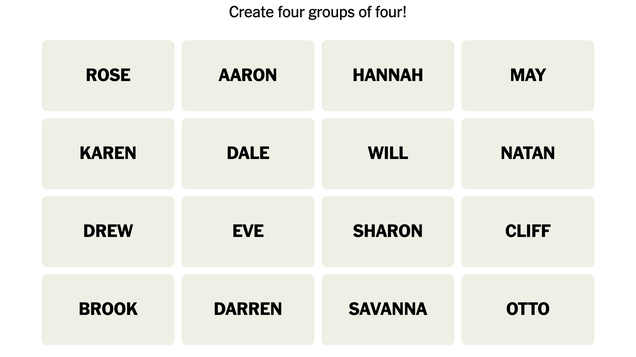
If you’re looking for the Connections answer for Saturday, October 7, 2023, read on—I’ll share some clues, tips, and strategies, and finally the solutions to all four categories. Beware, there are spoilers below for October 7, NYT Connections #118! Read on if you want some hints (and then the answer) to today’s…
Source: LifeHacker – Today’s NYT Connections Hints (and Answer) for Saturday, October 7, 2023
23andMe Scraping Incident Leaked Data On 1.3 Million Users
Jonathan Greig writes via The Record: Genetic testing giant 23andMe confirmed that a data scraping incident resulted in hackers gaining access to sensitive user information and selling it on the dark web. The information of nearly 7 million 23andMe users was offered for sale on a cybercriminal forum this week. The information included origin estimation, phenotype, health information, photos, identification data and more. 23andMe processes saliva samples submitted by customers to determine their ancestry.
When asked about the post, the company initially denied that the information was legitimate, calling it a “misleading claim” in a statement to Recorded Future News. The company later said it was aware that certain 23andMe customer profile information was compiled through unauthorized access to individual accounts that were signed up for the DNA Relative feature — which allows users to opt in for the company to show them potential matches for relatives. […] When pressed on how compromising a handful of user accounts would give someone access to millions of users, the spokesperson said the company does not believe the threat actor had access to all of the accounts but rather gained unauthorized entry to a much smaller number of 23andMe accounts and scraped data from their DNA Relative matches.
A researcher approached Recorded Future News after examining the leaked database and found that much of it looked real. […] The researcher downloaded two files from the BreachForums post and found that one had information on 1 million 23andMe users of Ashkenazi heritage. The other file included data on more than 300,000 users of Chinese heritage. The data included profile and account ID numbers, names, gender, birth year, maternal and paternal genetic markers, ancestral heritage results, and data on whether or not each user has opted into 23andme’s health data. The researcher added that he discovered another issue where someone could enter a 23andme profile ID, like the ones included in the leaked data set, into their URL and see someone’s profile. The data available through this only includes profile photos, names, birth years and location but does not include test results.


Read more of this story at Slashdot.
Source: Slashdot – 23andMe Scraping Incident Leaked Data On 1.3 Million Users
Man Jailed In UK's First Treason Conviction In 40 Years Was Encouraged By AI Chatbot
An anonymous reader quotes a report from Motherboard: A man who admitted attempting to assassinate Queen Elizabeth II with a crossbow after discussing his plan with an AI-powered chatbot has been sentenced to 9 years in prison for treason. It’s the UK’s first treason conviction in more than 40 years. Jaswant Singh Chail, who was 19 at the time of his arrest on Christmas Day, 2021, scaled the walls of Windsor Castle’s grounds with a mask and a loaded high-power crossbow. He said his intent was, as a British Sikh, to assassinate the Queen in a Star Wars-inspired plan to avenge the 1919 Jallianwalla Bagh massacre, a colonial-era atrocity during British rule in India. Prosecutors said that Chail was encouraged to undertake this plot after discussing it at length with an AI-powered chatbot that egged him on and bolstered his resolve. […] Chail is currently being held at Broadmoor high-security hospital and will remain there until he is psychologically well enough to serve his sentence.


Read more of this story at Slashdot.
Source: Slashdot – Man Jailed In UK’s First Treason Conviction In 40 Years Was Encouraged By AI Chatbot
Best Free and Open Source Alternatives to Adobe Bridge
Adobe Bridge is a creative asset manager that lets you preview, organise, edit and publish multiple creative assets quickly and easily.
Source: LXer – Best Free and Open Source Alternatives to Adobe Bridge
23andMe says private user data is up for sale after being scraped
Enlarge / The 23andMe logo displayed on a smartphone screen.
Genetic profiling service 23andMe has confirmed that private user data is circulating for sale online after being scraped off its website.
Friday’s confirmation comes five days after an unknown entity took to an online crime forum to advertise the sale of private information for millions of 23andMe users. The forum posts claimed that the stolen data included origin estimation, phenotype, health information, photos, and identification data. The posts claimed that 23andMe’s CEO was aware the company had been “hacked” two months earlier and never revealed the incident.
23andMe officials on Friday confirmed that private data for some of its users is, in fact, up for sale. The cause of the leak, the officials said, is data scraping, a technique that essentially reassembles large amounts of data by systematically extracting smaller amounts of information available to individual users of a service. Attackers gained unauthorized access to the individual 23andMe accounts, all of which had been configured by the user to opt in to a DNA relative feature that allows them to find potential relatives.
Read 8 remaining paragraphs | Comments
Source: Ars Technica – 23andMe says private user data is up for sale after being scraped
Unlock Warner Bros.’s Crypt of Movie Horrors With Spooky Style

With Trick ‘r Treat at Loungefly and Beetlejuice at RSVLTS and BlackMilk, and pop culture icons like Looney Tunes and Friday the 13th flexing their tricks, there’s a ton of spooky-fun merch to add to your list in time for WB100 and Halloween.
Source: Gizmodo – Unlock Warner Bros.’s Crypt of Movie Horrors With Spooky Style
All Slack Employees Forced To Spend a Week Getting Salesforce Certifications
Kylie Robison writes via Fortune: Beginning on Monday, Slack employees will be expected to set aside their regular work duties and to instead plug away at various modules on Salesforce’s Trailhead online learning platform, Fortune has learned. The goal is for Slack’s employees to reach Trailhead’s Ranger level, a feat that requires roughly 40 hours on the learning platform, whose modules include topics like “Learn about the Fourth Industrial Revolution” and “Healthy Eating.” A large percent of Slack’s roughly 3,000 staff have neglected to hit the target, according to sources inside the company. And since Salesforce provides Trailhead to other businesses as a way to “upskill” employees, some speculate that the slackers at Slack make for bad optics.
In a message to employees in mid-September, Slack CEO Lidiane Jones wrote that the one week shutdown, dubbed “Ranger Week,” is intended to give everyone “dedicated time to make a lot of progress towards the goal.” Jones wrote in her message that the product development engineering (PDE), customer experience (CE), Biz Ops, and communication departments are expected to participate in Ranger Week. “It’s important that we all reach Ranger status this year, and I want to ensure that everyone has focus time to upskill on Trailhead,” Jones wrote in the message to staff. “I know this will disrupt and slow V2MOM progress for many of us — we are making this a priority now so we can quickly get back to work on our roadmaps,” she said, referring to the company’s annual forward-looking strategy planning document which stands for vision, values, methods, obstacles, and measures. […]
“We really are canceling all meetings next week to facilitate this heads-down time, even 1:1s,” Slack’s chief of staff to the CTO wrote to employees on Wednesday. “We don’t know yet what will happen to people who haven’t hit Ranger by Jan. 31. At a minimum, it will make Slack look bad compared to the other clouds. Please do use the time next week to make as much progress as you can!” […] Still, the work stoppage is somewhat porous. Slack’s CTO noted that “deploys, on-call rotations, and interviews” will still happen as normal, and while no executive has used the word “mandatory,” it’s considered strongly encouraged. According to Insider, some workers at Slack are “gaming” the platform to speed through the sessions.


Read more of this story at Slashdot.
Source: Slashdot – All Slack Employees Forced To Spend a Week Getting Salesforce Certifications
23andMe user data breached in credential-stuffing attack
Biotech company 23andMe, known for its DNA testing kits, confirmed to BleepingComputer that its user data is circulating on hacker forums. The company said the leak occurred through a credential-stuffing attack.
A credential-stuffing attack involves user information that has already been compromised (usernames and passwords, for example) from one organization, which a hacker obtains and attempts to reuse with a second organization — in this case, 23andMe. Because of the nature of credential-stuffing, it does not appear this was a breach of the company’s internal systems. Rather, accounts were broken into piecemeal. The perpetrators of this attack appear to have obtained quite sensitive information from the compromised accounts (genetic testing results, photos, full names and geographical location, among other things).
The initial leak comprised “1 million lines of data for Ashkenazi people,” according to BleepingComputer. By October 4, data was being offered for sale in bulk, in increments of 100, 1,000, 10,000 or 100,000 profiles. The scale of the attack is as yet unknown, but the scope of its impact has likely been exacerbated by 23andMe’s ‘DNA Relatives’ feature. “Relatives are identified by comparing your DNA with the DNA of other 23andMe members who are participating in the DNA Relatives feature,” the company states. After accessing an unknown number of profiles via credential-stuffing, the threat actor behind this breach apparently scraped the ‘DNA Relatives’ results for those profiles, netting much more sensitive data. According to the same FAQ page, “The number of relatives listed [..] grows over time as more people join 23andMe.” For the fiscal year 2023, the company reported it “genotyped” around 14 million customers.
Ever since 23andMe went public in 2021, the company has faced extra scrutiny for its data protection practices — rightly so, since it deals with sensitive medical data derived from saliva sampling, including predispositions for diseases like Alzheimer’s, Type 2 diabetes and even cancer. On its website the company claims it “exceeds” data protection standards for its industry.
This article originally appeared on Engadget at https://www.engadget.com/23andme-user-data-breached-in-credential-stuffing-attack-231757254.html?src=rss
Source: Engadget – 23andMe user data breached in credential-stuffing attack