Sequels often have a scope problem, especially superheroic ones. Your hero’s been established, they’ve come into their own, and now the temptation is that to test them you have to throw everything and the kitchen sink at them almost immediately. Go big or go home! Marvel’s Spider-Man 2 is certainly no exception to…
Being Spider-Man never gets old. The rush of swinging like a pendulum through Times Square, the thrill of pirouetting through a high-stakes crime bust, the satisfaction of watching a chorus of tiny Spidey gizmos wrap up another band of bad guys with elegant ease—even after completing everything there is to do in Marvel…
Web hosting doesn’t have to cost a fortune if you go through a hosting service like iBrave, and it’s on sale for $99.99 right now. iBrave Cloud Web Hosting offers unlimited cloud hosting that includes fast servers and premium features, like a one-click WordPress install, a user-friendly control panel, and a free…
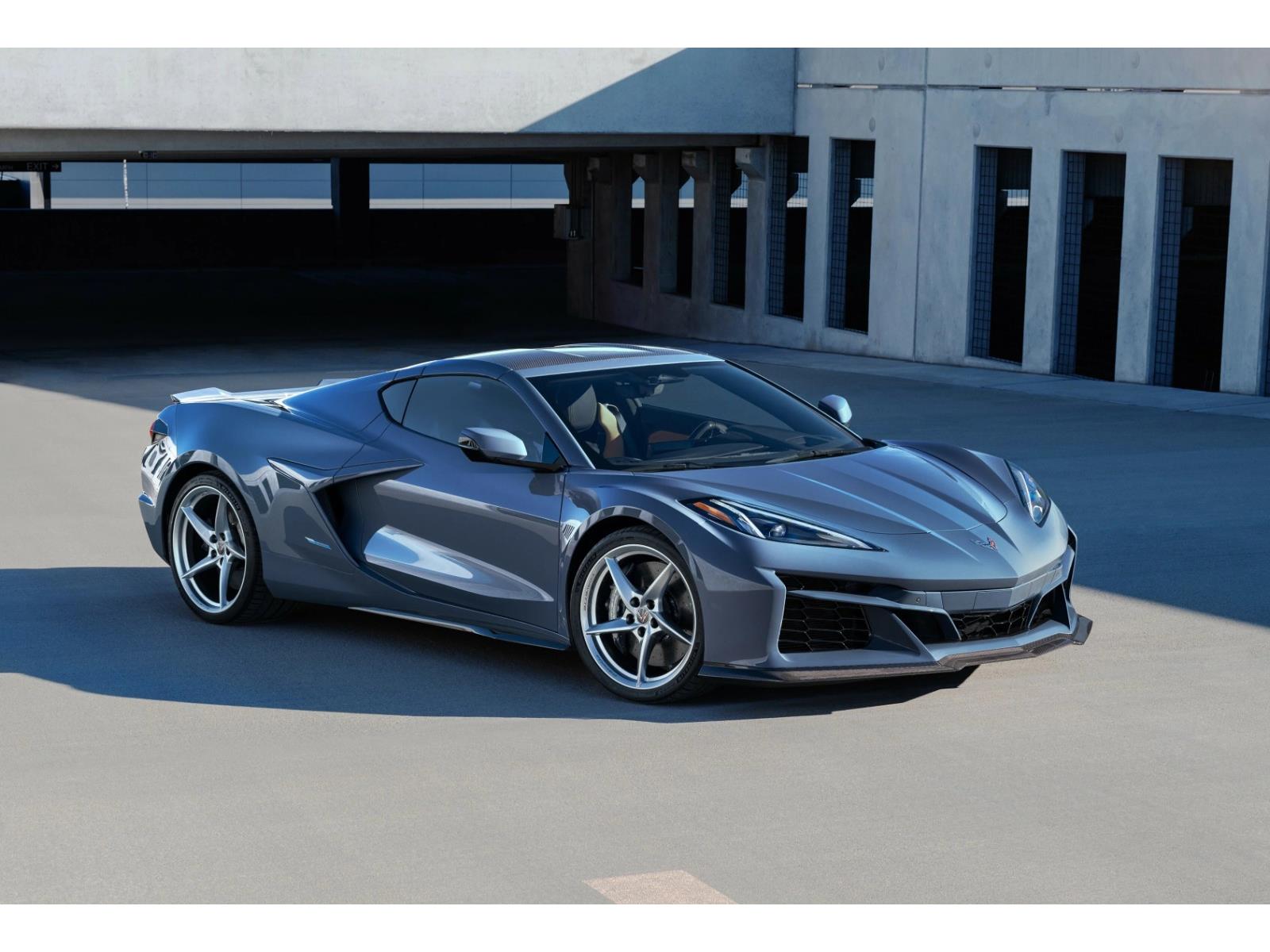
If you thought Chevrolet couldn’t make the C8 Corvette even more bonkers, out comes the highly anticipated (and divisive) 2024 Corvette E-Ray, complete with a hybrid powertrain and all-wheel drive (AWD). In other words, a Corvette that won’t run away from you in inclement weather, while making you feel good about helping the environment.
After months of speculation, Intel today formally introduced its 14th Gen Core processors, otherwise known as Raptor Lake Refresh. Exactly as the name implies, this is a refresh of Intel’s 13th Gen Raptor Lake CPUs, as opposed to a brand new architecture, which for consumers means the newly minted silicon can slip into existing 600- and 700-series
Close to 15 years after its release, Minecraft is more popular than ever. The game is already one of the highest-selling games of all time, but on Monday the Microsoft-owned company Mojang declared it crossed the threshold of 300 million copies sold.
If you’re looking for a solid city-commuter e-bike with a surprisingly brawny motor and a stylish look, look no further than the Aventon 500 Pace 3. Aventon has secured its niche within the crowded e-bike market by aiming for the juncture between “high performance” and “beginner friendly,” and the Pace 3 hits that…
Meta’s flirtation with innovation has been, at best, poorly panning out and, at worst, delightfully creepy. The latter best describes the case of the tech company’s new foray into AI with machine-generated personas.
On September 28, the Van Gogh Museum in Amsterdam opened its doors with an exciting new display inside. That day, visitors would delight in new, featured artwork based on Vincent Van Gogh’s iconic paintings, but with a Pokémon twist. Or at least, that was the idea. However, rather than fans happily enjoying the…
A set of patches to the community-developed MSI-EC Linux kernel driver would allow toggling MSI’s Cooler Boost functionality under Linux for enhancing laptop cooling performance…
You can add supernova spotting to the laundry list of accolades attributed to artificial intelligence. This week, a collaboration of astronomers led by Northwestern University said they have developed the world’s first AI-assisted, fully automatic supernova detection, identification, and classification system. The…
As gaming laptops and dedicated portable consoles like the Steam Deck eat up all of the press, it’s easy to forget the humble tower desktop. Alienware sure hasn’t, as it just announced the latest refresh to its popular Aurora line of mid-tower gaming desktops. The Aurora R16 is a legit monster that the company says can overclock to an incredible 6.1GHz to handle even the most advanced modern gaming applications.
As a matter of fact, Alienware says this is the company’s first system to reach beyond 6Ghz. This is due to the inclusion of an Intel Core 14th Gen processor, a two UDIMM memory architecture and a custom motherboard based on the Intel Z690 chipset. You can overclock via a BIOS switch to fly past that 6GHz benchmark.
Gaming PCs are also largely defined by the GPU, and the R16 ships with the scarily-powerful Nvidia GeForce RTX 4090 graphics card with 24GB of GDDR6X memory, though that’s the top-of-the-line model. You have plenty of GPU options here, all the way down to the GeForce RTX 3050 with 8GB of GDDR6 memory. You can also choose up to 64GB of DDR5 XMP memory and up to 4TB of SSD storage.
Aurora desktops have been a mainstay with PC gamers since 2009, but this latest release represents a near-total redesign. The R16’s inspired by the industrial form factor of the company’s Legend 3 gaming laptop. You get a nifty cube design that’s 40 percent smaller than last year’s R15, while still emphasizing accessibility and user upgrades. The chassis ships with either a solid door or a clear side panel so you can marvel at all of those sweet techy innards. The new cube shape also makes it easier to find the perfect spot on or under your desk.
Alienware
With all of that new power comes new thermal regulation requirements. The R16 boasts larger air-intakes and exhausts than the R15, with hexagonal side vents and a new vertical stadium to provide a larger surface area for airflow. The top face also features a larger surface area for the purposes of exhaust. All told, the company says these upgrades contribute to a seven percent reduction in overall temperature when compared to the R15, despite the added power. You also have your choice of air-cooled or liquid-cooled CPUs.
The R16 also integrates with the company’s Alienware Command Center 6.0 software suite, a first for desktops. This software lets you adjust nearly every aspect of the PC, from the AlienFX lighting, thermal regulation, game presets and much more. As for user upgrades, you have two DIMM slots for memory, 2x M.2 PCIe slots for SSD storage and an additional 3.5” HDD slot. All configurations also support Wi-Fi 6E and 2.5 Gbps ethernet.
The Alienware Aurora R16 will be available for purchase tomorrow and starts at $2,200. This is for a bare-bones model, however, so you could potentially pay hundreds more for access to each and every bell and whistle.
This article originally appeared on Engadget at https://www.engadget.com/alienwares-new-aurora-desktop-can-overclock-to-an-astounding-61ghz-130059365.html?src=rss
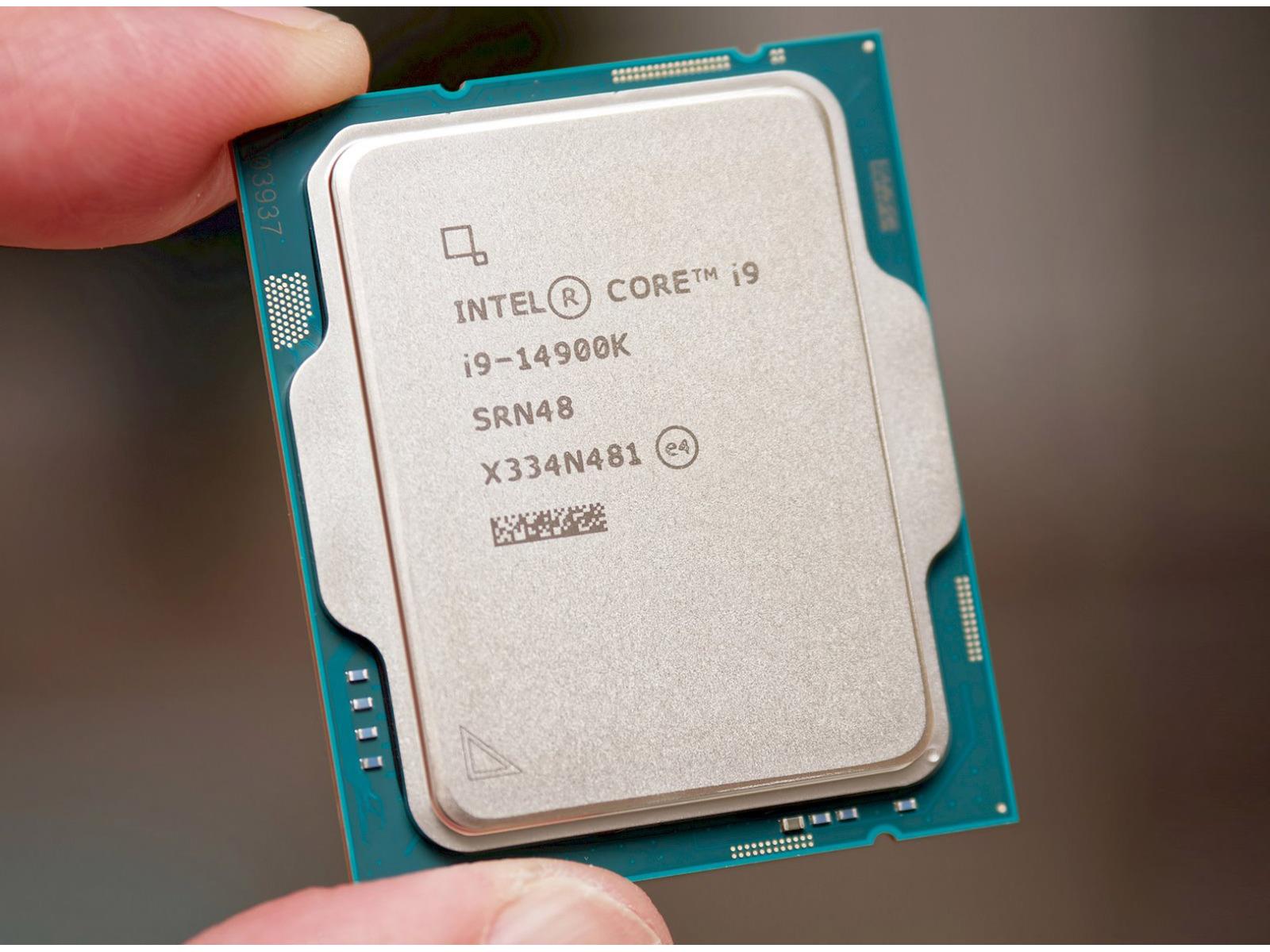
It used to be that if you dreamed of reaching 6GHz speeds with your hot rod desktop CPU, you’d have to try your luck with overclocking and all of the potential instability and cooling demands that required. Earlier this year, Intel released the Core i9-13900KS, which hit 6GHz right out of the box. Now, the company is doing it again with its fastest 14th-gen desktop CPU, the i9-14900K. That frequency is just a short-lived “Thermal Velocity Boost” speed, which isn’t sustained for very long, but it’s still something Intel can lord over AMD.
These 14th-gen chips, to be clear, are different from Intel’s recently announced 14th-gen Core Ultra processors for notebooks. Understandably, Intel is focusing on efficiency for its mobile lineup, whereas its desktop chips are all about raw power (and 6GHz bragging rights). You can look at the 14th-gen desktop hardware as a last gasp for Intel’s existing architecture, where the company doesn’t mind pushing power demands to out-bench AMD. (The i9-14900K consumes as much as 253 watts, just like its predecessor.)
Intel’s highest-end 14th-gen chip may get most of the attention, but discerning gamers may be more interested in the i7-14700K, which now features 20 cores (8 performance and 12 efficiency) and reaches up to 5.6GHz “Turbo Boost Max 3.0” speeds. Perhaps most importantly, its $409 price tag is well below the 14900K’s $589.
When it comes to benchmarks, Intel claims the 14900K is up to 23 percent faster than AMD’s Ryzen 9 7950X3D while playing Starfield in 1080p. The company also says that chip is up to 54 percent faster than the same AMD hardware while multi-tasking between After Effects and Premiere Pro. (That comparison may be a bit unfair, since Intel tested an Auto Reframe task in Premiere Pro that works together with its UHD graphics, something that AMD’s graphics don’t help with.)
Intel
Perhaps more useful than raw benchmark comparisons, Intel also says the i9-14900K was able to reach over 100fps in Total War: Warhammer III while playing, streaming and recording in 1080p with ultra graphics settings. That game is also optimized specifically for its 14th-gen hardware, so you can’t expect the same results with every title.
If you’re still eager to overclock, Intel is also making that easier with its new XTU AI Assist feature, which will only be available on the i9-4900K. In a demo for media, an Intel representative showed off how the XTU app can quickly determine the ideal processor core voltages, motherboard power settings and “other tuning knobs” to determine safe performance speeds. They noted that Intel had trained its AI overclocking model on hundreds of CPUs, as well as a variety of motherboard and cooler options (including a bit of liquid cooling). Once the AI tuning process is complete, you can roll with its suggested settings or use them as a baseline for further overclocking.
One feature you won’t see in these new 14th-gen chips? An NPU (neural processing unit) for AI acceleration. Oddly enough, the company’s upcoming Core Ultra mobile chips will feature an NPU, which enables things like Windows Studios Effects for AI-powered background blurs in video chats. It makes sense for Intel’s first NPU to appear in its new architecture, whereas the 14th-gen desktop chips are beefed-up versions of last year’s hardware. Still, it’s a bit odd for its priciest desktop hardware to miss out on something mere laptops will see next year.
Intel’s 14th-gen desktop chips will be available from retailers and system manufacturers on October 17th.
This article originally appeared on Engadget at https://www.engadget.com/intel-hits-6ghz-again-with-its-14th-gen-desktop-cpus-130007286.html?src=rss
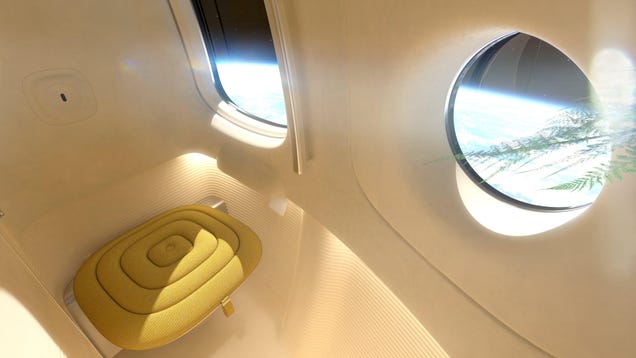
In space, no one can hear you tinkle. But just to be sure, Space Perspective has designed a luxuriously private bathroom experience on board its balloon-propelled capsules.
The word “chili” can mean a lot of different things, depending on where you are in the country. Setting chili peppers aside, the dish known as “chili” can take a few forms, most commonly a mess of meat or beans or some combination of the two, usually swimming in a base of tomato, garlic, onion, and (of course) chili…
Intel engineers are proposing that full support for the SYCL programming model be added to upstream LLVM. This is part of their broader oneAPI effort and embracing Khronos’ SYCL standard for single-source C++ heterogeneous programming from CPUs to GPUs, FPGAs, and other accelerators…
Different insects flap their wings in different manners. Understanding the variations between these modes of flight may help scientists design better and more efficient flying robots in the future. However, decoding insect flight is not as easy as it sounds.
Winged insects have been around for nearly 400 million years, and the evolution of flight in different insect species influences things like how insects flap their wings, what makes some insects highly maneuverable, and how their flight muscles work. A new study has used a mix of evolutionary analysis and robotic model wings to better understand how different flight modes operate.
Insects are the most skilled flyers
There are organisms other than insects that can fly. Scientists can also take inspiration from them, so what makes insect flight so special?
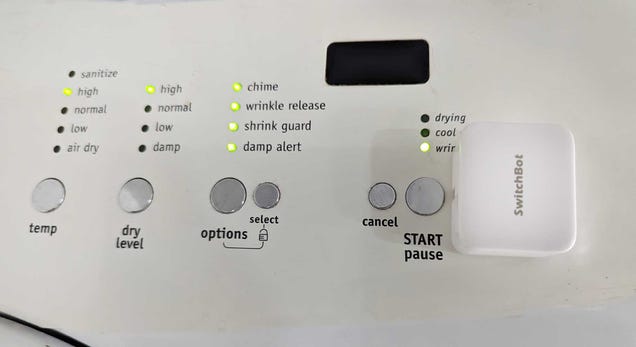
Part of the proposition of smart home technology is “less”—fewer plugs, fewer remotes, fewer extension cords. Items are controlled via wifi or Bluetooth, and the result is (usually) a sleek, streamlined gadget or switch. SwitchBot saw that model and gave it the finger.
Enlarge/ The Porsche Museum brought plenty of its toys to Laguna Seca for Rennsport Reunion 7 in September 2023. (credit: Jonathan Gitlin)
MONTEREY, CALIF.—Few car brands have managed to stake out the kind of mindshare occupied by Porsche. Celebrating its 75th anniversary this year, the company just held its seventh Rennsport Reunion, a car show crossed with a race meet at the Laguna Seca racetrack in Northern California. It drew a crowd of more than 90,000 Porschephiles at the end of September.
From its start in the aftermath of World War II, Porsche has concentrated on using clever engineering to make cars for people who like to drive. Much of that clever engineering was first proven at the racetrack before making the jump to something a bit more road-legal. And almost all of it was on display at Rennsport Reunion, from early engines with twin spark plugs and early experiments with aerodynamics through turbocharging, hybrids, and now extremely high-performance EVs.
The early days
The first Porsche-designed racing cars predate the family firm and date back to 1934 and the fearsome Auto Union V16. But the first factory-built Porsche racing car took five years to follow the company’s first road car, which appeared in 1948. When Porsche started building 356s, customers started racing them in sprints, hill climbs, and long-distance races, complete with pleas to the factory to see if it couldn’t deliver a little more power, particularly from American owners.