Ray-Ban Meta smart glasses review: Instagram-worthy shades

A lot has changed in the two years since Facebook released its Ray Ban-branded smart glasses. Facebook is now called Meta. And its smart glasses also have a new name: the Ray-Ban Meta smart glasses. Two years ago, I was unsure exactly how I felt about the product. The Ray-Ban Stories were the most polished smart glasses I’d tried, but with mediocre camera quality, they felt like more of a novelty than something most people could use. 

After a week with the company’s latest $299 sunglasses, they still feel a little bit like a novelty. But Meta has managed to improve the core features, while making them more useful with new abilities like livestreaming and hands-free photo messaging. And the addition of an AI assistant opens up some intriguing possibilities. There are still privacy concerns, but the improvements might make the tradeoff feel more worth it, especially for creators and those already comfortable with Meta’s platform.

What’s changed

Just like its predecessor, the Ray-Ban Meta smart glasses look and feel much more like a pair of Ray-Bans than a gadget and that’s still a good thing. Meta has slimmed down both the frames and the charging case, which now looks like the classic tan leather Ray-Ban pouch. The glasses are still a bit bulkier than a typical pair of shades, but they don’t feel heavy, even with extended use.

This year’s model has ditched the power switch of the original, which is nice. The glasses now automatically turn on when you pull them out of the case and put them on (though you sometimes have to launch the Meta View app to get them to connect to your phone).

The new Headliner style in
Image by Karissa Bell for Engadget

The glasses themselves now charge wirelessly through the nosepiece, rather than near the hinges. According to Meta, the device can go about four hours on one charge, and the case holds an additional four charges. In a week of moderate use, I haven’t had to top up the case, but I do wish there was a more precise indication of its battery level than the light at the front (the Meta View app will display the exact power level of your glasses, but not the case.)

My other minor complaint is that the new charging setup makes it slightly more difficult to pull the glasses out of the case. It takes a little bit of force to yank the frames off the magnetic charging contacts and the vertical orientation of the case makes it easy to grab (and smudge) the lenses.

The latest generation of smart glasses comes in both the signature Wayfarer style, which start at $299, as well as a new, rounder “Headliner” design, which sells for $329. I opted for a pair of Headliners in the blue “shiny jean” color, but there are tan and black variations as well. One thing to note about the new colors is that both the “shiny jeans” and “shiny caramel” options are slightly transparent, so you can see some of the circuitry and other tech embedded in the frames.

The lighter colors also make the camera and LED indicator on the top corner of each lens stand out a bit more than on their black counterparts. (Meta has also updated its software to prevent the camera from being used when the LED is covered.) None of this bothered me, but if you want a more subtle look, the black frames are better at disguising the tech inside.

New camera, better audio

Look closely at the transparent frames, though, and you can see evidence of the many upgrades. There are now five mics embedded in each pair, two in each arm and one in the nosepiece. The additional mics also enable some new “immersive” audio features for videos. If you record a clip with sound coming from multiple sources — like someone speaking in front of you and another person behind you — you can hear their voices coming from different directions when you play back the video through the frames. It’s a neat trick, but doesn’t feel especially useful.

The directional audio is, however, a sign of how dramatically the sound quality has improved. The open-ear speakers are 50 percent louder and, unlike the previous generation, don’t distort at higher volumes. Meta says the new design also has reduced the amount of sound leakage, but I found this really depends on the volume you’re listening at and your surrounding noise conditions.

There will always be some quality tradeoffs when it comes to open-ear speakers, but it’s still one of my favorite features of the glasses. The design makes for a much more balanced level of ambient noise than any kind of “transparency mode” I’ve experienced with earbuds or headphones. And it’s especially useful for things like jogging or hiking when you want to maintain some awareness of what’s around you.

Camera quality was one of the most disappointing features on the first-generation Ray-Ban Stories so I was happy to see that Meta and Luxottica ditched the underpowered 5-megapixel cameras for a 12MP ultra-wide.

The upgraded camera still isn’t as sharp as most phones, but it’s more than adequate for social media. Shots in broad daylight were clear and the colors were more balanced than snaps from the original Ray-Ban Stories, which tended to look over-processed. I was surprised that even photos I took indoors or at dusk — occasions when most people wouldn’t wear sunglasses — also looked decent. One note of caution about the ultra-wide lens, however: if you have long hair or bangs, it’s very easy for wisps of hair to end up in the edges of your frame if you’re not careful.

The camera also has a few new tricks of its own. In addition to 60-second videos, you can now livestream directly from the glasses to your Instagram or Facebook account. You can even use touch controls on the side of the glasses to hear a readout of likes and comments from your followers. As someone who has live streamed to my personal Instagram account exactly one time before this week, I couldn’t imagine myself using this feature.

But after trying it out, it was a lot cooler than I expected. Streaming a first-person view from your glasses is much easier than holding up your phone, and being able to seamlessly switch between the first-person view and the one from your phone’s camera is something I could see being incredibly useful to creators. I still don’t see many IG Lives in my future, but the smart glasses could enable some really creative use cases for content creators.

The other new camera feature I really appreciated was the ability to snap a photo and share it directly with a contact via WhatsApp or Messenger (but not Instagram DMs) using only voice commands. While this means you can’t review the photo before sending it, it’s a much faster and convenient way to share photos on the go.

Meta AI

Two years ago, I really didn’t see the point of having voice commands on the Ray-Ban Stories. Saying “hey Facebook” felt too cringey to utter in public, and it just didn’t seem like there was much point to the feature. However, the addition of Meta’s AI assistant makes voice interactions a key feature rather than an afterthought.

The Meta Ray-Ban smart glasses are one of the first hardware products to ship with Meta’s new generative AI assistant built in. This means you can chat with the assistant about a range of topics. Answers to queries are broadcast through the internal speakers, and you can revisit your past questions and responses in the Meta View app.

To be clear: I still feel really weird saying “hey Meta,” or “OK Meta,” and haven’t yet done so in public. But there is now, at least, a reason you may want to. For now, the assistant is unable to provide “real-time” information other than the current time or weather forecast. So it won’t be able to help with some practical queries, like those about sports standings or traffic conditions. The assistant’s “knowledge cutoff” is December 2022, and it will remind you of that for most questions related to current events. However, there were a few questions I asked where it hallucinated and gave made-up (but nonetheless real-sounding) answers. Meta has said this kind of thing is an expected part of the development of large language models, but it’s important to keep in mind when using Meta AI.

A suggested Instagram caption generated by Meta AI.
Karissa Bell

Meta has suggested you should instead use it more for creative or general interest questions, like basic trivia or travel ideas. As with other generative AI tools, I found that the more creative and specific your questions, the better the answer. For example, “Hey Meta, what’s an interesting Instagram caption for a view of the Golden Gate Bridge,” generated a pretty generic response that sounded more like an ad. But “hey Meta, write a fun and interesting caption for a photo of the Golden gate Bridge that I can share on my cat’s Instagram account,” was slightly better.

That said, I’ve been mostly underwhelmed by my interactions with Meta AI. The feature still feels like something of a novelty, though I appreciated the mostly neutral personality of Meta AI on the glasses compared to the company’s corny celebrity-infused chatbots.

And, skeptical as I am, Meta has given a few hints about intriguing future possibilities for the technology. Onstage at Connect, the company offered a preview of an upcoming feature that will allow wearers to ask questions based on what they’re seeing through their glasses. For example, you could look at a monument and ask Meta to identify what you’re looking at. This “multi-modal” search capability is coming sometime next year, according to the company, and I’m looking forward to revisiting Meta AI once the update rolls out.

Privacy

The addition of generative AI also raises new privacy concerns. First, even if you already have a Facebook or Instagram account, you’ll need a Meta account to use the glasses. While this also means they don’t require you to use Facebook or Instagram, not everyone will be thrilled at the idea of creating another Meta-linked account.

The Meta View app still has no ads and the company says it won’t use the contents of your photos or video for advertising. The app will store transcripts of your voice commands by default, though you can opt to remove transcripts and associated voice recordings from the app’s settings. If you do allow the app to store voice recordings, these can be surfaced to “trained reviewers” to “improve, troubleshoot and train Meta’s products.”

If you try to cover or block the LED, the glasses won't capture new photos or videos.
Karissa Bell

I asked the company if it plans to use Meta AI queries to inform its advertising and a spokesperson said that “at this time we do not use the generative AI models that power our conversational AIs, including those on smart glasses, to personalize ads.” So you can rest easy that your interactions with Meta AI won’t be fed into Meta’s ad-targeting machine, at least for now. But it’s not unreasonable to imagine that could one day change. Meta tends to keep new products ad-free in the beginning and introduce ads once they start to reach a critical mass of users. And other companies, like Snap, are already using generative AI to boost their ad businesses.

Are they worth it?

If any of that makes you uncomfortable, or you’re interested in using the shades with non-Meta apps, then you might want to steer clear of the Ray-Ban Meta smart glasses. Though your photos and videos can be exported to any app, most of the devices’ key features work best when you’re playing in Meta’s ecosystem. For example, you can connect your WhatsApp and Messenger accounts to send hands-free photos or messages but can’t send texts via SMS or other apps (Meta AI will read out incoming texts, however). Likewise, the livestreaming abilities are limited to Instagram and Facebook, and won’t work with other platforms.

If you’re a creator or already spend a lot of time in Meta’s apps, though, there are plenty of reasons to give the second-generation shades a look. While the Ray-Ban Stories of two years ago were a fun, if overly expensive, novelty, the $299 Ray-Ban Meta smart glasses feel more like a finished product. The improved audio and photo quality better justify the price, and the addition of AI makes them feel like a product that’s likely to improve rather than a gadget that will start to become obsolete as soon as you buy it.

This article originally appeared on Engadget at https://www.engadget.com/ray-ban-meta-smart-glasses-review-instagram-worthy-shades-070010365.html?src=rss

Source: Engadget – Ray-Ban Meta smart glasses review: Instagram-worthy shades

Roundup Herbicide Ingredient Connected To Epidemic Levels of Chronic Kidney Disease

A study conducted by Duke University researchers suggests that glyphosate, the active ingredient in Roundup, may be a potential cause of the mysterious kidney disease CKDu that has affected rural communities in Sri Lanka and similar regions around the world. The findings have been published in Environmental Science and Technology Letters. Phys.Org reports: Roundup is a glyphosate-based herbicide used to control weeds and other pests. Because it is supposed to break down in the environment within a few days to weeks, its use is relatively under-regulated by most public health agencies. But when glyphosate encounters certain trace metal ions that make water hard — like magnesium and calcium — glyphosate-metal ion complexes can form. Those complexes can persist up to seven years in water and 22 years in soil. In certain agricultural areas of Sri Lanka, the high, dry climate combined with its geological formations creates the perfect conditions for hard water. It is also in these regions that CKDu has reached epidemic levels, with as many as 10% of children aged 5-11 years exhibiting signs of early onset kidney damage.

[Nishad Jayasundara, the Juli Plant Grainger Assistant Professor of Global Environmental Health at Duke] believed that glyphosate may play a role in CKDu incidence because of the region’s hard water, even though Sri Lanka has banned use of the herbicide. To test his hypothesis, Jayasundara teamed up with environmental chemist Lee Ferguson, an associate professor of civil and environmental engineering at Duke and his Ph.D. student Jake Ulrich. In collaboration with Mangala De Silva, a professor at the University of Ruhuna, Sri Lanka, the Duke team sampled more than 200 wells across four regions in Sri Lanka. Ferguson’s lab at Duke employs high-resolution and tandem mass spectrometry to identify contaminants — even the barest trace of them — by their molecular weights. It’s a highly sensitive method of identification and quantitation that allows a broad view into the pollutants present in a water system. Through this technique, the researchers found significantly higher levels of the herbicide in 44% of wells within the affected areas versus just 8% of those outside it.

“We really focused on drinking water here, but it’s possible there are other important routes of exposure — direct contact from agricultural workers spraying the pesticide, or perhaps food or dust,” said Ferguson. “I’d like to see increased study with more emphasis looking at the links among these exposure routes. It still seems like there might be things we’re missing.” To this point, Ulrich also found elevated levels of fluoride and vanadium — both of which are linked to kidney damage — in the drinking water of most all of the communities with high incidence of CKDu. The researchers agree that more attention must be paid to the potential contributions each of these contaminants is playing, either individually or in concert with others. But given the reasoning for their glyphosate-based hypothesis going into the study and the herbicide’s high levels of use worldwide, they also believe these results should serve as a serious warning when considering risk of exposure to glyphosate.

Read more of this story at Slashdot.


Source: Slashdot – Roundup Herbicide Ingredient Connected To Epidemic Levels of Chronic Kidney Disease

'World's First Off-Road Solar SUV' Just Drove Across Morocco

An anonymous reader quotes a report from CNN: Zero-emission cars are soaring in popularity but running an electric vehicle is next to impossible in places with limited charging infrastructure. Stella Terra could change that. The khaki-green SUV uses solar panels on its sloping roof to charge its electric battery, meaning it can drive long distances powered entirely by the sun. Built by a team of students at Eindhoven University of Technology (TUE), “the world’s first off-road solar-powered vehicle” could help connect remote areas “where roads are less developed and energy grids are not as reliable,” and assist with emergency aid and deliveries, says Thieme Bosman, events manager for the team.

The team tested the vehicle in Morocco earlier this month, driving more than 1,000 kilometers (621 miles) between the country’s northern coast and the Sahara Desert in the south. “Morocco has a huge variety of landscapes and different surfaces in quite a short distance,” says Bosman, adding that the car was tested “on every type of surface that a car like this could encounter.” The road-legal car has a top speed of 145 kilometers (90 miles) per hour. On a sunny day, its battery range is around 710 kilometers (441 miles) on roads, and around 550 kilometers (342 miles) off-road, depending on the surface. In cloudy conditions, the team estimates the range could be 50 kilometers less. Bosman noted that the vehicle had proved to be one-third more efficient than expected on the trip, and that its lightweight design made it less liable to get stuck on rugged terrain, and put less stress on its suspension.

“Where the SUV market currently innovates on the previous models, we really start from scratch and design everything ourselves,” says Bosman. Minimizing the vehicle’s weight was essential, and the team of 22 students focused on making every element ultra-efficient. At just 2,645 pounds (1,200 kilograms), Stella Terra weighs around 25% less than the average mid-sized SUV. The aerodynamic design also reduces drag and uses “lightweight and robust” composite materials to cut weight, says Bob van Ginkel, technical manager for Stella Terra. “(One of) the benefits of the solar panels on top is that we can have a much smaller battery because we are charging while driving,” van Ginkel adds. Bosman and his peers hope their concept SUV could be mass produced in the near future. “We aim to also inspire not only everyday people, but also the automotive industry, the Ford and Chryslers of the world, to think again about their designs and to innovate faster than they currently do,” says Bosman.

“It’s up to the market now, who have the resources and the power to make this change and the switch to more sustainable vehicles.”

Read more of this story at Slashdot.


Source: Slashdot – ‘World’s First Off-Road Solar SUV’ Just Drove Across Morocco

Argentina's Presidential Front Runner Vows To Slash Science Funding

Javier Milei, the current front runner for president of Argentina, pledged to eliminate government spending on research and shut down the country’s main science agency, the National Scientific and Technical Research Council (CONICET), which provides funding for about 12,000 researchers at 300 institutions across the country. The libertarian candidate has said that shutting down CONICET, with its $400 million budget, could help to end Argentina’s fiscal crisis. Martin De Ambrosio and Fermin Koop report via the scientific journal Nature: Milei is a relative newcomer to Argentine politics, having become a lawmaker in the lower chamber of the country’s Congress only in 2021. Previously, he was an economic adviser to firms including Aeropuertos Argentina 2000, which manages airports in the country. He has also won notoriety as a guest on talk shows discussing economics and his services as a tantric sex coach. His rise was precipitated by eight years of economic turmoil in Argentina: the country owes billions to creditors such as the International Monetary Fund; annual inflation has reached more than 120%; and 40% of the population is living in poverty.

To tame the crisis, Milei has proposed not only privatizing science, but also closing the environment and health ministries, and abolishing the current public-health and education systems. The anti-establishment politician has even floated the idea of allowing people to sell their own organs for profit. On environmental issues, he is equally provocative, calling climate change “a socialist hoax,” and saying that a company should be able to pollute a river as it sees fit. “From his perspective, any regulatory intervention by the state represents an attack against market freedom and, therefore, against individual freedom,” says Maristella Svampa, a sociologist at the CONICET-funded Center for Documentation and Research of Left-Wing Culture in Buenos Aires.

Milei has tapped into the public’s angst. He is currently leading the polls, although electoral experts don’t necessarily trust the figures, and his competitors still hope to win the upper hand. […] If Milei becomes president, say sources who spoke to Nature, researchers will leave the country to seek jobs. They will be able to make a living elsewhere because they are talented, [says Jorge Aliaga, a physicist at Hurlingham National University in Buenos Aires]. But “losing scientists is a problem for the country.” Because of economic crises that have long dogged Argentina, brain drain is a regular threat. Hyperinflation in the late 1980s and a banking crisis in 2001 drove thousands of scientists to seek work in Europe and the United States. Even so, Argentina still has one of the best ratios of researchers to inhabitants in Latin America, Aliaga says. In 2014, for instance, it had about 1,200 researchers for every one million inhabitants. By contrast, Brazil had about 890 for every one million people. “In that sense, Argentina has better numbers than Brazil and Mexico,” Aliaga adds.

Read more of this story at Slashdot.


Source: Slashdot – Argentina’s Presidential Front Runner Vows To Slash Science Funding

Today’s NYT Connections Hints (and Answer) for Tuesday, October 17, 2023

If you’re looking for the Connections answer for Tuesday, October 17, 2023, read on—I’ll share some clues, tips, and strategies, and finally the solutions to all four categories. Beware, there are spoilers below for October 17, NYT Connections #128! Read on if you want some hints (and then the answer) to today’s…

Read more…


Source: LifeHacker – Today’s NYT Connections Hints (and Answer) for Tuesday, October 17, 2023

Meta Quest 3 Is a Virtual Reality of Repair Insanity

While the tech in virtual reality headsets has “undoubtedly gotten better,” iFixit says “repair is getting left off of designers’ priority lists.” In a recent teardown video, the DIY repair site disassembled Meta’s Quest 3 headset to find that it’s not super repairable,” giving it a repairability score of 4 out of 10 due the absence of manuals, OEM spare parts, and “any sign of repairability considerations whatsoever.” The Register reports: As the iFixit team tore into the headset, the first major failure from a repairability perspective was the “extremely complicated procedure of replacing the lithium polymer battery pack.” “Replacing the battery in the Quest 3 is as difficult as it was in the Quest 2, and far more difficult than the Quest Pro.” That said, the batteries in the controllers are AAs rather than the lithium-ion cells of the Quest Pro, so it’s a win there.

Faced with a multitude of screws and the lack of a service manual, iFixit stripped the headset back to its bare components, revealing the new time of flight sensor — essential for hand and controller tracking as well as mapping out the space around the user — and, beyond the fan, the mainboard. The Quest 3 is powered by a Snapdragon 8, the XR2 Gen2. According to iFixit: “Leaked benchmarks suggest that this newer SoC improves on the XR2+ found in the Quest Pro both in terms of performance and power efficiency.”

However, it is the battery that disappoints. Although it is a standard unit so theoretically replaceable, iFixit noted: “It’s taken me three Fixmats, a single tray of plastic, and very careful organizing of about 50 screws to get this far.” Yikes. Not really a user-serviceable part at all. […] Overall, the team gave the device a provisional 4 out of 10 in its teardown, principally due to the absence of manuals, OEM spare parts, and “any sign of repairability considerations whatsoever.” But hey, at least you can swap out the AAs in the controllers when they die.

Read more of this story at Slashdot.


Source: Slashdot – Meta Quest 3 Is a Virtual Reality of Repair Insanity

Apple's iPhone Loses Top Spot In China To Huawei

According to a report from Jefferies analysts, Huawei has overtaken Apple’s iPhone as the smartphone market share leader in China. CNBC reports: The analysts said smartphone sales in China have showed positive growth year over year, driven primarily by high double-digit growth in Android sales led by Huawei, Xiaomi and Honor devices. But Apple’s iPhone has seen a significant, double-digit decline, and its volume growth year over year has been negative since the iPhone 15 launched, according to the analysts.

“We believe weak demand in China would eventually lead to lower-than-expected global shipments of iPhone 15 in 2023,” the analysts wrote, adding that the trend suggests the iPhone will “lose” to Huawei next year. The Jefferies analysts wrote that Android’s volume growth can’t be chalked up to discounts and that discounts on iPhones, excluding the iPhone 15 models, have been stable, while the average discount for Android “is not high.” The analysts noted that resale iPhone 15 devices are all “trading at discounts to official selling prices,” which also reflects the weak demand in China.

Read more of this story at Slashdot.


Source: Slashdot – Apple’s iPhone Loses Top Spot In China To Huawei

35+ Advanced Examples of the Find Command in Linux

In this guide, we will talk about the most common and useful find command examples with detailed explanations. The find command is an advanced tool for searching files or directories rigorously in your file system, taking a little longer time than its alternative tools like the locate command.

The post 35+ Advanced Examples of the Find Command in Linux appeared first on Linux Today.


Source: Linux Today – 35+ Advanced Examples of the Find Command in Linux

Cloudera Hit With $240 Million Patent Verdict Over Cloud-Storage Technology

An anonymous reader quotes a report from Reuters: Patent owner StreamScale won a $240 million jury verdict in Waco, Texas, federal court on Friday in a patent case against data-management software company Cloudera. The jury said (PDF) after a four-day trial that Cloudera infringed three StreamScale patents related to cloud-based data storage technology. Cloudera said in a statement that it intends to challenge the decision and that it would not impact the company’s customers.

StreamScale attorney Jason Sheasby called the verdict a “referendum on the importance of small inventors and small businesses.” StreamScale owns patents for inventor Michael Anderson’s “accelerated erasure coding” technology, which the company’s complaint called a “cornerstone” of modern data storage. It sued Santa Clara, California-based Cloudera in 2021 for allegedly infringing several of its patents.

The lawsuit accused Cloudera’s CDH open source data-management platform of violating StreamScale’s patent rights. Cloudera argued its software worked in a different way than StreamScale’s inventions and said that the patents were invalid. StreamScale also accused other companies, including Intel, of infringing its patents in the 2021 lawsuit. Intel filed a separate lawsuit later that year arguing that StreamScale’s allegations violated a non-disclosure agreement.

Read more of this story at Slashdot.


Source: Slashdot – Cloudera Hit With 0 Million Patent Verdict Over Cloud-Storage Technology

Netflix will reportedly turn more of its hit shows into games

Netflix is making moves to expand its mobile gaming offerings. Soon, subscribers will see more shows made by Netflix made into mobile games, according to a report by the Wall Street Journal, like Squid Game and Wednesday.

While mobile gaming is not entirely new to Netflix, it’s still trying to find its place in the company’s business model. Right now, the Netflix app prompts users to download and play games like Exploding Kittens: The Game or Ghost Detective on the app store where you can play on the platform. But eventually, Netflix subscribers will be able to play games directly on their smart TVs and computers. This push into gaming by the streaming giant is preceded by the company’s recent release of a dedicated controller app for iOS devices that lets a player use their phone as a gamepad with a paired TV.

From the start, Netflix has never charged for its games or posed additional fees within its gaming domain. To play on your phone, you only need a subscription. And while we don’t know if that is going to ever change in the near future, Netflix’s focus on making games based on hit shows could help maintain interest in them, especially in between seasons. The bet on superconsumers’ could also lead the company to a path of buying its way into gaming.

As of now, Netflix offers more than 70 games on its platform and it plans to expand that more into the end of 2023. Netflix will continue to license non-show related games like Classic Solitaire, according to the WSJ.

It has been less than two years since the company began dabbling in mobile gaming and yet, Netflix has already become a player in indie publishing. And we’ve seen the company deliver on its promise of developing games based on hit shows. Netflix Stories: Love is Blind, an interactive story title based on the reality television series just came out last month. Now it appears ready to lean even harder into gaming.

This article originally appeared on Engadget at https://www.engadget.com/netflix-will-reportedly-turn-more-of-its-hit-shows-into-games-230944708.html?src=rss

Source: Engadget – Netflix will reportedly turn more of its hit shows into games

All the News, Trailers, and Cosplay You Might Have Missed From New York Comic Con 2023

New York Comic Con 2023 is at an end, and with it the book is closed on one of the most peculiar versions of the show in a long while—with the long shadow of Hollywood’s summer of labor reckonings and the ongoing SAG-AFTRA strike making for an event with some severely constrained splashiness.

Read more…


Source: Gizmodo – All the News, Trailers, and Cosplay You Might Have Missed From New York Comic Con 2023

Comcast Resists Call To Stop Its Misleading '10G Network' Claims

Jon Brodkin reports via Ars Technica: An advertising industry group urged Comcast to stop its “10G” ads or modify them to state that 10G is an “aspirational” technology rather than something the company actually provides on its cable network today. The National Advertising Division (NAD), part of the advertising industry’s self-regulatory system run by BBB National Programs, ruled against Comcast after a challenge lodged by T-Mobile. In its decision announced Thursday, the NAD recommended that Comcast “discontinue its ’10G’ claims” or “modify its advertising to (a) make clear that it is implementing improvements that will enable it to achieve ’10G’ and that it is aspirational or (b) use ’10G’ in a manner that is not false or misleading, consistent with this decision.”

Comcast plans to appeal the decision, so it won’t make any changes to marketing immediately. If Comcast loses the appeal and agrees to change its practices, it would affect more than just a few ads because Comcast now calls its entire broadband network “10G.” “In February 2023, Comcast rebranded its fixed Internet network as ‘Xfinity 10G Network’ to signify technological upgrades to its network that are continuing to be implemented,” the NAD said. Comcast’s website claims that the “Xfinity 10G Network is already here! You’ll see continual increases in network speed and reliability. No action is required on your part to join the Xfinity 10G Network.” It also claims that 10G is “complementary” to the 5G mobile network.

Read more of this story at Slashdot.


Source: Slashdot – Comcast Resists Call To Stop Its Misleading ’10G Network’ Claims

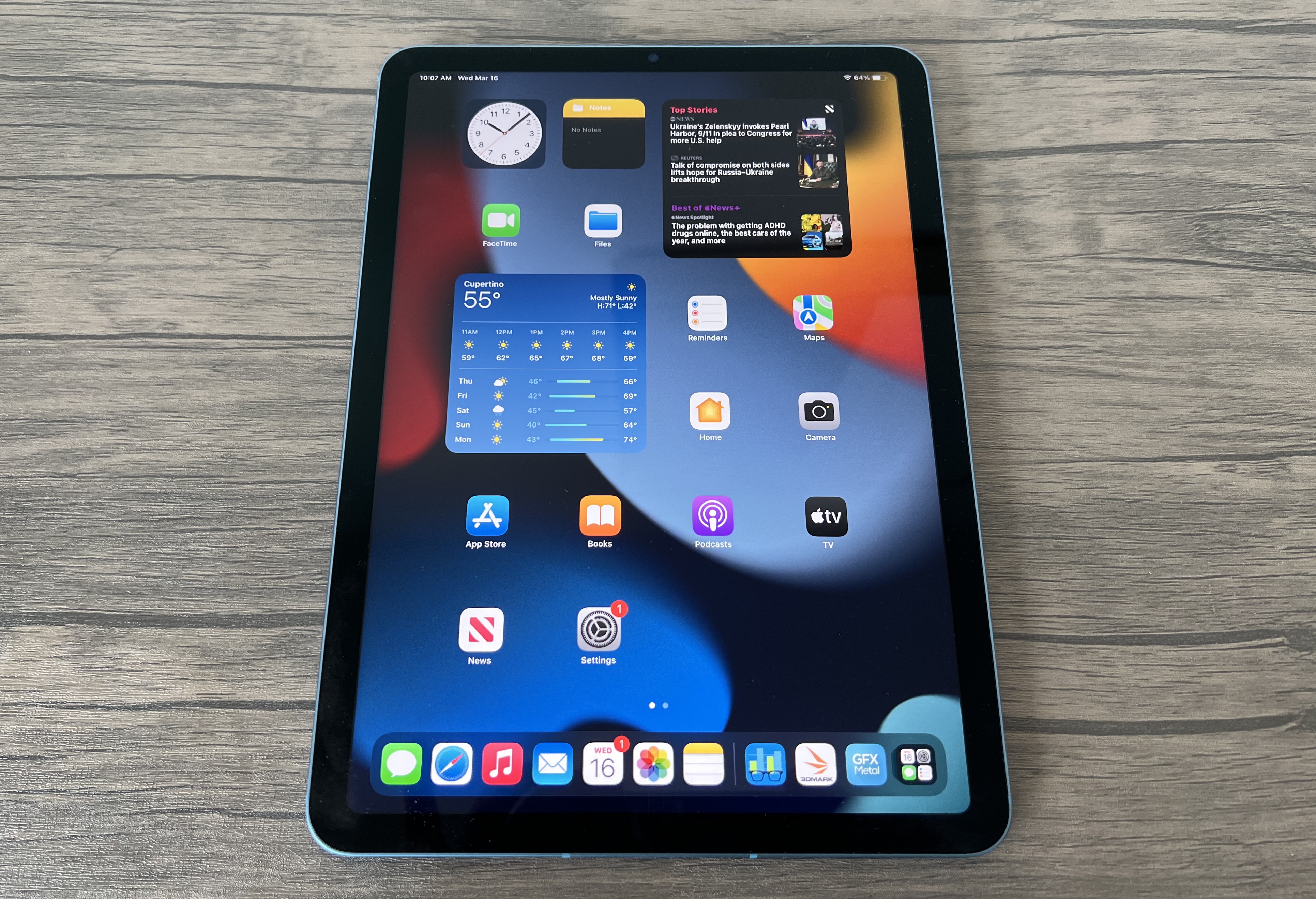
What to expect amid the bevy of conflicting iPad rumors

The 2022 iPad Air.

Enlarge / The 2022 iPad Air. (credit: Samuel Axon)

Over the past few days, there have been many conflicting rumors and reports, some from usually reliable sources, about Apple’s plans for the next wave of iPad updates. But on close examination, the rumors may not be as contradictory as it seems.

First up was an email blast from Bloomberg’s Mark Gurman on Sunday. Noting that he had written in July that we would see iPad refreshes before the end of the year, he appeared to walk that back, writing, “a new entry-level iPad, iPad Air and iPad mini are all in development with faster chips, but I don’t believe updates of any significance are imminent.”

He pointed to his prior reporting that Apple plans a major iPad Pro update with an OLED screen next year, but not before 2023’s end.

Read 11 remaining paragraphs | Comments


Source: Ars Technica – What to expect amid the bevy of conflicting iPad rumors

These Two Beginner-Friendly Drones Are on Sale for $145 Right Now

The Alpha Z Pro and the Flying Fox are two wide-angle dual-camera drones that you can get together on sale for $144.99 right now. Both drones have a six-axis gyroscope and one-button return for smooth flights and easier landings, and they also both have first-person flight capabilities.

Read more…


Source: LifeHacker – These Two Beginner-Friendly Drones Are on Sale for 5 Right Now