Midori has parted ways with Chromium for the next best thing, Gecko, which you must’ve seen being used in browsers such as Firefox, LibreWolf, Tor Browser, and more.
Earlier this month Intel introduced the 14th Gen Core “Raptor Lake Refresh” processors led by the flagship Core i9 14900K. Unfortunately my review samples had arrived late but in any event today are the first Linux benchmarks of the new Core i5 14600K and Core i9 14900K processors compared to prior 13th Gen Core processors as well as the AMD Ryzen 7000 series competition. All of these Intel and AMD processors were freshly re-tested on the newly-launched Ubuntu 23.10 with the Linux 6.5 kernel.
NVIDIA 545.29.02 is here with beta-quality support for NVIDIA GeForce and NVIDIA Workstation GPUs to open-source Linux kernel modules that NVIDIA offers alongside the proprietary variant of its graphics driver.
A fast-moving patch set—seemingly the norm for Linux networking
development—seeks to add some Rust abstractions for physical layer
(PHY) drivers. Lots of
review has been done, and the patch set has been reworked
frequently in response to those comments. Unfortunately, the Rust-for-Linux developers are
having trouble keeping up with that pace. There
is, it would appear, something of a disconnect between the two communities’
development practices.
Earlier this year Intel published x86-simd-sort as a very speedy sorting library that initially leveraged AVX-512 instructions for 10~17x faster sorts. Numpy was one of the first major projects to adopt x86-simd-sort and OpenJDK more recently adopted it. Since the initial release we’ve seen more features and performance optimizations added. Today marks the release of x86-simd-sort 4.0 and it’s delivering even greater performance while also adding an AVX2 code path to help those without AVX-512…
The 160th installment of the 9to5Linux Weekly Roundup is here for the week ending on October 29th, 2023, keeping you guys up to date with the most important things happening in the Linux world.
The Linux kernel 6.6 release is a big one with plenty of improvements across the board for various laptops, networking hardware, processors, and whatnot.
Version
0.2 of Incus, an LXD fork, has been released. “This version
incorporates most changes that went into LXD 5.19 as well as introduce a
few additional features and improvements.” Changes include NVME
storage support, support for migrating clustered environments from LXD, and
more.
Sent out this morning was the Direct Rendering Manager (DRM) feature pull request of updated graphics/display drivers for the in-development Linux 6.7 kernel. Notable this round is Intel Meteor Lake integrated graphics now being considered stable / enabled out-of-the-box, Intel Lunar Lake graphics support has started to get underway, and AMD continues working on their upcoming hardware platforms…
New CEO comes to helm as companies like Google, Meta, and TikTok pull out of the Lisbon-based mega-conference in response to accusations from the event’s founder and former CEO that Israel is committing “war crimes.”
And other novelties likely next year in kernel 6.7. The merge window has opened for what will become Linux version 6.7, and below we’ve compiled some things that are likely to be included in the new release.…
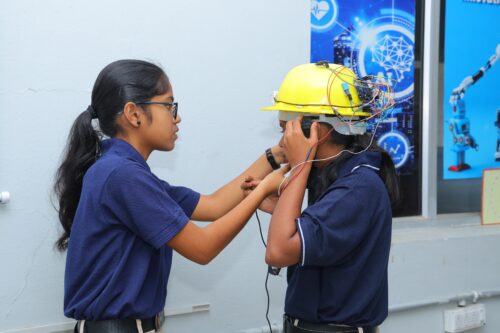
On September 29 2023, amidst much excitement and enthusiasm, a significant event took place at a unique school in Moinabad, Telangana: the teams of the Raspberry Pi Foundation and Telangana Social Welfare Residential Educational Institutions Society (TSWREIS) gathered to celebrate our partnership on the esteemed Coding Academy of TSWREIS.
This event marked a special project for us where we are piloting a distinctive, progression-based computing curriculum in a government school and a degree college in India.
Partnering with TSWREIS to bring computing education to Telangana
At the Foundation, our goal is to work closely with schools, tailoring our offerings to their contexts. Our objective is to design and evaluate unique learning experiences by integrating content from our diverse range of high-quality educational products. Through these efforts, we aim to drive significant advancements in education and technology, benefiting both students and education systems across the world.
TSWREIS manages 268 residential educational institutions in Telangana, with a primary focus on delivering quality education to under-resourced young people, particularly children from scheduled castes and tribes in rural areas. Among these institutions is the Coding Academy school, located in Moinabad, which operates as a fully residential co-ed school for grades 6 to 12, accommodating around 800 students. Additionally, TSWREIS oversees another centre of excellence, the Coding Academy degree college in Shamirpet catering to 600 undergraduate female students.
We joined forces with TSWREIS to form a collaborative partnership with their Coding Academy units at both high school and college. We’re committed to sharing our expertise in computing and coding curriculum for students from Grade 6 to intermediate at the school, and across all courses at the college.
The exciting model for our partnership with TSWREIS
We took on the challenge of directly delivering a comprehensive curriculum at the Coding Academy school and college through our own educators, exclusively hired and trained for this project. This is an exciting new approach for us, because up to this point, we have never directly delivered a curriculum anywhere in the world. However, we know we have created a world-class computing curriculum for educators in formal (and non-formal) settings, and we have many years’ experience of training teachers, so we are well-prepared to face this project and its potential challenges head-on and make it a success.
To begin the project, our team members based in India conducted a thorough study of the Coding Academy students’ interests and learning levels. Based on this, our Curriculum team in the UK and India customised and localised the content in our curriculum. We will be observing the curriculum’s delivery in classrooms and collecting students’ responses, and based on this data we’ll further refine the localised curriculum.
Throughout the project’s lifespan, we’ll measure the effectiveness of our curriculum and the impact of learning on the students. To do this, we’ll collect data from classroom observations, periodic assessments, and focused group discussions with students and educators.
Starting from the second year of the project, we will build capacity within the system. In collaboration with TSWREIS, we’ll select teachers from within the organisation based on their interest and competence, and initiate their training. Our objective is that by the project’s fifth year, TSWREIS will have achieved self-sufficiency in delivering computing education to students at the Coding Academy as well as other institutions in its purview.
The promise of this project for our work in India
We began delivering lessons at the Coding Academy college and school in July, and it’s worth mentioning that it’s been a rollercoaster ride so far. We’ve been working closely with the TSWREIS team to equip both the academic units with the resources needed for seamless implementation of the project. Our India-based team has been able to ensure continuity in the project’s momentum and plug every gap, and is working tirelessly to make this big, challenging, and exciting project blossom and succeed. When it comes to the students’ energy, enthusiasm, and the sparkle in their eyes for their learning, it’s unmatched, and everyone feels proud of their achievements so far.
This work with TSWREIS holds immense importance for us, representing our dedication to shaping a brighter educational landscape especially for young people from under-resourced communities. We hope to replicate similar initiatives across various regions in India, enabling widespread access to quality education. We also aspire to take forward our initiatives in much larger dimensions for the entirety of India.
In addition to our partnership with TSWREIS, we are actively engaged in several other impactful projects in India, such as our partnership with Mo School Abhiyan in Odisha to serve the government’s schools across Odisha state, and our collaboration with Pratham Foundation, which is helping us reach under-resourced communities and furthering our commitment to enhancing educational experiences.
We look towards the future
In reflection, the voices at the launch event on September 29 echoed the anticipation and optimism that filled the air on that memorable day. Chief guests who graciously attended the event were Shri. E Naveen Nicholas, IAS, Secretary at TSWREIS & TTWREIS, and Rachel Bennett, our Managing Director at the Raspberry Pi Foundation. Heartfelt gratitude to them for their presence and blessings. We also extend our thanks to our funding partner in this work, Ezrah Charitable Trust, and our delivery partners for their invaluable support.
The energy felt on the event day continues to drive our determination to do the work that lies ahead. As we look forward to the future, our hope and the hope of both the Coding Academy team and students are aligned: hope for a brighter, technologically empowered future, where education becomes a beacon of opportunity for all.
Earlier this month NVIDIA published the R545 Linux driver beta while today it’s been promoted to the stable series with the NVIDIA 545.29.02 Linux driver release…
With the upcoming 0.5 release, WirePlumber’s Lua scripts will be transformed with the new Event Dispatcher. More modular and extensible with very little redundant processing, they will look and feel completely different.