How to Keep Your Pumpkin Plants Alive Until Halloween

I over-plant pumpkins every year—and with good reason. They’re slow starters, and right when the vines start taking off and the pumpkins start to appear, the fall rain hits and the temperature drops. There are a lot of challenges to keeping those pumpkins healthy, solid, and ripe enough for Halloween. Here are some…

Read more…


Source: LifeHacker – How to Keep Your Pumpkin Plants Alive Until Halloween

Airbnb's next focus appears to be long-term rentals

Airbnb chief executive Brian Chesky told the Financial Times that the company is going “a little bit beyond its core business” starting next year. Chesky wants Airbnb to expand its focus and is currently planning a push into long-term rentals. The service already offers monthly rentals, but apparently, only 18 percent of gross nights booked in the second quarter of 2023 come from stays longer than 30 days. Chesky believes the company can do more to drum up interest in long-term bookings and that offering rentals for up to a year represents a “huge opportunity.” 

“In this post-pandemic world, there’s this   unrecognized market of a month, two months, three months, because people can work from laptops, people are going away for the summer,” he told the publication. 

Chesky’s plan, if executed well, could be what the company needs to be able to regain lost NYC listings. The city used to be one of the biggest Airbnb markets with the most number of listings available, but officials recently started enforcing new regulations that wiped out most of them. NYC mandated that hosts will have to lodge an application to be able to rent homes to guests for less than 30 days, and it has reportedly been slow to issue approvals. Further, hosts can only rent out homes for short-term stays if they’re also staying there, and only two guests are allowed at any one time. 

In addition to putting a focus on long-term rentals, Chesky also intends to expand its experiences selection, so it could offer more “things to do on your trip.” He presented more ideas under consideration to the Times, as well, including dining pop-ups and car rentals. “The second biggest asset usually in someone’s life after their home is their car,” he said. “That’ll be the next thing.” His statement hints at a business model similar to services like Turo’s, which people have been calling “Airbnb for cars.”

This article originally appeared on Engadget at https://www.engadget.com/airbnbs-next-focus-appears-to-be-long-term-rentals-113936992.html?src=rss

Source: Engadget – Airbnb’s next focus appears to be long-term rentals

It seemed like a good idea at the time: 9 car designs that went nowhere

It seemed like a good idea at the time: 9 car designs that went nowhere

Enlarge (credit: Michael Reinhard | Getty Images)

Ford Motor Company had a better idea, as it once advertised, producing such iconic cars as the Mustang, Bronco, Thunderbird, and Model T. But it also built the ill-fated Edsel. Ford wasn’t alone, either; many inventors and engineers have produced cars that seemed like a good idea until they actually acted on it. Here are a few examples.

1899 Horsey Horseless

Kellogg’s cereal wasn’t the only product to emanate from Battle Creek, Michigan. The Horsey Horseless also came from there, although it’s unknown whether this vehicle was ever actually built. Still, it was a solution to a common problem in the early days of motoring, when automobiles were still uncommon and scared horses. Uriah Smith thought that sticking a horse head on the front of a horseless carriage would prevent horses from getting upset upon seeing one.

“It would have all the appearance of a horse and carriage and hence raise no fears in any skittish animal,” he wrote. “Before he could discover his error and see that he had been fooled, the strange carriage would be passed, and then it would be too late to grow frantic and fractious.”

Read 42 remaining paragraphs | Comments


Source: Ars Technica – It seemed like a good idea at the time: 9 car designs that went nowhere

Assassin’s Creed Mirage: The Kotaku Review

Assassin’s Creed Mirage isn’t like the past few games in the series. It’s not like Odyssey, and it’s not like Origins. Those games both evolved the series into something bigger, adding hundreds of side-quests and newfound RPG elements, like loot drops and enemies with levels. Those games were fun. I enjoyed exploring…

Read more…


Source: Kotaku – Assassin’s Creed Mirage: The Kotaku Review

DragonFlyBSD's HAMMER2 File-System Seeing New Improvements, Initial Recovery Support

When it comes to the BSD operating systems, DragonFlyBSD’s HAMMER2 is one of the most interesting innovations. HAMMER2 supports online deduplication, clustering, multiple mountable file-system roots, snapshots, compression, encryption, extensive checksumming, and other features. Over the past decade it’s evolved quite nicely and in recent days has seen further enhancements…

Source: Phoronix – DragonFlyBSD’s HAMMER2 File-System Seeing New Improvements, Initial Recovery Support

Linux Patches Allow Changing Hibernation Compression Format For Better Performance

Currently when hibernating a Linux system LZO compression is used for preserving the memory contents while a new patch series posted today by Qualcomm allow for changing out the compression API used and makes LZ4 a new option during Linux hibernation…

Source: Phoronix – Linux Patches Allow Changing Hibernation Compression Format For Better Performance

India's Early Electronic Music From the '70s Is Finally Being Released

Hugh Morris writes via the New York Times: When the musician and artist Paul Purgas was invited in 2017 by the National Institute of Design in Ahmedabad, India, to play some of the music he’d found in its archives that year, he was initially very keen. These were tapes that had been hidden from the public for decades; they proved the existence of a fertile avenue for electronic music in 1960s and ’70s India, and he was determined for people to hear them. But as he went to use the institute’s aging reel-to-reel machine, he got a nasty surprise: an electric shock. “I think that sobered me up,” he said in an interview. The project, he realized, was about to become “a bit of a lifetime journey.”

Purgas, 43, is a London-based sound artist and curator, and half of the electronic music duo Emptyset. Initially, he had been on the trail of the lost Moog synthesizer that the American experimentalist David Tudor used while in India, which led him to the library of the NID. In “a victory for good record keeping,” Purgas found details of some unknown Tudor recordings noted in a handwritten logbook by a diligent archivist in the 1960s. He requested them from the archives, and was presented with box after box of carefully annotated tapes, all taken from a neglected cupboard. Purgas returned to England to undertake training in tape restoration to properly conserve what he’d found: music from a group of Indian composers who, aided initially by Tudor, had used the Moog and some accompanying homemade modular devices between 1969 and 1972 to create some of India’s earliest electronic music.

Following a 2020 BBC radio documentary, “Electronic India,” in which Purgas situated the music in its cultural context, a new compilation — “The NID Tapes: Electronic Music from India 1969-1972,” out Friday — presents the restored pieces in their full variety. There are manipulated field recordings, pieces linked to birds and nature, compositions inspired by Indian classical music, imagined voyages to outer space, and tracks reminiscent of bleep techno or Aphex Twin. What the recordings demonstrate, Purgas said, is “electronic sound and music existing free from any baggage,” away from “any vestiges of what could be conceived as a kind of Western continuum.”

Read more of this story at Slashdot.


Source: Slashdot – India’s Early Electronic Music From the ’70s Is Finally Being Released

This EV restomod highlights the joys and flaws of the classic MGB

A metallic green MGB drives down an English road

Enlarge / Mass-produced in the 1960s with a not-very special engine, the MGB is a rather good candidate for an electric conversion. (credit: Frontline Developments)

Electrifying classic sports cars is swiftly becoming big business. Battery-powered 911s, E-Types, Triumphs, and more have been around for a while, but the humble MGB has thus far been overlooked… until now. UK-based MG specialists Frontline Developments has a rich history of restoring, modifying, and generally sprucing up MGBs, and has decided that now is the time to inject a cleaner, greener heart into what was once a British sportscar staple.

The MG BEE EV is a neat little thing. Currently in prototype form, it’s packing a 40 kWh battery attached to a 114 hp (85 kW) 162 lb ft (220 Nm) Hyper9 motor that sends power to the rear wheels via a five-speed Mazda Miata gearbox. Range is about 140 miles (225 km) if you drive sensibly, and charging takes about five hours. Frontline will build you one as a BEE GT (coupe), or Roadster should you wish to feel the wind in your beard as you roll along.

Frontline Developments is well known in the MG world. Founded in 1991 by Tim Fenna, it started with gearbox swaps, then widened its business with suspension, brake, and even engine upgrades for customers wanting a little more go. The company offers full restorations, as well as its own special editions from time to time. Its LE50 and Abingdon editions came with beautiful aesthetics, twinned with more modern (and powerful) internal combustion engines. It’s launching a V8-powered LE60 alongside the BEE for those who fancy old-school thrills.

Read 10 remaining paragraphs | Comments


Source: Ars Technica – This EV restomod highlights the joys and flaws of the classic MGB

NASA Plans To Build Houses On the Moon By 2040

Several scientists from NASA told the New York Times that the agency is planning to build houses on the moon by 2040. Forbes reports: The agency is set to return to the moon and is hoping its astronauts can stay long-term — in a house built on the moon via a 3D printer. The idea is to build the house structure out of a special lunar concrete from the moon’s surface, and NASA has found just the company to do it: Austin-based 3D printing company, ICON. In what’s been dubbed Project Olympus, ICON

ICON created its first 350-square-foot prototype home in Austin in March 2018 with a proprietary machine called Vulcan. This year, it showcased its first model home at Wolf Ranch in Georgetown, Texas, which is part of its 3D-printed 100-home community project. The start-up first received funding from NASA in 2020, and in 2022 it announced an additional $60 million for a space-based construction system that can be used beyond earth. The idea is to send a 3D printer up to the moon via a rocket, and the printer completes its job from there. “We’ve got all the right people together at the right time with a common goal, which is why I think we’ll get there,” NASA’s director of technology maturation, Niki Werkheiser told The New York Times. “Everyone is ready to take this step together, so if we get our core capabilities developed, there’s no reason it’s not possible.”

Read more of this story at Slashdot.


Source: Slashdot – NASA Plans To Build Houses On the Moon By 2040

Generative AI Is the Newest Tool in the Dictator's Handbook

When protests in Pakistan earlier this year escalated into clashes between pro-government forces and supporters of former Prime Minister Imran Khan, the now-imprisoned leader turned to social media to bolster his message. Khan shared this brief video clip on Twitter showing his supporters holding up signs with his…

Read more…


Source: Gizmodo – Generative AI Is the Newest Tool in the Dictator’s Handbook

Predictive Policing Software Terrible At Predicting Crimes

An anonymous reader quotes a report from Wired: Crime predictions generated for the police department in Plainfield, New Jersey, rarely lined up with reported crimes, an analysis by The Markup has found, adding new context to the debate over the efficacy of crime prediction software. Geolitica, known as PredPol until a 2021 rebrand, produces software that ingests data from crime incident reports and produces daily predictions on where and when crimes are most likely to occur. We examined 23,631 predictions generated by Geolitica between February 25 and December 18, 2018, for the Plainfield Police Department (PD). Each prediction we analyzed from the company’s algorithm indicated that one type of crime was likely to occur in a location not patrolled by Plainfield PD. In the end, the success rate was less than half a percent. Fewer than 100 of the predictions lined up with a crime in the predicted category, that was also later reported to police. Diving deeper, we looked at predictions specifically for robberies or aggravated assaults that were likely to occur in Plainfield and found a similarly low success rate: 0.6 percent. The pattern was even worse when we looked at burglary predictions, which had a success rate of 0.1 percent.

Read more of this story at Slashdot.


Source: Slashdot – Predictive Policing Software Terrible At Predicting Crimes

Japan Startup Develops 'Gundam'-Like Robot With $3 Million Price Tag

A Tokyo startup has developed a 4.5-meter-tall, four-wheeled robot modeled after the “Mobile Suit Gundam” from the Japanese animation series. It has a price tag of $3 million. Reuters reports: Called ARCHAX after the avian dinosaur archaeopteryx, the robot has cockpit monitors that receive images from cameras hooked up to the exterior so that the pilot can maneuver the arms and hands with joysticks from inside its torso. The 3.5-ton robot, which will be unveiled at the Japan Mobility Show later this month, has two modes: the upright ‘robot mode’ and a ‘vehicle mode’ in which it can travel up to 10 km (6 miles) per hour.

“Japan is very good at animation, games, robots and automobiles so I thought it would be great if I could create a product that compressed all these elements into one,” said Ryo Yoshida, the 25-year-old chief executive of Tsubame Industries. “I wanted to create something that says, ‘This is Japan.'” Yoshida plans to build and sell five of the machines for the well-heeled robot fan, but hopes the robot could one day be used for disaster relief or in the space industry.

Read more of this story at Slashdot.


Source: Slashdot – Japan Startup Develops ‘Gundam’-Like Robot With Million Price Tag

Today’s NYT Connections Hints (and Answer) for Wednesday, October 4, 2023

If you’re looking for the Connections answer for Wednesday, October 4, 2023, read on—I’ll share some clues, tips, and strategies, and finally the solutions to all four categories. Beware, there are spoilers below for October 4, NYT Connections #115! Read on if you want some hints (and then the answer) to today’s…

Read more…


Source: LifeHacker – Today’s NYT Connections Hints (and Answer) for Wednesday, October 4, 2023

Japan To Provide $1.3 Billion In Extra Aid To US Chipmaker Micron

In a move to strengthen its chip supply chain, Japan announced it will provide up to $1.3 billion in additional subsidies for U.S. chipmaker Micron Technology’s plant in Hiroshima Prefecture. The Japan Times reports: The move, which comes on top of the up to 46.5 billion yen aid announced earlier, adds to Japan’s efforts to ensure a stable supply of chips at a time when rising tensions between the United States and China are increasingly posing a threat to its economic security. Micron has said it plans to invest up to 500 billion yen in Japan in the next few years and will become the first chipmaker to introduce extreme ultraviolet lithography machines — state-of-the-art equipment for manufacturing advanced semiconductors — in Japan. The company is slated to start mass production of next-generation 1-gamma dynamic random access memory chips in 2026.

Read more of this story at Slashdot.


Source: Slashdot – Japan To Provide .3 Billion In Extra Aid To US Chipmaker Micron

The Heir of an Empire Rises in Our Ahsoka Finale Discussion Zone

The moment is upon us: Rebels have reunited, Thrawn’s grand design has been put into motion, and everyone just wants to get back to the galaxy that’s a little less far, far away than the one they’re currently in. Ahsoka’s finale is here, and… well, there’s a lot that needs sorting out.

Read more…


Source: Gizmodo – The Heir of an Empire Rises in Our Ahsoka Finale Discussion Zone

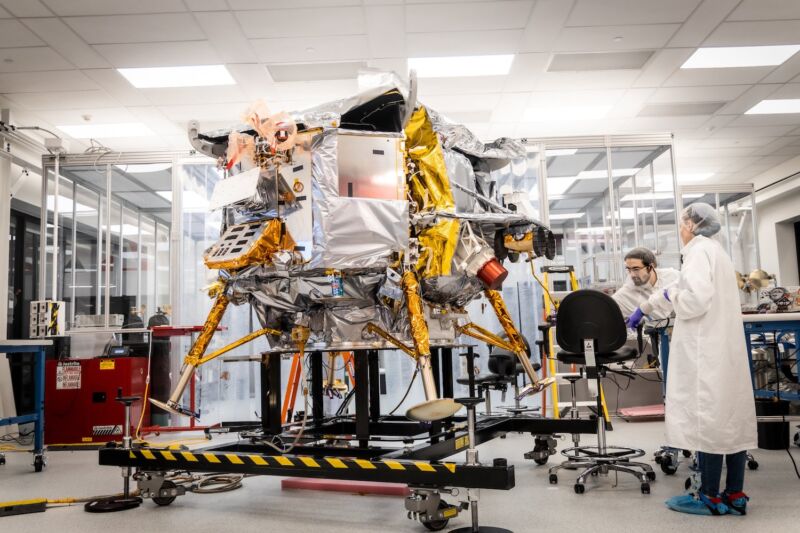
It’s crunch time for companies building NASA’s commercial lunar landers

Read 46 remaining paragraphs | Comments


Source: Ars Technica – It’s crunch time for companies building NASA’s commercial lunar landers

Microsoft Overhauls OneDrive With a Big New Design, AI Copilot Integration

Tom Warren writes via The Verge: Microsoft is announcing the third generation of its OneDrive cloud storage today, complete with the company’s AI-powered Copilot system, a Fluent design refresh, and big improvements to the way businesses share and use cloud documents. […] Microsoft is overhauling the main OneDrive web app with a new Fluent design. It more closely matches the Windows 11 interface and recent changes to Office apps, and it also fits in with the latest File Explorer design updates. There is now an AI-powered file recommendations “For you” section up the top, much like File Explorer. Files that matter to your workday are surfaced here immediately and can appear here whether they’re in your OneDrive, Teams, or elsewhere. […] You can also now choose the colors of your folders, and when you share with co-workers, they will also see the color choice. […]

One thing many OneDrive business users have been asking for is the ability to open any document from OneDrive on the web into the native desktop apps. Microsoft is adding this feature in December, with the ability to open things like CAD files or PDFs. Microsoft is also adding a new media view that includes all photos and video assets in a single location. This new OneDrive experience will also soon be available in the files section of Microsoft Teams and the file navigation part of Outlook. Microsoft expects the new OneDrive in Outlook view to be available in December.

Microsoft is also planning to integrate its Copilot AI system into OneDrive in December for everyone with a Microsoft 365 Copilot license. Copilot will offer up a daily digest of files, like a catch-up feature for documents you and your colleagues are working on. This will include a list of important changes to files and a summarized look at new comments. Microsoft says it will intelligently organize these summaries based on context and relevance. Most of the interface changes can be experienced now at onedrive.com, with more arriving in early 2024. You can view the full list of changes here.

Read more of this story at Slashdot.


Source: Slashdot – Microsoft Overhauls OneDrive With a Big New Design, AI Copilot Integration

HMD Global Starts Manufacturing In Europe With the 'Made In Hungary' Nokia Phone

An anonymous reader quotes a report from TechCrunch: HMD Global, the phone maker and marketer behind the Nokia mobile phone brand, has launched its very first smartphone manufactured in Europe. The news comes some six months after the Finnish company first revealed it was transitioning some of its manufacturing to Europe to meet a growing demand from enterprises for locally produced hardware to address security and sustainability concerns. HMD Global hadn’t revealed where, exactly, it was manufacturing in Europe, with the company telling TechCrunch in February that it was keeping the facility under wraps due to security concerns.

“Unfortunately, due to our customers being in various security-conscious industries, we’re not allowed to tell anyone which countries we are producing these devices in, simply to keep it as secure as possible,” HMD Global chief marketing officer Lars Silberbauer said at the time. However, the company has now seemingly had second thoughts on that, and it has confirmed at least one of its manufacturing locations is in Hungary. A spokesperson told TechCrunch that it still can’t reveal where exactly in Hungary the manufacturing facility is, though they did note that they will be adding further manufacturing and assembly capacity to additional locales in Europe.

The first device off the line is the 5G Nokia XR21, which is available for enterprises to buy today. This is pretty much the same as the XR21 that launched earlier this year, except the new variant has been assembled in Europe and HMD Global can offer enterprise customers a “higher level of security assurance through customized software and security features,” a spokesperson said, adding that they are working with a number of additional IT security partners. Additionally, the company is making 30 limited edition versions of these devices available to the general public through the online Nokia store for consumers in the U.K., France, Germany, Austria, the Netherlands, Belgium, Spain, Italy, and Finland, with a sticker price of 699 euros. It also plans to launch a standard (i.e., non-limited edition) of the European XR21 smartphone for consumers, which will be available in black.

Read more of this story at Slashdot.


Source: Slashdot – HMD Global Starts Manufacturing In Europe With the ‘Made In Hungary’ Nokia Phone