Apple's October Surprise Might Be a New iMac or MacBook Pro

October is almost over, but by the time spooky season is done, Apple may have a jump scare planned for all those with their finger on the tech pulse. The company is reportedly gearing up for some sort of product launch soon enough, this time dropping new versions of the MacBook Pro and iMac

Read more…


Source: Gizmodo – Apple’s October Surprise Might Be a New iMac or MacBook Pro

Why Blizzard Is Giving Away A Liquid-Cooled Diablo IV Gaming PC With Real Human Blood

Why Blizzard Is Giving Away A Liquid-Cooled Diablo IV Gaming PC With Real Human Blood
Back in the old days, it wasn’t uncommon to bestow a drop of blood (or more) inside a gaming PC as a sort of accidental sacrifice—many of those beige towers from yesteryear had sharp edges on their metal panels and it was easy to gash your finger. Fast forward a few decades and Blizzard is giving away a Diablo IV-themed gaming PC that’s intentionally

Source: Hot Hardware – Why Blizzard Is Giving Away A Liquid-Cooled Diablo IV Gaming PC With Real Human Blood

You Can Get This Beginner's Cybersecurity Course for $60 Right Now

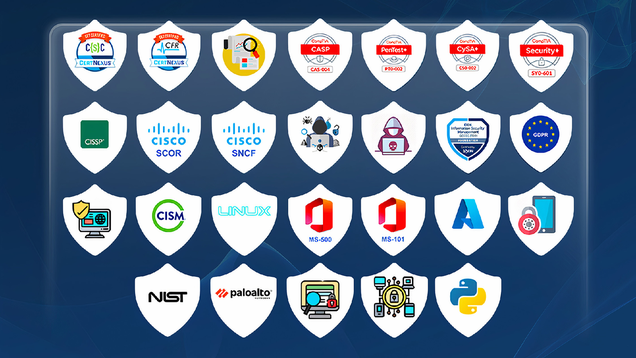
You can learn the basics of cybersecurity with this comprehensive 408-hour, 26-course overview that is on sale for $59.97 right now (reg. $754) through October 23. It covers everything from Python to penetration testing and ethical hacking.

Read more…


Source: LifeHacker – You Can Get This Beginner’s Cybersecurity Course for Right Now

LLVM Looking To Better Collaborate Around Common AI/GPU/FPGA Offloading

While most hardware vendors are relying on LLVM when it comes to offloading compute work to GPUs, AI accelerators, FPGAs, and similar heterogeneous compute environments, right now each vendor is basically creating their own LLVM offloading run-time among a lot of other duplicated — and often downstream only — code. The new “llvm/offload” project hopes to lead to better collaboration in this area…

Source: Phoronix – LLVM Looking To Better Collaborate Around Common AI/GPU/FPGA Offloading

The Best Vegan Mashed Potatoes Start With Yukon Golds

There is only one Thanksgiving dish that cannot be made vegan: the turkey. The rest are surprisingly easy to modify, and mashed potatoes are the easiest. Non-vegans are always reticent to sacrifice dairy, but if you choose the right spud for your mash (and grab one of those fancy new margarines), you’ll find you don’t…

Read more…


Source: LifeHacker – The Best Vegan Mashed Potatoes Start With Yukon Golds

Intel Vulkan Driver Lands Optimization To Help GravityMark, Other Demanding Software

Following an FCV optimization for the latest Intel graphics hardware, ASTC LDR emulation, some still-pending Vulkan sparse support for ANV atop the existing i915 driver, and other recent Intel open-source “ANV” Vulkan driver optimizations, another optimization was just merged into Mesa 23.3…

Source: Phoronix – Intel Vulkan Driver Lands Optimization To Help GravityMark, Other Demanding Software

The Daily Telescope: A look at a young star cluster in a nearby galaxy

A new infrared image of NGC 346 from the Mid-Infrared Instrument on NASA’s James Webb Space Telescope.

Enlarge / A new infrared image of NGC 346 from the Mid-Infrared Instrument on NASA’s James Webb Space Telescope. (credit: NASA, ESA, CSA, STScI, Nolan Habel (NASA-JPL))

Welcome to the Daily Telescope. There is a little too much darkness in this world and not enough light; a little too much pseudoscience and not enough science. We’ll let other publications offer you a daily horoscope. At Ars Technica, we’re going to take a different route, finding inspiration from very real images of a universe that is filled with stars and wonder.

Good morning. It is October 23, and today’s image features a new view of a star cluster within the Small Magellanic Cloud, one of the nearest galaxies to Earth. This galaxy has an estimated 3 billion stars, which sounds like a lot. However it is tiny compared to the nearest galaxy that is of a similar size to our own Milky Way. That would be the Andromeda Galaxy, which has an estimated 1 trillion stars. That’s … a lot.

Anyway, one of the neatest features in the Small Magellanic Cloud is a particularly bright cluster of stars known as NGC 346, discovered about 200 years ago by a Scottish astronomer. Some of these stars may be as young as 2 million years old.

Read 3 remaining paragraphs | Comments


Source: Ars Technica – The Daily Telescope: A look at a young star cluster in a nearby galaxy

Five Fixes for Leaky Gutters That You Can DIY

Problems with your gutters can be frustrating: Loud drips, water collecting in places it shouldn’t, and water taking an unplanned path, which can cause damage and make rainstorms more trouble than they need to be. While some issues with your gutters require professional help, others can be solved simply yourself with…

Read more…


Source: LifeHacker – Five Fixes for Leaky Gutters That You Can DIY

Masks Work. So What Went Wrong with a Highly Publicized COVID Mask Analysis?

A Harvard professor on the history of science looks at our response to the pandemic, criticizing “a report that gave the false impression that masking didn’t help.” From Scientific American:

The group’s report was published by Cochrane, an organization that collects databases and periodically issues “systematic” reviews of scientific evidence relevant to health care. This year it published a paper addressing the efficacy of physical interventions to slow the spread of respiratory illness such as COVID… The review of studies of masking concluded that the “results were inconclusive…” [and] it was “uncertain whether wearing [surgical] masks or N95/P2 respirators helps to slow the spread of respiratory viruses.” Still, the authors were also uncertain about that uncertainty, stating that their confidence in their conclusion was “low to moderate.” You can see why the average person could be confused… The Cochrane finding was not that masking didn’t work but that scientists lacked sufficient evidence of sufficient quality to conclude that they worked…

Cochrane has made this mistake before. In 2016 a flurry of media reports declared that flossing your teeth was a waste of time… The answer demonstrates a third issue with the Cochrane approach: how it defines evidence. The organization states that its reviews “identify, appraise and synthesize all the empirical evidence that meets pre-specified eligibility criteria.” The problem is what those eligibility criteria are. Cochrane Reviews base their findings on randomized controlled trials (RCTs), often called the “gold standard” of scientific evidence. But many questions can’t be answered well with RCTs, and some can’t be answered at all…
In fact, there is strong evidence that masks do work to prevent the spread of respiratory illness. It just doesn’t come from RCTs. It comes from Kansas. In July 2020 the governor of Kansas issued an executive order requiring masks in public places. Just a few weeks earlier, however, the legislature had passed a bill authorizing counties to opt out of any statewide provision. In the months that followed, COVID rates decreased in all 24 counties with mask mandates and continued to increase in 81 other counties that opted out of them… Cochrane ignored this epidemiological evidence because it didn’t meet its rigid standard.

I have called this approach “methodological fetishism,” when scientists fixate on a preferred methodology and dismiss studies that don’t follow it. Sadly, it’s not unique to Cochrane. By dogmatically insisting on a particular definition of rigor, scientists in the past have landed on wrong answers more than once.
Vox also points out that while Cochrane’s review included 78 studies, “only six were actually conducted during the Covid-19 pandemic… Instead, most of them looked at flu transmission in normal conditions, and many of them were about other interventions like hand-washing.

“Only two of the studies are about Covid and masking in particular. Furthermore, neither of those studies looked directly at whether people wear masks, but instead at whether people were encouraged or told to wear masks by researchers.”

Read more of this story at Slashdot.


Source: Slashdot – Masks Work. So What Went Wrong with a Highly Publicized COVID Mask Analysis?

The Morning After: North Korean workers got remote IT jobs to help finance weapons programs

The United States Justice Department says North Korean nationals have been working remotely for US companies, using fake IDs. The money they make is apparently being funneled to fund weapons of mass destruction programs. At a news conference in St. Louis, Missouri, the FBI alleged that thousands of individuals have moved to countries such as Russia and China and posed as freelance IT workers living in the US.

They used false information for emails, payment platforms and websites — sometimes even paying Americans to use their Wi-Fi and setting up proxy computers from those connections. The money being made here was substantial, too. The FBI has apparently collected around $1.5 million in money earned by these workers during previously sealed seizures in October 2022 and January 2023.

– Mat Smith

The biggest stories you might have missed

Instagram’s latest test feature turns users’ photos into stickers for Reels and Stories

Twitch will allow simulcasting to competitor streaming platforms

Universal Audio’s SC-1 condenser microphone comes with new modeling software

NVIDIA’s latest AI model helps robots perform pen spinning tricks as well as humans

​​You can get these reports delivered daily direct to your inbox. Subscribe right here!

Engadget Podcast: Breaking down Andreessen’s “Techno-Optimist Manifesto”

Also, we discuss why Spider-Man 2 on the PS5 is a worthy sequel.

Venture capitalist Marc Andreessen has wrapped up his pro-tech worldview in a massive tome, the Techno-Optimist Manifesto. Andreessen claims, “technology is the glory of human ambition and achievement, the spearhead of progress, and the realization of our potential,” and he goes on to vilify anyone who dares to step in the way of “progress.” To break down this document, we’re joined by tech critic Paris Marx. We also dive into Spider-Man 2 on PS5.

Continue reading.

Super Mario Bros. Wonder review

The joy of pure imagination.

TMA
Nintendo

So Mario has always consumed mushrooms, but in the latest Mario game on Nintendo Switch, it seriously feels like the plumber (and his friends) are dabbling in hallucinogens. This has opened the creative floodgates for level design and gameplay dynamics, twisting the usual 2D platform game in weird and wonderful ways. The game also marks the first Mario title with a new voice actor for the protagonist.

Continue reading.

Jon Stewart’s Apple TV+ show reportedly ends following clash over AI and China

The show was abruptly canceled.

The Problem With Jon Stewart isn’t returning for a third season at Apple TV+. It was supposed to begin filming for another eight episodes within the next couple of weeks, but Apple and Stewart reportedly decided to part ways before it could start. According to The New York Times, the publications said the parties didn’t see eye to eye, with Stewart apparently telling production staff that Apple executives had raised concerns about certain subjects they planned to cover, particularly China and artificial intelligence. Neither party has issued a statement.

Continue reading.

Blizzard plans to raffle off a human-blood-infused PC

Diablo IV players have to donate to make it happen.

TMA
Blizzard

To celebrate the release of Diablo IV’s new season, Season of Blood, Blizzard has launched a month-long blood drive in the US that’ll unlock in-game rewards. Once donations reach 666 quarts altogether, players will be able to enter sweepstakes for “a custom liquid-cooled PC infused with real human blood.” A typical blood donation is 1 pint, so it’ll take a little over 1,300 donations to hit the final goal. Get giving, you creeps.

Continue reading.

This article originally appeared on Engadget at https://www.engadget.com/the-morning-after-north-korean-workers-got-remote-it-jobs-to-help-finance-weapons-programs-111516316.html?src=rss

Source: Engadget – The Morning After: North Korean workers got remote IT jobs to help finance weapons programs

Acer Helios 18 Review: A Massive Gaming Laptop That’s Almost Top of the Line

This is the third 18-inch gaming laptop I’ve reviewed in 2023 (although the first for Gizmodo). It’s a trend that’s hopefully going to stick around well into the future, as having access to an almost desktop-monitor-size screen, plus top gaming components, is exactly what laptop gamers need right now.

Read more…


Source: Gizmodo – Acer Helios 18 Review: A Massive Gaming Laptop That’s Almost Top of the Line

Etnaviv NPU Support Coming Together, Mesa Upstreaming Next

The Etnaviv Gallium3D driver within Mesa has long been focused on reverse engineering and supporting Vivante graphics IP found in various SoCs. That driver has worked out well for open-source OpenGL support for Vivante graphics while more recently Etnaviv has begun tackling Vivante neural processing unit (NPU) support that is beginning to be found in various SoCs…

Source: Phoronix – Etnaviv NPU Support Coming Together, Mesa Upstreaming Next

Tinder will let your family nag you and play virtual matchmaker

Tinder has rolled out a new feature dubbed “Tinder Matchmaker” that will allow users’ family and friends to access the dating app and make recommendations for potential matches. The matchmakers do not need to have a Tinder profile to view or suggest possible pairings. Hypothetically, that means anyone from your grandmother to your ex-boyfriend could help you select a new profile to match with.

A Tinder user will need to launch a “Tinder Matchmaker session” either directly from a profile card or within the app’s settings. If you see a potential match, you can share a unique link with up to 15 individuals in a 24-hour period. Once a matchmaker gets a link, they can log into Tinder or continue as a guest.

A matchmaker will gain access to profiles they can “like” and if they do, it will appear as a recommendation for the original Tinder user to see. The matchmaker’s abilities are limited though. They can’t send messages or actually swipe right on the profiles in question – ultimately, the Tinder user will decide whether or not to match with another. 

“For years, singles have asked their friends to help find their next match on Tinder, and now we’re making that so easy with Tinder Matchmaker,” Melissa Hobley, Tinder’s Chief Marketing Officer says on the new feature.

Bumble has a similar offering, where a user can recommend a profile to a friend through a private link that only they can open within the dating app. However, it’s more geared for one-on-one sharing compared to Tinder Matchmaker. Hinge, another key competitor, tried launching a separate Hinge Matchmaker app in 2017. Matchmakers on the Hinge spinoff were supposed to suggest potential pairings based on who the individuals knew personally from Facebook. That secondary app didn’t last for Hinge – the app is no longer available.

Tinder’s matchmaker feature is just the latest offering from the company designed to entice more users to engage with the app in new ways. Verification on Tinder got a boost with video selfies, incognito mode finally was introduced earlier this year and the company just started letting Tinder users specify gender pronouns and non-monogamous relationship types.

This article originally appeared on Engadget at https://www.engadget.com/tinder-will-let-your-family-nag-you-and-play-virtual-matchmaker-100011319.html?src=rss

Source: Engadget – Tinder will let your family nag you and play virtual matchmaker

CarPlay? Android Auto? Most People Still Just Listen to AM/FM Radio

“New data suggests that what a lot of people do most often in their car is listen to AM/FM radio,” writes 9to5Mac. “Yes, it’s 2023, and you might think AM/FM radio is on the way out, but new data show that to not be the case for a lot of people…”

The market research company Edison Research used one-day listening diarires (for Americans older than 13) to measure the amount of time spent listening to audio — then compared results for those with and without an in-car entertainment system.

Those without an in-car entertainment system spent 67% of their time listening to AM/FM radio — with the rest listening to Sirius XM (12%), a streaming service (9%), or podcasts (4%).

But among those with an in-car entertainment system… 46% still listened to AM/FM radio. Less than a fifth listened to Sirus XM (19%), a streaming service (18%), or podcasts (7%).

The researchers’ conclusion? “Even those with these systems choose AM/FM for nearly half of their in-car listening. For many people, even with so many new options, radio and the in-car environment continue to just go together.”

Read more of this story at Slashdot.


Source: Slashdot – CarPlay? Android Auto? Most People Still Just Listen to AM/FM Radio

California Law Limits Bitcoin ATM Transactions to $1,000 to Thwart Scammers

One 80-year-old retired teacher in Los Angeles lost $69,000 in bitcoin to scammers. And 46,000 people lost over $1 billion to crypto scams since 2021 (according to America’s Federal Trade Commission).

Now the Los Angeles Times reports California’s new moves against scammers using bitcoin ATMs, with a bill one representative says “is about ensuring that people who have been frauded in our communities don’t continue to watch our state step aside when we know that these are real problems that are happening.”

Starting in January, California will limit cryptocurrency ATM transactions to $1,000 per day per person under Senate Bill 401, which Gov. Gavin Newsom signed into law. Some bitcoin ATM machines advertise limits as high as $50,000… Victims of bitcoin ATM scams say limiting the transactions will give people more time to figure out they’re being tricked and prevent them from using large amounts of cash to buy cryptocurrency.
But crypto ATM operators say the new laws will harm their industry and the small businesses they pay to rent space for the machines. There are more than 3,200 bitcoin ATMs in California, according to Coin ATM Radar, a site that tracks the machines’ locations. “This bill fails to adequately address how to crack down on fraud, and instead takes a punitive path focused on a specific technology that will shudder the industry and hurt consumers, while doing nothing to stop bad actors,” said Charles Belle, executive director of the Blockchain Advocacy Coalition…

Law enforcement has cracked down on unlicensed crypto ATMs, but it can be tough for consumers to tell how serious the industry is about addressing the concerns. In 2020, a Yorba Linda man pleaded guilty to charges of operating unlicensed bitcoin ATMs and failing to maintain an anti-money-laundering program even though he knew criminals were using the funds. The illegal business, known as Herocoin, allowed people to buy and sell bitcoin in transactions of up to $25,000 and charged a fee of up to 25%.

So there’s also provisions in the law against exorbitant fees:
The new law also bars bitcoin ATM operators from collecting fees higher than $5 or 15% of the transaction, whichever is greater, starting in 2025. Legislative staff members visited a crypto kiosk in Sacramento and found markups as high as 33% on some digital assets when they compared the prices at which cryptocurrency is bought and sold. Typically, a crypto ATM charges fees between 12% and 25% over the value of the digital asset, according to a legislative analysis…
Another law would by July 2025 require digital financial asset businesses to obtain a license from the California Department of Financial Protection and Innovation.

Read more of this story at Slashdot.


Source: Slashdot – California Law Limits Bitcoin ATM Transactions to ,000 to Thwart Scammers

NASA Transmits Patches to the Two Voyager Probes Launched in 1977

“It’s not every day that you get to update the firmware on a device that was produced in the 1970s,” writes Hackaday, “and rarely is said device well beyond the boundaries of our solar system.
“This is however exactly what the JPL team in charge of the Voyager 1 & 2 missions are facing, as they are in the process of sending fresh firmware patches over to these amazing feats of engineering.”

From NASA’s announcement:
One effort addresses fuel residue that seems to be accumulating inside narrow tubes in some of the thrusters on the spacecraft. The thrusters are used to keep each spacecraft’s antenna pointed at Earth. This type of buildup has been observed in a handful of other spacecraft… In some of the propellant inlet tubes, the buildup is becoming significant. To slow that buildup, the mission has begun letting the two spacecraft rotate slightly farther in each direction [almost 1 degree] before firing the thrusters. This will reduce the frequency of thruster firings… While more rotating by the spacecraft could mean bits of science data are occasionally lost — akin to being on a phone call where the person on the other end cuts out occasionally — the team concluded the plan will enable the Voyagers to return more data over time.

Engineers can’t know for sure when the thruster propellant inlet tubes will become completely clogged, but they expect that with these precautions, that won’t happen for at least five more years, possibly much longer. “This far into the mission, the engineering team is being faced with a lot of challenges for which we just don’t have a playbook,” said Linda Spilker, project scientist for the mission as NASA’s Jet Propulsion Laboratory in Southern California. “But they continue to come up with creative solutions.”

But that’s not the only issue:

The team is also uploading a software patch to prevent the recurrence of a glitch that arose on Voyager 1 last year. Engineers resolved the glitch, and the patch is intended to prevent the issue from occurring again in Voyager 1 or arising in its twin, Voyager 2…

In 2022, the onboard computer that orients the Voyager 1 spacecraft with Earth began to send back garbled status reports, despite otherwise continuing to operate normally… The attitude articulation and control system (AACS) was misdirecting commands, writing them into the computer memory instead of carrying them out. One of those missed commands wound up garbling the AACS status report before it could reach engineers on the ground.

The team determined the AACS had entered into an incorrect mode; however, they couldn’t determine the cause and thus aren’t sure if the issue could arise again. The software patch should prevent that.

“This patch is like an insurance policy that will protect us in the future and help us keep these probes going as long as possible,” said JPL’s Suzanne Dodd, Voyager project manager. “These are the only spacecraft to ever operate in interstellar space, so the data they’re sending back is uniquely valuable to our understanding of our local universe.”

Since their launch in 1977, NASA’s two Voyager probes have travelled more than 12 billion miles (each!), and are still sending back data from beyond our solar system.

Read more of this story at Slashdot.


Source: Slashdot – NASA Transmits Patches to the Two Voyager Probes Launched in 1977

Today’s NYT Connections Hints (and Answer) for Monday, October 23, 2023

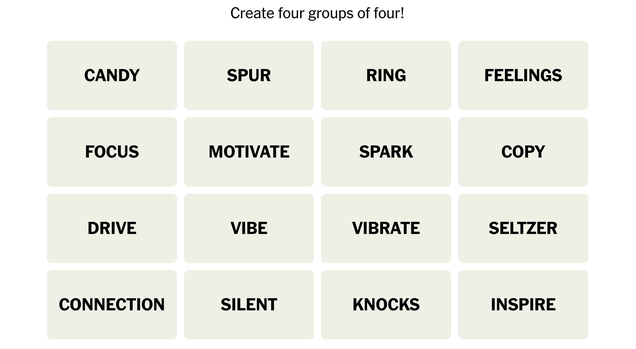
If you’re looking for the Connections answer for Monday, October 23, 2023, read on—I’ll share some clues, tips, and strategies, and finally the solutions to all four categories. Along the way, I’ll explain the meanings of the trickier words and we’ll learn how everything fits together. Beware, there are spoilers below…

Read more…


Source: LifeHacker – Today’s NYT Connections Hints (and Answer) for Monday, October 23, 2023