Qualcomm unveiled a new laptop processor designed to outperform rival products from Intel and Apple on Tuesday, stepping up its long-running effort to break into the personal computer market. From a report: Qualcomm formally launched the Snapdragon X Elite, the flagship platform of its Snapdragon X family that leverages its Oryon CPU core, and promises to double — yes, double — the performance of some of the most popular 13th-gen Core chips from AMD and Intel. Sound familiar? It should. Qualcomm promised the same with its earlier Snapdragon 8-series chips, and really didn’t deliver. But after buying chip designer Nuvia in 2021, Qualcomm is trying again, hoping that its superpowered Arm chips can once again make Windows on Arm PCs a competitor to conventional X86 PCs when they launch in mid-2024. And they’e talking some big numbers to prove it.
Qualcomm sees Oryon first going into PCs (as the engine of the Snapdragon X Elite platform) but then moving into smartphones, cars, “extended reality” devices, and more, Qualcomm chief executive Cristiano Amon is expected to say today. […] To begin with, Qualcomm’s Snapdragon X Elite is manufactured on a 4nm process node, versus the Intel 4 process node of Intel’s Meteor Lake. (The two process technologies aren’t directly comparable, though they’re close enough for most purposes.) Oryon is a tri-cluster design. Historically, that has meant prime, performance, and efficiency cores, with each type of core taking on their own role depending upon the task. However, it appears that Qualcomm and its X86 rivals may have swapped strategies; as Intel adopts performance and efficiency cores, Qualcomm has chosen AMD’s path. There are twelve cores within the Snapdragon X Elite, all running at 3.8GHz. Well, most of the time. If needed one or two of the cores can boost to 4.3GHz, the turbo boost strategy that’s become common on the PC. The 64-bit Oryon CPU will be paired with 42Mbytes of total cache, and a memory controller that can access eight channels of LPDDR5x memory (64GB in total) with 130GBps memory bandwidth, executives said. It will be a single die, not a chiplet design.
Nintendo’s relationship with the grassroots competitive scene around its Super Smash Bros. games has never been great, But today it may have hit an all-time low. Fans of the company’s enormously popular fighting game franchise are collectively freaking out about a new set of tournament guidelines that some believe…
Dollar Flight Club has a dedicated team that unearths deals on flights, mistake fares, and other opportunities to help members discover the best options for upcoming trips or impromptu vacations. From now until Oct. 31, members can get a lifetime subscription to a Premium plan for $39.97 or Premium Plus+ plan for…
Oregon State University on Tuesday urged students and staff to “avoid all robots” after a bomb threat was reported in Starship food delivery robots. NBC News reports: The warning was issued at 12:20 p.m. local time and by 12:59 p.m., the potentially dangerous bots had been isolated at safe locations, the school said. The robots were being “investigated by” a technician, OSU said in a statement posted at 1:23 p.m. “Remain vigilant for suspicious activity,” the school said. Finally, at around 1:45 p.m., the school issued an “all clear” alert. “Emergency is over,” the message said. “You may now resume normal activities. Robot inspection continues in a safe location.”
A representative for Starship, the company that produces the robots, could not be immediately reached for comment. The company calls itself a “global leader in autonomous delivery” with agreements at a host of universities across the United States. Developing…
When I tell people I prefer using mechanical keyboards, I often hear that they’re too expensive. Even people in tech circles have told me they can’t find a quality mechanical keyboard for a decent price. Is $28 decent enough for you?
That’s how much the Keychron C3 Pro is going for on Amazon right now. It’s a sale price that could change, but the keyboard was still only $35 when it released in September. Since September 21, I’ve been using the budget clacker as my primary keyboard, and it has kept up with my busy workload—writing about 17 articles for Ars Technica and more emails than I care to recount. Expensive mechanical keyboards often come with all sorts of perks worth obsessing over, but the C3 Pro proves that sometimes, cheap is good enough. Mechanical keyboards don’t have to be a luxury peripheral.
Meet the C3 Pro
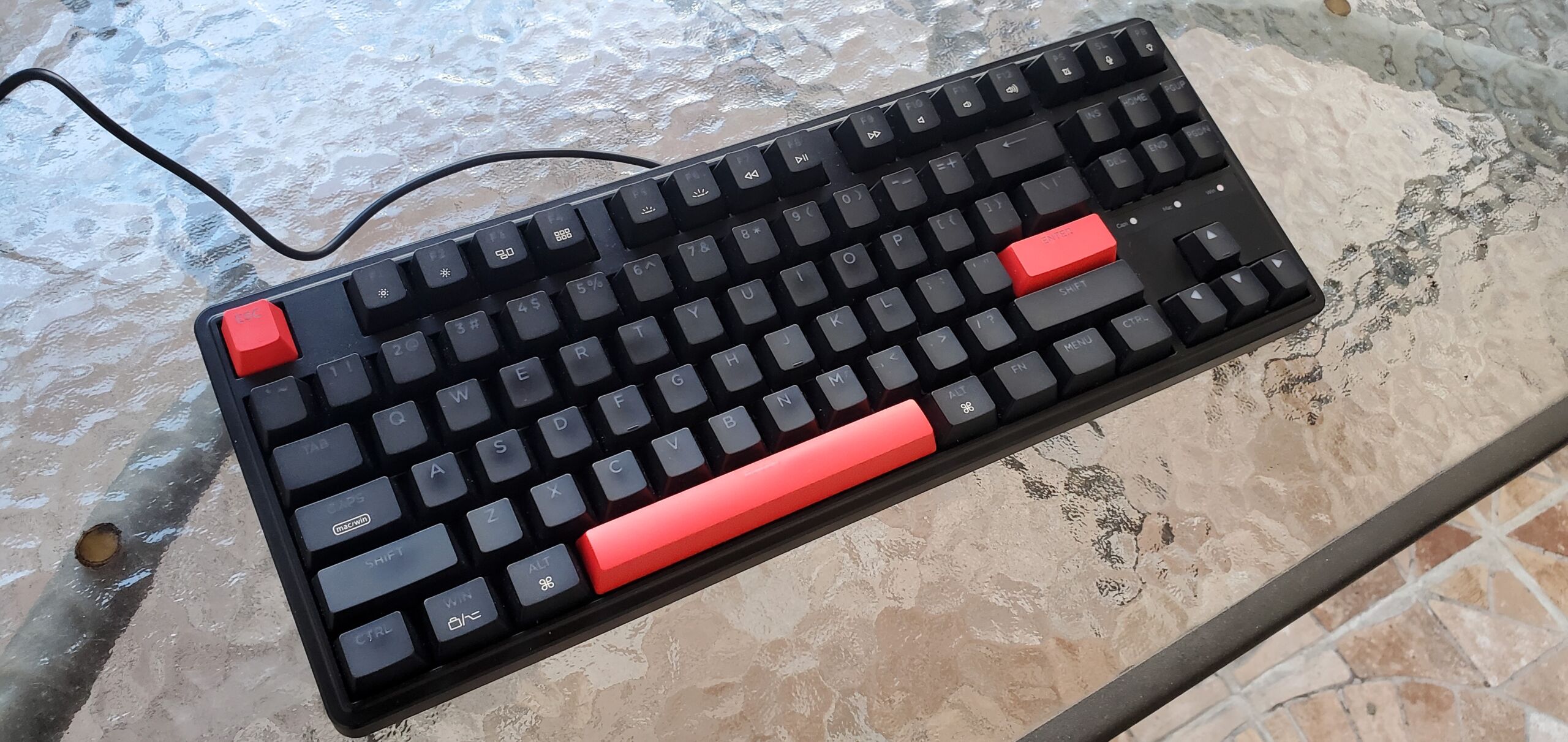
The C3 Pro is Keychron’s lowest-priced mechanical keyboard. [credit:
Scharon Harding ]
Keychron’s C3 Pro is a tenkeyless (TKL) mechanical keyboard, so there’s no numpad. If you can get past that, you’re left with an affordable keyboard offering a typing experience that’s superior to any membrane or mechanical keyboard in this price range.
Motorola showcased some wacky concepts at Lenovo Tech World ’23 that may or may not ever see the light of day. The smartphone maker (a subsidiary of Lenovo since 2014) unveiled an “adaptive display” prototype that can be rolled into a phone, stand or smart bracelet. (It looks like a more advanced version of a prototype Lenovo exhibited in 2016.) In addition, the company highlighted several developmental AI-powered features for the Lenovo devices you can already buy.
The display concept is a rollable smartphone with an FHD+ pOLED display. The prototype “can be bent and shaped into different forms depending on users’ needs,” the company wrote in its announcement blog post. The device can stretch out entirely flat to use as a traditional smartphone, or you could bend it partway to sit on a desk (similar to foldable phones). You can even wrap the concept device partway around your wrist as it transforms into something akin to a smart slap bracelet.
Motorola / Lenovo
The conceptual prototype has a 6.9-inch display and runs “a full Android experience, just like any smartphone” (well, except for iPhones). When upright in a stand mode, it switches to a compact form of Android on a 4.6-inch section of its display.
As fun as it can be to gawk at futuristic concepts, we wouldn’t recommend holding your breath for this gadget to become an available consumer product anytime soon. However, Lenovo has repeatedly proven that it isn’t afraid to go zany with shipping consumer products, so who knows?
In addition to its flexible prototype, Motorola also introduced several AI-powered concepts since that’s whatcorporations doin 2023. The company is tapping into generative AI’s powers to supply the people with… better wallpaper?
Motorola / Lenovo
“With this concept, users can upload or capture a picture of their outfit to produce multiple unique AI-generated images that reflect their style,” the company wrote. You can then transform those AI-made images into a custom wallpaper for your device. A video the company published on its blog post shows a person taking a selfie of an outfit (using the rollable display device, of course), which the software then turns into a variety of wallpaper options for the bendy phone.
The company also announced that it’s working on a personal voice / text assistant for PCs and smartphones that runs on a large language model (LLM). Dubbed MotoAI, the company says the assistant could “answer questions, draft messages, schedule tasks, and so much more.” MotoAI would emphasize privacy, processing data and running tasks locally rather than in the cloud. The company says the tool could uniquely personalize your device as it learns more about you, becoming more useful over time.
Motorola also tackled document scanning, teasing a feature that can minimize wrinkles and shadows when scanning physical images or documents with a phone’s camera. “This innovation aims to improve final image quality by minimizing wrinkles and shadows to ensure documents or images appear as crisp and clear as possible,” the company wrote.
This article originally appeared on Engadget at https://www.engadget.com/motorola-is-back-with-another-slap-bracelet-phone-concept-215026843.html?src=rss
Microsoft’s most recent Q1 2024 earnings report continues the company’s upward trajectory thanks to the cloud. Microsoft’s earnings reached $56.5 billion, up 13 percent from last year! Profits hit $22.3 billion, up 27 percent. Almost every aspect of Microsoft’s business is a success — that is, except for its devices, which dropped 22 percent from last year.
That segment, which includes its Surface hardware, HoloLens and accessories, has been in decline over the last two years. It fell from $7.2 billion in revenue in 2020 to $6.5 billion in 2021 and $5.4 billion in 2022. And there doesn’t seem to be any sign of that stopping. Ahead of the company’s most recent device event in New York City, it was obvious that its Surface PCs were in a rut. The arrival of the Surface Laptop Studio 2 and Surface Laptop Go 3, while welcome, likely won’t change that.
It’s becoming increasingly clear that the time of the Surface may be over for Microsoft. Panos Panay, the charismatic product lead for those devices, has moved to Amazon. The iconic Surface tablet line hasn’t been touched at all this year. Given Microsoft’s wildly successful cloud business, as well as its gamble on AI this year, is there any point in duking it out in the PC market?
Between Apple’s successful transition towards its own efficient-yet-powerful Arm chips, and more nimble PC makers who can quickly adopt new CPUs and GPUs, there just isn’t much room left for Microsoft.
This article originally appeared on Engadget at https://www.engadget.com/microsoft-q1-2024-earnings-212522110.html?src=rss
An anonymous reader quotes a report from Reuters: California’s auto regulator said on Tuesday it has suspended General Motors’ Cruise autonomous vehicle deployment and driverless testing permits, saying it had misrepresented information related to the safety of the autonomous technology. Cruise’s AVs posed an “an unreasonable risk to public safety,” and “are not safe for the public’s operation” California’s Department of Motor Vehicles (DMV) said in a statement. The suspension, which came after a series of accidents involving Cruise vehicles, is a major setback to GM’s self-driving technology unit and to the nascent autonomous vehicle (AV) industry. The suspension was effective immediately.
GM has previously insisted Cruise represents a “giant growth opportunity.” In June, GM CEO Mary Barra reiterated a forecast that Cruise could generate $50 billion a year in annual revenue by 2030, a target the company has not backed away from. The automaker reported on Tuesday that it lost $723 million on Cruise during the third quarter. The DMV added that Tuesday’s “decision does not impact the company’s permit for testing with a safety driver.” Cruise issued a statement saying it “will be pausing operations of our driverless AVs in San Francisco.” Cruise said the California Department of Motor Vehicles reviewed an incident on Oct. 2, when one of its self-driving vehicles was putting on the brakes but did not avoid striking a pedestrian who had previously been struck by a hit-and-run driver.
Cruise said that in that incident, “a human hit and run driver tragically struck and propelled the pedestrian into the path of the AV” which struck the pedestrian. “When the AV tried to pull over, it continued before coming to a final stop, pulling the pedestrian forward,” the company said. “Our teams are currently doing an analysis to identify potential enhancements to the AV’s response to this kind of extremely rare event,” it added. In August, the regulator said it was investigating “concerning incidents” involving autonomous vehicles operated by Cruise in San Francisco and asked the company to take half its robotaxis off the roads. That month, a Cruise robotaxi was involved in a crash with an emergency vehicle in San Francisco. Barra said the Cruise robotaxis have better safety records than human drivers.
You know something has become popular once some version of it is available for purchase at Starbucks. This was true with cake pops, and it’s true with their sous-vide egg bites, which have been wildly popular ever since they were introduced in 2017. I’ve been making sous-vide egg bites with my immersion circulator for…
NASA is considering alternative ways to bring back samples from Mars after its budget and schedule for the sample return mission was deemed unrealistic in a recent report by an independent review board.
No matter how you choose to carve your pumpkins and what you choose to do with them, you’re going to end up with a mess. Pumpkin guts are—all at once—stringy and solid, wet and dry, and squishy and hard. You have to get your hands in there to scoop them out, then manually pry the seeds from the mush. You’re going to…
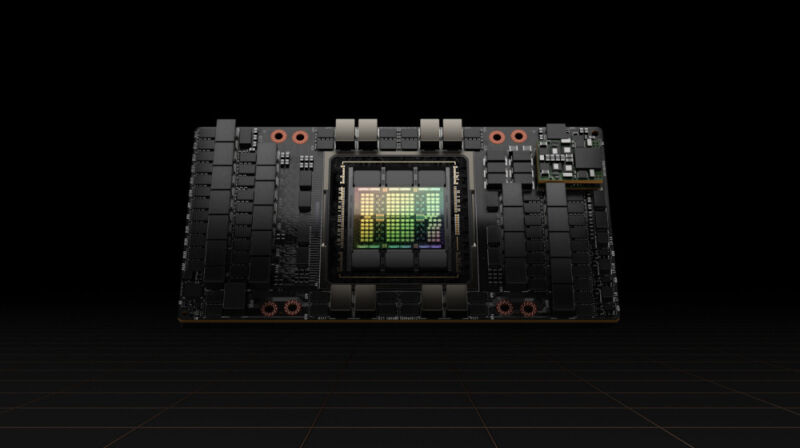
Enlarge/ A press photo of the Nvidia H100 Tensor Core GPU. (credit: Nvidia)
On Tuesday, chip designer Nvidia announced in an SEC filing that new US export restrictions on its high-end AI GPU chips to China are now in effect sooner than expected, according to a report from Reuters. The curbs were initially scheduled to take effect 30 days after their announcement on October 17 and are designed to prevent China, Iran, and Russia from acquiring advanced AI chips.
The banned chips are advanced graphics processing units (GPUs) that are commonly used for training and running deep learning AI applications similar to ChatGPT and AI image generators, among other uses. GPUs are well-suited for neural networks because their massively parallel architecture performs the necessary matrix multiplications involved in running neural networks faster than conventional processors.
The Biden administration initially announced an advanced AI chip export ban in September 2022, and in reaction, Nvidia designed and released new chips, the A800 and H800, to comply with those export rules for the Chinese market. In November 2022, Nvidia told The Verge that the A800 “meets the US Government’s clear test for reduced export control and cannot be programmed to exceed it.” However, the new curbs enacted Monday specifically halt the exports of these modified Nvidia AI chips. The Nvidia A100, H100, and L40S chips are also included in the export restrictions.
Miles Morales and Peter Parker have a lot in common, both swinging around New York City in spandex as Spider-Man and compulsively quipping at bad guys before punching their lights out. The duo even share skill tree points in Insomniac Games’ recently released Marvel’s Spider-Man 2. However, only one of them can do the …
Rumors of the metaverse’s death overseas may have been a bit premature, even as headset-maker Pico seems to be in the doldrums of a rather anticlimactic year in VR. Word on the street was that ByteDance, the China-based company best known as the owner of TikTok, was looking to get out of the virtual reality game.
Snapchat grew to more than 400 million users, Snap announced in its third-quarter earnings report. The app added nine million new users in the last quarter, bringing its total daily active users (DAUs) to 406 million, an increase of 12 percent from last year, the company said.
The milestone comes a little more than a year after Snap laid off about 20 percent of its workforce in an effort to cut costs as advertising revenue slowed. Those cuts, along with new product features, are apparently starting to pay off.
The company reported $1.19 billion in revenue for the quarter, an increase of 5 percent from last year and better than Wall Street analysts expected, according toCNBC. In a statement, Snap pointed to its subscription service, Snapchat+, as a key part of its strategy to grow its non-advertising sources of revenue. Snap announced last month that Snapchat+, which offers users exclusive and experimental features for $4 a month, had reached five million subscribers.
Generative AI has also been a bright spot for the company. The company’s MyAI chatbot, which rolled out to all Snapchat users in April, has reached more than 200 million people who have collectively exchanged more than 20 billion messages with the OpenAI-powered chatbot. Snap said it believes the assistant is one of the “most used AI chatbots available today.”
Developing…
This article originally appeared on Engadget at https://www.engadget.com/snapchat-grows-to-more-than-400-million-users-205715066.html?src=rss
Enlarge/ A box of Sudafed PE sinus pressure and pain medicine containing phenylephrine is displayed for sale in a CVS Pharmacy store in Hawthorne, California, on September 12, 2023. (credit: Getty | PATRICK T. FALLON)
Drug store giant CVS revealed late last week that it is voluntarily pulling some common cold and flu medicines from its shelves because they don’t work—while many other ineffective products remain on the shelves.
In a statement to Ars, a CVS spokesperson suggested the FDA advisory panel’s vote was the impetus for the change, but that it would “follow direction from the FDA.”