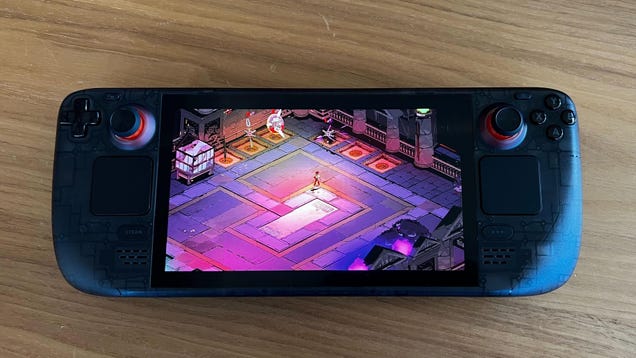
Valve is back on the Steam Deck design train, and the latest version of its handheld console is getting more than a new coat of paint. The studio’s newly revealed refreshed Steam Deck isn’t promising any better in-game performance, but the new deck is lighter, prettier, and more efficient thanks to a brand new OLED…
Sony Interactive Entertainment (SIE) has halved the number of live service games it plans to release over the next few years, it’s confirmed. From a report: SIE had previously said it planned to have 12 live service titles in the market by its fiscal year ending in March 2026 — up from three during its last business year ended this March. However, earlier this year PlayStation’s management team confirmed that it had partnered with Destiny studio Bungie for a “rigorous portfolio review” process. According to press reports, this has led to some projects being scaled back.
During an earnings call on Thursday, Sony president, COO and CFO Hiroki Totoki seemingly confirmed that this review had resulted in some games being pushed back due to quality concerns. “We are reviewing this… we are trying as much as possible to ensure [these games] are enjoyed and liked by gamers for a long time,” he said. “[Of] the 12 titles, six titles will be released by FY25 — that’s our current plan. [As for] the remaining six titles, we are still working on that. That’s the total number of live service and multiplayers titles [and] mid-to-long-term we want to [push] this kind of service and that’s the unchanged policy of the company. It’s not like we stick to certain titles, but game quality should be the most important [thing].”
Fossilized feces from the Pleistocene epoch have divulged the mitochondrial DNA of a woolly rhinoceros, whose genome had never previously been assembled. The ancient poop was not excreted by an ancient rhino but by a hyena—an animal that evidently ate the massive herbivore before it, too, died sometime in the Middle…
Baby Luigi represents the reaction of sandbagging racers in this artistic rendering. (credit: Nintendo)
Since Mario Kart 8‘s launch on the Wii U, one of the game’s most successful and controversial strategies has involved intentionally hanging out at the back of the pack to amass and abuse the game’s best items. Now, over nine years since the game’s initial release, Nintendo has taken steps to eliminate the controversial “bagging” strategy in the latest update to the Switch’s Mario Kart 8 Deluxe.
Mario Kart 8 players who made use of “bagging” (short for “sandbagging” and sometimes also called “item smuggling”) in online races would briefly retreat to last place to sit on a regenerating item box, waiting to acquire some of the game’s most powerful items (which are much more likely to appear when you are far away from first place). The bagging player could then use one of those items (say, a Golden Mushroom and/or Starman) to quickly catch up with the pack before using the other amassed item (say, a Bullet Bill) to build up a dominant lead. The strategy can be especially effective on tracks like “Cheese Land,” where using a Bullet Bill in very specific locations can extend how long the powerful item lasts.
Not “cheating,” but not exactly “racing”?
Despite bagging’s controversial reputation among many players, the strategy isn’t really comparable to outright cheating—baggers play an unmodified version of the game as it was designed, after all. And for years, many Mario Kart 8 players have argued that it’s a perfectly fair strategy that requires actual skill to use effectively. “Sandbagging is a risk vs reward kind of thing,” GameFAQs user RydeonHD wrote in 2016. “There have been many times where it can just plain out backfire (in those cases, it would’ve just been better to strive for first).”
A new 3D tour of ancient Rome allows you to explore the imperial city as it appeared in the 4th century CE. The tour, produced by the education technology company Flyover Zone, is the fourth iteration of the 3D model.
Working long hours outdoors is a skin cancer hazard, and new research estimates that about one in three deaths caused by non-melanoma cancers annually can be attributed to occupational exposure to the sun’s ultraviolet rays. As of the latest available data, this amounted to nearly 19,000 such work-related deaths…
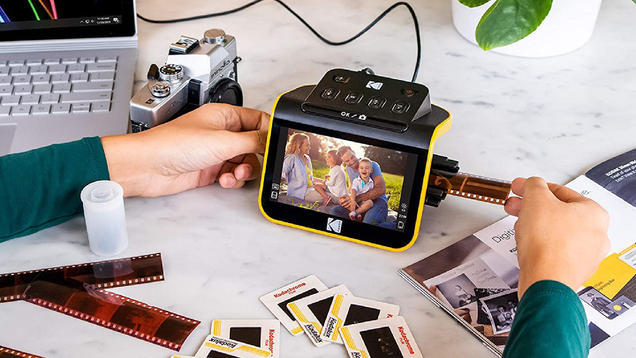
This Kodak scanner digitally preserves film negatives and 50mm slides, and it’s on sale for $169.97 right now (reg. $224.99) when you use the code KODAK through November 9. It comes with a 50x50mm slide holder and adapters for 135, 110, and 126 sizes.
Back in 2021, developer Zynga (FarmVille, Words With Friends) unveiled a squad-based, Overwatch-like hero shooter using the Star Wars license. Dubbed Star Wars: Hunters, this free-to-play PvP experience was originally slated to launch later that year, but was delayed to 2023 in July 2022. Now, the game has been…
io9 is proud to present fiction from LIGHTSPEED MAGAZINE. Once a month, we feature a story from LIGHTSPEED’s current issue. This month’s selection is “The CRISPR Cookbook (Chapter Two): A Guide to Biohacking Your Own Eggs into Weapons of Destruction, to Be Forcibly Implanted into One Patriarchist at a Time” by…
Sony’s PS5 Slim is starting to become available in the US. A standard model that comes with a copy of Marvel’s Spider-Man 2 at no extra cost has hit Dell and Walmart, but the $500 bundle is going in and out of stock. It seems likely that the PS5 Slim (which isn’t actually the official name for the latest models) will surely become available at other retailers soon.
Listings for Call of Duty: Modern Warfare IIIbundles have appeared at Walmart too, though those cost $609 and come with your choice of accessory. Sony initially suggested that the PS5 Slim would only be available in the US at the outset, but standard models that come with Modern Warfare III as a freebie have popped up in Canada for $650 CAD.
When Sony revealed the leaner PlayStation 5 models last month, it indicated they would be available some time in November. However, the company didn’t say exactly when they’d hit its own storefront (where the systems are not yet available at the time of writing) and third-party retail shelves.
The latest PS5 units have 30 percent less volume than the original chonksters. Depending on which model you go with, it’ll be 18 percent or 24 percent lighter than its predecessor too. While the latest versions have a similar curved look as the original PS5 units, there’s one key way to tell them apart at first glance. The new systems have a black band that separates the cover panels on the top and bottom.
At $450, the new PS5 digital edition is $50 more expensive than the previous version. If you pick up the latest model and decide later that you want to use physical game discs or watch DVDs or Blu-rays on your PS5, you’ll be able to connect an $80 disc drive that seems to easily clip onto the console. Sony says that when the original PS5 consoles are sold out, they’ll be discontinued. So if you want a less expensive digital edition, you may not have a ton of time left to snag it.
If want to position the PS5 Slim in a vertical orientation you’ll need to buy a $30 stand. Otherwise, you’ll be stuck with inelegant-looking plastic clips that stabilize the console in its horizontal alignment.
This article originally appeared on Engadget at https://www.engadget.com/you-can-now-buy-a-ps5-slim-in-the-us-and-canada-if-youre-lucky-172529067.html?src=rss
Target’s early Black Friday deals are already live, and one of their limited-time offers will be especially attractive to pint-size gamers (and their parents). The retailer is offering Roblox gift cards at 40% off for a very limited time—today only, in fact. From now until 2:59 a.m. ET on Friday, Nov. 10, Target is…
Humane, the startup founded by former Apple design and engineering team Imran Chaudhri and Bethany Bongiorno, has officially launched its long-awaited Ai Pin — making a splashy foray into the nascent field of artificial intelligence hardware. From a report: The device can magnetically clip onto clothing and will cost $699 with a $24-a-month subscription — which will come with unlimited data and phone calls. The company also said it would partner with T-Mobile for phone service and Microsoft and OpenAI for AI technology. The device will be available to order starting Nov. 16.
Tech and AI enthusiasts have watched Humane closely after Chaudhri and Bongiorno, husband-and-wife co-founders, started the company in 2018. It has kept most of its work under wraps, with some notable exceptions. In April, Chaudhri gave a demo of the device at a TED Talk. In September, the pin adorned models including Naomi Campbell at Paris Fashion Week. The Humane Ai Pin is meant to eventually be a smartphone replacement. The subscription plan comes with its own phone number, and it doesn’t need to be paired with a phone. The device is screenless, and people will interact with it via voice, touchpad, gesture or by holding up objects. It also features a laser projector that can emit text onto the user’s hand.
Fans sue (or attempt to sue) video game companies all the time. Just this year a Star Wars: Knights of the Old Republic II fan sued remaster publisher Aspyr for not delivering its planned restored content DLC, but these situations are usually targeted at specific companies about an isolated issue. However, one family…
The first three generations of AMD Ryzen processors were given model numbers in the 1000s, the 2000s, and then the 3000s. However, between the launch of the Ryzen 3000 family and AMD’s next-gen processors, the company released some refreshed APUs that it gave a 4000-series model number. That meant that the next-generation parts had to have
Last spring, Teenage Engineering announced a curious, tiny mixer. At $1,200 the TX-6 appeared to pair a serious price tag with almost comically small controls. It divided music making forums with naysayers deeming it evidence that the company was squandering its reputation as a maker of spendy-but-delightful products. Importantly, the TX-6 was the first in a new line of “Field” products. It was soon joined by the OP-1 Field synthesizer, but until recently that was it, and a mixer with a synth didn’t feel like much of a “system”.
With the arrival of the TP-7 recorder and the CM-15 microphone, the Field family is complete — although the company hasn’t ruled out adding more products further down the line. And like some sort of heavily designed musical Infinity Stones, all four products feel far more exciting and powerful together than they do individually. Or, forced metaphors aside, it’s easier to see where the company was going with all this now that the family is complete.
That’s if the $5,900 entry fee for the full set doesn’t make you balk. But let’s ignore the economics for now, as that’s an accepted part of the Teenage Engineering experience at this point. What we have here is a compact, creativity-inducing system that’s like no other and this off-beat, playful approach to product design is something I wish we saw more of (and ideally in a more accessible way).
We’ve already covered the TX-6 mixer and the OP-1 Field synthesizer and how they interact with each other. But as the two new arrivals bring their own set of skills to the Field system, most of which is laid out below. I say most, as every time I tinker with them, it occurs to me to try something new. Similarly, revisiting the online guide seems to have an uncanny ability to throw up things you missed last time, further unlocking ideas or features.
CM-15
Teenage Engineering’s first studio microphone is nothing if not beautiful. The Field aesthetic of small, rectangular CNC aluminum makes the most sense here out of all the products. The CM15 could really just be another fancy microphone. The CM15 is also the one where the price is most inconspicuous, given high-end microphones tend to start around the $1,200 that you’ll need to spend to add this to your collection.
The CM15 is a large diaphragm condenser microphone which is the type preferred in studios and tends to be a lot more sensitive than something like the podcaster’s favorite Shure SM7b. This microphone doesn’t have elaborate features like internal storage or any type of sound modification tools, but it’s not without some interesting details. For one, the CM15 has three output options — mini XLR, USB and 3.5mm — which makes it compatible with a wide range of devices. Specifically, as the CM15 has its own battery, it plays nice with more USB devices than rival condensers that may require more juice than your phone can deliver.
A switch around the back offers three levels of gain adjustment (neutral and +/- 18dB) which is handy given the variety of things you can plug this into. The gain is analog and in testing sounds pretty clean, with only a marginal effect on the noise floor. I found being able to quickly adjust the gain directly on the mic for different situations made this mic feel like a really good all-rounder, both at home or on the go.
With regard to the Field range, and the intercompatibility thereof, there’s less here than other devices in the family. When you plug the CM15 into the TP-7 recorder over USB it recognizes it as the CM15 and presents you a cute mini icon of it. When the mic is detected you’ll also have the option to add an additional 12dB of digital gain — something that’s not an option when plugging in a phone, for example. The CM15 is also the only mic I tried that worked with the USB port of the TX-6 mixer. This allows you to add effects and, of course, mix it with other instruments, but also this frees up an analog input if needed (though the mic will share channel six with anything else on that input).
Teenage Engineering states the CM15 can also be used as an audio interface, but when tested this didn’t work for Windows, MacOS or iOS. Though it will work as a USB mic for all those operating systems.
As for sound, the CM15 is a very “close” sounding condenser microphone. By that, I mean it never seemed to pick up a lot of the room which can often be the case with condensers, especially those with larger diaphragms. This is due to the supercardioid polar pattern but the result is perfect for mobile applications where you may find yourself in different environments and the CM15 will deliver fairly consistent sound. For my voice, I might appreciate the option to bump the mid-high frequencies a touch, but for most everything else, including foley and instruments, the CM15 sounds bright and clear.
TP-7
I’ll say it straight up front, the $1,499 TP-7 is my favorite of the four Field devices. The OP-1 Field is the flagship, but for pure portability to functionality balance, the TP-7 wins. Described as a “Field recorder” the TP-7 takes the idea of a portable cassette recorder and brings it up to date for the 21st century. There’s a built-in microphone, 128GB of storage and three stereo inputs (that can also be outputs). It can record multitrack podcasts, has tactile scrubbing controls and a thumb rocker and can even become a tiny turntable complete with scratching and physical pitch control.
First and foremost though, the TP-7 is a capable recorder. Press and hold the side button, even when the device is off, and it’ll spring to life and start recording via the internal mic. This feature is more about recording short notes and ideas which you can then have transcribed via a companion app. The app connects over Bluetooth or USB, works offline and will even identify different speakers. It’s not as fully featured as a paid service like Trint or Otter but it’s really cool extra functionality. I even tried loading an old interview I had on my PC onto the TP-7 and the app happily transcribed that, too. The only restriction seemingly being that you have a TP-7 (you can’t load an audio up from your phone within the app, for example).
Beyond memo recording is more general recording of the TP-7’s various inputs. As with the TX-6 mixer, your main inputs are 3.5mm ports which isn’t ideal but most things with a line signal can be wrangled into 3.5mm easily enough. You can also record audio into and out of your phone via USB-C (including the iPhone 15) or directly from the CM15 digitally and over 3.5mm analog at the same time, if you wanted.
The three 3.5mm ports can be configured for line-level or headset/TRRS input or flipped into outputs. Line level will cover most instruments and active electronics with audio output, while headset mode is for anything with a lower output signal such as, well, headsets, but also some other unpowered microphones like lavaliers. I even had some success recording an SM7b via an XLR to TRRS adapter. You can add up to 45dB of gain to the 3.5mm inputs, and with about 35dB the output from Shure’s gain-hungry mic was quiet, but clean and usable. Other XLR dynamic mics were much louder and usable.
With three microphones connected this way, the TP-7 will spit out a multitrack WAV file with each one recorded on its own channel making this a capable podcast recording tool or mini studio recorder that you can mix properly after the fact.
Connect a phone to the TP-7 over USB-C and you can record any sound directly, so you could grab the audio from a video and transcribe it with the app, or load up a beat and then sing or rhyme over it for an on the go demo whenever inspiration strikes. When playing back on the TP-7 the main front disk rotates and you can speed it up, slow it down or even do some rudimentary scratching. This could be used for effect when feeding the output into the TX-6 mixer for recording onto another device.
Multitrack also works for playback. So if you have a WAV file that has drums, vocals, synth and bass as different tracks, you can play it on the TP-7 into the TX-6 over USB and you can mix and add effects to each part of the track separately. In this way, you can use the pair as an effective performance tool, creating an intro with just the beat, adding in the bassline and so on.
Taking this concept even further, with two TP-7s and the TX-6 mixer you effectively have a pair of tiny turntables, with actual turning platters, that can be pitched up or down in real time into the mixer. It’s a classic analog DJ setup but the size of a paperback. I tried it, and mixing this way is really hard as using the jog wheel to alter pitch is a bit heavy handed. You can adjust the pitch more gently by holding the side button and then using the jog wheel, but if, like me, you haven’t mixed this way in 20 years, it takes a little getting used to. It’s also a little OTT to be fair.
What’s much more reasonable, is using the TP-7 as a general audio player. You can load files onto it, and then play them back either on the internal speaker or (preferably) via headphones. You can use the side rocker or the main wheel to control the playback, too. Currently you can only play .wav and .flac file extensions, which is fine, but the lack of mp3 feels like an obvious omission (Teenage Engineering confirmed support is incoming).
The flexibility of the TP-7 doesn’t stop out in the field. Connect it to your PC and it’ll become an audio interface, too. Or at least, that’s the idea. Right now on Windows I only had it working briefly and not in full. On macOS it was marginally better, but not usable. Bear in mind the TX-6 also offers this functionality, and after months that still doesn’t work with Windows at all and is still not flawless on macOS. It’s a shame, as at this price point you’d hope it works at launch and across both systems.
There’s really a lot more you can do with the TP-7, especially in combination with the TX-6. There’s Bluetooth MIDI functionality, for one. The two really make a great team, but the above cover much of the main functionality. Everything else starts to get a little bit niche. Fun, but niche. I’m also certain that functionality will continue to grow as Teenage Engineering is generally pretty good about adding features, often based on user feedback.
Putting it all together
After spending days plugging different things into the TP-7 and the TX-6 and trying out various scenarios and ideas, it sometimes felt like that was often half the fun. Wondering what will happen if you do X and connect to Y. Like musical lego. Much of this will be true for many combinations of audio gear, but the Field line does lend itself particularly well to this playful experimentation.
That said, there are some bugs that you might not expect at this price point. The most obvious one I encountered was the audio interface functionality. At launch I would expect Windows and macOS support and for both to be fairly seamless. Other curiosities were less important but still confusing. Sometimes the CM15 wouldn’t be recognized over USB until a restart, or simply using the analog/3.5mm output would sporadically give crunchy audio when recording into one thing, but clear audio on the TP-7. This could well be down to cables, adapters and so on, but when the same scenario works just fine on a product a third of the price it’s harder to justify.
Take the Tula mic, for example. It’s actually a device that’s already quite popular with Teenage Engineering fans. It has a more classic design, but offers similar functionality to both the TP-7 and the CM15 combined. The mic on it maybe isn’t as good as Teenage Engineering’s, and the recorder functionality doesn’t have the fancy rocker and jog wheel controls, but it’s a good mic and a good recorder all in one and it only costs $259 — less than a tenth of the TP-7 and CM15 together.
But as I said up top, this is less about the price. Teenage Engineering fans are aware of the expense that comes with the products. Many consider it worth it just for that extra dash of playfulness that you don’t find elsewhere. (Other fans are, to be clear, still not really okay with the pricing.) That’s perhaps a conundrum that good old market forces can decide. If, after all these years, the company is still chugging along, it suggests there are plenty of people that consider it a premium worth paying.
What is less contested is that Teenage Engineering does something unique enough to earn it enough fans for there to even be an argument. Or an article like this one. The Field system, in my opinion, exemplifies what the company does best. Interesting tools that have a practical core and a less practical fun side. Individually all four field items will solve a basic problem, like most products do. Together they become a little bit more than the sum of their parts. If you believe creativity lives in that space between functionality and possibility then the Field range creates enough room here for the right kind of creator that the price
This article originally appeared on Engadget at https://www.engadget.com/teenage-engineering-tp7-cm15-field-series-review-170052292.html?src=rss
Need help figuring out how to program smart lights to turn on at dusk? You can ask AI for help with that. Google’s generative AI-powered feature called the “Help me script” started rolling out to beta testers this week. It can help you figure out robust home automation. All you have to do is copy and paste code.
Sony was betting big on turning PlayStation into a live-service juggernaut, but it sounds like the platforms shift into online multiplayer games hasn’t been anywhere near as quick or smooth as it once hoped. Unlike originally planned, Sony president Hiroki Totoki told investors six of the company’s 12 upcoming live…
Google has confirmed in court that Epic was offered a $147 million deal to launch its hit game Fortnite on Android’s Google Play Store. From a report: The deal, which Google’s VP of Play partnerships, Purnima Kochikar, says was approved and presented to Epic but not accepted, would have seen the money dispensed over a three-year period of “incremental funding” (ending in 2021) to the games publisher. It was meant to stem a potential “contagion” of popular apps bypassing Android’s official store and, with it, Google’s lucrative in-app purchase fees.
Epic launched Fortnite on Android in 2018 directly through its website, avoiding the Play Store. That allowed it to sell Fortnite’s in-game currency, V-Bucks, without paying the commission required of Play Store apps. It relented in 2020, saying that “scary, repetitive security pop-ups” and other factors had put it at a severe disadvantage. But in an antitrust lawsuit filed later that year — and currently being argued before a jury — it alleged its initial decision had thrown Google into a panic. It cited internal documents claiming Google feared a “contagion risk” if other game developers (including Blizzard, Valve, Sony, and Nintendo) followed Epic’s lead, and it claimed Google attempted to forestall it by offering special benefits or even buying Epic.