Tesla apparently won’t sue Cybertruck buyers for reselling the vehicle within the first year of buying it. Its newly-updated purchase agreement, which had included the controversial clause as of last week, has now been removed, according toElectrek, which first spotted the change.
The previous version of the agreement stated that Tesla “may seek injunctive relief to prevent the transfer of title of the Vehicle” if buyers breach its resale provision, or it may “demand liquidated damages from you in the amount of $50,000 or the value received as consideration for the sale or transfer,
whichever is greater.” Buyers who tried to flip their Cybertrucks could also be banned from buying Tesla vehicles in the future, the previous agreement said. It was also unclear how long Tesla would enforce this clause.
Electrek noted that clauses like these have been used by other car companies like Ferrari, Ford, and Porsche before to prevent resellers from scalping rare or expensive cars. But the Cybertruck, whose first deliveries are due around the end of this month, is supposed to be a mass-produced vehicle, with Tesla claiming to be able to build around 125,000 of them each year. The company has delayed the Cybertruck numerous times and won’t start full-fledged production until 2024.
This article originally appeared on Engadget at https://www.engadget.com/cybertruck-resellers-rejoice-tesla-wont-sue-you-for-flipping-your-car-too-soon-211929865.html?src=rss
On Tuesday, Intel pushed microcode updates to fix a high-severity CPU bug that has the potential to be maliciously exploited against cloud-based hosts.
The flaw, affecting virtually all modern Intel CPUs, causes them to “enter a glitch state where the normal rules don’t apply,” Tavis Ormandy, one of several security researchers inside Google who discovered the bug, reported. Once triggered, the glitch state results in unexpected and potentially serious behavior, most notably system crashes that occur even when untrusted code is executed within a guest account of a virtual machine, which, under most cloud security models, is assumed to be safe from such faults. Escalation of privileges is also a possibility.
Very strange behavior
The bug, tracked under the common name Reptar and the designation CVE-2023-23583, is related to how affected CPUs manage prefixes, which change the behavior of instructions sent by running software. Intel x64 decoding generally allows redundant prefixes—meaning those that don’t make sense in a given context—to be ignored without consequence. During testing in August, Ormandy noticed that the REX prefix was generating “unexpected results” when running on Intel CPUs that support a newer feature known as fast short repeat move, which was introduced in the Ice Lake architecture to fix microcoding bottlenecks.
Less than two years after it launched, Donald Trump’s social media site, Truth Social, might be headed for the internet graveyard. New federal filings show that Truth, like a lot of Trump businesses, has lost massive amounts of money ($73 million, in this case) and is drifting, inevitably, toward insolvency. The…
A recent deep field image from the Webb Space Telescope, showcasing a region of space known as Pandora’s Cluster, or Abell 2744, features two galaxies. These galaxies are remarkable for their distance from Earth, being the second and fourth most distant galaxies ever observed, according to a team of researchers that…
Some of the United States’ largest civil liberties groups are urging Senate majority leader Chuck Schumer not to pursue a short-term extension of the Section 702 surveillance program slated to sunset on December 31. From a report: The more than 20 groups — Demand Progress, the Brennan Center for Justice, American Civil Liberties Union, and Asian Americans Advancing Justice among them — oppose plans that would allow the program to continue temporarily by amending “must-pass” legislation, such as the bill needed now to avert a government shutdown by Friday, or the National Defense Authorization Act, annual legislation set to dictate $886 billion in national security spending across the Pentagon and US Department of Energy in 2024.
“In its current form, [Section 702] is dangerous to our liberties and our democracy, and it should not be renewed for any length of time without robust debate, an opportunity for amendment, and — ultimately — far-reaching reforms,” a letter from the groups to Schumer says. It adds that any attempt to prolong the program by rushed amendment “would demonstrate blatant disregard for the civil liberties and civil rights of the American people.”
Debt consolidation may simplify your payments, but there are risks to consider.Debt consolidation may simplify your payments, but there are risks to consider.
It’s been a surprisingly strong year for the Nintendo Switch even as sales slow and fans eagerly await its successor, and today the company promoted a bunch of indie games that will fill out the console’s release calendar heading into 2024, from a new Shantae action-platformer to a port of beloved cult-hit sci-fi…
Music gear and plugin maker Arturia is known for its annual Black Friday sale and it’s that time of year again. The sale is officially live, offering deep 50 percent discounts on most of its software instruments and effects plugins.
That means you can snag the stellar V Collection 9 for $300 instead of $600. The latest and greatest collection of vintage synth recreations now features 32 instruments, along with thousands upon thousands of presets. The sounds are pristine, the interface is solid and the presets are easily accessible, thanks to integration with the company’s Analog Lab software. You even get integration with those newer Mac chipsets.
The sale also applies to Arturia’s collection of effects plugins, which recently added a rotating Leslie speaker to its roster of studio-grade effects. Other than that, the collection includes everything you need to finish up high-quality tracks, from compressors to reverbs and beyond. The sale brings the price down to $250 from $500.
The discounts aren’t just for collections of virtual instruments and plugins. You can also get the well-reviewed Pigments synthesizer for $100 instead of $200. This is the company’s flagship modern soft-synth, with two engines working in parallel to create unique sounds. Arturia also frequently updates this software with new engines and effects.
Analog Lab is also on sale for $100 instead of $200, making for an extremely attractive entrypoint to Arturia’s many offerings. The Black Friday sale starts today and ends on December 5, so you have a couple of weeks to set aside plugin money.
This article originally appeared on Engadget at https://www.engadget.com/arturias-black-friday-sale-is-live-and-offers-50-percent-off-flagship-software-200027466.html?src=rss
We are now six days into the Epic v. Google legal showdown over whether the Google Play Store is an illegal monopoly with high fees and strict rules designed to control Android app developers. Things are getting wild as Google employees—including the company’s CEO—might have deleted evidence or hidden chats from court…
The Top500 organization released its semi-annual list of the fastest supercomputers in the world, with the AMD-powered Frontier supercomputer retaining its spot at the top of the list with 1.194 Exaflop/s (EFlop/s) of performance, fending off a half-scale 585.34 Petaflop/s (PFlop/s) submission from the Argonne National Laboratory’s Intel-powered Aurora supercomputer. From a report: Argonne’s submission, which only employs half of the Aurora system, lands at the second spot on the Top500, unseating Japan’s Fugaku as the second-fastest supercomputer in the world. Intel also made inroads with 20 new supercomputers based on its Sapphire Rapids CPUs entering the list, but AMD’s EPYC continues to take over the Top500 as it now powers 140 systems on the list — a 39% year-over-year increase.
Intel and Argonne are currently still working to bring Arora fully online for users in 2024. As such, the Aurora submission represented 10,624 Intel CPUs and 31,874 Intel GPUs working in concert to deliver 585.34 PFlop/s at a total of 24.69 megawatts (MW) of energy. In contrast, AMD’s Frontier holds the performance title at 1.194 EFlop/s, which is more than twice the performance of Aurora, while consuming a comparably miserly 22.70 MW of energy (yes, that’s less power for the full Frontier supercomputer than half of the Aurora system). Aurora did not land on the Green500, a list of the most power-efficient supercomputers, with this submission, but Frontier continues to hold eighth place on that list. However, Aurora is expected to eventually reach up to 2 EFlop/s of performance when it comes fully online. When complete, Auroroa will have 21,248 Xeon Max CPUs and 63,744 Max Series ‘Ponte Vecchio’ GPUs spread across 166 racks and 10,624 compute blades, making it the largest known single deployment of GPUs in the world. The system leverages HPE Cray EX â” Intel Exascale Compute Blades and uses HPE’s Slingshot-11 networking interconnect.
It’s still kind of wild to us that last year brought a new Predator movie, and a good one at that. After decades of the franchise flopping around unable to figure out what it wanted to be, director Dan Trachtenberg stepped up to the plate with Prey, a standalone prequel that gave us the kind of emotion and thrills the…
From SC23 going on in Denver, the PCI-SIG team sent out a news release that they have announced the naming for their next-generation PCI Express cabling… CopprLink…
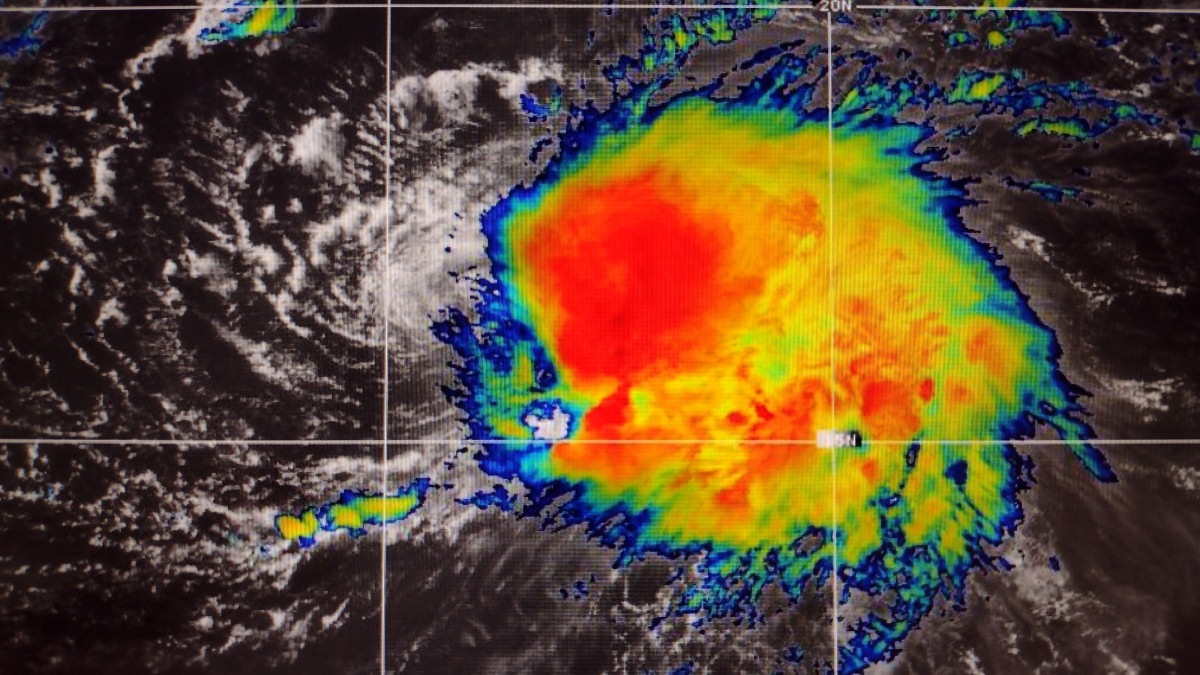
Enlarge/ A file photo of Tropical Storm Fiona as seen in a satellite image from 2022. (credit: Getty Images)
On Tuesday, the peer-reviewed journal Science published a study that shows how an AI meteorology model from Google DeepMind called GraphCast has significantly outperformed conventional weather forecasting methods in predicting global weather conditions up to 10 days in advance. The achievement suggests that future weather forecasting may become far more accurate, reports The Washington Post and Financial Times.
In the study, GraphCast demonstrated superior performance over the world’s leading conventional system, operated by the European Centre for Medium-range Weather Forecasts (ECMWF). In a comprehensive evaluation, GraphCast outperformed ECMWF’s system in 90 percent of 1,380 metrics, including temperature, pressure, wind speed and direction, and humidity at various atmospheric levels.
And GraphCast does all this quickly: “It predicts hundreds of weather variables, over 10 days at 0.25° resolution globally, in under one minute,” write the authors in the paper “Learning skillful medium-range global weather forecasting.”
Android has long had an iMessage problem. In the US, Apple’s proprietary chat platform reigns supreme, particularly among teens. In fact, many Americans won’t switch for fear of the perceived social stigma that comes with the green chat bubbles iMessage assigns to messages from Android phones. Google has tried a few different things to convince Apple to open the platform, including turning to the European Commission for regulatory relief. For most Android users, that’s meant there’s been little they’ve been personally able to do about the situation. Until now.
Nothing today announced Nothing Chats, a messaging app that supports both RCS and iMessage. Nothing Chats builds on Sunbird, a unified messaging platform that has been available in closed beta since the end of last year. Sunbird allows users to access all of their chats, including iMessage, from a single interface. As of this past April, the app had a waitlist more than 100,000 entries long. Sunbird is one of a few apps that Android users can turn to chat with their iPhone-touting friends. The most well-known player in the space is Beeper, which is the brainchild of Pebble founder Eric Migicovsky.
Nothing
With Friday’s release of Chats, Nothing isn’t just promising to allow Phone 2 owners to “camouflage” themselves as iPhone users. Out of the box, Chats will ship with support for many of iMessage’s signature features, including typing indicators, high-resolution media sharing and proper group messaging. Read receipts and Tapback reactions will arrive at a later date. As mentioned above, Chats also supports RCS, meaning you can enjoy iMessage-like features when messaging your Android friends too.
“We understand that the blue bubble vs. green bubble dilemma, especially in North America — although seemingly ridiculous — is real. Nothing Chats allows for freedom of communication between anyone regardless of their brand of smartphone – which is how it should be,” said Nothing CEO Carl Pei. “We want to remind consumers that they do have a choice when it comes to device selection and that their daily behaviors should not be dictated by any one company.”
So, what’s the catch? “There’s no data saved on the platform, so users don’t have to worry about their privacy,” Pei told Inverse. But there are some concerns. Sunbird, like Beeper, employs a workaround that Apple doesn’t officially support, and that the company would almost certainly argue puts users at risk. Nothing told Inverse Sunbird’s “patented” process for bringing iMessage to Android involves server farms of Mac minis that route a user’s messages through to Apple.
Before someone can access iMessage on Nothing Chats, they must first sign into their Apple ID through Sunbird’s platform. Nothing told Inverse all iMessage content sent through Chats is encrypted, and that “at no point can Sunbird access your messages or Apple ID.” Additionally, Nothing notes the startup will delete a user’s Apple ID credentials after two weeks of inactivity. Still, if you decide to use Nothing Chats to access iMessage, you’re effectively handing over the keys to your Apple ID to a company that isn’t Apple.
Nothing
As for whether Nothing Chats is long for this world: Asked about the possibility of Apple taking legal action against Nothing and Sunbird, Pei told Marques Brownlee he thought the tech giant would “probably [do] nothing.”
In a separate interview with The Washington Post, Pei said Nothing has sold “about six figures’ worth” of Phone 2 devices in North America, Britain and Europe. In other words, it’s a small fish in a big pond. More importantly, Apple finds itself in a regulatory environment where attempting to shut down a platform that is opening up iMessage would draw the attention of regulators in the European Union and beyond.
Nothing Chats will be available to download from the Play Store starting on November 17. For the time being, a Nothing Phone 2 is required to access the platform, with regional availability limited to the US, Canada, UK, EU and other European countries, including Norway and Switzerland.
This article originally appeared on Engadget at https://www.engadget.com/nothing-phone-2-is-getting-imessage-support-this-friday–with-some-catches-194655776.html?src=rss
TikTok’s cultural dominance just gained another weapon, and it’s an awfully convenient one: a new feature that will easily allow users to add songs they hear on TikTok to a streaming service like Amazon Music, Apple Music, and Spotify. “Add to Music App” is available in the U.S. and the UK starting today, with plans…
On Tuesday, the Pew Research Center released its latest look at how the US public views scientists and the scientific endeavor. While recent years have shown a decline in the public’s trust in science, these could be viewed as a return to normalcy after a spike in positive feelings during the pandemic’s peak. But this year’s data shows the decline has continued, creating a decline that has now taken us below pre-pandemic levels of trust.
The drop is most pronounced for self-identified Republicans and those without a college education. Despite the decline, however, scientists rank among the most trusted occupations in the US.
A trust deficit
The data used by Pew comes from a survey of nearly 9,000 participants, which provides a margin of error of just ±1.6 percentage points. For some of the individual questions, Pew has been gathering data since at least 2016, allowing it to spot trends in the public’s views. It also has data from all of the pandemic years, including two polls done during 2020, making it easier to spot how that event influenced perceptions of science.
TikTok now lets you save songs you find on the app to your favorite music streaming services, like Apple Music, Spotify, and Amazon Music.TikTok now lets you save songs you find on the app to your favorite music streaming services, like Apple Music, Spotify, and Amazon Music.