Like game director Ji Won Choi promised in early November, duo-developers Neowiz Games and Round8 Studio have dropped a new update for their gothic, Belle Époque-era Soulslike RPG, Lies of P. And just as expected, this update makes some significant changes to the game so that you have an actual fighting chance at…
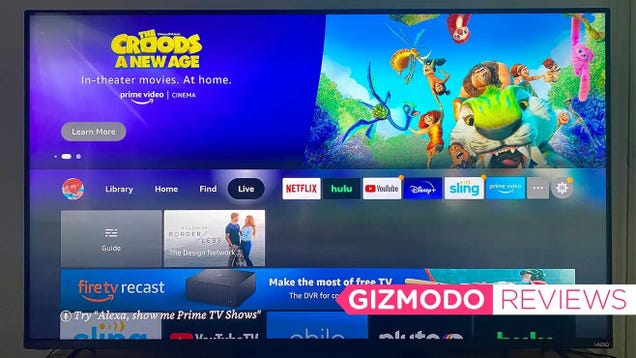
It seems like Amazon is currently developing its own operating system for its Fire TV devices and Smart TVs that run on Android. This was reported last week in Janko Roettgers’ Lowpass newsletter and hasn’t been corroborated with an official statement from Amazon yet.
Microsoft has announced a project it has been “refining in secret for years;” Its own custom silicon in the form of two new server chips. The company unveiled the fruits of its labor at Microsoft Ignite, showing off the Azure Maia AI Accelerator and the Azure Cobalt CPU. The latter of which, at least, the company is happy to admit is ARM-based, which can still feel unthinkable to eyes so used to Microsoft and Intel’s hand-in-glove dominance of the computing market.
The company turned to OpenAI to receive feedback on Azure Maia and to use the company’s models for testing. OpenAI CEO Sam Altman said the updated Microsoft’s Azure will also provide the opportunity for training improved models and making them more affordable for customers.
The custom-designed chips can further optimize Microsoft’s infrastructure instead of relying on third-party options. “Much like building a house lets you control every design choice and detail, Microsoft sees the addition of homegrown chips as a way to ensure every element is tailored for Microsoft cloud and AI workloads,” a blog post from the company explained. “The chips will nestle onto custom server boards, placed within tailor-made racks that fit easily inside existing Microsoft datacenters. The hardware will work hand in hand with software — co-designed together to unlock new capabilities and opportunities.”
The company plans to use the new Maia 100 AI Accelerator to power some of Microsoft Azure’s biggest internal AI workloads. Microsoft claims both the accelerator and Azure Cobalt CPU will improve efficiency and performance. The chips will make their way to Microsoft’s data centers early next year for powering services like Microsoft Copilot (now encompassing Bing Chat) and Azure OpenAI Service.
This article originally appeared on Engadget at https://www.engadget.com/microsoft-will-use-custom-designed-chips-to-bolster-its-ai-services-160050479.html?src=rss
Roasting the turkey is the hard part, but you’re not out of the woods until it’s on a plate.Roasting the turkey is the hard part, but you’re not out of the woods until it’s on a plate.
Microsoft is rebranding Bing Chat and is now simply calling it “Copilot,” giving its generative AI assistant a consistent identity across its products. Similarly, Bing Chat Enterprise will be known “Copilot Pro,” and it will be generally available starting on December 1. It will still be free for specific Microsoft 365 licenses, which will include F3 accounts for frontline workers, though the $5-a-month standalone subscription will be available that day, as well.
The Copilot Pro is based on OpenAI’s latest models, GPT-4 and DALL-E 3, and the company says it will not save prompts and responses. Microsoft will not see interactions happening within Copilot Pro at all, and it will not use customers’ chats to further train the underlying models. In addition to announcing Bing Chat’s rebranding, Microsoft has also revealed at its Ignite AI event that it’s giving Copilot for Microsoft 365 more personalization options. Users will be able to set their preferred formatting, style and tone, starting with Word and PowerPoint, and then later on with other apps.
In Teams, Copilot will gain the ability to take notes throughout the meeting starting sometime next year. Users will even be able to tell the assistant specific information to include — they can, for instance, ensure that a co-worker’s remarks are in the meeting notes by asking Copilot to “Quote [the co-worker’s name].” They can also have Copilot assist in a meeting to provide answers on the fly when needed without enabling transcription. The assistant can even list and visualize Teams discussions in a collaborative space in Whiteboard that all participants can access. In Teams channels, users will be able to use Copilot to synthesize long posts or review key happenings throughout the day.
In Outlook, Copilot will be able to comb through invitation details, related emails and pertinent documents to build a summary of events that users can review quickly starting in spring next year. A feature that’s “coming soon” to Word will allow users to be able to easily discern the latest changes to a document simply by asking Copilot a question, such as “How do I see what has changed in this document?” And in PowerPoint, users will be able to use corporate brand assets and easily reimagine them using AI-generated visuals. These are but a few of Microsoft’s announcements at Ignite, which also include its two new in-house AI chips, the Azure Maia AI Accelerator and Azure Cobalt CPU.
This article originally appeared on Engadget at https://www.engadget.com/microsoft-rebrands-its-ai-powered-bing-chat-as-copilot-160027250.html?src=rss
YouTube Premium may have gotten more expensive in the last year (like basically every other streaming service), but the company at least has adding features pretty frequently as well. YouTube Music in particular has gotten a lot of upgrades in 2023, but today YouTube is announcing a number of experimental features and offers for subscribers to check out.
Probably the most significant is that YouTube’s “enhanced” 1080p playback feature is coming to everyone, regardless of what device you’re using. It started out as an iOS-only feature, but is now available on Android, the web and smart TVs too. This quality setting provides an improved bitrate that YouTube says has more information per pixel. The enhanced 1080p setting started rolling out to some users on the web this summer, but it should be available to all Premium subscribers regardless of what device you’re using.
In the same vein, a “continue watching” feature that YouTube launched for phones and on the web is rolling out to tablets and smart TVs as well. Basically, if you’re watching a video on one device, all your other ones will remember what you’re watching and where you left off so you can seamlessly continue the video.
You’ll also be unsurprised to learn that YouTube is starting to bring AI-generated content into the Premium experience. Earlier this month the company announced it was testing out AI-generated summaries of comment sections as well as a chatbot that can attempt to answer questions about what you’re watching. The company didn’t do a full announce then, just dropping some info on a YouTube support page, but with today’s news you can sign up for a spot to try the chatbot out. YouTube says that only a limited number of people will get into the test, so don’t hesitate if you want to give it a shot. You can find the details about YouTube’s experimental features here.
YouTube also has a handful of decent perks available for Premium subscribers at the moment. Among them are three-month trials to Discord Nitro, Walmart+, and Game Pass for PCs (the last one is “coming soon”). There’s also a four-month subscription to the Calm meditation and sleep app and an “in-game loot bundle” for Genshin Impact. Finally, there are some cute new achievement badges highlighting how much you’ve watched or listened, among other things.
As part of the announcement, YouTube also noted that it now has 80 million paid and free trial users of Premium around the world. None of these new features are exactly the kinds of things that’ll drive more people to try the service, but existing subscribers should try and get as much as they can out of it — particularly people who are new to Premium in the face of YouTube’s recent crackdown on ad blockers.
This article originally appeared on Engadget at https://www.engadget.com/youtube-rolls-out-high-bitrate-1080p-to-all-premium-subscribers-160018538.html?src=rss
The Steam Deck OLED aren’t the only new handheld gaming variants you can snap up this week. The Analogue Pocket will soon be available in eight fresh colorways. Analogue says they’re color matched and manufactured in eight classic Game Boy Pocket and Game Boy Advance colors: blue, green, indigo, spice orange, pink, red, silver and yellow. They all look just lovely.
Pre-orders will open up on November 17 at 11AM ET on Analogue’s website. The company will start shipping these models on November 20. So, if you want to gift one of these versions to a (very special) someone this holiday season, it should arrive with plenty of time to spare.
However, you’ll surely need to act fast if you want one of these Classic Limited Editions. As with other special-edition Pockets, these will probably all be snapped up quickly. The Glow in the Dark model sold out in just two minutes. Even so, the limited-edition models may be your best chance of getting an Analogue Pocket anytime soon. The standard version is rarely in stock, and even when it is, it often takes quite some time to ship.
This article originally appeared on Engadget at https://www.engadget.com/the-analogue-pocket-will-soon-come-in-eight-game-boy-pocketadvance-colors-160009109.html?src=rss
Researchers at the Zurich-based ETH public university, along with a US-based startup affiliated with MIT, have done the impossible. They’ve printed a robot hand complete with bones, ligaments and tendons for the very first time, representing a major leap forward in 3D printing technology. It’s worth noting that the various parts of the hand were printed simultaneously, and not cobbled together after the fact.
Each of the robotic hand’s various parts were made from different polymers of varying softness and rigidity, using a new laser-scanning technique that lets 3D printers create “special plastics with elastic qualities” all in one go. This obviously opens up new possibilities in the fast-moving field of prosthetics, but also in any field that requires the production of soft robotic structures.
Basically, the researchers developed a method to 3D print slow-curing plastics, whereas the technology was previously reserved for fast-curing plastics. This hybrid printing method presents all kinds of advantages when compared to standard fast-cure projects, such as increased durability and enhanced elastic properties. The tech also allows us to mimic nature more accurately, as seen in the aforementioned robotic hand.
“Robots made of soft materials, such as the hand we developed, have advantages over conventional robots made of metal. Because they’re soft, there is less risk of injury when they work with humans, and they are better suited to handling fragile goods,” ETH Zurich robotics professor Robert Katzschmann writes in the study.
ETH Zurich/Thomas Buchner
This advancement still prints layer-by-layer, but an integrated scanner constantly checks the surface for irregularities before telling the system to move onto the next material type. Additionally, the extruder and scraper have been updated to allow for the use of slow-curing polymers. The stiffness can be fine-tuned for creating unique objects that suit various industries. Making human-like appendages is one use case scenario, but so is manufacturing objects that soak up noise and vibrations.
MIT-affiliated startup Inkbit helped develop this technology and has already begun thinking about how to make money off of it. The company will soon start to sell these newly-made printers to manufacturers but will also sell complex 3D-printed objects that make use of the technology to smaller entities.
This article originally appeared on Engadget at https://www.engadget.com/researchers-printed-a-robotic-hand-with-bones-ligaments-and-tendons-for-the-first-time-160005103.html?src=rss
The Webb Space Telescope has revealed a world quite alien compared to our own: WASP-107b, a Neptune-like gas giant that orbits a star some 211 light-years from Earth. Webb has now detected water vapor and sulfur dioxide in the planet’s atmosphere, as well as sand-like silicate clouds.
Ever wanted to add your own annotations to search results you find on Google? With Google’s new “Notes” experiment, launching Wednesday as an opt-in feature through Search Labs, you’ll be able to. From a report: If you’ve opted in to Notes, buttons to add and see notes will appear under search results and under articles on Discover in the Google app. When you create a note, you can add colorful fonts and images. During a briefing, Google showed me a note for an article about different kinds of frosting that had green text, an image of a cake, and a heart sticker. (At the bottom of the note, there was a link to the article the note was about.)
If you post a note, it should show up “within minutes,” unless it’s flagged for human review, Google VP Cathy Edwards said in an interview with The Verge. When you look at all of the notes for a link, what’s shown will be ranked dynamically based on things like the user’s query and a note’s relevance to the content on the page.
Apple’s latest and greatest iPad Air tablet is on sale via Amazon for $500 as part of an early Black Friday deal. The MSRP is $600, so this represents a savings of $100 for the fifth-gen device. The record-low deal applies to every available color, from purple to space gray, but some hues require you clip an affiliated coupon on the side of the page. You know the drill.
This deal is for the M1-equipped iPad Air, so it’ll be fast enough for just about anything you throw at it. It’s the 64GB version, though the 256GB models are also on sale for $650 instead of $750. Additionally, there’s a similar discount for the 5G cellular models that shaves off $100 from that sticker price.
The fifth-gen iPad Air is generally considered to be the best all-purpose tablet that Apple makes. There’s a reason, after all, why it sits atop our list of the best iPads. We gave it high marks in our official review, calling out the sheer power of the M1 chip and the excellent battery life, which lasts around 12 hours per charge. We also admired the much-improved front camera, the optional 5G and, of course, the top-notch design and build.
On the downside, the storage options are a bit stingy, as is typical with Apple. The 64GB model will fill up fast, particularly if you are downloading apps and games at a rapid pace. This model also lacks Face ID, if that’s a dealbreaker for you. Finally, like all Apple tablets, the official pencil and keyboard accessories are on the expensive side. Despite these caveats, though, this was the best Apple tablet you could buy at $600, so that certainly holds true at $500.
This article originally appeared on Engadget at https://www.engadget.com/apples-ipad-air-m1-drops-to-a-record-low-500-in-an-amazon-black-friday-deal-155933724.html?src=rss
Super Mario RPG was a revelation when it came to the SNES in 1996. A mashup of everyone’s favorite platforming plumber and the turn-based, stat-driven combat of a Final Fantasy game proved to be an enduring mix that spawned multiple spiritual successors. Does Nintendo’s remake of the retro gem on Switch do it justice?…
Dwayne “The Rock” Johnson confirms the live-action Moana is his next project. Cobra Kai brings back a familiar name for its final season. Plus, a new look at the anime adaptation of Go! Go! Loser Ranger!. To me, my spoilers!
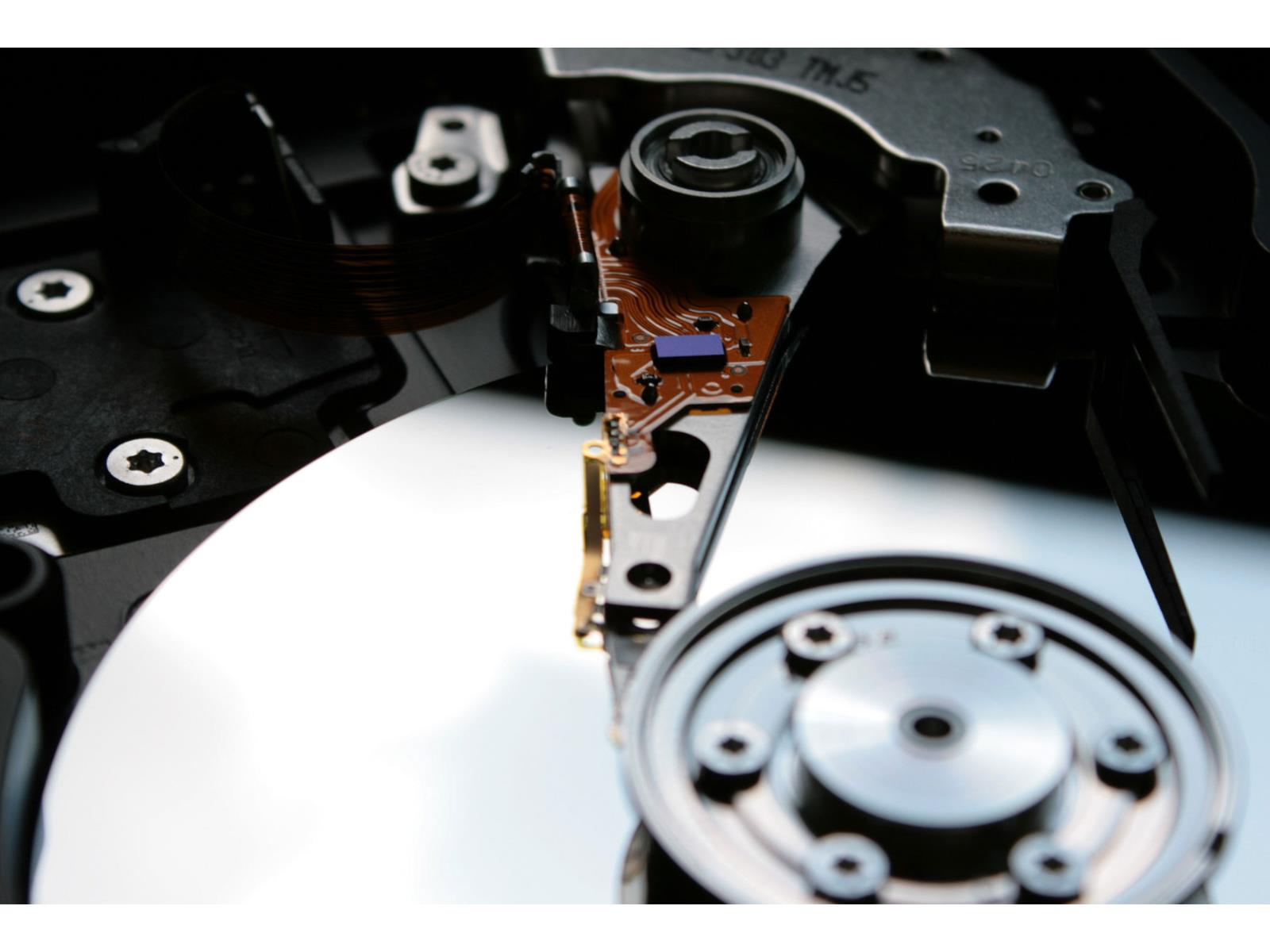
The mechanical hard disk drive (HDD) isn’t dead even as solid state drives (SSDs) steal the limelight. That’s because pricing for bulk storage still favors HDDs. But while the storage medium is far from dead, HDDs do give up the ghost, some more often than others. Which ones are the most reliable? That’s a tricky question, and it’s also where
The GNOME GTK toolkit is introducing support for graphics offloading within the toolkit. This new GTK “GraphicsOffload” support is Wayland-only at this time and not working either for non-Linux platforms…
Astronomers were recently amazed to find an aurora-like display some 40,000 kilometers above a sunspot. Researchers from the New Jersey Institute of Technology’s Center for Solar-Terrestrial Research (NJIT-CSTR) detailed radio observations of the event that share characteristics with the auroral radio emissions typically only seen in planetary
Huawei and China Mobile have built a 3,000 kilometer (1,860-mile) internet network linking Beijing to the south, which the country is touting as its latest technological breakthrough. From a report: The two firms teamed up with Tsinghua University and research provider Cernet.com to build what they claim is the world’s first internet network to achieve a “stable and reliable” bandwidth of 1.2 terabits per second, several times faster than typical speeds around the world. Trials began July 31 and it’s since passed various tests verifying that milestone, the university said in a statement.
Tsinghua, Chinese President Xi Jinping’s alma mater, is plugging the project as an industry-first built entirely on homegrown technology, and credits Huawei prominently in its statement. The Chinese firm in August made waves when it released a 5G smartphone with a sophisticated made-in-China processor, inspiring celebration in Chinese state and social media. That event also spurred debate in Washington about whether the Biden administration has gone far enough in attempts to contain Chinese technological achievement.
NASA has produced thousands of images over its illustrious 65-year history, but some images have had a far greater impact than others. Among this vast portfolio, certain images stand out for having reshaped our understanding of space and our place within it, capturing moments that have both ignited the collective…
Nine months after its initial announcement during February’s Pokémon Presents, we finally have a trailer for Pokémon Concierge, the upcoming stop-motion Netflix series set in the Pokémon world. The four-episode series is set to premiere on the streaming service on December 28, and y’all, it looks like a vibe and a…
Virtual reality has come a long, long way since the days of Nintendo’s doomed Virtual Boy. Meta just unveiled its standalone Quest 3 headset, Sony continues to offer support for the PS VR2 and there’s plenty of PC-connected VR headsets available from HP, HTC, Vive and other companies. The industry’s growing at a rapid pace and picking up new converts in the process. If you’re an enthusiast, sifting through the sea of virtual reality accessories and add-ons can be tricky and overwhelming. That’s where we come in: here are the best VR accessories for folks tired of boring-old actual reality.
We tried to keep these picks as universal as possible, to suit the various VR ecosystems out there. However, some of the best VR accessories only work on certain platforms and we’ll note this stuff as we go. We also stayed away from experimental and expensive add-ons, like treadmills and force feedback clothing, to keep you from bankruptcy.
Meta Elite Strap With Battery
Meta Link Cable
Skywin VR Mat
AMVR Headset Holder
Casematix Hard Case
Kiwi Design 10,000 mAh Battery Pack
SteelSeries Arctis Nova 4
NexiGo VR Cable Management System
Ringside Weighted Exercise Gloves
DeadEyeVR DriVR Golf Club Handle
AMVR Fishing Rod
This article originally appeared on Engadget at https://www.engadget.com/best-vr-accessories-150021126.html?src=rss