
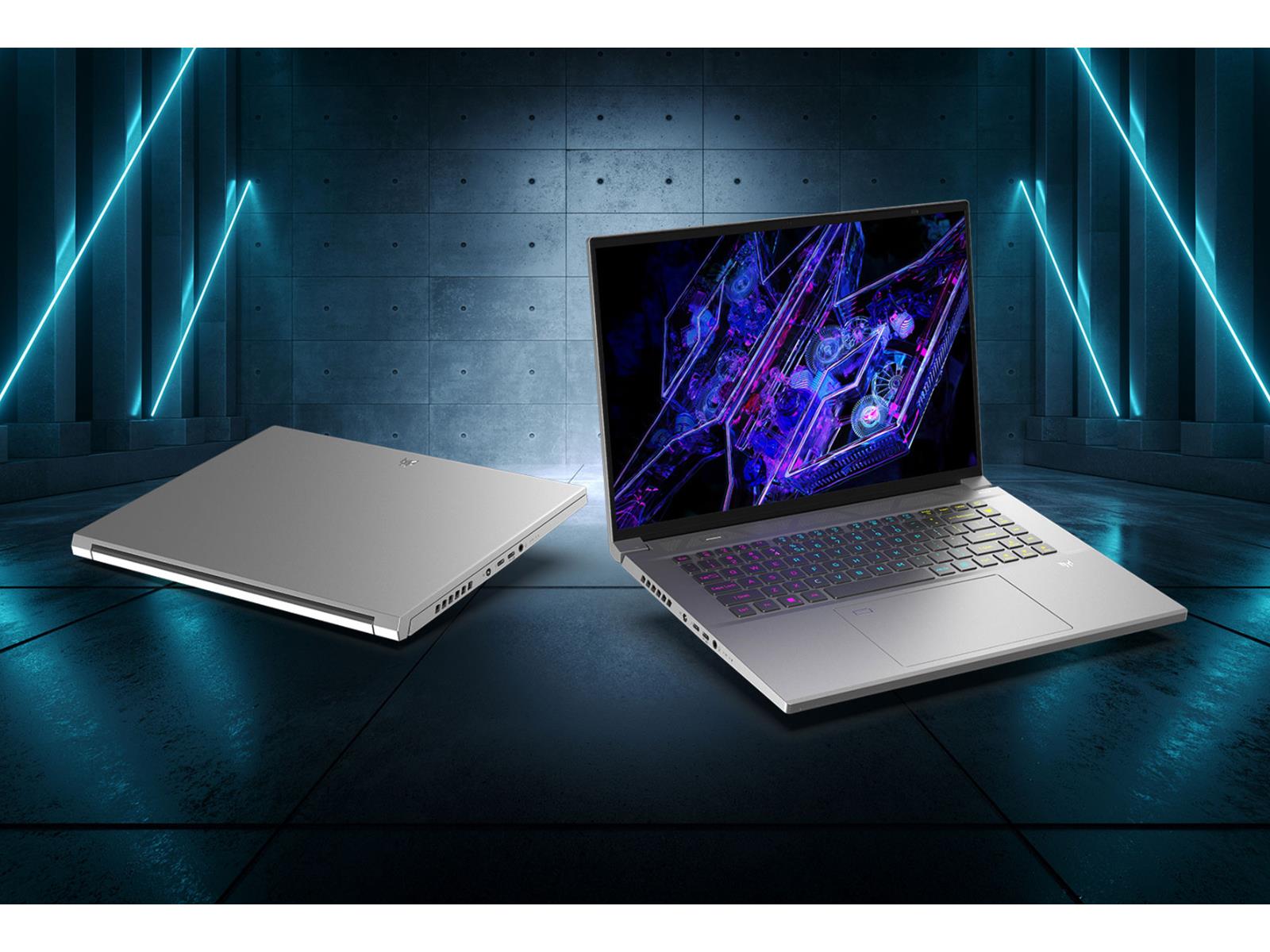
Today is the day that Intel’s initial Meteor Lake CPU lineup becomes official and as is always the case for these types of launches, OEM system builders and hardware partners are at the ready with a barrage of product announcements. It’s no surprise, then, that Acer is rolling out several new products, one of which is the Predator Triton Neo
Source: Hot Hardware – Acer Predator Triton Neo 16 Gaming Laptop Flexes Meteor Lake Muscle, RTX 40 Graphics
Category Archives: Unfiltered RSS
Intel intros first Meteor Lake chips with faster GPUs and worse single-core speed
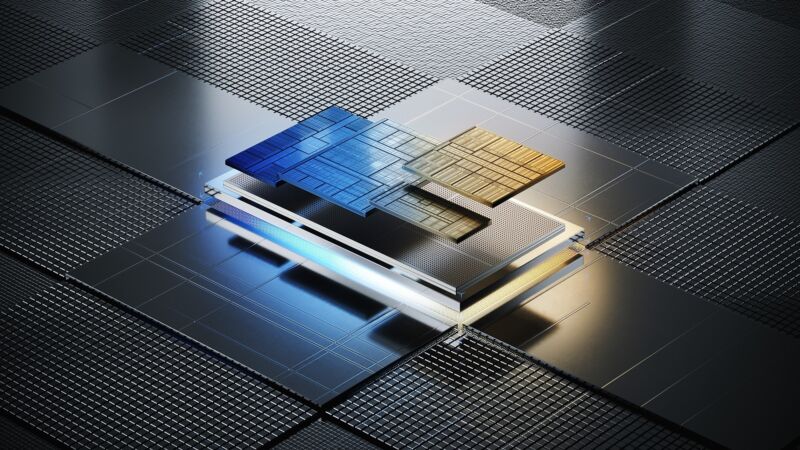
Enlarge / Intel’s Core Ultra CPUs combine multiple silicon dies into a single chip. (credit: Intel)

Intel announced technical details about its next-generation Core CPUs a few months ago. Codenamed Meteor Lake, the chips are good and bad news for Intel’s chip manufacturing ambitions—they’re simultaneously the first chips to use the brand-new Intel 4 process and the first of Intel’s mass-market consumer processors to use silicon manufactured by someone other than Intel (in this case, TSMC). They’re also a showcase for Intel’s Foveros packaging technology, which welds together several pieces of silicon (“tiles,” in Intel’s words) rather than integrating everything into a single monolithic die.
Today, Intel is announcing the first wave of actual Meteor Lake processors, which Intel says will be available in some PCs starting today—expect to see quite a few of these PC designs announced this week, and even more of them at CES next month.
The lineup includes 11 chips across two different product families: H-series processors for thin-and-light workstation and gaming laptops and U-series chips that will end up in Ultrabooks. Eight of these are launching today, and three more are expected in Q1 of 2024. The two families share many similarities, including Intel’s first built-in neural processing unit (NPU) for accelerating machine learning and AI workloads, but in short, the H-series chips use more power and include more P-cores and GPU cores.
Read 14 remaining paragraphs | Comments
Source: Ars Technica – Intel intros first Meteor Lake chips with faster GPUs and worse single-core speed
Lenovo's latest ThinkPad and IdeaPad laptops include new Intel Core Ultra chips
Lenovo has unveiled its latest productivity-focused ThinkPad and IdeaPad laptops ahead of CES. The systems are equipped with Intel’s new Core Ultra chipsets, which include three compute engines — a central processing unit, graphics processing unit and neural processing unit. Those are designed to work together for greater efficiency. Lenovo notes that some compute tasks can be offloaded to the GPU or NPU for better performance and power management. Since they run on Windows 11, all three laptops will support Copilot AI features.
The IdeaPad Pro 5i is the first consumer Intel Evo Edition laptop that runs on an Intel Core Ultra chipset. Lenovo claims this will power faster AI-driven features, such as image and text generation, as well as photo editing. There are also claims of improved performance for traditionally demanding tasks like video editing and exporting, along with multitasking.
You can equip the IdeaPad Pro 5i with up to an NVIDIA GeForce RTX 4050 Laptop GPU, up to 32GB of LPDDR5X RAM and up to a 1TB SSD. An expandable SSD slot and SD card reader can help bump up the storage as well.
The laptop is available in 14-inch and 16-inch formats with several display options, including an 16:10 OLED panel with a 100 percent DCI-P3 color gamut and 120Hz refresh rate. The IR Full HD camera has a time-of-flight sensor and privacy shutter along with Windows Hello support.
No matter which size of the laptop you opt for, you’ll get an 84WHr polymer battery with quick charging support via Thunderbolt 4. You’ll get an HDMI 2.1 port, two USB 3.2 Gen 1 Type A slots and a 3.5mm audio jack. There’s also Wi-Fi 6E and Bluetooth 5.2 support. The 14-inch model weighs 3.22 lbs and the larger variant is 4.3 lbs.
The Lenovo IdeaPad Pro 5i is available now. The laptop starts at $1,150.
Lenovo
You’ll need to wait slightly longer for the Lenovo ThinkPad X1 Carbon Gen 12. Some configurations will be available later this month (starting at $2,989) and the full swathe of options to follow in March. The ThinkPad X1 2-in-1 Gen 9 will become available in March too. That laptop is expected to start at $2,639.
Lenovo has integrated a major accessibility-focused feature into the new ThinkPads in the form of additional tactile cues on the keyboard to help folks with visual impairments. The company says it worked with Microsoft’s Accessibility Team to help develop new industry standards in keyboard design. For instance, the F2 and F3 keys (often used for volume control) have tactile markings, as does the Insert key to help people tell it apart from the Delete key. Meanwhile, the ThinkPad X1 2-in-1 has a larger magnetic pen, which is said to deliver a better experience for those who prefer to use a stylus.
The ThinkPad X1 models include a self-explanatory Low Light Enhancer feature for the webcam. Lenovo says this tool runs on the NPU for greater system efficiency when you have video conferencing software such as Zoom running.
The ThinkPad X1 Carbon Gen 12 can be configured with up to 64GB of LPDDR5X RAM and up to 2TB of SSD storage. There’s no dedicated GPU option as the laptop will support Intel Arc graphics. The 14-inch display can have a resolution of up to 2.8K with a refresh rate of 120Hz on an OLED panel.
As for ports, you’ll get two USB-C Thunderbolt 4, two USB-C, an HDMI 2.1 and a 3.5mm audio jack. The ThinkPad X1 Carbon Gen 12 can be equipped with Wi-Fi 6E or 7 and Bluetooth 5.3. There are several webcam options too, up to an 8MP MIPI Computer Vision camera with privacy shutter. The laptop’s weight starts at 2.42 lbs.
The ThinkPad X1 Yoga Gen 9 has similar specs though it, of course, is a 2-in-1. The other key difference is that the weight starts at 2.92 lbs.
Lenovo
Source: Engadget – Lenovo’s latest ThinkPad and IdeaPad laptops include new Intel Core Ultra chips
Intel unveils Core Ultra, its first chips with NPUs for AI work
Intel today is entering the “AI PC” era with the launch of its new Core Ultra notebook chips. Originally codenamed “Meteor Lake,” these are Intel’s first processors to include an NPU, or neural processing unit, for accelerating AI tasks. The launch comes a week after AMD revealed its upcoming Ryzen 8040 hardware, its second batch of chips to include NPUs. While Intel is playing a bit of AI catch-up, the Core Ultra chips still sound like a solid step forward — at least according to the company’s benchmarks.
Intel claims the Core Ultra chips use up to 79 percent less power than AMD’s last-gen Ryzen 7840U while idling in Windows, and they’re also up to 11 percent faster than AMD’s hardware for multithreaded tasks. Intel didn’t have the upcoming Ryzen 8040 chips to test, but it’ll be interesting to see how they both compare next year.
Efficiency is a key component of the Core Ultra chips: They’re built on the company’s new Intel 4 (7nm) process, and they feature its FOVEROS 3D packaging. According to Intel, these are are also “the most efficient x86 processor for ultrathin systems.” There are refined P (Performance) and E (Efficiency) cores, as well as Intel Arc graphics, which is up to twice as fast as the last generation (and also offer double the performance per watt).
Intel
The Core Ultra family launches with the Ultra 7 165H at the high end, offering 16 cores/22 threads (6P cores, 8 E cores and 2 low-power E cores and a 5GHz Max Turbo frequency. A beefier Ultra 9 185H will arrive in the first quarter of 2024 with a 5.1GHz Max Turbo speed, slightly faster GPU and higher power draw (45 watts, compared to the Ultra 7’s 28 watts). As usual, there’s also a lower-power “U” series of chips for the thinnest machines.
While you won’t find the Core Ultra chips in the most powerful gaming laptops, the addition of Intel Arc graphics should make them slightly more viable for less demanding gaming (or at least more on par with AMD’s 7000 series chips). Intel says the Ultra 7 165H can play Baldur’s Gate 3 twice as fast as the Core i7 1370P in 1080p with medium graphics settings, and it can handle Resident Evil Village 95 percent faster than that older Intel chip.
Across an average of 18 games, including Apex Legends, Overwatch 2 and Final Fantasy XIV, Intel says the Ultra 7 165H is 5 percent faster than AMD’s Ryzen 7 7840U in the Thinkpad T16. Sure, that’s just a nominal improvement over last-gen hardware, but at least Intel finally appears to be competitive with AMD’s solid graphics. The company’s XeSS AI upscaling can also improve performance around 39 percent on average in 1080p. In some titles, including Like A Dragon: Gaiden, Intel’s upscaling can bump a game up from a middling 30fps range to a far smoother 69 fps.
As for AI workloads, Intel says Core Ultra chips can reach up to 34 TeraOPS when combining performance across the NPU, GPU and CPU. But the big change this time is the NPU: It’ll enable features like Windows 11’s Studio Effects, which can blur backgrounds and improve video lighting without hurting your battery life much. For creative AI workloads, Intel says the Ultra 7 165H is 70 percent faster than the Ryzen 7 7840U in Adobe Premiere Pro and a whopping 5.4 times faster running GIMP Stable Diffusion.
What’s truly exciting about the Core Ultra hardware, as well as AMD’s upcoming Ryzen 8040 series, is the potential for NPUs to make our computing lives slightly easier. They could help eke out more battery life while editing audio in Audacity on the go, or give you a slightly sleeker background blur during Zoom calls. Both Intel and AMD also say they’re also pushing developers to help create more AI-enabled features in their apps. Basically, get used to the term “AI PC” — you’ll be hearing it quite a bit throughout the next year.
This article originally appeared on Engadget at https://www.engadget.com/intel-unveils-core-ultra-its-first-chips-with-npus-for-ai-work-150021289.html?src=rss
Source: Engadget – Intel unveils Core Ultra, its first chips with NPUs for AI work
Acer’s Predator Triton Neo 16 gaming laptop has Intel Core Ultra processors
Acer just unveiled the Predator Triton Neo 16 gaming laptop which features Intel’s long-awaited Core Ultra processors, formerly referred to internally as Meteor Lake. These CPUs boast a dedicated Neural Processing Unit (NPU) for advanced AI performance. The chips prioritize efficiency and speed, with Intel promising that graphics will be twice as fast when it comes to performance per watt, among other intriguing metrics.
As for the actual laptop, Acer’s Predator Triton Neo 16 is a beast. There’s the Core Ultra processor, with availability up to i9, but you can also outfit it with a powerful GPU, up to the NVIDIA GeForce RTX 4070. This combination allows for AI-optimized visuals when playing games with advanced ray tracing, thanks to NVIDIA’s DLSS 3.5 technology.
There are several 16-inch display options here, offering up to a 3.2K resolution with a 165Hz refresh rate and a 16:10 aspect ratio. These screens take advantage of a DCI-P3 100% color gamut and offer support for NVIDIA G-Sync and Optimus, for sharper colors and tear-free frames.
You can spec this laptop out with up to 32GB of LPDDR5X system memory and up to 2TB PCIe Gen 4 SSD storage. These computers also offer access to Acer’s proprietary Purifier Voice 2.0 technology, which combines AI-driven noise reduction and beam-forming to keep communications clear during fast-paced multiplayer sessions. The Predator Triton Neo 16 will be available in March, starting at $1,500.
Acer
Looking for a laptop outfitted with a new Intel Core Ultra chip but don’t want to wait until March? Acer also updated the Swift Go 14 line. These laptops aren’t as powerful, maxing out with an i7 chip, but feature a gorgeous OLED display. You can actually pick one of these up today from retailers like Amazon, Costco and Sam’s Club, among others. The Swift Go 14 starts at $800 for the bare-bones model.
This article originally appeared on Engadget at https://www.engadget.com/acers-predator-triton-neo-16-gaming-laptop-has-intel-core-ultra-processors-150009793.html?src=rss
Source: Engadget – Acer’s Predator Triton Neo 16 gaming laptop has Intel Core Ultra processors
Intel Xeon Platinum 8592+ "Emerald Rapids" Linux Benchmarks
Following the 5th Gen Xeon Scalable “Emerald Rapids” overview, you are likely wondering about the performance claims made by Intel and how they shake up in independent testing as well as how Emerald Rapids competes against AMD EPYC Genoa(X) and Bergamo. If so this article is for you with the Phoronix benchmarks of the new flagship Intel Xeon Platinum 8592+ 64-core processors being tested in both single and dual socket modes.
Source: Phoronix – Intel Xeon Platinum 8592+ “Emerald Rapids” Linux Benchmarks
Intel Launches 5th Gen Xeon Scalable "Emerald Rapids" Server Processors
In addition to announcing the Core Ultra “Meteor Lake” processors, Intel’s AI Everywhere event in New York City also served as the launch point for 5th Gen Xeon Scalable “Emerald Rapids” server processors. Emerald Rapids is an incremental improvement over Sapphire Rapids with emboldened AI capabilities, energy efficiency improvements, and now up to 64 cores per socket.
Source: Phoronix – Intel Launches 5th Gen Xeon Scalable “Emerald Rapids” Server Processors
Intel Announces Xeon E-2400 & Xeon D-1800/D-2800 CPUs
While Intel’s AI Everywhere event today was primarily focused on Core Ultra “Meteor Lake” laptop processors and 5th Gen Xeon Scalable “Emerald Rapids” processors, Intel also briefly announced their newest Xeon D and Xeon E series processors…
Source: Phoronix – Intel Announces Xeon E-2400 & Xeon D-1800/D-2800 CPUs
Intel Core Ultra Meteor Lake Mobile CPUs Launch With Gaming Grade iGPU And AI Brawn
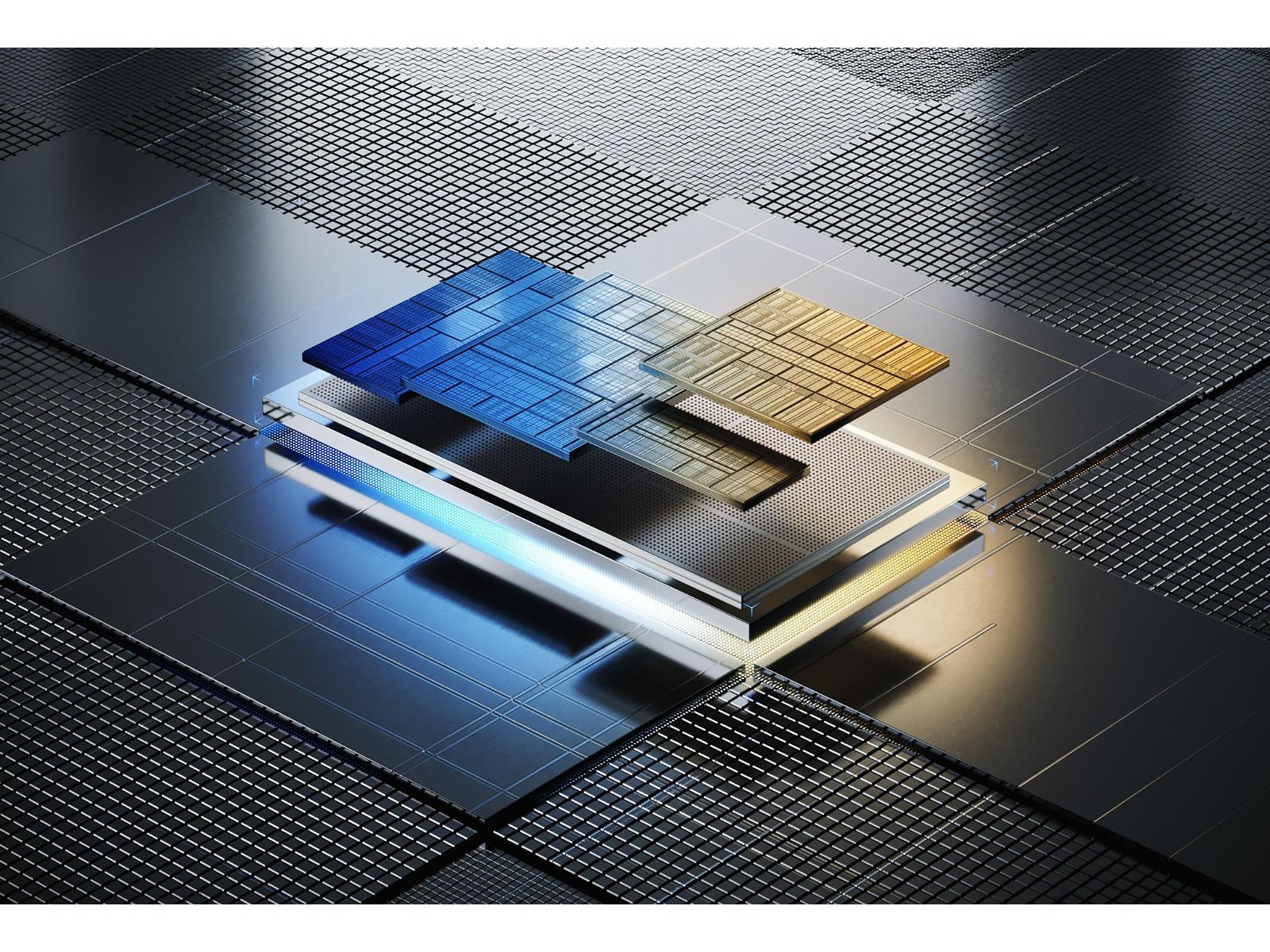
If you’re a regular HotHardware reader, we probably don’t have to explain to you that Intel’s new Core Ultra processors launching today were codenamed Meteor Lake, and that they represent not only Intel’s first “disaggregated” consumer CPUs built from disparate tiles, but also the debut of Intel’s “Intel 4” process technology.
We’re not
Source: Hot Hardware – Intel Core Ultra Meteor Lake Mobile CPUs Launch With Gaming Grade iGPU And AI Brawn
Lenovo's Latest Laptops Tap Intel's Meteor Lake CPUs To Drive New AI Experiences On PC
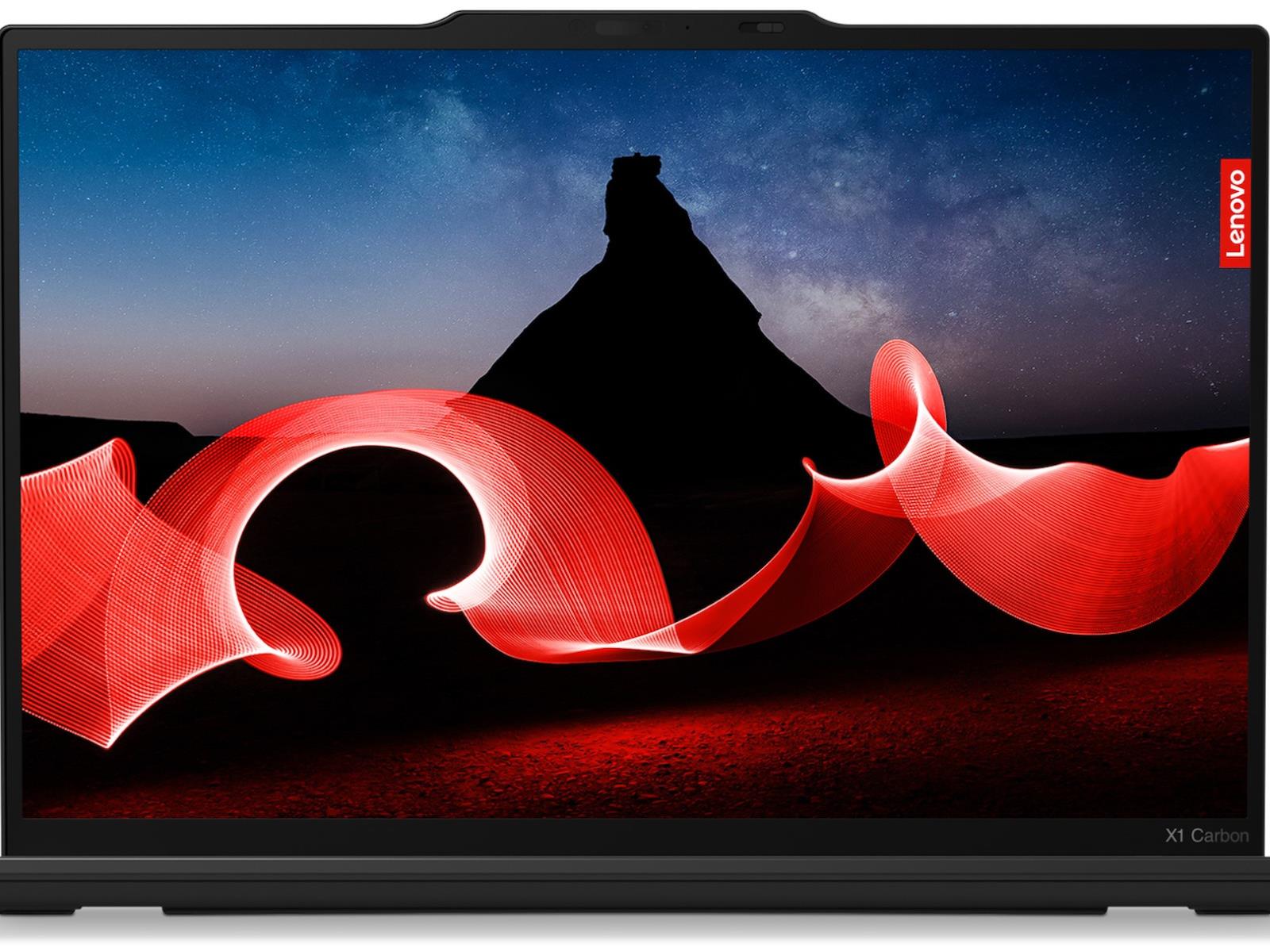
As you may have heard, today is launch day for Intel’s Core Ultra processors, likely better known by their codename, Meteor Lake. These parts are not only Intel’s first disaggregated design, but also the company’s first CPUs to include a bespoke Neural Processing Unit (NPU) designed to accelerate AI processing. Naturally, Lenovo is updating
Source: Hot Hardware – Lenovo’s Latest Laptops Tap Intel’s Meteor Lake CPUs To Drive New AI Experiences On PC
Intel Launches Core Ultra "Meteor Lake" Mobile Processors
At Intel’s AI Everywhere event they officially launched their new Core Ultra branded Meteor Lake processors that will begin appearing in new laptops. Intel Core Ultra aims to deliver their most power efficient client processors, deliver around twice the GPU performance of existing integrated graphics, and via the NPU feature more robust AI capabilities.
Source: Phoronix – Intel Launches Core Ultra “Meteor Lake” Mobile Processors
The Apple Watch Ultra 2 Just Hit Its Lowest Price Yet
Apple is notoriously stingy with their discounts, the idea being that it will keep the perception of high value and exclusivity. It has clearly worked for them thus far. That’s why it’s surprising to see that their latest top-of-the-line smartwatch, the Apple Watch Ultra 2, released fewer than three months ago, is already discounted $100 off its $799 price tag. To get it for $699 (the lowest price it has ever been, according to Camelcamelcamel’s price history), you will need to click the on-screen $50 coupon before adding the smartwatch to your Amazon cart.
Apple’s latest and highest-tier smartwatch
The Apple Watch Ultra 2 was released in September of this year and is Apple’s flagship smartwatch. It is different than the previous first-generation Apple Watch Ultra, which you can find for $659 at Best Buy;but for $40 more, you might as well get the latest one. It’s also different from the Apple Watch Series 9, which you can get for $449 on Amazon right now. If you’re looking for a budget-friendly Apple watch, consider the second generation Apple Watch SE available for $199 (originally $249). Just keep in mind that this one will arrive after Christmas.
The Apple Watch Ultra 2 is packed with fitness-focused features, but even if you aren’t a health nut, it still has a lot of great features for casual users as well. People who want a reliable sleep tracker can learn a lot about their sleep habits with the Ultra 2 as long as they keep it well-charged. And the great thing is that Apple is still upgrading their watchOS 10.2, listening to their users, and improving it little-by-little.
The model currently available for $699 is the larger size, which fits people with wrists measuring 165 to 210mms. The medium size, for those with wrists measuring 145 to 190mms, is $729.99 after applying the same $50 on-screen discount.
Source: LifeHacker – The Apple Watch Ultra 2 Just Hit Its Lowest Price Yet
Razer Turns A Lexus TX Into A Luxury Gaming Vehicle With RGB, Do You Dig It?

Razer and Lexus sounds like an unlikely partnership, right? Well, this concept gaming vehicle may change your mind. Simply dubbed the Razer Lexus TX, it shows off what happens when you combine luxury with serious gaming aspirations on-the-go.
Revealed at the 2023 Esports Awards Show in Las Vegas recently, the Lexus-Razer gaming vehicle
Source: Hot Hardware – Razer Turns A Lexus TX Into A Luxury Gaming Vehicle With RGB, Do You Dig It?
LinkedIn Shelved Planned Move To Microsoft Azure, Opting To Keep Physical Data Centers
LinkedIn has set aside an effort to relocate its data center technology out of its physical facilities and into Microsoft’s Azure cloud, CNBC reported Thursday, citing people familiar with the matter. From a report: The decision not to proceed with the project, code-named “Blueshift,” marks a major reversal for LinkedIn, which announced its plan to move to Azure in 2019, three years after Microsoft acquired the company for $27 billion. LinkedIn had been using Azure for specific tasks.
The U-turn represents a setback for Microsoft, which is chasing Amazon
Web Services in the lucrative cloud infrastructure market and has been counting on cloud technology and services to fuel much of its growth. Microsoft CEO Satya Nadella ran the cloud business before elevation to his current job in 2014. Mohak Shroff, LinkedIn’s vice president of engineering, wrote in a 2019 blog post announcing Blueshift that “moving to Azure will give us access to a wide array of hardware and software innovations, and unprecedented global scale.” Staffers started to learn of the decision not to follow through with the Azure migration last year, said the sources, who asked not to be named because of confidentiality. Executives stressed that the project was being put on hold, rather than getting canceled altogether, they said.


Read more of this story at Slashdot.
Source: Slashdot – LinkedIn Shelved Planned Move To Microsoft Azure, Opting To Keep Physical Data Centers
What People Are Getting Wrong This Week: The 'War on Christmas'
It’s the holiday season, so I thought I’d take a look at the state of the supposed “War on Christmas.” I was hoping to point to a bunch of outrageous beliefs religious people have about Christmas this year, but instead, it seems the furor over the holiday being under siege has died down.
This is not, however, a sign of progress.
The War on Christmas isn’t new
The phrase “War on Christmas” originated in 2000 on this blog post by Peter Brimelow, but it caught on shortly after a 2004 broadcast by Bill O’Reilly featuring a segment called “Christmas Under Siege.”
“All over the country, Christmas is taking flak,” Reilly intoned, before pointing out that cities were erecting “holiday trees” instead of “Christmas trees” and pointing out instances of public schools banning religious content. From there, books were written, tweets were tweeted, and outrage was stoked until the phrase “War on Christmas” was known by all.
But the sentiment behind the “War on Christmas” dates back way further than its heyday in the early 2000s, to at least 1921, when noted antisemite (and car manufacturer) Henry Ford wrote: “Last Christmas most people had a hard time finding Christmas cards that indicated in any way that Christmas commemorated Someone’s Birth.”
While O’Reilly and his ilk tend to not specifically name an enemy in the War on Christmas, Ford wasn’t shy. As you might suspect, according to Ford, the Jews were to blame:
Not only do the Jews disagree with Christian teaching — which is their perfect right, and no one dare question it — but they seek to interfere with it. It is not religious tolerance in the midst of religious difference, but religious attack that they preach and practice. The whole record of Jewish opposition to Christmas, Easter and certain patriotic songs shows that.
Post-war America’s religiosity eventually led to prayer and Christmas celebrations in public schools, and that led to a backlash where courts ruled much of it was unconstitutional, and that time of uncertainty led to the publication of ur-War on Christmas texts like the pamphlet “There Goes Christmas?!” by Hubert Kregeloh of the John Birch Society:
The UN fanatics launched their assault on Christmas in 1958, but too late to get very far before the holy day was at hand…They are already busy, however, at this very moment, on efforts to poison the 1959 Christmas season with their high-pressure propaganda. What they now want to put over on the American people is simply this: Department stores throughout the country are to utilize U.N. symbols and emblems as Christmas decorations.
Scary stuff. Still, the John Birch society were not a potent cultural force, and weird ideas about “U.N. fanatics” churned under the surface of the U.S.’s cultural consciousness—until Fox New’s early 2000s ascendency brought them to the surface.
The War on Christmas isn’t over
While the sentiment behind the War on Christmas—”evil globalists/democrats/Jews are oppressing Christians”—is alive and thriving, right now the religious right is quiet about the “War on Christmas” itself, so quiet it’s almost like they’re embarrassed.
The outrage from years past is just gone. Even Starbucks’ once-reliable choice in holiday cup design is failing to rile anyone up—the sources for this recent Sun article with the headline “Starbucks fans continue to boycott the popular chain and slam its ‘War on Christmas’ over controversial cup campaign” are:
-
Three links to the Facebook search for the phrase “war on christmas starbucks cups”
Gone are the days when Conservatives could base an entire book on the War on Christmas premise, or political figures could score easy points by promising they’ll bring saying “Merry Christmas” back to the White House (even though it never left). Even the inclusion of a Satanic Christmas tree at a Wisconsin train museum this year didn’t move the outrage needle. The War on Christmas is over, right?
Not exactly. It would be nice to think the people behind popularizing the “War on Christmas” concept have shut up about it because it’s such a ridiculous idea, but really they’ve moved on because it’s not sexy anymore. Consistently generating cultural outrage requires novelty. The enemies—modernity, Jews, “U.N. fanatics,” liberalism, people of color, etc.— remain the same as they were when Henry Ford was around, but they have to be dressed in new costumes or people would stop paying attention. So Bud Light cans take the place of Starbucks cups. New scapegoats replace the old, and new, nonsensical, arguments are constructed. In the 1970s, opponents of the ERA helped shoot down the amendment by repeating the shibboleth that it would result in unisex bathrooms (like you have in your house.) In 2023, it’s “trans people might use a bathroom I don’t approve of!” It’s always bathrooms with these people.
If you miss making fun of people for taking the “War on Christmas” seriously, don’t despair. It will be back. The popularity of using Christmas as a flashpoint for our ongoing cultural conflicts ebbs and flows, but it’s as much of a holiday classic as Maria Carey’s “All I Want for Christmas is You.” Once people have sufficiently forgotten, some future Henry Ford/Hubert Kregeloh/Bill O’Reilly will say, “Look! The bad people are attacking Christmas!” and the war will be back on. Because it’s not actually a war; it’s just one of a million battles in a war that will never end.
Source: LifeHacker – What People Are Getting Wrong This Week: The ‘War on Christmas’
Kotaku's Best Last-Minute Gaming Gifts Of 2023

It’s that time of year again! By which I mean, that dread-inducing season when you realize the holidays are mere days away, instead of weeks. Maybe you were planning to give that special someone something one-of-a-kind and handmade. Perhaps you’d planned to make a run to the local mall, only for the sweet, sweet siren…
Source: Kotaku – Kotaku’s Best Last-Minute Gaming Gifts Of 2023
Google Chrome's third-party cookie phaseout begins on January 4
It’s finally time. Google already announced that as part of its ongoing “Privacy Sandbox” initiative, it’ll begin to restrict third-party cookies in Chrome starting in Q1 2024, and now, we have the exact launch date: January 4. At first, only a random one percent of Chrome users globally will see “Tracking Protection” enabled in their browser, meaning third-party cookies will be blocked by default. If you happen to be one of these lucky folks, you’ll see a prompt on the address bar indicating as such, thus limiting cross-site tracking in the name of privacy.
Assuming everything goes smoothly, Google will then gradually ramp up the rollout to 100 percent of Chrome users by the second half of 2024. Of course, hiccups are expected during this transitional period. Should you find yourself repeatedly loading a website to no avail, Chrome will let you temporarily re-enable third-party cookies. Simply click on the eye icon on the right side of the address bar to toggle this aging feature.
According to StatCounter’s November 2023 report, Google’s Chrome took up 62.85 percent of the worldwide browser market share, with Apple’s Safari in second place at 20.04 percent, and Microsoft’s Edge in third place at a mere 5.5 percent. Considering that there are billions of Chrome users today, it is perhaps fair for Google to call the initial one-percent rollout “a key milestone” for its “responsible approach to phasing out third-party cookies.”
That said, Google may still face some final hurdles set by the UK’s Competition and Markets Authority, as well as similar administrations from other countries, which are looking into minimizing the impact on their local ad businesses.
This article originally appeared on Engadget at https://www.engadget.com/google-chromes-third-party-cookie-phaseout-begins-on-january-4-140051834.html?src=rss
Source: Engadget – Google Chrome’s third-party cookie phaseout begins on January 4
Cadillac plans new electric SUV to fit between the Lyriq and Escalade IQ
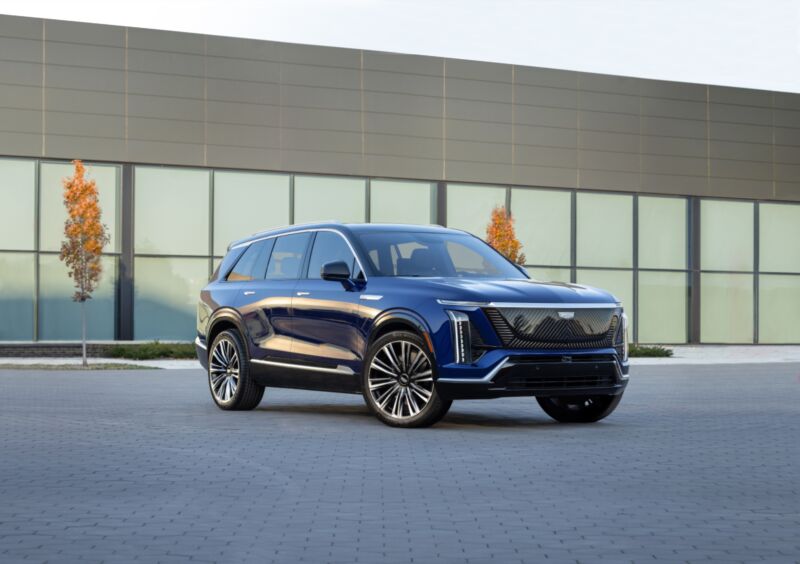
Enlarge / I’m not 100 percent sure but it looks a lot like the Vistiq will be a three-row SUV. (credit: Cadillac)

Cadillac’s product planners sure love the letter Q. Last year the American luxury automaker started building the Lyriq, a rather competent midsize electric SUV. Last month, it revealed plans for an entry-level electric crossover called the Optiq, that goes on sale next year. And today, it tells us there’s another new SUV due in model year 2026 called the Vistiq.
Size-wize, the Vistiq slots between the Lyriq and the rather ginormous Escalade IQ due for model year 2025—the brand recognition on that name is far too good to Q-icize it directly. Although we have no details other than the model year and the name right now, there’s a fairly good chance the Vistiq will be an electric analogue to the Cadillac XT6.
(Similarly we have no further details on the Optiq yet, other than it will share the same smaller crossover architecture as the forthcoming Chevrolet Equinox and will arrive in 2024.)
Read 2 remaining paragraphs | Comments
Source: Ars Technica – Cadillac plans new electric SUV to fit between the Lyriq and Escalade IQ
God Of War Ragnarök: Valhalla: The Kotaku Review

God of War Ragnarök’s free DLC, Valhalla, is so good I can’t believe it’s free. While the original Ragnarök was robust and a worthy successor to the 2018 reboot, it was also a bloated attempt to wrap up a trilogy’s worth of story in one game. Valhalla, meanwhile, is such a lean encapsulation of everything Ragnarök and…
Source: Kotaku – God Of War Ragnarök: Valhalla: The Kotaku Review
Dropbox Spooks Users With New AI Features That Send Data To OpenAI When Used
Dropbox has enabled a default setting to share user data with OpenAI for an AI search feature, but says it’s only accessed when the feature is used, not to train models, and deleted in 30 days. From a report: Even with assurances of data privacy laid out by Dropbox on an AI privacy FAQ page, the discovery that the setting had been enabled by default upset some Dropbox users. The setting was first noticed by writer Winifred Burton, who shared information about the Third-party AI setting through Bluesky on Tuesday, and frequent AI critic Karla Ortiz shared more information about it on X.
Wednesday afternoon, Drew Houston, the CEO of Dropbox, apologized for customer confusion in a post on X and wrote, “The third-party AI toggle in the settings menu enables or disables access to DBX AI features and functionality. Neither this nor any other setting automatically or passively sends any Dropbox customer data to a third-party AI service.”


Read more of this story at Slashdot.
Source: Slashdot – Dropbox Spooks Users With New AI Features That Send Data To OpenAI When Used