The European Union opened a formal investigation into Elon Musk’s X on Monday examining the platform’s role in spreading ‘illegal content’ around the Israel and Hamas war. X has come under fire recently for antisemitic content on the platform, losing a slew of advertisers in the process.
Apple AirPods is the most ubiquitous name in wireless audio—but not all AirPods are created equal. Apple currently sells four models of AirPods, which is actually the company’s overarching brand name for all of its wireless headphones and earbuds. Which means it can get confusing: If someone in your life asks for “AirPods” as a gift, which should you buy?
Three of the four models are in-ear wireless earbuds, while the fourth is an over-the-ear pair of headphones. Each has its particular set of features, pros and cons, and, of course, price point. Let’s take a look at all the AirPods Apple currently sells, and how much each costs.
The 2nd generation AirPods are identical to the original AirPods in look and shape, so if you prefer that long-stem, this is the pair for you. This model also has an H1 chip, so you get classic features like automatic switching between Apple devices and higher sound quality. However, compared to the Pros or the AirPod 3, these are a little simple, which is why it’s the most affordable pair of AirPods at the moment. The AirPods (2nd generation) costs $129, currently on sale for $99.
AirPods (3rd generation)
The third-generation AirPods are the best bet for anyone who want some of the newest AirPods tech Apple has to offer, but doesn’t like the silicone tips of the Pros. These one-size-fits-all AirPods are sweat and water resistant, but not dust resistant. You get an H1 chip and spatial audio, but miss out on active noise cancellation and a few other AirPods Pro features. The AirPods (3rd generation) is priced at $169, but are currently $139.99.
AirPods Pro (2nd generation)
The second-generation AirPods is the best pair of in-ear wireless headphones that Apple makes right now. This model has an H2 chip and supports cool features like Conversation Awareness, Adaptive Audio, and Personalized Volume. You also get the benefit of spatial audio and active noise cancellation, which can be your best friend at concerts and other loud environments, plus you can adjust the volume level from the stem. The AirPods Pro ships with a case that supports wireless charging, and is also dust, sweat, and water resistant. Plus, there are interchangeable silicone tips, so you can find the right fit for your ear shape. All of these features are yours for $249, but you can find them on sale for $199.99 currently.
AirPods Max
The AirPods Max is the only over-ear headphone in Apple’s AirPods lineup. It’s also the most expensive AirPods model at $549 (but you can find them for as low as $479). Unfortunately, the AirPods Max hasn’t been updated in a while, and still has the older H1 chip, as opposed to the H2 in the AirPods Pro. It misses out on Adaptive Audio and other newer features, but you do get active noise cancellation and spatial audio. It offers a similar level of sound quality as the AirPods Pro 2, but will appeal to those who prefer an over-ear design over earbuds.
Southwest Airlines is still paying for its meltdown during the 2022 holidays that stranded millions of travelers — and the tab is growing. From a report: The U.S. Transportation Department has ordered Southwest to pay a $140 million civil penalty, part of a broader consent order after the airline’s operational failures a year ago. That penalty is by far the largest the DOT has ever levied for consumer protection violations, according to a statement from the department. “This is not just about Southwest,” Transportation Secretary Pete Buttigieg said in an interview with NPR’s Morning Edition on Monday. “This is about the entire industry, sending a signal that you should not be cutting corners — because if you fail your passengers, we will hold you accountable.”
A major winter storm last December caused travel disruptions across the country as airlines canceled thousands of flights. But while other airlines recovered relatively quickly, Southwest fell apart. The airline ultimately canceled 16,900 flights, stranding more than 2 million passengers. In a statement, Southwest described the agreement as “a consumer-friendly settlement.” The airline says it has taken steps since last year’s disruption to improve its operational resiliency and customer care.
It’s time to look back at spaceflight in 2023, a real “two steps forward, one step back” kind of year, filled with highs, lows, and everything in between.
Google is giving its Stadia Controllers a reprieve from becoming e-waste by extending the deadline for the ability to switch it to Bluetooth mode. The new deadline for owners of the controller is now December 2024, an extension of one year from the prior deadline of December 2023.
It’s a big deal as there are quite a few of these devices
Give credit to Valve for popularizing handheld gaming in the PC space, a realm that was mostly concentrated on Nintendo’s various portable consoles (Switch, Game Boy, etc) before the Steam Deck arrived. Almost overnight, PC gaming handhelds became a viable category. It’s still early, with the Steam Deck and ASUS ROG Ally being the primary
Mark Zuckerberg is worth over $100 billion. What does the world’s sixth-richest person do with all that money, besides lighting lots of it on fire to try to bring a Ready Player One-style metaverse to life? Apparently, he builds a sprawling mansion complex with a massive underground bunker that sounds like a cross…
Though it didn’t snag the GOTY at this year’s Game Awards, there’s no doubting that The Legend of Zelda: Tears of the Kingdom is one of 2023’s many gaming highlights. Featuring an intuitive and versatile crafting system, players are free to accomplish tasks in the open-world RPG in wild, unexpected ways. But in a…
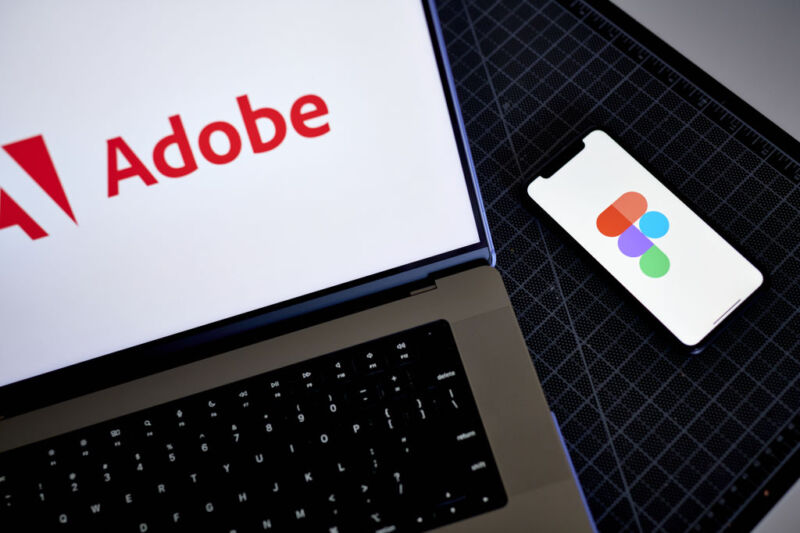
Adobe has abandoned its proposed $20 billion acquisition of product design software company Figma, as there was “no clear path to receive necessary regulatory approvals” from UK and EU watchdogs.
The deal had faced probes from both the UK and EU competition regulators for fears it would have an impact on the product design, image editing and illustration markets.
Adobe refused to offer remedies to satisfy the UK Competition and Markets Authority’s concerns last week, according to a document published by the regulator on Monday, arguing that a divestment would be “wholly disproportionate.”
A mystery involving missing tomatoes onboard the International Space Station (ISS) has been solved. The yearlong tomato conundrum began after NASA astronaut Frank Rubio lost track of two tomatoes grown in space while harvesting for the eXposed Root On-Orbit Test System (XROOTS).
According to NASA, the XROOTS investigation uses hydroponic
As a precocious teen looking to improve my college application, I sat in on a business studies class. I figured taking two extra A-Levels at night school alongside those I took during the day would make me irresistible to admissions tutors. The class I watched examined if it was worth a large factory keeping its own trucks and drivers in-house rather than outsourcing them. The data showed selling the trucks and firing the workers was more expensive in the long run, and yoked the company to the whims of any third-party logistics company in the local area. Not to mention, if you don’t own a mission-critical component of your business, you’re a lot less powerful when negotiating with your suppliers. But the teacher, and the class, all agreed it was smart to sell it all because it made a bigger profit in the quarter and was cheaper for the next two years. These people had never considered if something bad would happen, and how to prepare for it. It was at this point I realized my values were out of step with the commercial orthodoxy and opted not to take the course.
I mention this because I’ve always thought the people in the tech industry with all the money are probably halfway savvy about how All Of This Is Meant To Work. I’d told myself that what, to me, appeared illogical and self-defeating was because they were playing a game of six-dimensional chess on a board I was too dim to see. Unless, of course, the economics of our industry are so unmoored from reality that everyone’s just pretending, or deluding themselves. And more than a decade of cheap money and lax regulation means everyone’s behaved a little bit sillier than they should have. Now the lights are coming up and everyone’s looking to see what’s actually going on, there’s nowhere for these apparently smart people to hide.
It’s stopped making sense for investors
UCG via Getty Images
The Silicon Valley mindset is easy to grasp: If you’re lucky enough to have spare cash, put a small bit of it behind some kids with a big idea. All it takes is for one of those bets – emphasis on the word bet – to win and you’ll get a slice of some pretty big profits. In an era where zero interest-rate policies mean it’s almost free to rack up extraordinary debt, it’s a better route than heading to Las Vegas with your 401k. Not to mention the special cachet and attention you can garner by presenting yourself to the world as a “guru.” But you might have noticed that a lot of high-profile bets haven’t been coming off of late, wasting a lot of cash in the process.
Take WeWork, which this year filed for Chapter 11 after working its way through $16.9 billion since 2014. What logic can we apply to its main backer, Softbank CEO Masayoshi Son*, to justify him burning the GDP of Jamaica on such a venture? Especially when Regus, which performs the same decidedly un-techy role of renting temporary office space, owns its properties and makes a small but regular profit every non-COVID year, was available to buy outright for a fraction of the cost? How did this amount of money pass from one company to another without any sort of internal or external oversight? And why did he think that WeWork’s nicer interior design and a beer tap on every floor was such a big draw? The only theory that holds water is that Son was so blindsided by promises of vast future profits (from office rental) that he lost any sense of self-restraint.
That mix of cheap credit and the promise of unbelievable future returns can be applied across the tech industry, too. It might help explain why the cost of streaming has leapt so high while the catalogs available have shrunk. The studios weren’t hurting for profit in the days before Netflix, but the fact it was valued like a tech company enabled it to rack up huge debts. That led plenty of studios to leap onto the bandwagon in the hope of getting some of that mythical profit. In the early days, the hope was that the sheer number of people paying for content would balance out the low cost. But now growth has stalled and there’s still $14.30 billion of debt, plus an audience with an ever-increasing desire for new content.
It’s stopped making sense for consumers
Mario Tama via Getty Images
The debt swinging around Netflix’s neck, and the necks of those who followed it into the streaming world save for Amazon, Apple and Warner Bros***, is directly related to this gold rush. And it’ll need to be paid off to the investors and banks who handed over billions of dollars in expectation of vast rewards further down the line. Which is why the cost of a standard Netflix subscription has pretty much doubled since 2011 – with Premium plans now costing $23 a month. Given the scattershot nature of streaming libraries and the fact Netflix can’t be your sole source of entertainment, most consumers have more than one subscription going at the same time. That’s been fine, more or less, while times are good, so what happens when the world’s economies all start to slow down and you’re looking to make room in your monthly budget?
It’s worth remembering new technologies are expensive, both in cost and how much time and effort you spend to get to grips with them. But while technology has had some world-changing hits in the past – personal computing, the internet, smartphones and, uh, social media – it’s been a while since we’ve had anything that big. But the industry can’t help but keep hyping the next big thing even if it’s obvious to anyone with eyes that it’s not going to be a winner. We’re at the peak of the hype cycle for machine learning, which its boosters tell us will automate us all into obsolescence in a decade or so**. The problem is, whenever you actually sit and try to use a generative AI, the results are underwhelming, so great is the gap between the promise and the reality. Take Google’s new AI which managed to give fake answers to spreadsheet-level questions like who won an Academy Award last year. You can already see the itchy feet of those hoping the Humane Pin will be the Next Big Thing despite its risible introduction video.
Consumers lose out here not just because of these expensive boondoggles but because they suck up all the oxygen from everything else. Many of these technologies were designed not to solve real-world problems, of which we have plenty, but to dazzle investors, placate Wall Street and dupe credulous buyers. It doesn’t help that generative AI, like crypto before it, uses a significant amount more energy than it should, exacerbating climate change. Sadly, when all the attention and money shifts to the next thing, we’ll all be poorer for it, both for the folks who were duped into reading machine-written articles about the importance of volleyball, and the folks who got laid off because some genius thought GPT-3 would do a better job without oversight.
It’s stopped making sense for workers
Embracer Group is a Swedish game publisher that loaded up on debt to buy every small studio and IP it could get its hands on. In 2018, CEO Lars Wingefors told GamesIndustry his company would eschew a “fewer, bigger, better” strategy in favor of a “diversified” lineup. In 2021, it said it had access to more than $2 billion in cash and credit to continue its spending spree, bankrolling a slew of newer, smaller titles. That included reviving TimeSplitters developer Free Radical to start work on a new game in the long-dormant cult series.Two years after that, the company admitted that a deal worth $2 billion in revenue over six years had fallen apart and that it would have to cut costs. Free Radical has now been closed, putting the last two years’ worth of work on the shelf and close to 1,000 people across Embracer have lost their jobs.
Reality’s going to hit us in the face like a shovel
krisanapong detraphiphat via Getty Images
When I was a kid, a relative worked for a company that made and sold slot machines for adult gambling. I must have been 10 when he came over and set up a game where he gave me a pound in 2p pieces, which I could wager on the outcome of a deck of cards. He’d rigged the game so that, despite all of the pledges to double my cash as my funds shrunk, I’d wipe out. It was a valuable lesson in why it’s not a smart idea to gamble your money, given by someone who saw it up close and personal every day.
The other lesson he taught me was the vow of gratitude he would utter often, which was doubly amusing given his atheism. Whenever there was a bad story in the news, or a tale of corporate woe closer to home, he’d say “there but for the grace of God go I.” Because he knew that so much of what happens in our lives is governed by chance, so it’s pointless to claim it was wisdom. We should always remember that none of us are untouchable, and that the worst phrase in the English language is “what could possibly go wrong?” It’s just a shame that so many of the supposed great minds in the technology industry didn’t get the chance to learn this lesson when they were young enough to appreciate it.
* Wikipedia – hardly a symbol of partisanship – has gone studs-in on Son. At the time of writing, his biography says “his reputation as an investor rests almost solely on his $20 million initial investment in Alibaba Group in 2000.” Given the rest of his track record – and the fact he is presently in debt to his own company to the tune of several billion, ouch.
** I do wonder how many of its backers who spend their days worrying about Roko’s Basilisk have thought about how they’ll be treated by the 85 million or so people suddenly forced into serfdom.
*** Warner Bros. malaise is more directly related to the debt tied to the various buyouts and sales that has seen it shifted from one corporate parent to another. Not that the streaming wars has helped here, but it’s fair to say that its problems are a different realm to those of its peers.
This article originally appeared on Engadget at https://www.engadget.com/2023-was-the-year-the-economics-of-tech-caught-up-with-reality-153052312.html?src=rss
When it comes to VR devices like the Meta Quest headsets, the biggest draw by far is gaming. But did you know you can also use your headset to get some work done? Thanks to the recent launch of certain Microsoft Office apps for Meta Quest headsets, you can now work on a Word doc, crunch some numbers in an Excel spreadsheet, or put together a presentation in PowerPoint, all in VR. These Office VR apps are just the beginning for Microsoft: The company recently released an Xbox Game Pass app, and is working on other VR apps, like Teams.
Products to consider:
Looking to pick up a new Meta Quest headset? You can buy the Meta Quest 2, 3, or Pro on Amazon:
Before you start diving into Microsoft Office, there are a couple of requirements to consider. First, you’ll need a Microsoft account if you don’t have one already. Next, you’ll need a Quest headset; the apps are available on the original Oculus Quest, Meta Quest 2, Meta Quest Pro, and the newly released Meta Quest 3. Lastly, you need to make sure you have an internet connection since these versions of Word, Excel, and PowerPoint run via the cloud.
Getting started with the Microsoft Office apps
Once you’ve sorted all that out, you’ll need to download the Word, Excel, and PowerPoint apps from the Meta store. The apps are fairly small in size (under 2 MB each) so storage shouldn’t be much of a concern. After you’ve gotten the apps downloaded, each app will take you through the setup process of signing into your Microsoft account. It’s worth noting that you don’t need a Microsoft 365 subscription to use the new apps in VR, but Microsoft will still try to push you to subscribe via ads in the app.
Using the Microsoft Office apps in VR
Using each of the Word, Excel, and PowerPoint apps was fairly straightforward for me. Signing into the apps was easy, and if you sign into your Microsoft account in one app, you’ll be automatically signed into the other Office apps. Upon opening one of the apps, a window running the web version of that Office app will appear. You can resize the windows by dragging on the sides with your controllers, or you can change your distance using the shortcut on the Quest universal bar. (Look for the icon near the bell/notification icon on the left.) The biggest hitch I encountered was long loading times when I opened a new, blank document. Some speed bumps are expected with any new app release, so this wasn’t too shocking.
To actually start working on documents, you can use your Quest headset’s controllers and the virtual on-screen keyboard. If that’s a little too wonky for you, you can pair a physical Bluetooth keyboard and mouse to do your work. To pair a keyboard and mouse to your headset, go to Settings, then Devices, then choose Pair, then put your mouse and keyboard into pairing mode. Once they’re paired, you’re good to go.
NVIDIA’s GeForce RTX 4090 is currently the most powerful consumer GPU on the market. Class-leading power, however, often comes with some drawbacks. First, the GeForce RTX 4090’s $1,599 MSRP is steep by any measure. Secondly, the GeForce RTX has a hefty 450W TDP, which has resulted in issues with its 12VHPWR connector.
Apple’s recent move to block Beeper Mini, the app that lets Android users chat with iPhone through the iMessage protocol, has caught the eye and a fair bit of ire of several U.S. congresspeople. Now lawmakers are calling for an investigation into the tech giant over “potential anticompetitive treatment” of the smaller…
An anonymous reader shares a report: As Russian troops poured into Ukraine at the start of Vladimir Putin’s invasion in February last year, alarm was rising at a flagship Kremlin nuclear project in neighboring Belarus, just a short distance from the European Union’s border. Engineers at Rosatom preparing a new 1,200-megawatt reactor, which was not yet connected to the power grid, to generate electricity at the Astravets Nuclear Power Plant detected a mysterious and exceedingly rare problem. Resin was seeping into the primary circuit, threatening to seize up critical components, according to internal documents of the Russian state nuclear corporation seen by Bloomberg.
Control rods and fuel assemblies risked being damaged or broken if the problem persisted when uranium atoms began fissioning. In the worst case, according to people familiar with the problem, accumulation of so-called ion-exchange resin, which regulates the purity of water flowing through plant channels and pipes, could impede reactor control, elevating the risk of a meltdown if something went wrong once it was online. So on February 25, 2022, Rosatom pulled the plug temporarily on its freshly fueled unit in northwest Belarus, delaying its launch.
Nuclear engineers said Rosatom followed safety procedures by interrupting physical startup of the reactor in order to investigate. Still, the problem compounded delays that pushed back commercial operations more than a year. When the reactor was turned on for the first time in March, Belarusian President Alexander Lukashenko confirmed there were problems to state media. “There were certain shortcomings in the construction,” he said. “The delay is due to our determination to stick to very high safety standards.” The water contamination incident, which was previously flagged by Lithuanian intelligence, is among a series of problems, including shortages of skilled labor, delayed shipments, and defective supplies, that Rosatom faced in recent years and which have continued in the wake of Putin’s war against Ukraine, according to the documents and interviews with European officials familiar with the assessments.
Twisters screenwriter Mark L. Smith discusses the sequel. A new Percy Jackson clip introduces Grover. Hiding In Time is coming to Amazon. Plus, what’s coming on For All Mankind. Spoilers, away!
A Scottish couple has completed a 10-month long journey from the magnetic North Pole to the South Pole in an EV (electric vehicle). The husband and wife veteran adventurers wanted to prove that a mostly-stock EV—in this case, a Nissan Ariya e-4Force—was more than up to the arduous 18,000-plus mile task.
While buzzing coming from a light bulb isn’t usually dangerous, it certainly is annoying. There are a few reasons a light can make that irritating buzzing sound—and there are a few things you can try to fix it.
Tighten the bulb
The most common reason for a light to make a buzzing sound is if the bulb is loose. This can happen with any type of light bulb, but is most commonly associated with fluorescents. With fluorescent lights, the ballast that controls the flow of electricity to the bulb can also become loose and cause buzzing. The easiest way to address this is to just turn the light off, tighten the bulb, and then turn the light back on. Take care, especially with incandescent bulbs, to let it cool down before touching the surface of the bulb to avoid burning yourself.
Replace the ballast
If adjusting the bulb in your fluorescent light doesn’t work, it might be that the ballast has gone bad. This can cause a vibration in the fixture that will make a buzzing sound. The ballast is an electromagnetic resistor that regulates the flow of electricity to the fluorescent tubes. To fix this, you’ll need to turn off the breaker that goes to the fixture and remove the cover over the ballast. Then, you will need to undo the wires and remove the affected ballast. Make sure to leave enough wire—at least three inches—to wire in the new ballast. Then, replace the ballast and reconnect the wires, following the color coding on the fixture. You can reassemble your light and turn the breaker back on to test your repair.
Update the dimmer
For LED bulbs, a common cause of buzzing is a dimmer switch that’s meant for an incandescent bulb being used with an LED bulb. This incompatibility can cause the electronic components in an LED to vibrate, making a buzzing sound. To address this, you will need to replace your dimmer switch with one that’s compatible with LED lights. You should consult the packaging of your particular LED bulb, but CL, ELV, and LED+ dimmers are compatible with most LED bulbs.
Other common problems with LEDs
If your LED light is buzzing and there’s not a dimmer in sight, chances are that it’s caused by loose wiring. If that’s the case, you can swap out the bulb, or you might need to flip the breaker off to investigate the light fixture itself. If all the wiring looks to be snug, it could be that the type of LED bulb you’re using isn’t compatible with the fixture it’s in. Check the package to see if you’re within the recommended wattage for the bulb. It’s also possible the bulb is defective, so try swapping it for a different one to see if the buzzing stops.
When to contact an electrician
In rare circumstances, a buzzing sound can come from the wiring in a switch or connection in your home’s wiring. If you hear buzzing coming from the wiring or the switch as opposed to the light itself, you should turn the breaker off that powers that wiring and call an electrician. Such buzzing can indicate a dangerous short that could pose a fire risk.
With the new Intel 5th Gen Xeon “Emerald Rapids” processors there is a new feature called the Optimized Power Mode (OPM). This Optimized Power Mode can be enabled via the system BIOS for Emerald Rapids for helping to reduce the CPU power consumption when not running at full utilization. With Intel claiming that up to 110 Watts of server power savings can be conserved when running at 30~40% utilization, I was curious and set out to run my own Optimized Power Mode benchmarks with the Xeon Platinum 8592+ processors. Here is a deep dive on Intel Optimized Power Mode benchmarks.