Activision To Settle Discrimination Suit For $54 Million [Update]

Activision Blizzard has been the subject of scrutiny for several years now, due to its alleged “Boys’ Club” corporate culture. And now, The Wall Street Journal reports the embattled gaming company will pay roughly $54 million to settle a 2021 gender discrimination and harassment lawsuit—the same lawsuit that seemingly…

Read more…


Source: Kotaku – Activision To Settle Discrimination Suit For Million [Update]

Nikola founder Trevor Milton sentenced to four years in prison

Trevor Milton, the disgraced founder of Nikola, was just sentenced to four years in prison on three counts of fraud. 

In October 2022, a jury found Milton guilty of one count of securities fraud and two counts of wire fraud. Milton faced up to 60 years in prison. Prosecutors asked the judge for an 11-year prison sentence and a $5 million fine, according to The New York Times, while the defense argued for probation. 

After announcing the sentence at a federal court hearing in New York City, U.S. District Judge Edgar Ramos spoke directly to Milton. “As difficult as it may be for you or your family to hear, I believe the jury got it right,” Ramos said, as transcribed Reuters.

Milton addressed the court before sentencing was handed down, saying “I did not intend to harm anyone and I did not commit those crimes levied against me.” He also spoke at length about his rural upbringing and recited biblical verse. 

Prosecutors claimed that Milton pumped up the value of the company’s stock by lying to investors about “nearly all aspects” of Nikola’s business. Among other things, Milton claimed his company had a fully functional electric truck. The company released a video that made it appear as though a Nikola One prototype was able to move by itself. However, an indictment alleged that the truck was actually rolling down a hill and that Milton was involved in the video’s creation.

In addition, Milton was accused of lying about Nikola having billions of dollars worth of pre-order reservations and that it was producing hydrogen fuel at four times less than market rates. Prosecutors also said Milton falsely claimed Nikola had developed “game-changing” battery tech.

Nikola is still in business and it plans to resume deliveries of its battery electric truck in early 2024 following a recall over battery issues that cost around $61.8 million to resolve. In the nine months to September 30, Nikola produced 96 trucks and shipped 79.

The company’s stock price has dropped by 99 percent since 2020 and investors are said to have lost more than $660 million. Milton sold around $100 million of his Nikola stock in 2020 and spent most of that on luxury goods such as a plane and real estate, according to the Times. It’s likely that Milton will appeal this conviction, as he’s already asked Ramos for a new trial following the jury’s guilty verdict.

This article originally appeared on Engadget at https://www.engadget.com/nikola-founder-trevor-milton-sentenced-to-four-years-in-prison-192432136.html?src=rss

Source: Engadget – Nikola founder Trevor Milton sentenced to four years in prison

Mr. Cooper Hackers Stole Personal Data on 14 Million Customers

Hackers stole the sensitive personal information of more than 14.6 million Mr. Cooper customers, the mortgage and loan giant has confirmed. From a report: In a filing with Maine’s attorney general’s office, Mr. Cooper said the hackers stole customer names, addresses, dates of birth and phone numbers, as well as customer Social Security numbers and bank account numbers. Mr. Cooper previously said that customer banking information was stored by a third-party company and believed to be unaffected. Mr. Cooper said in a separate filing with federal regulators on Friday that hackers obtained personal data on “substantially all of our current and former customers.”

The number of affected victims is significantly higher than the four million existing customers that Mr. Cooper claims on its website, likely because of the historical data that the company stores on mortgage holders. Mr. Cooper said in its data breach notification letter to affected victims that the stolen data includes personal information on those whose mortgage was previously acquired or serviced by the company when it was known as Nationstar Mortgage, prior to its rebranding as Mr. Cooper. The company said affected customers may include those whose mortgages were serviced by a sister brand.

Read more of this story at Slashdot.


Source: Slashdot – Mr. Cooper Hackers Stole Personal Data on 14 Million Customers

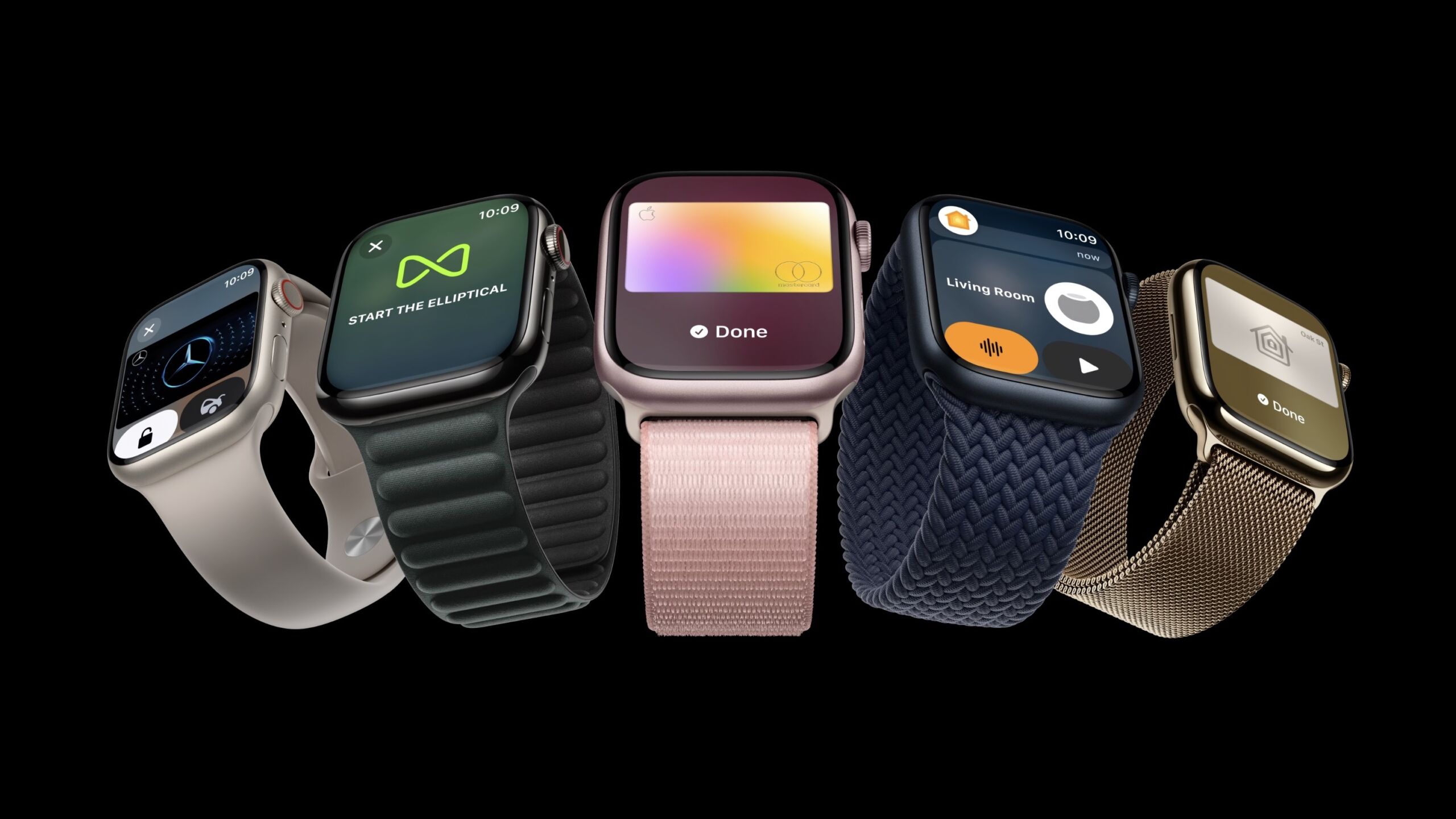
Apple Watches being pulled from stores this week due to potential import ban

Apple Watch Series 9

Enlarge / The Apple Watches Series 9 released in September 2023. (credit: Apple)

Apple will pause sales of the Apple Watch Series 9 and Apple Watch Ultra 2 starting December 21, it revealed today in a statement to 9to5Mac. The move comes as the products are facing a potential import ban until August 2028, due to rulings that the watches infringe on patents from Masimo.

In October, the US International Trade Commission (ITC) upheld a January ruling that Apple Watches with pulse oximeter features infringe on two Masimo patents. Since then, the case has been under a 60-day Presidential Review Period, which ends December 25. After that date, the watches are subject to an import ban until the patents’ expiration in 2028.

Apple told 9to5Mac:

Read 10 remaining paragraphs | Comments


Source: Ars Technica – Apple Watches being pulled from stores this week due to potential import ban

The Fictional Characters We Lost in 2023

Light a candle for those fictional characters we lost in 2023. Characters we’ve come to know either over the years, or maybe even over just a few short hours of a movie or TV show. But these characters left an impression on us meaning, as 2023 comes to an end, it was time to give them their final moment in the sun.

Read more…


Source: Gizmodo – The Fictional Characters We Lost in 2023

Disgraced Nikola founder Trevor Milton gets 4-year sentence for lying about EVs

Trevor Milton, founder of Nikola Corp., arrives at court in New York on Monday, Dec. 18, 2023. Milton is set to be sentenced on Monday after being found guilty of securities fraud and wire fraud in October 2022.

Enlarge / Trevor Milton, founder of Nikola Corp., arrives at court in New York on Monday, Dec. 18, 2023. Milton is set to be sentenced on Monday after being found guilty of securities fraud and wire fraud in October 2022. (credit: Bloomberg / Contributor | Bloomberg)

The disgraced founder and former CEO of the “zero emissions” truck company Nikola, Trevor Milton, was sentenced to four years in prison on Monday, Bloomberg reported.

That’s a lighter sentence than prosecutors had requested after a jury found Milton guilty of one count of securities fraud and two counts of wire fraud in 2022. During the trial, Milton was accused of lying about “nearly all aspects of the business,” CNBC reported.

From 2016 to 2020, Milton’s “extravagant claims” were fueled by a desire to pump up the value of Nikola stock, The New York Times reported. He was accused of misleading investors about everything from fake prototypes of emission-free long-haul trucks to billions worth of supposedly binding orders for hydrogen fuel cells and batteries that were never shipped. In a sentencing memo, prosecutors said that Milton targeted “less sophisticated investors,” the Times reported, engaging “in a sustained scheme to take advantage of” their inexperience.

Read 17 remaining paragraphs | Comments


Source: Ars Technica – Disgraced Nikola founder Trevor Milton gets 4-year sentence for lying about EVs

OpenAI Lays Out Plan For Dealing With Dangers of AI

OpenAI, the AI company behind ChatGPT, laid out its plans for staying ahead of what it thinks could be serious dangers of the tech it develops, such as allowing bad actors to learn how to build chemical and biological weapons. From a report: OpenAI’s “Preparedness” team, led by MIT AI professor Aleksander Madry, will hire AI researchers, computer scientists, national security experts and policy professionals to monitor its tech, continually test it and warn the company if it believes any of its AI capabilities are becoming dangerous. The team sits between OpenAI’s “Safety Systems” team, which works on existing problems like infusing racist biases into AI, and the company’s “Superalignment” team, which researches how to make sure AI doesn’t harm humans in an imagined future where the tech has outstripped human intelligence completely.

[…] Madry, a veteran AI researcher who directs MIT’s Center for Deployable Machine Learning and co-leads the MIT AI Policy Forum, joined OpenAI earlier this year. He was one of a small group of OpenAI leaders who quit when Altman was fired by the company’s board in November. Madry returned to the company when Altman was reinstated five days later. OpenAI, which is governed by a nonprofit board whose mission is to advance AI and make it helpful for all humans, is in the midst of selecting new board members after three of the four board members who fired Altman stepped down as part of his return. Despite the leadership “turbulence,” Madry said he believes OpenAI’s board takes seriously the risks of AI that he is researching. “I realized if I really want to shape how AI is impacting society, why not go to a company that is actually doing it?”

Read more of this story at Slashdot.


Source: Slashdot – OpenAI Lays Out Plan For Dealing With Dangers of AI

Google’s Stadia Controller salvage operation will run for another year

Man removing Stadia logo from a wall with high pressure water spray

Enlarge / Like it never even happened. (credit: Aurich Lawson / Getty Images)

Stadia might be dead, but the controllers for Google’s cloud-based gaming platform are still out there. With the service permanently offline, the proprietary Stadia Controller threatened to fill up landfills until Google devised a plan to convert them to generic Bluetooth devices that can work on almost anything. The app to open up the controller to other devices is a web service, which previously had a shutdown date of December 2023. That apparently isn’t enough time to convert all these controllers, so the Stadia Controller Salvage operation will run for a whole additional year. X (formerly Twitter) user Wario64 was the first to spot the announcement, which says the online tool will continue running until December 31, 2024.

As a cloud-based gaming service, Stadia had all the game code run on remote servers, with individual video frames streaming live to the user and showing the gameplay. The user would press buttons on their local controller, and every single individual button press had to travel across the Internet to the remote game server to be processed. These services live and die by their latency; in an attempt to reduce latency, the Stadia Controller connected to the Internet directly over Wi-Fi instead of connecting via Bluetooth to your computer and then to the Internet. Google claimed that one less hop on the local network led to shorter latency, especially since  the service was originally built around the power-limited Chromecast dongle.

With the service dead, the Wi-Fi-only controller wouldn’t work wirelessly, leaving old-school USB as the only way to use the controller. However, Stadia Controllers already came with a dormant Bluetooth chip, so Google cooked up a way to convert the orphaned controllers from Wi-Fi communication to Bluetooth, allowing them to wirelessly connect to computers and phones as a generic HID (Human Interface Device). Normally you’d expect a download for some kind of firmware update program, but Google being Google, the Stadia Controller update process happens entirely on a webpage. Google’s controller update page has a very fancy “WebUSB” API setup—you fire up a Chromium browser, plug in your controller, grant the browser access to the device, and the webpage can access the controller directly and update the firmware, without any program to install.

Read 3 remaining paragraphs | Comments


Source: Ars Technica – Google’s Stadia Controller salvage operation will run for another year

Four Ways an ATM Can Ruin Your Day (and How to Protect Yourself)

Cash may increasingly seem like a relic of a bygone age (less than 10% of Americans use cash as their primary way of paying for stuff these days), but paper money is still useful. Sure, it’s almost impossible to live a cash-only life these days, but when emergencies hit and the power and data connections shut down, cash is still king. Even if you rarely use cash, chances are you have a debit card linked to your bank accounts and use it at an ATM from time to time.

ATMs are pretty reliable and secure as long you take some basic precautions and stay abreast of the clever scams people employ to rob you. But like any machine or computer, ATMs can malfunction—and when they do it’s often much more than a simple inconvenience, because it involves your money. Bounced checks, late fees—the consequences of getting screwed over by your ATM can be disastrous. You can’t necessarily predict when an ATM is going to ruin your day, but you can be aware of what can go wrong and how to deal with each scenario. Here are all the ways an ATM can screw you over—and what to do about it.

When an ATM give you the wrong amount of cash

The primary way people use ATMs is to withdraw cash from their accounts. Usually, this is a pretty straightforward process: You insert or tap your card, punch in your personal identification number (PIN), and follow on-screen instructions to choose the account you’re accessing and the amount of money you want.

If that particular ATM is in the mood to screw you, one of two things happens next: You don’t get any cash, or you get too much cash. While the latter situation might seem like cause for celebration, chances are your bank will figure out what happened eventually and you may be hit with penalties for keeping the cash—or have your account closed entirely. So whether it’s zero cash or just an incorrect amount of it, you need to take a few steps:

  • Document the incident. Note the time, take photos of any messages on the screen and your receipt, assuming you got one. If there are several ATMs in the location, note which one it is. Gather all the information you can.

  • Report the incorrect amount. If you’re at your bank, go inside and inform the staff immediately. If not, call your banking institution right then and there and report the problem. Your bank is required by law to investigate your claim, though you may need to fill out a form and submit any documentation you have. Try to stay by the ATM until you’ve completed reporting the incident, in case it’s caused by a scam (see below).

It can take several weeks to resolve these kinds of errors, unfortunately. Your bank may credit your account, but they’re not required to do so until the end of the investigation, so you might need to make some short-term plans.

When an ATM messes up your deposit

Another way an ATM can mess up your life is when you use one to make a deposit—either by eating your cash or checks and not crediting your account, or by miscounting the deposit amount. This isn’t just infuriating—it can lead to a long list of problems, from unpaid bills to missing payroll for a small business. Here’s what to do if it happens:

  • Count everything. This might seem crazy, but a surprising number of people don’t count cash before depositing it into the machine, assuming it will count the bills for them. Some folks also don’t make a note of check amounts, again relying on the ATM’s optical scanner to accurately count everything for them. Don’t be lazy: Know precisely how much money you’re depositing.

  • Document & report. Again, your best first action is to take photos and record all the details—time, place, specific machine, and amount of your deposit. Then contact the bank by going in to find an employee or calling immediately.

The bank will investigate the incident, but make sure they review the security camera footage, which can confirm your presence and the fact that you made a deposit. Banks aren’t always willing to go through this trouble for smaller amounts of money, so be ready to push a bit.

When an ATM eats your card

Many ATMs have gone contactless, with the ability to tap a chipped debit card or your phone to access your accounts; others have chip readers that you insert your card into and immediately retract. But plenty of them still have the old-fashioned mechanism that sucks your card in, reads the magnetic strip, and then spits it back out. Which gives that ATM the opportunity to ruin your day by eating your card.

On a scale of getting screwed by an ATM, this is pretty low, of course, but it’s still a pain to deal with. Your obvious first step is to contact the bank to report the problem. At that stage you’ll have two choices on how to proceed:

  • Request a new card. You can have the bank cancel the eaten card and send out a replacement. This is the safest choice, as it prevents anyone from using your card if they happen to get access to it before the bank can retrieve it (say, if the ATM decides an hour later to spit it back out). If you go into the bank in person you can probably get a new card immediately, but if you have to call it can take seven to 10 days to get that card, and you won’t have a debit card during that time.

  • Retrieve the card. You can also ask your bank to simply retrieve the card when they next service the ATM, and send it to you or hold it for you to pick up. This can be a much faster and more convenient choice, but you do run some (small) risk of the card being intercepted before the ATM is serviced next.

When an ATM is an unwitting party to fraud

Finally, ATMs are pretty secure, but they’re still prime targets for fraud. A lot of that fraud relies on age-old scam techniques that have nothing to do with your ATM, but there are a few ways a compromised ATM can be forced to screw you over:

  • Skimmers and shimmers. Thieves can place fake card readers on ATMs that read the magnetic strip or chip information, then pass it through to the ATM. As a result, you still complete your transaction but the thieves have all they need to duplicate your card. Before you insert or tap your debit card, physically examine the reader—try to pull it off the machine, and look for any physical inconsistencies in color or texture.

  • Traps. A “trap” is when a thief sabotages the ATM so that cash being dispensed gets stuck in the machine, or your card gets stuck in the machine. When you leave the area, the thief disables the trap and retrieves either your cash or your card (or both). This is why it’s a good idea to remain by the ATM until you’ve reported an eaten card or lack of cash from a withdrawal, so at least you have a record of the problem.

  • Cameras. Always cover the keypad when entering a PIN. Scammers often set up tiny cameras in ATM kiosks to film keypads. If they use a fake reader to duplicate the card and get your PIN from a camera, your account is officially compromised.

  • Tapping. One way thieves access ATMs that allow you to just tap your card is to simply wait until you leave. Many ATMs that allow tapping leave the transaction open until you manually end it—if you just walk away after getting your cash, the thief simply walks to the machine and makes as many withdrawals as possible. Adding salt to the wound: Because you left the screen active, some banks may balk at reimbursing you, claiming you authorized the transactions. Always make sure you terminate your session at an ATM before walking away.


Source: LifeHacker – Four Ways an ATM Can Ruin Your Day (and How to Protect Yourself)

The 10 Biggest Kotaku Stories Of 2023

What were you loyal Kotaku readers most interested in this year? Despite 2023 offering us scammers in Congress, a megolomaniac destroying one of the most popular social media websites of all time, and a pop star dating an NFL football hero, gamers remained laser-focused on the things that matter most to them as a…

Read more…


Source: Kotaku – The 10 Biggest Kotaku Stories Of 2023

What turns a fungal scavenger into a killer?

greyscale microscope image of a long, thin, unsegmented worm.

Enlarge / The fungus’ favorite food. (credit: Bishwo Adhikari, Brigham Young University)

Some of the scariest monsters are microscopic. The carnivorous fungus Arthrobotrys oligospora doesn’t seem like much while it’s eating away at rotting wood. But when it senses a live worm, it will trap its victim and consume it alive—pure nightmare fuel.

Until now, not much was known about how the attack of the killer fungus happens on a molecular level. Researchers from Academia Sinica in Taiwan have finally found out how the gene activity of the fungus changes when a nematode creeps too close to A. oligospora. Led by molecular biologist Hung-Che Lin, the research team discovered that the fungus synthesizes a sort of worm adhesive and additional trapping proteins to get ahold of its meal. It then produces enzymes that break down the worm so it can start feasting.

Caught in a trap

A. oligospora lives in the soil and is mostly saprotrophic, meaning it feeds on decaying organic matter. But that can quickly change if it finds itself deprived of nutrients or senses a tempting nematode nearby. This is when it goes into carnivore mode.

Read 10 remaining paragraphs | Comments


Source: Ars Technica – What turns a fungal scavenger into a killer?

Hasbro Unvaulted Some of Its Rarest Toy Projects, and Sold Them Out Immediately

Hasbro’s Haslab series—a crowdfunding drop line that lets the toymaker make some truly wild toys it could never feasibly release to the mass market, should enough collectors actually want them—is meant to be a one and done thing. The campaign starts, and if it hits its goals, when it ends pretty much all that’s ever…

Read more…


Source: Gizmodo – Hasbro Unvaulted Some of Its Rarest Toy Projects, and Sold Them Out Immediately

Webb telescope’s new Uranus image looks like a portal to another dimension

The James Webb Space Telescope (JWST) has a treat to celebrate the upcoming second anniversary of its launch. NASA and the European Space Agency (ESA), which operate the craft alongside the Canadian Space Agency (CSA), shared a recent image of the icy planet Uranus. The picture, resembling a glowing blue marble rippling into a black ocean, was funneled through the telescope’s infrared filters to capture wavelengths future space travelers wouldn’t see with the naked eye.

Compared with the generic-looking images of Uranus taken by Voyager 2 in the 1980s, the Webb telescope paints a more vivid picture. Capturing light in the infrared spectrum, the craft’s sensors reveal a “strange and dynamic ice world filled with exciting, atmospheric features,” as the team operating the telescope described it.

The JWST’s image showcases the planet’s rings surrounding the planet, including “the elusive Zeta ring,” Uranus’ faint and scattered innermost one. You can also catch its north polar cloud cap, the white blob near the center.

An image of Uranus taken with the James Webb Space Telescope. It appears as a glowing blue ball with rings surrounding it. Its scattered moons are labeled amid the black space behind it.
NASA / ESA / CSA

The image also captures 14 of Uranus’ 27 moons, labeled in the photo above. Among the (mostly Shakespearean-named) orbiting bodies pictured are Oberon, Titania, Umbriel, Juliet, Perdita, Rosalind, Puck, Belinda, Desdemona, Cressida, Ariel, Miranda, Bianca and Portia.

The JWST’s photo uses four NIRCam filters, revealing detail in the near-infrared spectrum. These include F140M (blue), F210M (cyan), F300M (yellow) and F460M (orange). An image NASA shared earlier this year showed Uranus in only two filters (blue and orange), resulting in a more primitive-looking view of the icy giant.

Speaking of ice, Uranus has loads of it. The planet rotates on its side at about 98 degrees, plunging the opposite side of the planet into extreme cold and darkness for a quarter of a Uranian year. Oh, and since Uranian years last around 84 Earth years, that means, by our calendar, the planet’s dark side enjoys a blustery 21-year winter.

Image of Uranus taken with the James Webb Space Telescope. The planet appears as a blue marble-like ball surrounded by light-colored rings of varying clarity and intensity. Moons and distant stars and galaxies appear in the black space surrounding the planet.
NASA / ESA / CSA

Astronomers believe the Webb telescope’s images will help them better understand Uranus, especially its Zeta ring, for future missions. They also view the pictures as a proxy for learning about the nearly 2,000 documented exoplanets in other solar systems that share traits with our ringed and icy neighbor.

This article originally appeared on Engadget at https://www.engadget.com/webb-telescopes-new-uranus-image-looks-like-a-portal-to-another-dimension-181035887.html?src=rss

Source: Engadget – Webb telescope’s new Uranus image looks like a portal to another dimension

You can reserve Acura’s ZDX EV starting today

Acura has opened reservations for its first fully electric vehicle (EV). Starting today, you can order the Acura ZDX at around $60,000 for a baseline model with a single-motor (rear-wheel-drive) powertrain. The first deliveries of the “performance SUV” are expected in early 2024.

The automaker said earlier this year it would shift to online-only sales of Acura EVs starting in 2024, and ZDX preorders appear to reflect that. The company said the EV is available through “a new, omni-channel digital sales process,” which buyers can use themselves at home, or receive assistance in using at Acura dealers (although the EVs won’t be available at the dealership itself.)

The ZDX comes in two models. The standard ($60,000 and up) A-Spec variant ships with a 325-mile range, 340 horsepower, a rear-wheel-drive single motor and 20-inch wheels. Meanwhile, the all-wheel-drive ZDX Type S has a shorter 288-mile range but a more potent 500 horsepower, 22-inch wheels and a starting price of around $70,000. Parent company Honda describes the pricier Type S as “the most powerful and best performing Acura SUV ever.”

Marketing photo of the Acura ZDX electric SUV. The vehicle, in hold trim, cruises down a highway at night.
Acura

The EV has Android Auto, built-in Google apps and Apple CarPlay integration. It includes an 11-inch driver-side touchscreen, an 11.3-inch center display and a Bang & Olufsen audio system, which is standard. Its safety features include a rear pedestrian alert and blind zone steering assist. It even has hands-free cruise driver assistance.

The ZDX supports DC Fast Charging (and can add 81 miles through a 10-minute top-off). In addition, Honda has teamed with six other automakers on a project to build a network of 30,000 stations across North America. That initiative is expected to begin in the US by the summer of 2024.

Internal marketing photo of the Acura ZDX SUV. The EV’s interior shows the center display, steering wheel and other dash features.
Acura

You can order your ZDX in either model in Acura’s online reservations portal. Honda notes pre-orders will include a bonus Acura Energy Key Card, which can unlock “exclusive benefits,” including “discounts to Acura entertainment partners and special events.”

This article originally appeared on Engadget at https://www.engadget.com/you-can-reserve-acuras-zdx-ev-starting-today-180050726.html?src=rss

Source: Engadget – You can reserve Acura’s ZDX EV starting today

Eggs, Gas, and Other Prices That Are Actually Deflating

As inflation drove consumer prices up to dizzying heights in 2022, many households cut back on discretionary spending in order to afford essentials like fuel, food, and rent. Even more so than other grocery items, egg prices skyrocketed last year, and continued to soar in early 2023. (The only silver lining from that inflation-ridden hellscape was the advent of the word “eggflation.”)

While inflation has remained sticky across the economy, the most recent consumer price index (CPI) report shows promising year-over-year price index drops in some goods and services categories. Let’s take a look at where you may be feeling some welcome relief—in the grocery store aisles, at the gas pump, and more.

What prices have deflated since last year?

Deflation is the opposite of inflation: it’s when prices fall instead of rise. Here are some of the biggest drops among foods, other goods and services.

Foods:

  • Eggs: -22.3%

  • Lettuce: -10.2%

  • Apples: -5.8%

  • Tomatoes: -4.4%

  • Fresh vegetables: -3.1%

Other goods:

  • Fuel oil and other fuels: -19.3%

  • Smartphones: -14%

  • Laundry equipment: -12%

  • Telephone hardware, calculators and other consumer information items: -11.2%

  • Major appliances: 10.6%

Services:

  • Airline fares: -12.1%

  • Car and truck rentals: -10.7%

  • Public transportation: -8.1%

  • Wireless telephone services: -2.8%

Bottom line

Even with the prices of the goods and services above dropping, others are still going up. The most recent CPI report showed that overall, prices were up 3.1% in November, down from a 3.2% year-over-year rise in October. As inflation slow down, it doesn’t hurt to remind yourself how to see through inflation prices to figure out what actually constitutes a good value.

And while national averages provide helpful guidance, prices can vary locally. Download apps like GasBuddy to pinpoint cheap gas close by, and pay attention to regular grocery store specials. Whenever possible, the easiest way to save on groceries is by buying in bulk. Consumer spending is only one factor driving inflation and deflation. For many household expenses, inflation remains unrelenting—but selective price drops can provide some limited relief.


Source: LifeHacker – Eggs, Gas, and Other Prices That Are Actually Deflating

Imran Khan Deploys AI Clone To Campaign From Behind Bars in Pakistan

AI allowed Pakistan’s former prime minister Imran Khan to campaign from behind bars on Monday, with a voice clone of the opposition leader giving an impassioned speech on his behalf. From a report: Khan has been locked up since August and is being tried for leaking classified documents, allegations he says have been trumped up to stop him contesting general elections due in February. His Pakistan Tehreek-e-Insaf (PTI) party used artificial intelligence to make a four-minute message from the 71-year-old, headlining a “virtual rally” hosted on social media overnight on Sunday into Monday despite internet disruptions that monitor NetBlocks said were consistent with previous attempts to censor Khan.

PTI said Khan sent a shorthand script through lawyers that was fleshed out into his rhetorical style. The text was then dubbed into audio using a tool from the AI firm ElevenLabs, which boasts the ability to create a “voice clone” from existing speech samples. “My fellow Pakistanis, I would first like to praise the social media team for this historic attempt,” the voice mimicking Khan said. “Maybe you all are wondering how I am doing in jail,” the stilted voice adds. “Today, my determination for real freedom is very strong.” The audio was broadcast at the end of a five-hour live-stream of speeches by PTI supporters on Facebook, X and YouTube, and was overlaid with historic footage of Khan and still images.

Read more of this story at Slashdot.


Source: Slashdot – Imran Khan Deploys AI Clone To Campaign From Behind Bars in Pakistan