
The policy about-face seems to have left lawmakers confused and outraged.

The policy about-face seems to have left lawmakers confused and outraged.
The Brookings analysis is of the US, but the same logic would apply anywhere: The more a city’s economy is oriented around white-collar knowledge work, the more exposed it is to AI. “Exposure” doesn’t necessarily mean automation, stressed Mark Muro, a senior fellow at Brookings and one of the study’s authors. It could also mean productivity gains. From the Brookings report: Now, the higher-end workers and regions only mildly exposed to earlier forms of automation look to be most involved (for better or worse) with generative AI and its facility for cognitive, office-type tasks. In that vein, workers in high-skill metro areas such as San Jose, Calif.; San Francisco; Durham, N.C.; New York; and Washington D.C. appear likely to experience heavy involvement with generative AI, while those in less office-oriented metro areas such as Las Vegas; Toledo, Ohio; and Fort Wayne, Ind. appear far less susceptible. For instance, while 43% of workers in San Jose could see generative AI shift half or more of their work tasks, that share is only 31% of workers in Las Vegas.


Read more of this story at Slashdot.
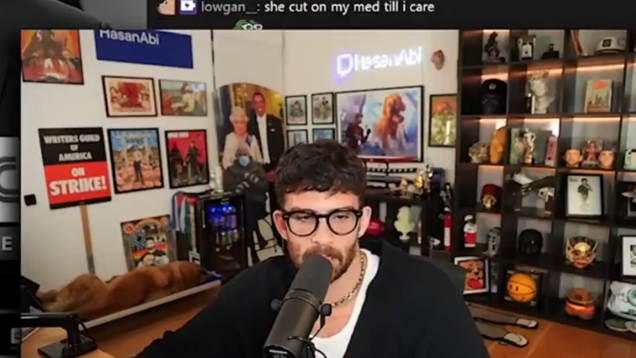
Twitch has temporarily banned Hasan Piker for a fifth time on Monday shortly after the leftist streamer talked about how if Republicans really cared about Medicaid they would kill Florida Senator Rick Scott. “Big shout out to the right wing free speech lovers who took time out of their day screaming about dei &…
We may earn a commission from links on this page.
I’ve looked into everything coming to Max this month, and the below TV shows and movies are the best of the bunch, or at least the most interesting. My top pick: HBO’s fearless, acerbic comedy The Righteous Gemstones is coming back for its fourth and final season. There’s also The Parenting, an HBO original horror movie with an intriguing premise and an all-star cast, and a trio of movies produced by A24: Queer, Heretic, and Sing Sing.
The fourth and final season of HBO original comedy The Righteous Gemstones features the titular family of scummy televangelists fighting America’s “war on Christianity” while continuing to grift suckers hilariously. The show’s talented cast—including Danny McBride, Adam DeVine, Edi Patterson, and John Goodman—will be returning, and a couple of new faces will be onhand to keep things fresh. Will & Grace star Megan Mullally plays Lori, an old family friend of the Gemstones, and Sean William Scott from American Pie plays her son.
Starts streaming March 9.
Max original horror/comedy The Parenting features a stacked cast that includes Brian Cox, Lisa Kudrow, Dean Norris, Edie Falco, Parker Posey, Nik Dodani, and Brandon Flynn. Dodani and Flynn play a young couple who plan a weekend getaway so their parents can meet and they can announce their engagement. Tensions between the future in-laws flare, but that’s the least of the family’s problems. The malevolent poltergeist that haunts the isolated country house is much more serious issue, especially when it starts possessing people.
Starts streaming March 13.
Daniel Craig turns in an unforgettable performance in this A24-produced film based on the novel from iconoclastic writer William S. Burroughs. Set in Mexico City in 1950s, Queer tells the story of an America expat William Lee (Craig) who spends his days drinking and chasing younger men, but falling in love with an American GI, played by Drew Starkey, complicates his life immensely. Queer was directed by Luca Guadagnino (Call Me By Your Name), and he makes fantastic movies.
Starts streaming March 28.
In this critically acclaimed horror movie, a pair of idealistic Mormon missionaries knock on the wrong man’s door. Hugh Grant is extremely charming when Sisters Barnes (Sophie Thatcher) and Paxton (Chloe East) stop by; he even invites them in for a slice of pie and a conversation about spirituality. But things soon turn ugly. The smart, sharp script and masterful performance from Grant may transcend the genre, but the brutality and suspense won’t let you forget you’re watching a horror movie, “elevated” or not.
Starts streaming March 7.
Sing Sing earned nearly universal acclaim for its depiction of Sing Sing prison’s Rehabilitation Through the Arts (RTA) program, in which hardened prisoners stage dramatic productions behind bars. Colman Domingo won an Oscar for his portrayal of John Whitfield, a real person who was imprisoned for a crime he didn’t commit. Much of the rest of Sing Sing‘s cast are former convicts playing versions of themselves, which gives Sing Sing a raw, almost documentary feel. This unique, powerful film should be at the top of your must-watch list.
Starts streaming March 21.
If you haven’t had enough of YouTube superstars Jake and Logan Paul, this eight part reality show will take you deep inside the over-the-top lives and careers of these uniquely American entertainment and sports superstars. Along with the famous brothers, Paul American will introduce the nation to the extended Paul family so that new stars may emerge. God bless America!
Starts streaming March 27.
This sports reality series takes viewers inside the locker rooms and boardrooms of the Boston Celtics, the winningest team in NBA history. From its founding back in 1946, through the 1980s Larry Bird years, to the triumphant 2024 season, Celtics City examines the complex forces that shapes the squad into an enduring sports legacy.
Starts streaming March 3.
Based on the novel by Sergio Sarria, When No One Sees Us is Max’s first original Spanish language series. It stars Maribel Verdú (The Flash) as local Spanish police officer Lucía Gutierrez. When a series of disturbing murders take place around Holy Week in Morón de la Frontera (Seville), Gutierrez must work with lieutenant Magaly Castillo from the American military base nearby. More than a thriller and police procedural, When No One Sees Us explores the clash of culture between “deep Spain” and one of the largest U.S. military bases in the world.
Starts streaming March 7.
Mike White’s Emmy-winning series The White Lotus is the best. Its mix of biting commentary on wealth and privilege, well-drawn (but nearly always reprehensible) characters, and pitch-black humor add up to a nothing-else-like-it TV series. Season 3 sees a new group of pampered Americans arriving at a White Lotus luxury resort in Thailand. I can’t say for sure, but I’m guessing they’ll have unexpected and troubling times instead of a restful vacation. Season 3 also see the return of Natasha Rothwell, who played the spa owner from season one—one of the few sympathetic characters in the show’s run. Other notable cast members include Walton Goggins (The Ghoul in Prime’s Fallout series), Carrie Coon, Scott Glenn, Leslie Bibb, Michelle Monaghan, and Parker Posey.
Starts streaming February 16.
There’s a new season of Last Week Tonight premiering this month, and I’m pretty sure sardonic host John Oliver will have a lot to talk about in 2025 America. Oliver promises to ask the hard questions, like “Have two presidents ever kissed?” and “Did Tucker Carlson’s mom really leave him $2 in her will?” (She actually left him $1.) Don’t miss it if you like pointed political humor, because who knows how long pointed political humor will remain legal.
Starts streaming February 16.
This Adult-Swim-produced cartoon looks intriguing. Common Side Effects‘ executive producer, Mike Judge, created both King of the Hill and Beavis and Butthead, but Common Side Effects is not really a comedy. It’s a moody, stylish looking drama about a pair of high school friends who discover both a drug that cures literally everything and a vast conspiracy from the pharmaceutical industry and the government to cover up its existence.
Starts streaming February 3.
If John Oliver doesn’t provide enough comedic news coverage, why not give Have I Got News for You a try? Hosted by Roy Wood Jr. with Amber Ruffin and Michael Ian Black, this show takes the grinding misery out of “following the news” and makes it fun. Each episode features a different pair of celebrity guests who compete against each other in games and quizzes that test their knowledge of current events. It’s a little like a TV version of NPR’s Wait, Wait, Don’t Tell Me.
Starts streaming February 15.
If you’re in the mood for a tragic drama about doomed romance in the vein of The Notebook, this is the movie for you. Anchored by solid performances from Florence Pugh and Andrew Garfield, We Live in Time takes risks with structure, jumping around in time to tell the story of Pugh’s character’s cancer diagnoses and her decision to skip treatment to live her last days as fully as possible instead. We Live in Time was produced by A24, a company that rarely misses.
Starts streaming February 7
This HBO original docu-series details law enforcement’s battle with the Aryan Brotherhood of Texas, a neo-Nazi street and prison gang responsible for dozens of murders and hundreds of other crimes, including the brutal killing of Breanna Taylor. Through interviews with cops, Taylor’s family, and members of the Aryan Brotherhood of Texas, The Takedown: American Aryans examines the investigation, arrests, and trials that crippled the notorious criminal enterprise.
Starts streaming February 6.
There are no recognizable actors in We are the Best! It was made for very little money in Sweden. Although it got good reviews, hardly anyone saw it—it barely broke a million dollars at the box office. It’s hard to explain why anyone would care about three twelve-year-olds in Stockholm starting a terrible punk rock band in 1982, but I promise you will care if you watch it. It captures something elusive and true about youth and hope in a way that few films ever have. Seriously, watch this movie.
Starts streaming February 1.
I was brought up Catholic, but it was “try to go to church on Sunday because it makes your mom happy” style Catholicism, a world of the difference from the hardcore Catholics in Opus Dei: They mean it. Among other things, they sleep on boards instead of beds and are into “mortification of the flesh,” and not in a fun/kinky way. Anyway, How I Left Opus Dei is a docu-series that tells the story of 13 women who got sick of being abused and left the group. I’m definitely checking it out.
Starts streaming February 7
If you want a little break from the Kansas City Chiefs versus the Philadelphia Eagles, you can switch over to HBO’s coverage of The Puppy Bowl on Super Bowl Sunday, and watch cute little puppies on Teams Ruff and Fluff play with dog toys and wrassle around with each other, totally unaware that they’re on TV and people are saying, “awwwwww.” Don’t miss the cat-centric halftime show, either.
Starts streaming February 9.
Docker Hub remains free of pull consumption charges, with improved pull limits and delayed storage fees to support developers.
The post Docker Hub Drops Pull Consumption Fees appeared first on Linux Today.

A sixth and final season of the main Hulu series drops in April—but Margaret Atwood’s dystopian world will continue on.
Striking a four-year deal with President Donald Trump, the Taiwan Semiconductor Manufacturing Co. (TSMC) plans to invest $100 billion in chip manufacturing plants in the US, sources told The Wall Street Journal.
According to “people familiar with the matter,” Trump will officially announce the deal later today. While still unconfirmed, TSMC’s supposed investment comes after OpenAI and Apple announced similarly vague plans to each invest $500 billion into the US in apparent efforts to get on Trump’s good side. It’s hard to tell if these plans are actually new or if companies had already planned to invest heavily without outside pressure, WSJ noted.
It’s undeniable that expanding TSMC’s US presence has long been a goal for the US. TSMC announced its first fab in 2020, initially committing $12 billion over 10 years. Since then, TSMC’s investments over time have expanded, reaching $40 billion by 2022. Last year, its investments notched up again when TSMC was awarded $6.6 billion in direct funding under the CHIPS Act to “support the company’s planned investment of more than $65 billion in three greenfield leading-edge fabs in Phoenix, Arizona,” the Commerce Department press release said. At that time, Joe Biden had promised those fabs would “manufacture the most advanced chips in the world,” putting the US “on track to produce 20 percent of the world’s leading-edge semiconductors by 2030.”

It’s the latest warning from the Trump administration that it wants Big Tech left alone.

The recently discovered copy of Sonnet 116 “reads as a political love song” during England’s Civil Wars, according to the professor who found it.

As part of Mobile World Congress, happening this week in Barcelona, Google has teased that its Gemini AI is finally ready to see the world. Literally.
Originally teased as Project Astra in May of last year, Google’s Gemini Live with Video and Gemini Live with Screenshare features each have a new trailer, showing how the search giant plans to catch up with ChatGPT’s Advanced Voice Mode. Soon, Google One AI Premium subscribers will be able to share their phone screens and real-time video with Gemini, which the chatbot will then be able to use to answer questions.
ChatGPT’s Advanced Voice Mode got these features late last year, but it also requires you to shell out at least $20/month for a ChatGPT Plus subscription. While a Google One AI Premium plan is priced identically, it also throws in 2TB of storage for your Drive and Gmail accounts, so depending on your needs, it could be the better pick for you.
In the trailers, Google shows users accessing Gemini Live via the Gemini phone app to open a real-time conversation with the AI, then tapping either a video or screen sharing button at the bottom of the screen to get started. In the Gemini Live with Video demo, we see someone showing the chatbot some vases they’ve just fired as well as some glaze swatches and asking for advice on which one to choose. In the Screenshare demo, the chatbot instead looks at a store listing for a pair of jeans and gives advice on which type of clothes to pair with them.
I’d love to meet the type of person who would go through all of the effort of spinning and firing a vase without knowing what color to glaze it, but the point is clear. Gemini will soon be able to use real-time video and screen captures as input when answering prompts.
Unfortunately, Google hasn’t yet said much more than that. When Project Astra was originally teased, it boasted such impressive (and creepy) abilities as “being able to tell where you live just by looking out the window.” These trailers seem significantly scaled back in comparison, but they’re also clearly just short demos. I’m curious to see how the feature actually functions once users get their hands on it, which Google says will happen “later this month.”

Google is migrating Chrome browser extensions to a new specification that limits the functionality of ad blockers.
Anthony and Joe Russo have their hands full these days with the Marvel films Avengers: Doomsday and Avengers: Secret War, slated for 2026 and 2027 releases, respectively. But we’ll get a chance to see another, smaller film from the directors this month on Netflix: The Electric State, adapted from the graphic novel by Swedish artist/designer Simon Stålenhag.
Stålenhag’s stunningly surreal neofuturistic art—featured in his narrative art books, 2014’s Tales from the Loop and 2016’s Things From the Flood—inspired the 2020 eight-episode series Tales From the Loop, in which residents of a rural town find themselves grappling with strange occurrences thanks to the presence of an underground particle accelerator. That adaptation captured the mood and tone of the art that inspired it and received Emmy nominations for cinematography and special visual effects.
The Electric State was Stålenhag’s third such book, published in 2018 and set in a similar dystopian, ravaged landscape. Paragraphs of text, accompanied by larger artworks, tell the story of a teen girl named Michelle who must travel across the country with her robot companion to find her long-lost brother, while being pursued by a federal agent. The Russo brothers acquired the rights early on and initially intended to make the film with Universal, but when the studio decided it would not be giving the film a theatrical release, Netflix bought the distribution rights.
Mobile World Congress is taking place in Barcelona this week, offering manufacturers an opportunity to show off new gear without needing to hold their own splashy event. So far, we’ve learned about some new laptops and phones, as well as upcoming AI updates to Android.
Here’s a look at everything announced at Mobile World Congress that caught our eye. We’ll update this story throughout the week.
Among the bigger-name manufacturers, Lenovo has arguably had the busiest MWC so far. The company has revealed a whole bunch of laptops, including upgraded ThinkPads and several intriguing concept models.
The ThinkPad T14s 2-in-1 has a design that’s more aligned with the convertible format of the Yoga lineup than a typical ThinkPad. The 14-inch machine can be equipped with a 400-nit WUXGA touch display. Other ThinkPads are getting spec upgrades, while Lenovo claims the new ThinkPad X13 Gen 6 has “one of the lightest ThinkPad designs ever.” The company has a fresh slate of laptops with generative AI capabilities as well.
Some of Lenovo’s concepts have certainly caught our attention. It’s a bummer that the company doesn’t currently plan to turn the Yoga Solar PC Concept into a commercial device. Thanks to the solar cells on the casing, the laptop can soak up enough energy from the sun in 20 minutes to play an hour of videos. As little as 0.3 watts of light is enough to juice up the battery. While solar-powered laptops aren’t exactly new, the Yoga Solar PC feels polished. Here’s hoping Lenovo does more with the notion in the future.
In addition, Lenovo showed off some conceptual display accessories for a ThinkBook laptop. There’s an eight-inch screen that attaches to the side magnetically to help you, for instance, keep up with notifications and widgets. The Magic Bay Dual Display Concept adds a 13.3-inch panel to either side of the main display. There’s also a slim second display that’s designed to sit above your laptop screen and provide quick access to things like the time, weather, notifications, a focus mode timer, an AI assistant and notifications.
On top of all of that, Lenovo offered a look at a new prototype laptop with a flexible display. Building on the tech the company used in the ThinkBook Plus Gen 6 Rollable, the ThinkBook codename Flip AI PC Proof of concept (to give its full name) has a fold-out screen. This allows Lenovo to double the panel’s size from 13 inches to 18.1 inches. The ThinkBook Rollable’s display, on the other hand, can extend to 16.7 inches. Again, Lenovo doesn’t currently plan to release a commercial version of this fold-out laptop, but it’s an interesting idea.
The main MWC news from Samsung this year is the company’s latest midrange and budget phones. The Galaxy A56 has a larger screen than its predecessor at 6.7 inches, but it’s thinner too at 7.44mm vs. 8.2mm. There’s now a small bump where the volume and power buttons are — a tweak that we feel makes the A56 easier to handle.
Samsung has switched up the camera array in the A56. On the front, there’s a lower-res 12MP lens. On the other side, you’ll find an upgraded 12MP ultrawide, 50MP main sensor and a 5MP macro lens. The A56 has a bunch of AI-powered camera and image editing features, such as enhanced subject detection in portrait mode and an object eraser.
Pre-orders are open in the UK for the Galaxy A56, which costs $499/£499. It will hit the UK on March 19, but folks in the US will have to wait until “later this year” for it.
Samsung also revealed the Galaxy A36 5G and Galaxy A26 5G. Both devices have a 120Hz, 6.7-inch display with brightness of up to 1,200 nits. They also share an IP67 rating and 5,000mAh battery with the A56.
However, the base models of each only have 6GB of RAM (compared with the A56’s 12GB). In addition, the A36 has the Snapdragon 6 Gen 3 processor instead of the Exynos 1580 that the A56 boasts, while the A26 has a Exynos 1380 chipset.
Unfortunately, Xiaomi doesn’t have plans to bring a handset it showed off at MWC to the US. That’s a real pity, because no other companies are selling phones quite like the Xiaomi 15 Ultra in the country these days.
Xiaomi teamed up with Leica to make a smartphone that leans heavily into photography. The camera array includes a 1-inch 50-megapixel Sony main sensor, an f/2.2 50MP ultrawide cam, a 50MP midrange lens with a 70mm focal length and a 200MP periscope array with a 100mm focal length — that equates to a 4.7x optical zoom. Some preset Leica filters help to tie the two brands’ knowhow together.
That’s not all that might be interesting to mobile snappers. Xiaomi’s separate Photography kit includes an add-on camera grip with a physical shutter button, an adjustable dial and dedicated video button. You’ll have the option to attach a standard 67mm filter adapter to a case as well — in other words, some of the equipment you might use on a dedicated camera is compatible with the Ultra 15 as part of this setup.
Moreover, the Ultra 15 has a 6.7-inch AMOLED display with 120Hz refresh rate and up to 3,200 nits of brightness to help you get a good look at your captures. Plus, unlike some other Chinese phones (like Huawei’s), Xiaomi supports Google services in HyperOS 2, which is an Android skin. The Ultra 15 starts at about €1,499 (around $1,572).
Speaking of Android, Google announced two new AI-powered features for the operating system at MWC. The Live Video function, which Google first previewed at I/O 2024, allows you to share what your phone’s camera sees with Gemini so you can ask the chatbot questions about the footage.
The new screensharing function works in a similar way. You can ask Gemini questions about whatever’s on your phone or tablet’s display.
If they work as well as advertised, these features could be a boon for accessibility. Google will first offer them to Gemini Advanced subscribers starting later this month. Those with a $20 per month Google One AI Premium membership, which is included with some Verizon plans, have access to Gemini Advanced.
This article originally appeared on Engadget at https://www.engadget.com/computing/laptops/mwc-2025-everything-announced-in-barcelona-so-far-185656341.html?src=rss

Forty years ago, Gundam‘s first sequel took the kind of big swings few franchises are willing to take today.

Popular streamers Valkyrae, Emiru, and Cinna were stalked and attacked by a young man during a livestream as they walked around the Santa Monica Pier. Thankfully, nobody was hurt during the encounter.

Zach Barth, the namesake of game studio Zachtronics, tends to make a certain kind of game.
Besides crafting the free browser game Infiniminer, which inspired the entire global Minecraft industry, Barth and his collaborators made SpaceChem, Infinifactory, TIS-100, Shenzen I/O, Opus Magnum, and Exapunks. Each one of them is some combination of puzzle game, light capitalism horror, and the most memorable introductory-level computer science, chemistry, or logistics class into which you unwittingly enrolled. Each game is its own thing, but they have a certain similar brain feel between them. It is summed up perhaps best by the Zachtronics team itself in a book: Zach-Like.
Barth and his crew have made other kinds of games, including a forward-looking visual novel about AI, Eliza, and multiplayer card battler Nerts!. And Barth himself told PC Gamer that he hates “saying Zach-like.” But fans of refining inputs, ordering operations, and working their way past constraints will thrill to learn that Zach is, in fact, back.