Apple just released iOS 26.3 alongside updates for the Mac, iPad and Apple Watch

Apple has released the software update 26.3 for its various platforms. This includes the iPhone, iPad, Mac and Apple Watch. In other words, don’t be surprised when your iPhone notifies you of a pending update.

Unfortunately, there isn’t all that much to talk about here. Consider this a minor update that focuses primarily on bug fixes, which is important but not exactly fun. It is worth noting that the new iOS and iPadOS has an especially long list of fixes. There are 37 security issues addressed by the update, according to a report by 9to5Mac. 

iOS 26.3 and iPadOS 26.3 do include a new tool for transitioning from an Apple device to an Android device, which is handy. It transfers photos, notes, messages, apps and other data to an Android phone but doesn’t do anything with health data, protected notes or photos. There’s also a new option to forward notifications from an iPhone or iPad to another device, but only for users in the EU. 

The update to macOS Tahoe 26.3 is just bug fixes and security enhancements. The same goes for watchOS 26.3.

Why the small fries update? Rumors have been swirling that Apple is saving the big guns for the next release. Insiders have suggested that software update 26.4 will include the long-awaited Siri refresh and new emoji functionality.

This article originally appeared on Engadget at https://www.engadget.com/mobile/smartphones/apple-just-released-ios-263-alongside-updates-for-the-mac-ipad-and-apple-watch-193532483.html?src=rss

TikTok’s First US-Exclusive Feature Is a Local Feed That Wants Your Location Data

It hasn’t been a month since the U.S. arm of TikTok came under new ownership, and already American users are getting an exclusive feature. In a surprise move, the app today introduced a new “Local Feed” specific to U.S. users, ostensibly aimed at helping Americans see content from their immediate area. Technically, it’s similar to the “Nearby Feed” that was introduced in the U.K. and Europe in December, though this specific iteration might differ in the minor details, like the name, and more importantly, which data it accesses. Specifically, the company wants access to your GPS data to power the Local Feed, but it’s not making it transparent how exactly it will be used.

TikTok’s new Local Feed

TikTok announced its Local Feed today, and it has already popped up in my app without the need for an update. It’s located to the left of the Following feed, and tapping on it brings you to a scrollable list of posts rather than the usual “swipe-to-navigate” autoplaying videos. TikTok says that the feed is “designed to help you discover and connect with content, businesses, and services wherever you are,” and yeah, what I saw was mostly restaurant recommendations for New York City.

It’s worth noting that I was already occasionally getting these recommendations on my For You feed, and when I go on vacation, these posts usually change to match wherever I’m staying. So the app’s algorithm did already take location into account, however it got that information (more on that later). But the Local Feed allows you to choose when to see those posts, instead of waiting for the For You feed to show them to you. (Note that while it does originally display as a scrollable list, hopping into a video will allow you to swipe through the feed as usual.)

How to see the Local Feed on your TikTok account

The Local Feed showed up for me automatically when I opened my app today, but TikTok says there are a few situations where you might not see it, or if you do see it, where it might not show any content. For instance, accounts belonging to users under 18 supposedly won’t see content in their Local Feed, and neither will private accounts, or accounts where post privacy is set to Friends or Only You.

It’s unclear how the Local Feed uses your GPS data

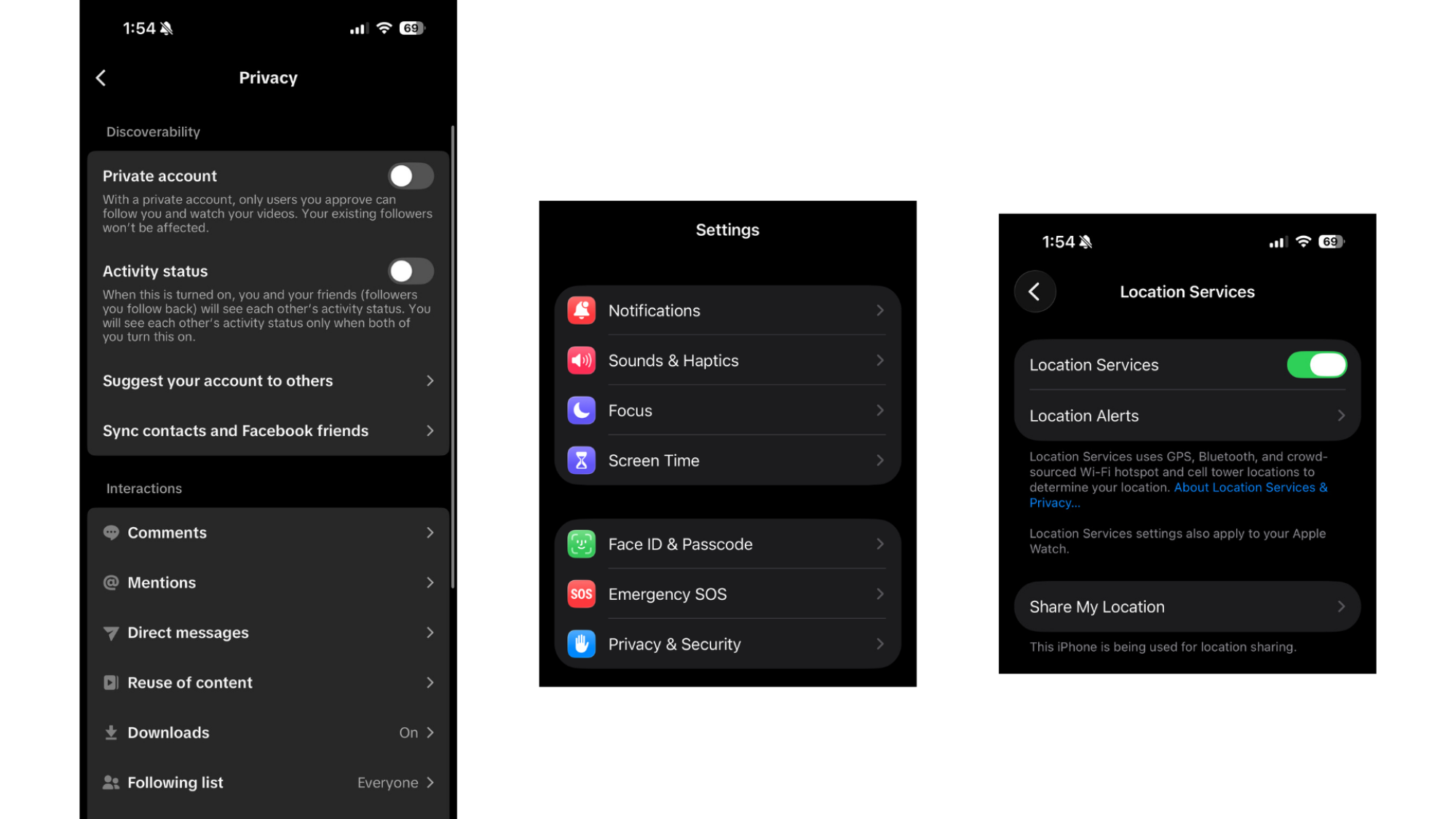
The author's Privacy settings on TikTok (left) and iPhone (center, right)

Credit: Michelle Ehrhardt

Maybe most concerning in TikTok’s new announcement is a disclaimer towards the bottom of the post, explaining that TikTok will use your GPS location to help power the Local Feed. The company says this feature is off by default, entirely optional, and only available to accounts for users who are 18 or older. Still, I have a few quibbles.

First, it’s difficult to know where to adjust these permissions, because they’re not located in the TikTok app. Instead, they rely on your device settings. On iPhone, that’s under Settings > Privacy & Security > Location Services, while the exact steps will vary among Android phones. In device settings, you can see which apps have access to your location, and tap on them to restrict access. This differs from previous TikTok app, which allowed you to access your Location Services settings from within the app itself; that button no longer appears for me on the Settings and privacy > Privacy page despite it being shown there in Europe’s Nearby Feed announcement. It’s still mentioned on TikTok support pages, and I’ve reached out to TikTok for clarification as to what happened to it.

My bigger question is this: While TikTok was not listed among the apps in my device’s Location Services settings, I still had access to locally pinpointed content within the Local Feed, and it was still able load new content upon refreshing the feed and even restarting the app. This persisted even after I had turned off Location Services on my device entirely, and perhaps more concerningly, even after I switched to a private account, which TikTok said should not see content in the Local Feed. I’ve reached out to TikTok for clarification on this.

There are a few possible answers to these questions. The first is that it’s possible that even after I disabled my location or took my account private, the Local Feed continued to refresh using data it had already collected before I made those changes. As for why I couldn’t find the location services button in its usual location under the settings tab, that might be related to the app’s new Privacy Policy, which now gives it permission to gather your “precise location” so long as you have location services turned on for your device—bypassing the need for a separate toggle within the app.

To be fair to TikTok, all of this information would have been accessible to the app even before the Local Feed made its debut, but the Local Feed does make it a bit more obvious that TikTok knows where you are. That said, your location is supposedly only tracked when the app is in active use.

Amazon’s same-day prescription deliveries are coming to even more cities

Amazon has announced that it will bring its same-day prescription delivery service to 4,500 new cities and towns by the end of 2026. The company originally launched Amazon Pharmacy in 2020 with a two-day delivery option, and has continued to increase the availability and delivery speed of the service in the years that followed, including expanding access to nearly half of all US residents in 2024.

The company’s announcement doesn’t break down all the new cities same-day deliveries will be available in, but does note that the delivery option is coming to Idaho and Massachusetts for the first time. In the past, access to same-day deliveries has been determined by where Amazon has fulfillment centers that it can open pharmacies in. Amazon Pharmacy also offers next-day delivery and in some cities, the ability to pick up prescriptions from Amazon’s OneMedical offices.

Amazon reportedly applied for Amazon Pharmacy trademarks in the UK, Canada and Australia in 2020, but has yet to expand its prescription delivery service to those regions. In 2023, Amazon launched RxPass, a separate $5 per month subscription that lets Amazon Prime customers order from a collection over 50 common medications for a flat fee. Amazon began letting Medicare recipients access the subscription in 2024.

This article originally appeared on Engadget at https://www.engadget.com/big-tech/amazons-same-day-prescription-deliveries-are-coming-to-even-more-cities-192221224.html?src=rss

This Aggressive Spyware Is Targeting Both Android and iOS Devices

Threat actors don’t have to work that hard to obtain sophisticated malware to deploy against unsuspecting targets. A new spyware platform known as ZeroDayRAT is reportedly being sold on Telegram, complete with customer support and updates.

According to mobile security company iVerify, this aggressive spyware grants full remote control over devices running Android 15 through 16 and iOS versions up to iOS 26. Once deployed, it allows everything from user profiling and location tracking to live surveillance and financial theft.

What ZeroDayRAT can gather from your device

This spyware has wide-ranging capabilities that, according to iVerify, have traditionally been found on platforms sponsored by state actors. Here’s a look at what ZeroDayRAT can do:

  • Collect information about the device, such as model, OS, battery, country, lock status, SIM and carrier info, app usage, live activity, and SMS message previews. This allows threat actors to develop user profiles for further targeting.

  • Pull GPS coordinates, capture notifications from apps and systems, and harvest account information, such as usernames and emails.

  • Send SMS messages and receive verification codes to bypass two-factor authentication.

  • Log keystrokes (including biometric unlocks, gestures, and app launches), access the camera and microphone, and screen record.

  • Log crypto wallet addresses and target banking and payment app credentials via overlay attacks.

How to protect against spyware

ZeroDayRAT can infect your device only if a malicious binary—an APK on Android or iOS payload—is downloaded and installed. These may be distributed through phishing, such as links sent via emails, texts, or messaging platforms, as well as in fake app stores.

All standard guidance for avoiding scams and malware applies: never click links in unsolicited communication, including conversations in apps like Telegram and WhatsApp, and only download apps and extensions from official, trusted sources.

Users at high risk of being targeted and anyone who wants an extra layer of security can consider enabling Lockdown Mode (iOS) or Advanced Protection (Android).

EVs Could Be Cheaper To Own Than Gas Cars in Africa by 2040

Electric vehicles accounted for just 1% of new car sales across Africa in 2025, but a study published in Nature Energy by researchers at ETH Zurich finds that EVs paired with solar off-grid charging systems — solar panels, batteries and an inverter — could become cheaper to own than gas-powered equivalents across most of the continent by 2040.

The analysis considered total cost of ownership including sticker price, financing and fuel or charging costs, but excluded policy-related factors like taxes and subsidies. Electric two-wheelers could reach cost parity even sooner, by the end of the decade, thanks to smaller battery packs.

Small cars remain the toughest segment. The biggest obstacle is financing: in some African countries, political instability and economic uncertainty push borrowing costs so high that interest on an EV loan can exceed the vehicle’s purchase price. South Africa, Mauritius and Botswana are already near the financing conditions needed for cost parity; countries like Sudan and Ghana would need drastic cuts.


Read more of this story at Slashdot.

SISU Racing Club Championships New York Edition Announced Beginning March 3

The SISU Racing Club Championships return for their third edition in March, and this year they’re taking the fight to the brand-new roads of Zwift’s New York map.

Riders will be tested across four disciplines: an individual time trial, a criterium, a climbing route, and an endurance road race. Every stage matters and every second counts, as winners in each category will be decided based on combined time.

Registration

Registration is now open. To be included in the final results, fill out the registration form, join the SISU Racing Club in the Companion app (where the race events can be found), and make sure you’re registered on ZwiftPower.

All Zwifters are welcome to race. While this is a Club Championship for SISU (meaning the top-placed SISU rider will be crowned Club Champion), everyone is welcome to compete.

Race Schedule

Toefield Tornado (Individual Time Trial) – Tuesday, March 3

The championships kick off with a true test of focus and pacing. Toefield Tornado is all about riding the knife-edge between power and precision as racers face the clock alone. Smooth lines, disciplined pacing, and mental toughness will define the early leaderboard—and set the tone for the battles to come.

Avon Flyer x 8 Laps (Criterium) – Tuesday, March 10

Fast, furious, and relentlessly tactical, the Avon Flyer brings pure criterium chaos to the streets of New York. Expect tight racing, constant accelerations, and decisive moments in the blink of an eye. Positioning is everything, and only the sharpest racers will survive the speed and sprint for glory.

Points in each grade will be awarded as follows:

  • FAL (First Across The Line) at Centre Sprint at the end of laps 2, 5, and 6 to the first 20 riders: 40, 38, 36, 34, 32, 30, 28, 26, 24, 22, 20, 18, 16, 14, 12, 10, 8, 6, 4, 2.
  • The first 20 riders in each grade across the line at the end of the race will be awarded: 250, 240, 230, 220, 200, 180, 160, 140, 130, 110, 100, 90, 80, 70, 60, 50, 40, 30, 20, 10.

Powerups: Draft, Ghost, Aero

Events will be held in multiple time zones, with the total points determining the Club Championships (should there be a tie on points, the fastest time will determine the winner).

Stay Puft Pursuit (Climb) – Tuesday, March 17

The championships turn uphill on Stay Puft Pursuit, where raw watts meet resolve. This is a climber’s proving ground—no hiding, just sustained effort and inner strength. Gaps open quickly here, and contenders will need to dig deep to stay in the championship fight.

Powerups: Draft, Feather, Aero

Fuhgeddaboudit (Road Race) – Saturday, March 28

It all comes down to the Fuhgeddaboudit road race—longer, tougher, and packed with opportunity for bold moves. Endurance, teamwork, and race IQ collide on this iconic New York route. Championships will be won and lost here as riders empty the tank in one final showdown.

Powerups: Draft, Feather, Aero, Anvil

February Tune-Up: 3 Training Focuses for March Peak

With the championships in March, February is about sharpening—not smashing yourself.

1. Discipline-Specific Intensity

  • One TT-style workout per week (10–15 min steady efforts at race power).
  • One VO₂ / anaerobic session for crit readiness (30–90 sec repeats).
  • One sweet spot or threshold climb simulation.

2. Fatigue-Resistance Training

  • Long endurance ride with race-pace efforts late in the session.
  • Practice fuelling exactly as you will on race day.

3. Race Craft & Recovery

  • Jump into shorter races to sharpen positioning and pack skills.
  • Prioritise sleep and easy days—fitness gains come from recovery, not just watts.

Zwift Racing Score

Riders enter using peak Zwift Race Score from the last 30 days for category enforcement. Race categories will be:

  • 690-1000 (A Grade)
  • 520-690 (B Grade)
  • 350-520 (C Grade)
  • 180-350 (D Grade)
  • 1-180 (E Grade)

More Information

  • All riders are welcome – the SISU Club Champion title goes to the top SISU Racing member.
  • Overall GC decided on combined time across all four stages (iTT + Crit + Climb + Road Race).
  • Open events with separate Men’s and Women’s results.
  • Race one discipline or all four – specialists welcome, all-rounders rewarded.
  • Mass start racing with all riders visible, true to SISU spirit.
  • ZwiftPower profile required.
  • ZPower riders and riders without heart rate data will be excluded from results.
  • Learn more on SISU’s Club Championships homepage.

The Helldivers movie will star Jason Momoa and hits theaters on November 10, 2027

Jason Momoa will be playing the lead in the forthcoming film adaptation of the Helldivers gaming franchise, according to a report by Variety. The games don’t have a story-driven protagonist, so Momoa is likely to play a currently unnamed soldier.

We also have a release date for the Helldivers film. It comes out on November 10, 2027. That’s a while from now, but at least it gives fans something to look forward to. The movie is being directed by Justin Lin, who is best known for helming several entries in the Fast & Furious franchise. However, he also directed Star Trek Beyond, proving he can do sci-fi.

Gary Dauberman is penning the script. He wrote both It and It Chapter Two, in addition to the horror film Annabelle and its follow-ups. Dauberman is mostly a horror guy, so we’ll have to see how he handles high-octane science fiction.

For the uninitiated, Helldivers is a co-op shooter franchise that’s heavily inspired by the movie Starship Troopers. The games are set in a hyper-patriotic dystopia called Super Earth. Helldivers 2 dropped back in 2024, though was recently released for Xbox.

Sony hasn’t announced any other actors who will be joining Momoa. We’ll keep you updated when more casting news drops.

This article originally appeared on Engadget at https://www.engadget.com/entertainment/tv-movies/the-helldivers-movie-will-star-jason-momoa-and-hits-theaters-on-november-10-2027-183445038.html?src=rss

Smart home PSA: Apple’s “new architecture” for Home app becomes mandatory today

In 2022, Apple announced it was adopting a “new Home architecture” for its smart home ecosystem to improve its performance and reliability and make it possible to support different kinds of accessories. Although it was mostly an invisible update when it worked properly, some users who attempted to switch to the new architecture when it first rolled out in iOS 16.2 ran into slow or unresponsive devices and other problems, prompting Apple to pause the rollout and re-release it as part of iOS 16.4.

If you put off transitioning to the new architecture because of those early teething problems or for some other reason, Apple is forcing the issue starting today: You’ll need to update to the new Home architecture if you want to continue using the Home app, and older iOS and macOS versions that don’t support the new architecture will no longer be able to control your smart home devices. The old version of the Home app and the old Home/HomeKit architecture are no longer supported.

If you’re like me, you hit an “upgrade” button in your Home app years ago and then mostly forgot about it—if you open the Home app on a modern iPhone, iPad, or Mac and don’t see an update prompt, it means you’re already using the updated architecture and don’t need to worry about it.

Read full article

Comments

UK Orders Deletion of Country’s Largest Court Reporting Archive

The UK’s Ministry of Justice has ordered the deletion of the country’s largest court reporting archive [non-paywalled source], a database built by data analysis company Courtsdesk that more than 1,500 journalists across 39 media organizations have used since the lord chancellor approved the project in 2021.

Courtsdesk’s research found that journalists received no advance notice of 1.6 million criminal hearings, that court case listings were accurate on just 4.2% of sitting days, and that half a million weekend cases were heard without any press notification. In November, HM Courts and Tribunal Service issued a cessation notice citing “unauthorized sharing” of court data based on a test feature.

Courtsdesk says it wrote 16 times asking for dialogue and requested a referral to the Information Commissioner’s Office; no referral was made. The government issued a final refusal last week, and the archive must now be deleted within days. Chris Philp, the former justice minister who approved the pilot and now shadow home secretary, has written to courts minister Sarah Sackman demanding the decision be reversed.


Read more of this story at Slashdot.

These Skullcandy Headphones Are Over 50% Off Right Now

We may earn a commission from links on this page. Deal pricing and availability subject to change after time of publication.

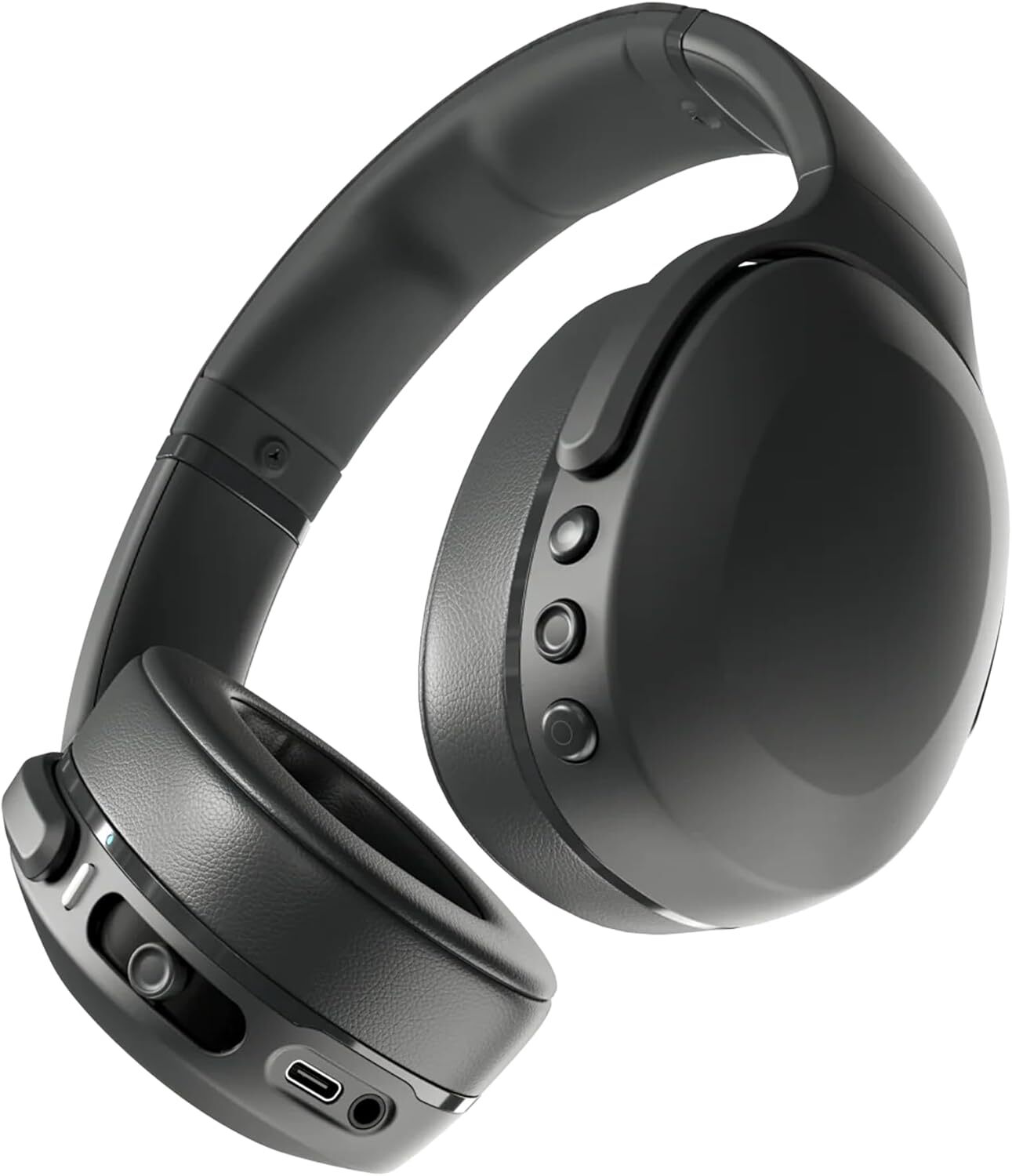
For bass-heads and audiophiles, there’s arguably no more acceptable choice than bass-y over-ear headphones. They have superior immersive sound, larger drivers that produce richer sound, and bigger cups that avoid that dreaded ear-squishing feeling. Skullcandy is known for its wide range of over-ear headphones, and the Skullcandy Crusher Evo wireless headphones are a mid-range option known for their bass. Right now, they’re 52% off, down to their lowest price ever of $99.99 (originally $209.99).

The standout feature on these headphones is the extra bass drivers that beef up the dual 40mm drivers; it has a unique haptic bass slider that adds vibration to low frequencies, and you can crank it up if you want a more bass-heavy experience. Compared to on-ear headphones, which can lead to discomfort over time, the plush memory foam cups will let you comfortably game or listen to music and podcasts all day (or night) long. And despite the generous ear cups, they fold flat, making them fairly compact for over-ear headphones. 

They’re advertised as lasting an impressive 40 hours on a single charge; they take a little over three hours to fully charge, but just 10 minutes of charging will get you a solid four-hour top-up. They don’t offer premium features such as multi-device pairing or high-res codecs, and the lack of active noise cancellation may be a dealbreaker for some. However, if you’ve been on the hunt for comfy, long-lasting, bass-thumping headphones that deliver at around a $100 price point, the Skullcandy Crusher Evo wireless headphones are less expensive than many alternatives, and have a bass-tuning feature that’s hard to come across.

Our Best Editor-Vetted Presidents’ Day Deals Right Now


HP Omen 35L (Intel Core Ultra 9 285K, RTX 5080, 2TB SSD, 64GB RAM)


—


(List Price $3,099.99 With Code “PRESDAYPC100”)

Deals are selected by our commerce team

Meta turned Threads algorithm complaints into an official feature

Threads users have been complaining about its recommendation algorithm pretty much since the beginning of the platform. At some point, this turned into a meme, with users writing posts jokingly addressed to the algorithm in which they requested to see more posts about the topics they’re actually interested in.

Now, Meta is turning those “Dear algorithm” posts into an official feature that it says will allow Threads users to tune their recommendations in real time. With the change, users can write a post that begins with “dear algo” to adjust their preferences. For example, you could write “dear algo, show me more posts about cute cats.” You can also ask to see fewer posts about topics you don’t want to see, like “dear algo, stop showing me posts about sick pets.”

You can track your requests to the algorithm in the app’s settings in order to revisit them or remove them. You can also retweet other users’ “dear algo” posts to have those topics reflected in your feed. Importantly, “dear algo” requests are temporary and only last for three days at a time, which Meta says is meant to keep the algorithm feel fresher and more flexible.  

The rollout of the feature follows a limited test late last year. Now, “dear algo” posts will work for Threads users in the US, UK, Australia and New Zealand with more countries coming “soon.”

This article originally appeared on Engadget at https://www.engadget.com/social-media/meta-turned-threads-algorithm-complaints-into-an-official-feature-180000236.html?src=rss

How Did the FBI Get Nancy Guthrie’s Nest Doorbell Footage?

Like millions of Americans, I’ve been watching the news of Nancy Guthrie’s disappearance with concern—so I was somewhat relieved when the FBI announced they were releasing new footage of a suspect. Finally, the case had something to go on, even if it was only doorbell video of a masked stranger.

When I saw the footage, I assumed this was something the FBI had in their possession since the beginning, and had finally decided to release to the public. But that’s not what happened at all. If you have been following this case closely, you may know that law enforcement had previously confirmed that Guthrie’s Google Nest camera was disconnected (presumably by the perpetrator), and that she did not have a subscription that would store video either on the doorbell or in the cloud. Yet despite the fact the doorbell should have been a dead end, the FBI has seemingly produced this video out of thin air.

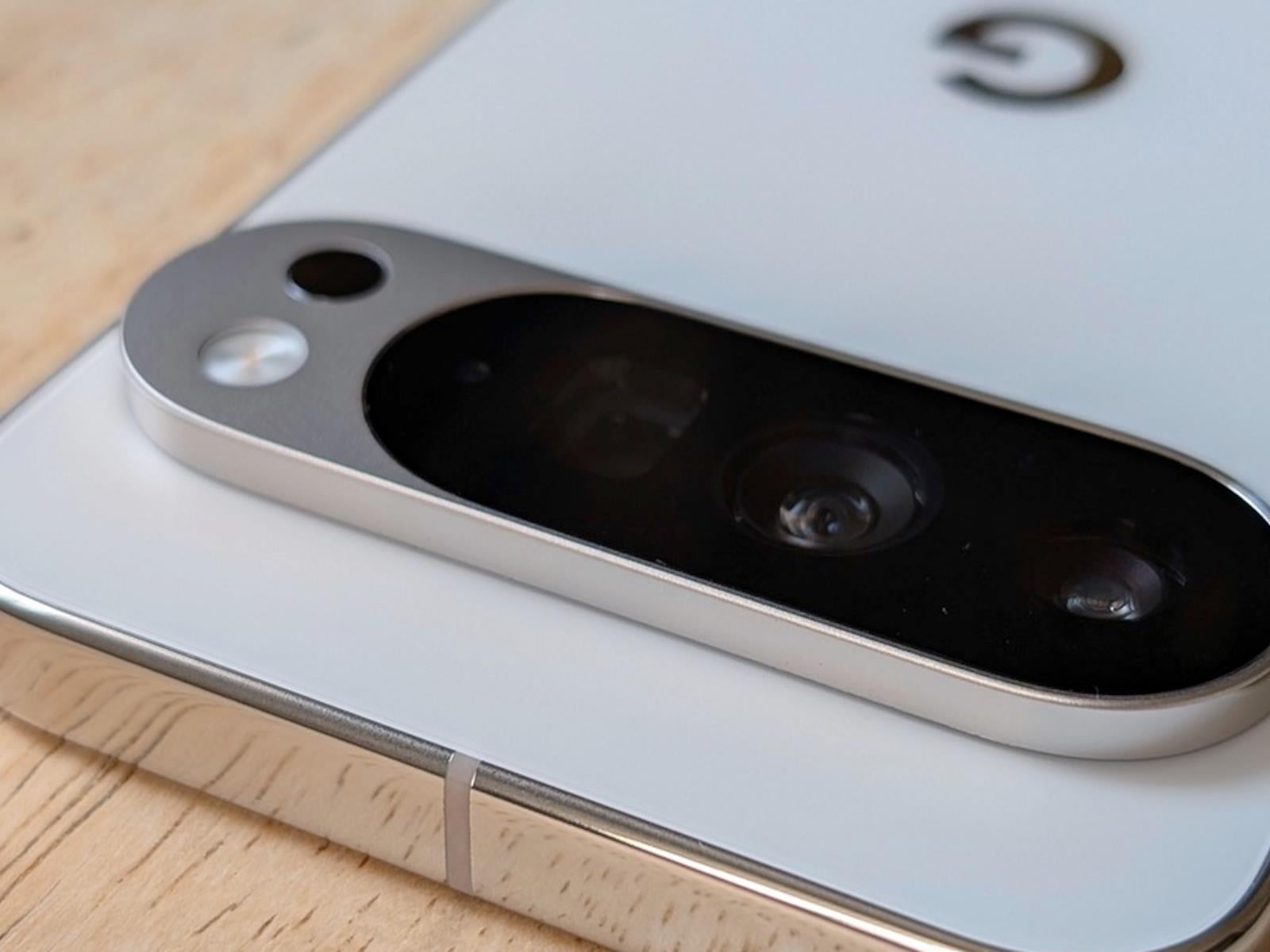
If you have a Google Nest device in or attached to your home, this might give you pause. Sure, it’s one thing if law enforcement is able to obtain video from your subscription or from the device itself. But if you don’t keep video records on your Nest, it seems it is still possible to retrieve the footage. How did the FBI do this, and what does it mean for the privacy of your Nest devices?

The FBI likely pieced the video together from fragments

The short answer is that we don’t really know for sure how the FBI got the footage, but there are a few leads. According to FBI Director Kash Patel, the Google Nest footage was recovered “from residual data located in backend systems.” That’s pretty vague, though the FBI isn’t necessarily known for its transparency.

According to experts that spoke to NBC News, however, it is possible to obtain data from the “complex infrastructure” of cloud-based cameras, including Google Nest devices. Retired FBI agent Timothy Gallagher told NBC News that Guthrie’s Nest camera might have sent images to Google’s cloud service, or at least stored data points locally throughout the hardware of the device, even though she wasn’t paying for a Nest subscription. The FBI could have obtained the footage from the cloud this way, or pieced together the video from those data points.

Both possibilities track, based on how Nest cameras work without a subscription: While you need to pay Google in order to save video clips from your Nest cameras, some Nest devices record event histories and store them on-device. The third-gen wired Nest Doorbell can save up to 10 seconds of clips, while the first and second-gen wired doorbells can save up to three hours of event history, all without a subscription. They also support live video feeds when motion is detected, which could impact the video data points saved to the device or cloud.

It’s entirely possible the subject walking up to the camera triggered the doorbell to save an event history. But since it took the FBI so long to produce the footage, and since the director claims it was obtained from “residual data,” my guess is it wasn’t readily available in Guthrie’s Google Home app. Maybe the event history saved to the cloud, but it wasn’t clear where it was located. Maybe it was overwritten, but the FBI was able to build it back up with recovered data points. My guess would learn toward the latter, as authorities did say the camera had been disconnected. Unfortunately, we don’t have a definitive answer at this time, even if the theory is sound.

I’ve reached out to Google for comment, and will update this piece if I hear back.

Should you get rid of your Nest camera over privacy concerns?

Based on what we know, it doesn’t really seem like your Nest doorbell or camera is a fourth amendment disaster waiting to happen—but I don’t blame anyone for being concerned. After all, if you don’t have a Nest subscription, you might have been comforted by the thought that none of your footage was being saved anywhere, meaning law enforcement or other authorities would have nothing to seize if you somehow popped up on their radar. That doesn’t necessarily appear to be the case.

That said, without a subscription, you don’t have access to a collection of all clips your Nest camera has ever recorded. You might have a limited event history saved, based on motion detection, but that will be limited to three hours of data. Your device might have data points that an organization like the FBI could theoretically use to restore footage, but that’s likely true for any camera or smart doorbell system—not just Nest.

Also, this is not a Ring situation—Google hasn’t partnered with organizations like Flock to help law enforcement request footage from users. Nest also lacks Ring’s “Search Party” feature, which can turn a neighborhood into a kind of surveillance state, and probably not just to search for lost dogs. I’m not dismissing every security and privacy concern, of course: By putting a commercially-available smart camera on your front door, you are placing your data in the hands of companies like Google or Amazon. If you want to eliminate the risk of the FBI obtaining your doorbell footage, you simply can’t have a doorbell with a camera. But barring a warrant, or a Nancy Guthrie-level situation, the chances of your Nest doorbell footage actually being used against you seem rather slim.