
Start with Pre-installation step $ sudo apt install build-essential bpftool and include /usr/sbin in system $PATH variable.On Debian forky installation of libdw-dev and build dependencies for libdw-dev steps are required to succeed with build CachyOS 6.19.2 Kernel on top of Debian Testing ( forky native kernel 6.18.9 )
99% of adults over 40 have shoulder “abnormalities” on an MRI, study finds
Up to a third of people worldwide have shoulder pain; it’s one of the most common musculoskeletal complaints. But medical imaging might not reveal the problem—in fact, it could even cloud it.
In a study published in JAMA Internal Medicine this week, 99 percent of adults over 40 were found to have at least one abnormality in a rotator cuff on magnetic resonance imaging (MRI). The rotator cuff is the group of muscles and tendons in a shoulder joint that keeps the upper arm bone securely in the shoulder socket—and is often blamed for pain and other symptoms. The trouble is, the vast majority of the people in the study had no problems with their shoulders.
The finding calls into question the growing use of MRIs to try to diagnose shoulder pain—and, in turn, the growing problem of overtreatment of rotator cuff (RC) abnormalities, which includes partial- and full-thickness tears as well as signs of tendinopathy (tendon swelling and thickening).
These Three Claude Premium AI Features Are Now Available for Free
Anthropic’s Claude is an AI bot that keeps up a steady pace when it comes to pushing out new features, and the latest upgrade of note sees three useful features make their way down to free users, having previously been exclusive to the paid-for plans.
If you’re choosing between AIs and comparing the features available on the free plans, then there’s now more of a case to be made for choosing Claude over a competitor like ChatGPT or Gemini for your next batch of AI tasks.
The three new features now available to free users on Claude are file creation, external plug-ins called Connectors, and bundles of instructions called Skills. Here’s how you can make use of them.
File creation in Claude
Claude’s file creation capabilities let you create Word documents, PowerPoint slideshows, Excel spreadsheets, and PDFs from right inside a conversation. You can either supply the bot with all text, data, and other information you want included, get Claude to invent everything itself, or something in between.
For example, if you’ve got a long list of names and scores, Claude can put them into a spreadsheet for you. If you’ve got a series of images, Claude can combine them into a PDF and describe them. You can get it to analyze and visualize data, produce presentations based on reports, and create summary documents.

A simple prompt can create a file in Claude.
Credit: Lifehacker
Credit: Lifehacker
To enable file creation for your account, click your profile icon (bottom left) in Claude on the web, then select Settings > Capabilities and enable Code execution and file creation. With that done, you just have to prompt Claude with the type of file you want to make and what you want included, supplying any information as needed (or telling the AI where to find it online).
As usual with these AI bots, the more detail and specificity you can provide, the better—the end result is then more likely to be closer to what you were aiming for. I got it to quickly come up with the results of a fictional sports day race, and produce a spreadsheet from it. While it’s not the most demanding of tasks, Claude completed it correctly.
Claude Connectors
Connectors can hook Claude up to a variety of other apps, sites, and services: So if you want to get it to design something for you in Canva, or manage your messages in Slack, or find some travel deals on Trivago, then Claude can do that for you. The full list of current Connectors gives you some idea of what’s possible.
To get to the Connectors from the Claude prompt box, click the small + (plus) icon in the lower left corner, then choose Add connectors. You can search through Connectors by name, and filter them by type and category. When you select one you like, you’ll need to supply your account credentials and give Claude permission to access your account.

Use Connectors to connect Claude to other apps.
Credit: Lifehacker
Credit: Lifehacker
Your Connectors of choice are then available from the same sub-menu in the prompt box: You can add more plug-ins and remove existing ones from there. You can either select an app, or specify the name of it in your prompt and Claude should understand what you mean. You can ask for outputs, run searches, and communicate through your connected services.
Connectors can give Claude some handy extra talents. With the Canvas Connector, for example, I was able to create a basic bit of artwork for a birthday party flyer—something that the AI wouldn’t have been able to do on its own. I find that access was spotty, however, perhaps a sign of a lot of free users now making use of these tools.
Claude Skills
With Skills, you can “teach Claude how to complete specific tasks in a repeatable way” (in the words of the official support document). In old-school computer talk, they might be referred to as macros: batches of set instructions that Claude can repeat whenever you need something doing in a particular way.
Templates are a good example, whether they’re for emails or documents. Rather than just getting Claude to write an email for you, you can set down some basic parameters for the job that include guidelines on tone, length, and style, as well as crucial bits of information (such as your contact details) that always need to be included.
You’ve got three options for creating Skills.
Credit: Lifehacker
Credit: Lifehacker
Click your account profile icon (bottom left) in Claude on the web, then choose Settings > Capabilities and click Add under Skills to get started. You can create a Skill through a Claude conversation, by writing out the instructions, or by uploading a Skills file (which is handy for including extra items such as code snippets, as described here).
I took the Create with Claude route to put together a basic way of summarizing PDF reports, with specific guidelines on how many paragraphs and headings to use, and the tone of voice to apply. In the future, rather than typing out those instructions every time I need something summarized, I can just invoke the Skill.
Cannondale updates the SuperSlice for a 10-watt aero gain
Cannondale has launched the third generation of its SuperSlice time trial/triathlon bike, which it says is the fastest Cannondale ever made. There’s a claimed 10-watt saving at 50km/h from its predecessor, representing a 14% drag reduction.
The new SuperSlice’s overall weight is kept similar to the previous frameset, thanks to Cannondale’s top-spec Lab71 carbon fibre construction in place of the previous frameset’s Hi-Mod carbon. Nevertheless, the brand says the frame weight has increased by 60g due to the additional material needed to maintain strength in the deeper tube sections.
Cannondale claims a size-M frame weighs 1,122g, with the fork adding 610g, the seatpost 267g and the base bar 321g, for a 2,026g total.
The design incorporates Cannondale’s Delta steerer, now used on the majority of its road bikes, including the new SuperSix Evo road bike, which also launched today. This design enables integrated hose routing through the narrow head tube with its 1⅛-inch top and bottom bearings.
Cannondale has switched to a Universal Derailleur Hanger and a 68mm BSA bottom bracket. It recommends a maximum 64-tooth 1x chainring or a 60/46-tooth 2x, although it says you could go larger still, as do some of the EF Education pros. The frameset is compatible with electronic groupsets only.
More adjustability and more clearance
Cannondale has made small changes to the SuperSlice’s steering geometry, claiming its handling is now sharper for fast descents and tight turns.
There’s a larger range of effective seat tube angle adjustability, thanks to a saddle clamp that can be moved forward and back through 45mm. This equates to effective seat tube angles between 74 and 77 degrees.
There’s also a greater range of cockpit adjustability, with 100mm and 120mm reach adjustment, as well as 0 to 30-degree extension angle adjustment.
The bike has a new base bar, the SystemBar TT, which has a mono-riser and is compatible with Vision Speed JS-Bend and Vision TFE EVO extensions. Cannondale says the new cockpit reduces both weight and drag from the second-generation SuperSlice.
As with pretty much every new bike, there’s more tyre clearance, with an increase to 32mm – more than enough to accommodate the new 30mm Vittoria Corsa Pro Speed and Continental’s latest 30mm-wide GP5000 TT TR time trial tyre.
Cannondale enables you to equip the SuperSlice for triathlon use, with the Vision bar providing compatibility with the Metron front and Trimax rear hydration systems.
The new SuperSlice is available in sizes XS, S, M and L.
Vittoria launches 30c Corsa Pro Speed for wet conditions – and it proves tyre-size labels are a mess
Vittoria has announced a new, 30c version of its Corsa Pro Speed TLR tyres.
Designed for improved grip in wet conditions, Vittoria says this new size was developed “at the request of WorldTour teams”.
The news comes on the same day as Continental announced it has launched a 30mm option for its GP5000 TT TR time trial tyre, and a 35mm option for its G5000 S TR all-rounder.
As in gravel racing, then, it seems the trend towards ever wider road bike tyres shows no signs of abating.
Available now, the 700x30c Vittoria Corsa Pro Speed TLR costs £89.99 / $125.99 / €95.95 per tyre.
The difference a millimetre makes
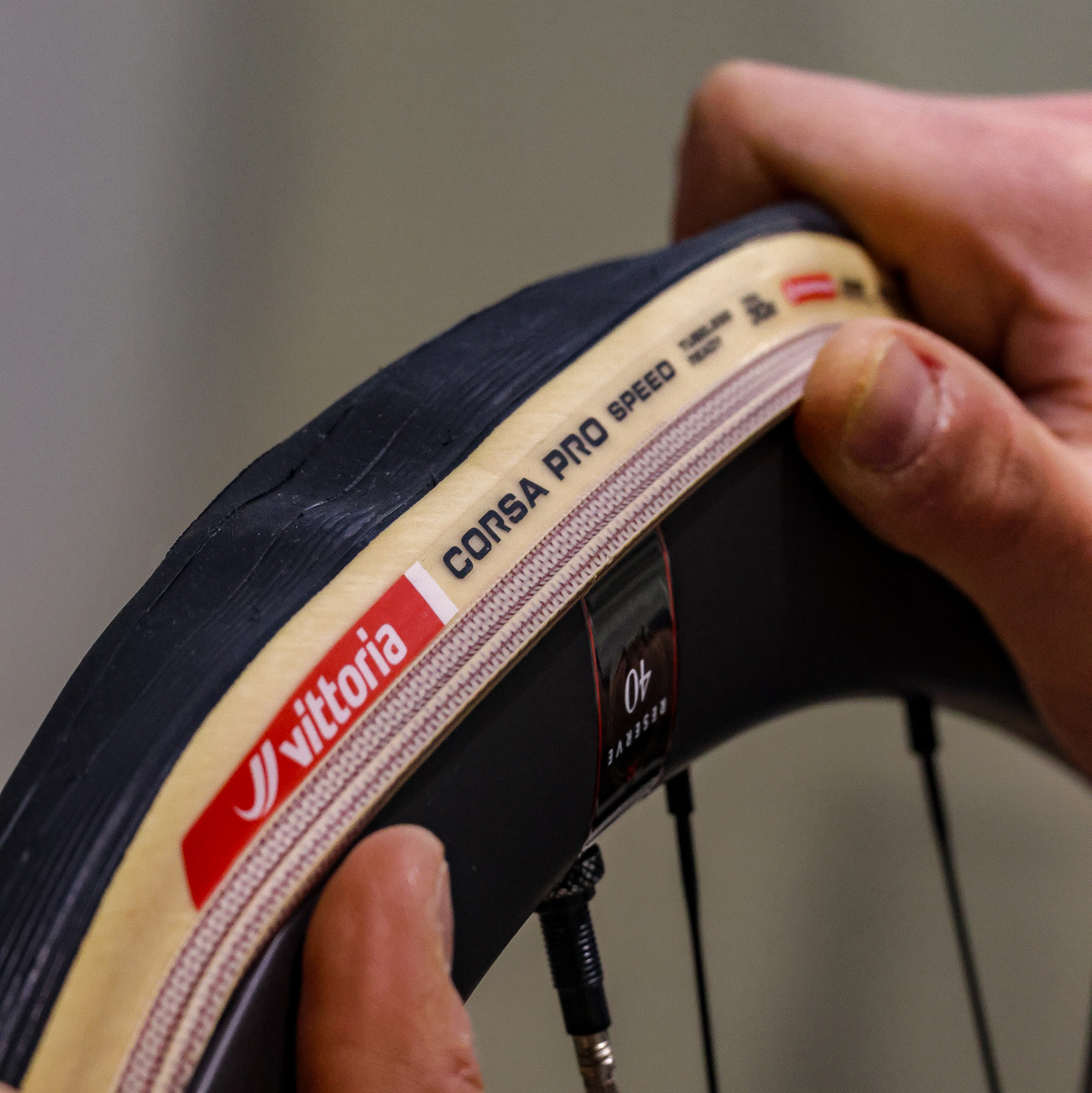
The addition of a 30c (or 700x30c / 30-622, officially) option to the Corsa Pro Speed TLR range brings the total number of sizes available to five.
The range starts with a skinny – by modern standards – 24c option, and now goes up to 30c in 2mm nominal increments.
Eagle-eyed readers will note a 29c version already existed, though, so the addition of another model ostensibly only one millimetre wider might seem curious.
The claimed weights for the tyres give an insight into what’s likely going on, though.
A 29c Corsa Pro Speed TLR tyre is claimed to weigh 255g, for example, only 5g more than the 28c version.
In contrast, the new 30c version is claimed to weigh 270g per tyre, 15g more than the 29c version.
The difference is due to the fact the 29c tyre is “Wide Rim Optimised”, which is Vittoria’s label for tyres it has designed for optimal aerodynamic performance with 25mm-wide rims (internal width).
In contrast the new 30mm option looks to be designed with a relatively higher volume casing – Vittoria specifically references the tyre’s “larger air volume and contact patch” in its press release – hence the more significant increase in weight.
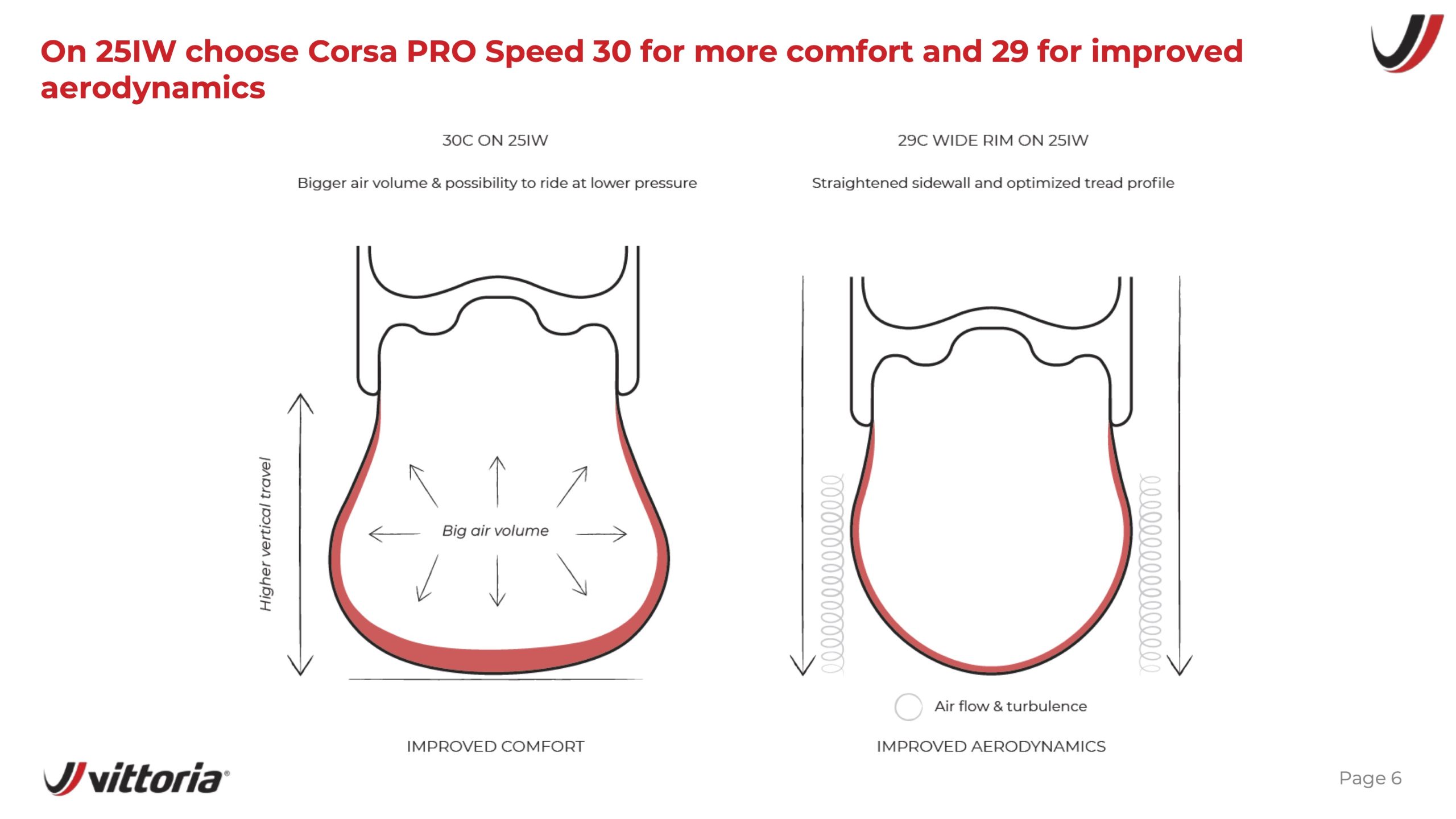
If that all feels exceptionally confusing then don’t worry – you’re not alone.
This mess is why Josh Poertner, CEO of Silca and the former chairman of the Bicycle Wheel Technical Committee, told BikeRadar “currently the sidewall printed number [on a tyre] is meaningless”.
Instead, Poertner believes the industry should instead quote the “unmounted casing lay-flat width” of tyres, as that would enable riders to make better informed decisions about which tyres are safe to use on their rims.
For more on that subject, though, check out our feature on the question of whether hookless rims are safe for road cycling?
A TT tyre for road racing?
Although the Corsa Pro Speed TLR was originally pitched as a pure time trial tyre – given its thin casing, low weight and lack of a puncture protection strip beneath the tread – it, and other time trial tyres, have become increasingly popular in pro road races in recent years.
This was a key tech trend at last year’s Tour de France, for example, with eventual race winner, Tadej Pogačar, using Conti’s GP5000 TT TR tyres for most stages of the race.
The addition of an even wider option for the Corsa Pro Speed indicates Vittoria likely intends to lean into this, rather than push back against it.
Alternatively, or perhaps concurrently, could a rash of new time trial bikes with clearance for big tyres be about to launch?
Cannondale has just launched its new SuperSlice TT bike today, with clearance for 32mm-wide tyres, and we know Pogačar has been testing a new lightweight Colnago TT bike in recent weeks. Doubtless other manufacturers won’t be resting on their laurels ahead of this year’s key stage races either.
As always, we’ll keep our eyes peeled for any developments.
Cannondale’s latest SuperSix Evo is lighter and more aggressive for EF Education’s pro riders
Cannondale has unveiled its latest SuperSix Evo all-round race bike, with a refined geometry and frameset designed to meet the needs of its pro racers.
The bike, which we spotted at the Tour Down Under WorldTour season opener, doesn’t rip up the SuperSix Evo design playbook, but instead sees a series of incremental developments to cut weight while maintaining the previous bike’s aerodynamics.
The geometry has been made more aggressive by reducing the stack by 10mm (resulting in a 4mm increase in effective reach), while the new bike is available with two new one-piece handlebars.
The frameset comes in three carbon tiers – Lab71 (‘0 Series’), Hi-Mod and ‘standard’, weighing from 728g for the frame and 410g for the fork, in a size 56cm.
Prices start from £4,495 for the SuperSix Evo 5 with a Shimano 105 Di2 R7100 groupset, rising to a £12,500 ceiling.
Responding to pro-rider feedback
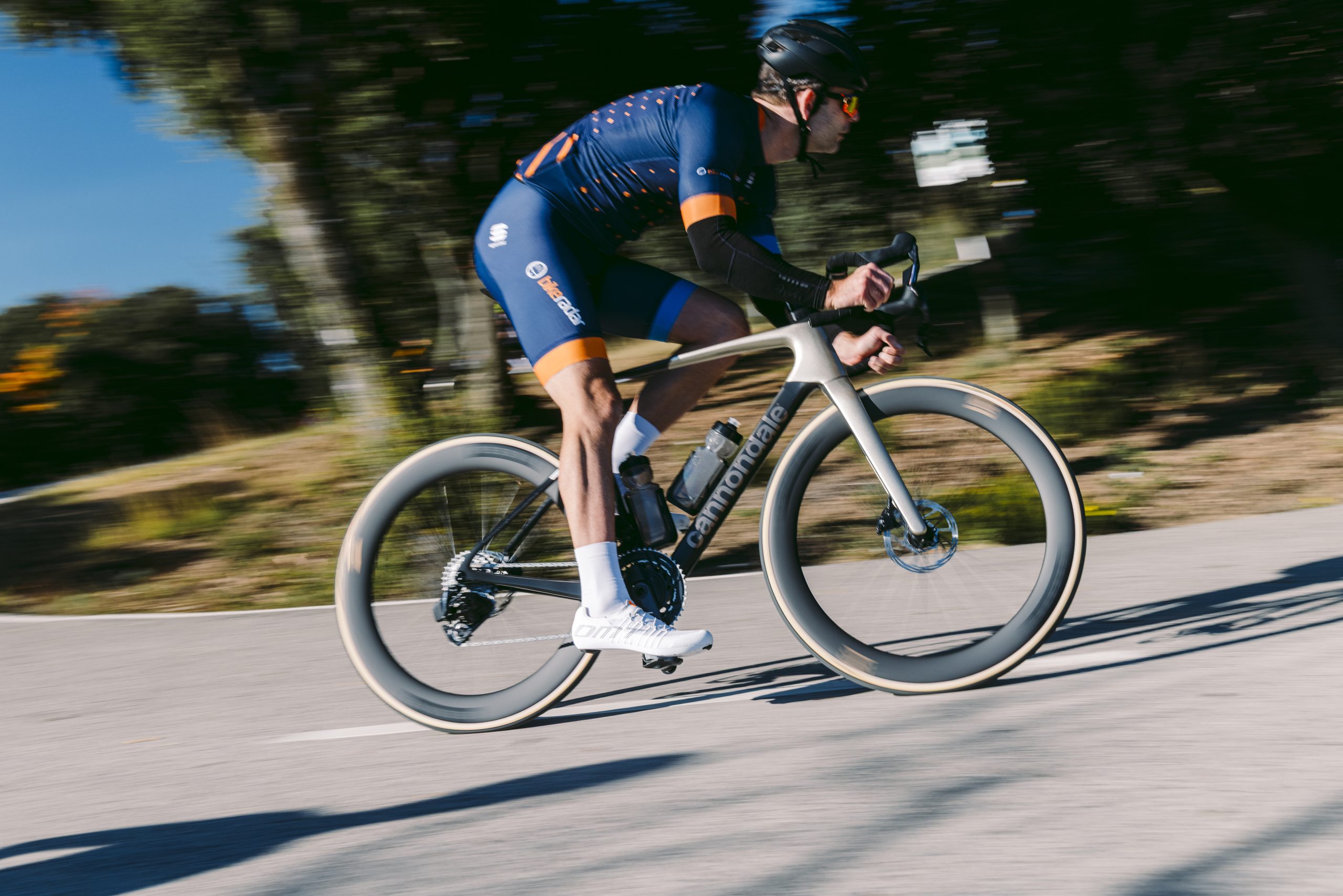
Despite some brands edging towards making their all-round race bikes slightly less aggressive to help them fit more riders, Cannondale has responded to feedback from its professional riders – such as Ben Healy – to make the SuperSix more aggressive in terms of fit.
This isn’t the surprise it might first appear, though. The previous SuperSix was relatively conservative with a 10mm taller stack and 6mm shorter reach than a Specialized Tarmac SL8, for example, in a size 56cm.
Steve Smith, Cannondale’s engineering manager for road bikes, says that Healy and Kasper Asgreen were key in offering feedback on the old SuperSix Evo – incidentally, both rode Specialized Tarmacs before moving to the EF-Education sponsored team.

Smith also says the latest Synapse endurance bike had “racy performance added to it”, suggesting this left the SuperSix ripe for an even racier layout.
That said, the head tube angle remains identical at 73 degrees, while the seat tube angle has steepened by 0.2 degrees (in a size 56cm).
When asked, Smith confirmed riders wanted to preserve the handling of the previous bike, so the similarities here are unsurprising.
Cannondale has also added an extra size to the range – with 50 and 52cm offerings rather than a single 51cm size between its 48 and 54cm sizes.
| Size (cm) | 44 | 48 | 50 | 52 | 54 | 56 | 58 | 61 |
|---|---|---|---|---|---|---|---|---|
| Seat Tube Length (mm) | 400 | 429 | 448 | 467 | 490 | 510 | 532 | 570 |
| Top Tube Horizontal (mm) | 510 | 522 | 529 | 536 | 544 | 560 | 577 | 600 |
| Top Tube Actual (mm) | 492 | 503 | 511 | 519 | 527 | 543 | 559 | 582 |
| Head Tube Angle (°) | 70.9 | 71.2 | 71.2 | 71.2 | 71.2 | 73 | 73 | 73 |
| Seat Tube Angle (°) | 74.5 | 74 | 74 | 74 | 74 | 73.5 | 73 | 72.5 |
| Standover (mm) | 694 | 717 | 733 | 752 | 770 | 790 | 812 | 846 |
| Head Tube Length (mm) | 89 | 101 | 114 | 130 | 143 | 154 | 178 | 209 |
| Wheelbase (mm) | 980 | 985 | 993 | 1002 | 1010 | 995 | 1007 | 1024 |
| Front Centre (mm) | 582 | 586 | 594 | 602 | 611 | 595 | 607 | 624 |
| Chainstay Length (mm) | 410 | 410 | 410 | 410 | 410 | 410 | 410 | 410 |
| Bottom Bracket Drop (mm) | 74 | 74 | 74 | 72 | 72 | 72 | 69 | 69 |
| Bottom Bracket Height (mm) | 269 | 269 | 269 | 271 | 271 | 271 | 274 | 274 |
| Fork Rake (mm) | 55 | 55 | 55 | 55 | 55 | 45 | 45 | 45 |
| Trail (mm) | 60 | 58 | 58 | 58 | 58 | 58 | 58 | 58 |
| Stack (mm) | 495 | 508 | 520 | 532 | 545 | 565 | 585 | 615 |
| Reach (mm) | 373 | 376 | 379 | 383 | 387 | 393 | 398 | 406 |
| Axle to Crown (mm) | 376 | 376 | 376 | 376 | 376 | 376 | 376 | 376 |
Two new cockpits for Lab71 and Hi-Mod bikes
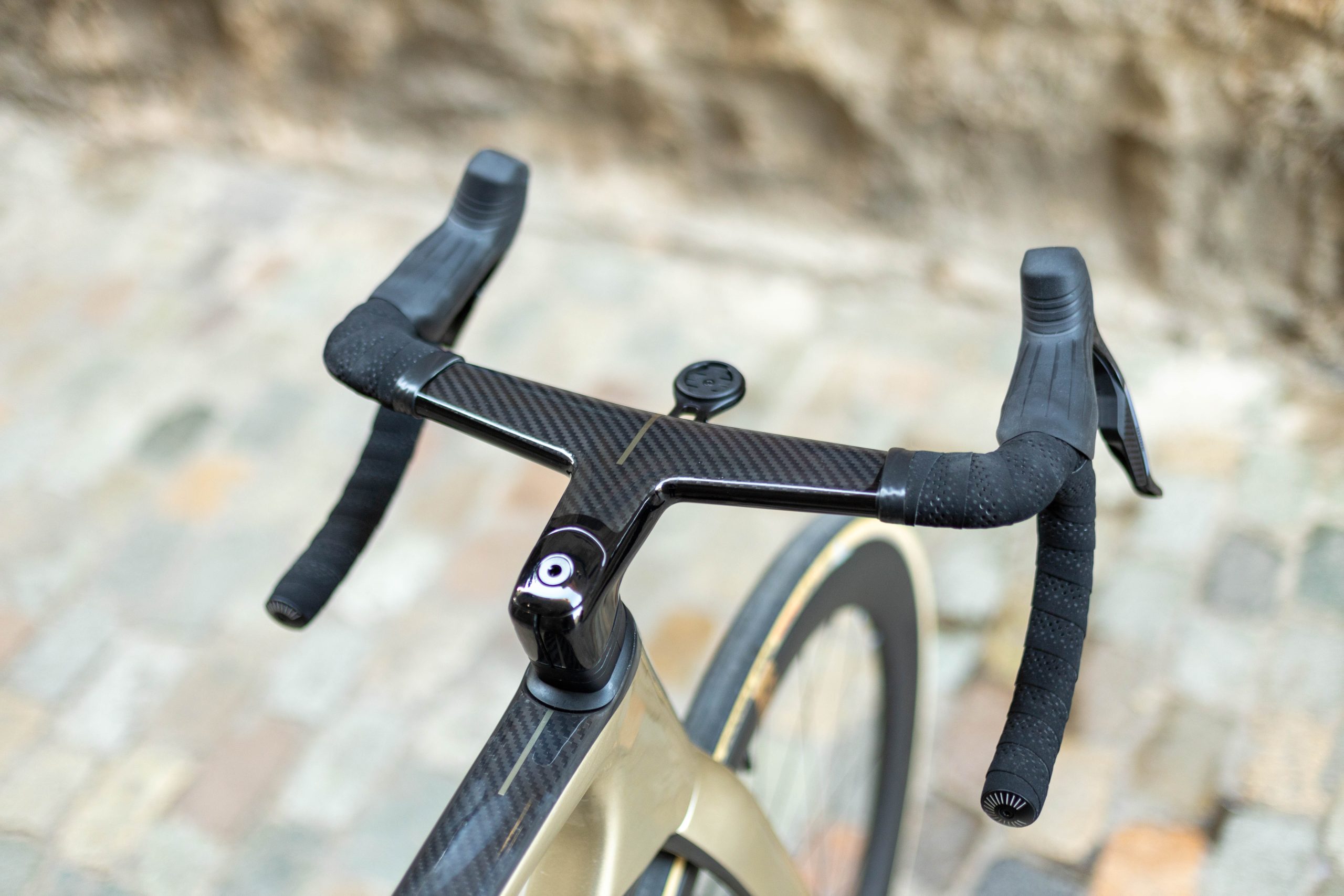
The frameset continues to sport the brand’s Delta steerer design, which sees brake hoses routed inside the headset bearings, but two new top-tier cockpits have been designed for the new bike.
Cannondale refers to these as the SystemBar Road and the SystemBar SL – the first designed as a more aerodynamic solution, and the latter a lightweight option.
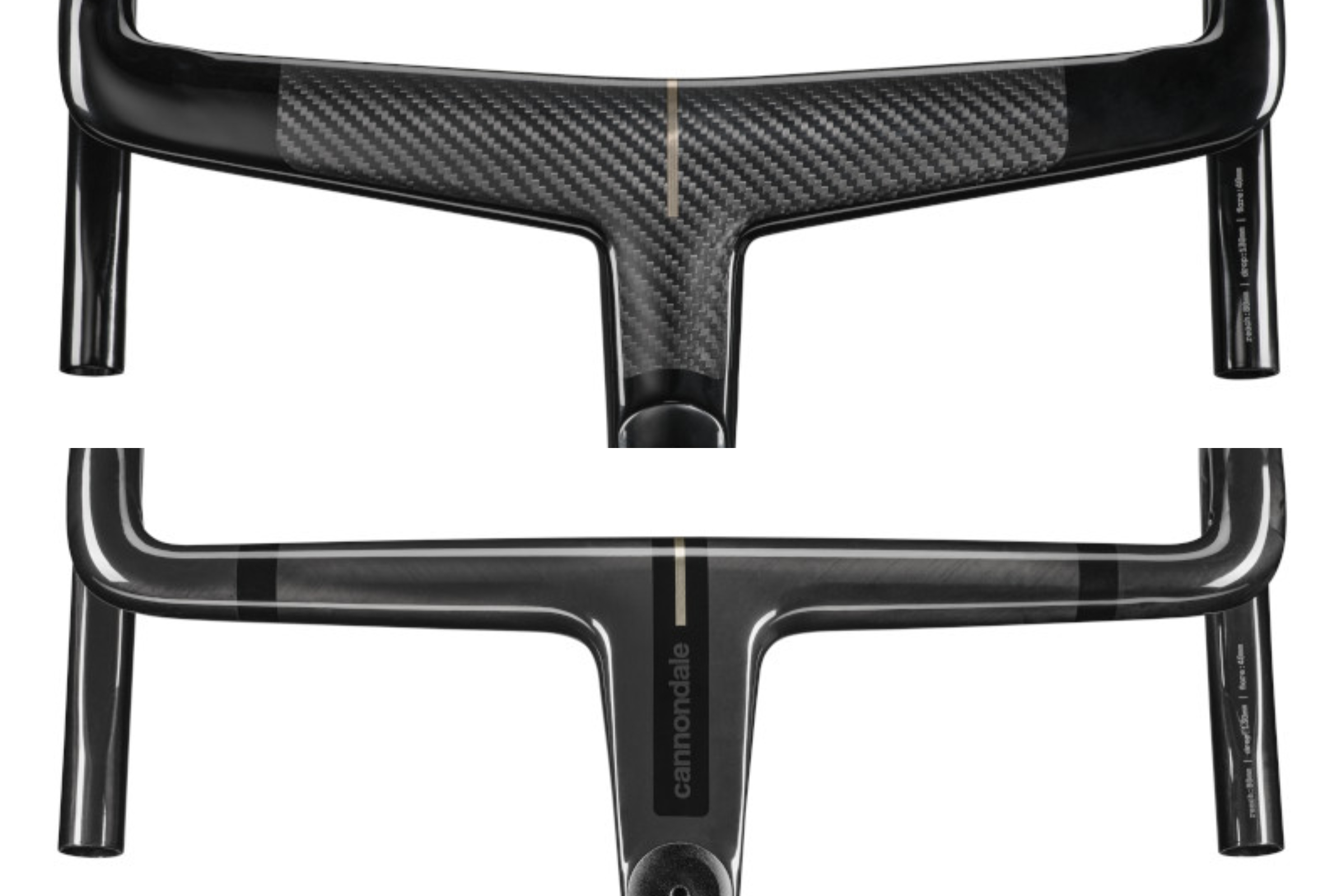
The SystemBar Road features aerofoil tops, which sweep forwards to increase the effective reach to the hoods, with a 20mm flare at the drops. This is available in 10 sizes, ranging from 340-380mm wide (measured centre-to-centre), with 90-140mm effective stem lengths.
The SystemBar SL comes in seven sizes – 380 or 400mm widths, with 90-130mm effective stem lengths, but with more traditional rounded tops that don’t sweep forwards. This is said to weigh 265g, compared to the SystemBar Road’s 375g.
These handlebars come specced with the Lab71 and Hi-Mod grade framesets. Entry-level frame bikes come with a Vision Trimax Carbon Aero handlebar and Cannondale C1 stem.
Tweaks under the skin
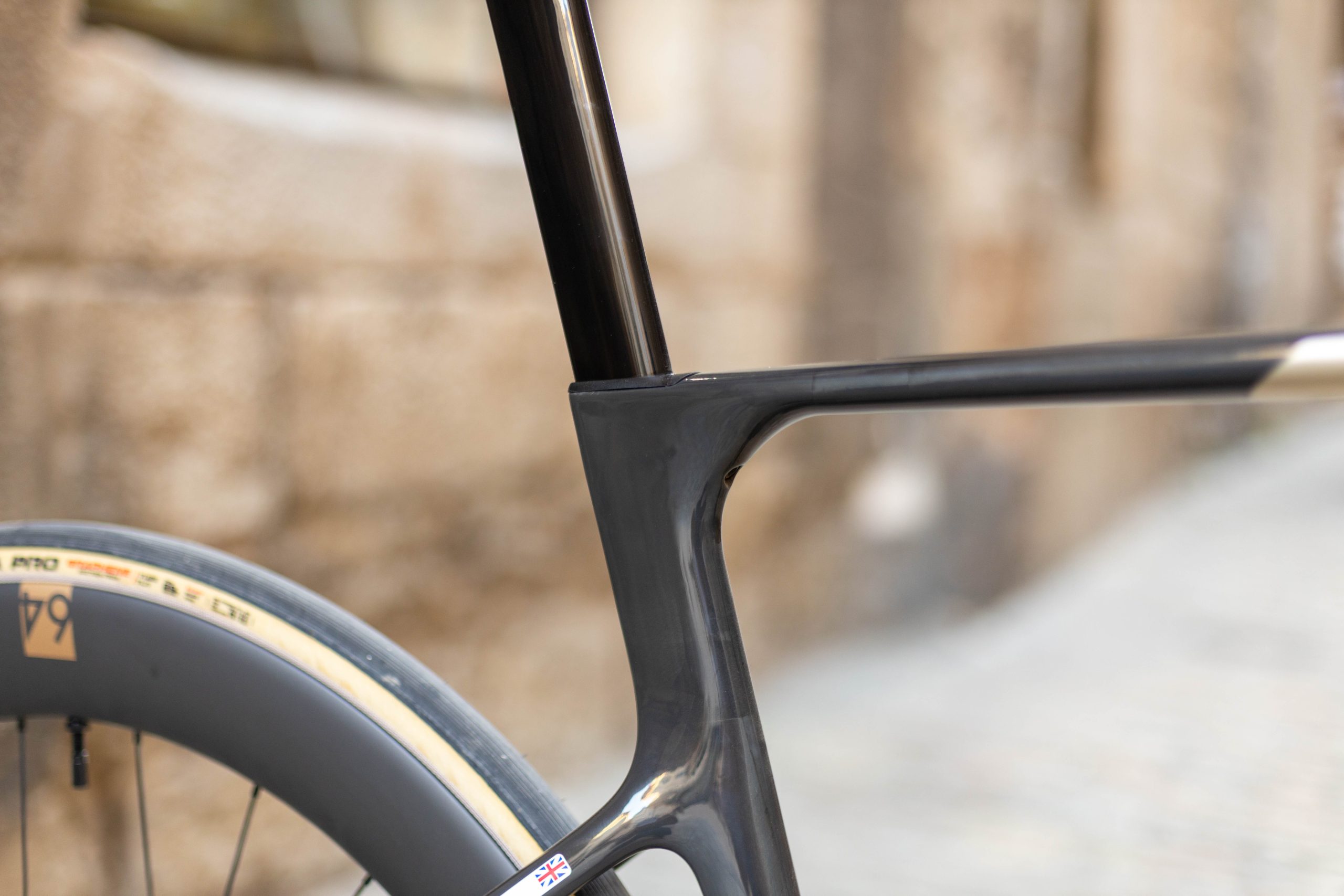
Cannondale says it has improved upon its carbon manufacturing process to help cut excess material (and therefore weight) from the frames.
A Lab71 frame is said to tip the scales at 728g in a size 56cm (painted, including bonded parts), a Hi-Mod frame 781g, and an entry-level frame 910g. Factoring in the changes made elsewhere, including the handlebars, Cannondale claims a Lab71 bike is 148g lighter than the previous generation.

Cannondale says every tube is new despite the similar aesthetics, and this yields marginal gains across the entire yaw spectrum in the wind tunnel – albeit the brand won’t divulge by exactly how much.
The smaller changes include a new seatpost-clamp design and a recessed dust cover to help prevent ingress, a new Di2 battery mounting system, plus a switch to SRAM’s Universal Derailleur Hanger design. 32mm tyre clearance remains, alongside a threaded bottom bracket.
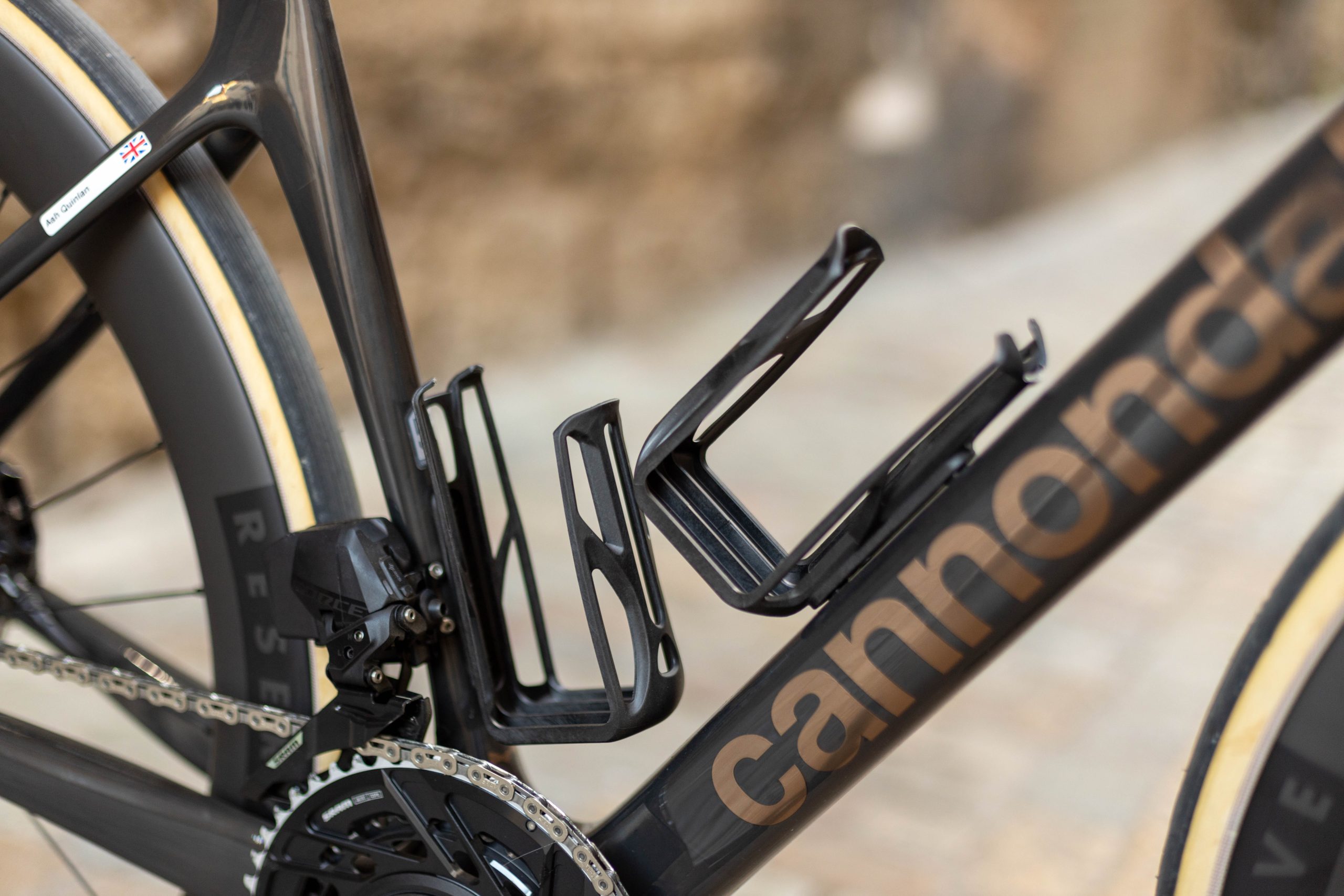
Cannondale has stuck with its aero-shaped bottle cage (and bottle) design, but this now features injected carbon for a claimed 26% weight reduction compared to the previous cages. Customers will have the cages and bottles supplied with all Lab71 and Hi-Mod spec bikes. The cages will sport regular round-shaped bottles, too.
Lab71 and Hi-Mod bikes also feature new titanium seatpost bolts, but all bikes come with an integrated out-front mount – a new dedicated unit for Lab71 and Hi-Mod bikes designed for the new handlebars, and a Cannondale Conceal mount for the entry-level machines.
2026 Cannondale SuperSix Evo models and pricing
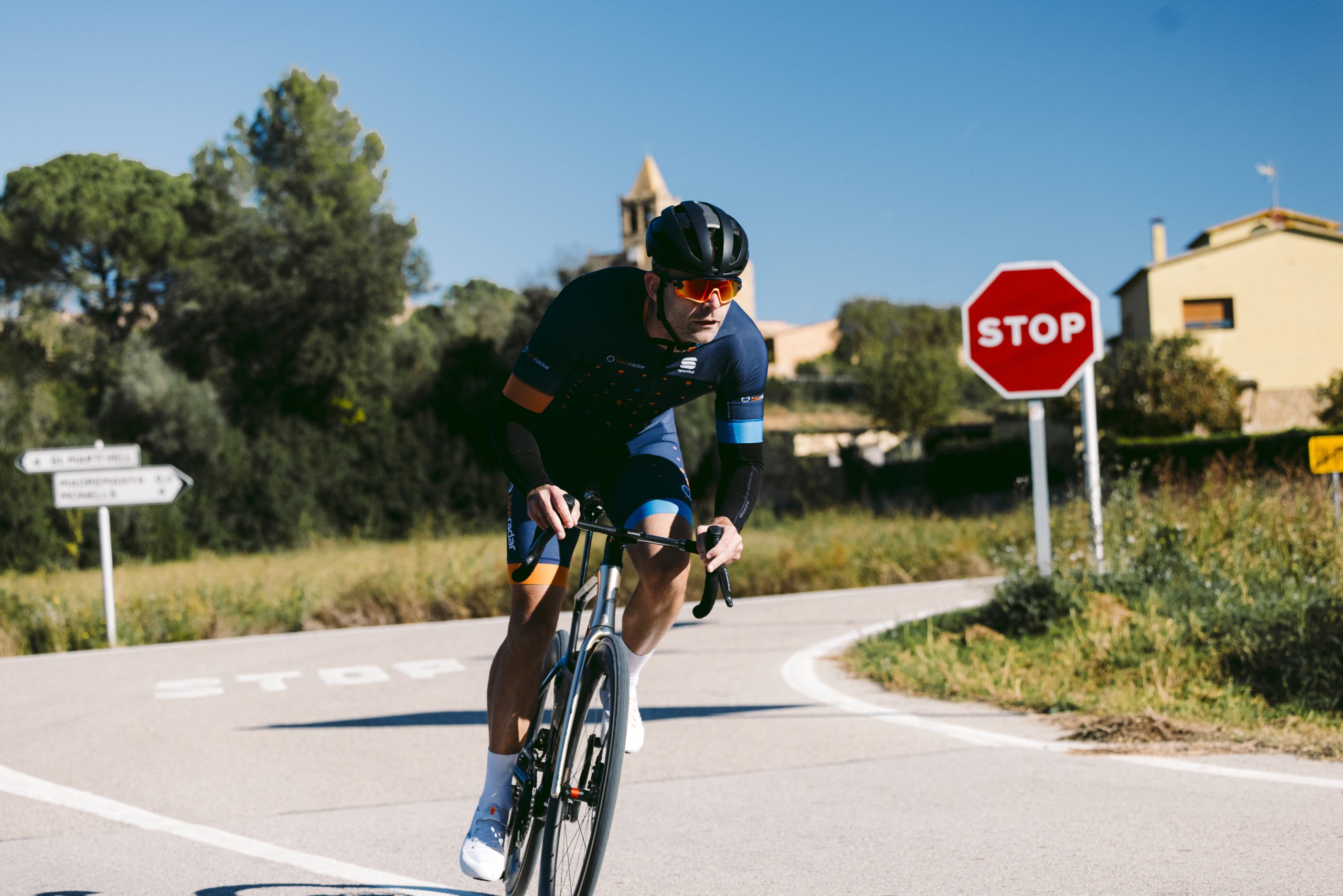
As mentioned, the SuperSix Evo is available in three frameset specifications – Lab71, Hi-Mod and entry-level ‘Carbon’.
Customers are supplied a set seatpost setback (zero or 15mm offset) and handlebar size with each size bike, with the alternatives available to purchase after market.
The Lab71 and Hi-Mod grade bikes are split into two basic build approaches: aero-oriented and lightweight ‘SL’, while entry-level bikes have one all-round spec. It’s also worth noting that Cannondale has dropped the Hi-Mod and Carbon branding from the bikes’ names, as shown below.
Cannondale SuperSix Evo Lab71
- Price: £12,000
- Frameset: Series 0 carbon
- Groupset: Shimano Dura-Ace Di2 R9200
- Cockpit: Cannondale SystemBar Road
- Wheelset: Reserve 57|64, DT Swiss 180 EXP hubs
- Tyres: Vittoria Corsa Pro TLR (29mm)
- Power meter: 4iiii Precision 3+ Pro
Cannondale SuperSix Evo Lab71 SL
- Price: £12,500
- Frameset: Series 0 carbon
- Groupset: SRAM Red AXS
- Cockpit: Cannondale SystemBar SL
- Wheelset: DT Swiss ARC 1100 Spline 38, DT Swiss 180 EXP hubs
- Tyres: Vittoria Corsa Pro clincher (28mm)
- Power meter: SRAM Red AXS
Cannondale SuperSix Evo 1
- Price: £8,995
- Frameset: Hi-Mod carbon
- Groupset: SRAM Force AXS
- Cockpit: Cannondale SystemBar Road
- Wheelset: Reserve 57|64, DT Swiss 240 EXP hubs
- Tyres: Vittoria Corsa Pro TLR (29mm)
- Power meter: SRAM Force AXS
Cannondale SuperSix Evo 1 SL
- Price: £8,795
- Frameset: Hi-Mod carbon
- Groupset: Shimano Ultegra Di2 R8100
- Cockpit: Cannondale SystemBar SL
- Wheelset: Reserve 34|37, DT Swiss 240 EXP hubs
- Tyres: Vittoria Corsa Pro TLR (29mm)
- Power meter: 4iiii Precision 3+ Pro
Cannondale SuperSix Evo 2
- Price: £6,995
- Frameset: Carbon
- Groupset: Shimano Ultegra Di2 R8100
- Cockpit: Vision Trimax Carbon Aero handlebar, Cannondale C1 Conceal stem
- Wheelset: DT Swiss ERC 45, DT Swiss 370 hubs
- Tyres: Schwalbe One TLR (28mm)
- Power meter: No
Cannondale SuperSix Evo 3
- Price: £5,995
- Frameset: Carbon
- Groupset: SRAM Force AXS
- Cockpit: Vision Trimax Carbon Aero handlebar, Cannondale C1 Conceal stem
- Wheelset: DT Swiss ERC 45, DT Swiss 370 hubs
- Tyres: Schwalbe One TLR (28mm)
- Power meter: No
Cannondale SuperSix Evo 4
- Price: £5,495
- Frameset: Carbon
- Groupset: SRAM Rival AXS
- Cockpit: Vision Trimax Carbon Aero handlebar, Cannondale C1 Conceal stem
- Wheelset: DT Swiss ERC 45, DT Swiss 370 hubs
- Tyres: Schwalbe One TLR (28mm)
- Power meter: No
Cannondale SuperSix Evo 5
- Price: £4,495
- Frameset: Carbon
- Groupset: Shimano 105 Di2 R7100
- Cockpit: Vision Trimax Carbon Aero handlebar, Cannondale C1 Conceal stem
- Wheelset: Vision SC45, Vision hubs
- Tyres: Schwalbe One TLR (28mm)
- Power meter: No
Valve’s Steam Deck OLED Will Be ‘Intermittently’ Out of Stock Because of the RAM Crisis
Valve has updated the Steam Deck website to say that the Steam Deck OLED may be out of stock “intermittently in some regions due to memory and storage shortages.” From a report: The PC gaming handheld has been out of stock in the US and other parts of the world for a few days, and thanks to this update, we now know why. The update comes shortly after Valve delayed the Steam Machine, Steam Frame, and Steam Controller from a planned shipping window of early 2026 because of the memory and storage crunch.
“We have work to do to land on concrete pricing and launch dates that we can confidently announce, being mindful of how quickly the circumstances around both of those things can change,” Valve said in a post about that announcement from earlier this month. Its goal is to launch that new hardware sometime in the first half of 2026, and the company is working to finalize its plans “as soon as possible.”


Read more of this story at Slashdot.
Valve Confirms Steam Deck OLED Is The Latest Memory Supply Crunch Victim

Try getting your hands on a Steam Deck these days and you’re likely to be frustrated by the lack of inventory. That’s understandable for the original LCD version of the Steam Deck, which also happens to be the most affordable variant, as Valve confirmed in December that it had discontinued that model. But even the Steam Deck OLED models are
Renthal’s radical new clipless pedals relocate SPD-compatible bindings inboard
Considerable research and development has gone into Revo’s first clipless pedals since we first saw the prototypes at COREbike in February 2024. Now both models are finally available.
Renthal says the design it has settled on for the Revo-DHC and Revo-TRC prioritises durability, easy servicing and feel.
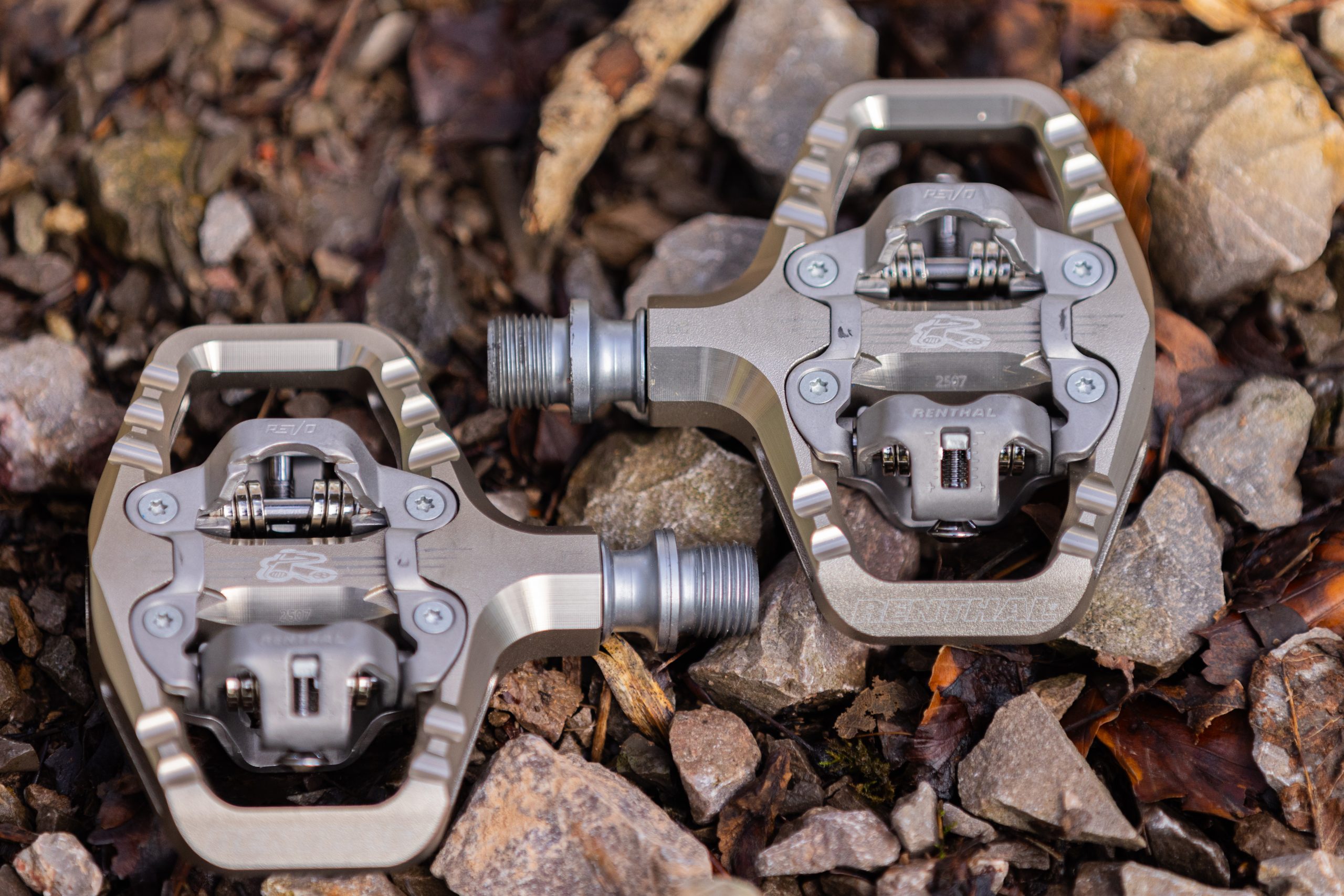
The brand says that in the case of the Revo-DHCs, it was aiming for a flat-pedal-like feel, but has gone about this in an unorthodox way.
Built for downhill racers
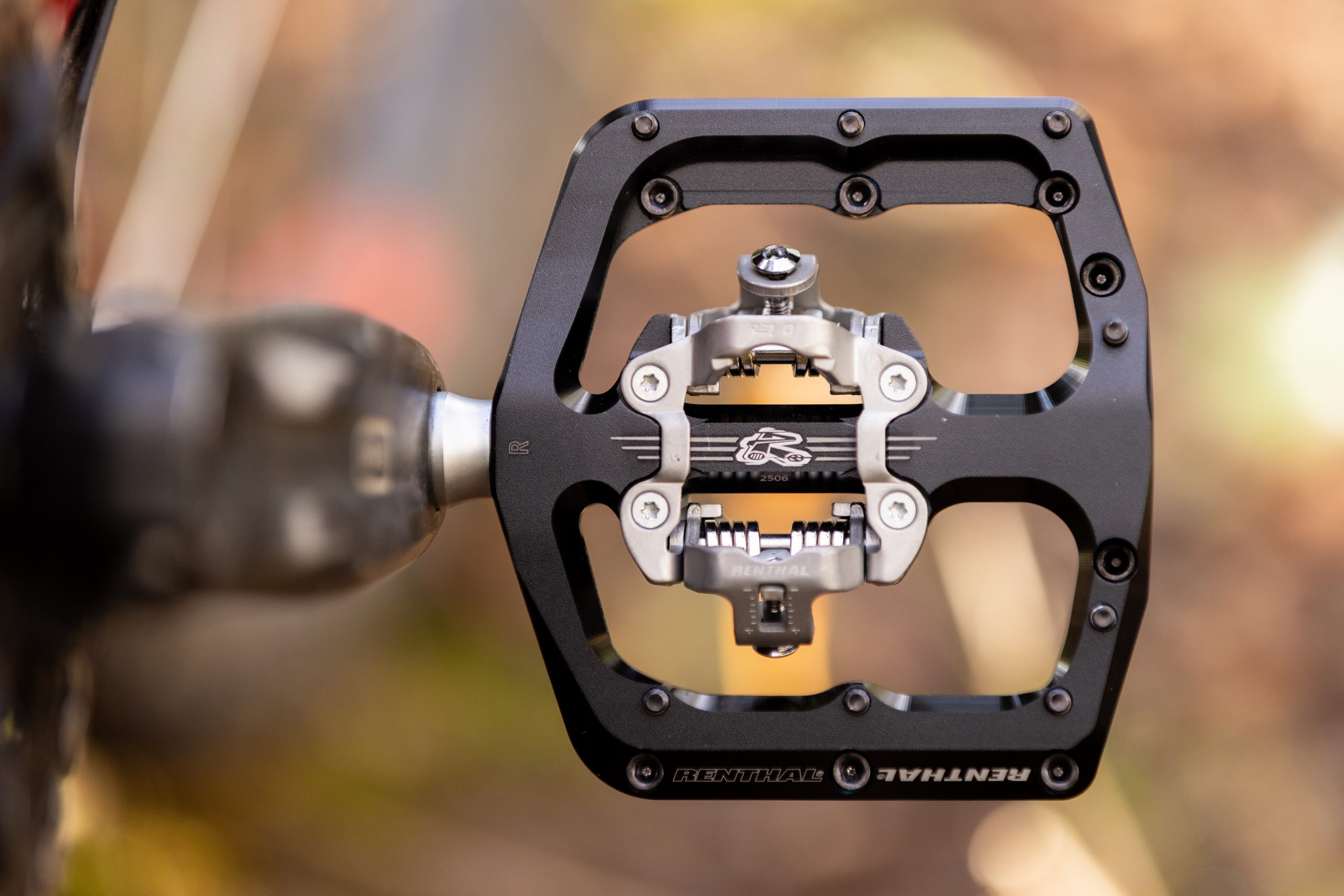
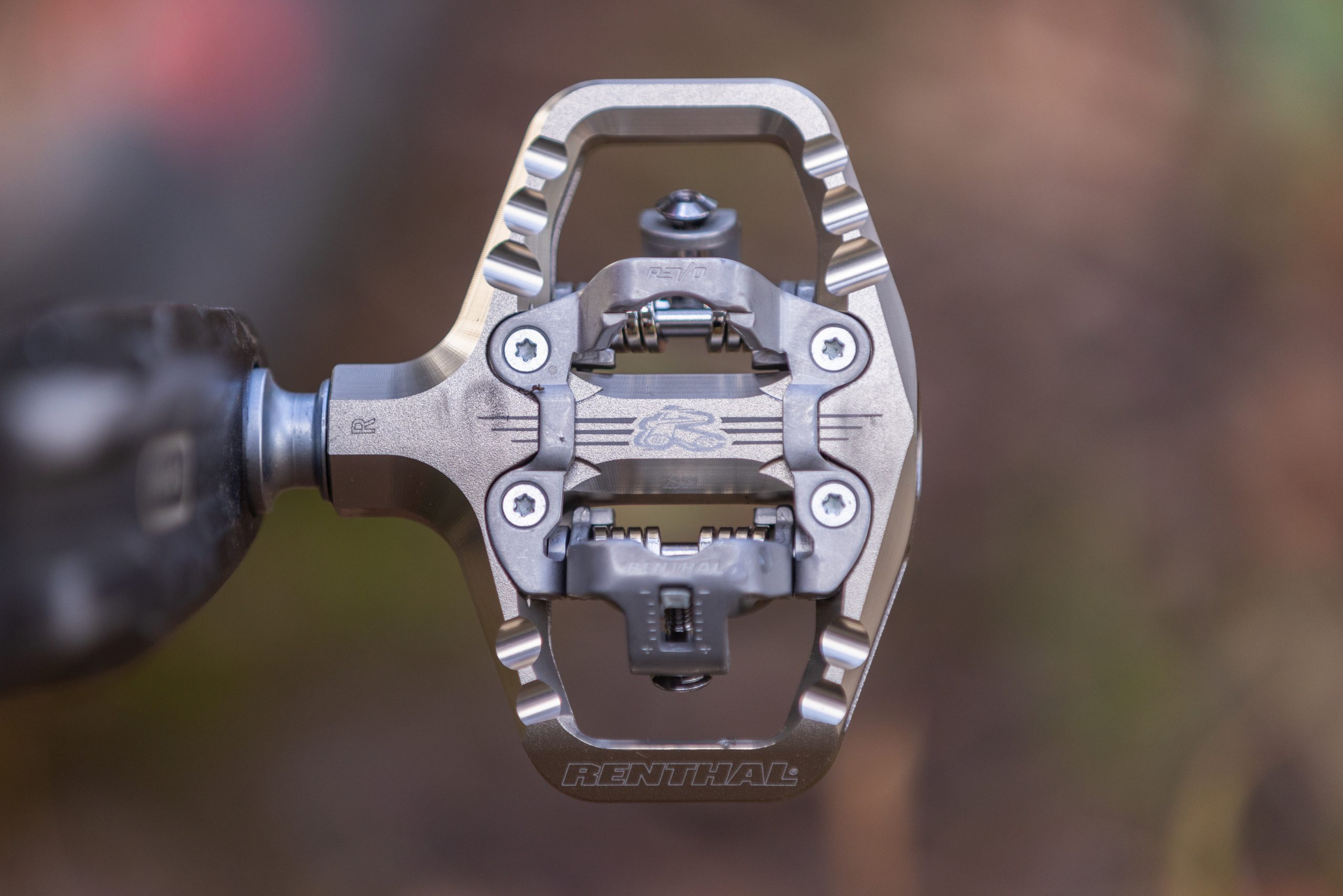
Aimed at downhill racers, the Revo-DHC pedals look striking because the mechanism is heavily offset inboard within the flat-pedal-esque platform.
It sits the same distance from the crank arm (circa 55mm) as on most clipless designs, but unlike traditional pedals, there is increased additional outboard support for the shoe sole.
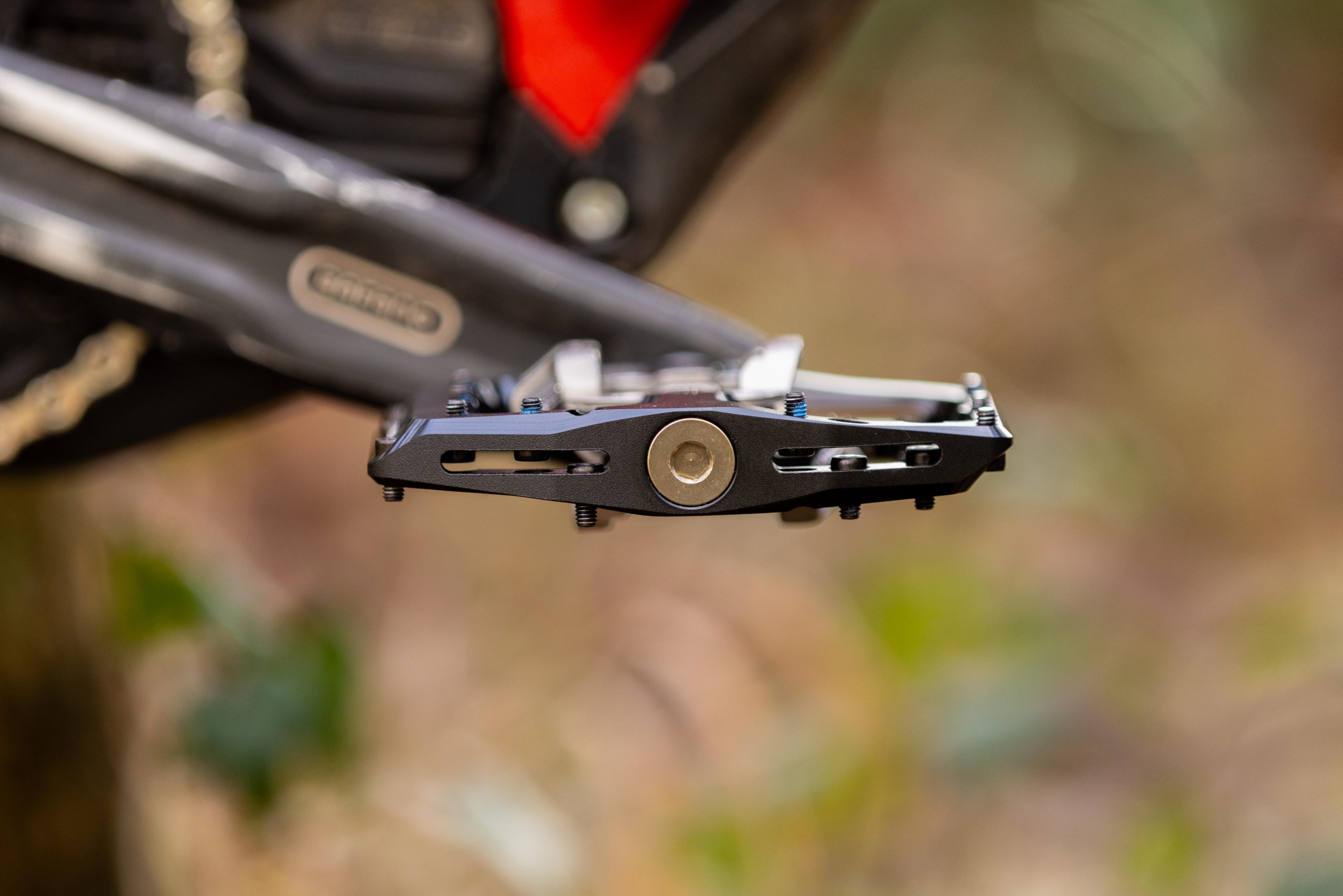
The Revo-DHCs share their silhouette with Renthal’s Revo-F flat pedals, launched in 2024, and use the same adjustable-height (1.5 to 5.5mm) pins.
The idea is that these should be set to a length that enables ‘float’ between shoe and pedal for easy engagement, but permits them to bite into the sole when you load the pedal, giving a planted feel.
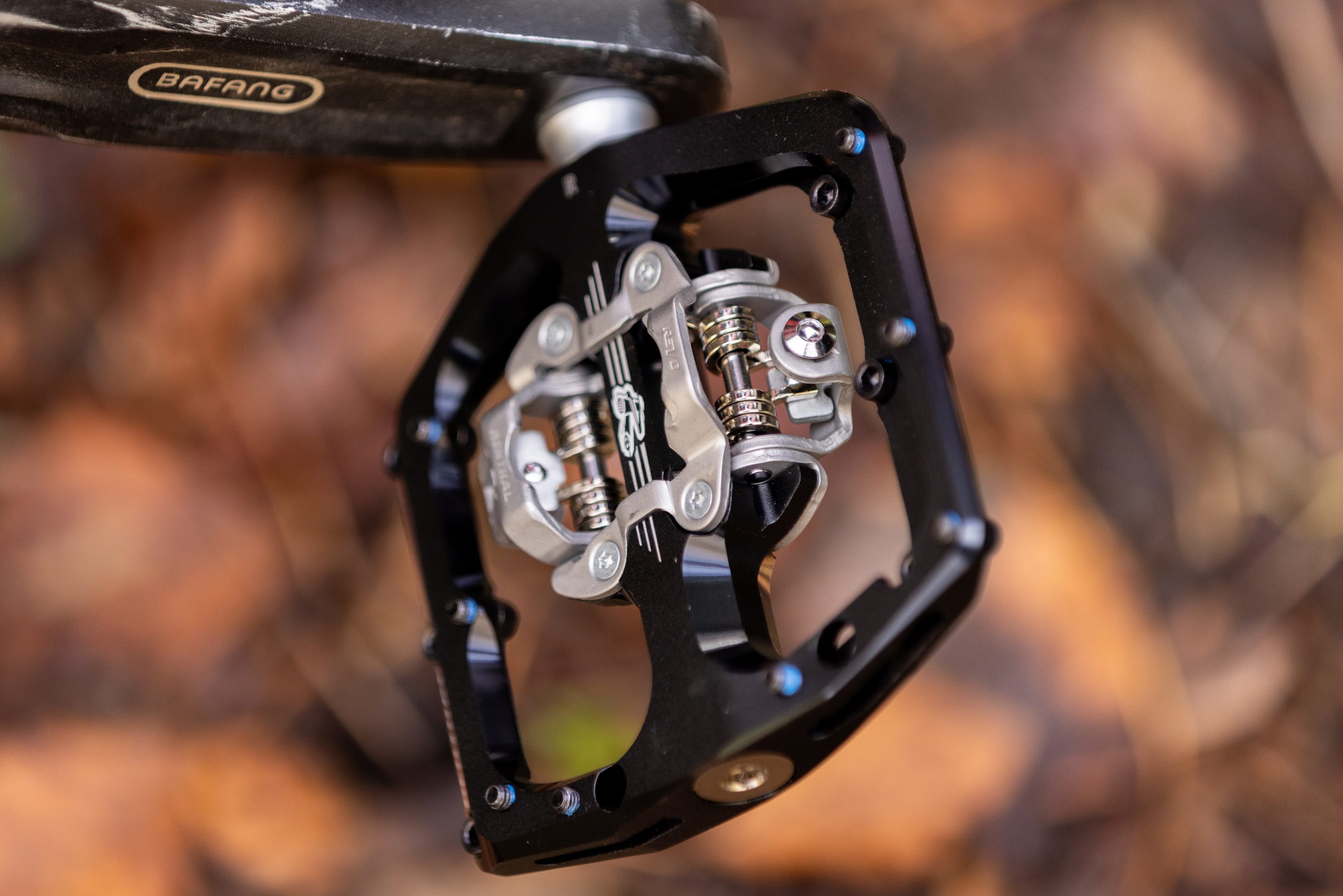
The Revo-DHCs’ large platform contains eight pins per side, so when you unclip, there should be plenty of support available until you can clip in again.
“The front pins are set to clear the front of the shoe as close as possible when clipping in, the rear pins are set to clear the shoe by the same margin when clipped in,” says Renthal.
At 620g a pair, the DHCs aren’t light, but Renthal says “we didn’t want to sacrifice that flat-pedal feel just to save a few grams”.
The platform is made from CNC-machined 6061 aluminium alloy and spins on a chromoly steel axle, supported by an inboard IGUS bush and three outboard cartridge bearings.
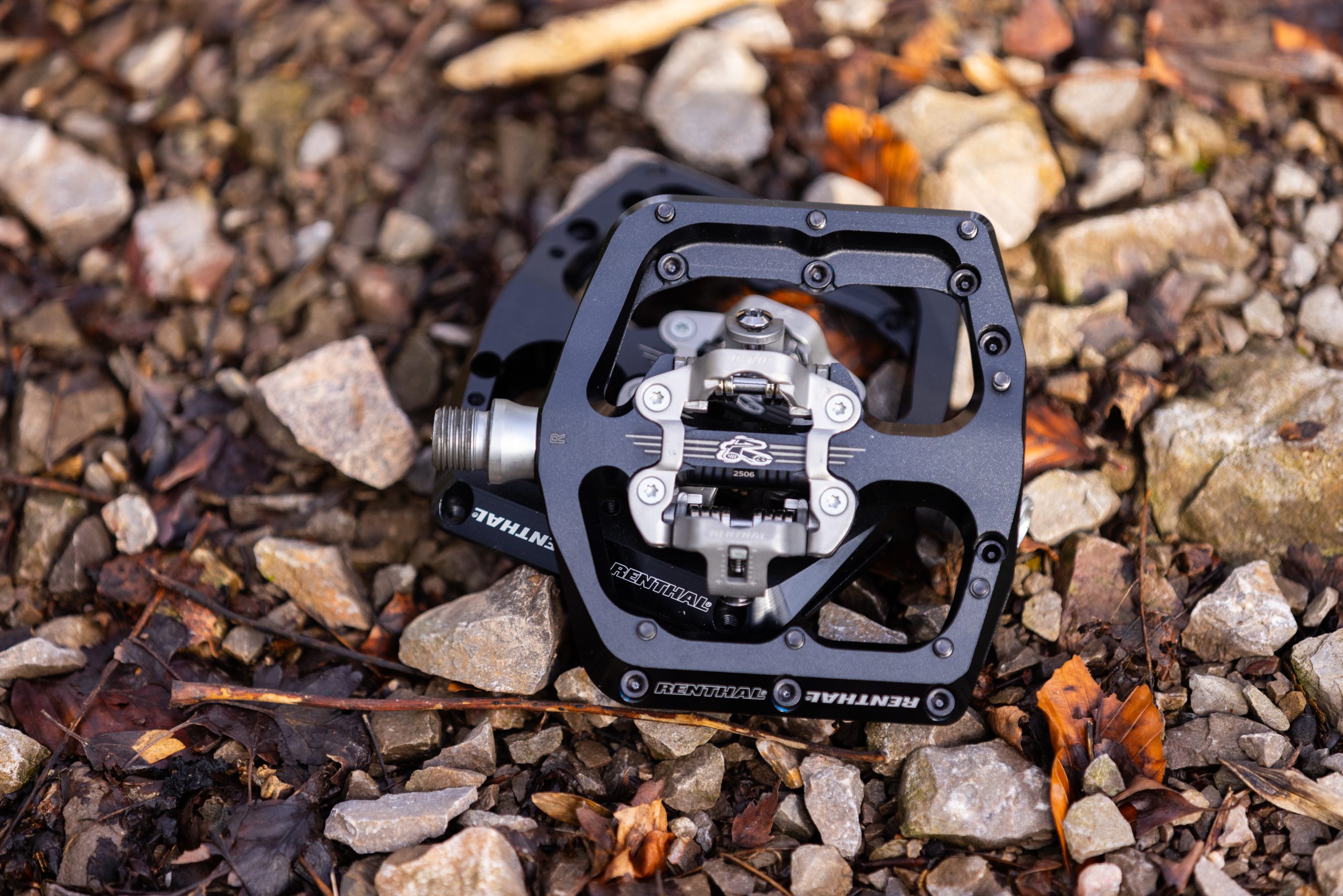
The binding mechanism used on both models of Revo pedal is proprietary, but compatible with Shimano’s ubiquitous SPD cleats.
For riders concerned about weight, the UK brand also has the Revo-TRCs, which it claims weigh 394g. Aimed at trail and enduro riders, they feature the same materials and mechanism as the DHCs, but have a smaller platform, no pins and a more conventional look; the binding sits centrally within the cage.
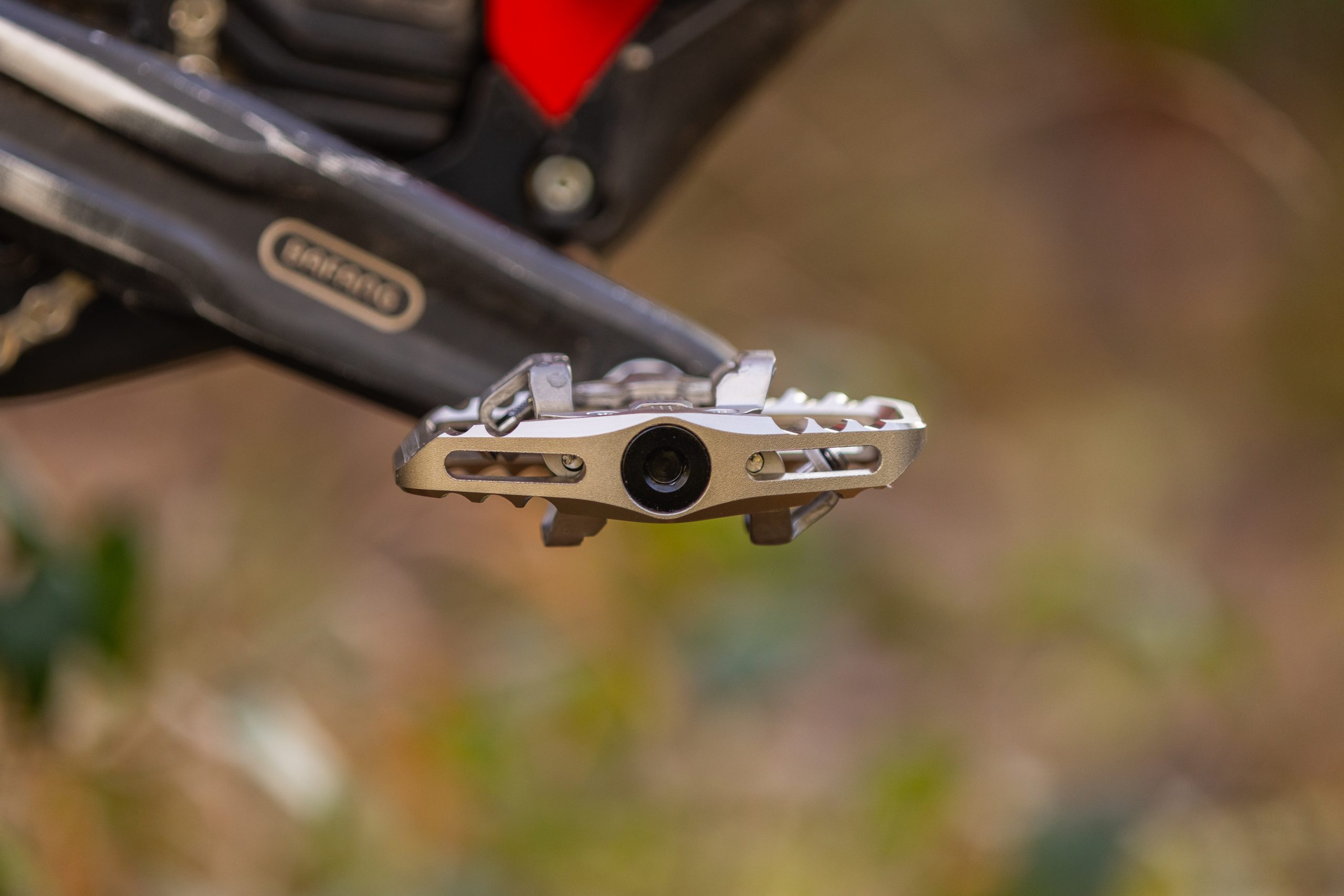
Unusually, the three cartridge bearings have been moved to the middle of the body on this design.
Renthal’s Ian Collins says pedals with a smaller platform are less prone to rock strikes, and therefore loads more often go through the centre of the pedals, so this arrangement provides the best bearing longevity.
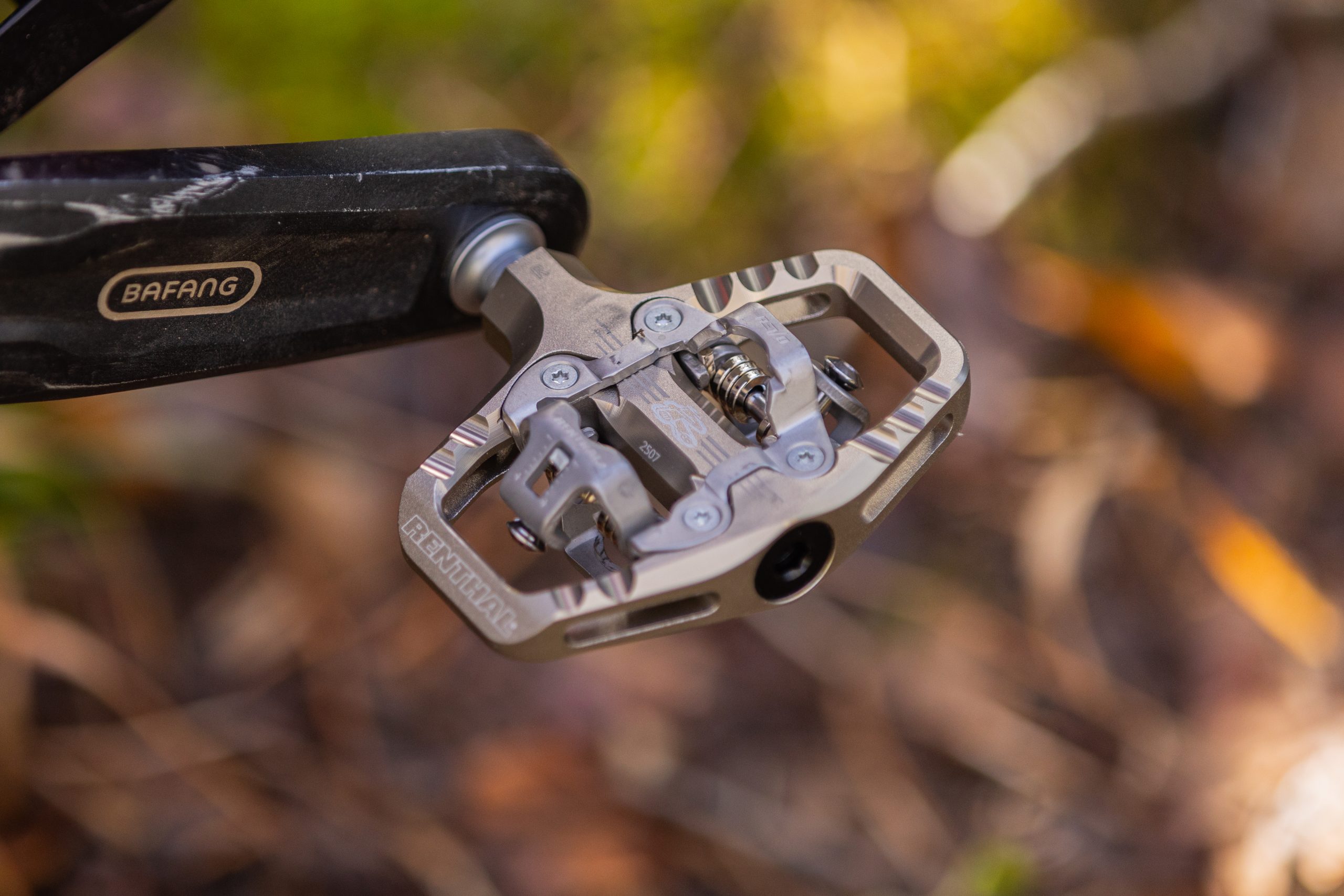
Both pedals are designed for easy servicing without specialist tools, thanks mainly to Renthal’s proprietory patent-pending axle design, where the axle itself doubles as a bushing installation and extraction tool.
They are available either in black or Renthal’s signature ‘AluGold’ colourways.
- Revo DHC: £189.95 | $189.95 (excl. tariff) / $226.20 (incl. tariff) | €199.95
- Revo TRC: £164.95 | $179.95 (excl. tariff) / $213.52 (incl. tariff) | €179.95
Apple’s 14-inch MacBook Pro M5 is up to $300 off
Apple released its new 14-inch MacBook Pro M5 in October with little fanfare. But, despite the underselling, we found the device to be a great upgrade to its predecessor and the best MacBook for creatives. Now, you can find out for yourself with less of a strain on your wallet, thanks to a big sale.
Currently, B&H has discounts available for a variety of configurations. The cheapest option is the MacBook Pro M5 with 16GB of RAM and 512GB of SSD. It’s available in Space Black and Silver for $1,499, down from $1,599 — the lowest price we’ve seen for it. There’s also a deal on the 24GB of RAM option, but the best savings are $300 off the model with 32GB of RAM and either 512GB ($1,699) or 1TB ($1,899).
We gave the 14-inch Apple MacBook Pro M5 a 92 in our October review. We were impressed with how much faster — up to 60 percent — the GPU is than with the M4. It has a 10-core GPU, 10-core CPU and 16 Neural Engine cores. Beyond that, it has an extensive battery life, lasting 34 hours and 30 minutes while playing a looping HD video. It also has an excellent design, great keyboard and an extensive port selection.
Follow @EngadgetDeals on X for the latest tech deals and buying advice.
This article originally appeared on Engadget at https://www.engadget.com/deals/apples-14-inch-macbook-pro-m5-is-up-to-300-off-131743149.html?src=rss
VisionOS Update Gives Devs Improved Tools for VR Cloud Streaming


Apple Vision Pro just got a new update that brings Foveated Streaming to the headset, essentially the same bandwidth-saving feature Valve is bringing to its upcoming Steam Frame headset.
The News
As noted by VR supply chain analyst Brad Lynch, foveated streaming has arrived on Vision Pro via the latest visionOS 26.4 beta update, which landed on February 16th.
Much like Valve’s foveated streaming solution for Steam Frame, Apple’s implementation uses Vision Pro’s eye-tracking to optimize the streamed image to serve up the highest quality at the very center of your view, according to recent Apple developer documentation.
If you have an existing virtual reality game, experience, or application built for desktop computers or a cloud server, you can stream it to Apple Vision Pro with the Foveated Streaming framework.
Foveated Streaming allows your endpoint to stream high quality content only where necessary based on information about the approximate region where the person is looking, ensuring performance.
Additionally, Apple notes that on Vision Pro, foveated streaming allows for a sort of hybrid approach to computing: you can display visionOS spatial content alongside streaming content, such as a flight simulator rendering a cockpit using RealityKit while processor-intensive landscapes are streamed from a remote computer to the device.
The key difference is the focus and implementation. Valve seems to be applying Foveated Rendering globally, meaning all Steam apps will benefit out of the box. Valve’s focus is also on local PC streaming, which is done via a direct Wi-Fi 6E connection.
Instead, Vision Pro apps and games need to be specifically integrated with Apple’s version of the technology, with Apple additionally supporting NVIDIA’s CloudXR SDK, which allows developers of existing VR apps created for desktop computers as well as cloud servers to stream to Vision Pro.
My Take
On the face of it, it looks like Apple is matching Valve punch-for-punch with foveated streaming, although I wouldn’t take this as Apple meaningfully looking to compete with the upcoming Steam Frame on the consumer end of things.
The $3,500 Vision Pro M5 refresh likely won’t come down in price anytime soon, and I don’t suspect Apple is trying to get a bunch of PC VR developers onboard to create consumer-facing versions of their apps that will need to be specifically integrated with Vision Pro foveated streaming.
If I were an enterprise user though, I would may be pretty interested in the new update, as this opens up one of the key features Steam Frame is bringing to the table.
Being able to push more compute-intensive apps to a headset they likely already own could stop some companies from justifying a Steam Frame(s) purchase, which Apple is all too happy to oblige—especially as the recent memory and storage crisis has seen components shoot up in price so dramatically, causing Valve to take reassess pricing and release date of Steam Frame.
The post VisionOS Update Gives Devs Improved Tools for VR Cloud Streaming appeared first on Road to VR.
Microsoft .NET On Linux Patches Use IO_uring For Massive Performance Benefits
A pull request for the Microsoft .NET Runtime build on Linux to use IO_uring for sockets is showing some massive performance benefits…
Unity Promises Deluge Of New Games Prompted Into Existence By AI As Its Stock Tanks

If you love shovelware just wait
Rebel Route: Big Ring/Little Ring (Watopia)
I’ve been messing around with lots of different Watopia Rebel Route ideas lately, but this may be my favorite. It uses Watopia’s most classic roads in a combination that would work well for an easy short ride, a warmup + lap-jersey-grabbing ride, or (hopefully some day) an official Zwift race with a flatter start and a punchy and strategic second half.
This route is simply a combination of two well-known Watopia circuits: Volcano Circuit and Hilly Route. We begin with the Volcano Circuit – the “big ring” that is flat and fast. Then we hit the inner “little ring” of the Hilly Route with its namesake KOM.
One other tidbit: this is the first time I’ve created a “reverse” version of a Rebel Route, because I think the Big Ring/Little Ring Reverse makes a great course as well. The Strava segment is linked at the bottom of this post, and I’ll be including the reverse version in the Veloviewer Leaderboards.
About Rebel Routes
“Rebel Routes” are Zwift rides not available on Zwift’s routes list, thus requiring manual navigation.
The reward for your rebel ride? Exploring a new route, knowing you’ve gone where few Zwifters have gone before. And a Strava segment rank in the tens or hundreds instead of the thousands! Rebel Routes are also included as a separate category on our Veloviewer Route Hunter leaderboard.
Route Description
You can set yourself up for an easy first 11km of navigating by selecting the Volcano Flat route to begin your ride.
A note about the Strava segment’s start point: it begins at the white line on Ocean Boulevard which acts as the official start line for some newer Watopia routes. This allows future events as well as free rides to match the Strava segment.
The first loop of this route – the “Big Ring” portion – is the Volcano Flat route. That means you’ll travel through the Ocean Blvd tunnel, the marina, down the Dirty Sorpressa and across the land bridge to the Volcano, then back into downtown Watopia. That’s the “Big Ring” done.
Next, instead of turning onto Ocean Blvd again, we go straight to head up the Hilly KOM for the spicy “Little Ring” portion. This is Watopia’s classic “Hilly Route” which takes you over the KOM, down through the Italian Villas, onto the JWB Sprint, then up the ramp and into The Esses before a fast finish at the downtown lap arch.
Turn By Turn Directions
Begin by choosing the Volcano Flat route, which starts you in downtown Watopia and routes you correctly until you need to turn right to hit the KOM after completing the Volcano Flat route (turn #12 below).
- Left to Ocean Blvd
- Straight (Right) to Italian Villas
- Straight (Right) to Italian Villas
- Left to Italian Villas
- Left to Volcano Circuit
- Straight (Left) to Volcano Circuit
- Straight (Right) to Volcano KOM
- Left to Volcano Circuit
- Straight (Right) to Volcano
- Left to Downtown
- Left to Downtown
- Straight (Right) to KOM
- Straight (Left) to KOM
- Straight (Left) to Bridge
- Straight (Left) to Islands
- Straight (Right) to Italian Villas
- Right to Sprint
- Straight (Left) to Sprint
- Right to Downtown
Route details:
Distance: 20.6km (12.8 miles)
Elevation Gain: 143m (469′)
Strava Segment
Reverse Strava Segment
See on ZwiftMap.com
Rebel Route Suggestions
Got an idea for a great Rebel Route? Share it below and maybe we’ll publish a post about it!
Europe probes Shein’s addictive app design and illegal product sales
The European Commission (EC) has opened an investigation into low-cost fast fashion retailer Shein. EC officials are concerned about the sale of illegal products, including child sexual abuse material, as well as the potentially addictive design of its shopping experience. The Commission found fellow low-cost retailer Temu in violation of the Digital Services Act after a similar investigation last year.
The probe is being opened under the Digital Services Act, a set of EU rules governing online services. The Commission will examine how Shein drives engagement with shoppers, including using a points and rewards system, and whether the company is properly mitigating the risk of addiction via these and other features.
Algorithmic recommendation systems are another point of contention, and the Commission will ask Shein to disclose how it suggests products to users. It also says that the company must offer users a system that is not based on profiling.
The Singapore-based company has faced a great deal of scrutiny in past years on a number of fronts, including its labor practices, materials sourcing, data practices and IP infringement. Last year the Texas Attorney General opened a probe into the company’s safety and labor practices amid allegations that Shein uses forced labor as well as toxic or hazardous materials.
Addictive design has been a recent priority for European regulators, with the Commission demanding that TikTok make changes to its platform after a similar probe concluded earlier this month. Algorithms have also been in focus, with the Commission recently launching a probe into how exactly X’s recommendation algorithm works.
The regulatory body will now continue collecting evidence in the matter, and holds the authority within the EU to levy fines and demand changes should the platform wish to continue operations in the region.
This article originally appeared on Engadget at https://www.engadget.com/general/europe-probes-sheins-addictive-app-design-and-illegal-product-sales-125322191.html?src=rss
Sony Tech Can Identify Original Music in AI-Generated Songs
Sony Group has developed a technology that can identify the underlying music used in tunes generated by AI, making it possible for songwriters to seek compensation from AI developers if their music was used. From a report: Sony Group’s technology analyzes which musicians’ songs were used in learning and generating music. It can quantify the contribution of each original work, such as “30% of the music used by the Beatles and 10% by Queen,” for example.
If the AI developer agrees to cooperate for the analysis, Sony Group will obtain data by connecting to the developer’s base model system. When cooperation is not attainable, the technology estimates the original work by comparing AI-generated music with existing music. The AI boom has sparked numerous cases in which AI developers are accused of using copyrighted music, video and writing without permission to train machines. In the music industry, AI-generated songs using the voices of well-known singers have been distributed online. The Japanese company thinks the technology will help create a system that distributes revenue generated by AI music to original songwriters based on their contribution.


Read more of this story at Slashdot.
Giant Bicycles founder King Liu has died aged 93
Giant Bicycles founder King Liu “passed away peacefully” on Monday at the age of 93.
“To Giant Group, Mr. Liu was not only our Founder, but a leader who consistently guided the organization forward while remaining attentive to the people around him,” Giant said in a statement released yesterday.
“Through a strong commitment to quality and a clear long-term vision, he led the company onto the global stage and helped the world recognize the strength and capability of Taiwan’s bicycle industry,” the statement continued.
Liu founded Giant Group in 1972 in his hometown of Taichung, Taiwan, making bikes for overseas brands such as Schwinn.
Liu graduated from a technical high school before working in several professions, across transportation, chemicals, food imports and hardware. After the loss of his previous venture, an eel farm, Liu decided to build a bicycle factory in 1972 when he was 38.
Giant initially made bicycles for overseas brands, before beginning production of its own bicycles in 1981. It is now the largest bicycle manufacturer in the world, producing an estimated 6.6 million bikes annually.
In 2013, Liu told the New York Times that he had a “mission” to make Taiwan the “capital of cycling”.
Liu took to cycling seriously in his 70s. He reignited his passion for cycling in 2007 by riding 575 miles through Taiwan in 17 days. Two years later, he rode more than 1,000 miles from Taiwan to China to promote the positive benefits of the bicycle.
“Throughout his life, Mr. Liu devoted himself to bicycles, believing they represented not merely a business, but a meaningful way of life. He was widely respected as a lifelong advocate for cycling culture and remained a deeply influential figure to colleagues, partners, and riders across generations,” Giant said.
SlimeVR Launches Crowdfunding Campaign for Thinner & Lighter Full-Body Trackers


SlimeVR has launched its next crowdfunding campaign, this time looking to get backers excited about its next-gen ‘Butterfly’ body trackers, which promise to be thinner, lighter, and offer a longer-lasting battery.
SlimeVR’s crowdfunding campaign for the new Butterfly Trackers quickly crossed its $180,000 funding goal when it went live on February 9th, now sitting at over $347,000 from nearly 760 backers.
Much like the original SlimeVR Full-Body Tracker, which attracted more than $9 million in 2021, the IMU-based body tracking solution lets VR users better articulate their avatars without the need of base stations or external sensors of any type. It’s also handy for things like motion capture and VTubing.
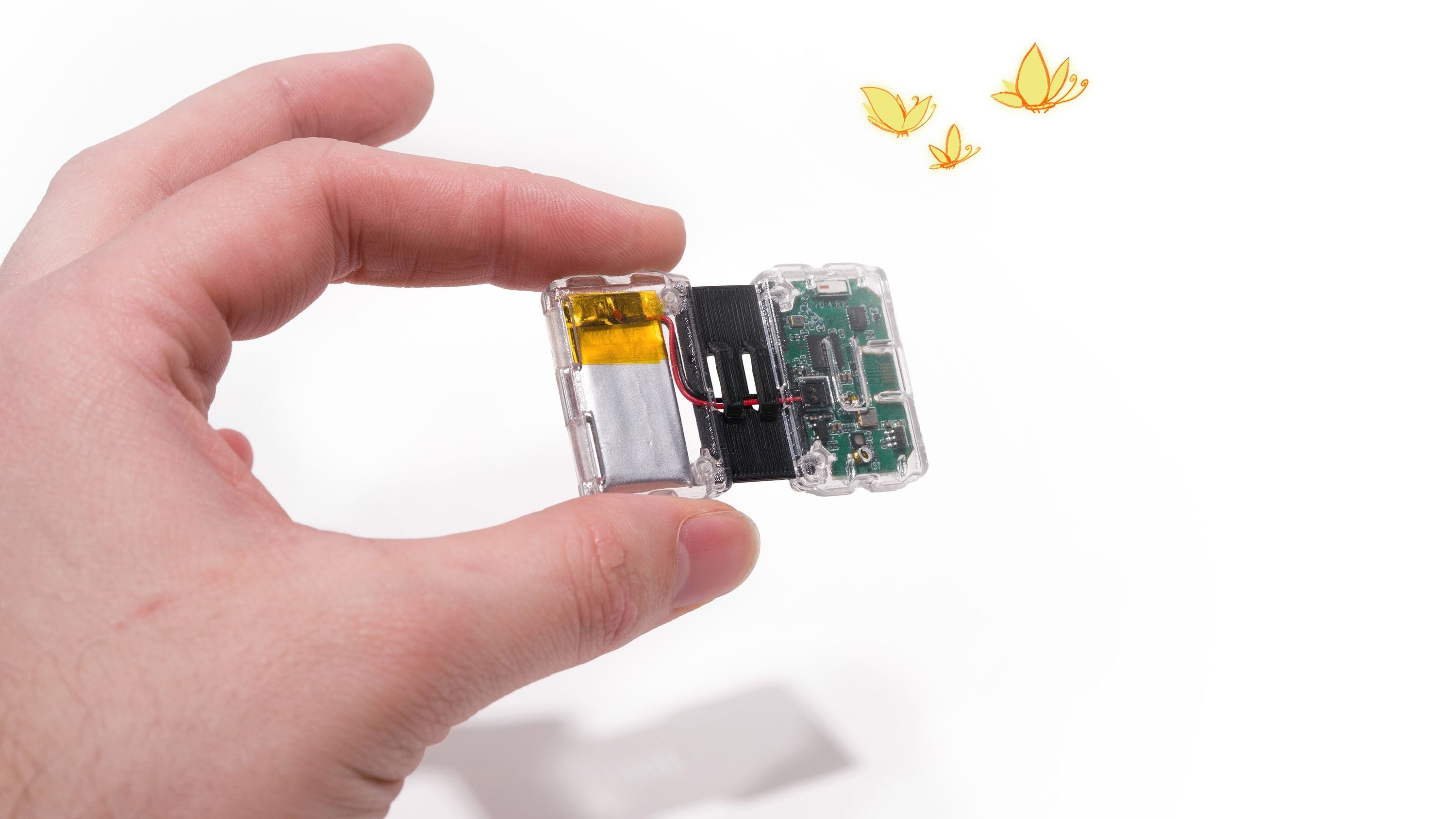
That said, Butterfly Trackers are built using the same tracking technology and the ICM-45686 IMU chip by TDK as the original, something SlimeVR notes also includes the same long drift reset times and tracking quality.
The key innovation however is the inclusion of a custom 2.4 GHz dongle instead of Wi-Fi, which essentially allows the trackers to be smaller, lighter, and have a longer battery life. SlimeVR estimates each tracker can last up to 48 hours on a single charge, which is more than double its original Full-Body Trackers.
And because they’re so thin and light, this also includes a few new methods of attachment, including directly via straps, clips, and even iron-on patches.
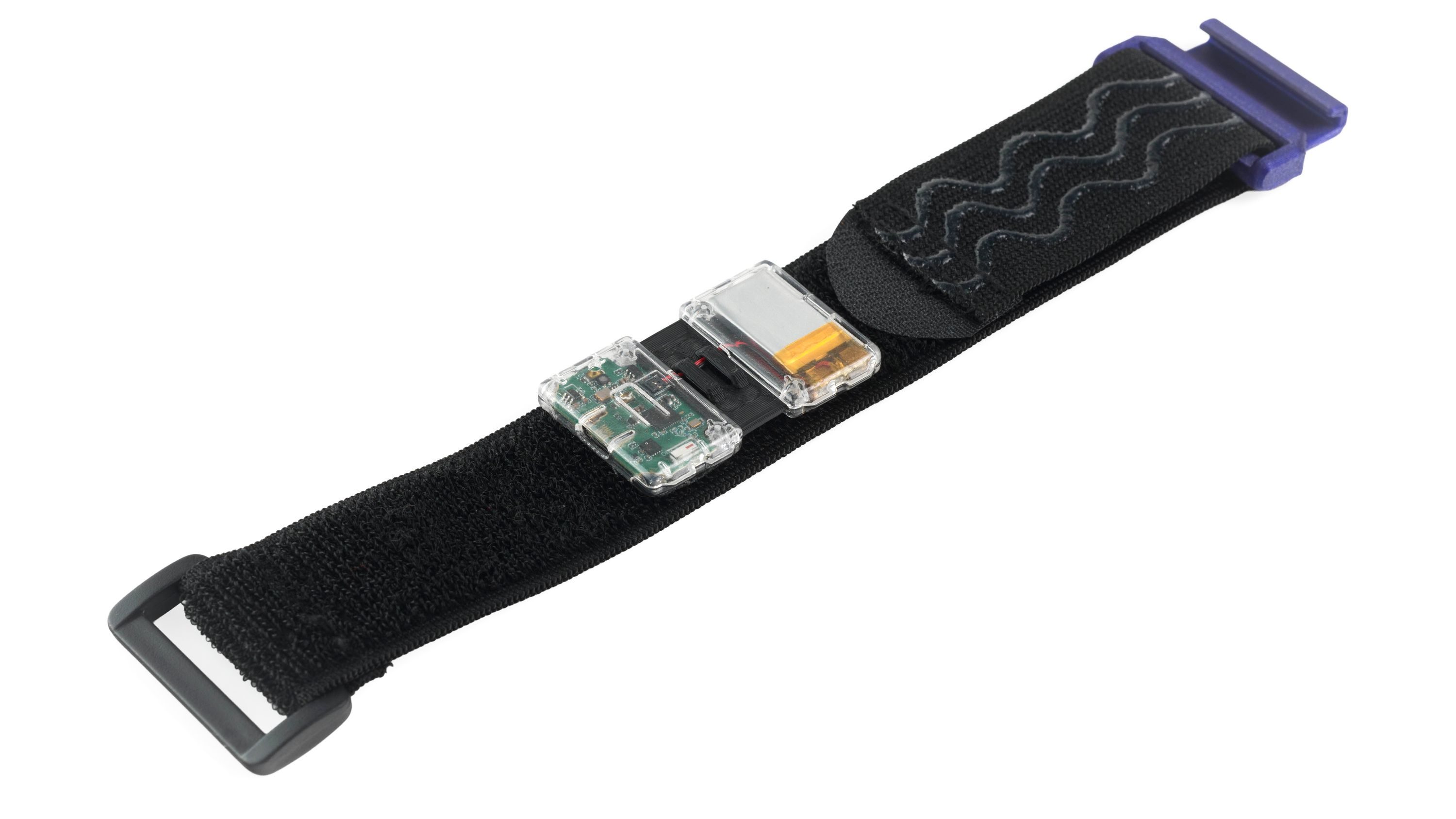
Notably, all SlimeVR trackers are compatible with standalone headsets, including Meta Quest, Pico, or Steam Frame, as well as any headset that uses SteamVR.
The campaign’s lowest backer tier is the ‘Core Set Bundle’, which includes six Butterfly Trackers for $279, which are estimated to ship by Aug 31st, 2026. SlimeVR says the six-unit bundle is enough to track the position and rotation of your hip, knees, and chest, as well as the position (re: not rotation) of your feet.
You can check out the full specs list and additional funding tiers over on the SlimeVR Butterfly Tracker Crowd Supply campaign, which ends March 19th.
The post SlimeVR Launches Crowdfunding Campaign for Thinner & Lighter Full-Body Trackers appeared first on Road to VR.
EU launches second investigation into Grok’s nonconsensual image generation
X is facing yet another investigation into Grok’s reported creation of nonconsensual sexual images on the platform. Ireland’s Data Protection Commission (DPC) has announced an inquiry into X regarding the harmful, intimate images and processing of EU and EEA individuals’ personal data — including children.
In an 11-day period, X generated about three million sexualized images, an estimated 23,000 of which were of children. British nonprofit, the Center for Countering Digital Hate (CCDH) announced the results of its December 29 to January 9 review last month.
Critically, the investigation will determine whether X has broken GDPR laws. “The DPC has been engaging with XIUC since media reports first emerged a number of weeks ago concerning the alleged ability of X users to prompt the @Grok account on X to generate sexualised images of real people, including children,” DPC deputy commissioner Graham Doyle said, referring to X using the full title X Internet Unlimited Company (XIUC).
Doyle continued: “As the Lead Supervisory Authority for XIUC across the EU/EEA, the DPC has commenced a large-scale inquiry which will examine XIUC’s compliance with some of their fundamental obligations under the GDPR in relation to the matters at hand.”
The DPC’s probe could have repercussions for X across the EU, while also building on similar probes in the bloc. In January, the European Commission launched an investigation into whether X has violated the Digital Services Act. It’s looking into if X has properly “assessed and mitigated” Grok’s risks on X, including the spread of illegal content such as the AI-generation nonconsensual sexually explicit images. Once again this includes those of children — this disturbing point can’t be emphasized too much.
X claimed in mid-January that it was preventing Grok from editing photos of real people to give them revealing clothing. However, this seems far from the truth. Earlier this month, a male reporter found Grok would still put him in revealing clothing and even added visible genitalia.
This article originally appeared on Engadget at https://www.engadget.com/big-tech/eu-launches-second-investigation-into-groks-nonconsensual-image-generation-113239967.html?src=rss
Valve admits Steam Deck availability is affected by memory and storage shortages
Don’t expect the Steam Deck to be easier to get anytime soon. Valve has posted a notice on the Steam Deck page with a warning that the handheld gaming console “may be out of stock intermittently” in certain regions “due to memory and storage shortages.” The company also reiterated that the more affordable Steam Deck LCD is no longer in production and will no longer be available once stocks run out. Valve started phasing out the LCD console back in December, which means the OLED handhelds are now the only choice for gamers who want to get a Steam Deck. The company’s notice comes after it completely ran out of Steam Deck units a few days ago.
RAM and storage shortages are plaguing tech manufacturers due to massive demand for those components from the artificial intelligence industry. AI companies have been snapping up available memory chips and hard drives for their rapid infrastructure buildouts, leaving everyone else short. In fact, we couldn’t find any deals for RAM last Black Friday, and Samsung global marketing leader Wonjin Lee warned at CES 2026 that memory price hikes are on the horizon.
Valve also had to delay the release of the Steam Machine and the Steam Frame VR headset due to industry-wide memory and storage shortages. It had intended to start shipping those devices in early 2026, but it admitted in its announcement that it has to rethink their launch date and pricing, insinuating that they could be priced higher than the company had planned,
This article originally appeared on Engadget at https://www.engadget.com/gaming/valve-admits-steam-deck-availability-is-affected-by-memory-and-storage-shortages-102913993.html?src=rss