
Snap’s Top AR Exec Quits Ahead of Specs Consumer Debut

Scott Myers, Snap’s top executive in charge of Specs, has left the company ahead of the planned release of its consumer AR glasses.

The News

Myers reportedly left his six-year tenure at the company due to a dispute with Snap CEO Evan Spiegel, tech outlet Sources claims, characterizing the dispute as a “blow-up” centered around the company’s strategy.

A Snap spokesperson confirmed Myers’ departure on Reddit, nothing that Specs are still on track for release this year:

“Scott Myers has decided to step down from his role at Snap. We thank him for his contributions and wish him the best in his next chapter. We can’t wait to bring Specs to the world later this year. We remain focused on disciplined execution and long term value creation for our developer partners, community and shareholders.”

Myers came to Snap in 2020 to oversee all aspects of Specs, including hardware, software, product and operations. He previously held senior positions at SpaceX, Apple, and Nokia, according to his LinkedIn profile.

Snap Spectacles (gen 5) | Image courtesy Snap Inc

This comes at a critical moment for Snap. In September 2025, Spiegel noted in an open letter that the company is heading into a make-or-break “crucible moment” in 2026, positioning Specs are an integral part of the company’s future.

“This moment isn’t just about survival. It’s about proving that a different way of building technology, one that deepens friendships and inspires creativity, can succeed in a world that often rewards the opposite,” Spiegel said.

The consumer version of Specs is set to be the company’s sixth generation glasses following the release of its fifth-gen hardware in 2024. As ‘true’ AR glasses (re: not smart glasses like Meta Ray-Ban Display), the device is ostensibly set to frontrun some of Snap’s largest competitors.

My Take

It’s uncertain why Myers left Snap; the company even disputed the “blow-up” narrative with TechCrunch, providing no other reasoning, which makes Myers’ departure an even greater mystery—especially on the eve of the company’s big consumer AR glasses launch.

Speculatively speaking, there is at least one recent sign that could point to trouble brewing in the background. Myer’s departure follows a recent move by the company to form a wholly-owned subsidiary dedicated to Specs.

Snap says the so-called ‘Specs Inc’ subsidiary will primarily allow for “new partnerships and capital flexibility,” including the potential for minority investment. More concretely, Specs Inc also insolates Snap from any potential failure.

Whether that betrays a lack of confidence is unclear, although the top executive who oversaw the release of the fourth and fifth-gen versions—notably the only two with displays and AR capabilities—doesn’t smack of confidence.

The post Snap’s Top AR Exec Quits Ahead of Specs Consumer Debut appeared first on Road to VR.

Microsoft removes guide on how to train LLMs on pirated Harry Potter books

Following backlash in a Hacker News thread, Microsoft deleted a blog post that critics said encouraged developers to pirate Harry Potter books to train AI models that could then be used to create AI slop.

The blog, which is archived here, was written in November 2024 by a senior product manager, Pooja Kamath. According to her LinkedIn, Kamath has been at Microsoft for more than a decade and remains with the company. In 2024, Microsoft tapped her to promote a new feature that the blog said made it easier to “add generative AI features to your own applications with just a few lines of code using Azure SQL DB, LangChain, and LLMs.”

What better way to show “engaging and relatable examples” of Microsoft’s new feature that would “resonate with a wide audience” than to “use a well-known dataset” like Harry Potter books, the blog said.

Read full article

Comments

Rocket Report: Chinese launch firm raises big money; Falcon 9 back to the Bahamas

Welcome to Edition 8.30 of the Rocket Report! As I write this week’s edition, NASA’s Space Launch System rocket is undergoing a second countdown rehearsal at Kennedy Space Center, Florida. The outcome of the test will determine whether NASA has a shot at launching the Artemis II mission around the Moon next month, or if the launch will be delayed until April or later. The finicky fueling line for the rocket’s core stage is the center of attention after a hydrogen leak cut short a practice countdown earlier this month.

As always, we welcome reader submissions. If you don’t want to miss an issue, please subscribe using the box below (the form will not appear on AMP-enabled versions of the site). Each report will include information on small-, medium-, and heavy-lift rockets, as well as a quick look ahead at the next three launches on the calendar.

Who is actually investing in sovereign launch? No one will supplant American and Chinese dominance in the space launch arena anytime soon, but several longtime US allies now see sovereign access to space as a national security imperative, Ars reports. Taking advantage of private launch initiatives already underway within their own borders, several middle and regional powers have approved substantial government funding for commercial startups to help them reach the launch pad. Australia, Canada, Germany, and Spain are among the nations that currently lack the ability to independently put their own satellites into orbit, but they are now spending money to establish a domestic launch industry. Others talk a big game but haven’t committed the cash to back up their ambitions.

Read full article

Comments

Samsung updates Bixby to become more conversational

Bixby isn’t typically part of the conversation when it comes to virtual assistants for mobile devices, but Samsung is clearly hoping that you would use it more. The company has launched the latest version of Bixby with the new One UI 8.5 beta, and it has been tweaked to work as a “conversational agent.” Samsung says you’ll now be able to talk to it and give it tasks using natural language, like how you’d talk to other people or, these days, to chatbots.

You don’t have to remember exact commands or names for specific settings. You can just describe what you want to happen, such as “I don’t want the screen to time out while I’m still looking at it.” Bixby will then automatically turn on the “Keep Screen on While Viewing” setting. If you ask it a question, such as “Why is my phone screen always on when it’s inside my pocket,” it could provide several solutions you can choose from.

In addition, the assistant can now access new and up-to-date information on the web. You do searches without opening a browser, and Bixby will display web results right within its interface. At the moment, the updated Bixby is only available in Samsung’s home country of Korea, as well as in Germany, India, Poland, the UK and the US, but company will roll it out more widely in the future.

This article originally appeared on Engadget at https://www.engadget.com/mobile/smartphones/samsung-updates-bixby-to-become-more-conversational-112649179.html?src=rss

Mesa KosmicKrisp Driver Is Coming To iOS, More Performance & Vulkan 1.4 Expected

Last year LunarG announced KosmicKrisp as a new Vulkan implementation atop Apple’s Metal API. Initially targeting macOS, KosmicKrisp since was merged to Mesa and has evolved quite nicely as a modern implementation of Vulkan-on-Metal for Apple Silicon. It continues moving ahead with an eye for iOS, more performance optimizations, and completing Vulkan 1.4 support…

ZIX Gets A ‘Foundation’-al Update While Devs Announce New Free-To-Play Spinoff

Hidden IO’s latest update to ZIX upgrades the Unity engine to push the game forward while its new free-to-play spinoff aims to grow its player base.

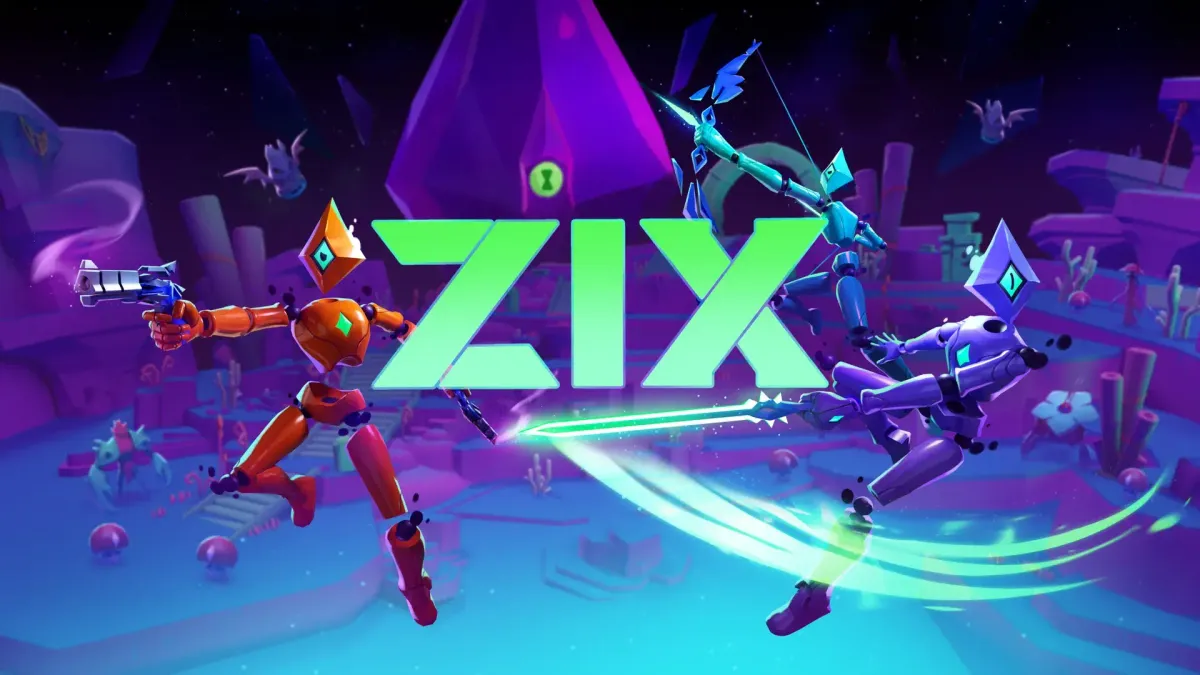
Neon-themed co-op roguelite ZIX was hitting performance ceilings, according to Hidden IO, limiting its abilities to increase enemy counts and the overall pace of the game. The new Foundation update upgrades the Unity engine, bringing “meaningfully better” performance and enabling higher enemy counts and more intense encounters on each run.

ZIX Review-In-Progress: Movement-Driven Mayhem In A Surreal Setting
Surreal roguelike ZIX shines with its unique combat and fluid movement, though the early access release on Quest 3 and PC VR has some rough edges.
UploadVRPete Austin

In the dev post, Hidden IO also confirmed it is working on Gogo Dojo, a new free-to-play title designed to showcase the best of ZIX’s gameplay style in an easier, more accessible setting. Pre-alpha playtesting for Gogo Dojo is said to start ‘soon’ in Hidden IO’s Discord.

Explaining why it is developing a free game, Hidden IO stated “ZIX lives or dies by how many people play it. We can’t sustain development without players, and the current VR landscape is tough. Many studios are struggling, and we’re not immune to that reality.”

0:00

/1:23

ZIX VR Game Trailer

The Foundation update is said to set the stage to expand ZIX in the future, including a revamped progression system and expanded build variety.

ZIX is available now in Early Access on Quest 3 and Steam for $19.99.

Google Play used AI to help block 1.75 million bad apps in 2025

Google has announced that with the help of AI, it blocked 1.75 million apps that violated its policies in 2025, significantly down from 2.36 million in 2024. The lower numbers this year, it said, are because its “AI-powered, multi-layer protections” are deterring bad actors from even trying to publish bad apps.

Google said it now runs more than 10,000 safety checks on every app and continues to recheck them after they’re published. Its use of the latest generative AI models helps human reviewers discover malicious patterns more quickly, it added. The company also blocked 160 million spam ratings, preventing an average 0.5-star rating drop for apps targeted by review bombing. Finally, Google stopped 255,000 apps from gaining excessive access to sensitive user data in 2025, down from 1.3 million the year before. 

Meanwhile, Google Play Protect, the company’s Android defense system, sniffed out over 27 million new malicious apps, either warning users or preventing them from running. The company added that Play Protect’s enhanced fraud protection now covers 2.8 billion Android devices in 185 markets and blocked 266 million risky “side-loading” installation attempts. 

“Initiatives like developer verification, mandatory pre-review checks, and testing requirements have raised the bar for the Google Play ecosystem, significantly reducing the paths for bad actors to enter,” the company said its blog. “This year, we’ll continue to invest in AI-driven defenses to stay ahead of emerging threats and equip Android developers with the tools they need to build apps safely.”

Google has steadfastly justified its relatively high fees on app purchases and subscriptions by touting its investments in app safety. However, its Play store has been under pressure from regulators in Europe and other regions that claim it amounts to a monopoly. Last year, the company changed its fee structure for developers using alternative payment channels, but EU regulators recently claimed the company still isn’t complying with Digital Markets Act regulations. 

This article originally appeared on Engadget at https://www.engadget.com/apps/google-play-used-ai-to-help-block-175-million-bad-apps-in-2025-102208054.html?src=rss

New York Drops Plan To Legalize Robotaxis Outside NYC

New York Governor Kathy Hochul has dropped a proposal that would have allowed limited commercial robotaxi deployments outside New York City, citing a lack of support among state legislators. “The move is a blow to Waymo and other robotaxi companies who saw New York, and especially New York City, as a potential goldmine,” reports The Verge. From the report: The plan, which was introduced by Hochul as part of the state’s budget proposal last month, would have allowed limited robotaxi deployment in cities other than the Big Apple — while leaving whether New York City would get autonomous vehicles up to the mayor and the City Council. But now that plan is DOA, as support in the legislature never materialized. “Based on conversations with stakeholders, including in the legislature, it was clear that the support was not there to advance this proposal,” Sean Butler, a Hochul spokesperson, said in a statement. “While we are disappointed by the Governor’s decision, we’re committed to bringing our service to New York and will work with the State Legislature to advance this issue,” Waymo spokesperson Ethan Teicher said in a statement. “The path forward requires a collaborative approach that prioritizes transparency and public safety.”


Read more of this story at Slashdot.

Trump Directs US Government To Prepare Release of Files on Aliens and UFOs

US President Donald Trump says he will direct US agencies, including the defence department, to “begin the process of identifying and releasing” government files on aliens and extraterrestrial life. From a report: Trump made the declaration in a post on Truth Social, after he accused Barack Obama earlier in the day of revealing classified information when the former president said “aliens are real” on a podcast last week. “He’s not supposed to be doing that,” Trump told reporters aboard Air Force One, adding: “He made a big mistake.”

Asked if he also thinks aliens are real, Trump answered: “Well, I don’t know if they’re real or not.” Former US President Obama told podcast host Brian Tyler Cohen that he thinks aliens are real in an interview released last Saturday. “They’re real, but I haven’t seen them, and they’re not being kept in Area 51,” Obama said. “There’s no underground facility unless there’s this enormous conspiracy and they hid it from the president of the United States.”


Read more of this story at Slashdot.

Newborn Chicks Connect Sounds With Shapes Just Like Humans, Study Finds

An anonymous reader quotes a report from Scientific American: Why does “bouba” sound round and “kiki” sound spiky? This intuition that ties certain sounds to shapes is oddly reliable all over the world, and for at least a century, scientists have considered it a clue to the origin of language, theorizing that maybe our ancestors built their first words upon these instinctive associations between sound and meaning. But now a new study adds an unexpected twist: baby chickens make these same sound-shape connections, suggesting that the link to human language may not be so unique. The results, published today in Science, challenge a long-standing theory about the so-called bouba-kiki effect: that it might explain how humans first tethered meaning to sound to create language. Perhaps, the thinking goes, people just naturally agree on certain associations between shapes and sounds because of some innate feature of our brain or our world. But if the barnyard hen also agrees with such associations, you might wonder if we’ve been pecking at the wrong linguistic seed.

Maria Loconsole, a comparative psychologist at the University of Padua in Italy, and her colleagues decided to investigate the bouba-kiki effect in baby chicks because the birds could be tested almost immediately after hatching, before their brain would be influenced by exposure to the world. The researchers placed chicks in front of two panels: one featured a flowerlike shape with gently rounded curves; the other had a spiky blotch reminiscent of a cartoon explosion. They then played recordings of humans saying either “bouba” or “kiki” and observed the birds’ behavior. When the chicks heard “bouba,” 80 percent of them approached the round shape first and spent an average of more than three minutes exploring it compared with an average of just under one minute spent exploring the spiky shape. The exploration preferences were flipped when the chicks heard “kiki.”

Because the tests took place within the chicks’ carefully supervised first hours of life outside their eggshell, this association between particular sounds and shapes couldn’t have been learned from experience. Instead it may be evidence of an innate perceptual bias that goes back way farther in our evolutionary history than previously believed. “We parted with birds on the evolutionary line 300 million years ago,” says Aleksandra Cwiek, a linguist at Nicolaus Copernicus University in Toru, Poland, who was not involved in the study. “It’s just mind-blowing.”


Read more of this story at Slashdot.

Meta “Explicitly Separating” Horizon Worlds From Quest & Focusing On Third-Party Apps

Meta published a blog post for developers wherein it lays out its new strategy for the Quest ecosystem and Horizon Worlds, taking the two in separate directions.

Titled ‘Our Renewed Focus in 2026’ and written by the VP of Content at Meta Reality Labs, Samantha Ryan, much of the post repeats what CTO Andrew Bosworth has already said in a series of public interviews and Instagram “ask me anything” sessions in recent weeks.

Meta CTO Explains Layoffs & Strategy Shift: “VR Is Growing Less Quickly Than We Hoped”
In a series of interviews at Davos, Meta CTO Andrew Bosworth explained why the company is reducing its investment in VR.
UploadVRDavid Heaney

The gist of Meta’s new VR and metaverse strategy, according to its executives, is that Horizon Worlds will become “almost exclusively mobile”, and the platform will no longer be pushed on Quest owners. Meanwhile, on the VR side, Meta will focus on funding and supporting the third-party developer ecosystem instead of putting out its own blockbuster VR games to compete with them.

Meta is removing individual Horizon Worlds destinations from the in-VR store on Quest, Ryan writes, and “separating worlds from the Store” in the smartphone app.

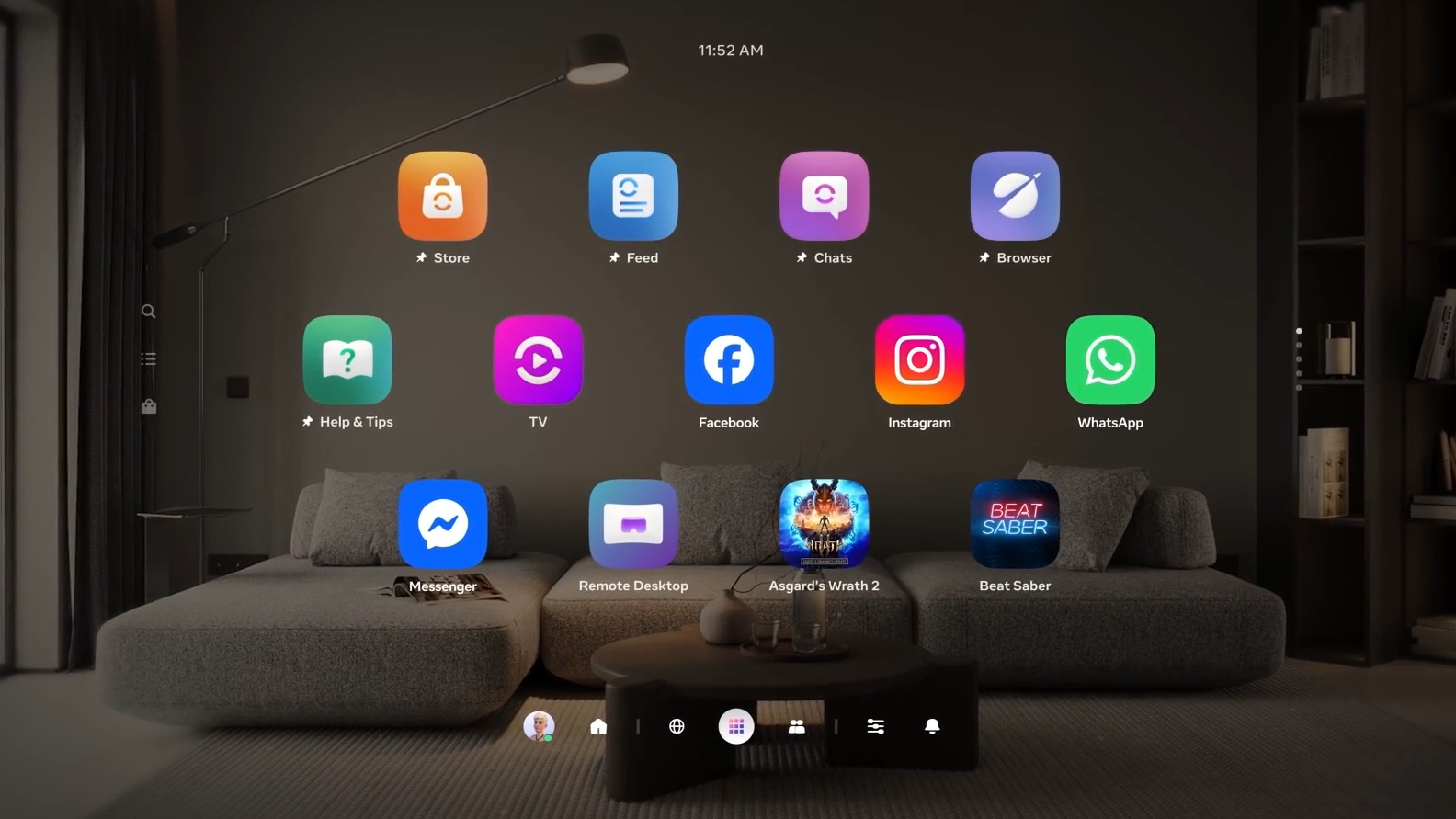
Last month, Meta also announced that Quest’s new ‘Navigator’ UI will soon become the default and the Horizon Feed will be removed, meaning the headset will boot to a grid of your installed apps. Some Quest owners on the Public Test Channel (PTC) have also received a refreshed Navigator that lacks the ‘Worlds’ button.

Quest’s New ‘Navigator’ UI Becoming Default As Horizon Feed To Be Removed
“Starting” in Quest v85, the new ‘Navigator’ UI is becoming the default, and the Horizon Feed will be “gradually” removed from Horizon OS.
UploadVRDavid Heaney

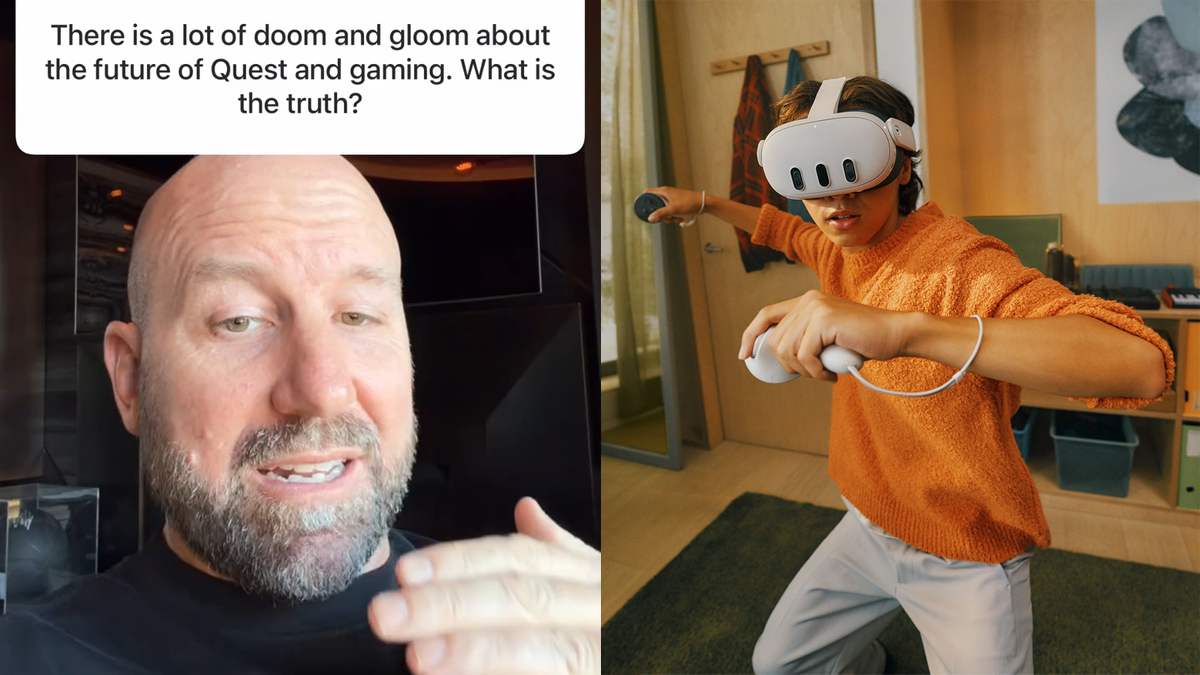
The post also seems to take aim at the gloom and doom discourse around the future of the Quest platform that followed Meta’s shutdown of three of its acquired VR game studios, significant layoffs at a fourth, cancelation of the Batman: Arkham Shadow sequel, and deprecation of Horizon Workrooms and Quest headsets for business offering.

As well as noting that Meta has “a robust roadmap of future VR headsets”, echoing comments from the CFO and CTO, Ryan claims that VR “is still growing”, and that Quest had “a tremendous holiday season that was on par with our 2024 results”.

“Total payment volume on the platform remained similar year-over-year in 2025”, Ryan writes, also noting that Quest headset sales remain “far ahead of all competitors” while Meta remains “the single biggest investor in the VR industry”.

Quest 4 Is Still On The Roadmap, Meta CTO Seemingly Confirms
In an interview with Alex Heath, Meta CTO Andrew Bosworth seemed to confirm the leak that a gaming-focused Quest 4 is still on the roadmap.
UploadVRDavid Heaney

In what seems to be an attempt to reassure developers, Ryan claims Meta is “focused on supporting the third-party developer community” through “strategic partnerships and targeted investments”.

Last year multiple new VR games earned millions of dollars of revenue on the platform, Ryan claims, including UG, Hard Bullet and The Thrill of the Fight 2.

“While we’re proud of the world-class work from Oculus Studios over the years, among 1P and 3P apps, 86% of the effective time people spend in their VR headsets is with third-party apps”, Ryan notes.

Ryan also claims that in 2025 Meta invested “nearly $150 million in VR developer programs”.

Meta CTO: We’re Still Investing More In VR Content Than Anyone Else
Meta CTO Andrew Bosworth claims that even after the cuts, the company is still investing more in VR content than anyone else, and more than it was 4 years ago.
UploadVRDavid Heaney

Of course, words are cheap, and since acquiring Oculus almost twelve years ago, Meta’s VR strategy has constantly shifted under developers’ feet. Many will be weary of this instability, and UploadVR will keep a close eye on the Quest platform in the wake of Meta’s latest change of direction.

US Plans Online Portal To Bypass Content Bans In Europe and Elsewhere

The U.S. State Department is reportedly developing a site called freedom.gov that would let users in Europe and elsewhere access content restricted under local laws, “including alleged hate speech and terrorist propaganda,” reports Reuters. Washington views the move as a way to counter censorship. Reuters reports: One source said officials had discussed including a virtual private network function to make a user’s traffic appear to originate in the U.S. and added that user activity on the site will not be tracked. Headed by Undersecretary for Public Diplomacy Sarah Rogers, the project was expected to be unveiled at last week’s Munich Security Conference but was delayed, the sources said. Reuters could not determine why the launch did not happen, but some State Department officials, including lawyers, have raised concerns about the plan, two of the sources said, without detailing the concerns.

The project could further strain ties between the Trump administration and traditional U.S. allies in Europe, already heightened by disputes over trade, Russia’s war in Ukraine and President Donald Trump’s push to assert control over Greenland. The portal could also put Washington in the unfamiliar position of appearing to encourage citizens to flout local laws.


Read more of this story at Slashdot.