Jack Dorsey’s Block Cuts Nearly Half of Its Staff In AI Gamble

Jack Dorsey’s Block is cutting more than 4,000 jobs, or nearly half its workforce, as part of a deliberate shift toward becoming a smaller, “intelligence-native” company built around AI. The Verge reports: “We’re not making this decision because we’re in trouble,” Dorsey says. “Our business is strong. Gross profit continues to grow, we continue to serve more and more customers, and profitability is improving. But something has changed. We’re already seeing that the intelligence tools we’re creating and using, paired with smaller and flatter teams, are enabling a new way of working which fundamentally changes what it means to build and run a company. And that’s accelerating rapidly.”

Dorsey opted to do a big layoff instead of gradual cuts because “I’d rather take a hard, clear action now and build from a position we believe in than manage a slow reduction of people toward the same outcome.” The layoffs were announced on Thursday as part of the company’s Q4 2025 earnings. In a shareholder letter (PDF), Dorsey says that “We believe Block will be significantly more valuable as a smaller, faster, intelligence-native company. Everything we do from here is in service of that.”


Read more of this story at Slashdot.

Neanderthals seemed to have a thing for modern human women

By now, it’s firmly established that modern humans and their Neanderthal relatives met and mated as our ancestors expanded out of Africa, resulting in a substantial amount of Neanderthal DNA scattered throughout our genome. Less widely recognized is that some of the Neanderthal genomes we’ve seen have pieces of modern human DNA as well.

Not every modern human has the same set of Neanderthal DNA, however; different people will, by chance, have inherited different fragments. But there are also some areas, termed “Neanderthal deserts,” where none of the Neanderthal DNA seems to have persisted. Notably, the largest Neanderthal desert is the entire X chromosome, raising questions about whether this reflects the evolutionary fitness of genes there or mating preferences.

Now, three researchers at the University of Pennsylvania, Alexander Platt, Daniel N. Harris, and Sarah Tishkoff, have done the converse analysis: examining the X chromosomes of the handful of completed genomes we have. It turns out there’s also a strong bias toward modern human sequences there, as well, and the authors interpret that as selective mating, with Neanderthal males showing a strong preference for modern human females and their descendants.

Read full article

Comments

iFi’s new GO Link 2 DAC is a cheap way to reap the lossless benefits of your Spotify plan

Audio company iFi just introduced a new DAC (digital-to-analogue converter) that’s both smaller and lighter than its previous model, and only costs $59. The iFi GO Link 2 connects to a smartphone or other audio-playing device over USB-C and can instantly improve the listening experience on wired headphones.

Wireless earbuds and music streaming services have normalized listening to your favorite songs at a lower quality. For anyone who doesn’t consider themselves an audiophile, that might not matter, but now that several streaming services offer higher sample rates and lossless audio, you might consider other ways of listening. In order to experience all the benefits of high-res or lossless audio, you need wired headphones, something that’s increasingly difficult when most smartphones only have a USB-C port. That’s where the iFi GO Link 2 comes in. The dongle plugs into a USB-C port and lets you connect a pair of wired earbuds while preserving your high quality audio at the same time.

An iFi GO Link 2 DAC laid flat on a white background.
iFi

iFi’s new DAC is eight percent smaller than the previous GO Link and 29 percent lighter, approaching the size of Apple’s USB-C to 3.5mm Headphone Jack dongle. The GO Link 2’s built-in ESS Sabre DAC chipset is supposed to add “6dB of dynamic range between the loudest and quietest moments” and reduce distortion for clearer sound by up to 62 percent when compared to the original GO Link.

Via iFi’s companion Nexis app on Android, the GO Link 2 can also be updated on the go and further customized with digital filters. The GO Link 2 supports two digital filters — one hybrid and one linear — so that you can adjust things to your preferred sound profile. You can also use the Nexis app to set volume limits when you’re listening with the DAC attached.

The previous GO Link made it on Engadget’s list of the best DACs for Apple Music Lossless, and at the same price, the GO Link 2 seems like it could, too. The iFi GO Link 2 is available to purchase now for $59.

This article originally appeared on Engadget at https://www.engadget.com/audio/ifis-new-go-link-2-dac-is-a-cheap-way-to-reap-the-lossless-benefits-of-your-spotify-plan-231535369.html?src=rss

Blade And Sorcery: Nomad ‘Sentara’ Update Out Now

The free update adds a new faction, new weapons, armor, and lore, plus a new map to explore in the game’s sandbox and Crystal Hunt modes.

Blade and Sorcery: Nomad developer WarpFrog has announced that its Sentara update is available now. The free update is the second of four planned content drops known as the Byeth Updates. It adds a new Sentara-themed map to explore in Blade and Sorcery’s sandbox and Crystal Hunt game modes, as well as several new weapons, armor, and new lore.

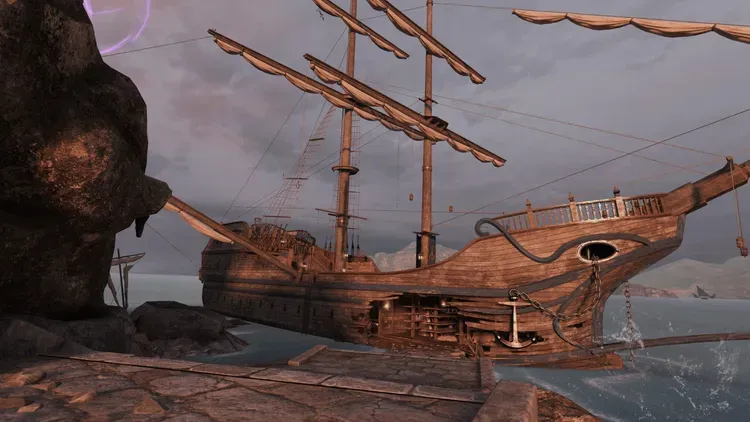
The Sentara map is a maritime-themed land, evoking Mediterranean sea nations from the Age of Sail. There are lighthouses and pirate ships, and weapons inspired by maritime history. There’s also a new physics system to simulate buoyancy in water, meaning objects will float differently depending on their weight (including bodies).

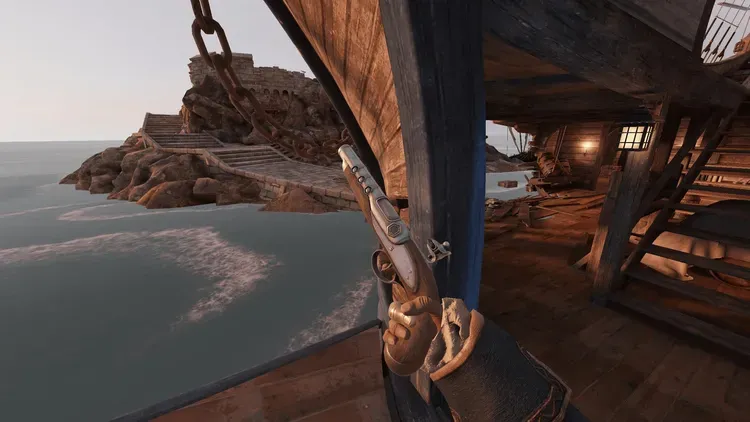
New weapons and armor similarly evoke the real-world gear of the time. There are classic cutlasses, stiletto daggers, a harpoon, a dueling sword, and most notably, firearms (though these run on crystals, rather than gunpowder).

In addition to the Sentara map, another new map has been added for sandbox and Crystal Hunt modes. This map is themed around Rakta, the East Asian-inspired faction that had previously been added in the first Byeth Update.

WarpFrog promises that there’s a whole lot more to discover in the Sentara Update (a claim that seems legit when looking at the update’s full notes).

Blade and Sorcery: Nomad is now available on Meta Quest and Pico headsets.

Zombie Army VR To Lose Co-Op Gameplay Next Month

Zombie Army VR will lose co-op multiplayer next month, with the developer blaming a change with Unity’s hosting services.

Zombie Army VR has had a bit of a rough go, to be kind. The VR entry to Rebellion’s popular series was first announced for a 2024 release before being delayed to May 2025, followed by another delay to June 2025. In the course of that, Rebellion quietly switched developers from XR Games to Xtended Realities.

Zombie Army VR Review: Good Foundations Marred By Repetition
Zombie Army VR has the foundations for something more, though it’s held back by a repetitive campaign.
UploadVRHenry Stockdale

Now, less than a year post release, the beleaguered FPS, is losing its cooperative game mode. Rebellion announced on a support post on its website that Zombie Army VR’s co-op play servers would be shut down at the end of March “as a result of Unity’s phased exit from the Multiplay Game Server Hosting Service.”

Unity sent out communication to all developers using its multiplayer servers in December 2025, saying anyone on the service had until March 31, 2026 to transition to a new service. Unity also stated it was licensing its Multiplay Game Server Hosting Service to Rocket Science Group to ensure continuity for any live games.

Rebellion said it is investigating methods to save game progress for any co-op campaigns in progress, but at the time of this article, that solution has not been announced.

Zombie Army VR is available now on Meta Quest, Steam, and PlayStation VR2 for $29.99.

Thief Simulator VR: Heist Crew Sneaks on Meta Quest Soon

The follow up to Thief Simulator VR: Greenview Street promises to build on the best parts of its predecessor with procedural generation and chaotic multiplayer.

3R Games, also known for Cave Crave and Besiege VR, announced a new Thief Simulator title on a recent post on X.com, saying Heist Crew is being “built on the best mechanics of Thief Simulator VR: Greenview Street.” From the description of the Meta Quest listing, crews will have a limited time to break into homes on procedurally generated maps, scoring points both as teammates and individuals.

Thief Simulator VR Is A Modern Sandbox Burglary Game
Have you ever wanted to run around your neighborhood and rob every house in sight? I hope not, but nonetheless, Thief Simulator VR might be the game for you if so. Thief Simulator VR launches into early access today, and currently offers around 10 hours of story content. However, the
UploadVRHarry Baker

Due to the individual scoring system, 3R says betrayal will be a part of Heist Crew’s gameloop, with teammates turning on each other to raise their own individual scores.

Thief Simulator was originally ported to PC VR by Playway, in partnership with Gameboom. 3R Games took over developmental duties for Greenview Street on Meta Quest with Playway listed as a publisher.

Thief Simulator: Heist Crew can be wishlisted now on Meta Quest. At the time of this article, there is no information on ports for other platforms, release date, or price. Greenview Street is available on PS VR2 for $24.99 and Meta Quest for $19.99.

Perplexity announces “Computer,” an AI agent that assigns work to other AI agents

Perplexity has introduced “Computer,” a new tool that allows users to assign tasks and see them carried out by a system that coordinates multiple agents running various models.

The company claims that Computer, currently available to Perplexity Max subscribers, is “a system that creates and executes entire workflows” and “capable of running for hours or even months.”

The idea is that the user describes a specific outcome—something like “plan and execute a local digital marketing campaign for my restaurant” or “build me an Android app that helps me do a specific kind of research for my job.” Computer then ideates subtasks and assigns them to multiple agents as needed, running the models Perplexity deems best for those tasks.

Read full article

Comments

Made-For-VR Raceclub Arrives On Quest In Early Access Today

The new, built-for-VR racer Raceclub has just released on Meta Quest headsets in early access.

Mixer Lab has announced that their made-for-VR racing game Raceclub has launched in Early Access today. The title is available now at an early-bird price via the Meta Horizon Store.

Built by “a seasoned team of racing enthusiasts,” Raceclub’s developers promise an authentic and exciting racing experience. The team says players may choose between two styles of racing: a 12-cylinder car inspired by real-world Formula 1 design, and a nimble electric-influenced model reminiscent of Formula E, where mastering regenerative braking and managing power modes is critical to winning.

0:00

/1:13

Multiple race modes keep the gameplay varied, and planned updates intend to add multiplayer sometime after Early Access launch.

Raceclub is available starting today in Early Access via the Meta Horizon Store for $12.99. A limited-time early-bird offer brings the price down to $9.99.

What’s the Point of School When AI Can Do Your Homework?

An anonymous reader quotes a report from 404 Media: There’s a new agentic AI called Einstein that will, according to its developers, live the life of a student for them. Einstein’s website claims that the AI will attend lectures for you, write your papers, and even log into EdTech platforms like Canvas to take tests and participate in discussions. Educators told me that Einstein is just one of many AI tools that can do homework for students, but should be seen as a warning to schools that are increasingly seen by students as a place to gain a diploma and status as opposed to the value of education itself.

If an AI can go to school for you what’s the point of going to school? For Advait Paliwal, Brown dropout and co-creator of Einstein, there isn’t one. “I think about horses,” he said. “They used to pull carriages, but when cars came around, I’d argue horses became a lot more free,” he said. “They can do whatever they want now. It would be weird if horses revolted and said ‘no, I want to pull carriages, this is my purpose in life.'” But humans aren’t horses. “This is much bigger than Einstein,” Matthew Kirschenbaum told 404 Media. “Einstein is symptomatic. I doubt we’ll be talking about Einstein, as such, in a year. But it’s symptomatic of what’s about to descend on higher ed and secondary ed as well.”

[…] The attractiveness of agentic AIs is a symptom of a decades-long trend in higher education. “Universitiesby and large adopted a transactive model of education,” Kirschenbaum said. “Students see their diploma as a credential. They pay tuition and at the end of four years, sometimes five years, they receive the credential and, in theory at least, that is then the springboard to economic stability and prosperity.” Paliwal seems to agree. He told 404 Media that he attempted to change the university from the inside while working as a TA, but felt stymied by politics. “The only way to force these institutions to evolve is to bring reality to their face. And usually the loudest critics are the ones who can’t do their own job well and live in fear of automation,” he said. “I think we really need to question what learning even is and whether traditional educational institutions are actually helping or harming us,” said Paliwal. “We’re seeing a rise in unemployment across degree holders because of AI, and that makes me question whether this is really what humans are born to do. We’ve been brainwashed as a society into valuing ourselves by the output of our productive work, and I think humanity is a lot more beautiful than that. Is it really education if we’re just memorizing things to perform a task well?”

Kirschenbaum added: “What we’re finding is that if forms of education can be transacted then we’ve just about arrived at the point where autonomous software AI agents are capable of performing the transaction on your behalf,” he said. “And so the whole educational paradigm has come back to essentially bite itself in the ass.”


Read more of this story at Slashdot.

Block, the parent of Square and Cash App, is laying off over 4,000 people

Block is the latest business to announce layoffs, with the operator of payment platforms Square and Cash App opting to cut jobs in favor of using more AI tools. The financial tech company, helmed by Twitter founder Jack Dorsey, is slashing its current staff of 10,000 to “just under 6,000.” CNBC highlighted a letter Block sent to shareholders announcing the decision to nearly halve its workforce. According to the message from Dorsey: 

“The core thesis is simple. Intelligence tools have changed what it means to build and run a company. We’re already seeing it internally. A significantly smaller team, using the tools we’re building, can do more and do it better. And intelligence tool capabilities are compounding faster every week.”

We learned last year that Block had developed an AI agent called “codename goose” for interacting with LLMs. Leadership is clearly putting high expectations on that project and any other in-house tools to fill the shoes of thousands. “intelligence will be at the core of how the entire company works. How we make decisions, how we build trust and manage risk, how we build products, and how we serve customers,” the shareholder letter states.

Block also reported its latest financial results today. It finished the 2025 financial year with operating income (profit after expenses) of $1.71 billion.

This isn’t the first time the fintech company has made deep cuts in its employee count. Layoffs numbering about 1,000 were rumored both in 2024 and 2025.

This article originally appeared on Engadget at https://www.engadget.com/apps/block-the-parent-of-square-and-cash-app-is-laying-off-over-4000-people-223343068.html?src=rss

xAI spent $7M building wall that barely muffles annoying power plant noise

For miles around xAI’s makeshift power plant in Southaven, Mississippi, neighbors have endured months of constant roaring, erupting pops, and bursts of high-pitched whining from 27 temporary gas turbines installed without consulting the community.

In a report on Thursday, NBC News interviewed residents fighting to shut down xAI’s turbines. They confirmed that xAI operates the turbines day and night, allegedly tormenting residents in order to power xAI founder Elon Musk’s unbridled AI ambitions.

Eventually, 41 permanent gas turbines—that supposedly won’t be as noisy—will be installed, if xAI can secure the permitting. In the meantime, xAI has erected a $7 million “sound barrier” that’s supposed to mitigate some of the noise.

Read full article

Comments

Guitar Hero vets RedOctane reveal their new music game

RedOctane Games, a relaunched version of one of the studios behind the very first Guitar Hero, has shared a first trailer for its new music game, Stage Tour. The original RedOctane was shut down by Activision in 2010, and only recently reformed under Embracer Freemode to create a new music game franchise in August 2025.

Stage Tour is playable solo or with other players in a band, according to RedOctane, and supports inputs from a keyboard and mouse on top of the expected guitar, drums and microphone accessories. The studio plans to primarily offer the game digitally, but hopes to also sell a bundle with a guitar controller and a download code because “that just feels right.” As far as ongoing support goes, whereas games like Guitar Hero or Rock Band included a set tracklist and support for song DLC, it sounds like RedOctane could be taking an approach more inspired by Epic’s regular updates to Fortnite. “The plan is regular special events that are more than just music drops,” RedOctane writes. “Real moments. Real themes. Real updates. We want to evolve the game alongside the fans who support it. Improve it. Expand it. Keep it alive.” 

RedOctane and Harmonix created the first Guitar Hero in 2006, before RedOctane was acquired by Activision to continue the franchise in 2006, and Harmonix went on to start the Rock Band series. Development of Stage Tour is currently being led by RedOctane, with Eidos Montréal helping with motion capture and QA, and Third Kind Games providing additional development support. Conveniently, RedOctane’s owner Embracer Freemode also already owns CRKD, a video game accessory maker that has experience building controllers for rhythm games.

Sign-ups to play an alpha of Stage Tour will open soon, and RedOctane plans to “kick off closed alpha testing late spring/early summer.” We’re long past the peak popularity of games like Guitar Hero, but rhythm and music games never went away. Players have had Clone Hero and more official experiences like Fortnite Festival to get their Guitar Hero or Rock Band fix, but Stage Tour could be a more than welcome third option when it launches later this year.

This article originally appeared on Engadget at https://www.engadget.com/gaming/guitar-hero-vets-redoctane-reveal-their-new-music-game-220809719.html?src=rss

Google Launches Nano Banana 2 Model With Faster Image Generation

Google has launched Nano Banana 2 (Gemini 3.1 Flash Image), a faster, more realistic image generation model that becomes the default across Gemini, Search, Lens, and Flow. TechCrunch reports: The new Nano Banana 2 retains some of the high-fidelity characteristics of the Pro model but produces images faster. The company says you can create images with a resolution ranging from 512px to 4K, in different aspect ratios. Nano Banana 2 can maintain character consistency for up to five characters and fidelity of up to 14 objects in one workflow for better storytelling. Users can also issue complex requests with detailed nuances for image generation, Google says. In addition, users can create media with more vibrant lighting, richer textures, and sharper detail.

[…] On Google’s higher-end plans, Google AI Pro and Ultra, subscribers can continue to use Nano Banana Pro for specialized tasks by regenerating images via the three-dot menu. […] The company said that all images created through the new model will have a SynthID watermark, which is Google’s mark to denote AI-generated images. The images are also interoperable with C2PA Content Credentials, created by an industry body consisting of companies like Adobe, Microsoft, Google, OpenAI, and Meta. Google said that since launching the SynthID verification in the Gemini app in November, people have used it over 20 million times.


Read more of this story at Slashdot.

Toto’s ‘Africa’ But The Lyrics Are All The Countries In Africa

Because sometimes it’s easy to forget this is the internet and not just a dark cave filled with influencers and depression, this is another musical edit by There I Ruined It (previously) featuring Toto’s ‘Africa’, but the lyrics are listing all 54 countries in Africa. It’s a banger and geography lesson rolled into one! Maybe if we’d sung songs about geography in middle school it wouldn’t have taken until I was 24 to learn Alaska is connected to Canada and isn’t an island like they show on weather maps. I always did think that incredibly straight eastern coast was suspicious. Just, you know, not suspicious enough to warrant an investigation. Basically the opposite of if my girlfriend found a blonde hair in the apartment.

The physics of squeaking sneakers

We’re all familiar with the high-pitched squeak of basketball shoes on the court during games, or tires squealing on pavement. Scientists conducted several experiments and discovered that the geometry of the sneakers’ tread patterns determines the squeak’s frequency, enabling the team to make rubber blocks set to specific frequencies and slide them across glass surfaces to play Star Wars’ “Imperial March.”

“Tuning frictional behavior on the fly has been a long-standing engineering dream,” said co-author Katia Bertoldi of Harvard University. “This new insight into how surface geometry governs slip pulses paves the way for tunable frictional metamaterials that can transition from low-friction to high-grip states on demand.” In addition, the dynamics revealed by these results are similar to those of tectonic faults and thus give scientists a new model for the mechanics of earthquakes, according to their new paper published in the journal Nature.

Leonardo da Vinci is usually credited with conducting the first systematic study of friction in the late 15th century, a subfield now known as tribology that deals with the dynamics of interacting surfaces in relative motion. Da Vinci’s notebooks depict how he pulled rows of blocks using weights and pulleys, an approach that is still used in frictional studies today, as well as examining the friction produced in screw threads, wheels, and axles. The authors of this latest paper used an experimental setup similar to da Vinci’s.

Read full article

Comments